Jagannath Rath Yatra 2026: Dates, Schedule and Puri Guide
Plan Jagannath Rath Yatra 2026 in Puri with festival dates, key rituals, travel tips, and a practical schedule for visitors.
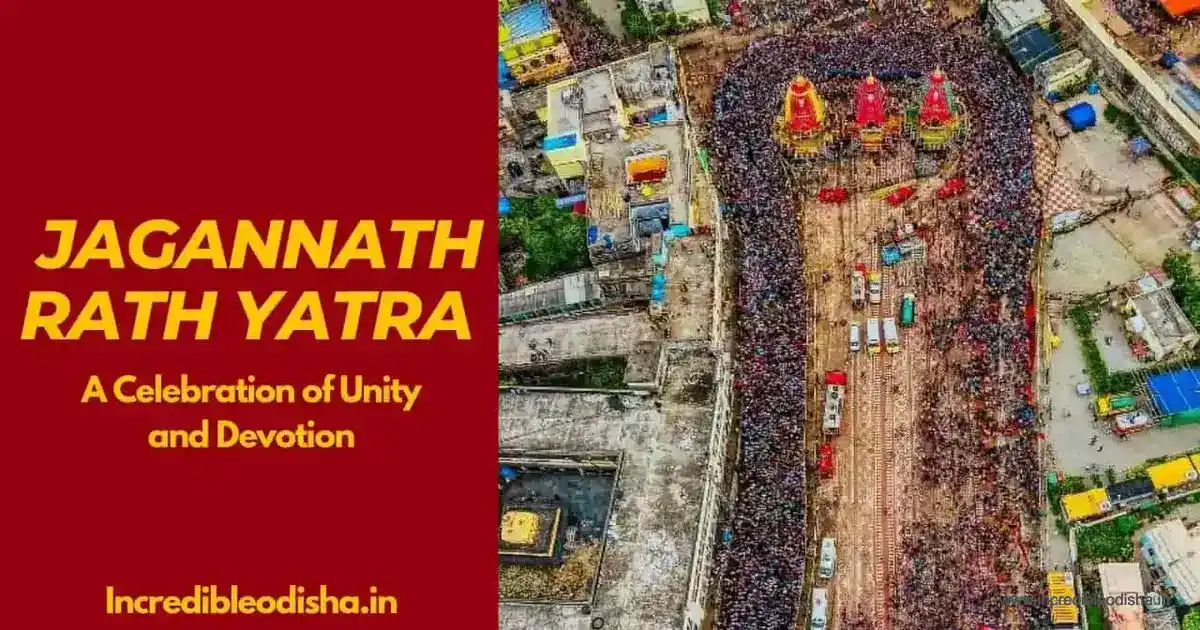
Jagannath Rath Yatra is the annual chariot festival of Lord Jagannath, Lord Balabhadra, and Devi Subhadra in Puri, Odisha. In 2026, the main Rath Yatra is scheduled for July 16, 2026. This event brings millions of people to the Grand Road, or Bada Danda, to see the “Lord of the Universe” leave His temple to meet the people.
If you are traveling to Puri in 2026, you will join millions of others in one of the world’s oldest living traditions. This guide provides a clear Jagannath Rath Yatra 2026 schedule, explains the major rituals, and offers practical advice on navigating the city during the festival to help you plan a safe and spiritual visit.
Important update note: Rath Yatra rituals follow the Odia lunar calendar. The main Rath Yatra date is widely cited as July 16, 2026, but event-wise timings and associated ritual dates should still be checked against the Shree Jagannath Temple Administration, Odisha Tourism, and Puri district administration before travel.
Jagannath Rath Yatra 2026 Date and Key Highlights
- Main festival date: July 16, 2026
- Location: Puri, Odisha
- Main deities: Lord Jagannath, Lord Balabhadra, Devi Subhadra, and Sudarshana
- Main route: From the Jagannath Temple in Puri to Gundicha Temple
- Who can attend: The public festival is open to people of all faiths and backgrounds
What Is Jagannath Rath Yatra?
Jagannath Rath Yatra, also called the Puri Rath Yatra, Ratha Yatra, Shri Gundicha Yatra, or Chariot Festival of Puri, is the annual procession in which the three sibling deities leave the Jagannath Temple and travel on giant wooden chariots to Gundicha Temple.
The festival is especially significant because it allows devotees to have darshan of the deities outside the main temple precincts. This is one of the reasons Rath Yatra is often described as a festival of accessibility, devotion, and public participation.
When Is Jagannath Rath Yatra 2026?
The main Jagannath Rath Yatra in 2026 is scheduled for Thursday, July 16, 2026, based on currently published festival calendars and media coverage that reference the temple calendar. Final confirmation should still be taken from the Shree Jagannath Temple Administration.
Because many users search for the complete sequence around the main festival, it is useful to understand that Rath Yatra is not a single-day event. It is a larger ritual cycle that begins with chariot construction and continues through ceremonies such as Snana Yatra, Anasara, Pahandi, Hera Panchami, Bahuda Yatra, Suna Besha, Adhara Pana, and Niladri Bije.
Jagannath Rath Yatra 2026 Schedule
The following schedule reflects the standard 2026 festival sequence most commonly cited across current published calendars and festival references. Since event-level dates can still be presented differently across temple calendars and secondary publishers, visitors should verify the final schedule with the official Shree Jagannath Temple Administration website before making time-sensitive plans.
| Festival Event | Date in 2026 | Why It Matters |
|---|---|---|
| Akshaya Tritiya | April 20, 2026 | Construction of the three chariots begins. |
| Snana Yatra / Debasnana Purnima | June 29, 2026 | The deities are bathed publicly with 108 pitchers of sacred water. |
| Anasara | June 30 to July 15, 2026 | The deities remain in seclusion and public darshan is paused. |
| Netrotsava / Nava Yauvana Darshan | July 15, 2026 | The deities reappear after ritual renewal. |
| Shri Gundicha Rath Yatra | July 16, 2026 | The main chariot festival from Jagannath Temple to Gundicha Temple. |
| Hera Panchami | July 20, 2026 | A ritual centered on Goddess Lakshmi’s visit. |
| Bahuda Yatra | July 24, 2026 | The return journey of the deities toward the main temple. |
| Suna Besha | July 25, 2026 | The deities are adorned with gold ornaments. |
| Adhara Pana | July 26, 2026 | A special ritual offering is made on the chariots. |
| Niladri Bije | July 27, 2026 | The deities return to the sanctum. |
Why Is Rath Yatra Celebrated in Puri?
Rath Yatra is celebrated in Puri to mark the annual ceremonial journey of Lord Jagannath, Lord Balabhadra, and Devi Subhadra from the main temple to Gundicha Temple. In devotional tradition, Gundicha Temple is often described as the destination of the Lord’s annual outing, a framing also reflected in temple and tourism descriptions from the Shree Jagannath Temple Administration and Odisha Tourism.
The festival also carries wider religious and cultural meaning:
- It symbolizes the Lord coming out to meet all devotees.
- It makes public darshan possible outside the temple.
- It reflects humility, service, and equality through rituals such as Chhera Pahanra.
- It keeps alive a tradition of temple servitors, artisans, painters, and musicians.
The history of Jagannath Rath Yatra is more than just a list of dates; it is a rich story of faith, tribal heritage, and mystery. To understand why millions come to Puri, we must look at the stories that define the “Lord of the Universe.”
The Legend of King Indradyumna and Nila Madhava
The most enduring narrative of the festival’s origin begins with King Indradyumna of Malwa. A devout worshipper of Lord Vishnu, the King was restless to see the Lord in his most pristine form. He heard rumors of a secret deity named Nila Madhava (the Blue Vishnu) being worshipped by a tribal chief named Vishvavasu in the dense forests of Odisha.
Eager to find the deity, Indradyumna sent his priest, Vidyapati, on a quest. Vidyapati eventually located the tribal village and, through a series of events (including marrying Vishvavasu’s daughter), gained the chief’s trust. Vishvavasu agreed to lead a blindfolded Vidyapati to the secret cave where Nila Madhava was kept. However, the clever priest dropped mustard seeds along the path, which later sprouted, allowing him to find the way back.
When King Indradyumna finally arrived to claim the deity, Nila Madhava had vanished. Heartbroken, the King received a divine message: the Lord would reappear, but in a new form—as a Daru (a sacred log) floating in the sea at Puri.
Daru Brahma and the “Unfinished” Deities
The King found the sacred log, marked with divine symbols, but no carpenter’s tools could make a dent in it. Finally, an old carpenter (widely believed to be Lord Vishwakarma, the divine architect, in disguise) appeared. He agreed to carve the deities on one condition: he must be left alone in the temple for 21 days, and the doors must remain shut.
Impatience got the better of the King. Hearing no sound from within after some days, he feared the old man had died and opened the doors. The carpenter vanished instantly, leaving behind three “incomplete” figures with large round eyes and no hands or feet. These are the deities we worship today as Lord Jagannath, Balabhadra, and Subhadra. This “incompleteness” is seen as a divine message that the Lord sees everything and accepts all offerings through his transcendental form, beyond physical limitations.
For readers exploring the broader spiritual setting of Puri, the Jagannath Temple in Puri and the History of Odisha provide essential background on how these traditions shaped the state’s identity.
Jagannath Rath Yatra Rituals Explained
Many searchers look specifically for Jagannath Rath Yatra rituals, so this section breaks down the main ceremonies in simple terms.
Akshaya Tritiya and Chariot Construction
The ritual cycle begins with Akshaya Tritiya, when the construction of the three chariots starts. Every year, the chariots are built anew using traditional methods and temple-prescribed measurements. This process is a major expression of Odisha’s ritual craftsmanship and is consistently described in temple and tourism materials from Shree Jagannath Temple Administration and Odisha Tourism.
Snana Yatra: The Divine Bath
Snana Yatra, or Debasnana Purnima, is the birthday of Lord Jagannath. The deities are brought out of the inner sanctum to the Snana Vedi (bathing altar) and bathed with 108 pitchers of sacred water drawn from the Suna Kua (Golden Well). It is during this ritual that the Lord appears in the Gajanana Besha (Elephant attire) to please his devotees.
Anasara: The 15-Day Seclusion
One of the most human-like aspects of the deities is the Anasara period. Legend says that after the heavy ceremonial bath, the deities “fall ill” with a fever. For 15 days, they are kept in a secret chamber (Anasara Ghara) where they are cared for by the Daitapati servitors (descendants of the tribal chief Vishvavasu).
During this time, the public cannot see the wooden idols. Instead, three Pattachitra paintings (Anasara Patti) represent the deities. They are offered a strict diet of medicinal herbs, roots, and sandalwood paste—a ritual that highlights the deep connection between the Lord and his tribal roots.
Pahandi Bije: The Rhythmic Sway
The Pahandi is perhaps the most visually striking part of the 2026 Rath Yatra. The deities do not simply move; they are carried in a rhythmic, swaying motion called Dhadi Pahandi. As the giant idols move towards the chariots, their huge floral crowns (Tahia) sway back and forth to the sound of gongs, conchs, and the rhythmic shouts of “Hari Bol!” through the Grand Road.
Chhera Pahanra: The Sweeping King
In a ritual that epitomizes humility, the Gajapati Maharaja of Puri, the titular King of Odisha, arrives in a silver palanquin. He performs Chhera Pahanra, where he sweeps the platforms of the three chariots with a golden broom (Suna Phulabarhuni) and sprinkles sandalwood water. This ritual serves as a powerful reminder that in the eyes of Lord Jagannath, even the highest king is but a humble servant (Adya Sevak).
Suna Besha: The Golden Transformation
Suna Besha, also known as Raja Besha, occurs when the deities return from Gundicha Temple and are still on their chariots. They are adorned with nearly 208 kilograms of gold ornaments, including giant hands of gold, feet of gold, and various jewelry. It is one of the most crowded days in Puri, as seeing the Lord in his “King of Kings” form is believed to bring immense spiritual merit.
Adhara Pana
In Adhara Pana, a special offering is placed before the deities on the chariots. The ritual holds a distinct place in the closing sequence of Rath Yatra observances.
Niladri Bije
Niladri Bije marks the ceremonial return of the deities into the temple sanctum. It is the concluding ritual of the Rath Yatra cycle.
Engineering and Design: The Chariots of Puri Rath Yatra
The three massive wooden chariots seen during the Puri Rath Yatra are remarkable examples of ancient engineering, built entirely without modern blueprints, nails, or measuring tapes.
The Construction: Akshaya Tritiya to Completion
The construction cycle begins on Akshaya Tritiya. For nearly 58 days, the Ratha Khala (the designated yard) becomes a hub of activity.
- The Wood: Every year, nearly 865 logs are used. Traditional woods like Phasi, Dhaura, and Asana are sourced from the forests of Nayagarh and Boudh.
- The Artisans: The construction is a hereditary service performed by the Maharanas (carpenters), Bhoi Sevayats (log carriers), and Chitrakaras (painters).
- The Technique: No iron nails or screws are used. Instead, the wood is joined using wooden pegs and intricate interlocking joints, which allow the chariots to withstand the immense pressure of being pulled by thousands of devotees.
Technical Specifications and Symbolism
| Feature | Nandighosa (Jagannath) | Taladhwaja (Balabhadra) | Darpadalana (Subhadra) |
|---|---|---|---|
| Total Height | 45 Feet | 44 Feet | 43 Feet |
| Number of Wheels | 16 wheels | 14 wheels | 12 wheels |
| Chariot Canopy | Red & Yellow cloth | Red & Green cloth | Red & Black cloth |
| Guardian Deity | Garuda | Vasudev | Jayadurga |
| Charioteer (Sarathi) | Daruka | Matali | Arjuna |
| Horse Names | Shankha, Bhalahaka, Shweta, Haridashwa | Tibra, Ghora, Dirghasharma, Swarnanava | Jochika, Jochika, Aparajita, Jitāmitrā |
| Rope Name | Sankhachuda Nagini | Basuki Naga | Swarnachuda Nagini |
Each part of the chariot is symbolic. The chariot itself is a metaphor for the Human Body, the horses represent the Senses, and the driver represents the Mind guiding the soul (the Deity) through the journey of life.
The three chariots of Jagannath Rath Yatra on the Grand Road in Puri.
Can Non-Hindus Attend Jagannath Rath Yatra?
Yes. This is one of the most common long-tail questions related to the festival.
While entry rules apply inside the main Jagannath Temple, the public Rath Yatra procession is open to everyone, including non-Hindus, international visitors, photographers in public areas, and general travelers following local security rules. For day-of access advisories and movement restrictions, visitors should follow the Puri district administration and local police instructions.
This openness is one of the main reasons the festival is widely known beyond Odisha and is often described as a public expression of Jagannath culture.
How to Attend Jagannath Rath Yatra in Puri
For search traffic, practical visitor information is as important as religious explanation. A strong festival guide should answer how a person can actually attend the event safely and realistically.
How to Reach Puri for Rath Yatra
- By air: The nearest airport is Biju Patnaik International Airport in Bhubaneswar.
- By train: Puri railway station is the main rail entry point. Tickets for Rath Yatra season often book out well in advance.
- By road: Puri is connected by road from Bhubaneswar, Cuttack, and other parts of Odisha, but traffic restrictions are common during major ritual days.
Travelers coming for the festival often also read guides on places to visit and things to do in Puri to plan a longer stay.
Where to Stay in Puri During Rath Yatra
Accommodation demand rises sharply during Rath Yatra. Visitors typically choose between:
- hotels near the Grand Road for ritual access
- stays near Puri Beach for comparatively easier movement
- properties on Chakratirtha Road and nearby tourism zones
Booking well in advance is important during Rath Yatra, Bahuda Yatra, and Suna Besha.
Puri Beach remains a common stay area for visitors attending Rath Yatra.
Best Time to Arrive for Rath Yatra
Visitors who want smoother logistics usually arrive at least one or two days before the main procession. Same-day arrival can be difficult because of traffic diversion, crowd density, police barricades, and transport delays.
What to Carry for Rath Yatra
- light cotton clothing suitable for humidity and rain
- drinking water and oral rehydration support
- a small umbrella or rain protection
- minimal valuables
- fully charged phone and ID
Essential Tips for the 2026 Rath Yatra
Attending the 2026 Rath Yatra in Puri is a powerful experience, but it requires careful planning due to the huge crowds (often over 1.5 million people).
For International Travelers & Foreign Tourists
- Entry Rules: While non-Hindus are not allowed inside the main temple, the Rath Yatra is the only time you can see the deities up close. This is called Suna Besha or Ghare Bahare—the Lord coming out to his people.
- Dress Code: Wear modest, light cotton clothing. Avoid leather items if possible, as a sign of respect for local traditions.
- Photography: You can take photos of the chariots and the procession in public areas. However, drones are strictly prohibited around the temple and the Grand Road for security reasons.
- Verified Guides: Use only official guides from Odisha Tourism or reputable travel agencies to avoid scams.
For Elderly & Differently-Abled Visitors
- Elevated Viewing: The most comfortable way to witness the Yatra is by booking a balcony seat in one of the private houses or hotels lining the Grand Road (Bada Danda). These spots offer shade and a bird’s-eye view away from the pushing crowds.
- Medical Support: The local administration sets up multiple first-aid posts along the route. If you have a heart condition or severe claustrophobia, it is best to avoid the “rope-pulling” zones.
- Early Arrival: Plan to reach your viewing spot by 6:00 AM on July 16, as all roads to the main area will be barricaded by 8:00 AM.
Digital Experience: Rath Yatra 2026 Live Stream
If you cannot travel to Puri, the entire festival is broadcast live by various national and international channels. You can watch the Jagannath Rath Yatra 2026 Live Streaming on:
- Official YouTube channels of the Shree Jagannath Temple Administration.
- Doordarshan (DD) and local Odia news channels like OTV and Kanak News.
- Many international ISKCON centers also host virtual Rath Yatra events.
Safety and Security in 2026
The Odisha Police and Puri District Administration deploy nearly 200 platoons of police personnel, including paramilitary forces, NSG snipers, and bomb disposal squads.
- AI Surveillance: 2026 will likely see enhanced use of AI-powered CCTV cameras for crowd density monitoring.
- No-Vehicle Zone: The entire Grand Road from the Railway Station to the Temple is a pedestrian-only zone on major ritual days.
- Hydration: Free drinking water booths (Chatra) are set up by NGOs, but it is wise to carry your own bottle and ORS packets.
Best Place to Watch Rath Yatra in Puri
Another high-intent query is where to watch the procession.
The most sought-after areas are:
- stretches of Bada Danda along the chariot route
- zones near Singhadwara for the early ritual movement
- legal and pre-arranged elevated viewing points where permitted
Access, barricading, and security rules vary by year, so visitors should rely on local administration guidance rather than informal assumptions.
The Divine Flavors of Rath Yatra: What to Eat in Puri
No pilgrimage to Puri is complete without experiencing the unique culinary heritage of the Jagannath Temple. During the 2026 Rath Yatra, the city’s food culture reaches its peak, offering flavors that are both sacred and ancient.
Mahaprasad: The Food of the Gods
The Mahaprasad is considered the most sacred food in the Hindu tradition. It is cooked in the temple’s Rosha Ghara (the world’s largest kitchen) in heritage earthen pots placed on top of each other over wood fires. Legend says that the food is first offered to Lord Jagannath and then to Goddess Bimala, after which it becomes Mahaprasad.
- Abadha: This is the standard temple meal consisting of rice (Kanika or Aruna Ana), lentils (Dalma), and various vegetable curries.
- Where to find it: During the Rath Yatra, Mahaprasad is available at the Ananda Bazar (a massive open-air food area) within the temple complex, though access may be limited on the main festival day.
Poda Pitha: The Favorite of the Lord
Poda Pitha is a slow-baked rice cake made with coconut, jaggery, and ginger. It is famously associated with the “Mausi Maa” (Aunt) of Lord Jagannath. On the return journey (Bahuda Yatra), the chariots stop at the Mausi Maa Temple, where the deities are offered this special Pitha. It is a must-try for any visitor interested in authentic Odisha Food traditions.
Adhara Pana: The Closing Ritual Offering
On the final days of the festival, while the deities are still on their chariots, they are offered Adhara Pana. This is a rich, sweet drink made of milk, cheese (Chhena), sugar, and various aromatic spices like pepper and cardamom. The drink is served in giant cylindrical earthen pots that reach the lips (Adhara) of the deities. After the offering, the pots are smashed on the chariot platform, allowing the “leftovers” to be symbolically consumed by the spirits and guardians of the chariots.
Street Food & Seasonal Delicacies
Beyond the temple rituals, Puri’s street food scene during Rath Yatra is legendary.
- Khaja: A crispy, multilayered sweet made of refined flour and sugar syrup. It is the signature sweet of Puri and can be stored for weeks.
- Pakhala: Given the July heat and humidity, many locals survive on Pakhala (water-soaked rice), which is cooling and incredibly refreshing when served with fried fish or vegetables.
- Tanka Torani: A refreshing drink made from fermented rice water, curd, lemon leaves, and green chilies—a perfect natural probiotic for the summer weather.
Cultural Importance of Jagannath Rath Yatra
Jagannath Rath Yatra is not only a religious procession. It is also a major cultural institution that supports Odisha’s ritual arts, music, painting, woodwork, and hereditary temple service systems.
Key cultural elements include:
- Pattachitra-inspired visual traditions
- ritual music and percussion
- woodcraft and chariot construction
- festival food traditions
- the role of servitor communities
This cultural depth is one reason the festival attracts both devotees and researchers interested in Odisha’s living heritage.
High above the Jagannath Temple, the Neela Chakra (the Blue Wheel) is a clear sign of protection for every devotee entering Puri. Made of an alloy of eight metals (Asta-dhatu), the wheel is about 11 feet high.
- The Patitapavana Bana: Every day, a servitor climbs the 214-foot tall temple dome to change the flag (Bana). Watching this flag flutter against the wind (a strange phenomenon where the flag always flows against the wind direction) is a ritual in itself.
- Spiritual Sight: It is said that even looking at the Neela Chakra from a distance is equivalent to having the Darshan of Lord Jagannath himself. During the Rath Yatra, the Neela Chakra is often the first thing devotees look for as they approach the Grand Road.
The Daitapatis: The Servitors of the “Human” Lord
The Daitapatis are a unique group of temple servitors who claim descent from the tribal chief Vishvavasu. They are the only ones permitted to handle the deities during the Anasara seclusion and the Rath Yatra procession.
- A Family Bond: The Daitapatis treat the Lord not as a distant god, but as a family member. When the Lord “falls ill,” they perform the rituals with the same care a son would give to a father.
- The Final Journey: Their role is critical during the Navakalevara (New Body) ceremony, where they are responsible for the secret transfer of the Brahma Padartha (the divine core) from the old idols to the new ones.
The Meaning of Pulling the Chariot
Why do millions of people struggle and sweat just to touch a rope? In Jagannath culture, pulling the chariot is not a physical task; it is a spiritual purification.
- Equality: On the ropes of the chariots, there is no caste, no class, and no rank. A billionaire and a beggar pull the same rope, side by side.
- Moksha: It is believed that even touching the rope of the Nandighosa chariot can help a person attain Moksha (liberation from the cycle of birth and death).
- Service: For the local devotees, it is an act of Seva (selfless service) to help the Lord reach his “Aunt’s house.”
Global Celebration: From Puri to the World
While Puri remains the heartbeat of the festival, the Jagannath Rath Yatra has truly become a global phenomenon.
- ISKCON Rath Yatra: Thanks to the efforts of A.C. Bhaktivedanta Swami Prabhupada and the ISKCON movement, Rath Yatra is now celebrated in over 100 countries, including major processions in London’s Trafalgar Square, New York’s Fifth Avenue, and across Australia and Europe.
- Universal Brotherhood: The festival’s message of universal brotherhood and the Lord “coming to the people” resonates across cultures, making it one of the most recognized Indian festivals globally.
FAQ on Jagannath Rath Yatra 2026
1. When is the exact date for Jagannath Rath Yatra 2026?
The main procession is on Thursday, July 16, 2026.
2. What are the names of the three chariots?
They are Nandighosa (Lord Jagannath), Taladhwaja (Lord Balabhadra), and Darpadalana (Devi Subhadra).
3. Can foreigners touch the chariots?
Yes. Unlike the temple interior, the chariots in the public procession can be touched by anyone, regardless of faith or nationality.
4. What is the return journey called?
The return journey, which takes place 9 days after the start, is called Bahuda Yatra. In 2026, it is expected on July 24.
5. Why are the idols made of wood?
The idols are made of Neem wood to represent the Daru Brahma (Supreme Soul in Wood). Neem is chosen for its durability and ritual purity.
6. What is the significance of the 16 wheels on Jagannath’s chariot?
The 16 wheels of Nandighosa represent the 16 arts (Shodasha Kala) and the 16 phases of the moon.
7. Who is the King of Puri?
The current titular King is Gajapati Maharaja Dibyasingha Deb, who has been performing the Chhera Pahanra since 1970.
8. What happens to the chariots after the festival?
The chariots are dismantled, and the sacred wood is used as firewood in the temple’s kitchen (Rosha Ghara) to cook Mahaprasad.
9. Is there an entry fee to watch the Rath Yatra?
No, the public procession is free for all. However, private balcony views in hotels may charge a fee.
10. How many logs are used to build the chariots?
Approximately 865 logs of specific trees like Phasi and Asana are used every year.
11. Why does Lord Jagannath stay at Gundicha Temple?
Gundicha Temple is considered the birthplace of the Lord or his “Aunt’s House.” The stay symbolizes his annual vacation.
12. What is Suna Besha?
It is the “Golden Attire” ritual where the deities are decorated with nearly 208 kg of gold while still on their chariots.
13. Is it safe for solo female travelers?
Yes, but it is highly recommended to stay in a group or book a guided tour due to the extreme crowd density.
14. What items are prohibited?
Leather items, alcohol, tobacco, and drones are strictly prohibited during the festival.
15. Where is the best place to stay?
For luxury, choose hotels near the Puri Beach. For ritual proximity, hotels on the Grand Road are best but must be booked months in advance.
Conclusion: A Living Tradition
The Jagannath Rath Yatra 2026 represents a culture that has survived for centuries. It is a time when the Lord leaves the temple to walk among everyone.
Pulling the ropes of the Nandighosa, tasting Poda Pitha for the first time, or even watching the live stream from a distant country—the shared experience of Rath Yatra brings a sense of equality. As the sun sets on the Grand Road, the roar of “Jai Jagannath” reminds us that this ancient tradition belongs to everyone.
Plan your visit early, respect the traditions, and experience the power of faith in the Holy City of Puri.