Maha Shivratri in Odisha 2026: Jagara Guide
Explore Maha Shivratri in Odisha with Jagara dates, Mahadipa timings, rituals, and key Shiva temples to visit across the state.
The smell of crushed bel leaves, the heavy scent of incense smoke hanging in the cool night air, and the rhythmic, almost hypnotic chant of “Om Namah Shivaya” echoing from ancient stone walls—this is Maha Shivratri in Odisha. For us, it’s more than just a festival; it’s the “Jagara,” a night of awakening where we trade sleep for spiritual bliss. I remember standing in the queue at Lingaraj Temple last year at 3 AM, the chill of the Kalinga winter still biting at my heels, yet feeling an incredible warmth from the thousands of flickering diyas surrounding me. There’s a specific kind of energy you only feel on this night, a vibration that seems to rise from the very earth of this sacred land.
Maha Shivratri, or the Great Night of Shiva, is celebrated with unparalleled fervor across the length and breadth of Odisha. From the mist-covered peaks of Kapilash to the subterranean depths of Gupteswar Cave, every Shiva temple (or Shiva Kshetra) becomes a lighthouse of devotion. In 2026, this auspicious festival falls on February 15th, and if you’ve never witnessed the Mahadipa being lifted to the top of a thousand-year-old temple, you’re missing out on one of the most soul-stirring experiences India has to offer.
In this guide, I’ll take you through the heart of the Jagara festival in Odisha—the rituals that define us, the temples you must visit, and the local secrets that make a Shivratri in Odisha unlike any other in the world.
The Significance of Maha Shivratri: Why We Stay Awake
To understand the Jagara festival, one must understand the depth of Shiva’s connection to the Odia soul. While the rest of India celebrates it as the wedding anniversary of Shiva and Parvati, in Odisha, we also emphasize the “Tandava”—the cosmic dance of creation and destruction. It is believed that on this night, Lord Shiva performed the Tandava to save the universe from the darkness of ignorance.
Another popular legend we grew up hearing is the story of the Samudra Manthan (Churning of the Ocean). When the deadly poison Halahala emerged, threatening to consume all existence, Shiva drank it to save the gods and demons alike. His throat turned blue, earning him the name Nilakantha. Devotees stay awake to keep him company, symbolically sharing his burden and expressing gratitude for his sacrifice.
Philosophically, “Jagara” means to be awake—not just physically, but spiritually. It’s a night to conquer the “tamas” (darkness/lethargy) within us and move toward the “jyoti” (light). When you see a frail old woman sitting patiently with a lamp in her hand at 2 AM, you realize that for her, this isn’t a chore; it’s a deep, personal conversation with the Mahadeva.
Maha Shivratri 2026 Dates and Puja Timings in Odisha
Planning your visit is crucial because the “Tithi” (auspicious time) dictates everything from when you start your fast to the moment the Mahadipa is raised. For 2026, here are the vital timings you need to note down.
| Ritual/Event | Date | Time (IST) |
|---|---|---|
| Maha Shivratri Date | February 15, 2026 | Sunday |
| Chaturdashi Tithi Begins | February 15, 2026 | 05:04 PM |
| Chaturdashi Tithi Ends | February 16, 2026 | 05:34 PM |
| Nishita Kaal Puja | February 16, 2026 | 12:09 AM to 01:01 AM |
| Shivaratri Parana (Breaking Fast) | February 16, 2026 | 06:59 AM to 05:34 PM |
The Four Prahars of the Night
The night is traditionally divided into four Prahars (three-hour units), each requiring a specific type of Abhishek (ritual bath) for the Shiva Linga:
- First Prahar (Evening): The Linga is bathed in Milk. It represents the prayer for the well-being of the senses.
- Second Prahar (Late Night): The Linga is bathed in Curd. This is for the purification of the mind.
- Third Prahar (Midnight): The Linga is bathed in Honey/Ghee. This symbolizes the sweetness of devotion and the removal of ego.
- Fourth Prahar (Pre-dawn): The Linga is bathed in Water/Sandalwood paste. This is the final purification before the light of the Mahadipa.
The “Jagara” Experience: Rituals and Traditions of Odisha
If you walk into a Shiva temple in Odisha on Shivratri, the first thing that hits you is the sight of thousands of diyas (clay lamps). This is the essence of the Jagara. Devotees buy or bring small clay lamps, fill them with ghee or oil, and keep them burning throughout the night. The collective glow of these thousands of lamps creates an atmosphere that is nothing short of divine.
The Vrat (Fasting) Rules
Fasting for Shivratri in Odisha is quite strict. Most devotees observe a Nirjala fast—not even a drop of water passes their lips from sunrise until the Mahadipa is lifted. However, if you have health issues, a Phalahari fast is common, where you can consume fruits and milk.
One local tradition I love is the preparation of “Pana”—a traditional spiced drink. While the famous Bela Pana is more common during Pana Sankranti, a special version with crushed fruits, chenna (cottage cheese), and black pepper is often prepared during the night to keep the energy levels up. Trust me, after 12 hours of fasting, a sip of this “Mahaprasad” feels like nectar.
The Chanting and Bhajans
The night isn’t silent. Throughout the night, groups of devotees gather to sing Bhajans. You’ll hear the ancient Odia Shiva Stutis and sometimes even the Shiva Tandava Stotram chanted with incredible rhythm. In rural Odisha, “Pala” and “Daskathia” (traditional folk performances) are staged in temple courtyards, narrating stories of Shiva’s greatness to keep the pilgrims awake and engaged.
Exploring the Major Shiva Kshetras of Odisha
Odisha is often called the “Land of Temples,” and during Shivratri, some of these sites transform into epicenters of spiritual energy. Here are the must-visit temples for the 2026 Jagara festival.
1. Lingaraj Temple, Bhubaneswar: The Hari-Hara Concept
Bhubaneswar, the temple city, revolves around the majestic Lingaraj Temple. Built in the 11th century by the Somavamsi dynasty kings (specifically Jajati Keshari and completed by Lalatendu Keshari), this temple is the pinnacle of Kalinga architecture. What makes this temple unique is the concept of Hari-Hara. The presiding deity is half Vishnu (Hari) and half Shiva (Hara). This synthesis is evident in the rituals; even the leaves offered are a mix of Bel (for Shiva) and Tulsi (for Vishnu).
I remember the first time I entered the Lingaraj complex on a Shivratri night. The sheer scale of the 11th-century architecture is humbling. The stone carvings of the Parsvadevatas (side deities) like Ganesha and Parvati seem to come alive under the flickering light of a million diyas. The temple complex has over 50 smaller shrines, each with its own history.
How to Reach: Lingaraj Temple is just 4 km from Bhubaneswar Railway Station and 5 km from Biju Patnaik International Airport. You can easily take an auto-rickshaw or a city bus (Mo Bus Route 11, 12).
2. Kapilash Temple, Dhenkanal: The Kailash of Odisha
Perched on a hill at a height of about 457 meters, the Kapilash Temple is known as the “Kailash of Odisha.” The temple was built by King Narasinghdeva I of the Ganga Dynasty in 1246 AD. To reach the main shrine of Lord Chandrasekhar Jew, you have to climb 1,352 steps, or you can take the motorable ghat road which has 12 hairpin bends.
The surrounding forest is a sanctuary of biodiversity, home to various species of flora and fauna that thrive in the cool mountain climate. During Shivratri, the trek up is as much about connecting with nature as it is about deep faith. You’ll see several smaller shrines on the way up, including the Narasingha Mandir and the Biswanath Mandir.
How to Reach: Dhenkanal is well-connected by train from Bhubaneswar. From Dhenkanal station, Kapilash is about 26 km. Special buses run during Shivratri, but you can also hire a private taxi.
3. Lokanath Temple, Puri: The Submerged Miracle
While Puri is world-famous for the Jagannath Temple, the Lokanath Temple holds a special place during Shivratri. Built in the 11th century, the Shiva Linga here remains submerged in water throughout the year in a small underground chamber. Legend says that Lord Rama installed this Linga here during his search for Sita.
The “Pankodhar Neeti” is a spectacle in itself. The servitors work day and night to clear the mud, and the sight of the deity after a year is an emotional moment for thousands.
How to Reach: Puri is easily accessible by train or bus from Bhubaneswar (60 km). The Lokanath temple is located on the western outskirts of the city, easily reachable by cycle-rickshaw or auto.
4. Gupteswar Cave Temple, Koraput: The Hidden God
Deep inside the lush forests of Koraput lies the Gupteswar Cave Temple. The Shiva Linga here is a natural stalagmite. It was “discovered” during the reign of the Jeypore kings, and since then, it has been a major pilgrimage site.
The cave is surrounded by the Sabari river, adding to its mystical charm. The “Harihar Bhet” here is a beautiful tradition where the Odia and tribal cultures merge seamlessly.
How to Reach: The nearest major town is Jeypore (58 km). You can take a train to Jeypore or Koraput and then hire a vehicle. During Shivratri, OSRTC runs special buses from Jeypore.
Lesser-Known Shiva Temples for a Peaceful Jagara
If you want to avoid the massive crowds of Lingaraj or Kapilash, Odisha has several hidden gems that offer a deeply spiritual experience:
-
Dhabaleswar Temple (Cuttack): Located on an island in the Mahanadi river, accessible by a suspension bridge or boat.
-
Biraja Temple (Jajpur): While primarily a Shakti Peetha, the Isaneswara Shiva temple inside the complex is very significant during Shivratri.
-
Ladubaba Temple (Sarankul, Nayagarh): Famous for its “Hari-Hara” idol and the massive Jagara mela.
-
Brahmeswar Temple (Bhubaneswar): A stunning 9th-century temple known for its intricate carvings and peaceful atmosphere.
-
Kosaleswar Temple (Deogaon, Keonjhar): An ancient temple with unique architectural features.
-
Budhapada Shiva Temple (Khordha): Known for its massive Shiva Linga and ancient pond.
-
Manikeswar Temple (Bhawanipatna): The presiding deity of the Kalahandi royalty.
-
Huma Leaning Temple (Sambalpur): While famous for its lean, the Shivratri celebrations here are unique due to the “Kudo” fish in the river that are worshipped.
-
Nilakantheswar Temple (Padmapur, Rayagada): Located on a hillock, offering a panoramic view of the Rayagada valley.
-
Chateswar Temple (Kishinapur, Cuttack): A beautiful 12th-century temple built by the Ganga dynasty.
The Environmental Aspect: Protecting our Holy Sites
With lakhs of people visiting hill shrines like Kapilash and cave temples like Gupteswar, the environmental impact is significant. In recent years, the Odisha Tourism department and local NGOs have started “Green Jagara” initiatives.
-
Plastic Bans: Most temple committees now discourage the use of plastic bags for carrying puja items.
-
Eco-Camps: In places like Kapilash and Satkosia, eco-tourism camps are set up to provide sustainable accommodation for pilgrims.
-
Waste Management: Special volunteer groups are deployed during Shivratri to clear the bel leaves and flowers after the rituals.
As a traveler, please ensure you carry a reusable water bottle and do not litter in these pristine environments. Our spiritual heritage is deeply tied to the land, and protecting one means protecting the other.
Transportation Guide for Shivratri 2026
By Air: Biju Patnaik International Airport (BBI) in Bhubaneswar is the main gateway. From here, you can reach most Shiva temples within a few hours.
By Rail: Odisha has a robust rail network.
-
For Lingaraj: Bhubaneswar (BBS) Station.
-
For Kapilash: Dhenkanal (DNKL) Station.
-
For Lokanath: Puri (PURI) Station.
-
For Gupteswar: Jeypore (JYP) or Koraput (KRPU) Stations.
-
For Akhandalamani: Bhadrak (BHC) Station.
By Road: Odisha State Road Transport Corporation (OSRTC) and private bus operators run special services. During Shivratri, “Jagara Specials” run throughout the night.
A 3-Day Maha Shivratri Itinerary for Odisha (2026)
If you’re traveling to Odisha for the 2026 Jagara festival, here is a suggested itinerary to soak in the atmosphere.
Day 1: Arrival and Preparation (February 14, 2026)
-
Arrive in Bhubaneswar.
-
Afternoon: Visit the Dhauli Shanti Stupa and the nearby Dhabaleswar Shiva Temple (on an island in the Mahanadi).
-
Evening: Explore the Ekra Haat to see local handicrafts.
-
Prepare your mind for the fast starting the next morning.
Day 2: The Jagara Night (February 15, 2026)
-
Morning: Visit the Lingaraj Temple early to avoid the extreme rush. Offer your prayers and light a diya.
-
Afternoon: Drive to Kapilash Temple in Dhenkanal (approx. 2.5 hours from Bhubaneswar).
-
Evening: Join the thousands of devotees on the hill. Find a spot to sit and observe the night vigil.
-
Midnight: Experience the chanting, the bhajans, and the intense energy of the 4 Prahars.
-
Pre-dawn: Witness the Mahadipa being lifted to the top of the Kapilash hill.
Day 3: Breaking the Fast and Reflection (February 16, 2026)
-
Morning: Take a dip in the temple tank and break your fast with the Mahaprasad/Pana.
-
Afternoon: Return to Bhubaneswar and rest.
-
Evening: Visit the Mukteswar Temple (the “gem of Odia architecture”) to see the intricate carvings of Shiva.
The Mythology of the “Great Night” in Odisha: Legends and Lore
Beyond the standard stories of the Samudra Manthan, Odisha has its own local legends that are deeply embedded in our culture. One such story is about a hunter who, while waiting for prey, sat on a Bel tree. To keep himself awake, he plucked leaves and dropped them. Unknowingly, they fell on a Shiva Linga at the foot of the tree. Shiva was so pleased with this unintentional devotion that he granted the hunter salvation. This story is often told to children to explain why even the smallest act of devotion on this night is powerful.
In the tribal belts of Koraput and Rayagada, Shiva is often worshipped as “Bhairava” or “Budha Raja”. The rituals involve ancient songs that speak of Shiva as a forest dweller, an ascetic who protects the hills and the trees. This “Prakriti” (Nature) and “Purusha” (Divine Spirit) connection is very evident in the way Odia people treat the festival—as a return to our roots.
The Legend of the Ketaki Flower
One of the most fascinating legends shared during Shivratri is why the Ketaki flower (Screw Pine) is offered only on this night. According to the Puranas, a dispute once arose between Lord Brahma and Lord Vishnu about who was superior. To settle this, Shiva appeared as a massive pillar of light (Jyotirlinga) and asked them to find its beginning and end. Vishnu, in the form of a boar, went downwards but couldn’t find the base. Brahma, in the form of a swan, flew upwards. On his way, he met a Ketaki flower falling down and convinced it to lie that he had found the top.
When Brahma made this false claim, Shiva emerged from the pillar, furious at the lie. He cursed Brahma that he would never be worshipped on Earth and cursed the Ketaki flower that it would never be used in his puja. However, seeing the flower’s remorse, Shiva granted it a boon: it would be used only once a year, on the night of Maha Shivratri. This is why you will see thousands of Ketaki flowers being sold outside temples in Bhubaneswar and Cuttack on this day.
The Kalinga War Connection
In Bhubaneswar, there is a deep-rooted belief connecting the Kalinga War to the spread of Shaivism. Legend says that after the bloodshed of the Kalinga War at Dhauli, Emperor Ashoka sought solace. While he eventually turned to Buddhism, the local population, resilient in their culture, saw the transformative power of Shiva as a way to heal from the trauma of war. The building of massive Shiva temples like Lingaraj and Mukteswar in the centuries that followed was seen as a celebration of life and creation over the destruction of war.
Detailed Rituals of the 4 Prahars: A Spiritual Breakdown
The night of Shivratri is not just about staying awake; it’s a systematic journey of the soul. Each of the four Prahars (watches) of the night has a specific ritualistic significance in the Odia tradition.
The Four Prahars Explained
1. First Prahar (6:00 PM to 9:00 PM)
The rituals begin with a cleansing of the temple and the deity. The Shiva Linga is bathed in Milk. Milk represents the Guna (quality) of Sattva—purity and calmness. Devotees chant the “Shiva Sahasranama” (1000 names of Shiva). This is the time when the largest crowds are present, as families come together to light their first diyas.
2. Second Prahar (9:00 PM to 12:00 AM)
As the night deepens, the Linga is bathed in Curd. Curd represents prosperity and the stabilization of the mind. This is often the time when the cultural performances like Pala and Daskathia reach their peak intensity in the temple courtyards. The chanting becomes more rhythmic and energetic.
3. Third Prahar (12:00 AM to 3:00 AM)
This is the most critical time of the night, known as the Nishita Kaal. The Linga is bathed in Honey or Ghee. This symbolizes the removal of ego and the sweetness of divine love. It is believed that at this exact midnight hour, Lord Shiva manifested himself as the Jyotirlinga. The energy in the temples like Lingaraj or Kapilash at this time is electric. Many devotees enter a deep state of meditation during this watch.
4. Fourth Prahar (3:00 AM to 6:00 AM)
The final watch before dawn. The Linga is bathed in Water or Sandalwood paste. This represents the final purification and the coolness of peace. By this time, the “Mahadipa” has usually been lifted in most temples. The atmosphere becomes serene as the first light of dawn begins to touch the temple spires.
Regional Variations: How Shivratri Changes Across Odisha
While the core of the festival remains the same, the flavor changes as you move across the state.
-
Western Odisha (Sambalpur/Balangir): In Western Odisha, the Huma Leaning Temple near Sambalpur attracts thousands. A unique part of the celebration here involves the “Kudo” fish in the Mahanadi river. Devotees feed these fish, believing them to be messengers of the deity.
-
Southern Odisha (Koraput/Ganjam): In the southern belt, the influence of the tribal “Desia” culture is prominent. The rituals involve the offering of forest produce like wild tubers and honey. In Berhampur, the Maa Budhi Thakurani temple also sees a connection with the local Shiva temples during this night.
-
Coastal Odisha (Puri/Cuttack/Bhubaneswar): This is where the classical Vedic traditions are strongest. The emphasis is on the precision of the Shlokas and the grandiosity of the temple architecture. The “Harihar Bheta” in Puri is a prime example of this coastal synthesis of traditions.
The Role of Art and Culture in Jagara
Shivratri is also a massive day for the performing arts in Odisha.
-
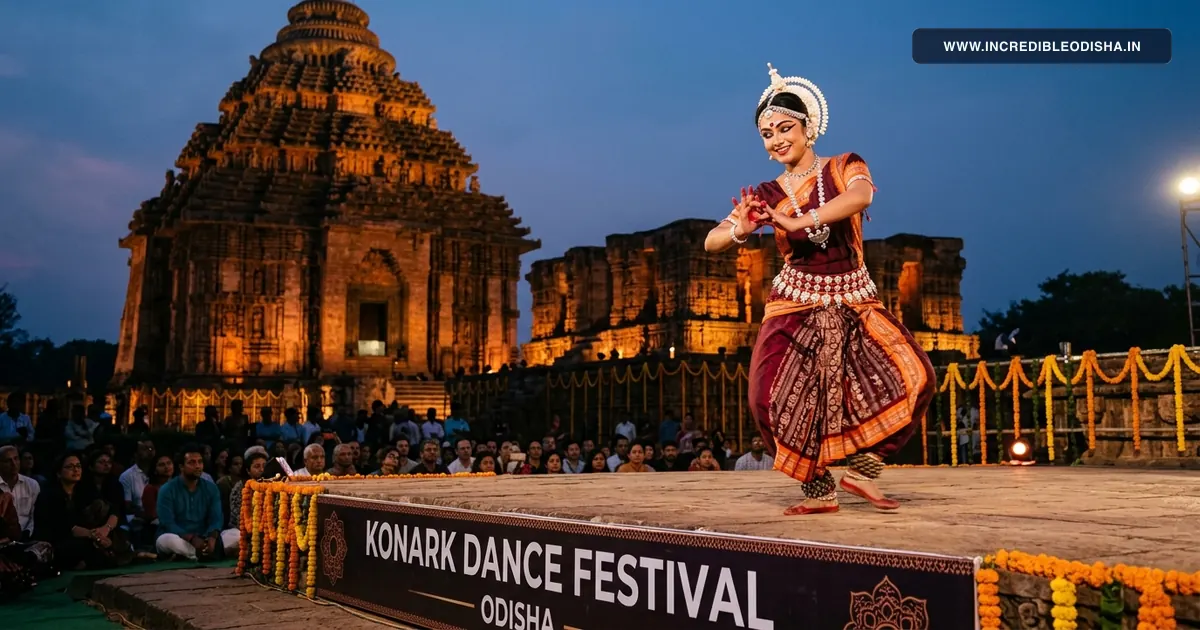
Odissi Dance: Many dancers perform the Shiva Panchakshara Stotram or the Dashavatar (where Shiva’s role is highlighted). The “Tandava” style of Odissi is particularly powerful on this night.
-
Pala & Daskathia: These are traditional ballad-style performances. A group of five performers (in Pala) or two (in Daskathia) narrate stories from the Puranas with a lot of wit, music, and social commentary. In rural temples, these performances go on all night to keep the pilgrims awake.
-
Sand Art: If you are in Puri, you’ll likely see world-famous artists like Sudarsan Pattnaik creating massive, intricate sand sculptures of Lord Shiva on the beach.
The Mahadipa Ritual: The Beacon of Knowledge
You cannot talk about Shivratri in Odisha without mentioning the Mahadipa. In every major temple, a large lamp is lit with great ceremony. A group of specialized priests, often carrying the lamp on their heads or shoulders, climb the steep outer walls of the temple spire (Vimana).
Watching them scale the heights without any safety gear, illuminated only by the light of the lamp, is heart-stopping. The Mahadipa represents the dispelling of the darkness of ignorance. Once the lamp is placed at the very top (the Kalasa), it signals the successful completion of the night’s vigil. Only after the Mahadipa is visible do the devotees perform their final prayers and prepare to break their fast. It is a moment of collective triumph—light over darkness, knowledge over ignorance.
Fasting Food: What to Eat on Maha Shivratri
For those observing the fast, Odisha has some delicious “Sattvic” options. Since regular grains like rice and wheat are avoided, we turn to:
-
Sabudana Khichdi: Tapioca pearls cooked with peanuts, ginger, and curry leaves (no onion or garlic).
-
Sabu Dana Pana: A cooling drink made with soaked sago, milk, banana, grated coconut, and crushed black pepper.
-
Fruit Salad: A mix of seasonal fruits like banana, apple, grapes, and papaya.
-
Makhana: Roasted fox nuts are a popular snack during the long wait.
-
Chenna Gaja (Unfried): Fresh cottage cheese lightly sweetened with jaggery or palm sugar.
-
Boiled Sweet Potato: Often eaten during the day as a source of slow-releasing energy.
Pro-tip: Use Saindhava Lavana (rock salt) instead of regular table salt if you are cooking during the fast. Most Odia households avoid salt altogether during the 24-hour period.
Practical Tips for Travelers Visiting Odisha during Shivratri 2026
-
Plan for Crowds: The major temples like Lingaraj and Kapilash will have lakhs of visitors. If you want a peaceful darshan, try visiting early in the morning on the day of Shivratri.
-
Dress Code: Traditional attire is highly recommended. For men, a dhoti or kurta-pyjama is ideal. For women, a saree or salwar kameez. Many temples have strict rules against western casuals during big festivals.
-
Stay Hydrated: Even if you aren’t fasting, the heat and crowds can be exhausting. Carry water bottles, but remember that some temple interiors might not allow them.
-
Booking Stays: If you are visiting Puri or Bhubaneswar, book your hotels at least 2-3 months in advance. Shivratri 2026 is on a Sunday, so expect a heavy weekend rush.
-
Local Transport: Many roads around temples will be blocked for vehicles. Be prepared to walk 1-2 kilometers to reach the temple entrance.
-
Photography: Be very careful. Most active temples in Odisha (especially Lingaraj) strictly prohibit photography inside the premises. Always look for signs or ask the temple authorities.
Conclusion: The Night that Never Ends
Maha Shivratri in Odisha is not just a date on the calendar; it’s a shared emotional journey. Whether you are climbing the steps of Kapilash, sitting in the cave of Gupteswar, or watching the Mahadipa at Lingaraj, you are part of a tradition that stretches back millennia. It’s a night where the individual soul (Jiva) seeks union with the supreme soul (Shiva).
As the Mahadipa flickers against the dark sky on the night of February 15, 2026, take a moment to look around. You’ll see thousands of faces, all tired but glowing with a strange peace. That is the magic of the Jagara. It reminds us that even in the darkest night, a small lamp of faith is enough to show the way.
For more information on the spiritual landmarks of our state, explore our guide on the 20 must-visit best tourist places in Odisha.
FAQs on Maha Shivratri Festival in Odisha
1. What is the significance of the number 1352 in Kapilash?
The 1,352 steps represent the arduous journey of a seeker toward enlightenment. Many believe that climbing these steps on Shivratri helps in washing away past sins.
2. Can I visit Lokanath Temple during the Pankodhar Neeti?
Yes, the three days leading up to Shivratri (starting from Pankoddhar Ekadashi) are the only times you can see the Shiva Linga without it being submerged in water. It’s a very popular time for devotees to visit.
3. What is the “Mahadipa” made of?
The Mahadipa is a large brass or copper lamp filled with several kilograms of ghee and a thick cotton wick. It is designed to burn for a long time, often visible until the next morning.
4. Is public transport available for Kapilash or Gupteswar?
Yes, OSRTC (Odisha State Road Transport Corporation) usually runs special “Jagara Special” buses from major towns like Dhenkanal, Jeypore, and Bhubaneswar to these temple sites.
5. What are the 4 Prahars of Shivratri?
The four Prahars are four blocks of three hours each during the night. Special pujas are performed in each:
-
6 PM to 9 PM
-
9 PM to 12 AM
-
12 AM to 3 AM
-
3 AM to 6 AM
6. Why are Ketaki flowers offered to Shiva only on Shivratri?
According to mythology, Shiva had banned the Ketaki flower from his worship because it gave false testimony. However, on the night of Shivratri, he grants it a special exemption, allowing it to be used in his puja once a year.
7. What is the best place to witness Shivratri if I want to avoid massive crowds?
Consider visiting smaller but equally ancient temples like Bhringeswar Shiva Temple in Dhauli or the Parsurameswar Temple in Bhubaneswar. They have the same spiritual vibe but with much smaller crowds compared to Lingaraj.
8. How is the Shivratri fast broken?
Most devotees break the fast after seeing the Mahadipa. They first drink the “Pana” (holy drink) or some water, followed by light fruits or the “Abhada” (Mahaprasad) from the temple the next morning.
Sources and Further Reading:
-
Official Odisha Tourism Portal: odishatourism.gov.in
-
Shree Jagannath Temple Administration: shreejagannatha.in
-
Detailed Tithi and Puja Timings: drikpanchang.com
-
History of Maha Shivratri: Wikipedia - Maha Shivaratri