Daringbadi Hill Station: Complete 2026 Kashmir of Odisha Guide
Comprehensive 2026 travel guide to Daringbadi Hill Station (Kashmir of Odisha). Explore pine forests, Mandasaru Gorge, waterfalls & Eco Retreat.
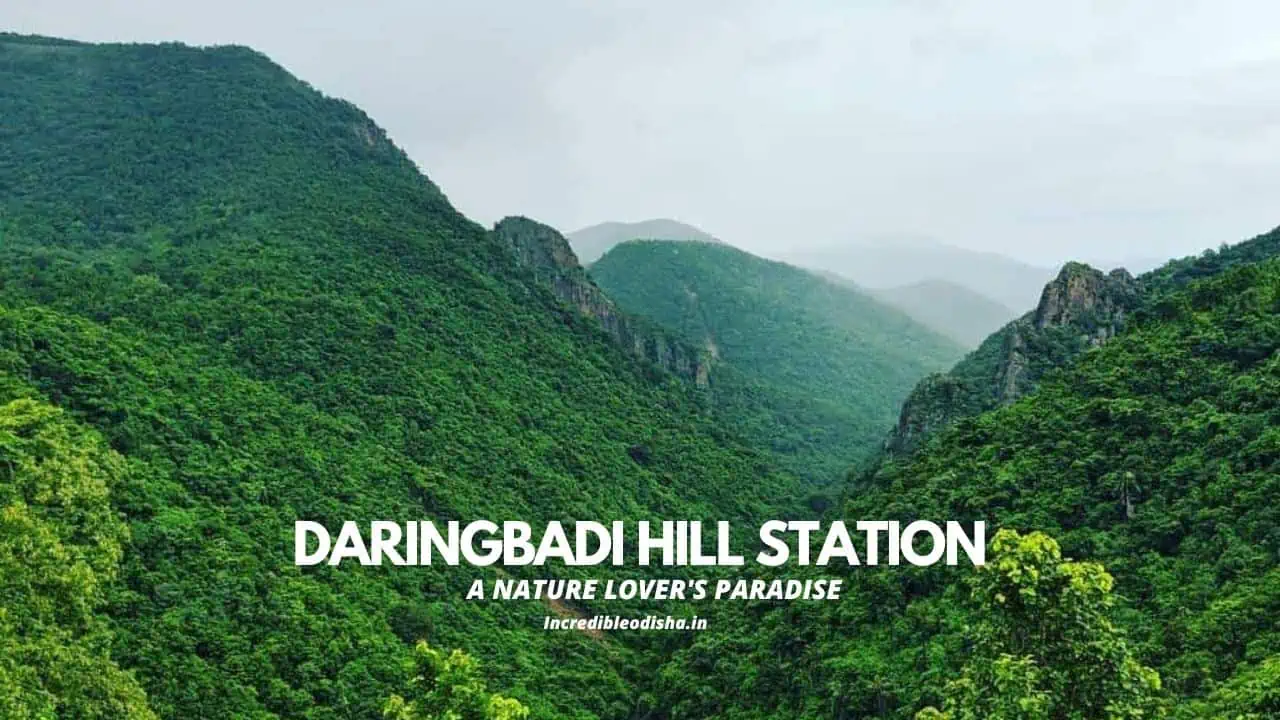
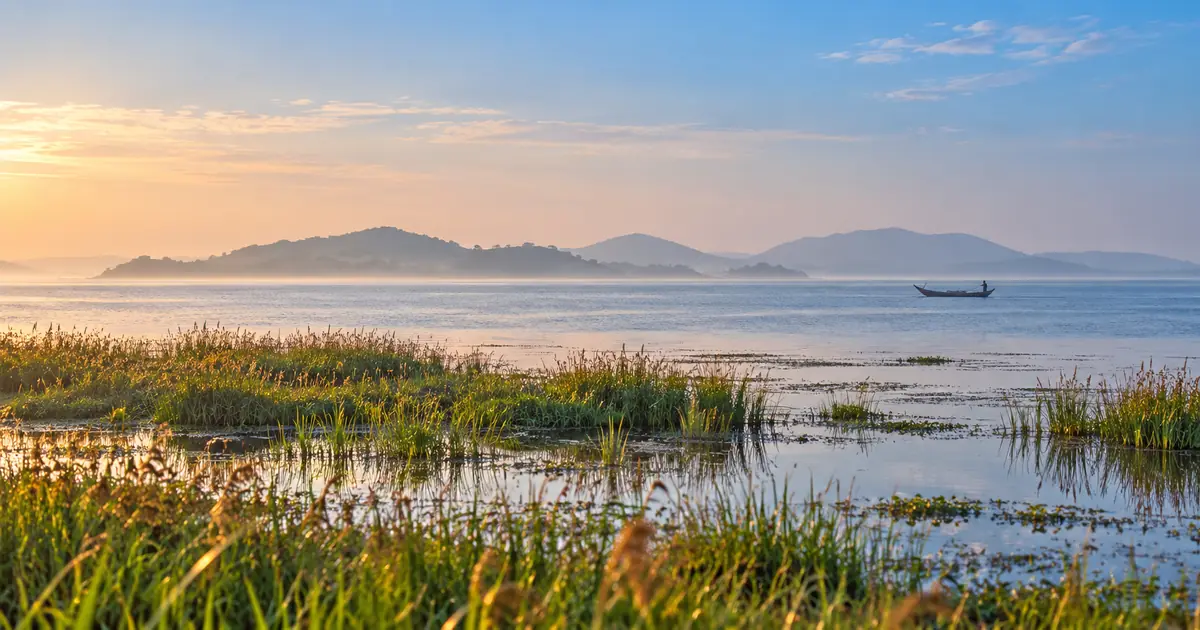
Perched at an elevation of 3,000 feet (915 meters) above sea level amidst the cloud-kissed ridges of the Eastern Ghats in Kandhamal district, Daringbadi is Odisha’s premier high-altitude hill resort. Widely celebrated as the “Kashmir of Odisha,” this highland plateau combines sub-tropical pine forests, multi-tiered organic coffee and black pepper plantations, roaring mountain waterfalls, and deep geological gorges with the ancient tribal traditions of the indigenous Kutia Kondh community.
During peak winter between late December and mid-January, Daringbadi witnesses a unique microclimatic phenomenon known locally as Tusharapata (winter ground frost), where nocturnal temperatures plummet toward 0°C (32°F), encasing valley meadows, coffee leaves, and pine needles in glittering white ice crystals. Combined with the upscale Eco Retreat Daringbadi glamping initiative by the Department of Tourism, Government of Odisha and community-run nature camps managed by EcoTour Odisha, Daringbadi stands as Eastern India’s fastest-growing eco-tourism and adventure getaway.
This comprehensive 2026 guide provides complete logistical intelligence for visiting Daringbadi, detailing its geological origins, weather patterns, master 12-attraction directory, accommodation options, GI-tagged local produce, turnkey itineraries, and scenic Ghat road navigation.
Also explore our master state guide: 20 Best Tourist Places in Odisha
Historical & Geological Origins: The Story Behind “Daringbadi”
The British Colonial Legacy: Daring Sahib
Unlike conventional hill stations developed as military cantonments, Daringbadi owes its contemporary nomenclature to a British administrative officer named Mr. Daring, who served as the colonial revenue collector and forest conservator for the Kandhamal highland tracts in the late 19th century. Struck by the temperate climate, misty valleys, and resemblance to European alpine meadows, Officer Daring established his summer retreat and residential bungalow here. In the local Kui tribal dialect, the suffix Badi translates to “settlement” or “estate,” transforming Daring’s Badi into modern Daringbadi.
The Eastern Ghats Highland Ecology
Geologically, Daringbadi occupies an elevated undulating plateau within the North-Eastern Ghats bio-geographic zone. Underlain by Precambrian granite gneisses and khondalites, the highland acts as a vital ecological watershed, feeding the headwaters of the Rushikulya River and numerous perennial forest streams. Dense stands of Himalayan Chir Pine (Pinus roxburghii), Silver Oak (Grevillea robusta), Sal (Shorea robusta), and wild orchids blanket the hill slopes, creating a self-contained ecological microclimate distinct from the coastal plains of Odisha.
Climatic Breakdown: Seasons & The Winter Frost (Tusharapata)
Daringbadi experiences three distinct travel seasons, with the highland climate remaining significantly cooler than coastal Bhubaneswar and Cuttack throughout the year:
| Season | Calendar Months | Average Temperature Range | Climatic Characteristics & Highlights | Ideal Traveler Type |
|---|---|---|---|---|
| Peak Winter | November – February | 0°C to 22°C (32°F to 72°F) | Crisp alpine cold, dense morning valley fog, sub-zero grass frost (Tusharapata), Eco Retreat glamping | Winter enthusiasts, couples, photographers |
| Pleasant Summer | March – June | 18°C to 33°C (64°F to 91°F) | Moderate sunny days, cool mountain breezes in the evening, blooming wild orchids and flame-of-the-forest | Families seeking summer respite from coastal heat |
| Lush Monsoon | July – October | 16°C to 26°C (61°F to 79°F) | Heavy rainfall (1,500 mm annual average), emerald-green valleys, roaring high-velocity waterfalls, misty mountain drives | Trekkers, nature lovers, offbeat road-trippers |
The Science of “Tusharapata” (Odisha’s Winter Frost)
While Daringbadi does not experience high-altitude snowfall like the northern Himalayas, its specific topographical depression creates intense temperature inversion during clear December and January nights. Heavy cold air drains into the valley basins, causing surface temperatures at ground level to plunge below the freezing point (0°C to -1°C). Atmospheric moisture condenses and freezes instantaneously upon blade tips, pine needles, and vehicle roofs, leaving a brilliant white layer of frost that sparkles in the dawn sunlight.
Master 12-Attraction Visitor Matrix for Daringbadi
| # | Attraction Name | Attraction Category | Distance from Town Center | 2026 Timings | 2026 Entry Fee | Key Highlights & Photo Spots |
|---|---|---|---|---|---|---|
| 1 | Mandasaru Gorge (Silent Valley) | Geological Canyon / Eco-Park | 33 km (Raikia Block) | 7:00 AM – 5:30 PM | ₹20 per person | 15-km gorge, 6 hidden waterfalls, wooden cliffside watchtowers |
| 2 | Hill View Park & Watchtower | Landscaped Garden & Viewpoint | 1 km (Town Edge) | 7:00 AM – 6:30 PM | ₹10 per person | 360-degree panoramic valley views, musical fountain, children play park |
| 3 | Pine Forest Valley (Duluri) | Coniferous Forest Trail | 2 km (Towards Baliguda) | 24 Hours Open | Free Entry | Towering pine canopy, golden dawn light shafts, fragrant needles |
| 4 | Coffee & Pepper Plantations | Agro-Tourism Spice Estate | 1.5 km (Main Road) | 8:00 AM – 5:30 PM | ₹10 per person | Multi-tier farming, red coffee cherries, black pepper vines on silver oaks |
| 5 | Midubanda (Dasingbadi) Waterfall | Forest Waterfall & Pool | 15 km (Dasingbadi Village) | 8:00 AM – 5:00 PM | ₹10 per person | 50-foot cascading drop, stone staircase descent, dense Sal forest |
| 6 | Lover’s Point (Dadubada) | Riverbed & Natural Caves | 19 km (Kirikuti Village) | 7:30 AM – 5:30 PM | ₹10 per person | Duluri river tumbling over massive granite boulders, natural rock shelters |
| 7 | Butterfly Park & Medicinal Garden | Eco-Park & Herbal Conservatory | 2 km (Near Hill View Park) | 8:00 AM – 6:00 PM | ₹15 per person | 50+ butterfly species, 100+ Ayurvedic herbs, giant rock sculptures |
| 8 | Emu Bird Farm | Agro-Wildlife Sanctuary | 14 km (Towards Baliguda) | 8:00 AM – 5:30 PM | ₹10 per person | Flightless Australian Emu breeding center amidst rural orchards |
| 9 | Belghar Wildlife Sanctuary | Wildlife Sanctuary / PVTG Trail | 115 km (Southern Kandhamal) | 6:00 AM – 5:00 PM | Free Entry (Permit) | 2,555-ft plateau, wild elephant corridors, Kutia Kondh tribal culture |
| 10 | Rushimal Hill (Rushikulya Origin) | Geographic River Source / Trek | 48 km (Near Bhismagiri) | Sunrise – Sunset | Free Entry | Sacred natural spring origin of South Odisha’s lifeline Rushikulya River |
| 11 | Ludu Waterfall | Deep Forest Waterfall | 120 km (Subarnagiri Range) | 8:00 AM – 4:00 PM | Free Entry | 100-foot multi-tier jungle waterfall surrounded by elephant habitats |
| 12 | Durgaprasad Ghat Viewpoint | Mountain Ghat Vista | 35 km (Bhanjanagar Border) | 24 Hours Open | Free Entry | Dramatic hairpin bends overlooking Ganjam-Kandhamal valley plains |
Detailed Profiles: The Top Attractions of Daringbadi
1. Mandasaru Gorge: The Silent Valley of Odisha
Located 33 km southeast of Daringbadi in the Raikia Block, Mandasaru Gorge is one of Eastern India’s most dramatic natural geological formations, frequently referred to by geographers as the “Silent Valley of Odisha.”
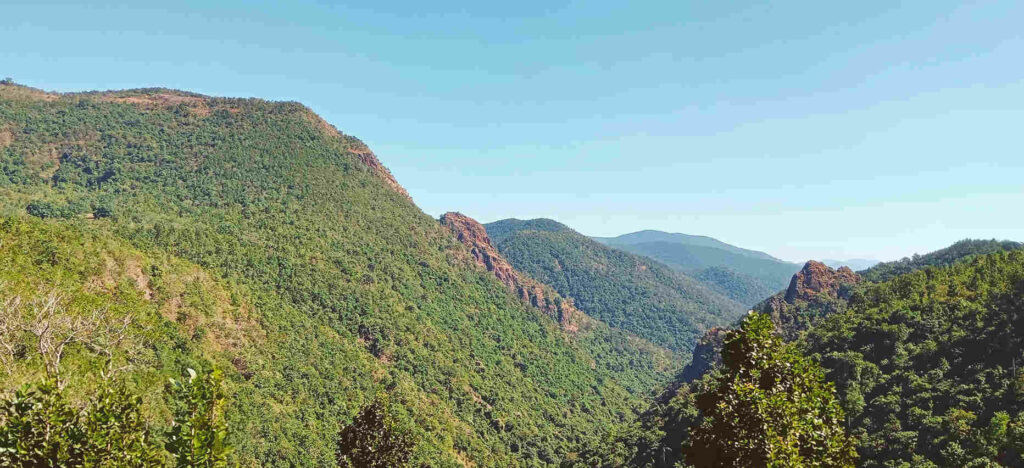
- Geological Grandeur: A colossal 15-kilometer-long natural canyon flanked by sheer precipices and dense sub-tropical rainforests, dropping steeply into a tranquil, mist-shrouded gorge.
- The Six Hidden Waterfalls: The gorge acts as a catchment basin for six perennial mountain cascades, the most prominent being the Pisogrundu Waterfall tumbling down the central rock face.
- The Acoustic Echo Phenomenon: Standing on the cantilevered wooden observation deck maintained by the Forest Department, visitors can experience a remarkable acoustic resonance where calls bounce across the canyon walls with pristine clarity.
- Mandasaru Valley Nature Camp: Managed by EcoTour Odisha, the campsite features cliff-edge wooden cottages perched directly over the gorge abyss, offering unmatched sunrise vistas above floating cloud blankets.
- Visitor Tips: The road from Daringbadi to Mandasaru passes through scenic tribal villages. Allow at least 3 hours to explore the canyon viewpoints and nature trails.
2. Hill View Park & Panoramic Watchtower
Situated just 1 km from the Daringbadi town intersection along the road to Gopalpur, Hill View Park is the primary recreational landmark and sunrise/sunset viewpoint of the hill station.
- Landscaped Terraces: Perched atop a natural knoll, the park features terraced lawns, ornamental flower beds, a musical fountain, and a dedicated children’s play area.
- The 360-Degree Watchtower: A two-story steel-and-stone observation tower provides sweeping 360-degree vistas across the entire Daringbadi valley bowl, the surrounding pine-clad ridges, and the distant Eastern Ghats horizon.
- Photography Window: The ideal photography window occurs between 6:00 AM and 7:30 AM, when early morning mist fills the valley floor like a white sea before burning off in the golden sun.
3. Pine Forest Valley (Duluri Pine Woods)
Stretching along the undulating slopes on the outskirts of Daringbadi toward Baliguda, the Pine Forest Valley represents one of the few places in Peninsular India where coniferous pine trees thrive in dense plantations.
- Alpine Atmosphere: Planted several decades ago by the State Forest Department to prevent soil erosion, the tall, slender Himalayan Chir Pines create a fragrant, shaded canopy with a soft carpet of fallen brown pine needles underfoot.
- Cinematic Light Shafts: At dawn and late afternoon, sunlight filters horizontally through the pine trunks, creating dramatic volumetric light beams (God rays) that make it the premier portrait photography and walking location in Kandhamal.
- Duluri River Trail: A gentle walking trail meanders through the pine woods toward the banks of the murmuring Duluri River, offering tranquil spots for reading and meditation.
4. Soil Conservation Coffee & Black Pepper Plantations
Spanning over 45 hectares of gently sloping terrain near the town center, the Daringbadi Coffee & Pepper Estates showcase the agricultural ingenuity of high-altitude farming in Odisha.
- Multi-Tiered Agroforestry: Managed by the Directorate of Soil Conservation and Watershed Development, the estate practices sustainable multi-tier agriculture. Tall Silver Oak trees provide shade for high-altitude Arabica coffee shrubs, while organic black pepper vines coil around the tree trunks up to 30 feet high.
- Harvesting Season (December to February): During winter, coffee plants are heavily laden with ripe, ruby-red coffee cherries, while clusters of green peppercorns mature on the vines.
- Guided Garden Walks & Tasting: Visitors can walk through the shaded aisles with local guides, learn about wet and dry coffee processing, and purchase freshly roasted and ground Daringbadi Arabica coffee beans and organic whole black peppercorns directly from the state retail counter.
5. Midubanda (Dasingbadi) Waterfall
Tucked inside a dense Sal and bamboo forest near Dasingbadi village, 15 km from Daringbadi, Midubanda Waterfall is the most picturesque cascading water body in the region.
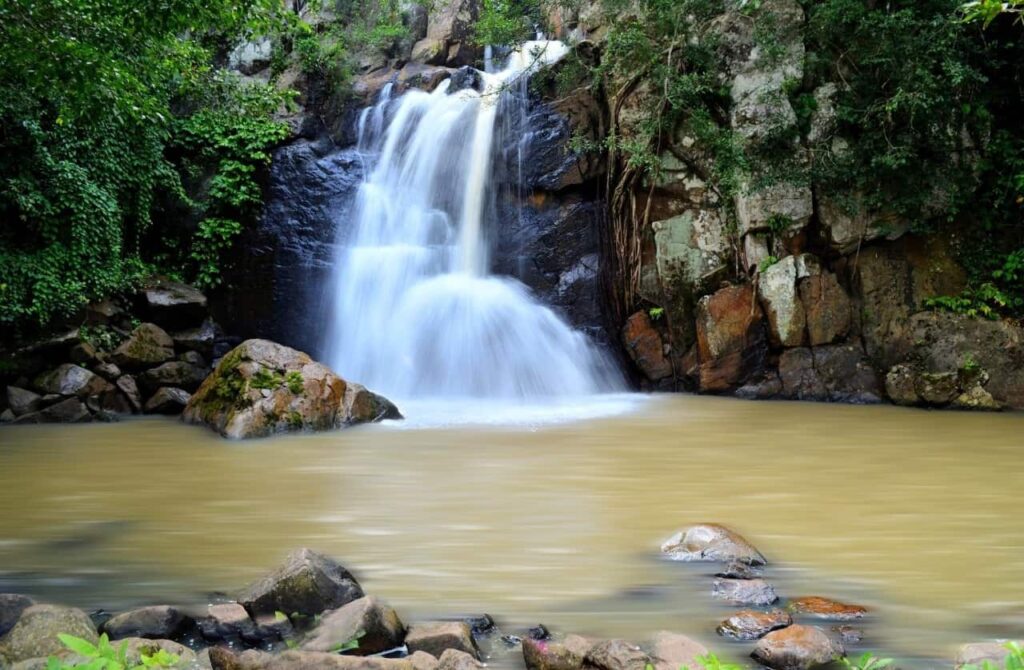
- The 50-Foot Forest Plunge: The forest stream courses over a vertical basalt ledge, dropping 50 feet into a crystal-clear natural splash pool surrounded by moss-covered boulders and towering forest trees.
- The 180-Step Forest Descent: Reached via a well-maintained masonry staircase of approximately 180 steps descending through the cool forest canopy. The rhythmic roar of crashing water echoes through the trees long before the falls come into view.
- Visitor Facilities: The entrance gate features shaded rest pavilions, tea stalls, and designated parking managed by the local Vana Suraksha Samiti (VSS). Swimming is permitted in shallow pool edges, but caution is advised near the slippery plunge base.
Read our complete state waterfalls guide: Full List of Waterfalls in Odisha
6. Lover’s Point & Kirikuti Riverbed (Dadubada)
Located 19 km from Daringbadi near Kirikuti village along the road to Baliguda, Lovers Point Dadubada is a scenic geological riverbed destination framed by lush deciduous forests.
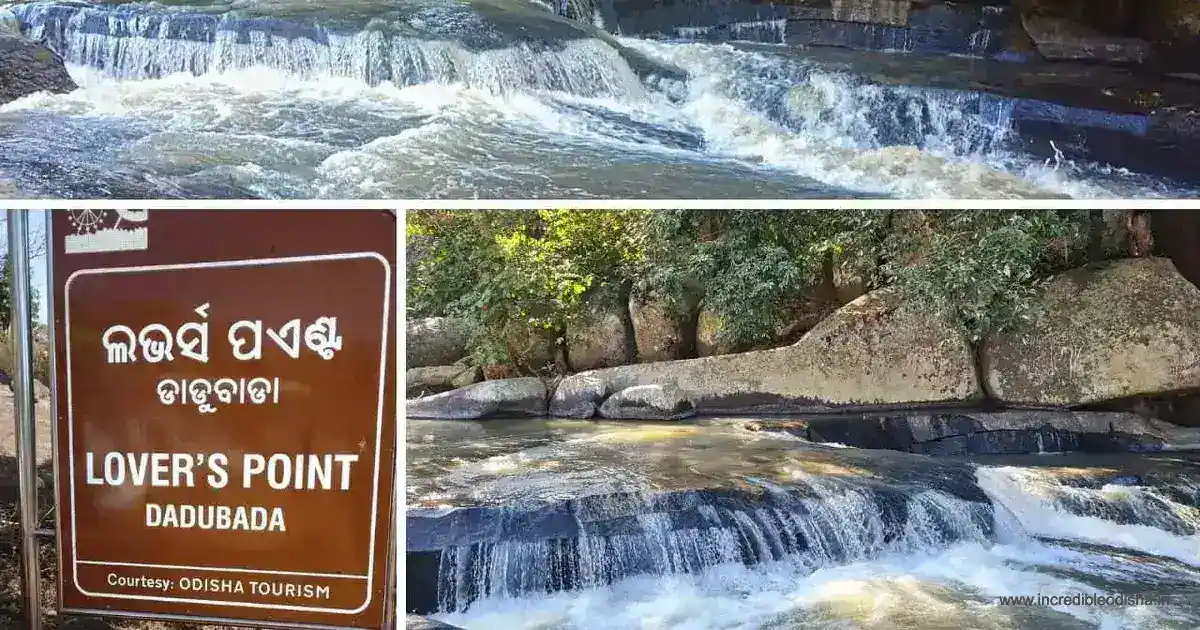
- Granite River Sculpture: The turbulent waters of the Duluri River have carved deep channels, swirling potholes, and smooth crevices across massive granite bedrock over millions of years.
- Natural Rock Caverns: Surrounding rock formations harbor shallow natural caves and shaded stone ledges where travelers can sit and dip their feet into the cool, running water.
- Picnic & Leisure Hub: A favorite afternoon relaxation spot with paved walking paths and riverside gazebos constructed by the District Tourism Council.
7. Butterfly Park & Herbal Medicinal Garden
Established by the State Forest Department just 2 km from the town center, this ecological park blends botanical conservation with interactive tourist spaces.
- 50+ Lepidopteran Species: Landscaped with nectar-rich flowering shrubs and host plants specifically cultivated to attract diverse native butterfly species, including the Common Mormon, Blue Tiger, and Crimson Rose.
- Kandhamal Herbal Conservatory: Features an open-air nursery of over 100 rare medicinal and aromatic plants traditionally utilized by the tribal healers (Kavirajas) of Kandhamal for therapeutic remedies.
- Rock Art Installations: The park is decorated with colossal stone sculptures of butterflies, deer, and tribal motifs, providing attractive backdrops for family photography.
8. Emu Bird Farm & Agro-Tourism Center
Situated 14 km from Daringbadi town along the road to Baliguda, the Emu Bird Breeding Farm is an offbeat agro-tourism destination nestled amidst rolling orchard country.
- Flightless Giant Birds: Home to several breeding flocks of Australian Emus (Dromaius novaehollandiae), the second-largest living bird species in the world, thriving in the cool, elevated climate of Kandhamal.
- Agro-Farming Insights: Visitors can observe the birds up close, learn about commercial emu rearing, and explore surrounding plantations of guava, jackfruit, and seasonal highland crops.
- Visitor Tips: Open daily from 8:00 AM to 5:30 PM (nominal entry fee of ₹10). Ideal for families with young children.
9. Belghar Wildlife Sanctuary & Kutia Kondh Tribal Heartland
Located 115 km southwest of Daringbadi at an altitude of 2,555 feet, the Belghar Wildlife Sanctuary is the ultimate wilderness and anthropological frontier of Central Odisha.
- Dense Sal & Bamboo Wilderness: Spanning a pristine plateau of over 16,000 hectares, Belghar is a critical biological corridor for herds of wild Asian elephants, leopards, sambar deer, barking deer, and giant squirrels.
- The Kutia Kondh PVTG Tribe: Belghar is the ancestral homeland of the Kutia Kondh, one of India’s 75 Particularly Vulnerable Tribal Groups (PVTGs). Revered for their profound ecological wisdom, distinctive facial tattoos (Khadaba), earthen round huts with thatch roofs, and ancient buffalo-worship rituals (Meriah / Kedu).
- The Wooden Rest House: Belghar features a historic British-era wooden inspection bungalow constructed entirely of interlocking wooden beams without iron nails, surrounded by misty hill peaks.
10. Rushimal Hill: The Sacred Origin of the Rushikulya River
Located approximately 48 km from Daringbadi near Bhismagiri, Rushimal Hill is the geographical and spiritual birthplace of South Odisha’s primary river system, the Rushikulya River.
- The Sacred Spring Origin: A perennial natural crystal spring bubbles up from a mossy stone fissure beneath ancient banyan and Sal trees atop Rushimal Hill. According to local folklore, the river was created by Sage Vasishtha’s penance.
- Scenic Highland Trek: Reaching the spring involves a scenic 3-km forest trek through indigenous tribal settlements, offering panoramic vistas of the Ganjam-Kandhamal border hills.
- Downstream Ecological Lifeline: From this tranquil mountain spring, the Rushikulya journeys 175 km southeast to meet the Bay of Bengal at Gokharkuda, creating the world-renowned mass nesting sanctuary for millions of endangered Olive Ridley sea turtles.
11. Ludu Waterfall (Subarnagiri Wildlife Range)
Hidden inside the dense, trackless jungles of the Kotagarh Wildlife Sanctuary, 120 km from Daringbadi, Ludu Waterfall is one of the most magnificent yet secluded waterfalls in Central Odisha.
- The 100-Foot Multi-Tier Jungle Drop: The Ludu stream plunges over a sheer 100-foot multi-tiered granite cliff into a deep, jade-green plunge pool enveloped by towering Sal forests and giant wild creepers.
- Elephant Habitat Precautions: Because the surrounding jungle is an active migratory corridor for wild elephant herds, visits should strictly be undertaken during daylight hours with an experienced local guide from the Forest Department.
- Best Season: Post-monsoon months from October through January, when water volume is at its peak and forest access trails are dry and navigable.
12. Durgaprasad Ghat Viewpoint & Sorada Reservoir
Positioned along the state highway connecting Daringbadi to Bhanjanagar (35 km from town), the Durgaprasad Ghat marks the dramatic transition from the Ganjam coastal plains to the Kandhamal highlands.
- Engineering Mountain Curves: The highway negotiates a series of steep, sweeping hairpin curves flanked by sheer rock cliffs on one side and endless valley drop-offs on the other.
- The Panoramic Valley Vista: A dedicated roadside viewing gallery provides sweeping vistas overlooking the vast agricultural plains of Ganjam district and the shimmering waters of the distant Sorada Reservoir (Sorada Dam).
- Sunset Photography Stop: The westward-facing curves catch the golden rays of the setting sun, making it the premier sunset pause point for road-trippers arriving from Berhampur.
Accommodation Guide: Eco Retreat, Nature Camps & Resorts
Daringbadi offers diverse lodging options ranging from ultra-luxury seasonal glamping to government eco-nature camps and private budget hotels:
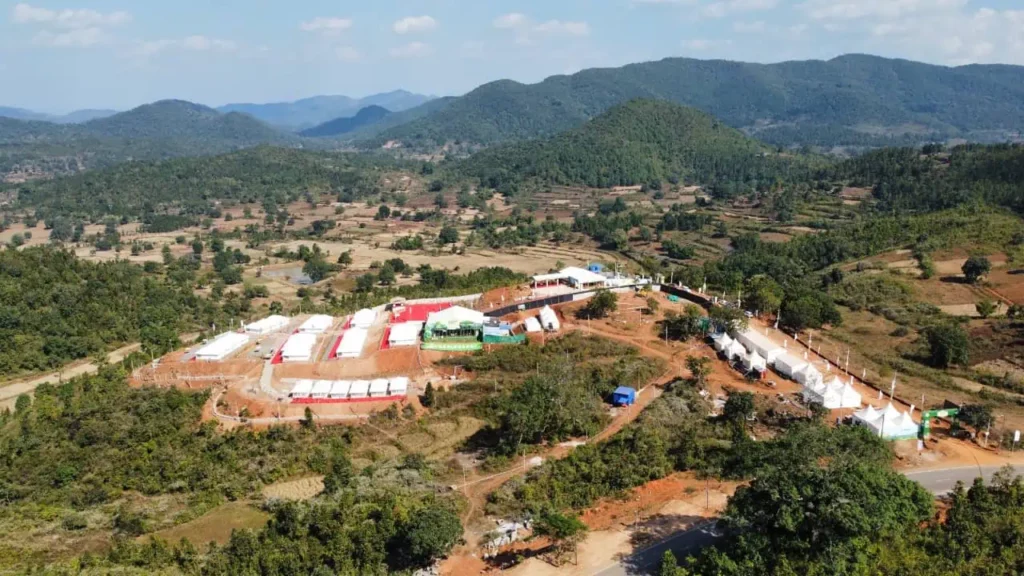
1. Eco Retreat Daringbadi (Odisha Tourism Luxury Glamping)
- Operational Season: Annually from November to February.
- Accommodation Style: 25+ air-conditioned, weather-proof, ultra-luxury Swiss cotton tents equipped with plush bedding, en-suite modern bathrooms, private verandas, and heated blankets.
- Amenities & Activities: Multi-cuisine fine dining restaurant serving authentic Odia delicacies and continental fare, evening cultural Odissi and Sambalpuri folk performances around bonfires, guided cycling tours, rifle shooting, archery, and stargazing sessions.
- Booking Portal: Reservations open annually in September on the official Odisha Tourism Eco Retreat Portal.
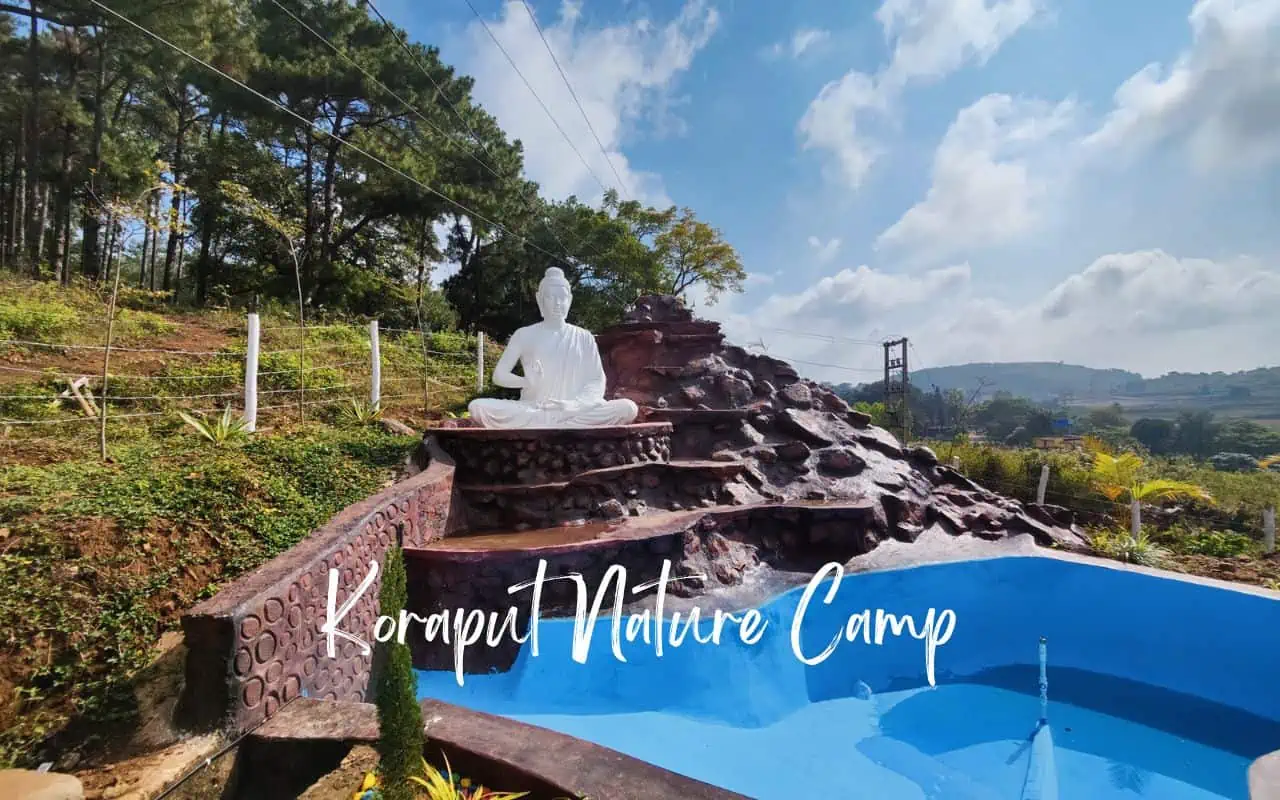
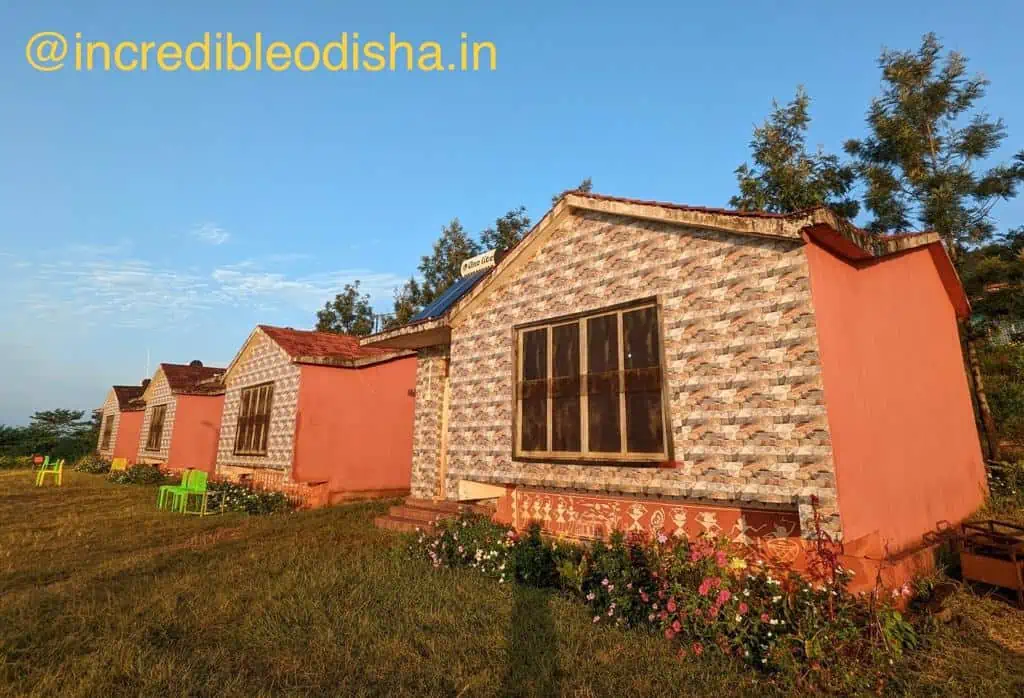
2. Daringbadi Nature Camp (EcoTour Odisha)
- Location: Perched atop a pine-covered knoll on the outskirts of Daringbadi town.
- Accommodation Style: 10 well-appointed ethnic cottages with stone walls, wooden paneling, and panoramic hill balconies.
- Management: 100% managed by the local community and Vana Suraksha Samiti (VSS), providing authentic home-cooked Odia meals (Pakhala, Desi Chicken Curry, Dalma, and Kheer).
- Booking Portal: Online reservations via EcoTour Odisha Official Website.
3. Mandasaru Valley Nature Camp (EcoTour Odisha)
- Location: Raikia Block, 33 km from Daringbadi, overlooking the Mandasaru Gorge.
- Accommodation Style: 6 elevated wooden chalets built on stilts along the edge of the canyon cliff, featuring glass-fronted bedrooms with direct canyon sunrise views.
- Vibe: Ideal for birdwatchers, writers, and couples seeking complete seclusion amidst pristine wilderness.
4. OTDC Panthanivas & Private Hotels
- OTDC Panthanivas Daringbadi: Government-operated tourism lodge offering dependable AC and Non-AC rooms with in-house restaurant facilities.
- Private Resorts: Trusted private properties include Deers Eco Home Resort, Nature Valley Resort, Parijat Resort, and Hotel Mid City located along the main town road.
Read our complete eco-camps guide: Eco Tourism in Odisha & Best Nature Camps
Local Produce & Souvenirs: Kandhamal Organic Treasures
A visit to Daringbadi is incomplete without exploring the indigenous organic agricultural produce cultivated by local tribal farmers in the pesticide-free soils of the Kandhamal hills:
| Local Specialty Product | GI Certification / Origin | Key Characteristics & Flavor Profile | Where to Purchase in Daringbadi |
|---|---|---|---|
| Kandhamal Haldi (Turmeric) | GI Tagged (2019) | High curcumin content (4.5–5.5%), deep golden-yellow hue, intense therapeutic aroma | ORMAS Gramshree Mela counters, ITDA retail outlet |
| Daringbadi Arabica Coffee | Shade-Grown Plantation | 100% Arabica, mild acidity, rich chocolate-caramel undertones, slow-grown at 3,000 ft | Soil Conservation Department outlet near Coffee Garden |
| Kandhamal Black Pepper | Organic Agroforestry | Bold, pungent peppercorns sun-dried on bamboo mats with high piperine content | Tribal cooperative stores and local weekly Haats |
| Wild Forest Honey (Mahu) | Belghar Jungle Foraged | Raw, unpasteurized honey gathered from wild rock bee colonies in Sal forests | TDCC (Tribal Development Cooperative Corporation) shop |
| Kandhamal Mustard & Mustard Oil | Cold-Pressed Traditional | Pungent, golden mustard seeds ground in traditional wooden presses (Ghani) | Local Daringbadi market square |
| Handwoven Dokra & Bamboo Crafts | Kutia Kondh Artisans | Lost-wax cast brass figurines of elephants and deities, woven bamboo baskets | Tribal craft emporiums and Raikia craft centers |
Kandhamal Culinary Trail: Highland Flavors & Street Food
Dining in Daringbadi is an authentic immersion into the distinct flavors of the Eastern Ghats, where meals are prepared using organically grown spices, cold-pressed mustard oil, and pesticide-free forest produce:
| Local Specialty Dish | Key Ingredients & Preparation Method | Where to Experience |
|---|---|---|
| Kandhamal Desi Kukkuda Tarkari | Free-range country chicken slow-cooked with freshly crushed black pepper, local garlic, and pungent GI-tagged Kandhamal turmeric | Daringbadi Nature Camp dining hall, local highway dhabas |
| Mandia Jau (Finger Millet Gruel) | Fermented finger millet flour cooked with water, cooled, and mixed with sour curd and green chilies for natural cooling | Morning street stalls near Daringbadi bus stand |
| Karadi & Hendua (Bamboo Shoot Curry) | Tender fresh bamboo shoots (Karadi) or sun-dried fermented bamboo shoot cakes (Hendua) cooked with mustard paste | Traditional tribal homestays and seasonal food festivals |
| Charu Pani (Highland Rasam) | A light, tangy digestive soup prepared from tamarind pulp, roasted cumin, curry leaves, and fresh turmeric | Eco Retreat dining marquee, OTDC Panthanivas |
| Mati Handi Mutton | Tender mutton slow-simmered in sealed earthen pots (Mati Handi) over wood embers with whole black peppercorns | Selected highway restaurants on the Raikia-Daringbadi road |
| Freshly Brewed Daringbadi Coffee | 100% locally grown, medium-roasted Arabica coffee beans brewed fresh with hot milk and raw cane jaggery | Soil Conservation Coffee Garden kiosk, Hill View Park cafe |
Birdwatching & Highland Wildlife Photography Guide
Thanks to its elevated canopy of pines, silver oaks, and deciduous Sal forests, Daringbadi is one of Eastern India’s most rewarding birdwatching destinations:
Key Avian Hotspots
- Mandasaru Valley Bio-Reserve: Dense canopy harboring canopy-dwelling species like the Asian Fairy Bluebird, Scarlet Minivet, and Chestnut-bellied Nuthatch.
- Pine Forest Valley & Duluri Riverbed: Open woodland terrain ideal for spotting the Malabar Pied Hornbill, Emerald Dove, Black-hooded Oriole, and Tickell’s Blue Flycatcher.
- Belghar Forest Range: Old-growth forests hosting apex raptors such as the Crested Serpent Eagle, Changeable Hawk-Eagle, and Brown Fish Owl.
Photography Field Tips
- Optimal Lighting: The best window for landscape and bird photography is 6:00 AM to 8:30 AM, when morning mist creates soft atmospheric diffusion and birds actively forage in the warming sunlight.
- Recommended Gear: A 300mm to 600mm telephoto lens for avian wildlife; a wide-angle 16–35mm lens with a circular polarizer for the sweeping canyons of Mandasaru Gorge and volumetric light beams in the Pine Forest.
Practical Travel Essentials & Highland Advisory
1. Winter Thermal Clothing Checklist
- Night and early morning temperatures regularly drop to 0°C to 5°C between late December and mid-January.
- Pack high-quality thermal innerwear, woolen fleece jackets, windbreakers, woolen caps (beanies), gloves, and thick socks.
- In summer (March to June), light cotton clothing is comfortable during the day, with a light cardigan or shawl recommended for evenings.
2. Vehicle & Mountain Road Safety
- Ensure your vehicle’s brakes, tire treads, and coolant levels are inspected before tackling the steep hairpin bends of Kalinga Ghat or Durgaprasad Ghat.
- Maintain lower gears (2nd or 3rd gear) on descents to utilize engine braking rather than riding the foot brakes.
- Sound horns gently on blind hairpin turns and observe the 30–40 km/h speed limit.
3. Fuel & ATM Availability
- Daringbadi town has two functioning automated fuel stations (petrol/diesel).
- State Bank of India (SBI) and Axis Bank ATMs operate in the town square; however, carrying ₹3,000 to ₹5,000 in cash is strongly recommended as rural stalls and waterfall parking counters prefer cash due to occasional mobile network fluctuations.
- Mobile network connectivity: Jio and Airtel 4G/5G provide robust coverage across Daringbadi town, Hill View Park, and Coffee Gardens, with intermittent signals in deep gorges like Mandasaru.
Transit & Ghat Road Navigation: How to Reach Daringbadi
Daringbadi is located in the southern interior highland of Odisha, well-connected via smooth state highways and dramatic mountain ghat roads:
| Primary Driving Route | Highway Corridors Traversed | Total Distance & Travel Duration | Major Ghat Highway Highlight |
|---|---|---|---|
| Route 1 (via Nayagarh & Phulbani) | NH-16 ➔ NH-57 ➔ NH-59 | 250 km (approx. 6.5 hrs) | Traverses the serpentine Kalinga Ghat (12-km hairpin curves through Sal forests) |
| Route 2 (via Berhampur & Sorada) | NH-16 ➔ SH-33 ➔ SH-5 | 245 km (approx. 6.0 hrs) | Ascends the dramatic Durgaprasad Ghat with panoramic views of the Rushikulya valley |
Route 1: Via Nayagarh, Phulbani & Kalinga Ghat (250 km / 6.5 Hours)
- Driving Route: Bhubaneswar ➔ Khordha ➔ Nayagarh ➔ Dasapalla ➔ Baunsuni ➔ Phulbani ➔ G. Udayagiri ➔ Raikia ➔ Daringbadi.
- Ghat Highlight: Traverses the famous Kalinga Ghat—a 12-km serpentine mountain road featuring panoramic hairpin curves through Sal and teak forests.
- Road Condition: Excellent double-lane asphalt highway throughout.
Route 2: Via Berhampur, Aska & Durgaprasad Ghat (245 km / 6.0 Hours)
- Driving Route: Bhubaneswar ➔ Chilika Lake (Barkul) ➔ Berhampur ➔ Aska (Sugar Town) ➔ Sorada Reservoir ➔ Durgaprasad Ghat ➔ Daringbadi.
- Ghat Highlight: Climbs the scenic Durgaprasad Ghat, offering dramatic vistas of the Rushikulya river plains below.
- Road Condition: Smooth 4-lane NH-16 up to Berhampur, followed by a well-paved state highway.
Nearest Railway Stations & Airport Connectivity
- Nearest Airport: Biju Patnaik International Airport, Bhubaneswar (BBI) — 245 km away (6 hours by taxi).
- Nearest Major Railway Station: Berhampur Railway Station (BAM) — 120 km away (3.5 hours by taxi or OSRTC bus).
- Public Bus Services: OSRTC operates daily direct deluxe buses from Bhubaneswar Baramunda ISBT and Berhampur New Bus Stand directly to Daringbadi.
3 Turnkey Itineraries for Daringbadi
Itinerary 1: The 2-Day Weekend Nature & Coffee Escape
- Day 1: Early morning drive from Bhubaneswar/Berhampur via Durgaprasad Ghat ➔ Check-in at Daringbadi Nature Camp or Eco Retreat ➔ Afternoon walk through the Coffee and Black Pepper Plantations ➔ Sunset and 360-degree views from Hill View Park Watchtower ➔ Evening tribal bonfire dinner.
- Day 2: 6:00 AM visit to Pine Forest Valley to photograph winter morning frost (Tusharapata) and mist light shafts ➔ Breakfast ➔ Mid-morning exploration of Midubanda Waterfall ➔ Relax at Lover’s Point (Dadubada) ➔ Shopping for GI-tagged Kandhamal Haldi and coffee ➔ Afternoon return journey.
Itinerary 2: The 3-Day Comprehensive Eco, Waterfall & Canyon Circuit
- Day 1: Arrival in Daringbadi by noon ➔ Lunch featuring traditional Odia cuisine ➔ Explore the Butterfly Park & Medicinal Herbal Garden ➔ Evening sunset at Hill View Park ➔ Stargazing under clear mountain skies.
- Day 2: Full-day excursion to Mandasaru Gorge (Silent Valley) ➔ Marvel at the 15-km canyon and Pisogrundu Waterfall ➔ Echo point observation deck ➔ Afternoon picnic at Lover’s Point and Kirikuti village ➔ Evening coffee tasting session.
- Day 3: Dawn photography in the Pine Forest ➔ Descend the 180 stone steps to Midubanda Waterfall ➔ Visit the Emu Bird Farm ➔ Check-out and return drive via Kalinga Ghat.
Itinerary 3: The 4-Day Extended Kandhamal & Belghar Tribal Expedition
- Day 1: Drive to Daringbadi ➔ Coffee estate tour ➔ Sunset at Hill View Park ➔ Stay at Daringbadi Nature Camp.
- Day 2: Full-day canyon exploration at Mandasaru Gorge ➔ Trekking along gorge trails ➔ Stay overnight at Mandasaru Valley Nature Camp cliffside wooden cottages.
- Day 3: Drive to the remote Belghar Wildlife Sanctuary (115 km) ➔ Visit the British wooden bungalow ➔ Respectful cultural interaction with the Kutia Kondh indigenous community ➔ Evening return to Daringbadi.
- Day 4: Morning visit to Midubanda Waterfall and Pine Forest ➔ Shop for Dokra brass art and organic spices ➔ Return transit to Bhubaneswar.
Frequently Asked Questions (2026 Edition)
1. Does it snow in Daringbadi?
Daringbadi does not experience actual snowfall. Instead, during peak winter (late December to mid-January), night temperatures drop near 0°C, causing thick condensation on grass, leaves, and vehicles to freeze into a white blanket of frost (Tusharapata), resembling a light snowfall.
2. What is the best month to visit Daringbadi?
The best time to visit is between November and February for cool weather, winter frost, and the luxury Odisha Tourism Eco Retreat. For lush green landscapes and full waterfalls, September and October (post-monsoon) are ideal.
3. How far is Daringbadi from Bhubaneswar and Berhampur?
- From Bhubaneswar: Approximately 245 to 250 km (6 to 6.5 hours by road).
- From Berhampur: Approximately 120 km (3.5 hours by road).
4. What is the entry fee and timing for Mandasaru Gorge?
Mandasaru Gorge eco-park is open from 7:00 AM to 5:30 PM daily. The entry fee is ₹20 per person, with designated parking available for ₹30 per vehicle.
5. Why is Daringbadi called the “Kashmir of Odisha”?
It earned this moniker due to its high altitude (3,000 feet), dense pine tree valleys, chilly winter microclimate with sub-zero frost, rolling hills, and cool summer temperatures that contrast sharply with coastal Odisha.
6. Where can I book Eco Retreat Daringbadi?
Eco Retreat Daringbadi can be booked directly through the official Odisha Tourism Eco Retreat Portal. Stays operate seasonally from November through February.
7. What unique souvenirs should I buy in Daringbadi?
The top souvenirs are GI-tagged Kandhamal Organic Haldi (Turmeric), Daringbadi Arabica Coffee, whole black peppercorns, wild forest honey, and Kutia Kondh bamboo and Dokra brass handicrafts.
8. Are the Ghat roads to Daringbadi safe for self-driving?
Yes. Both the Kalinga Ghat (via Phulbani) and Durgaprasad Ghat (via Berhampur/Sorada) are well-paved, wide double-lane highways with safety guardrails and convex mirrors on sharp hairpin turns. Drive at moderate speeds (30–40 km/h) on curves.
9. Which indigenous tribe resides in the Daringbadi-Belghar region?
The Kutia Kondh tribe, recognized as a Particularly Vulnerable Tribal Group (PVTG), inhabits the highland forests of Daringbadi, Kotagarh, and Belghar.
10. Can Daringbadi be covered in a 2-day weekend trip?
Yes. A 2-day/1-night itinerary is sufficient to cover the Pine Forest, Coffee Plantations, Hill View Park, Midubanda Waterfall, and Lover’s Point. An extra day is recommended if visiting Mandasaru Gorge.