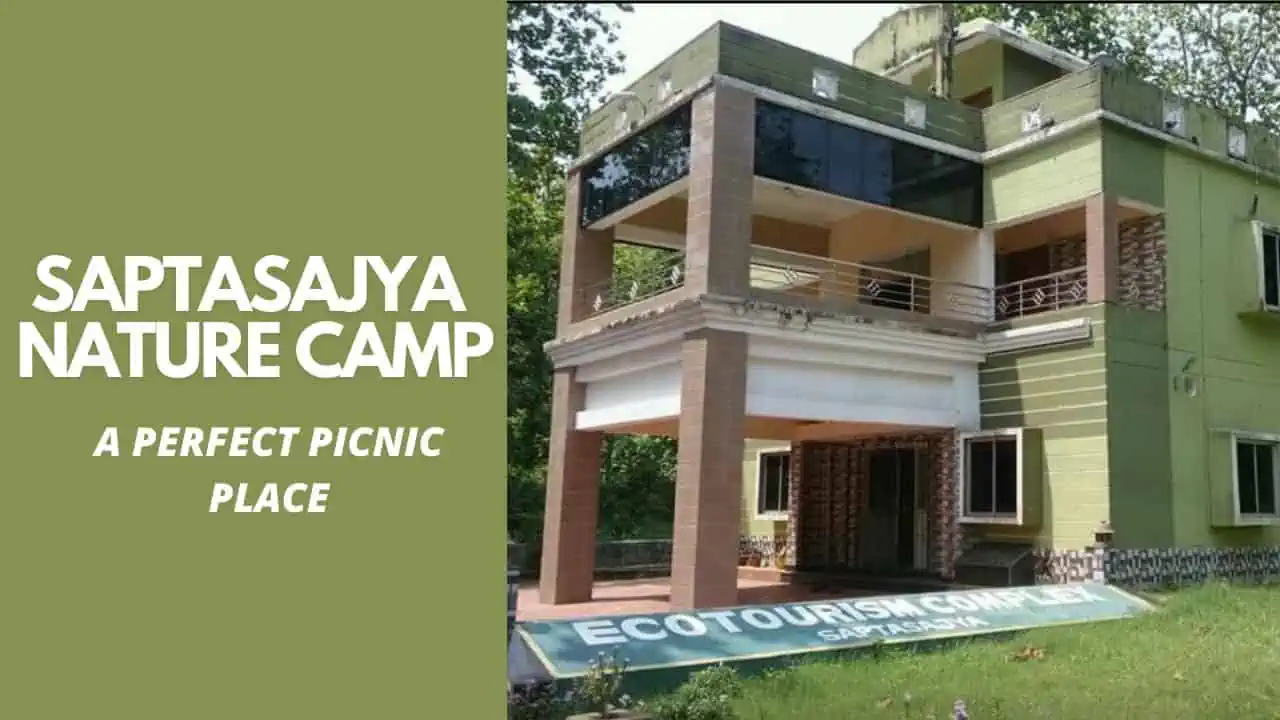
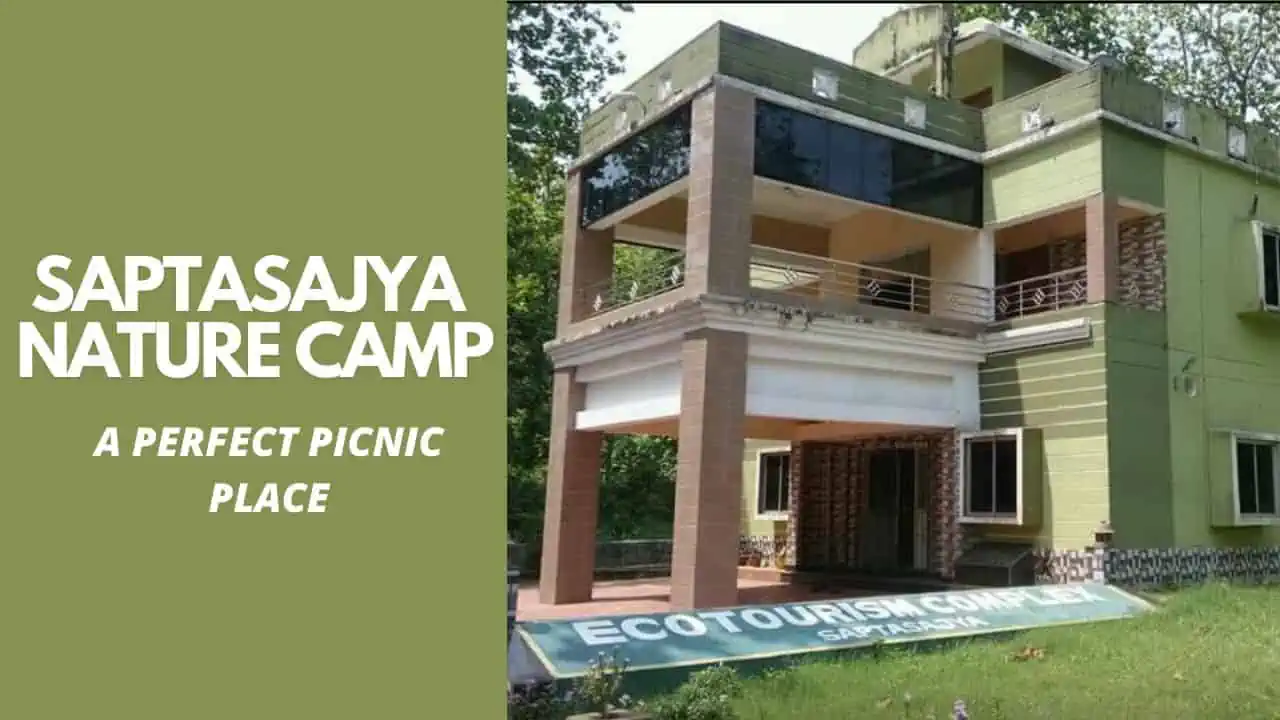
Featured image for Saptasajya Nature Camp: Travel Guide
Adventure · · 21 min read

Saptasajya Nature Camp: Travel Guide

Plan a Saptasajya Nature Camp trip with booking tips, trekking trails, Ramayana links, and travel details for Dhenkanal.

Nature CampsOdisha TourismDhenkanalSaptasajya

The first time I stepped into the Saptasajya Reserve Forest, I didn’t just see a forest; I felt a presence. There’s a specific kind of silence you only find in the hills of Dhenkanal—a silence that isn’t empty, but filled with the rustle of Sal leaves and the distant, rhythmic tolling of temple bells. As the morning mist clings to the seven peaks that give this place its name, you realize why the ancient sages chose these “seven beds” for their meditation.

Saptasajya Nature Camp isn’t your typical weekend getaway. It’s a place where the air smells of crushed herbs and damp earth, and where the sunrise feels like a private show staged just for you. Many visitors come here to trace the footsteps of Lord Rama, while others simply want to escape the frantic pace of life in Bhubaneswar. Either way, these hills have a way of grounding you.

Below, I’ve detailed everything you need to plan your 2026 trip to Saptasajya—from the legends that haunt these woods to the practicalities of booking your stay at the eco-retreat. By the time you reach the top of the Raghunath Temple steps, you’ll understand why this corner of Odisha is considered sacred.

Saptasajya Nature Camp entrance surrounded by lush green forests

Consider reading: 20 Must-Visit Best Tourist Places in Odisha

The Sacred Legend of Saptasajya: Seven Sages and an Epic Exile

What makes Saptasajya truly special isn’t just its verdant canopy or the cool mountain breeze; it’s the weight of the stories that have lived here for millennia. The name itself, “Saptasajya,” translates to “Seven Beds” or “Seven Homes,” referring to the seven hills that cradle this valley. But ask any local elder, and they’ll tell you a deeper story.

The Home of the Saptarishis (Seven Sages)

Legend has it that this serene landscape was once the chosen abode of the Saptarishis—the seven great celestial sages of Hindu mythology. Sages like Atri, Vashistha, and Kashyapa are said to have established their ashrams here, drawn by the absolute stillness and the spiritual energy of the hills. Walking through the forest today, it’s not hard to imagine them in deep meditation under the ancient Banyan trees.

There’s a local belief that the very rocks and streams here still carry the vibrations of their Vedic chants. When I visited, an old priest at the temple told me, “You don’t come to Saptasajya; the sages invite you.” It’s that kind of place—mystical, timeless, and deeply rooted in the spiritual soil of Odisha.

The Ramayana Connection: Lord Rama’s Seven Days of Peace

For many devotees, the primary draw of Saptasajya is its intimate connection to the Ramayana. It is widely believed that during their fourteen-year exile (Vanvasa), Lord Rama, Mata Sita, and Lakshmana spent seven days in these very hills.

Imagine the scene: three royal exiles, wandering the dense forests of eastern India, finding a temporary sanctuary in this hidden valley. Local folklore suggests that the “Seven Beds” might also refer to the resting places they used during their stay. This historical weight is why the Raghunath Temple was later built on the hilltop, serving as a permanent tribute to their presence.

But the epics don’t stop there. Some legends even link Saptasajya to the Mahabharata, suggesting that the Pandava brothers spent a portion of their “Agyanta Basa” (incognito exile) hiding within these deep ravines and caves. Whether you’re a believer or a history buff, standing in a place that links two of the world’s greatest epics is a humbling experience.

Saptasajya Nature Camp Location: A Green Oasis in Dhenkanal

Saptasajya Nature Camp is located in the Saptasajya Reserve Forest in the Dhenkanal district of Odisha, India. The camp is situated at an elevation of approximately 900 meters above sea level and spreads across an area of nearly 6.62 square kilometers.

But these numbers don’t do justice to the sheer biodiversity of the place. The Saptasajya Reserve Forest is a “dry deciduous” forest, meaning it transforms dramatically with the seasons. In the summer, the Sal trees stand tall and golden; in the monsoon, the whole valley turns into a vivid, pulsating green.

Flora: The Ancient Greenery of Saptasajya

If you’re into plants, Saptasajya is like a giant, open-air library. The forest is dominated by the majestic Sal (Shorea robusta), but look closer and you’ll find over 500 species of plants. What really surprised me was the abundance of wild orchids—there are over 30 species here! During the right season, you can see them clinging to the bark of ancient trees, adding splashes of exotic color to the green canopy.

The area is also famous for its medicinal plants. For centuries, local tribal communities have used the herbs found here for healing. There’s even a dedicated medicinal garden within the reserve where you can learn about traditional Odia herbal medicine. The scent of the forest here is unique—a mix of camphor, wild jasmine, and the earthy aroma of decomposing leaves.

Fauna: From Peacocks to Leopards

The wildlife at Saptasajya is as diverse as its plants. While it’s not a “safari” park, the forest is teeming with life. Peacocks are the unofficial mascots of the hills; you’ll often hear their haunting calls echoing through the valleys at dawn and dusk.

For birdwatchers, this place is a paradise. I managed to spot a Grey Hornbill and a Crested Serpent Eagle during my last morning walk. With over 120 species of birds, including the elusive Indian Pitta, you’ll want to keep your binoculars handy.

As for larger animals, the forest is a known corridor for elephants moving through the Dhenkanal-Angul belt. While sightings are rare near the camp, the local guards often talk about the leopards that roam the higher ridges. You might also spot wild boars, barking deer (Kutura), and giant squirrels leaping through the branches. It’s a reminder that when you’re at Saptasajya, you’re a guest in their home.

The Saptasajya Raghunath Temple: A Spiritual Ascent

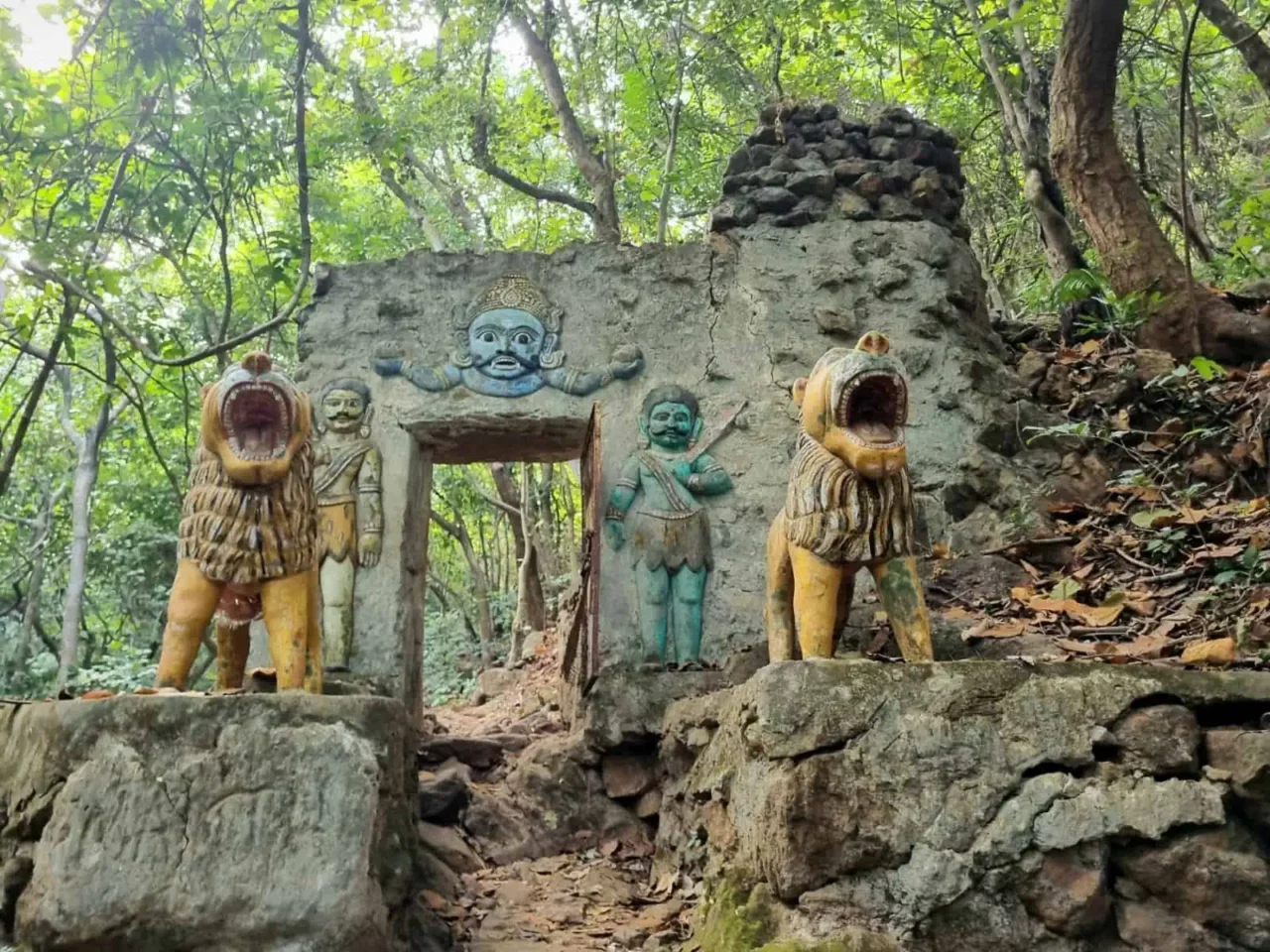
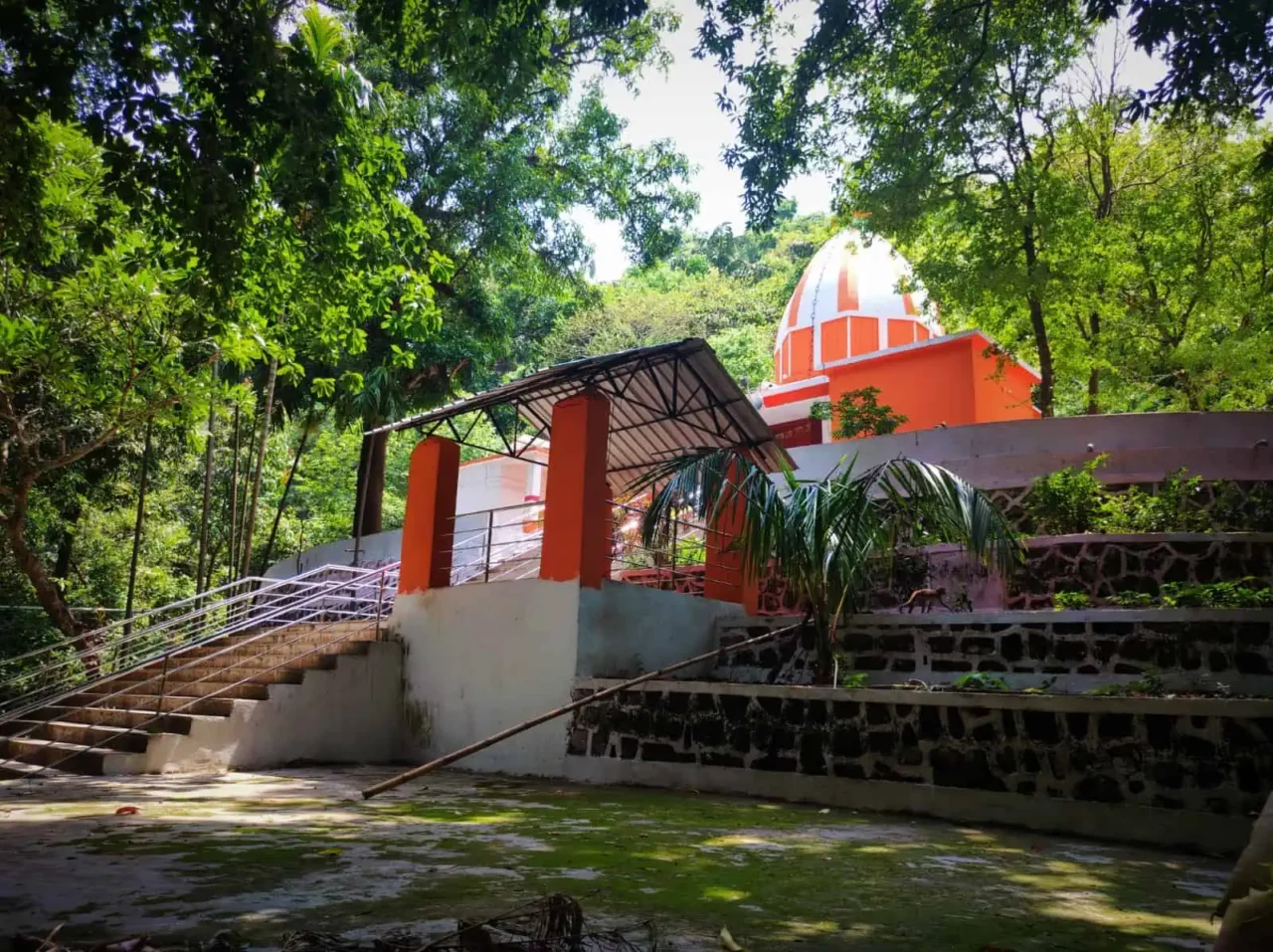
Saptasajya Raghunath Temple building in Dhenkanal

If Saptasajya is the body of this landscape, the Raghunath Temple is its soul. Perched higher up on the hill, this temple is dedicated to Lord Rama, Lakshmana, and Mata Sita. But reaching it is half the experience.

The Climb: 1,000 Steps to Serenity

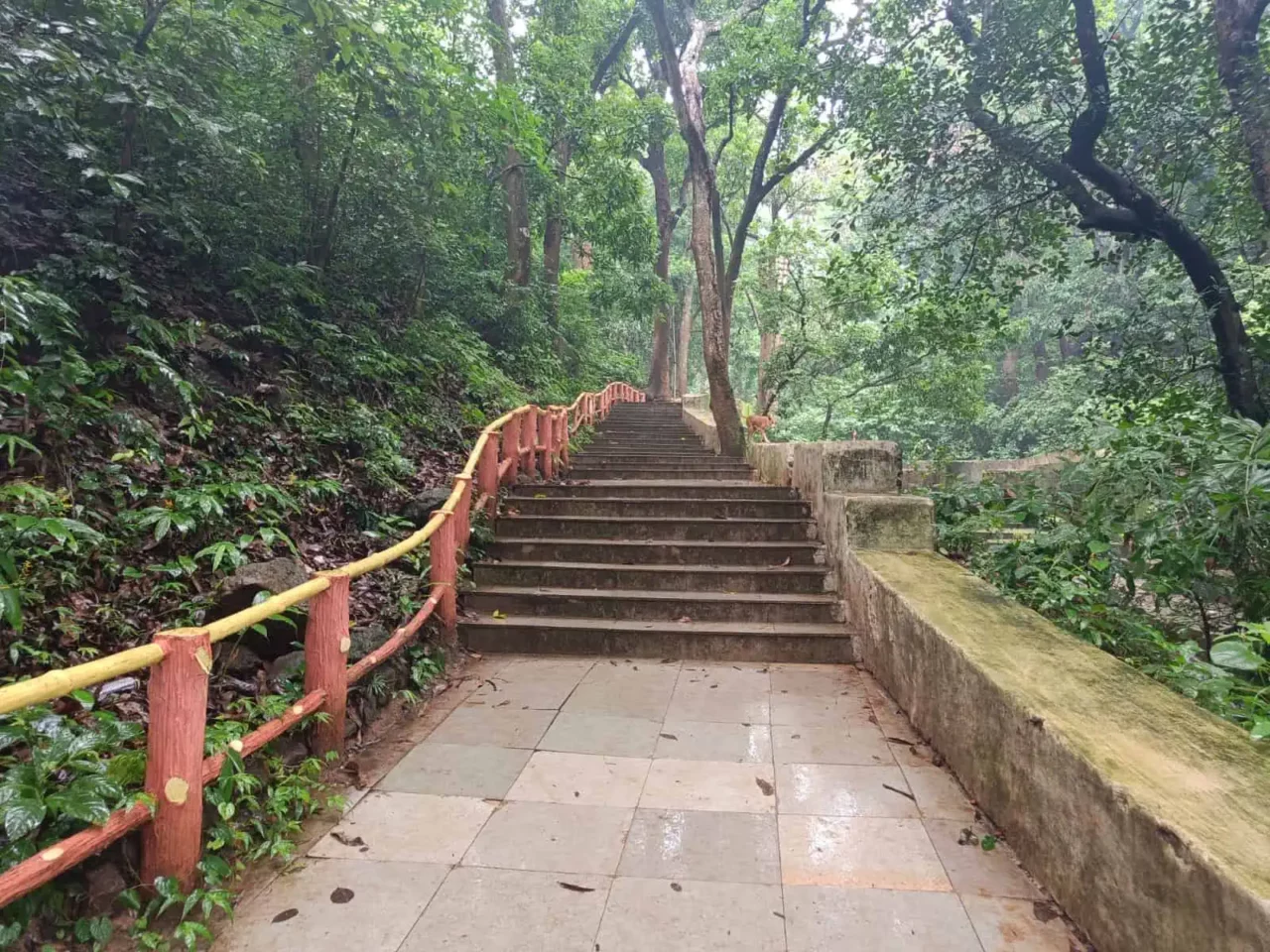
Stone steps leading through the forest to Saptasajya Raghunath Temple

To reach the main temple, you have to navigate a flight of stone steps that wind their way through the dense forest. While the number of steps is often cited as being around 1,000, the actual climb feels less like a chore and more like a meditative journey.

The path is shaded by massive trees, and the air grows cooler and crisper as you ascend.

Along the way, you’ll encounter groups of monkeys—the “Vanara Sena” of modern-day Saptasajya. They’re generally harmless but keep your food tucked away! The sound of your own footsteps on the stone, punctuated by the occasional bird call, creates a rhythm that prepares you for the spiritual atmosphere at the top.

When you finally reach the temple complex, you’re greeted by a stunning view of the Dhenkanal valley below. The temple itself, with its traditional Odia architecture, feels solid and grounded. Inside, the deities of Rama, Sita, and Lakshmana are carved with exquisite detail. There’s a small perennial stream nearby that locals believe has healing properties—I saw many pilgrims filling bottles to take back home.

Rama Navami 2026: The Ultimate Celebration

While Saptasajya is peaceful year-round, it transforms during Rama Navami. In 2026, the festival falls on March 27. During this time, the entire hill comes alive with thousands of devotees from across Odisha.

The air is thick with the scent of incense and the sound of “Rama Nama” chanting. It’s a sensory overload in the best possible way.

Pilgrims visiting the Saptasajya Raghunath Temple

Local vendors set up stalls selling everything from wooden toys to traditional Odia sweets like Arisa Pitha and Chenna Poda. If you want to witness the true cultural heart of Dhenkanal, this is the time to visit. However, be prepared for crowds! If you prefer peace, avoid the festival days and visit on a quiet Tuesday or Saturday instead.

How to Reach Saptasajya Nature Camp: Your 2026 Travel Logistics

Getting to Saptasajya is part of the adventure. Located in the heart of Odisha, it’s surprisingly accessible from major cities like Bhubaneswar and Cuttack. Here’s the lowdown on the best ways to reach this green sanctuary in 2026.

By Road: The Classic Odisha Road Trip

Most visitors prefer driving, and for good reason. The road trip from Bhubaneswar to Saptasajya takes you along the NH 55 (formerly NH 42). The distance is roughly 70 km, which usually takes about 2 to 2.5 hours depending on traffic.

As you leave the city behind, the landscape shifts from urban sprawl to the rolling hills of the Eastern Ghats. Once you cross Cuttack and head towards Dhenkanal, the road is flanked by lush fields and occasional patches of forest. The final 11-km stretch from Dhenkanal town to Saptasajya is particularly beautiful, as the road begins to wind upwards into the hills.

  • From Bhubaneswar: ~70 km via NH 55.
  • From Cuttack: ~50 km via NH 55.
  • From Sambalpur: ~210 km via NH 55.

If you don’t have your own vehicle, you can easily hire a private taxi from Bhubaneswar or Cuttack. Shared cabs and OSRTC buses also ply regularly between these cities and Dhenkanal town.

By Train: The Iron Path

Dhenkanal Railway Station is the nearest railhead, located about 15 km from the nature camp. It’s well-connected to major cities across India. From the station, you can hire an auto-rickshaw or a taxi to take you to the campsite.

Several express trains, including the Rajdhani and Intercity Express, stop at Dhenkanal. If you’re coming from Bhubaneswar, the train journey is short and scenic, taking just over an hour.

By Air: Flying into the Temple City

For those traveling from further away, the Biju Patnaik International Airport (BBI) in Bhubaneswar is the nearest airport. From the airport, the most convenient option is to book a pre-paid taxi directly to Saptasajya. Alternatively, you can take a bus from the Baramunda Bus Stand to Dhenkanal.

The Trekking Route: For the Brave Hearts

For the more adventurous, there’s an old trekking path from Dhenkanal town that leads directly to the hills. It’s about a 6-km trek through the forest. While it’s not for everyone, it’s a fantastic way to immerse yourself in the local landscape before you even reach the camp. If you choose this route, I highly recommend hiring a local guide to ensure you don’t lose your way in the dense canopy.

Note: Always check the latest road conditions, especially during the monsoon season, as some of the smaller forest roads can become slippery.

Consider reading: Best Nature Camps in Odisha

Saptasajya Nature Camp Price and Booking: Planning Your Stay

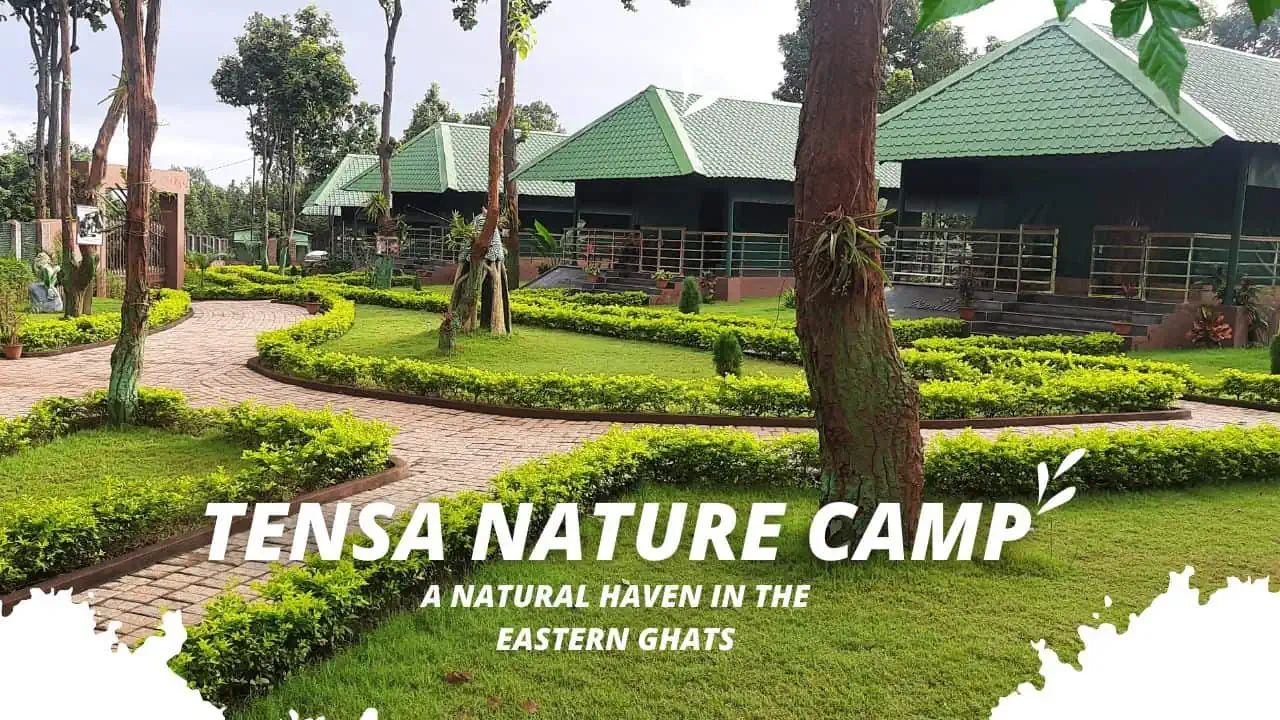
Staying at Saptasajya Nature Camp is an exercise in “luxury in simplicity.” The camp is managed by the Odisha Forest Development Corporation (OFDC) as part of their Ecotourism initiative. Booking your stay in advance is highly recommended, especially for weekends.

2026 Room Rates and Tariff

For 2026, the pricing for Saptasajya Nature Camp has remained fairly consistent with previous years, offering great value for money. The primary accommodation type is the Double Bedded A/C Suite.

Room TypeBase Price (INR)Entry Fee (Per Head)GST & Taxes (Approx.)Total (Approx.)
Double Bedded A/C Suite₹3,000₹100₹414₹3,714

What’s Included? One of the best things about the Odisha nature camps is that the tariff is almost always “all-inclusive.” Your booking at Saptasajya includes:

  • Accommodation for two adults.
  • Breakfast, Lunch, and Dinner (fixed menu).
  • Evening Tea and Snacks.
  • Guided trekking (sometimes seasonal).

How to Book

To book your stay, you must use the official portal of Odisha Ecotourism. I’ve found that the website is quite user-friendly, but rooms fill up fast during the peak winter months.

Book Saptasajya Nature Camp Official Site

The Culinary Experience: Authentic Odia Flavors

One of the highlights of my stay was the food. Don’t expect a 10-page multi-cuisine menu; instead, expect the warmth of a home-cooked Odia meal. The kitchen staff are usually locals who bring the authentic taste of Dhenkanal to your table.

For lunch, you’ll typically be served a traditional thali consisting of steaming rice, Dalma (lentils cooked with vegetables), Saga Bhaja (leafy greens), and a seasonal vegetable curry. If you visit during the summer, you might even get to try Pakhala (fermented rice), which is incredibly refreshing after a long trek. The dinner is usually lighter, often featuring Roti and a delicious chicken or paneer curry. There’s something about eating fresh, local food in the middle of a forest that makes everything taste ten times better.

Saptasajya Nature Camp Distance From Major Locations in Odisha

FromDistance (Approx.)Bhubaneswar70 kmCuttack50 kmPuri125 kmRourkela265 kmBerhampur200 kmSaptasajya Nature Camp Distance From Major Locations in Odisha

Activities at Saptasajya Nature Camp: Immersion in Nature

Saptasajya Nature Camp isn’t just a place to sleep; it’s a base camp for exploring the wild heart of Dhenkanal. The trails offer something for every pace, from adrenaline-fueled climbs to quiet spots perfect for reading under a tree.

Trekking: Conquer the Seven Hills

The most popular activity at Saptasajya is, without a doubt, trekking. The camp is surrounded by trails that cater to all fitness levels.

  • The Temple Trek: This is the “must-do” trek that leads you up to the Raghunath Temple. It’s a well-defined path with stone steps, making it accessible even for families.
  • The Deep Forest Trail: For those looking for something more rugged, there are forest trails that take you deeper into the reserve. These trails aren’t always well-marked, so I highly recommend taking one of the camp’s guides along. They know the forest like the back of their hand and can point out hidden streams and unique plant species you’d otherwise miss.

Bird Watching: A Symphony in the Trees

If you’re a bird enthusiast, wake up at the crack of dawn. The hours between 5:30 AM and 8:00 AM are when the forest is most vocal. Grab your binoculars and head towards the edge of the campsite.

I remember sitting on a rock near a small stream and watching a pair of Indian Pittas foraging in the undergrowth. Their vibrant colors are a sight to behold. You might also spot the Malabar Whistling Thrush, whose song sounds eerily like a human whistling a tune. It’s moments like these that make Saptasajya feel truly magical.

Night Camping and Stargazing

While you’ll be staying in comfortable AC suites, the experience still feels like camping. There’s a dedicated area for campfires (during winter months) where you can sit with other travelers and swap stories.

The best part? The sky. Away from the light pollution of Bhubaneswar and Cuttack, the night sky at Saptasajya is breathtaking. You can see the Milky Way with the naked eye on a clear night. It’s a great place to practice your long-exposure night photography.

Photography and Nature Walks

For photographers, Saptasajya is a dream. The play of light through the Sal canopy, the intricate textures of the orchid-covered bark, and the colorful tribal villages nearby provide endless inspiration. Even a simple walk through the campsite can be a rewarding experience. I spent an entire afternoon just photographing the different types of butterflies—there are dozens of species fluttering around the medicinal garden.

Note: Some activities like deep forest trekking require prior permission from the forest department or coordination with the camp manager. Always prioritize safety and follow the “Leave No Trace” principles—take nothing but memories, leave nothing but footprints.

Consider reading: Sarafgarh Nature Camp Guide

Best Time to Visit Saptasajya Nature Camp: Seasonal Insights

Choosing the right time to visit Saptasajya can completely change your experience. While the hills are beautiful year-round, here’s a seasonal breakdown to help you plan your 2026 trip.

Winter (October to March): The Peak Season

This is, without a doubt, the best time to visit Saptasajya. The weather is cool, crisp, and perfect for trekking. The daytime temperatures hover around 20-25°C, while the nights can get chilly, dropping to 10-12°C.

  • Pro Tip: If you’re visiting in December or January, pack a light jacket or a warm shawl. There’s nothing like waking up to a misty morning and enjoying a hot cup of tea as the sun breaks through the fog.
  • Key Event: Rama Navami in late March (March 27, 2026) is the cultural highlight of the year.

Monsoon (July to September): The Green Explosion

If you don’t mind a bit of rain, the monsoon is when Saptasajya is at its most vibrant. The forest turns a deep, electric green, and the streams and waterfalls are in full flow. The air is fresh and smells of damp earth and rain-soaked leaves.

  • The Catch: Trekking can be difficult as the stone steps and forest trails become slippery. Leeches can also be a nuisance during this time, so wear long pants and carry some salt or lime.
  • The Vibe: It’s a great time for writers, artists, or anyone looking for absolute solitude and a “moody” forest atmosphere.

Summer (April to June): The Quiet Retreat

Summers in Dhenkanal can be hot, with temperatures often touching 38-40°C. However, because the nature camp is located in a forest and at a higher elevation, it stays significantly cooler than the surrounding plains.

  • Why Visit? This is the best time for wildlife sightings. As water sources in the forest dry up, animals tend to congregate around the perennial streams near the temple and the camp. It’s also the time when many forest trees are in bloom, attracting thousands of butterflies.
  • The Catch: Afternoon treks can be exhausting. Plan your activities for early morning or late evening.

Note: Before you leave, it’s always a good idea to check the weather forecast. In Odisha, the transition between seasons can sometimes bring unexpected rain or heatwaves.

Places to Visit Near Saptasajya Nature Camp: Dhenkanal’s Hidden Gems

Dhenkanal is one of Odisha’s most underrated districts, and Saptasajya is just the beginning. If you’re staying at the nature camp for a few days, here are some incredible places nearby that you absolutely shouldn’t miss.

1. Kapilash Temple: The Kailash of Odisha

Located about 30 km from Saptasajya, Kapilash Temple is perhaps the most famous landmark in the district. Dedicated to Lord Shiva, the temple sits atop a hill at a height of 600 meters. You can reach the top either by driving up a winding ghat road or by climbing the 1,352 steps. The view from the top is spectacular, and the atmosphere is deeply spiritual.

2. Joranda: The Seat of Mahima Dharma

About 25 km from Saptasajya lies Joranda, the holy seat of the Mahima Dharma. This is a unique religious sect that originated in Odisha, characterized by its simplicity and the worship of the “Alekha” or the formless Divine. The Joranda Gadi (the main temple complex) is a place of profound silence and peace. If you visit during the Magha Mela (usually in February), you’ll witness thousands of saffron-clad monks gathering for a massive festival of lights and prayer.

3. Dhenkanal Palace: A Glimpse of Royalty

For a touch of history, head to the Dhenkanal Palace in the main town. This massive structure blends traditional Odia architecture with European influences. A part of the palace has been converted into a heritage hotel, but you can still visit the museum section to see royal artifacts, vintage cars, and the impressive library. It’s a great place to learn about the history of the Bhoi dynasty that once ruled this region.

4. Ansupa Lake: A Tranquil Escape

If you’re heading back towards Cuttack or Bhubaneswar, make a detour to Ansupa Lake. It’s a horseshoe-shaped freshwater lake surrounded by the Saranda and Bishnupur hills. It’s a paradise for birdwatchers and offers peaceful boating experiences. The sunset over the lake is one of the most beautiful sights in central Odisha.

5. Sarang: The Reclining Vishnu

About 60 km from Saptasajya, near the town of Talcher, you’ll find the Sarang Vishnu. This is a massive, 9th-century rock-cut statue of Lord Vishnu in a reclining posture (Anantashayi Vishnu) on the banks of the Brahmani River. It’s one of the largest such statues in India and is a masterpiece of ancient Odia craftsmanship.

Note: When visiting these religious sites, please dress modestly and respect the local customs and traditions. Most temples in the region do not allow photography inside the inner sanctum.

Consider reading: 11 Best Tourist Places in Bhubaneswar

FAQs on Saptasajya Nature Camp: Your Questions Answered

If you’re planning your first trip to Saptasajya, you probably have a few questions. Here are the most common ones I get asked, updated for 2026.

1. Is Saptasajya Nature Camp open throughout the year?

Yes, Saptasajya Nature Camp is open 365 days a year. However, the best time to visit is during the winter months (October to March) for pleasant weather. During the monsoon, the forest is beautiful but trekking can be difficult due to slippery trails and leeches.

2. How is the mobile network and internet connectivity?

Being in a reserve forest, the mobile network can be patchy. Major providers like Jio and Airtel usually have decent signals at the campsite and near the temple, but you might lose connectivity deep in the forest trails. The nature camp does not typically provide public Wi-Fi, so it’s a great chance to “unplug.”

3. What kind of food is served, and can I get non-veg options?

The camp serves authentic Odia cuisine. The standard menu is vegetarian (Dalma, rice, bhaja, etc.), but you can often request non-vegetarian dishes (like chicken curry) for dinner by informing the camp manager a few hours in advance. There might be a small additional charge for non-veg items.

4. Is the camp safe for solo female travelers and families?

Absolutely. The nature camp is managed by the forest department and has 24/7 security. The staff are local and very hospitable. It’s a very safe environment for families, couples, and solo travelers. Just remember to stay on the marked trails when trekking.

5. Are there medical facilities nearby?

Dhenkanal town (15 km away) has several hospitals and clinics. The Odisha government’s Biju Swasthya Kalyan Yojana (BSKY) is accepted at major hospitals in Dhenkanal for eligible cardholders. For minor issues, the camp staff usually has a basic first-aid kit.

6. Can I visit the temple without staying at the camp?

Yes, the Raghunath Temple and the Saptasajya hills are open to day visitors. You only need to book the nature camp if you intend to stay overnight. Day visitors are required to pay a small entry fee at the forest check post.

7. What should I pack for my Saptasajya trip?

  • Comfortable walking/trekking shoes with a good grip.
  • Light cotton clothes for the day and a light jacket for winter nights.
  • Binoculars for bird watching.
  • A power bank (just in case of occasional power cuts in the forest).
  • Personal medications and insect repellent.

Final Thoughts: Why Saptasajya Matters

In a world that’s constantly screaming for our attention, places like Saptasajya are a rare gift. It’s not just a “tourist spot”; it’s a sanctuary for the mind and soul. Whether you’re climbing the steps to the Raghunath Temple, listening to the call of a peacock, or simply breathing in the scent of the Sal forest, you’re connecting with something ancient and eternal.

Odisha is full of such hidden treasures, but Saptasajya holds a special place because of its blend of myth, nature, and peace. I hope this guide helps you plan an unforgettable journey to these sacred hills in 2026.

If you have any more questions or want to share your own Saptasajya experience, feel free to reach out. Until then, Jai Jagannath and happy travels!


Disclaimer: While I strive to keep all information (especially prices and timings) as accurate as possible for 2026, things can change. I highly recommend cross-checking with the official Ecotour Odisha website before making final bookings.

Found this helpful? Share it with others.

Rajesh Kumar avatar

Rajesh Kumar

Travel Writer & Odisha Explorer
10+ years experience

Documenting Odisha’s districts, culture, festivals, heritage sites, and practical local information to help travelers and residents alike.

Odisha Tourism Culture Heritage Nature Local Guides