11 Best Tourist Places in Bhubaneswar: 2026 Travel Guide
Complete 2026 travel guide to the 11 best tourist places in Bhubaneswar. Explore Lingaraj Temple, Dhauli Stupa, Udayagiri Caves, Nandankanan Zoo, and food.
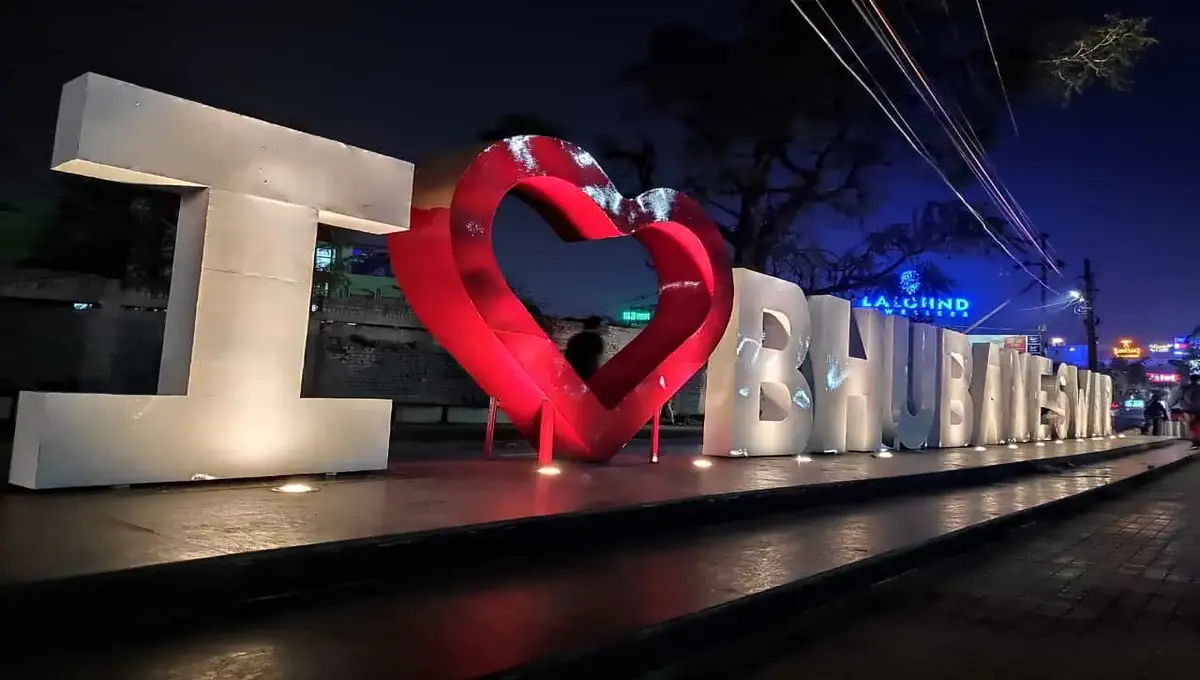
Known across India as the “Temple City” (Ekamra Kshetra), Bhubaneswar is one of the oldest continuously inhabited urban centers in Eastern India, boasting over 2,000 years of documented architectural evolution. From the 3rd-century BCE rock edicts of Emperor Ashoka at Dhauli and the 1st-century BCE rock-cut monastic caves of King Kharavela at Udayagiri to the soaring 11th-century sandstone spires of the Somavamshi empire, the capital of Odisha preserves an astonishing open-air architectural museum.
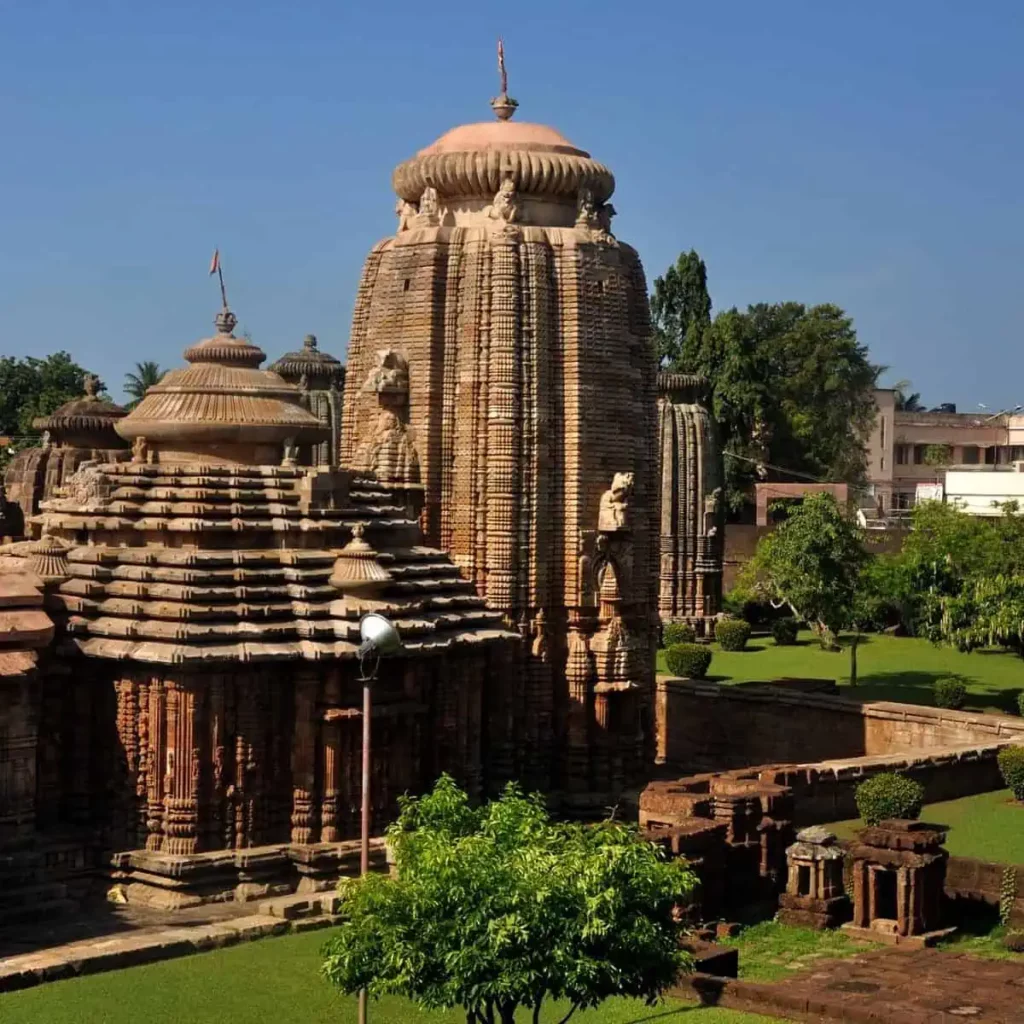
At its medieval zenith between the 7th and 12th centuries, more than 7,000 sacred stone shrines surrounded the central Bindu Sagar water reservoir. Today, approximately 500 historic temples remain intact, illustrating the complete evolutionary trajectory of the classical Kalinga architectural style. In modern times, Bhubaneswar has successfully paired this ancient spiritual soul with clean, wide boulevards, a world-class electric bus transit network (Mo Bus), and recognition as one of India’s premier planned Smart Cities.
From the soaring 180-foot sandstone spire of Lingaraj and the sculpted Torana archway of Mukteshwar to the open wildlife reserves of Nandankanan and traditional wood-fired Abadha banquets at Ananta Vasudeva, this 2026 travel guide details the 11 premier attractions across the capital, complete with visitor tariffs, transit routes, and turnkey itineraries.
Also explore our master state guide: 20 Best Tourist Places in Odisha and our comprehensive Khordha district guide.
At-a-Glance: 11 Best Tourist Places in Bhubaneswar (2026 Visitor Matrix)
| # | Attraction Name | Historical Era & Category | 2026 Entry Fee | Operating Hours | Recommended Duration | Nearest Mo Bus Stop |
|---|---|---|---|---|---|---|
| 1 | Lingaraj Temple | 11th Century (Somavamshi) / Temple | Free Entry (Cloakroom ₹10) | 5:00 AM – 1:00 PM & 3:30 PM – 9:00 PM | 1.5 – 2 Hours | Lingaraj Temple Bus Stop (Route 10, 12) |
| 2 | Dhauli Shanti Stupa | 261 BCE (Ashokan) / 1972 (Stupa) | Free Entry (Show ₹25) | 6:00 AM – 6:30 PM (Show: 7:00 PM) | 1.5 Hours | Dhauli Square Junction (Route 50) |
| 3 | Udayagiri & Khandagiri Caves | 1st Century BCE (Kharavela) / Caves | ₹25 (Indian) / ₹300 (Foreign) | 9:00 AM – 6:00 PM (Daily) | 2 – 2.5 Hours | Khandagiri Square Stop (Route 11, 16) |
| 4 | Nandankanan Zoological Park | Wildlife Sanctuary & Botanical Park | ₹50 (Adult) / ₹10 (Child) | 8:00 AM – 5:00 PM (Closed Mondays) | 4 – 5 Hours | Nandankanan Main Gate (Route 12, 13) |
| 5 | Rajarani Temple | 11th Century / Monument | ₹25 (Indian) / ₹300 (Foreign) | 6:30 AM – 6:00 PM (Sunrise to Sunset) | 1 Hour | Kalpana Square / Rajarani Stop (Route 10) |
| 6 | Mukteshwar Temple | 10th Century / Architectural Gem | Free Entry (ASI Protected) | 6:30 AM – 7:00 PM (Daily) | 1 Hour | Kedar Gouri / Old Town Stop (Route 12) |
| 7 | Kala Bhoomi Crafts Museum | State Handicrafts & Handloom Museum | ₹50 (Adult) / ₹20 (Student) | 10:00 AM – 5:30 PM (Closed Mondays) | 2 – 3 Hours | Pokhariput Junction Stop (Route 19) |
| 8 | Ananta Vasudeva Temple | 13th Century (Ganga) / Temple | Free Entry (Abadha ~₹150–₹250) | 6:00 AM – 9:00 PM (Lunch 1:00 PM) | 1 Hour | Bindu Sagar East Gate Stop (Route 12) |
| 9 | 64 Yogini Temple (Hirapur) | 9th Century (Bhauma-Kara) / Tantric | Free Entry (ASI Protected) | 6:00 AM – 6:00 PM (Sunrise to Sunset) | 1 Hour | Hirapur Village (Auto from Kalpana) |
| 10 | Ekamra Haat | Open-Air Artisan Village & Crafts | Free Entry (Shopping & Food) | 10:00 AM – 9:30 PM (Daily) | 1.5 – 2 Hours | Unit-II / State Library Stop (Route 10) |
| 11 | ISKCON Temple | Modern Spiritual Temple Complex | Free Entry | 5:00 AM – 1:00 PM & 4:30 PM – 9:00 PM | 1 Hour | Nayapalli / IRC Village Stop (Route 11) |
1. Lingaraj Temple: The Architectural Crown of Kalinga
Standing as the largest and most sacred shrine in Bhubaneswar, the Lingaraj Temple represents the absolute culmination of medieval Kalinga temple engineering. Commissioned in the 11th century by King Jajati Keshari of the Somavamshi dynasty and expanded by later Ganga monarchs, the monument is dedicated to Lord Harihara—a composite syncretic deity uniting Lord Shiva (Hara) and Lord Vishnu (Hari).
Architectural Structure & Sanctum Spire
The main temple tower (Rekha Deula) soars to a height of 180 feet (55 meters), dominating the skyline of Old Town. Built entirely from dark red sandstone and Laterite, the complex follows the classic four-fold Kalingan architectural layout:
- Vimana (Deula): The primary curvilinear sanctum housing the uncarved, natural stone Swayambhu Lingam.
- Jagamohana (Mukhasala): The stepped pyramidal assembly hall where pilgrims gather for darshan.
- Natamandira: The pillared festival and classical dance hall.
- Bhogamandapa: The hall of sacred food offerings.
Surrounding the central sanctum inside a massive walled courtyard are 150 subsidiary shrines dedicated to various Hindu deities, including a celebrated shrine to Goddess Parvati in the northwestern corner.
Practical Visitor Rules & Dress Code
- Entry Regulations: As per ancient temple traditions, entry inside the inner complex is reserved exclusively for practicing Hindus. Technical preservation and structural conservation are overseen by the Archaeological Survey of India (ASI).
- Viewing Platform for Non-Hindus & Foreign Tourists: Located on the northern exterior perimeter wall, an elevated stone viewing platform erected during the British era allows non-Hindu and international travelers to observe and photograph the entire 180-foot temple courtyard.
- Security & Digital Lockers: Mobile phones, cameras, leather belts, wallets, and smart watches are strictly prohibited inside. Free digital biometric lockers are operated at the main eastern Singhadwara entrance.
- Best Darshan Timing: Arrive early at 6:00 AM to witness the morning Alati and ritual bathing of the Lingam without crowds.
Read our complete guide: Lingaraj Temple Bhubaneswar Guide
2. Dhauli Shanti Stupa & Ashokan Rock Edicts: The Turning Point of Indian History
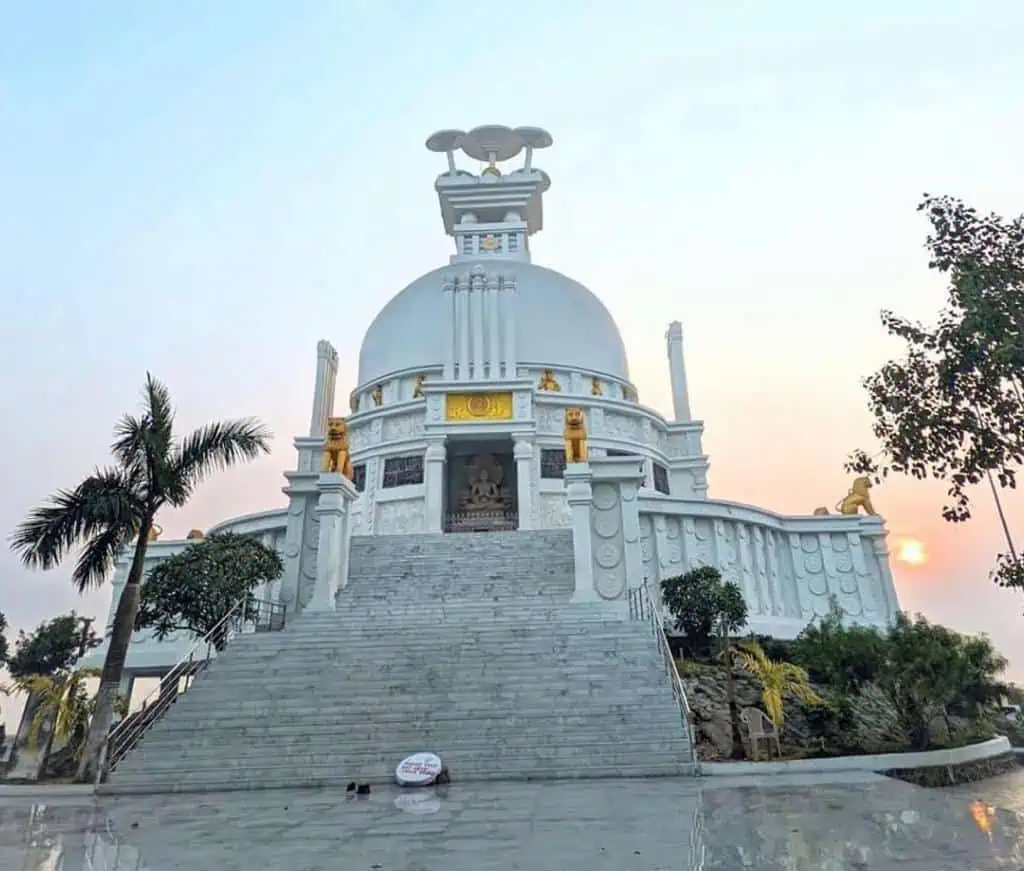
Perched upon the crest of the Dhauli Hills along the banks of the Daya River (8 km south of Bhubaneswar), Dhauli is one of the most historically significant sites on the Asian continent.
1. The 261 BCE Kalinga War & Emperor Ashoka’s Transformation
In 261 BCE, the catastrophic Kalinga War was fought on the plains below Dhauli. Ancient historical chronicles record that over 100,000 warriors fell in battle, and the waters of the Daya River ran crimson with blood. Stricken by remorse at the unfathomable carnage, the Mauryan Emperor Ashoka the Great renounced military conquest (Digvijaya), embraced Buddhism, and adopted the path of moral righteousness (Dhammavijaya).
2. The 3rd-Century BCE Rock Edicts of Ashoka
At the foot of the hill stands a protected rock pavilion containing the Rock Inscriptions of Ashoka, incised in ancient Brahmi script and Prakrit language around 257 BCE. Directly above the inscriptions sits the carved forepart of an elephant emerging from natural rock—the oldest surviving stone sculpture in Odisha, symbolizing the conception of Lord Buddha.
3. The White Peace Pagoda (Shanti Stupa)
Erected in 1972 through a collaborative partnership between the Kalinga Nippon Buddha Sangha (Japan) and the Department of Tourism, Government of Odisha, the dazzling white Shanti Stupa features a massive circular dome crowned with stone umbrellas (Chhatras). The four directional cardinal niches enshrine golden statues of Buddha depicting the Bhumisparsha (earth-touching) and Dharmachakra Pravartana (wheel-turning) mudras.
- 4K Laser Light and Sound Show: Every evening at 7:00 PM and 7:45 PM (except Mondays), an upgraded 3D mapping show projects the dramatic narrative of the Kalinga War across the white facade of the stupa in Odia, Hindi, and English (Ticket: ₹25).
3. Udayagiri and Khandagiri Caves: 2,000-Year-Old Rock-Cut Monasteries
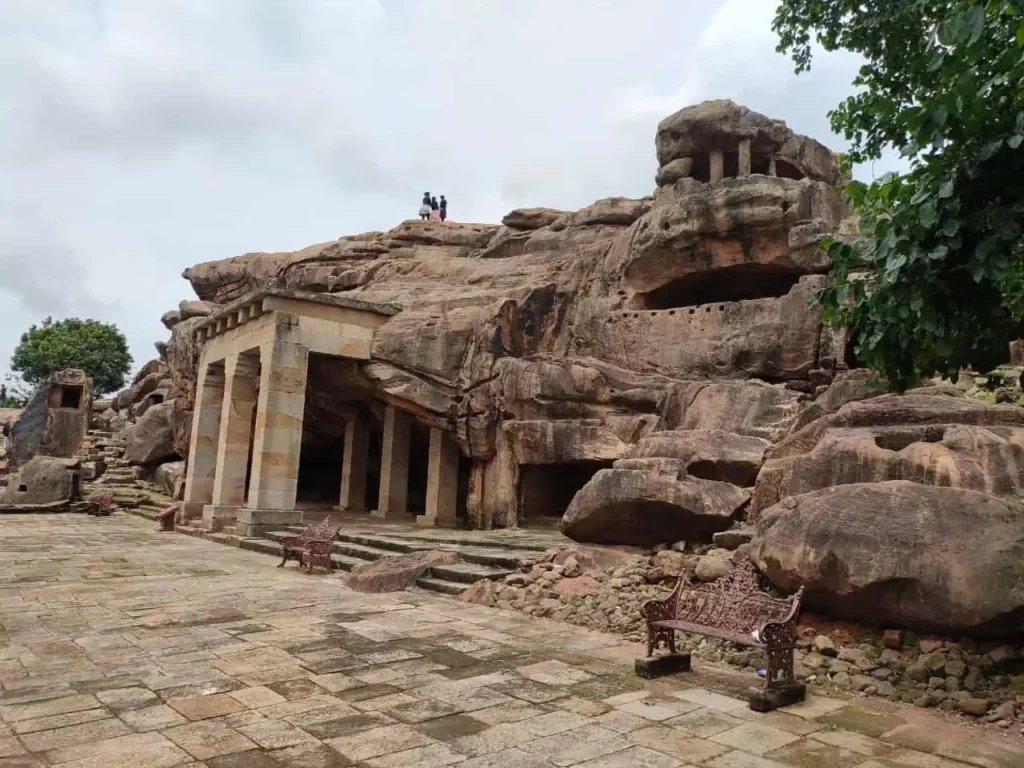
Located 6 km west of the city center along the ancient highway, the twin sandstone hills of Udayagiri (Sunrise Hill) and Khandagiri (Broken Hill) enshrine 33 rock-cut cave dwellings chiseled out in the 1st century BCE during the reign of Emperor Kharavela of the Mahameghavahana (Chedi) dynasty, fully protected by the Archaeological Survey of India (ASI).
1. Udayagiri Caves (18 Caves)
- Rani Gumpha (Cave 1 - Queen’s Cave): The largest and most architecturally intricate cave in Eastern India. This two-storied residential monastery features a pillared veranda, sculpted friezes depicting royal processions, wild elephant hunts, wrestling duels, and classical dance performances. The acoustics of the central courtyard were engineered for musical recitals.
- Hathi Gumpha (Cave 14 - Elephant Cave): Houses the celebrated 17-line Brahmi Inscription of King Kharavela, which details his military conquests across India, agricultural canal projects, and religious patronages year by year.
- Ganesha Gumpha (Cave 10): Carved with guardian monolithic stone elephants holding lotus stalks and reliefs of the legendary romance between King Udayana and Queen Vasavadatta.
2. Khandagiri Caves (15 Caves)
Khandagiri features prominent Jain devotional sanctuaries adorned with relief sculptures of the 24 Jain Tirthankaras:
-
Navamuni Gumpha (Cave 9): Features high-relief carvings of nine Jain tirthankaras seated in meditation postures.
-
Barabhuji Gumpha (Cave 8): Dedicated to the twelve-armed protective goddess Sasana Devi.
-
Khandagiri Peak Jain Temple: A functioning 19th-century white-marble Jain temple crowning the hilltop, providing panoramic sunset views of the modern Bhubaneswar skyline.
-
ASI Entry Fee: ₹25 for Indian citizens, ₹300 for foreign tourists (tickets valid for both hills).
-
Annual Fair: During Magha Saptami in late winter, the foothills host the historic week-long Khandagiri Mela, featuring sadhu camps, open-air folk opera (Jatra), and artisan bazaars.
-
Travel Tip: Watch out for aggressive local macaque monkeys around the steps; keep food and water bottles inside zipped backpacks.
Read our complete guide: Udayagiri and Khandagiri Caves Guide
4. Nandankanan Zoological Park & Botanical Garden
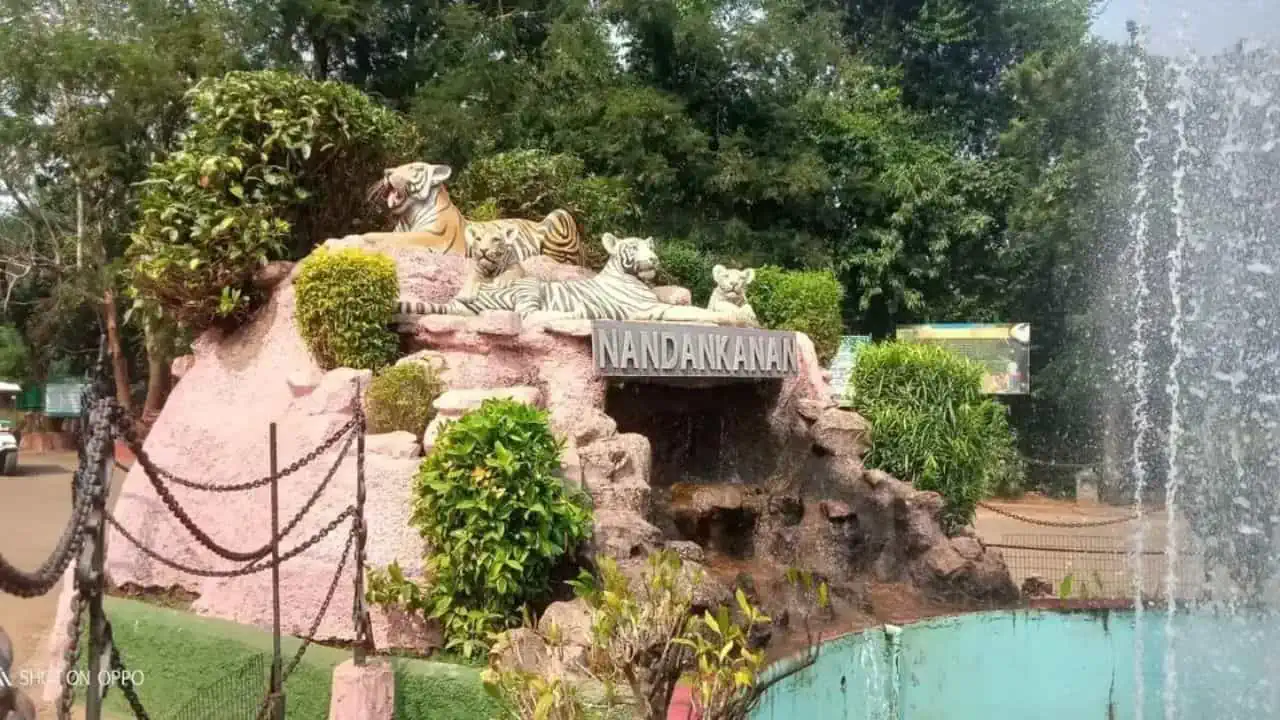
Spread across 437 hectares adjacent to the tranquil waters of Kanjia Lake (15 km north of the city center), Nandankanan Zoological Park (meaning “Garden of the Gods”) is recognized internationally as one of India’s leading wildlife conservation and breeding facilities.
1. World-Famous White Tiger Breeding Sanctuary
Nandankanan gained international acclaim in 1980 when normal-colored Bengal tigers gave birth to rare White Bengal Tigers (Panthera tigris tigris). Today, it houses one of the world’s largest captive white tiger populations.
2. Specialized Safari Circuits
Visitors can board heavy-duty, air-conditioned protective safari buses to enter large, open naturalized enclosures:
- Tiger Safari: Drive through dense Sal forest to observe normal and white tigers roaming free.
- Lion Safari: Enclosure dedicated to Asiatic lions.
- Bear & Herbivore Safari: Expansive forested grounds hosting sloth bears, spotted deer (Chital), and sambar.
3. Key Attractions & Wildlife Highlights
- Gharial Conservation Centre: India’s first captive breeding center that successfully rescued the critically endangered long-snouted Gharial (Gavialis gangeticus) from extinction.
- Pangolin Breeding Facility: World-renowned dedicated research and breeding center for the endangered Indian Pangolin.
- Kanjia Lake Ropeway & Toy Train: A scenic passenger cable car carrying travelers over Kanjia Lake to the State Botanical Garden, complemented by a heritage toy train loop.
| Service / Ticket Category | Official 2026 Tariff | Timings & Schedule |
|---|---|---|
| Zoo General Entry (Adult) | ₹50 | 8:00 AM – 5:00 PM (Closed on Mondays) |
| Zoo General Entry (Child 3–12 yrs) | ₹10 | 8:00 AM – 5:00 PM |
| Foreign Nationals Entry | ₹100 | 8:00 AM – 5:00 PM |
| Combined 4-Safari Ticket | ₹100 per person | Continuous bus departures (9:00 AM – 4:30 PM) |
| Lake Ropeway Cable Car | ₹120 per person | Round trip over Kanjia Lake |
| Battery-Operated Eco-Vehicle (BOV) | ₹80 per person | Hop-on hop-off within internal zoo lanes |
5. Rajarani Temple: The “Love Temple” of Odisha
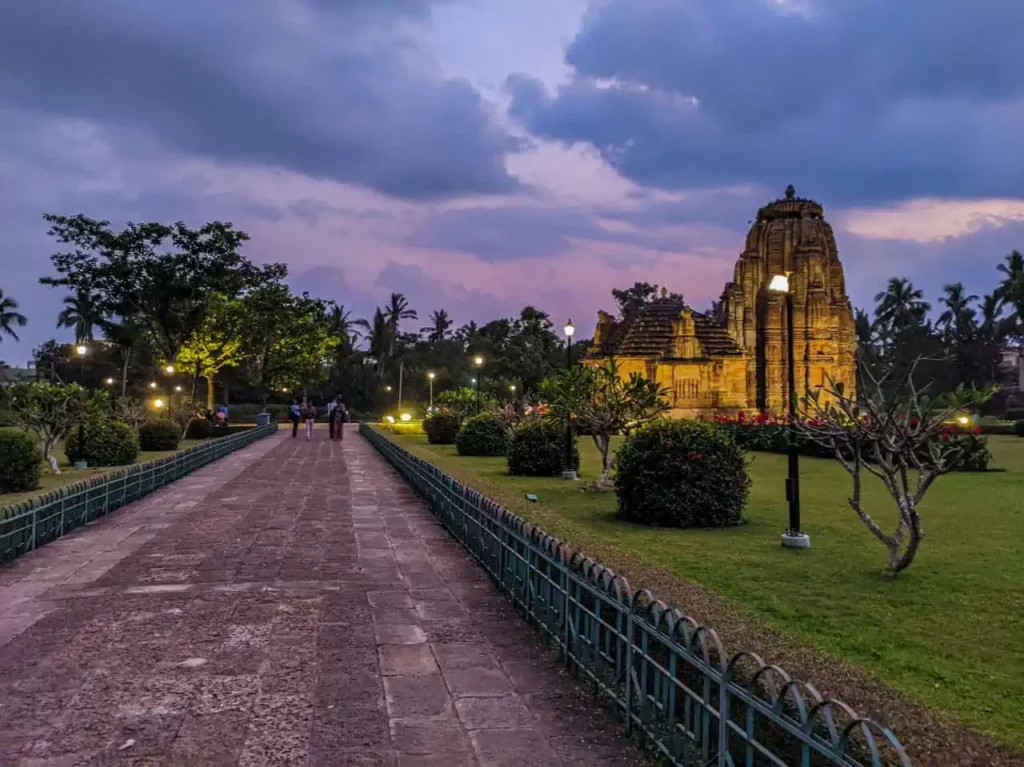
Set within manicured lawns maintained by the Archaeological Survey of India (ASI) near Tankapani Road, the 11th-century Rajarani Temple is an architectural marvel of the Somavamshi period.
1. The Red-Gold Rajarani Sandstone
The monument derives its name not from a royal queen, but from the distinctive, fine-grained Rajaraniya sandstone—a golden-yellow and dull-red sedimentary stone quarried from the nearby hills that glows warmly in the late afternoon sun.
2. Sculptural Elegance of the Nayikas & Ashta-Dikpalas
Unlike active shrines, Rajarani Temple contains no presiding deity inside its sanctum, making it accessible to all visitors regardless of faith. It is renowned for its secular and artistic sculptures:
- Sensuous Nayikas (Alasa Kanyas): Masterfully chiseled female figures shown applying makeup, plucking flowers, playing with birds, braiding hair, and smiling gracefully in three-dimensional relief.
- The Ashta-Dikpalas: The eight guardian deities of the cardinal directions carved in high relief on the lower exterior facade, including Indra on his elephant Airavata, Agni with his sacred ram, and Yama on his water buffalo.
3. Annual Rajarani National Music Festival (January)
Every year in mid-January, the temple grounds host the prestigious Rajarani Music Festival, where legendary Indian classical vocalists and instrumentalists perform against the floodlit backdrop of the 1,000-year-old spire.
Read our complete guide: Rajarani Temple Guide
6. Mukteshwar Temple: The “Gem of Odisha Architecture”
Celebrated by architectural historians as the “Gem of Odisha Architecture,” the 10th-century Mukteshwar Temple marks the pivotal stylistic transition from early primitive rock carving to the refined classical Kalinga idiom.
1. The Iconic Sculpted Torana (Archway)
The defining hallmark of Mukteshwar is its world-famous freestanding Torana (Ceremonial Archway)—a heavy, semicircular sandstone arch supported by two thick fluted pillars. Influenced by Buddhist and Kalingan artistic styles, the arch is intricately carved with:
- Smiling celestial damsels reclining along the stone curves.
- Elaborate scrollwork, lotus rosettes, and stylized peacocks.
- Medallions portraying monkeys, elephants, and mythical Yalis.
2. The Sacred Marichi Kunda
Directly behind the temple compound lies the Marichi Kunda, a rectangular step-well spring. Local folklore holds that bathing in its mineral-rich waters on the eve of Ashokashtami cures fertility disorders and skin ailments.
7. Kala Bhoomi: The Odisha Crafts Museum
Located in Pokhariput (8 km from Master Canteen), Kala Bhoomi (Odisha Crafts Museum) is an architectural and cultural masterpiece constructed from Laterite stone, terracotta tiles, and local timber.
1. The Eight Dedicated Exhibition Galleries
Spanning 12.6 acres across landscaped courtyards, the museum showcases Odisha’s living artisanal traditions across 8 themed wings:
-
Terracotta & Pottery Gallery: Tribal clay figurines, roof finials, and ritualistic votive pots.
-
Handloom Gallery: Masterpiece Ikats, Bandha textiles, Sambalpuri tie-dye sarees, and Tussar silk weaves.
-
Pattachitra & Palm-Leaf Gallery: Intricate mythological paintings on treated cotton canvas and etched palm-leaf scrolls (Talapatra Chitra).
-
Silver Filigree (Tarakasi) Gallery: Delicate, spiderweb-fine ornaments crafted from 99.9% pure silver wire by master goldsmiths of Cuttack.
-
Stone Carving & Wood Carving: Architectural replicas and ceremonial wooden chariots.
-
Metal Crafts & Dhokra Gallery: Lost-wax brass figurines crafted by indigenous tribes.
-
Entry Fee: ₹50 for adults, ₹20 for students, Free for children under 12.
-
Timings: 10:00 AM to 5:30 PM (Closed on Mondays). Live artisan workshops and an open-air cafe serving Chhena Poda and herbal tea operate daily.
8. Ananta Vasudeva Temple: The Divine Abadha Culinary Hub
Situated on the eastern banks of the sacred Bindu Sagar tank, the Ananta Vasudeva Temple was commissioned in 1278 CE by Queen Chandrika Devi, daughter of King Anangabhima Deva III of the Ganga Dynasty.
1. Vaishnavite Spiritual Legacy
While most ancient shrines in Bhubaneswar are dedicated to Lord Shiva, Ananta Vasudeva is the principal Vaishnavite temple in Old Town, enshrining black chlorite stone idols of Lord Krishna, Lord Balarama, and Devi Subhadra.
2. The Traditional Wood-Fired Earthen Pot Abadha
Similar to the grand Mahaprasad tradition of Puri, the temple kitchen of Ananta Vasudeva prepares daily sacred offerings (Abadha) cooked in unglazed earthen pots stacked vertically over wood fires:
- How to Experience It: Arrive at the eastern courtyard between 12:30 PM and 2:00 PM. You can purchase meal tokens (₹150 to ₹250 per plate) and sit on woven floor mats to feast on steaming Arwa Anna (pure rice), Dalma (split-pea lentils slow-cooked with pumpkin, raw banana, and roasted cumin-ghee), Kanika (sweet saffron rice), Besara (mustard-paste vegetables), and Khattaa (sweet-sour mango/tomato relish).
9. 64 Yogini Temple (Hirapur): The Mysterious Tantric Circle
Tucked away in the serene rural village of Hirapur (15 km southeast of Bhubaneswar), the Chausathi Yogini Temple is one of only four surviving hypaethral (roofless) circular Tantric shrines in India.
1. 9th-Century Bhauma-Kara Tantric Architecture
Constructed in the 9th century CE under the patronage of Queen Hiradevi of the Bhauma-Kara Dynasty, the temple is built from local sandstone in a completely circular, roofless plan with an internal diameter of barely 25 feet. The roofless design allowed the 64 mystical Yoginis to receive celestial cosmic energy and fly into the night sky as per Tantric belief.
2. The 64 Chlorite Yogini Statues
Set into interior wall niches around the circular enclosure are 64 exquisitely sculpted statues carved from dense, lustrous black chlorite stone:
- Each Yogini stands atop her unique animal or human mount (Vahana), including eagles, elephants, frogs, roosters, serpents, and skulls.
- The statues showcase diverse female forms, ranging from compassionate, smiling youthful maidens with elaborate coiffures to fierce, multi-armed protective deities armed with tridents and daggers.
- At the center of the arena stands the Chandi Mandapa, housing four stone lingams and four principal Bhairava statues.
10. Ekamra Haat: The Open-Air Artisan Market
Situated in the heart of the city near the State Library at Unit-II, Ekamra Haat is an open-air urban handicraft bazaar spread across 5 acres, designed to resemble a rural Odia village with grass-thatched brick cottages.
What to Buy:
- Authentic Handloom Sarees: Buy directly from state weaver cooperatives (Sambalpuri, Bomkai, Pasapalli, and Kotpad cottons).
- Pipili Applique Wall Hangings: Vibrant hand-stitched lanterns, umbrellas, and embroidered tapestries.
- Dhokra Metal Statues & Brass Bells: Traditional tribal brass castings.
- Local Street Food Stalls: Clean, tourist-friendly open-air food kiosks serving Dahi Bara Aloo Dum, Gupchup, Pitha, and hot Chhena Poda.
11. ISKCON Temple: Marble Devotional Sanctuary
Located in Nayapalli along the National Highway, the Sri Sri Krishna Balaram Mandir (ISKCON Bhubaneswar) was the 108th and final temple established globally by ISKCON’s founder-acharya A.C. Bhaktivedanta Swami Prabhupada in 1977.
- Spiritual Atmosphere: Built from pristine white marble with soaring red-tiled central spires, the temple radiates peaceful energy, particularly during the evening Sandhya Arati (6:30 PM), when devotees participate in collective Kirtan accompanied by clay Mridangas and brass Kartalas.
- Govinda’s Vegetarian Dining: The temple complex houses Govinda’s Restaurant, serving pure vegetarian Odia and North Indian thalis, fresh fruit juices, and sweets prepared according to strict sattvic dietary principles.
Read our complete guide: ISKCON Temple Bhubaneswar Guide
The 600-Year Architectural Evolution of Kalinga Temples in Bhubaneswar
Bhubaneswar is often termed the “Textbook of Kalinga Architecture” because a traveler can literally trace the entire 600-year chronological development of Hindu temple design across its streets:
| Historical Era & Century | Monument Example | Architectural Phase | Key Distinctive Innovations |
|---|---|---|---|
| 7th Century CE (650 CE) | Parasurameswara Temple | Formative Stage (Shailodbhava Dynasty) | Squat 44-ft spire, flat-roofed Jagamohana with perforated stone windows, Saptamatrikas |
| 8th Century CE (775 CE) | Vaital Deula | Tantric Stage (Bhauma-Kara Dynasty) | Rare barrel-vaulted Khakhara Deula roof dedicated to eight-armed Goddess Chamunda |
| 10th Century CE (950 CE) | Mukteshwar Temple | Transitional Masterpiece | Freestanding sculpted Torana archway, stepped pyramidal Pidha Deula roof |
| 11th Century CE (1030 CE) | Rajarani Temple | Mature Decorative Phase | Cluster of miniature spires (Angashikharas), fine-grained red-gold sandstone, secular sculptures |
| 11th Century CE (1060 CE) | Brahmeswara Temple | Perfected Pancharatha Phase | First fully developed Panchayatana (5-shrine) compound with Ashta-Dikpalas |
| 11th–12th Century CE (1090 CE) | Lingaraj Temple | Imperial Colossal Zenith | Soaring 180-ft Rekha Deula with all four complete Kalingan chambers |
2026 Ekamra Kshetra Heritage Project: Modernizing the Ancient Core
Under the flagship Ekamra Kshetra Heritage Project, the state government and the Bhubaneswar Municipal Corporation have revitalized the heritage precinct surrounding Lingaraj Temple and Bindu Sagar:
- Heritage Corridor & Pedestrianization: A 66-acre heritage perimeter has been pedestrianized with wide sandstone walkways, underground utility cabling, and landscaped water fountains.
- Bindu Sagar Water Purification: Advanced ecological bio-remediation and aeration systems have restored water clarity to the 1,300-year-old sacred tank.
- Smart Orientation Centers: Multi-lingual tourist information kiosks, battery-operated golf carts for senior citizens, and automated digital baggage lockers at temple gates.
Annual Cultural Festivals of the Temple City
| Festival Name | Annual Month / Timing | Primary Venue & Location | Cultural Highlights & Traveler Experience |
|---|---|---|---|
| Rajarani Music Festival | Mid-January (3 Days) | Rajarani Temple Lawns | Indian classical vocal and instrumental maestros performing under floodlit spires |
| Mukteshwar Dance Festival | Mid-January (3 Days) | Mukteshwar Temple Courtyard | Renowned Odissi solo, duet, and group dancers performing before the iconic Torana |
| Adivasi Mela (Tribal Fair) | Late January – Early February | IDCO Exhibition Ground, Unit-III | Over 100 tribal huts constructed by 62 indigenous tribes, organic forest produce, folk dances |
| Khandagiri Mela (Kumbha Mela of Odisha) | Magha Saptami (February) | Foothills of Khandagiri Caves | Thousands of Naga Sadhus, spiritual discourses, traditional Jatra open-air folk theatre |
| Maha Shivratri (Jagara) | Late February / Early March | Lingaraj Temple Compound | Over 200,000 devotees fasting all night until the sacred Mahadipa is carried atop the 180-ft spire |
| Rukuna Ratha Yatra (Ashokashtami) | March / April | Bada Danda, Old Town | The annual chariot festival of Lord Lingaraj, famous for its Analeuta non-turning chariot |
Where to Stay in Bhubaneswar: Top Neighborhoods
- Old Town (Ekamra Kshetra): Ideal for spiritual travelers and history lovers who want to wake up within walking distance of Lingaraj, Mukteshwar, and Bindu Sagar.
- Saheed Nagar & Master Canteen (City Centre): Best for business travelers, shoppers, and foodies; located 5 minutes from the Main Railway Station with direct Mo Bus connections.
- Patia & Infocity (Modern Northern Hub): Recommended for younger travelers, corporate visitors, and cafe lovers looking for pubs in Bhubaneswar, rooftop lounges, and fine dining.
The Bhubaneswar Street Food Trail: What and Where to Eat
| Iconic Odia Delicacy | Flavor Profile & Key Ingredients | Best Places to Experience It |
|---|---|---|
| Dahi Bara Aloo Dum | Spiced lentil dumplings in light yogurt water, topped with fiery potato curry, Ghungni, and sev | Shahid Nagar Market stalls, Bapuji Nagar stalls, CDA Cuttack stalls |
| Chhena Poda (Odia Cheesecake) | Fresh cottage cheese kneaded with cardamom, sugar, and cashew nuts, baked in Sal leaves | Banarasi Sweet Stall (Shahid Nagar), Nimapara Sweets (Bapuji Nagar) |
| Mati Handi Mutton | Tender mutton slow-cooked in sealed earthen pots with garlic, onions, and whole spices | Nana Dhaba (Chandrasekharpur), Dalma Restaurant (Unit-IV) |
| Pakhala Bhata Thali | Fermented rice in ice-cold water seasoned with curd and curry leaves, paired with fried fish & Badi Chura | Odisha Hotel (Saheed Nagar), Dalma (Madhusudan Nagar) |
Read our complete culinary guide: 10 Famous Odisha Foods You Must Try
Navigating Bhubaneswar: The 2026 Mo Bus Transit Network
Bhubaneswar’s award-winning Mo Bus network, operated by Capital Region Urban Transport (CRUT), offers air-conditioned, GPS-tracked public buses connecting all major tourist sights:
-
Route 10: Biju Patnaik International Airport (BBI) ➔ Bhubaneswar Railway Station ➔ Master Canteen ➔ Lingaraj Temple.
-
Route 11: Master Canteen ➔ Khandagiri & Udayagiri Caves ➔ Patia IT Corridor.
-
Route 12: Bhubaneswar Railway Station ➔ Old Town (Mukteshwar / Ananta Vasudeva) ➔ Nandankanan Zoo.
-
Route 50: Bhubaneswar Railway Station ➔ Dhauli Stupa ➔ Puri Bus Stand.
-
Route 70: Bhubaneswar ➔ Pipili Applique Village ➔ Konark Sun Temple.
-
Fares & Passes: Fares range from ₹10 to ₹40 within city limits. Download the “Mo Bus” Mobile App for live real-time bus tracking and cashless QR ticketing.
Top 4 Day Trips from Bhubaneswar
If you have extra days based in the capital, these premier regional day trips offer rich cultural and nature experiences within a 1 to 2-hour drive:
- Pipili Applique Artisan Village (20 km via NH-316): The world-renowned village of master tailors who have crafted the vibrant silk-and-cotton banners, Tarasa canopies, and ceremonial umbrellas (Chhatras) for the Puri Ratha Yatra chariots for centuries.
- Cuttack Silver Filigree & Barabati Fort (25 km via NH-16): The 1,000-year-old “Silver City” situated at the bifurcated apex of the Mahanadi and Kathajodi rivers. Explore the 14th-century Ganga dynasty stone moat at Barabati Fort and shop for spiderweb-fine Tarakasi silver filigree jewelry in Naya Sarak.
- Atri Hot Sulphur Springs (42 km via Khordha): A natural perennial sulphur spring maintaining a constant 55°C water temperature, believed to hold rejuvenating dermatological properties, located next to the ancient Lord Hatakeshwar Shiva Temple.
- Deras Dam & Chandaka Elephant Sanctuary (20 km via Chandaka Road): A tranquil eco-tourism reservoir surrounded by dense Sal forests on the western fringe of the capital, ideal for guided nature walks and birdwatching.
Photography, Drone Rules & Temple Etiquette
- Inner Sanctum Photography: Strictly banned in all functioning temples including Lingaraj, Ananta Vasudeva, and Mukteshwar. Mobile phones and cameras must be deposited in digital lockers at temple entrances.
- Drone Regulations: Bhubaneswar is classified as high-security airspace due to Biju Patnaik International Airport (BBI), the State Secretariat, and the Indian Air Force base. Unauthorized drone flights are strictly prohibited across the entire urban municipal limits without prior written authorization from DGCA / DigitalSky and local police commissionerate.
- Golden Hour Photography Locations:
- Sunrise (6:00 AM – 7:15 AM): The eastern facade and freestanding Torana archway of Mukteshwar Temple; morning mist over Bindu Sagar tank.
- Sunset (4:45 PM – 5:45 PM): The sandstone facade of Rajarani Temple (which glows deep amber); the panoramic hilltop viewpoint at Khandagiri Caves overlooking the city skyline.
Suggested 3-Day Bhubaneswar Master Itinerary
- Day 1: The Spiritual Heritage Circuit (Old Town & Peace Pagoda)
- 6:30 AM: Morning darshan at Lingaraj Temple and peaceful walk along the Bindu Sagar Heritage Corridor.
- 9:00 AM: Architectural tour of Mukteshwar Temple and the delicate sandstone reliefs of Rajarani Temple.
- 1:00 PM: Traditional wood-fired earthen pot lunch (Abadha) at Ananta Vasudeva Temple.
- 4:30 PM: Drive to Dhauli Shanti Stupa for the sunset view, Ashokan rock edicts, and the 7:00 PM 4K Laser Light & Sound Show.
- Day 2: Ancient Monasteries, Crafts & Wildlife Safari
- 8:30 AM – 1:30 PM: Morning wildlife safari, white tigers, and ropeway cable car at Nandankanan Zoological Park.
- 2:30 PM: Explore the 1st-century BCE royal rock-cut monasteries at Udayagiri and Khandagiri Caves (Rani Gumpha & Hathi Gumpha).
- 5:30 PM: Souvenir shopping and street food sampling (Dahi Bara Aloo Dum) at Ekamra Haat.
- Day 3: Tantric Mysteries, Master Craft Museums & Modern City
- 7:30 AM: Morning drive to the circular 9th-century 64 Yogini Temple in Hirapur village.
- 10:30 AM: Tour the 8 master artisanal galleries and handloom courtyards at Kala Bhoomi Crafts Museum.
- 2:00 PM: Authentic Odia seafood lunch at Odisha Hotel in Saheed Nagar.
- 5:30 PM: Evening devotional kirtan arati at ISKCON Temple, followed by cafe hopping in the northern modern hub of Patia.
Frequently Asked Questions (2026 Edition)
1. What are the top 5 must-visit tourist places in Bhubaneswar?
The top 5 must-visit places are Lingaraj Temple (11th-century Kalinga marvel), Dhauli Shanti Stupa (Ashokan Peace Pagoda), Udayagiri and Khandagiri Caves (1st-century BCE Jain monasteries), Nandankanan Zoological Park (white tiger safari), and Mukteshwar Temple (famous sculpted Torana arch).
2. Are non-Hindus allowed inside Lingaraj Temple?
Non-Hindus and foreign travelers are not permitted inside the inner sanctum. However, an elevated stone viewing platform on the northern perimeter wall allows all visitors to observe and photograph the entire temple courtyard.
3. What are the timings and entry fees for Nandankanan Zoo in 2026?
Nandankanan Zoo is open from 8:00 AM to 5:00 PM (closed on Mondays). Entry costs ₹50 for adults, ₹10 for children (3–12 yrs), and ₹100 for foreign nationals. The combined 4-safari bus tour costs ₹100 per person.
4. What is the best time of year to visit Bhubaneswar?
The best time to visit is from October to March, when daytime temperatures range between a pleasant 18°C and 28°C.
5. How do I travel around Bhubaneswar on public transport?
Bhubaneswar has an air-conditioned, GPS-tracked public bus network called Mo Bus. Route 10 connects the airport to Lingaraj, Route 11 goes to Khandagiri Caves, and Route 12 connects directly to Nandankanan Zoo.
6. Where can I try authentic temple Abadha lunch in Bhubaneswar?
The best place to experience authentic wood-fired temple lunch is the Ananta Vasudeva Temple courtyard near Bindu Sagar in Old Town between 12:30 PM and 2:00 PM daily.
7. What is the mystery of the 64 Yogini Temple at Hirapur?
Built in the 9th century by Queen Hiradevi, it is a circular, roofless Tantric temple enshrining 64 black chlorite statues of female Yoginis, designed without a roof so the deities could channel cosmic energy.
8. How far is Bhubaneswar from Puri and Konark?
Bhubaneswar is 60 km (1.5 hrs) from Puri via NH-316 and 65 km (1.5 hrs) from the Konark Sun Temple via the Pipili-Konark highway.
9. Where can I buy authentic Odia handicrafts in Bhubaneswar?
Ekamra Haat in Unit-II and Kala Bhoomi Crafts Museum in Pokhariput are the best government-authorized centers to purchase authentic Pattachitra paintings, Pipili applique work, and Sambalpuri handlooms directly from artisans.
10. How many days are needed to explore Bhubaneswar?
A 2 to 3-day itinerary is ideal to explore all 11 major heritage, spiritual, and wildlife attractions within the city before continuing along the Golden Triangle to Puri and Konark.