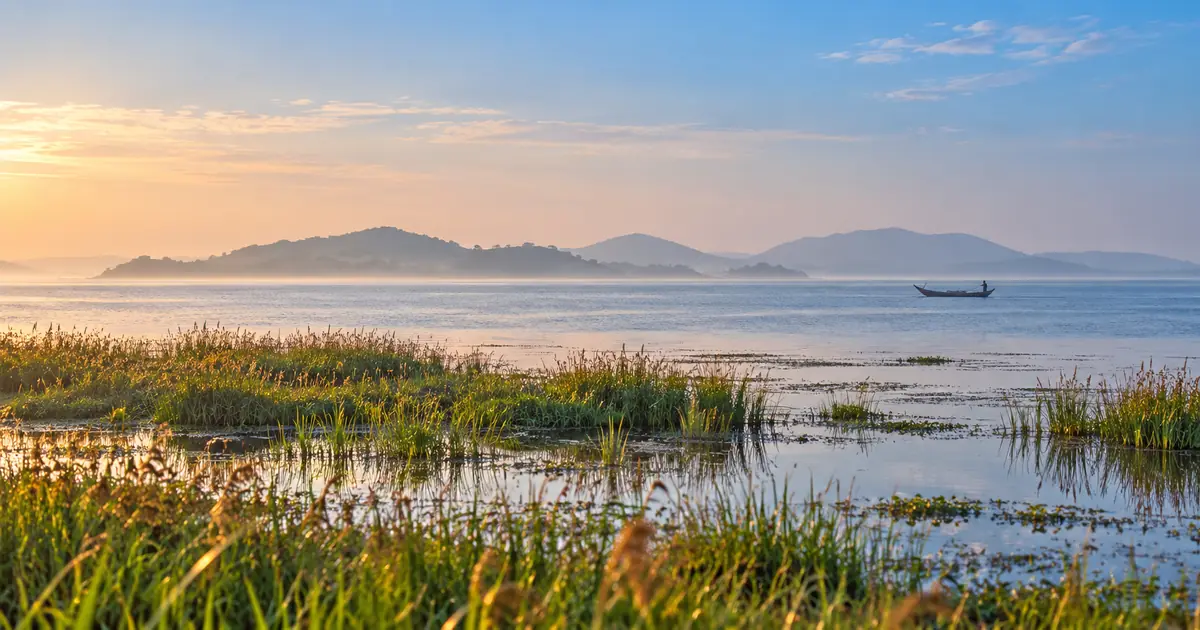
Chilika Lake 2026 Travel Guide: Dolphins, Birds & Islands
Complete 2026 travel guide to Chilika Lake (Ramsar Site). Explore Satapada dolphin boat prices, Mangalajodi birding, Kalijai Temple, ferry timings, and dhabas.
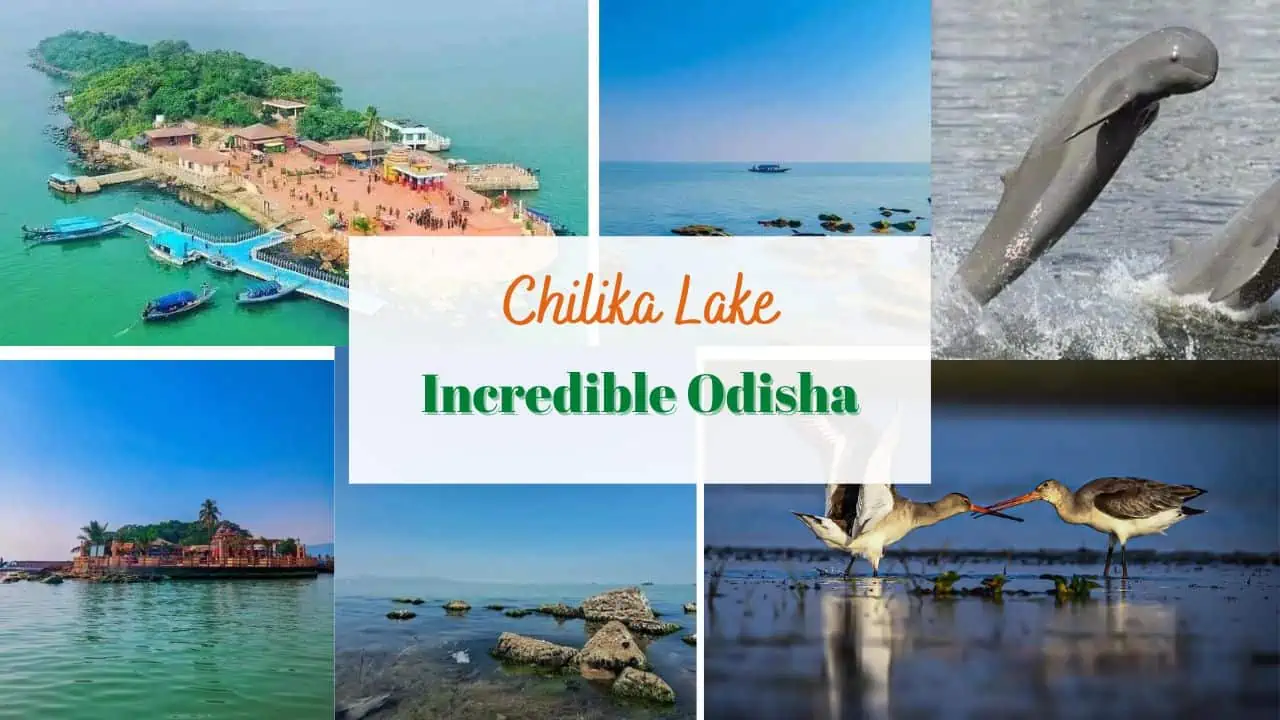
Spanning over 1,100 square kilometers across the coastal districts of Puri, Khordha, and Ganjam, Chilika Lake is Asia’s largest brackish water lagoon and India’s oldest designated Ramsar Wetland of International Importance (Site No. 229). Connected to the Bay of Bengal through a narrow 32-kilometer tidal channel, this vast estuarine ecosystem is nourished by 52 feeding rivers and streams, creating a dynamic wetland habitat where freshwater mixes with marine tides.
During the peak winter months from November to February, Chilika transforms into the largest wintering ground for migratory waterfowl on the Indian subcontinent, hosting over 1.13 million birds migrating along the Central Asian Flyway from Siberia, Ladakh, and the Caspian Sea. Near the sea mouth at Satapada, the lagoon shelters India’s largest stable population of 159 endangered Irrawaddy dolphins, while its central and southern waters are dotted with sacred island shrines, ancient maritime ruins, and fishing villages.
Because the lagoon spans such a vast geographic expanse, visiting Chilika requires choosing the right base hub: Satapada for dolphin watching and the sea mouth, Mangalajodi for quiet birdwatching on non-motorized boats, Barkul for the island shrine of Maa Kalijai, and Rambha for scenic island cruising.
Also explore our master state guide: 20 Best Tourist Places in Odisha
At-a-Glance: Chilika Lake Four-Sector Travel Matrix
Because Chilika covers hundreds of square kilometers with distinct ecological zones, travelers must choose their entry base carefully. The lagoon is divided into four distinct tourist sectors, each catering to different travel experiences:
| Sector & Base Hub | Primary Wildlife & Highlights | Best Suited For | Ideal Visit Timing | Nearest Major Transit Hub |
|---|---|---|---|---|
| 1. Satapada Sector (Puri Side) | Irrawaddy Dolphins, Sea Mouth (Muhan), Rajhans Island, Red Crab Island | Families, Day-trippers from Puri, Dolphin Enthusiasts | 7:00 AM – 9:30 AM (Calm morning waters) | Puri Railway Station (50 km / 1 hr 15 min via NH-316A) |
| 2. Mangalajodi Sector (Khordha Side) | 1.13+ Million Migratory Birds, Silent Hand-Punted Wooden Boats, Macro Bird Photography | Wildlife Photographers, Birders, Conservation Enthusiasts | 6:00 AM – 9:30 AM (Golden morning light) | Bhubaneswar Airport (70 km / 1.5 hrs via NH-16) |
| 3. Barkul Sector (Central Hub) | Kalijai Island Temple, Water Sports Complex, OTDC Panthanivas, Speedboats | Cultural Pilgrims, Families, Weekend Vacationers | 7:00 AM – 4:00 PM (Daily boat crossings) | Balugaon Railway Station (5 km / 10 mins on NH-16) |
| 4. Rambha Sector (Ganjam Side) | Honeymoon Island, Breakfast Island, Beacon Island, 5-Star Luxury Resorts | Couples, Peace Seekers, Luxury Glampers, Sunset Watchers | October to March (Pleasant coastal breezes) | Berhampur (Brahmapur) Station (45 km / 50 mins) |
Distance to Chilika Sectors from Major Odisha Hubs (2026 Table)
| Starting Point | Satapada (Dolphin Zone) | Mangalajodi (Bird Zone) | Barkul (Kalijai Hub) | Rambha (Island Zone) |
|---|---|---|---|---|
| Bhubaneswar (BBI Airport) | 110 km (2.5 hrs) | 70 km (1.5 hrs) | 105 km (2 hrs) | 125 km (2.5 hrs) |
| Puri (Golden Beach) | 50 km (1 hr 15 min) | 85 km (2 hrs) | 115 km (2.5 hrs) | 145 km (3 hrs) |
| Cuttack (Silver City) | 135 km (3 hrs) | 95 km (2 hrs) | 130 km (2.5 hrs) | 155 km (3 hrs) |
| Berhampur (Brahmapur) | 110 km (via ferry) | 90 km (1.5 hrs) | 60 km (1 hr) | 45 km (50 mins) |
Sector 1: Satapada — Spotting Endangered Irrawaddy Dolphins & The Sea Mouth
Located at the southeastern tip of the lagoon where Chilika breaches a narrow sandspit into the Bay of Bengal, Satapada (literally meaning “Seven Villages”) is the premier marine wildlife hub of Odisha.
1. The Endangered Irrawaddy Dolphins (Orcaella brevirostris)
Unlike the acrobatic oceanic bottlenose dolphins, Irrawaddy dolphins are shy, blunt-snouted cetaceans with distinctive rounded foreheads and a gentle, expressive face. They thrive in the brackish, tidal mixing zone where saltwater meets fresh river currents.
- 2026 Wildlife Census: According to the official wildlife census released by the Wildlife Wing of the Odisha Forest Department, Chilika Lake is home to a stable, protected population of 159 Irrawaddy dolphins, making it one of the single largest lagoon populations on planet Earth.
- Unique Biological Adaptations: Unlike oceanic dolphins, Irrawaddy dolphins possess an unusually flexible neck with unfused cervical vertebrae, allowing them to turn their heads side-to-side to hunt in shallow, turbid river channels. They are also famous for spit-hunting behavior—squirting streams of water up to 5 feet into the air to disorient schooling fish and herd them into tight clusters.
- Peak Sighting Window: The best time to observe them is between 6:30 AM and 9:00 AM. Early in the morning, the water is glassy and calm, and the dolphins surface regularly to breathe with a soft, audible exhale (“chuff”). As boat traffic increases after 10:30 AM, they retreat into the deeper channels of the Magarmukh sector.
- Ethical Dolphin Watching Guidelines: Responsible eco-tourism requires motorized boats to maintain an engine-idle distance of at least 50 meters from surfacing pods. Never encourage your boatman to chase mother-calf pairs.
2. The Sea Mouth (Chilika Muhan) & Rajhans Island
- Chilika Sea Mouth: A breathtaking natural wonder where you disembark onto an expansive sandy barrier beach. On your left lies the serene, green brackish lagoon; on your right, the roaring turquoise surf of the Bay of Bengal crashes against the shoreline.
- Rajhans Island: A slender, pristine sand island covered with casuarina groves, offering quiet strolls, local fried fish stalls, and views of red ghost crabs scuttling across the wet sand.
3. Satapada 2026 Official Boating Tariffs
To protect tourists from arbitrary fares, the Dolphin Motor Boat Association and the Odisha Tourism Development Corporation (OTDC) operate unified ticket counters at the Satapada Jetty:
| Boating Route & Package | Trip Duration | Official Tariff (Entire Boat / Up to 8 Pax) | Key Sights Included |
|---|---|---|---|
| Standard Dolphin Trip | 1.5 Hours | ₹1,500 – ₹1,800 | Outer Channel Dolphin Point, Surfacing Pods |
| Gold Sea Mouth Package | 3.5 Hours | ₹3,200 – ₹3,600 | Dolphin Point, Sea Mouth (Muhan), Rajhans Island |
| Diamond Eco Circuit | 4.5 Hours | ₹4,200 – ₹4,600 | Dolphins, Sea Mouth, Red Ghost Crab Island, Chakanasi |
| Cross-Lagoon Transit to Kalijai | 6.5 Hours | ₹5,800 – ₹6,500 | Satapada to Kalijai Island Temple & Barkul (Full Day) |
Sector 2: Mangalajodi — Asia’s Premier Community-Led Birding Paradise
If Satapada is the kingdom of marine mammals, Mangalajodi is the undisputed bird capital of Asia, explored thoroughly in our dedicated Mangalajodi Bird Sanctuary guide. Situated in the northern marshlands of Khordha district, this freshwater wetland represents one of the greatest ecological conservation triumphs in Indian wildlife history.
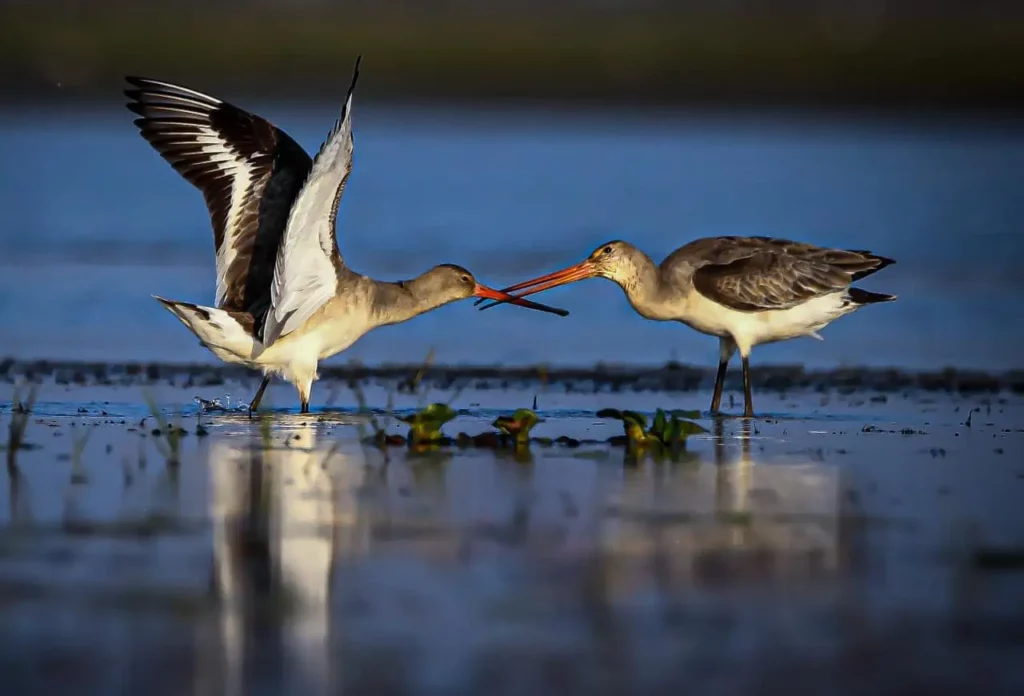
1. From Poachers to Protectors: The Conservation Miracle
Until the late 1990s, Mangalajodi was infamous as a poacher’s haven where over 2,000 birds were trapped and poisoned every night for meat markets. In a remarkable transformation spearheaded by local conservation champions, wildlife organization Wild Odisha, and the formation of the Sri Sri Mahavir Pakshi Suraksha Samiti, the very hunters who once set traps laid down their nets.
Today, these former poachers are internationally acclaimed bird guides who recognize hundreds of species by call, flight pattern, and plumage.
2. The 1.13 Million Bird Census & Key Migratory Species
The joint winter waterbird census conducted by the Chilika Development Authority (CDA) and the Bombay Natural History Society (BNHS) recorded 1,132,200 birds across 196 species throughout the lagoon, with the highest species density concentrated in Mangalajodi and Nalabana:
| Migratory / Resident Bird Species | Scientific Name | Migration Origin | Key Identifying Features & Behavior |
|---|---|---|---|
| Greater Flamingo | Phoenicopterus roseus | Rann of Kutch & Middle East | S-curved necks, pale pink plumage, filter-feeding in shallow mudflats |
| Northern Pintail | Anas acuta | Siberia & Northern Eurasia | Elegant chocolate-brown heads, needle-thin tail feathers, dabbling in pairs |
| Bar-headed Goose | Anser indicus | High-Altitude Tibetan Plateau | High-altitude flyers capable of crossing the Himalayas at 25,000+ ft |
| Garganey | Spatula querquedula | Central Europe & Steppes | Small, agile dabblers with broad white eye-stripes on males |
| Black-tailed Godwit | Limosa limosa | Northern Eurasia | Long, straight orange-based bill probing deep marsh mud for worms |
| Bronze-winged Jacana | Metopidius indicus | Resident Breeding Wetland | Elongated spider-like toes allowing effortless walking over floating lily pads |
| White-bellied Sea Eagle | Haliaeetus leucogaster | Coastal Resident | Apex raptor soaring with distinctive V-shaped wings over open waters |
| Osprey (Fish Hawk) | Pandion haliaetus | Northern Palearctic | Plunging feet-first into lagoon channels to catch live mullet (Khainga) |
3. Month-by-Month Wildlife & Birding Calendar
| Month | Lagoon Ecology & Wildlife Activity | Average Water Temp & Weather |
|---|---|---|
| October | Early scouting arrivals: Garganeys and Pintails land in Mangalajodi marshes | 28°C / Pleasant post-monsoon greenery |
| November | Mass migration begins: Thousands of waders and ducks settle in Nalabana | 24°C / Cool breezes, clear morning skies |
| December – January (Peak) | Over 1.1 Million birds present; Greater Flamingos congregate; Dolphins highly active | 16°C – 22°C / Misty mornings, ideal photography |
| February | Flocks begin fattening up for northern return; National Bird Festival held | 22°C – 26°C / Warm sunny afternoons |
| March – April | Migrants depart for Siberia; Resident nesting waterbirds and Fishing Cats active | 28°C – 32°C / High water clarity for dolphins |
| May – September | Monsoon rejuvenation; Crab breeding; Traditional Kaibarta fishing season | 30°C – 34°C / Lush green peripheral islands |
4. Silent Hand-Punted Country Boats
To protect the avian sanctuary from noise pollution and fuel contamination, motorboats are strictly forbidden inside the Mangalajodi core birding channels.
- Visitors glide through narrow marsh canals on flat-bottomed wooden boats propelled silently by long bamboo poles (Lathi).
- Because the boats move without engine noise, you can drift within 5 to 10 feet of feeding waterfowl without alarming them—providing world-class angles for wildlife photographers.
- Guide & Boat Charges: A 3-hour guided country boat excursion costs ₹1,200 to ₹1,800 per boat (accommodating up to 4 passengers including the boatman-naturalist).
5. Nalabana Bird Sanctuary: The Protected Core of Chilika
Situated centrally within the lagoon, Nalabana Island (literally “Weed-covered Island” in Odia) spans 15.53 square kilometers and was declared a wildlife sanctuary under the Wildlife Protection Act in 1987:
- The Disappearing Island: During the peak monsoon season, the entire island is completely submerged under 5 to 6 feet of floodwater. As winter approaches and water levels recede, the emergent mudflats expose nutrient-packed algae, worms, and mollusks, attracting over 400,000 birds simultaneously.
- Strict Conservation Zone: Landing on Nalabana Island is strictly prohibited by law. Tourist boats are only permitted to cruise along the perimeter watchtowers at an authorized distance to prevent disturbing the roosting flocks.
The People of the Lagoon: Kaibarta Fisherfolk & Traditional Ecology
Beyond its scientific accolades, Chilika is home to more than 150,000 traditional fisherfolk residing across 132 coastal villages whose lives have been intertwined with the lagoon for generations:
1. Traditional Fishing Communities
The primary fishing castes—the Kaibarta, Khandayat, and Nolia—possess an intimate, ancestral understanding of tidal hydrology, fish breeding runs, and salinity variations:
- The ‘Bheta’ Bamboo Traps: Fishermen construct intricate maze-like screens crafted from split bamboo sticks (Bheta) placed in shallow tidal channels to harvest migrating mullet (Khainga) and prawns without harming juvenile fingerlings.
- The ‘Khainga Jal’ Cast Nets: Master fishermen standing balanced on the tips of slender wooden canoes cast circular weighted nets in graceful arcs across bubbling shoals of fish.
2. The Symbiotic Shift to Eco-Tourism
In recent years, community-based tourism models supported by the state government and CDA have provided sustainable alternative livelihoods. Hundreds of local fishermen now serve as licensed boat captains, nature guides, and sanctuary wardens, ensuring that the economic benefits of tourism flow directly into village conservation cooperatives.
Sector 3: Barkul — Kalijai Island Temple & Water Sports Hub
Positioned along National Highway 16 near Balugaon, Barkul is the administrative and spiritual heart of Chilika Lake, housing the headquarters of the CDA and the flagship OTDC Panthanivas.
1. The Sacred Legend of Goddess Kalijai
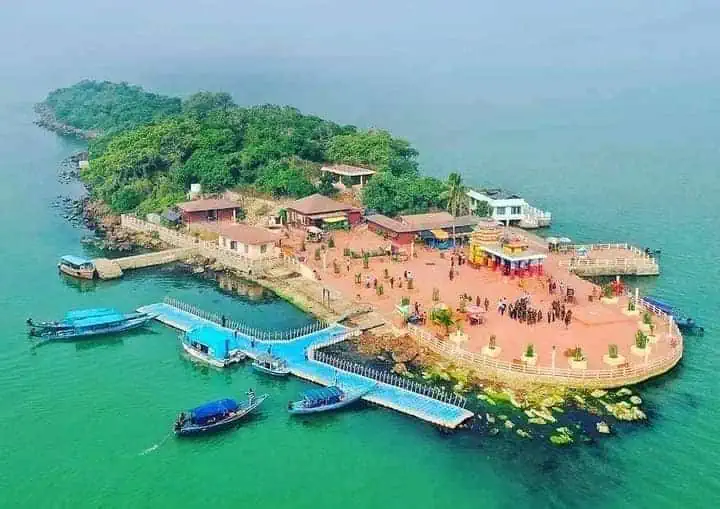
Perched on an emerald island 18 km out in the open lagoon stands the revered Maa Kalijai Temple, the divine guardian deity of all fishermen and boatmen who navigate Chilika’s waters:
- The Legend of Jai: Folk tradition recounts that in ancient times, a young, virtuous village girl named Jai was traveling by boat with her father across the lagoon to her wedding in Parikud. Suddenly, a violent coastal squall capsized the vessel near a rocky outcrop. While her father survived, the innocent young bride drowned in the deep water. Her spirit attained divinity as Goddess Kalijai.
- Makar Mela Festival (January 14): During Makar Sankranti, over 100,000 pilgrims travel in thousands of brightly flagged boats to Kalijai Island for a grand annual festival. The Raja of Parikud traditionally performs the first ceremonial worship.
- Boat Ride to Kalijai Island: Motorized OTDC and association catamarans take 45 to 60 minutes each way from the Barkul jetty. Round-trip boat fares average ₹1,800 to ₹2,400 per boat (or ₹200–₹250 per passenger on scheduled shared launches).
2. OTDC Water Sports Complex at Barkul
For thrill-seekers, the state tourism department operates high-powered twin-engine speedboats, water scooters, jet skis, and pedal boats from the Barkul water sports pavilion.
Sector 4: Rambha — The Scenic Archipelago & Hidden Southern Islands
Situated at the southern end of the lagoon in Ganjam district, Rambha offers the most panoramic, hill-fringed landscape on the lake, surrounded by rolling Eastern Ghats spurs and tranquil bays.
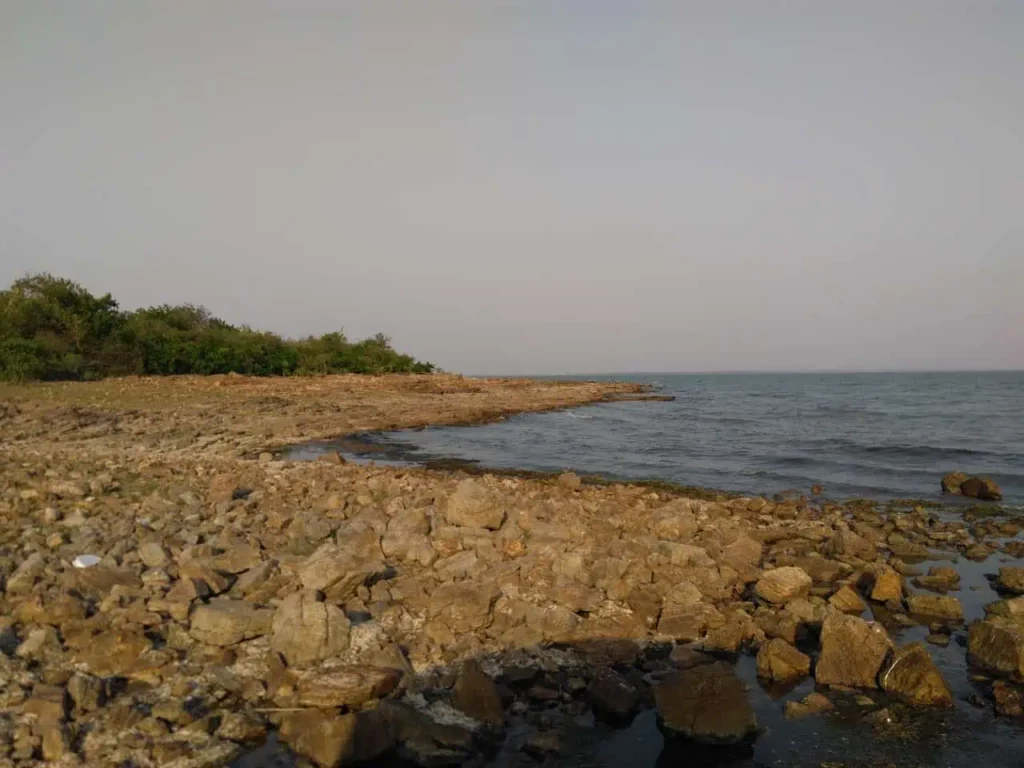
1. The Hidden Islands of Rambha Bay
- Honeymoon Island (Barkuda Island): A picturesque, vegetated island celebrated as the exclusive habitat of the Barkudia insular—a critically endangered, limbless burrowing skink discovered in 1917 and found nowhere else in the world.
- Breakfast Island (Sankuda Island): A miniature rocky islet housing an ancient, whitewashed conical room erected in the 1800s by Mr. Snodgrass, the British Collector of Ganjam, as an isolated office retreat.
- Beacon Island: A dramatic rock outcropping crowned with an architectural stone beacon built during colonial maritime trade.
- Bird Island: A rocky crag white with natural guano deposits, serving as a massive roosting site for hundreds of resident cormorants, egrets, and herons.
Ancient Maritime History: Palur Port and the Seafaring Sadhabas of Kalinga
Chilika was not always a semi-enclosed lagoon; two thousand years ago, it formed an expansive oceanic gulf and one of ancient India’s premier international maritime trading gateways:
1. The Ancient Port of Palur (Paloura)
In the 2nd century CE, the famous Greco-Roman geographer Claudius Ptolemy documented the prosperous international harbor of Paloura (modern-day Palur), situated on the southern shores of Chilika. Merchant vessels from the Roman Empire, Persia, and China anchored here to trade gold, silk, and spices.
2. The Sadhabas and the Boita Bandana Tradition
During ancient and medieval times, the seafaring merchants of Kalinga—known as Sadhabas—embarked on daring trans-oceanic voyages from Chilika’s deep anchorages to the Indonesian archipelago (Suvarnadvipa: Java, Sumatra, Bali, and Borneo) as well as Sri Lanka (Simhala). Every year during the full moon of Kartik Purnima, families gathered along Chilika’s shores to perform Boita Bandana—floating miniature decorative boats crafted from banana bark and betel leaves with oil lamps to pray for the safe return of their mariners.
3. The Myth of Pirate King Raktabahu
According to the Madala Panji (the ancient temple chronicle of Jagannath in Puri), a foreign pirate invader named Raktabahu sailed his armada secretly toward Puri to plunder the Jagannath Temple. Warned by priests, the deities were concealed inland. When Raktabahu’s warships approached the coast, the ocean miraculously surged forward, engulfing the entire pirate fleet and forming the vast lagoon of Chilika.
Where to Stay in Chilika: Complete 2026 Accommodation Comparison
| Property Name & Sector | Accommodation Type | Tariff Range (2026 Rates) | Key Amenities & Highlights |
|---|---|---|---|
| Swosti Chilika Resort (Rambha) | 5-Star Luxury Eco-Resort | ₹8,500 – ₹18,000 / Night | Lake-view luxury villas, infinity pool, ayurvedic spa, private yacht tours |
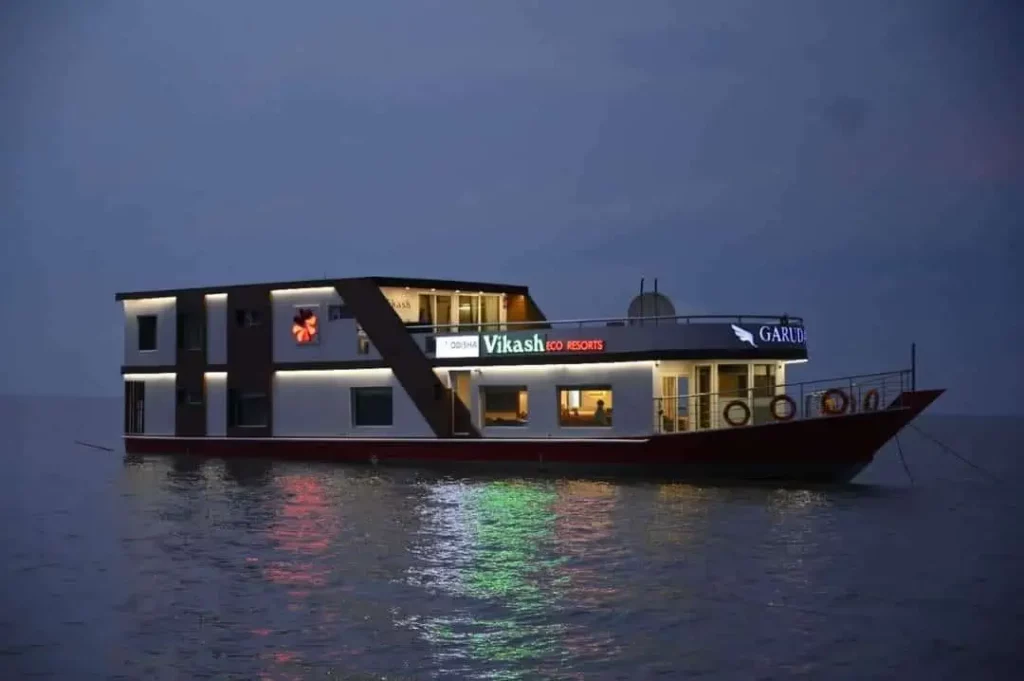
| Garuda Chilika Houseboat (Barkul) | Luxury Floating Houseboat | ₹21,000 – ₹29,500 / Night | All-inclusive floating suite, private chef, Odissi dance on deck, stargazing |
| OTDC Panthanivas Barkul | Government Tourist Lodge | ₹1,800 – ₹3,500 / Night | Direct jetty access, AC deluxe rooms, reliable restaurant serving Chilika prawns |
| OTDC Panthanivas Rambha | Government Heritage Lodge | ₹1,600 – ₹3,200 / Night | Sprawling lawns overlooking southern islands, calm ambiance, budget friendly |
| Mangalajodi Eco-Camp | Community Nature Camp | ₹3,000 – ₹5,000 / Night | Rustic eco-cottages, resident bird naturalists, authentic Odia village cuisine |
| Eco-Retreat Chilika (Pata) | Seasonal Luxury Glamping | ₹7,500 – ₹14,000 / Night | Glamourous Swiss tents, cultural evenings, water sports, seasonal (Nov–Feb) |
The Smart Traveler Shortcut: Janhikuda to Satapada Vehicle Ferry
One of the best-kept travel secrets in Odisha is the Janhikuda-Satapada Vehicle Ferry, operated by the Commerce and Transport Department.
Why Use the Vehicle Ferry?
If you are driving along the Golden Triangle from Puri or Konark and wish to continue south toward Gopalpur, Berhampur, or Andhra Pradesh (or vice versa), driving around the entire northern perimeter of Chilika requires a 160 km detour. The vehicle ferry carries your car, SUV, or motorbike straight across the 8-kilometer mouth of the lagoon, cutting your travel distance by nearly 100 kilometers.
| Vehicle Category | One-Way Ferry Tariff | Boarding Details |
|---|---|---|
| Cars & Hatchbacks | ₹400 – ₹450 | Includes vehicle + driver + 1 co-passenger |
| SUVs & Large Vehicles | ₹500 – ₹600 | Includes vehicle + driver |
| Motorcycles & Scooters | ₹20 – ₹30 | Drive directly onto the vessel deck |
| Individual Passengers | ₹10 | Walk-on passenger boarding |
- Crossing Time: 35 to 45 minutes across the serene lagoon channel.
- Operating Hours: Departs daily between 7:00 AM and 5:30 PM on a first-come, first-served basis (frequency roughly every 90 minutes depending on tides).
The Chilika Seafood Trail: Giant Prawns, Mud Crabs & Local Dhabas
Because Chilika is a brackish estuary where sweet river waters blend with nutrient-rich sea currents, its marine life possesses a distinctive, naturally sweet taste celebrated across India:
- Giant Tiger Prawns (Bagda Chingudi): Enormous prawns pan-fried in pure mustard oil with crushed ginger, garlic, and fresh green chilies.
- Chilika Mud Crabs (Kankada Kassa): Heavy, meaty crabs cooked in traditional brass kadhais with a slow-roasted paste of cumin, coriander, black cardamom, cloves, and fiery red chilies until the masala clings rich and dark to the cracked crab claws.
- Crispy Fried Khainga & Bhekti Fish: Freshly caught mullet (Khainga) and seabass (Bhekti) seasoned with turmeric and salt, crisp-fried and paired with steaming Pakhala Bhata (fermented rice) and Badi Chura.
The “Fresh Catch” Direct Purchase Travel Hack
If you want the freshest seafood at wholesale prices, visit the Balugaon Fish Landing Center (near Barkul) or the Satapada Jetty Market at 6:30 AM as the night-fishing catamarans return. You can purchase live mud crabs and giant tiger prawns directly from the fishermen by weight, then carry them to trusted roadside dhabas (such as Chilika Dhaba or Narayani Dhaba), where chefs will clean and cook them according to your preferred spice level for a nominal cooking charge of ₹150 to ₹250.
Top Recommended Dhabas Near Chilika
- The Iconic Chilika Dhaba (Barkul): Located on NH-16 near the Balugaon bypass, legendary for fresh butter garlic prawns and crab masala.
- Narayani Dhaba (Near Narayani Temple turning): A famous local favorite for fiery traditional Odia seafood curries.
- OTDC Panthanivas Restaurants (Barkul & Rambha): Hygienic, air-conditioned dining offering verified fresh seafood thalis.
Read our complete state food guide: 10 Famous Odisha Foods You Must Try
Eco-Resorts & Luxury Glamping on the Lagoon
| Stay Category | Featured Properties & Hubs | Ideal For | Highlights & Services |
|---|---|---|---|
| Luxury & Houseboats | Swosti Chilika Resort (Rambha), Garuda Luxury Houseboat (Barkul), Eco-Retreat (Pata) | Couples, Luxury Seekers, Special Occasions | 5-star villas, infinity pools, private yacht tours, floating suites |
| Community Eco-Camps | Mangalajodi Eco-Cottages, Berhampura Nature Camp | Birders, Photographers, Nature Lovers | Rustic bamboo cottages, village naturalists, home-cooked food |
| Trusted Mid-Range / Budget | OTDC Panthanivas (Barkul & Rambha), Balugaon Traveler Lodges | Families, Solo Travelers, Pilgrims | Direct jetty access, AC rooms, verified fresh seafood dining |
Featured Stays:
- Swosti Chilika Resort (Rambha): A premier 5-star eco-luxury resort featuring lake-view villas, landscaped jogging trails, an infinity pool overlooking the lagoon, and private yacht cruises.
- Garuda Chilika Luxury Houseboat: A floating palace equipped with state-of-the-art air-conditioned suites, panoramic viewing decks, and onboard chefs serving traditional Odia feasts.
- Chilika Nature Camps (Mangalajodi & Berhampura): Managed by local community forest protection committees, providing clean bamboo cottages, home-cooked local meals, and resident naturalists. Check our detailed guide: Chilika Lake Nature Camps.
Ecological Triumph: Ramsar Site #229 & Global Conservation
In the late 1990s, Chilika was choking. Severe siltation from 52 feeding rivers had choked the natural sea mouth, dropping lagoon salinity, decimating fish populations, and causing the rampant growth of invasive freshwater weeds. In 1993, the wetland was placed on the prestigious Montreux Record of endangered Ramsar ecosystems.
In September 2000, the Chilika Development Authority (CDA), guided by scientific hydrologic modeling, executed an ambitious engineering feat: opening a new, artificial sea mouth at Sipakuda.
- The Result: Tidal exchange was restored within 48 hours, lagoon salinity rebounded, fish and crab yields multiplied eight-fold, and weed infestations receded.
- Global Recognition: In 2002, Chilika became the first wetland in Asia to be successfully removed from the Montreux Record, and the CDA was awarded the prestigious Ramsar Wetland Conservation Award.
Wildlife Photography Masterclass: Camera Settings & Field Ethics
Capturing razor-sharp wildlife images on Chilika’s moving waters requires specialized field techniques:
1. Recommended Camera Gear
- Telephoto Lenses: A 100–400mm or 150–600mm telephoto lens provides the perfect balance of reach and handheld maneuverability.
- Support System: Tripods are cumbersome and transmit boat engine vibrations directly to your sensor. Instead, use a cushioned beanbag rested against the wooden gunwale or handhold your camera with optical image stabilization (IS/VR) enabled.
- Corrosion Protection: Salt spray and brackish moisture are corrosive to camera electronics. Keep a silicone rain sleeve over your camera body and wipe down your barrel with a dry microfiber cloth after every morning cruise.
2. Camera Settings Matrix for Moving Boats
| Subject & Action | Shutter Speed | Aperture | ISO Range | Focus Mode & Metering |
|---|---|---|---|---|
| Birds in Flight (BIF) | 1/2500s – 1/3200s | f/5.6 – f/8 | ISO 400 – 1000 | Continuous AF (AF-C / AI Servo) + Dynamic Area |
| Feeding Waders in Marshes | 1/1000s – 1/1600s | f/5.6 – f/6.3 | ISO 200 – 600 | Single Point Eye-AF + Matrix Metering |
| Dolphins Surfacing | 1/2000s – 1/2500s | f/6.3 – f/8 | ISO 400 – 800 | Continuous AF + High-Speed Burst Mode |
| Golden Hour Lagoons | 1/250s – 1/500s | f/8 – f/11 | ISO 100 – 200 | Single Shot AF + Evaluative Metering |
- Taming Lagoon Glare: Because bright morning sunlight reflects off the shallow alkaline water, your camera’s internal meter will often underexpose dark-plumaged birds. Dial in +0.3 to +0.7 EV exposure compensation for flying dark raptors, and -0.7 EV when shooting pale pink flamingos against deep blue water.
Scam Prevention & Practical Winter Travel Advisory
1. Debunking the “Fake Pearl Oyster” Scam
A prevalent trick practiced by unauthorized boatmen around certain islands involves offering to open a fresh oyster to “discover” a rare pearl, which is then offered to travelers for ₹500–₹1,500. These are synthetic, artificially placed plastic beads. Politely decline and book boats only through authorized OTDC or registered association counters.
2. Peak Winter Morning Fog Advisory
During late December and January, dense sea fog frequently rolls across the lagoon, reducing visibility to zero. Maritime authorities hold all passenger boat departures at Barkul and Satapada until 9:30 AM – 10:30 AM on foggy mornings for passenger safety. Plan your schedule accordingly.
Suggested 3-Day Ultimate Chilika Explorer Itinerary
- Day 1: The Birding Paradise (Mangalajodi & Barkul):
- 6:00 AM: Depart Bhubaneswar for Mangalajodi (1.5 hrs).
- 7:30 AM – 10:30 AM: Silent hand-punted birding boat safari with former poacher guides.
- 12:30 PM: Drive to Barkul on NH-16, lunch at Chilika Dhaba (fresh tiger prawns).
- 3:30 PM: Boat cruise to Kalijai Island Temple. Overnight at OTDC Panthanivas or Nature Camp.
- Day 2: The Southern Archipelago (Rambha & Luxury Sunset):
- 8:30 AM: Scenic drive to Rambha (45 mins).
- 10:00 AM – 1:00 PM: Island hopping to Honeymoon Island, Breakfast Island, and Beacon Island.
- 4:00 PM: High tea and sunset cruise from Swosti Chilika Resort deck.
- Day 3: The Dolphin Sanctuary & Marine Drive (Satapada to Puri):
- 7:00 AM: Cross on the Janhikuda-Satapada vehicle ferry.
- 8:30 AM – 11:30 AM: Dolphin watching cruise at Satapada and walk along the Sea Mouth sandspit.
- 1:00 PM: Drive along the scenic coastal highway to Puri Beach and explore the sacred Shree Jagannath Temple in Puri.
Frequently Asked Questions (2026 Edition)
1. What is the best time of year to visit Chilika Lake?
The best time to visit is from October to March, with peak migratory bird numbers and dolphin activity between November and February.
2. Where are the Irrawaddy dolphins found in Chilika?
Irrawaddy dolphins are concentrated in the Satapada sector at the southeastern end of the lagoon (50 km from Puri), where the lake meets the Bay of Bengal.
3. How much does boating cost at Chilika Lake in 2026?
Official OTDC and association rates range from ₹1,500 to ₹1,800 for a 1.5-hour standard dolphin trip at Satapada, ₹1,800 to ₹2,400 for Kalijai Island from Barkul, and ₹1,200 to ₹1,800 for a 3-hour silent birding boat at Mangalajodi.
4. Which sector is best for bird watching, Mangalajodi or Nalabana?
Mangalajodi is the best sector for travelers and photographers because visitors can enter the shallow channels in silent wooden boats. Landing on Nalabana Island is strictly prohibited as it is a core sanctuary zone; birds can only be viewed from boats from an outer perimeter.
5. Can I take my car across Chilika on the ferry?
Yes, the Janhikuda-Satapada Vehicle Ferry operates daily from 7:00 AM to 5:30 PM, transporting cars (₹400–₹450), SUVs, and motorbikes across the lagoon, saving 100 km of driving.
6. What is the legend behind Kalijai Temple?
Goddess Kalijai is revered as the divine transformation of Jai, an innocent village bride who drowned during a sudden squall while crossing the lagoon. She is worshiped by all boatmen as the protective guardian deity of Chilika.
7. How far is Chilika Lake from Bhubaneswar and Puri?
Mangalajodi is 70 km (1.5 hrs) from Bhubaneswar Airport. Satapada is 50 km (1 hr 15 mins) from Puri Railway Station, and Barkul is 105 km (2 hrs) from Bhubaneswar on NH-16.
8. What seafood dishes should I try at Chilika?
You must try the Giant Tiger Prawn Masala (Bagda Chingudi), Chilika Mud Crab Curry (Kankada Jhola), and Crispy Fried Khainga (Mullet) served at iconic dhabas like Chilika Dhaba in Barkul.
9. What is the Fake Pearl Scam in Chilika?
Some unauthorized boatmen offer to cut open fresh oysters to “find” rare pearls for tourists to buy. These are synthetic, pre-inserted plastic beads. Always decline and stick to official OTDC boating services.
10. Can I book luxury houseboats on Chilika Lake?
Yes, the Garuda Chilika Luxury Houseboat offers 5-star air-conditioned suites, viewing decks, and gourmet dining for overnight lake cruises departing from the Barkul/Rambha sectors.