Chilika Lake Nature Camps – 2026 Travel & Booking Guide
Plan your 2026 trip to Chilika Lake Nature Camps. Discover booking prices for Rajhans, Berhampura, and Mangalajodi, plus local tips on birding and dolphins.
The first time I watched the sun rise over the horizon at Chilika Lake, I realized that some places on earth don’t just offer a view; they offer a soul-stirring experience. Standing on the narrow strip of land at Rajhans, with the gentle ripples of Asia’s largest brackish water lagoon on one side and the thunderous waves of the Bay of Bengal on the other, I felt a sense of peace that’s hard to find in our fast-paced 2026 world. If you’re looking for an escape that blends raw nature with authentic Odia hospitality, the Chilika Lake Nature Camps are calling your name.
I’ve put together my experiences from visiting the three primary eco-retreats: Rajhans Nature Camp, Berhampura Nature Camp, and Mangalajodi Nature Camp. I’ve found that these spots offer a front-row seat to one of the most vibrant ecosystems in the world, no matter if you’re there for the birds, the photography, or just the silence.
Why Chilika Lake Nature Camps are Special in 2026
Chilika isn’t just a lake; it’s a living, breathing landscape that changes with every tide. Spanning over 1,100 square kilometers, it’s a RAMSAR site and a haven for over a million migratory birds that fly in from as far as Siberia and the Caspian Sea. But what makes the experience truly special is the “Nature Camp” model run by the Odisha Forest Development Corporation (OFDC).
Unlike luxury resorts that isolate you from the environment, these camps are designed to immerse you in it. I’ve stayed at several places across India, but there’s something unique about waking up to the call of a Purple Heron or seeing an Irrawaddy dolphin break the surface just meters from your boat. As of 2026, these camps have become even more sustainable, focusing on zero-plastic initiatives and community-led conservation. The revenue generated goes directly back into protecting the lake and supporting the local communities who have lived here for generations.
Consider reading: 20 Must-Visit Best Tourist Places in Odisha
Chilika Lake Nature Camps 2026 Price and Booking Details
One of the first questions I get asked is about the cost. Let’s be honest, planning a trip involves budgeting, and luckily, the eco-tourism model in Odisha is quite transparent. The prices for 2026 have seen a slight adjustment to reflect the enhanced facilities and conservation efforts.
All bookings are handled through the official Eco Tour Odisha portal. Here is the current tariff structure for the peak season of 2026:
| Nature Camp | Accommodation Type | Price Per Night (2 Adults) | Total with Tax (Approx) |
|---|---|---|---|
| Rajhans Nature Camp | AC Tent / Double Bed | ₹5,000 | ₹5,840 |
| Berhampura Nature Camp | AC Suite / Comfort Room | ₹5,000 | ₹6,190 |
| Berhampura Nature Camp | Non-AC Double Bed | ₹4,500 | ₹5,571 |
| Mangalajodi Nature Camp | AC Cottage / Double Bed | ₹5,000 | ₹6,190 |
| Mangalajodi Nature Camp | Non-AC Suite | ₹4,500 | ₹5,571 |
Pro Tip for Travelers: The tariff is on an American Plan (AP), which means your breakfast, lunch, and dinner are included. Trust me, the food here is a highlight—fresh, local, and packed with authentic flavor. If you’re traveling with kids (4-18 years), expect an additional charge of about ₹1,000 to ₹1,200 depending on the camp. Prices may vary slightly during the festive weeks of December and January.
Official Eco Tour Odisha Booking Portal
Rajhans Nature Camp: Where the Sea Meets the Lake

A peaceful afternoon at the Rajhans Nature Camp, nestled between the lagoon and the sea.
If I had to pick one place for a romantic getaway or a deep-nature experience, it would be Rajhans.
Located on a narrow sand bar, Rajhans is accessible only by boat from Satapada. The boat ride itself is an adventure—about 45 minutes of gliding through the blue waters, often accompanied by the “popping” sound of Irrawaddy dolphins.
The Vibe at Rajhans
Imagine waking up and walking 500 meters to your left to see a calm lake, then walking 500 meters to your right to stand on a wild, pristine beach facing the Bay of Bengal. That’s Rajhans. There are no permanent residents here except for the forest guards and the camp staff. At night, the only sound you hear is the rhythmic crashing of the waves.
The accommodation at Rajhans consists of elevated tents and cottages that are surprisingly comfortable. In 2026, the interiors have been updated with sustainable bamboo furniture and local handicrafts. I remember sitting on the wooden deck of my tent at 10 PM, watching the moon reflect on the lake while the sea breeze cooled the air—it’s a sensory experience you won’t find in any city hotel.
Activities You Can’t Miss at Rajhans
- Dolphin Spotting: Satapada is famous for Irrawaddy dolphins. These aren’t the leaping bottle-nose dolphins you see in movies; they are shy, snub-nosed creatures that rise gently to breathe. The best time to see them is between 7 AM and 9 AM.
- Sea-Mouth Visit: Take a boat to the spot where the lake meets the sea. The contrast in water color and the sheer power of the confluence is breathtaking. In 2026, the “New Mouth” (opened in 2000) has stabilized, creating a vibrant ecosystem for fish and birds.
- Star Gazing: With zero light pollution, the 2026 night sky at Rajhans is a canvas of stars. I remember lying on the sand and seeing the Milky Way clearly—a rare sight for city dwellers. Bring a basic star-map app; you’ll be amazed at what you can identify.
- Nature Walks: The sand bar is home to several species of lizards and ground-nesting birds. A walk along the beach might also reveal Olive Ridley turtle tracks if you visit during the nesting season (Jan-March).
Berhampura Nature Camp: The Island of Silence

The secluded and tranquil Berhampura Nature Camp, surrounded by lush plantations.
Often confused with the city of Berhampur, the Berhampura Nature Camp is actually an island located near Satapada.
It’s often referred to as the “Island of Silence,” and for good reason. While Rajhans has the sea breeze, Berhampura is tucked away in a more sheltered part of the lagoon, surrounded by cashew and coconut plantations.
Why I Love Berhampura
If Rajhans is for the adventurous, Berhampura is for the meditator. The camp is set amidst a thicket of trees, providing a natural canopy. During my last visit in early 2026, I spent hours just sitting on the porch of my cottage, watching the local fishermen cast their nets (known as Khae in Odia) in the distance. The camp is smaller and more intimate than Rajhans, making it perfect for those who truly want to disappear for a few days.
Local Insight: The Cashew Trails
Most people don’t know that Berhampura has beautiful trails through cashew orchards. In the spring (Feb-March 2026), the air is thick with the sweet, intoxicating scent of cashew apples. It’s a great place for a morning walk where you can spot resident birds like the Coppersmith Barbet and various species of Kingfishers. You might even spot a Golden Jackal or a Monitor Lizard if you’re quiet enough.
Consider reading: Chilika Lake 5 Things To Do And See
Mangalajodi Nature Camp: A Conservation Miracle

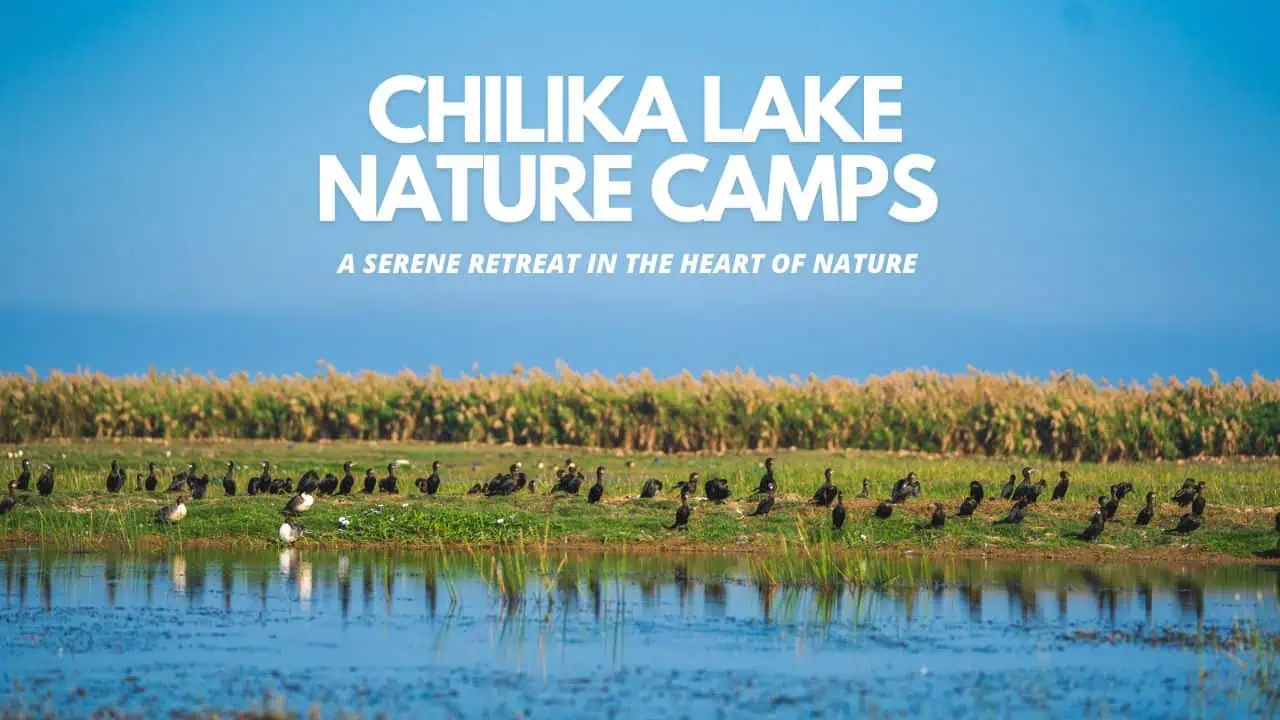
Bird watching at Mangalajodi, a true paradise for nature enthusiasts.
Mangalajodi is not just a destination; it’s a story of transformation.
Twenty years ago, this village was known for bird poaching. Today, it’s one of the best birding destinations in Asia. This shift from “Poachers to Protectors” is a testament to the power of community-led conservation, spearheaded by groups like Wild Orissa and supported by the Odisha Government.
The Birding Experience
Unlike the other camps where you use motorized boats, Mangalajodi uses traditional wooden boats that are hand-punted. This is crucial because it allows you to get remarkably close to the birds without disturbing them. The silence of the marsh is only broken by the sound of the bamboo pole hitting the water and the occasional call of a Swamphen.
My guide, a former poacher who now knows the scientific names of every bird in the marsh, pointed out a Black-tailed Godwit just a few feet away. “Look at the plumage,” he whispered in Odia, “it has traveled thousands of miles from Siberia to be here with us in 2026.” The depth of knowledge these local guides possess is staggering—they can identify a bird from a single feather or a distant silhouette.
Key Bird Species to Spot in 2026
- Migratory: Northern Pintail, Black-winged Stilt, Ruddy Shelduck (Brahminy Duck), Gadwall, and the elegant Garganey.
- Resident: Purple Swamphen (the mascot of Mangalajodi), Bronze-winged Jacana, Pheasant-tailed Jacana, and the elusive Cinnamon Bittern.
- Raptors: You can often spot the majestic White-bellied Sea Eagle or the Brahminy Kite circling the marshes looking for a meal.
Best Time for Mangalajodi
While Chilika is great year-round, for Mangalajodi, you must visit between mid-November and February. This is when the marshes are teeming with hundreds of thousands of birds. In 2026, the peak season saw a record number of arrivals, making it a photographer’s paradise.
Tastes of the Lake: Chilika Prawns and Crabs

Authentic Odia cuisine, including the famous seafood from Chilika Lake.
You cannot visit a Chilika Lake Nature Camp and not talk about the food.
The “Chilika Prawn” is legendary in Odisha. These are brackish water prawns, which means they have a unique sweetness compared to sea prawns. The local community has a specific way of preparing them that enhances this natural flavor.
A Typical Camp Menu
The meals at the nature camps are served in a communal dining hall, fostering a sense of community among travelers. Here’s what you can expect:
- Lunch: Authentic Odia thali with steamed rice, Dalma (lentils with vegetables), a seasonal veg fry, and the star of the show—Chilika Prawn Malai Curry or deep-fried Spicy Crabs.
- Dinner: Usually a bit lighter, often featuring Roti, a chicken or fish curry, and a sweet dish like Kheer or Chhena Poda.
Local Tip: If you’re a seafood lover, ask the chef for “Chilika Kankada” (Crab) masala. The shells are hard, but the meat inside is the most succulent you’ll ever taste. And if you want to try something truly local, ask for Pakhala Bhata (fermented rice) with some fried dried fish (Sukhua) on a hot afternoon. It’s the ultimate comfort food for an Odia soul.
Detailed 2026 Bird Watching Guide for Chilika
For those visiting specifically for the birds, here is a breakdown of what to look for and where:
1. Nalbana Bird Sanctuary (Core Area)
Nalbana is a 15-sq km island that stays submerged during the monsoon and emerges in winter. It’s the core of the Chilika Bird Sanctuary. While you can’t step onto the island, a boat ride around its periphery is essential. This is where you’ll see the massive “pink clouds”—flocks of thousands of Greater and Lesser Flamingos. In February 2026, the flamingo count was at an all-time high.
2. The Waders of Mangalajodi
The muddy banks of Mangalajodi are perfect for waders. Look for the Black-winged Stilt with its impossibly long pink legs and the Pacific Golden Plover. The Ruff is another interesting bird you’ll see here; their varied plumage makes them a challenge even for experienced birders.
3. The Raptors of the Outer Channel
As you travel towards the sea mouth from Rajhans, keep your eyes on the sky. The Osprey is a frequent visitor here, often seen diving into the water to catch a fish. The White-bellied Sea Eagle is another resident majesty you shouldn’t miss.
4. The Residents of the Cashew Orchards
In camps like Berhampura, don’t just look at the water. The trees are home to Indian Rollers (the state bird of Odisha), Asian Koels, and various Sunbirds. The flash of blue from a Small Blue Kingfisher is a common sight near the camp’s edge.
Photography Tips for 2026 Travelers
Capturing the beauty of Chilika requires a bit of planning. Here are my top tips for getting that perfect shot:
- Golden Hour is King: The 30 minutes before sunrise and after sunset are magical. The light reflecting off the brackish water creates a golden glow that’s perfect for silhouettes of birds or fishermen.
- Stability on Boats: When in a boat, especially the hand-punted ones at Mangalajodi, keep your shutter speed high (at least 1/1000s) to compensate for the boat’s movement. Use a monopod if needed, but a tripod is usually too bulky for the small boats.
- Focus on Behavior: Don’t just take “portrait” shots of birds. Wait for them to take flight, hunt, or engage in a mating dance. The Pheasant-tailed Jacana walking on lily pads makes for a stunning action shot.
- Protect Your Gear: Saltwater and electronics don’t mix. Carry a dry bag for your camera and lenses, especially during the boat ride from Satapada to Rajhans where the spray can be significant.
Multi-Day Itineraries for 2026
To help you plan, here are two suggested itineraries based on my recent travels:
The “Quick Escape” (3 Days / 2 Nights)
- Day 1: Arrive at Satapada, take the boat to Rajhans Nature Camp. Evening walk on the beach.
- Day 2: Morning dolphin safari and sea-mouth visit. Afternoon walk to the local village or bird watching near the camp.
- Day 3: Sunrise at the beach, breakfast, and boat back to Satapada. Visit the Interpretation Centre at Satapada before heading back to Bhubaneswar.
The “Deep Nature Dive” (5 Days / 4 Nights)
- Day 1: Reach Mangalajodi Nature Camp. Evening sunset boat ride through the marshes.
- Day 2: Full day birding at Mangalajodi (morning and afternoon sessions). Learn about the conservation history from the guides.
- Day 3: Drive to Satapada (approx 2 hours). Take the boat to Berhampura Nature Camp. Afternoon walk through cashew orchards.
- Day 4: Morning boat trip to Nalbana for flamingo spotting. Evening at the sea mouth.
- Day 5: Leisurely breakfast, boat back to Satapada, and departure.
A Day in the Life at a Chilika Nature Camp
What does a typical day look like? Let me paint a picture for you based on my 2026 experiences. Each camp has its own rhythm, but they all share the same connection to the sun and the tides.
05:30 AM: The Awakening Wake up to the sound of a bell or the natural chorus of birds. At Rajhans, you might hear the distant roar of the ocean. Have a quick cup of hot tea or coffee on your porch. The morning mist over the lake is often thick, giving the landscape a mystical feel. This is when the air is crispest, and the world feels brand new.
06:00 AM: The Morning Safari Head out for your morning boat safari. This is the absolute best time for photography as the light is soft, golden, and the birds are most active. In Mangalajodi, the punted boats move silently through the reeds, allowing you to hear the subtle “splosh” of a fish jumping or the rustle of a Purple Heron taking flight. The water is usually glass-calm, reflecting the sky in a way that makes you feel like you’re floating in space.
09:00 AM: Breakfast and Reflection Return for a hearty breakfast of Puri-Sabji (a local favorite) or Upma with coconut chutney. As you eat in the communal dining area, you’ll find yourself swapping stories with other travelers—sharing photos of a rare bird or the moment a dolphin surfaced right next to the boat.
11:00 AM: Mid-Morning Exploration For Rajhans, this is the time to walk to the beach. The sun is higher now, turning the sand into a sparkling white carpet. For Mangalajodi, you might take a village walk. I recommend visiting the local school or the community center to see how the eco-tourism revenue is being used to build infrastructure. You’ll see children who can identify birds by their calls before they can even read, a testament to the deep-rooted conservation culture.
01:30 PM: The Great Chilika Lunch Lunch time! Prepare for a food coma after that prawn curry. The food is prepared with minimal oil and maximum flavor, using traditional clay pots in some sections. The taste of Dalma cooked over a wood fire is something you’ll remember long after you’ve left Odisha.
04:00 PM: The Afternoon Rhythm After a short siesta (essential in the humid air), head out for your afternoon activity. This could be another boat ride to a different part of the lake, a visit to a nearby island like Kalijai, or just relaxing with a book in a hammock. The light starts to soften again, and the lake takes on a silvery-blue hue.
06:30 PM: Evening Sunset and Stories As the sun dips below the horizon, painting the sky in shades of violet and orange, return to the camp for evening snacks and tea. At Rajhans, this is often accompanied by a small bonfire (in winter). The camp staff, many of whom are from the local villages, often share stories of the lake—of great storms, legendary fish, and the spirits that protect the water.
08:30 PM: Dinner and The Deepest Sleep A simple but delicious dinner, often featuring local river fish or chicken curry. After dinner, take a moment to look at the stars. The silence of the lake ensures the best sleep you’ve had in years. There are no city sounds here—just the wind, the water, and the occasional call of a nocturnal bird.
The Mangalajodi Transformation: A Deep Dive into Conservation
The story of Mangalajodi is one I think every traveler should know. In the late 1990s, the village was a “poacher’s paradise.” Thousands of birds were killed every season for their meat, which was sold in local markets. The bird population was dwindling, and the ecosystem was on the verge of collapse.
Enter Wild Orissa, a non-profit organization that realized they couldn’t just stop the poachers through force—they had to provide an alternative. They started a dialogue with the villagers, explaining the ecological importance of the birds and the potential for eco-tourism. It wasn’t an easy transition. I spoke to one of the senior guides who told me, “We didn’t believe them at first. To us, the birds were just food. But then we saw the first few birdwatchers arrive with their big cameras, and we realized these birds were worth more alive than dead.”
Today, the Sri Sri Mahaveer Pakshi Suraksha Samiti (the local bird protection committee) is the backbone of Mangalajodi. They patrol the marshes at night to prevent poaching and act as expert guides during the day. This community-led model has been studied by conservationists worldwide. When you pay for a boat at Mangalajodi, you are directly funding the salaries of these former poachers, ensuring they never have to pick up a gun again. It’s a powerful cycle of life and protection that makes your visit feel meaningful.
The Legend of Goddess Kalijai: The Soul of Chilika
You cannot understand the culture of Chilika without knowing the legend of Kalijai. For the millions of fishermen and travelers who navigate these waters, Goddess Kalijai is the supreme protector.
Legend has it that centuries ago, a young girl named Jai was traveling by boat with her father to her in-laws’ house across the lake. Suddenly, a fierce storm (a Kalibaisakhi) struck. The boat capsized near a rocky hill in the middle of the lake. While her father and the boatman survived, Jai was never found. Soon after, the local fishermen began hearing the cries of a young girl from the hill. They believed it was Jai’s spirit, and they began to worship her as the protector of the lake.
In 2026, the temple on Kalijai Island is a place of deep devotion. I’ve seen hardened fishermen offer their first catch of the season to the Goddess before heading out. Visiting the temple during the Makar Mela in January is an experience like no other—the lake is filled with thousands of boats, all heading towards the island, their flags fluttering in the breeze. It’s a vivid reminder that in Odisha, nature and divinity are inseparable.
Local Communities and Traditional Livelihoods
The people of Chilika are as fascinating as its wildlife. There are over 150 villages surrounding the lake, primarily inhabited by the fishing community. Their lives are dictated by the rhythm of the tides and the migration of the fish.
Traditional Fishing Techniques
One of the most interesting sights in 2026 is the Khae and Dian fishing methods.
- Khae: This involves using massive, hand-woven bamboo traps that are set in the shallow parts of the lake. The fish enter the trap during high tide and are caught when the water recedes. It’s a sustainable method that has been used for hundreds of years.
- Dian: This is a more active method where fishermen use circular throw-nets. Watching a fisherman stand on the edge of a tiny wooden boat and perfectly cast a net in a wide circle is like watching a choreographed dance.
The Role of Women
Women in the Chilika villages play a crucial role in the economy. While the men go out into the deep waters, the women handle the sorting, drying, and selling of the fish. You’ll often see them along the banks, expertly sun-drying prawns and small fish to make Sukhua, which is a staple in Odia households.
How to Reach Chilika Lake Nature Camps
Getting to these camps is part of the journey. Depending on which camp you choose, your starting point will differ.
Reaching Rajhans and Berhampura
- By Air: Fly into Biju Patnaik International Airport (BBI) in Bhubaneswar. It’s about 110 km from Satapada.
- By Road: From Bhubaneswar or Puri (50 km), you can hire a taxi to Satapada. The drive from Puri is particularly scenic, hugging the coastline.
- By Train: The nearest major station is Puri or Balugaon. However, for Satapada, Puri is more convenient.
Special Tip (The Ferry Shortcut): If you are coming from the Barkul/Rambha side and want to reach Satapada with your vehicle, you can use the Janhikuda-Satapada Ro-Ro ferry.
- Timing: Usually runs 3-4 times a day (popular slots at 7:00 AM, 1:30 PM, and 4:30 PM).
- Car Price: Approximately ₹400 - ₹600 for a private car.
- Advantage: This saves about 100 km of driving and offers a beautiful 45-minute crossing of the lagoon. It’s a great way to connect Chilika with the Jagannath Temple in Puri.
Reaching Mangalajodi
- By Road: Mangalajodi is much closer to Bhubaneswar (about 70 km). It’s a smooth drive along NH16.
- By Train: Get down at Mukteswar or Tangi station, but most express trains stop at Balugaon. From Balugaon, Mangalajodi is about 30-40 minutes away by car.
Explore more on the Odisha Tourism Official Website
Comparison: Which Camp Should You Choose?
If you’re tight on time and can only pick one, here’s my honest assessment based on my 2026 travels:
- Rajhans is for the Solitude Seeker: If your idea of a perfect holiday is being on an island with almost no one else, Rajhans is it. The lack of land access makes it feel very exclusive. It’s the most “wild” of the three. You have the sea on one side and the lake on the other—it’s truly unique.
- Berhampura is for the Peace Seeker: It’s more sheltered and feels “cozier” than Rajhans. The presence of trees and plantations gives it a very different vibe from the open sands of Rajhans. It’s perfect if you want to write, paint, or simply “be.” The birdlife here is more “garden-style” (kingfishers, barbets) compared to the waders of the lake.
- Mangalajodi is for the Knowledge Seeker: If you want to learn about birds, conservation, and village life, this is the place. It’s more accessible by road, which makes it busier than the other two, but the level of expertise you get from the guides is unparalleled. The wooden boat experience is also very distinct.
Essential Packing List for your 2026 Trip
To make the most of your Chilika experience, here’s what I recommend packing:
- Binoculars: Essential for birding at Mangalajodi. Don’t rely on the ones provided; having your own makes a huge difference.
- Sunscreen and Hat: The sun can be quite strong on the open water. A wide-brimmed hat is better than a cap as it protects your neck too.
- Comfortable Footwear: Sandals or flip-flops for the boat and sturdy walking shoes for the islands.
- Power Bank: While the camps have electricity, it can be erratic during storms. You don’t want your camera dying in the middle of a dolphin sighting!
- Personal Medicines: The camps are remote, so bring your essentials. There’s no pharmacy on Rajhans!
- Camera with Zoom Lens: A 300mm+ lens is ideal for bird photography. For landscapes, a wide-angle lens is great for those massive Chilika sunsets.
Sustainable Travel in Chilika: The 2026 Way
As a traveler in 2026, we have a responsibility to protect these fragile ecosystems. The lake is facing challenges from climate change and siltation, so our footprint matters.
- No Plastic: The nature camps are strictly plastic-free. Carry a reusable water bottle; the camps provide safe, filtered water.
- Don’t Feed Wildlife: It disrupts their natural diet and behavior. This is especially true for the dolphins—please don’t throw food to attract them.
- Respect the Silence: Especially in Mangalajodi, keep your voice down. The birds are sensitive to noise, and you’ll see more if you’re quiet.
- Support Locals: Buy local handicrafts (like the beautiful terracotta or coir items) or tip your guides—they are the true guardians of this lake.
Nearby Attractions You Should Visit
While the nature camps are self-contained, if you have an extra day, I highly recommend exploring these spots:
1. Nalabana Bird Sanctuary
This is a 15-square kilometer island that completely disappears under water during the monsoon. In winter, it’s the core area of the bird sanctuary. While you cannot land on the island, you can take a boat around it to see massive flocks of flamingos, often numbering in the thousands.
2. Satapada Dolphin Sanctuary
Even if you aren’t staying at Rajhans, a trip to Satapada for dolphin watching is a must. The “Sea Mouth” where the lagoon meets the Bay of Bengal is a sight to behold. The confluence of salt and fresh water creates a unique turbulence that’s fascinating to watch.
3. Beacon Island and Breakfast Island
Beacon Island is a small rocky outcrop with a conical tower built during the British era to guide boats. Breakfast Island is a tiny spot where you can actually have a packed breakfast in the middle of the lake—a truly unique experience if you arrange it with the camp staff.
Consider reading: 11 Best Tourist Places in Bhubaneswar
FAQs on Chilika Lake Nature Camps
1. Is it safe to stay at these nature camps?
Absolutely. The camps are managed by the Odisha Forest Development Corporation and are very secure. The staff is local and very protective of their guests. I’ve stayed there as a solo traveler and always felt completely safe.
2. Do the rooms have AC?
Yes, most camps now offer AC accommodation. However, please note that in remote areas like Rajhans, AC operation might depend on the availability of stable electricity or generator backup. In 2026, solar power is being integrated, but it’s still good to be prepared for the occasional warm hour.
3. Is vegetarian food available?
Yes! While Chilika is famous for seafood, the camps provide excellent vegetarian Odia cuisine. Just inform them in advance if you have specific dietary needs. Their Potala Rasa (pointed gourd curry) is a must-try.
4. Can I visit Chilika as a day trip?
You can, but I wouldn’t recommend it. To truly feel the “vibe” of the lake, you need to see it at dawn and dusk. A day trip feels rushed and you miss the best wildlife activity which happens in the early hours.
5. How far in advance should I book?
For the peak winter months (December and January), I suggest booking at least 2-3 months in advance. These camps have limited rooms (usually 8-12 per camp) and fill up very fast.
6. Are there mosquitoes?
It’s a wetland, so yes, there will be mosquitoes, especially in the evenings. The camps provide nets or repellents, but it’s good to carry your own cream if you have sensitive skin.
7. Can non-Hindus visit the Kalijai Temple?
Yes, everyone is welcome at the Kalijai Temple. It’s a beautiful cultural experience for all, regardless of faith.
8. Is there mobile network at the camps?
Jio and Airtel work reasonably well at Mangalajodi and Satapada. At Rajhans and Berhampura, the signal can be weak or intermittent. Consider it a “digital detox” opportunity!
9. What is the best way to see the Irrawaddy dolphins?
The best way is to take an early morning boat (around 6:30 AM) from Satapada. The dolphins are most active when the water is calm and there are fewer tourist boats around. Be patient—sometimes you might wait 20 minutes before one pops up.
10. Can I swim in Chilika Lake?
I wouldn’t recommend it. The water is brackish, and there are areas with soft mud and undercurrents near the sea mouth. It’s best enjoyed from the safety of a boat or from the shores of the islands.
11. Are these camps pet-friendly?
As of 2026, most nature camps located within sanctuary areas do not allow pets to protect the local wildlife and maintain the ecological balance.
12. What language do the staff speak?
Most staff speak Odia and Hindi fluently. Many guides and managers also speak English, especially at Mangalajodi where they cater to many international birders.
13. Is there a medical facility nearby?
The camps have basic first-aid kits. For major issues, the nearest hospitals are in Balugaon or Puri. It’s advisable to carry your regular medications.
14. Can I fly a drone in Chilika?
Drone flying is strictly regulated in sanctuary areas. You need prior permission from the Forest Department. In Mangalajodi, it’s generally discouraged as it startles the birds.
15. What is the tipping culture at the camps?
While not mandatory, tipping is appreciated. It’s common to tip your boat guide and the camp staff at the end of your stay. A small gesture goes a long way in supporting the local community.
16. Are there any dress codes for the camps?
No specific dress code, but modest clothing is recommended for village walks and temple visits. Quick-dry clothing and earthy colors (greens, browns) are best for bird watching.
Final Thoughts on My Chilika Experience
As I sat on the boat leaving Mangalajodi during my last trip, watching a flock of flamingos paint the sky pink against the setting sun, I realized that Chilika is one of the few places where humans and nature have found a way to coexist. From the poachers who now protect the birds to the forest guards who live on remote islands, the human element is what makes this place truly “Incredible Odisha.”
If you’re planning your 2026 travels, don’t just put Chilika on your list—put it at the top. It’s an experience that will stay with you long after the sand has washed off your shoes. The lake teaches you patience, respect for nature, and the joy of simple, authentic living.
Plan a visit to the nearby Jagannath Temple in Puri
Jai Jagannath!