ISKCON Temple Bhubaneswar: Timings and Visitor Guide
Plan your visit to ISKCON Temple Bhubaneswar with aarti timings, history, prasad, guest house details, and temple tips today.
The first time I stepped into the ISKCON Temple Bhubaneswar at 4:15 AM for the Mangal Aarti, the air was thick with the scent of fresh sandalwood and incense. The city outside was still deep in its slumber, but inside the “Sri Sri Krishna Balaram Mandir,” the atmosphere was electric. The rhythmic beating of the mridanga, the sharp clang of cymbals, and the soul-stirring chanting of the Hare Krishna mantra felt like a warm embrace for the soul.
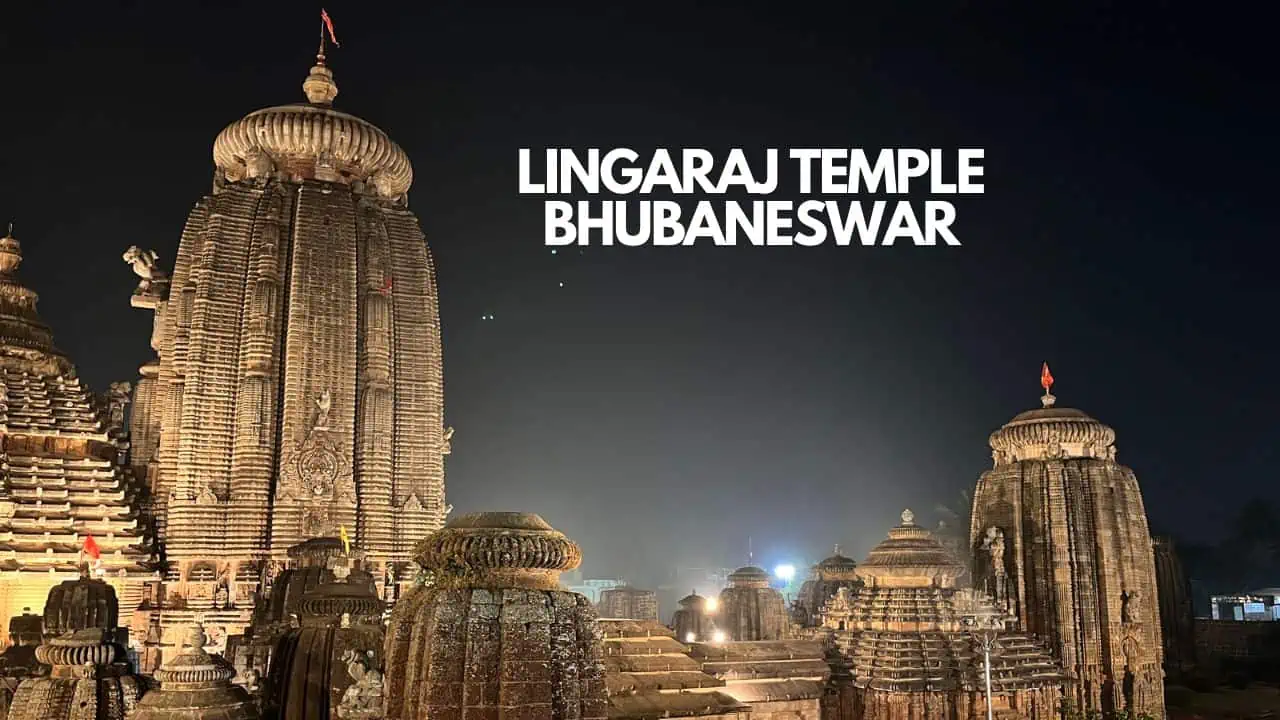
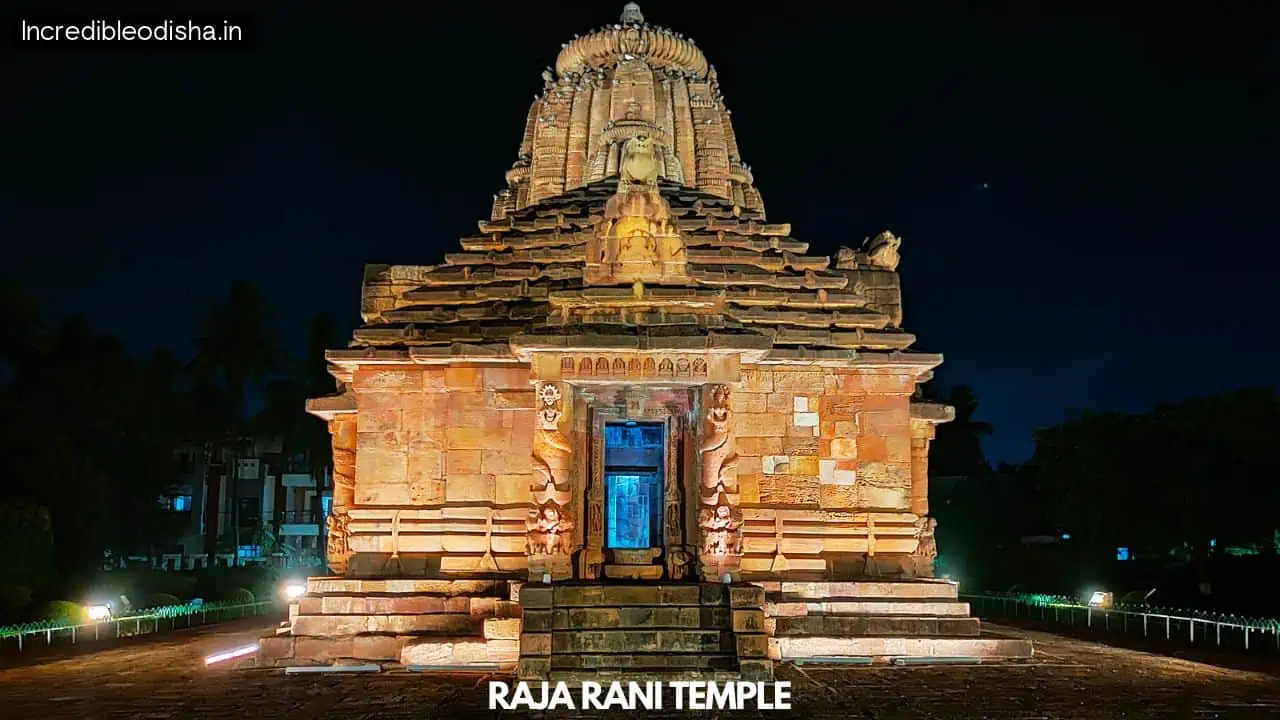
There’s something uniquely magical about this temple that distinguishes it from the ancient stone giants like Lingaraj or Rajarani. While those temples whisper stories of centuries past, ISKCON Bhubaneswar speaks of a living, breathing devotion that is as vibrant today as it was when the foundation stone was laid in 1977. Spiritual seekers and casual travelers alike find a unique sense of peace here, making the temple a sanctuary in the middle of Odisha’s bustling capital.
I’ve put together this guide to help you navigate your 2026 visit—covering everything from the exact Aarti timings and the fascinating history of how a small mud hut became a grand marble marvel, to the mouth-watering prasadam at Govinda’s restaurant.
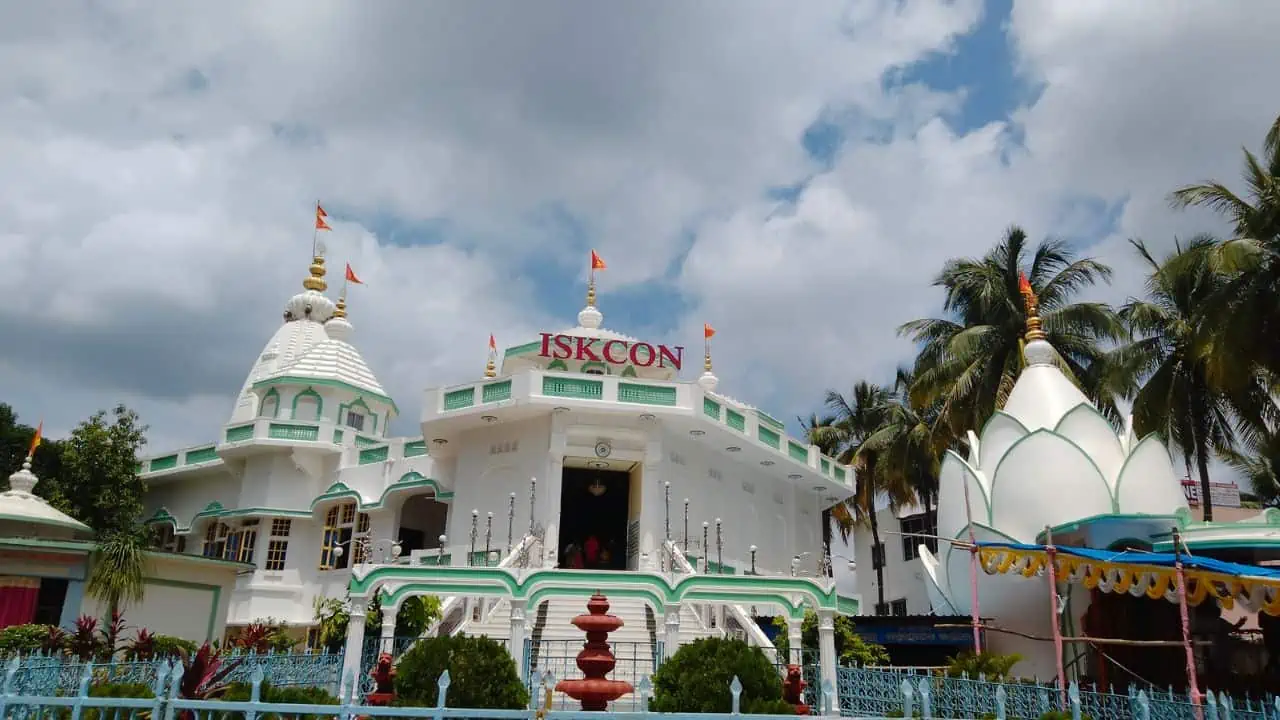
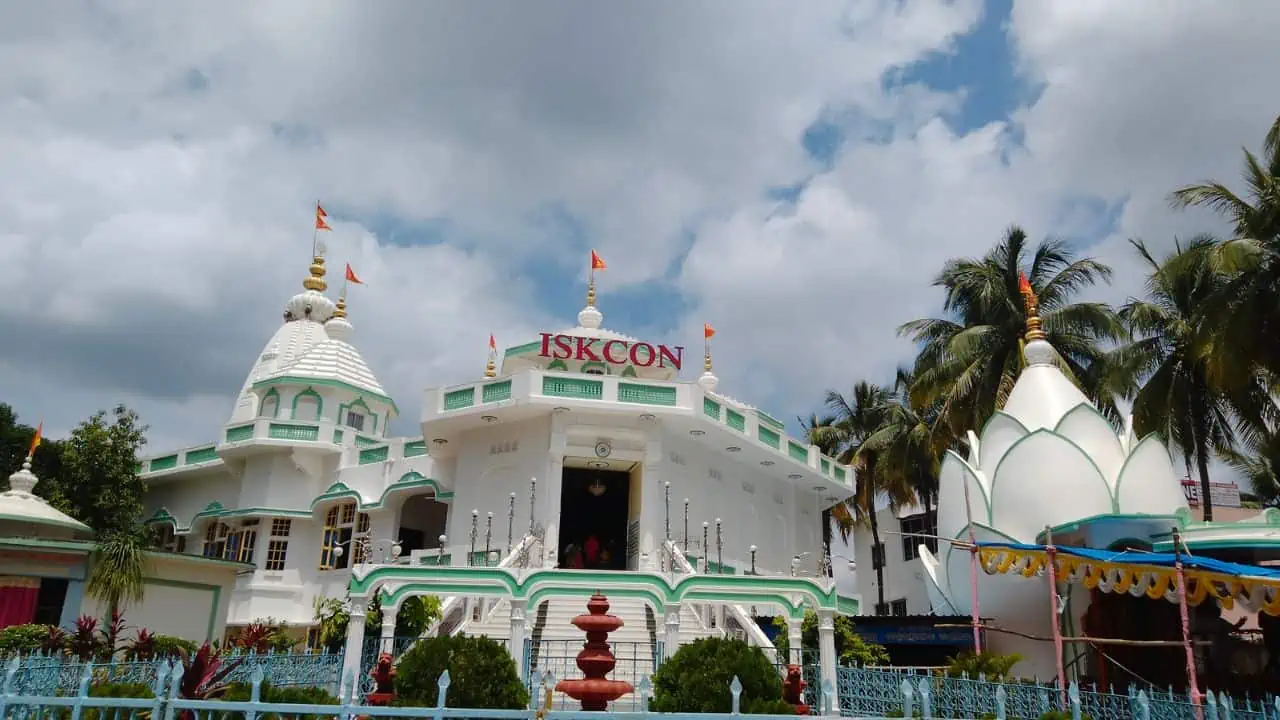
The stunning white marble facade of ISKCON Temple Bhubaneswar at dusk.
ISKCON Temple Bhubaneswar: Quick Facts for 2026
Before we dive into the deep spiritual and historical aspects, here is a quick summary of the essential details you’ll need for your 2026 trip.
| Feature | Details for 2026 |
|---|---|
| Official Name | Sri Sri Krishna Balaram Mandir (ISKCON Bhubaneswar) |
| Location | IRC Village, Nayapalli, Bhubaneswar, Odisha 751015 |
| Primary Deities | Lord Krishna and Lord Balaram, Lord Jagannath, Gaura-Nitai |
| Entry Fee | Absolutely Free (Donations are welcome) |
| Photography | Allowed in the complex, but strictly prohibited inside the main altar area |
| Best Time to Visit | 7:30 AM to 12:45 PM and 4:15 PM to 8:30 PM |
| Dress Code | Modest clothing; avoid shorts or revealing outfits out of respect |
| Guest House | Available (Booking recommended at least 2 weeks in advance) |
| Restaurant | Govinda’s (Pure vegetarian, no onion/garlic) |
If you are planning a wider tour of the city, don’t forget to check out my guide on the 11 Best Tourist Places in Bhubaneswar to make the most of your stay.
A Glimpse into the History of ISKCON Bhubaneswar
The story of ISKCON Bhubaneswar is one of incredible grit and unwavering faith. It wasn’t built by a wealthy king or a massive corporation; it started with a single man and a clear instruction from his spiritual master.
In 1975, A.C. Bhaktivedanta Swami Prabhupada, the founder of ISKCON, instructed his disciple Gour Govinda Swami to go to Bhubaneswar and build a temple. At that time, the land was a wild, jungle-like patch on the outskirts of the city. Gour Govinda Swami didn’t have money, but he had a vision. He lived in a tiny, thatched mud hut on the property, braving the elements and the isolation to fulfill his master’s wish.
A pivotal moment occurred in late January 1977 when Srila Prabhupada himself visited Bhubaneswar. Despite his frail health, he stayed for seventeen days in that very mud hut. It was a humble setting for a world leader, but he loved it. He often remarked that the simplicity of the hut reminded him of the true essence of spiritual life.
On February 2, 1977—the auspicious day of Lord Nityananda’s appearance—Srila Prabhupada laid the foundation stone. This temple holds a special place in the hearts of devotees because it was the last foundation stone he personally laid. He predicted that this center would become one of the most important in the world, serving as a gateway to the holy land of Jagannath Puri. For more context on the movement’s global impact, you can read about the history of ISKCON on Wikipedia.
Today, when you walk through the marble corridors, it’s hard to imagine those humble beginnings. But if you look closely, you can still find the commemorative spots that honor Gour Govinda Swami’s dedication. For a deeper dive into the global movement, you can visit the Official ISKCON Worldwide website.
Exploring the Architecture and Design of ISKCON Bhubaneswar
The architecture of the ISKCON Temple Bhubaneswar is a harmonious blend of traditional Odissi craftsmanship and contemporary structural design. As you approach the temple, the first thing that strikes you is the pristine white marble that covers the entire structure. On a sunny day, the temple literally glows, reflecting the purity and serenity it represents.
The design follows the classic Kalinga architectural style, characterized by the Vimana (the main tower over the sanctum) and the Jagamohana (the assembly hall). However, unlike the ancient temples made of sandstone like the Rajarani Temple Bhubaneswar, ISKCON uses modern materials to achieve a level of intricate detail that is breathtaking.
Intricate Marble Carvings
Take a moment to look closely at the walls. You’ll find exquisite carvings depicting various episodes from the Srimad Bhagavatam and the life of Lord Krishna. From the playful antics of the “Makhan Chor” (butter thief) to the cosmic dance of the Rasa Leela, the walls tell stories that transcend time. I remember spending nearly an hour just tracing the patterns on the pillars—each one is a masterpiece of precision.
The Sacred Altars
Inside the main hall, there are three primary altars. The central one is dedicated to Sri Sri Krishna Balaram, the presiding deities of the temple. To their left are Sri Sri Gaura-Nitai, and to the right is the magnificent altar of Lord Jagannath, Balabhadra, and Subhadra. The deities are dressed in vibrant silks, adorned with fresh flowers and jewels that change according to the festivals and seasons. The lighting inside is soft, creating an aura of divine peace that makes you want to sit and meditate for hours.
For those interested in comparing this with ancient Kalinga styles, a visit to the Lingaraj Temple Bhubaneswar is highly recommended, as it represents the peak of 11th-century temple engineering.
Daily Rituals and Aarti Timings in 2026
To truly experience the soul of ISKCON Bhubaneswar, you must participate in one of the daily Aartis. The temple follows a strict and elaborate schedule of worship that begins long before the sun rises.
Mangal Aarti: The Early Morning Bliss
If you can manage to reach the temple by 4:15 AM, you will witness the Mangal Aarti. This is considered the most auspicious time of the day. The chanting is soft at first, gradually building into a crescendo of devotion. There is a specific peace that descends upon you as the priest offers incense, lamps, and flowers to the sleeping deities.
Sandhya Aarti: The Evening Spectacle
The Sandhya Aarti at 6:15 PM is when the temple is most crowded and energetic. The entire hall vibrates with the sound of the Maha Mantra. Devotees and visitors alike join in the dancing and singing. It’s an infectious joy—I’ve seen people from all over the world, who don’t even speak the local language, dancing with abandon during the evening kirtan.
| Ritual Name | Timing in 2026 | Description |
|---|---|---|
| Mangal Aarti | 04:15 AM | The first offering of the day, very peaceful. |
| Mantra Meditation | 05:15 AM | Chanting the Hare Krishna Maha Mantra. |
| Srinagar Aarti | 07:15 AM | Deities are revealed in their full daytime dress. |
| Bhagavatam Class | 08:00 AM | Spiritual discourse on Vedic scriptures. |
| Darshan Closes | 12:45 PM | The temple closes for the deities’ afternoon rest. |
| Darshan Opens | 04:15 PM | Evening visiting hours begin. |
| Sandhya Aarti | 06:15 PM | The grand evening lamp offering with kirtan. |
| Gita Class | 07:30 PM | Evening spiritual discussion and lessons. |
| Darshan Closes | 08:30 PM | Final closing of the temple for the night. |
Govinda’s Restaurant: The Ultimate Prasad Experience
No visit to ISKCON Bhubaneswar is complete without a meal at Govinda’s Restaurant. Located within the temple complex, this is not just a place to eat—it’s a place to experience Krishna Prasadam.
The philosophy of Govinda’s is simple: the food is prepared with love and devotion, offered to the Lord first, and then served to the guests. One of the most unique aspects is that the food is strictly Karma-free, meaning it contains no meat, fish, eggs, or even onion and garlic.
What to Eat at Govinda’s?
The menu is quite extensive, offering everything from traditional Odia thalis to North Indian and Continental dishes.
- The Govinda’s Special Thali: This is what I usually recommend. It comes with a variety of seasonal vegetables, dal, rice, rotis, and a sweet dish. It’s wholesome, healthy, and incredibly satisfying.
- Dahi Bara Aloo Dum: While you can find this all over Bhubaneswar, the version served here is prepared without onion and garlic, giving it a unique, pure taste.
- Sweets: Don’t miss the Khaja and Laddoos. They are often available for sale at the sweets counter and make for great take-home gifts.
The prices are very reasonable, ranging from ₹150 to ₹350 per person for a full meal. The restaurant is clean, air-conditioned, and the staff are incredibly polite. Even if you aren’t particularly religious, the quality of the food alone makes it one of the best restaurants in Bhubaneswar for a peaceful family dinner.
Staying at the ISKCON Guest House in 2026
If you’re traveling from outside Odisha and want to stay close to the spiritual energy, the temple offers excellent guest house facilities. In my experience, staying on the temple premises allows you to attend the early morning rituals like Mangal Aarti without the stress of commuting.
The guest house is divided into two main buildings: Sanskruti and Samprati.
- Sanskruti: This building is slightly older but very well-maintained. It features 6 air-conditioned rooms that come with hot water facilities and basic amenities.
- Samprati: This is a newer, more modern wing with 18 spacious rooms. If you prefer a bit more comfort and space, this is the one to book.
How to Book?
Booking is usually done through the Official Website or by contacting their office directly. During peak seasons like Janmashtami or Ratha Yatra, the rooms get filled months in advance. As of 2026, I recommend booking at least 3-4 weeks before your intended visit.
Major Festivals and Celebrations in 2026
The ISKCON Temple in Bhubaneswar is famous for its vibrant festivals. If you happen to be in the city during these times, the energy is unlike anything else.
Janmashtami 2026 at ISKCON
In 2026, Janmashtami falls on Friday, September 4. This is the biggest event of the year. The temple is decorated with thousands of flowers, and the festivities go on until midnight. The highlights include the Abhishek (ceremonial bathing of the deity) and the distribution of special sweets. Be prepared for large crowds, but also for an atmosphere of pure bliss.
Ratha Yatra 2026
While the grandest Ratha Yatra happens in Puri, the ISKCON Bhubaneswar celebration is equally significant. In 2026, the Ratha Yatra starts on Thursday, July 16. The temple takes out its own beautifully decorated chariots for Lord Jagannath, Balabhadra, and Subhadra. It’s a wonderful way to experience the tradition if you want to avoid the massive crowds in Puri. For more on the Puri tradition, read my guide to the Jagannath Temple in Puri.
Nearby Attractions to Explore in Bhubaneswar
The temple is located in the Nayapalli area, which is quite central. Once you’ve finished your darshan and meal, there are several other places nearby that you can visit:
- Regional Museum of Natural History: Just a short drive away, this is a great place if you are traveling with kids.
- Pathani Samanta Planetarium: Perfect for those interested in space and science.
- Ekamra Haat: A beautiful open-air market where you can buy authentic Odia handicrafts and handlooms.
If you are looking for more ideas, my list of the 20 Must-Visit Tourist Places in Odisha will help you plan your entire Odisha itinerary.
The Spiritual Significance of the “108th Temple”
For many followers of ISKCON, the Bhubaneswar temple isn’t just another place of worship; it holds a profound mystical significance. It is often referred to as the 108th temple sanctioned by Srila Prabhupada. In Vedic tradition, the number 108 is sacred—there are 108 beads on a japa mala, and 108 Upanishads. The fact that this was the final project Srila Prabhupada initiated before his departure in late 1977 adds a layer of spiritual gravity to the site.
He often spoke of Bhubaneswar as the “gateway” to Puri. While Puri is the home of Lord Jagannath, Bhubaneswar is the city of temples (Ekamra Kshetra). By establishing a center here, he wanted to create a bridge for seekers to understand the deep philosophy of Krishna consciousness before they stood before the “Lord of the Universe” in Puri. When you walk through the temple gates, you aren’t just entering a building; you are entering a space that was envisioned by a visionary to be a spiritual powerhouse for the modern age.
Community Programs and Social Welfare: Faith in Action
The ISKCON Temple Bhubaneswar is more than just a place for chanting; it is a hub of humanitarian activity. One of the most inspiring aspects of this temple is how it puts its philosophy of “love and service” into actual practice through various community programs.
Food for Life (Anna Dan)
This is perhaps the most well-known program. The temple believes that no one in the vicinity of the Lord should go hungry. Every day, hundreds of plates of nutritious, sanctified vegetarian meals (prasadam) are distributed to the needy. During times of crisis—like the cyclones that occasionally hit the Odisha coast—the ISKCON volunteers are often among the first to reach the affected areas with food and basic supplies. This commitment to service is a core part of the temple’s identity, often working in tandem with disaster relief efforts recognized by the Odisha State Disaster Management Authority. In 2026, the temple has expanded this program to include mobile food vans that reach the remote slums of Bhubaneswar.
Youth Empowerment and Education
The temple runs several programs targeted at students and young professionals. These aren’t just religious classes; they focus on stress management, ethics, and character building based on the teachings of the Bhagavad Gita. Many students from nearby institutes like IIT Bhubaneswar and KIIT frequent the temple for these workshops. It’s heartening to see young minds engaging with ancient wisdom to navigate the complexities of modern life.
Environmental Initiatives
In line with the 2026 global focus on sustainability, the temple has also initiated “Green Temple” projects. This includes solar power installations for the guest house, waste management systems that turn temple kitchen waste into organic compost for the gardens, and regular tree plantation drives in the IRC Village area.
How to Reach ISKCON Temple Bhubaneswar in 2026
Bhubaneswar is one of the best-connected cities in Eastern India, and reaching the ISKCON temple is quite straightforward whether you are coming from across the country or just across the city.
By Flight: Biju Patnaik International Airport (BBI)
The airport is approximately 6-7 kilometers away from the temple. Once you land, you can easily find prepaid taxis, or use app-based services like Uber and Ola. In 2026, the airport has also introduced electric shuttle buses that connect to major landmarks, including the Nayapalli area. A cab ride should take you about 20-30 minutes depending on the traffic.
By Train: Bhubaneswar Railway Station (BBS)
The main railway station is about 5 kilometers away. It’s the most common way for travelers from Kolkata, Chennai, or Delhi to reach the city. From the station, you can take an auto-rickshaw (a very common mode of transport in Odisha) or a cab. If you want a more local experience, you can try the “Mo Bus” service—look for routes that pass through IRC Village or Nayapalli.
By Road and Inter-state Bus
The Baramunda ISBT (Inter-State Bus Terminal) is roughly 3 kilometers from the temple. If you are coming from nearby cities like Cuttack, Puri, or Berhampur, this is where you will likely arrive. From Baramunda, a short auto ride will bring you to the temple gates in less than 10 minutes.
Local Transport Tips for 2026
- Mo Bus: This is the lifeline of Bhubaneswar. The buses are clean, air-conditioned, and follow a strict schedule. Use the “Mo Bus” app to track real-time arrivals.
- Auto-rickshaws: Always negotiate the fare before starting the ride, or ask them to use the meter (though “sharing autos” are more common and cheaper for short distances).
- Walking: If you are staying in the IRC Village or Nayapalli area, the temple is easily accessible on foot. The neighborhood is residential, green, and safe for walking during the day.
A Typical Day in the Life of a Resident Devotee
Have you ever wondered what happens behind the scenes in a temple like this? Life for the resident monks and devotees is a disciplined blend of meditation, study, and service.
The day starts at 3:30 AM with the sound of a bell. After a quick shower, the devotees gather for the Mangal Aarti. The next few hours are spent in silent meditation (japa), where they chant the Hare Krishna mantra on beads. This is followed by a collective reading and discussion of the Srimad Bhagavatam.
By 9:00 AM, the service (seva) begins. Some head to the kitchen to prepare the massive quantities of prasadam, others manage the guest house, some work in the gardens, and some go out into the city for outreach programs. It’s a busy, purposeful life where every action is dedicated to the divine. Witnessing this level of commitment is often what leaves the deepest impression on visitors.
The Legacy of Gaur Govinda Swami and His Samadhi
You cannot talk about ISKCON Bhubaneswar without honoring the man who built it from the ground up—Sri Gaur Govinda Swami. His life story is a testament to the power of pure devotion. He was a scholar, a teacher, and a realized soul who gave up everything to fulfill the mission of his guru.
Within the temple complex, you will find the Samadhi Mandir of Gaur Govinda Swami. This is a place of intense silence and deep spiritual vibration. Many devotees come here to pray for guidance and to feel the presence of the great saint. I remember sitting there on a rainy afternoon in July; the sound of raindrops on the marble and the distant chanting from the main hall created a sense of peace that I’ve rarely found elsewhere.
His contribution wasn’t just physical—it was intellectual. He translated many of Srila Prabhupada’s books into Odia, making the philosophy accessible to the local people. He also established a school and various rural outreach centers that still function today. Visiting his Samadhi is a way to pay respect to the roots of this magnificent institution.
Sankirtan: The Heartbeat of ISKCON Bhubaneswar
If you spend even an hour at the temple, you will hear the word Sankirtan being mentioned frequently. It refers to the congregational chanting of the holy names of God. In the Vedic tradition, particularly in the Gaudiya Vaishnava lineage that ISKCON follows, Sankirtan is considered the most effective method for spiritual realization in the current age (Kali Yuga).
The Joy of Street Sankirtan
One of the most beautiful sights in Bhubaneswar is the ISKCON Sankirtan party. A group of devotees, dressed in saffron and white, moves through the streets with drums and cymbals, singing the Hare Krishna mantra. It’s a call to the busy citizens to take a moment and reconnect with their spiritual roots. In 2026, these parties have become a regular feature at major public spaces like the Biju Patnaik Park or near the railway station.
Kirtan Mela: A 24-Hour Celebration
Occasionally, the temple hosts a Kirtan Mela, where chanting continues non-stop for 24 or even 72 hours. Devotees from all over India and abroad gather to participate. The energy in the temple hall during these marathons is indescribable—it’s a sensory overload of music, dance, and pure emotion. Even if you are not a “singer,” you’ll find yourself humming the tune long after you’ve left the temple.
Practical Tips for Your 2026 Visit
To ensure your visit to ISKCON Bhubaneswar is smooth and fulfilling, here are some local tips I’ve gathered over the years:
- Avoid the Midday Heat: Bhubaneswar can get quite hot, especially from March to June. Try to schedule your visit for early morning or late evening.
- Respect the Sanctum: While photography is allowed in the gardens and common areas, please put your phone away when you enter the main temple hall. It helps maintain the sanctity of the space.
- Footwear: You will need to leave your shoes at the designated “Chappal Stand” before entering. It’s free, but a small donation to the caretakers is always appreciated.
- Participate in the Feast: If you visit on a Sunday, the temple usually hosts a “Sunday Feast” in the afternoon. It’s a great way to meet the community and enjoy some incredible prasadam.
- Ask Questions: Don’t be afraid to talk to the devotees at the information desk or the book stalls. They are usually very happy to explain the rituals or the philosophy behind the temple.
- Souvenirs: The temple has a wonderful gift shop where you can buy spiritual books, incense, traditional clothing, and even Ayurvedic products.
Why You Should Visit ISKCON Bhubaneswar in 2026
In a world that is becoming increasingly fast-paced and digital, places like ISKCON Bhubaneswar offer a much-needed pause. It’s not just about “religion”; it’s about finding a sense of community, peace, and higher purpose. Whether you are coming to marvel at the white marble architecture, to eat the world-famous Govinda’s thali, or to find answers to life’s deeper questions, this temple welcomes everyone with open arms.
The year 2026 marks nearly five decades since the foundation stone was laid. The jungle that Gour Govinda Swami once lived in is now a thriving part of the capital city, but the spirit of his simple mud hut still resides in every corner of this grand temple. It is a reminder that with faith and hard work, anything is possible.
For more information on the spiritual landscape of the state, you can explore the Odisha Tourism Official Portal.
FAQs on ISKCON Temple Bhubaneswar (2026 Edition)
What time is the evening Aarti at ISKCON Bhubaneswar?
The evening Aarti, also known as Sandhya Arati, takes place daily at 6:15 PM. This is followed by a Gita class at 7:30 PM. It is the most energetic time to visit, with live kirtan and dancing.
Is there a dress code for entering the temple?
While there is no “strict” uniform, visitors are expected to dress modestly. It is best to avoid shorts, mini-skirts, or sleeveless tops. Wearing traditional Indian attire like a kurta-pyjama or a saree is always a good way to respect the local culture.
How can I book a room at the ISKCON guest house?
You can book a room by visiting the ISKCON Bhubaneswar website or by calling their reception at +91-9861036321. It is advisable to book at least 2-3 weeks in advance for 2026, as rooms fill up quickly.
Is the food at Govinda’s restaurant safe for children?
Yes, absolutely. The food is pure vegetarian, prepared with high standards of hygiene, and is not overly spicy. It is one of the safest and healthiest dining options in the city for families with children.
What are the main festivals celebrated at the temple?
The two biggest festivals are Janmashtami (Sept 4, 2026) and Ratha Yatra (July 16, 2026). Other important dates include Gaura Purnima, Holi, and Govardhan Puja.
Can non-Hindus enter the ISKCON Temple Bhubaneswar?
Yes, unlike some ancient temples in Odisha, the ISKCON temple is open to people of all faiths, nationalities, and backgrounds. Everyone is welcome to participate in the Aartis and the chanting.
Is there an entry fee for the temple?
Entry to the temple and participation in the Aartis is completely free of charge. However, you are welcome to make voluntary donations to support the temple’s various social and community programs.
Where is the ISKCON temple located in Bhubaneswar?
It is located in the IRC Village, Nayapalli area. It is a well-known landmark and is easily accessible by auto-rickshaws, cabs, and public buses.
What is the history of the mud hut in ISKCON Bhubaneswar?
The mud hut was the original residence of Gour Govinda Swami in 1975 and later hosted Srila Prabhupada for 17 days in 1977. It is preserved as a sacred site to remind visitors of the temple’s humble and dedicated beginnings.