Balangir District Guide 2026: Map, Blocks, Places & History
Comprehensive guide to Balangir district in Western Odisha. Explore 14 blocks, subdivisions, Harishankar, Ranipur Jharial 64 Yoginis, handlooms, and routes.
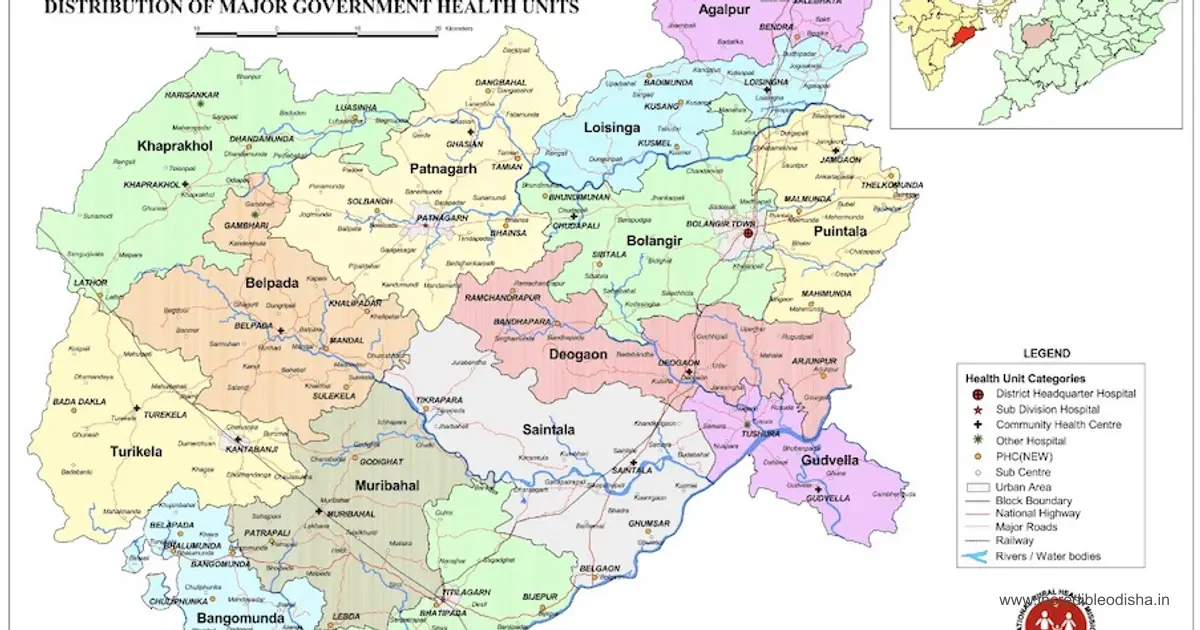
Balangir district forms the cultural heartland of Western Odisha, covering 6,575 square kilometers across the fertile valleys of the Tel and Suktel river basins. Situated within the Northern Revenue Division, the district borders Bargarh to the north, Subarnapur to the east, Boudh and Kalahandi to the south, and Nuapada District western border territory to the west. Travelers exploring the southern river basin border can reference our definitive Kalahandi district travel guide for comprehensive regional itineraries.
The region preserves a remarkable heritage shaped by the Chauhan dynasty of the historic Patna State. Its landscape unites dramatic granite outcrops, protected sal woodlands along the Gandhamardan hills, and fertile agrarian plains celebrated for premium cotton and world-renowned Sambalpuri Ikat handloom weaving.
Archaeologists and cultural travelers recognize Balangir for its rare historical monuments. The district houses the circular 9th-century open-air Chausath Yogini temple at Ranipur Jharial alongside the sacred mountain spring sanctuary of Harishankar, offering an authentic glimpse into medieval Odisha.
Key Takeaways
- Balangir district spans 6,575 square kilometers across Western Odisha, ranking as the 10th largest district in the state by area.
- The district is administratively organized into 3 revenue subdivisions (Balangir, Patnagarh, and Titilagarh) and exactly 14 community development blocks.
- Landmark heritage sites include the Harishankar temple on the Gandhamardan range and the rare circular 64 Yogini temple complex at Ranipur Jharial.
- Balangir operates as a major hub for traditional Sambalpuri tie-and-dye handloom weaving, anchored by historic master artisan villages in Loisingha and Patnagarh.
- National Highway 57 and the newly completed Khurda Road to Balangir railway corridor provide smooth transit connections to Bhubaneswar and coastal ports.
At-a-Glance: Balangir District Demographic and Geographic Profile
Balangir occupies an undulating plateau characterized by rocky granite knolls, deciduous forest ridges, and alluvial plains created by the Tel River and its tributaries. Over 23 percent of the district territory is covered by forest canopy, supporting rich medicinal flora, teak, sal, and bamboo reserves.
According to the 2011 Census of India, Balangir district recorded a total population of 1,648,997 residents living across 1,794 inhabited revenue villages. The district maintains an impressive sex ratio of 987 females per 1,000 males, reflecting healthy demographic balance. The overall literacy rate stands at 64.70 percent, supported by growing higher education infrastructure across urban centers.
For wider regional transit and border orientation across Western Odisha, consult the comprehensive Odisha district map and rail routes to observe how Balangir integrates with neighboring districts.
| Demographic and Geographic Indicator | Statistical Figure and Official Detail |
|---|---|
| Total Geographic Area | 6,575 square kilometers (ranks 10th in Odisha) |
| District Headquarters | Balangir Municipality |
| Revenue Division | Northern Revenue Division (Headquarters at Sambalpur) |
| Total Population (Census 2011) | 1,648,997 residents |
| Male Population | 830,097 |
| Female Population | 818,900 |
| Sex Ratio | 987 females per 1,000 males |
| Population Density | 251 persons per square kilometer |
| Overall Literacy Rate | 64.70 percent |
| Male Literacy Rate | 75.85 percent |
| Female Literacy Rate | 53.50 percent |
| Revenue Subdivisions | 3 (Balangir Sadar, Patnagarh, Titilagarh) |
| Community Development Blocks | Exactly 14 administrative blocks |
| Revenue Tehsils | 14 tehsils |
| Gram Panchayats | 317 Gram Panchayats |
| Inhabited Revenue Villages | 1,794 villages |
| Vehicle Registration (RTO) Code | OD-03 (Balangir) |
| Primary River Systems | Tel, Suktel, Ong, Rahul, Lanth, and Under rivers |
| Bordering Districts | Bargarh (north), Subarnapur (east), Boudh & Kalahandi (south), Nuapada (west) |
Landmark Directory: Key Attractions Located in Balangir District
Travelers and researchers frequently need to confirm the precise administrative jurisdictions for Western Odisha heritage landmarks. The directory below clarifies the exact community blocks, distances from Balangir town, and primary features for every major destination.
| Landmark Name | Classification | Exact Block / Location | Distance from Balangir Town | Notable Strategic Feature |
|---|---|---|---|---|
| Harishankar Temple | Pilgrimage & Perennial Stream | Khaprakhol Block | 81 km west | 15th-century Hari-Hara shrine on Gandhamardan hills with natural spring |
| Ranipur Jharial 64 Yoginis | Ancient Monolithic Complex | Bangomunda Block | 104 km southwest | Circular open-air hypaethral Yogini temple with 64 sandstone sculptures |
| Indralath Brick Temple | Early Medieval Architecture | Ranipur Jharial (Bangomunda) | 104 km southwest | One of the tallest surviving ancient brick temples in eastern India |
| Patneswari Temple | Royal Shakti Shrine | Patnagarh NAC / Block | 38 km west | Presiding deity of Chauhan kings housed in a 14th-century temple complex |
| Someswar Shiva Temple | Classical Shaivite Shrine | Patnagarh Block | 40 km west | 12th-century Somavamshi stone temple featuring Sanskrit inscriptions |
| Saintala Chandi Temple | Archaeological Relic Site | Saintala Block | 38 km south | Ancient sanctum housing exquisite broken statues of Goddess Chandi and Vishnu |
| Jogisarda Shiva Shrine | Pilgrimage & Rural Fair | Loisingha Block | 25 km north | Historic Jogeswar Mahadev temple hosting grand Shivaratri gatherings |
| Gandhamardan Hill Range | Botanical Reserve & Trekking | Khaprakhol / Bargarh border | 85 km west | Celebrated medicinal mountain ridge linked to the Ramayana Sanjeevani legend |
| Turekela Deer Forest | Wildlife Woodland | Turekela Block | 98 km west | Deciduous scrub forest sheltering spotted deer, wolves, and bird species |
| Sailashree Palace (Rajbati) | Royal Chauhan Heritage | Balangir Town Center | Central Balangir | Historic seat of Maharaja RN Singh Deo displaying Indo-Saracenic design |
Administrative Setup: How Many Blocks and Subdivisions in Balangir District?
Balangir functions under a decentralized administrative framework designed to deliver public services across rural agricultural plains and remote foothill villages. The District Collector and District Magistrate coordinates civic administration, revenue collection, and social development schemes from the collectorate in Balangir town.
The territory is divided into 3 revenue subdivisions: Balangir Sadar, Patnagarh, and Titilagarh. Each subdivision is administered by a Sub-Collector who oversees law enforcement, public distribution networks, and land records. Below the subdivisional level, the district contains 14 revenue tehsils handling local land administration and agricultural documentation.
Local rural development is implemented through 14 Community Development (CD) blocks supervising 317 Gram Panchayats. These blocks manage rural water security, village road connectivity, and welfare allocations under the Panchayati Raj system. Balangir municipality, Patnagarh NAC, and Titilagarh municipality manage civic amenities within urban areas.
Complete Directory of the 14 Administrative Blocks in Balangir
Balangir contains 14 distinct administrative community development blocks, each contributing unique agricultural, commercial, or handloom crafts to the district economy. The table below outlines the administrative headquarters, local village coverage, and dominant economic activities for every block.
| Community Block | Revenue Subdivision | Block Headquarters | Gram Panchayats | Inhabited Villages | Dominant Economic and Geographic Focus |
|---|---|---|---|---|---|
| Agalpur | Balangir Sadar | Boysar | 20 | 114 | Canal irrigation farming, sugarcane production, and paddy cultivation |
| Balangir | Balangir Sadar | Balangir Town | 24 | 148 | Commercial services, education, agro-trading, and small manufacturing |
| Bangomunda | Titilagarh | Bangomunda | 21 | 108 | Archaeological tourism (Ranipur Jharial), pulse farming, and cotton markets |
| Belpara | Patnagarh | Belpara | 23 | 129 | Forest produce gathering, rainfed agriculture, and traditional metal crafts |
| Deogaon | Balangir Sadar | Deogaon | 22 | 134 | Rice milling clusters, Sambalpuri handloom weaving, and pulse production |
| Gudvella | Balangir Sadar | Tentulikhunti | 15 | 87 | Alluvial vegetable farming along Tel River and rural weekly markets |
| Khaprakhol | Patnagarh | Khaprakhol | 20 | 142 | Pilgrimage tourism (Harishankar), medicinal plant gathering, and forest reserves |
| Loisingha | Balangir Sadar | Loisingha | 19 | 106 | Renowned Sambalpuri handloom weaving, brass utensil making, and highway transit |
| Muribahal | Titilagarh | Muribahal | 22 | 149 | Minor forest gathering, rainfed millet cultivation, and labor hubs |
| Patnagarh | Patnagarh | Patnagarh NAC | 29 | 165 | Royal heritage tourism, Sambalpuri cotton weaving, and agrarian trading |
| Puintala | Balangir Sadar | Puintala | 24 | 128 | Intensive paddy farming, dairy cooperatives, and vegetable supply to town |
| Saintala | Titilagarh | Saintala | 22 | 121 | Defense manufacturing (Ordnance Factory Badmal) and granite stone quarrying |
| Titilagarh | Titilagarh | Titilagarh Town | 25 | 118 | Railway freight logistics, cotton ginning, and regional wholesale commerce |
| Turekela | Titilagarh | Turekela | 21 | 145 | Tribal forestry, upland pulse cultivation, and boundary trade with Nuapada |
The District Rural Development Agency (DRDA) manages rural welfare funds across these blocks, investing heavily in water harvesting structures, farm ponds, and women’s self-help groups. Non-governmental cooperatives and handloom federations help traditional weavers in Loisingha and Patnagarh market their textiles globally.
Vidhan Sabha and Parliamentary Constituencies in Balangir
Balangir district contains 5 Legislative Assembly (Vidhan Sabha) constituencies, each represented in the Odisha Legislative Assembly. The territorial delimitation balances urban commercial hubs like Balangir and Titilagarh with tribal agricultural regions in Patnagarh and Kantabanji.
Under the parliamentary boundary structure governed by the Election Commission of India Delimitation Directory, all 5 assembly segments in the district unite under the Bolangir Lok Sabha Parliamentary Constituency (PC 10). The parliamentary seat also incorporates the Sonepur and Birmaharajpur assembly segments from adjoining Subarnapur district.
| Constituency Number & Name | Category | Administrative Blocks Included | Corresponding Lok Sabha (Parliamentary) Seat |
|---|---|---|---|
| AC 64: Loisingha | Scheduled Caste (SC) | Loisingha, Agalpur, and Puintala blocks | PC 10: Bolangir Parliamentary Constituency |
| AC 65: Patnagarh | General | Patnagarh, Khaprakhol, and Belpara blocks | PC 10: Bolangir Parliamentary Constituency |
| AC 66: Bolangir | General | Balangir municipality, Balangir block, and Deogaon block | PC 10: Bolangir Parliamentary Constituency |
| AC 67: Titilagarh | General | Titilagarh municipality, Titilagarh block, Saintala, and Gudvella | PC 10: Bolangir Parliamentary Constituency |
| AC 68: Kantabanji | General | Muribahal, Turekela, and Bangomunda blocks | PC 10: Bolangir Parliamentary Constituency |
This unified parliamentary structure ensures coherent developmental representation across the entire upper Tel river valley. Regional lawmakers focus legislative priorities on irrigation completion, railway corridor modernization, and textile cluster development.
Historical Heritage: Chauhan Rule, Patna State, and Somavamshi Antiquities
The historical roots of Balangir extend to antiquity, when the territory formed part of ancient South Kosala. Archaeological excavations around Ranipur Jharial reveal flourishing religious communities between the 8th and 11th centuries under the Somavamshi kings. During this era, royal patrons constructed impressive brick temples and established open-air tantric sanctuaries devoted to the 64 Yoginis.
During the 14th century, Ramai Deo established the Chauhan dynasty in Western Odisha, founding the Kingdom of Patna with its fortified capital at Patnagarh. The Chauhan monarchs consolidated regional authority, bringing eighteen feudatory states (Garhjats) across the Mahanadi and Tel valleys under their administrative umbrella.
The capital shifted in the 19th century from Patnagarh to Balaramgarh, founded by King Balaram Deo and subsequently known as Balangir. The royal administration erected civic reservoirs, court buildings, and palace quarters that transformed the town into an administrative center.
To understand how Western Odisha kingdoms influenced regional politics during this period, explore our overview of the medieval history of Odisha dynasties detailing royal lineage transitions. Following India’s independence, Maharaja Rajendra Narayan Singh Deo signed the instrument of accession, merging Patna State with the Indian Union in January 1948.
Notable Personalities and Statesmen of Balangir
Balangir has produced prominent political leaders, visionary administrators, and literary scholars who have profoundly shaped modern Odisha. The district’s public figures played critical roles in post-independence governance and cultural revitalization.
Maharaja Rajendra Narayan Singh Deo stands as one of the most distinguished figures in Odisha’s political history. As the last ruling Maharaja of Patna State, he transitioned into democratic public life, serving as the Chief Minister of Odisha from 1967 to 1971. His tenure was marked by fiscal discipline, bureaucratic transparency, and the establishment of foundational educational institutions across Western Odisha.
In contemporary politics, the royal lineage of Patnagarh has maintained deep public service traditions. Kanak Vardhan Singh Deo has served multi-term tenures as cabinet minister and currently functions as the Deputy Chief Minister of Odisha. Sangeeta Kumari Singh Deo has represented the Bolangir parliamentary seat across multiple Lok Sabha terms, advocating for regional rail expansions and agricultural water projects.
In literature and culture, Balangir is honored by scholars like Dr. Srinibas Udgata, a celebrated bilingual writer, poet, and Padma Shri recipient. His creative works in Odia and Hindi have brought the folklore, social nuances, and poetic idioms of Western Odisha to national recognition.
Economic Profile: Agrarian Economy, Defense Industry, and Lower Suktel
The economic backbone of Balangir is predominantly agrarian, supported by fertile black cotton soils and alluvial deposits along the Tel and Suktel rivers. Farmers cultivate high yields of paddy, green gram, black gram, and oilseeds across seasonal harvest cycles.
Balangir represents one of Odisha’s foremost cotton-producing districts, often referred to as the white gold belt of the state. Cotton ginning mills and spinning facilities in Kantabanji, Titilagarh, and Balangir process raw cotton for export to major textile hubs across India.
The district also hosts a vital national defense facility at Saintala. The Ordnance Factory Badmal, operated under the Ministry of Defence, manufactures high-explosive ammunition, propellant charges, and defense ordnance, providing specialized technical employment for thousands of residents.
Irrigation expansion is anchored by the Lower Suktel Irrigation Project, constructed across the Suktel River near Magurbeda. The project provides canal water to over 40,000 hectares of farmland across Balangir and Tarbha blocks, dramatically reducing drought vulnerability and boosting agricultural incomes.
Handloom and Weaving Traditions: Sambalpuri Bandha Heritage
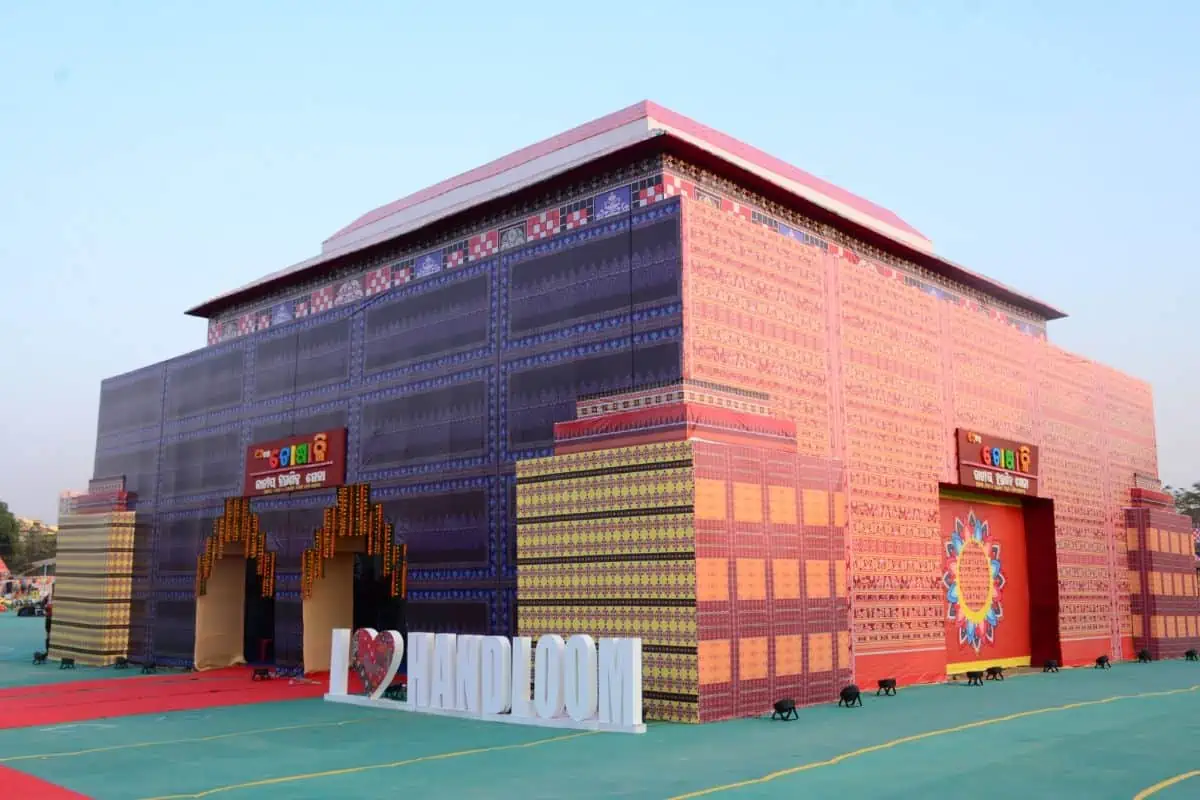
Balangir stands alongside Bargarh and Subarnapur as the heart of world-famous Sambalpuri Ikat handloom saree weaving. The craft is practiced by traditional Bhulia weaver families who inherit intricate mathematical tie-and-dye techniques perfected over centuries.
Weaving clusters in Loisingha, Patnagarh, and Deogaon specialize in creating iconic Bandha motifs. Master artisans bind cotton and mulberry silk yarns with precise resist ties before dipping them into vegetable or vat dye vats. When woven on pit looms, these dyed threads align into mesmerizing patterns of shankha (conch), chakra (wheel), padma (lotus), and traditional fish figures.
The district’s weavers have earned national awards for their craftsmanship, creating durable textiles that remain breathable during hot tropical summers. Co-operative societies like Sambalpuri Bastralaya help local weavers sell authentic sarees directly to consumers, cutting out middle intermediaries.
During the agrarian festival of Nuakhai, local residents celebrate community bonds dressed in fresh Sambalpuri handloom attire. The autumn celebration honors the newly harvested rice crop, bringing families together to share festive meals and perform traditional Dalkhai and Rasarkeli folk dances.
Major Educational Institutions and Healthcare Infrastructure
Balangir has steadily expanded its educational and healthcare infrastructure, establishing itself as a prime learning hub for Western Odisha students. Public sector investments have attracted colleges and tertiary medical facilities to the district.
Rajendra University, upgraded from the historic Rajendra College founded in 1944, represents the crown jewel of higher learning in Balangir. The university provides comprehensive undergraduate, postgraduate, and doctoral degree programs across humanities, commerce, and pure sciences.
Technical and vocational education is supported by the Government Polytechnic Balangir, alongside the State Institute of Hotel Management (SIHM), which trains hospitality professionals for national tourism markets. The Government Ayurveda College and Hospital in Balangir preserves traditional Ayurvedic medicine and botanical pharmacology research.
Tertiary healthcare is anchored by the Bhima Bhoi Medical College and Hospital (BBMCH), established in 2018 in Balangir town. The state-of-the-art facility provides 500-bed inpatient care, trauma surgery units, neonatal wings, and specialized outpatient departments. Rural healthcare is supported by the District Headquarter Hospital (DHH) alongside Community Health Centers located across all 14 block headquarters.
Iconic Gastronomy: What to Eat Across Balangir District
The culinary traditions of Balangir offer bold, earthy flavors rooted in indigenous grain crops, forest herbs, and seasonal river catches. Meals feature balanced combinations of sour, spicy, and roasted elements that keep diners refreshed in the warm climate.
Street food culture in Balangir town and Patnagarh revolves around hot, crispy Chaula Bara. These golden fritters are prepared from soaked raw rice and urad dal batter, seasoned with cumin, green chilies, and curry leaves, before being deep-fried and served with spicy tamarind-garlic water.
Traditional home dining features Ambila, a light, tangy vegetable soup prepared using fermented rice water (Kanji) or dried mango slices (Ambula) cooked with drumsticks, pumpkin, and mustard seeds. Another rural staple is Letha, a wholesome savory porridge cooked from rice flour and blended with green leafy vegetables like Kardi and seasonal wild herbs.
Travelers eager to explore the wider repertoire of central and western Odia cuisine can consult our guide to famous authentic foods of Odisha to discover regional preparations like Pakhala, Dalma, and Chenna Poda. In local sweet stalls, freshly prepared Chenna Gaja and sweet Arisa Pitha offer the perfect conclusion to an authentic Western Odia meal.
Top Tourist Attractions and Heritage Circuit in Balangir
Balangir features an extraordinary array of medieval archaeological sites, mountain temples, and tranquil forest sanctuaries that reward cultural travelers.
1. Harishankar Temple on Gandhamardan Hills
Located 81 km west of Balangir in Khaprakhol block, Harishankar is a revered 15th-century pilgrimage shrine situated at the southern base of the Gandhamardan hills. Constructed under Chauhan Queen Durlabha Devi, the temple is dedicated to the combined worship of Lord Vishnu (Hari) and Lord Shiva (Shankar).
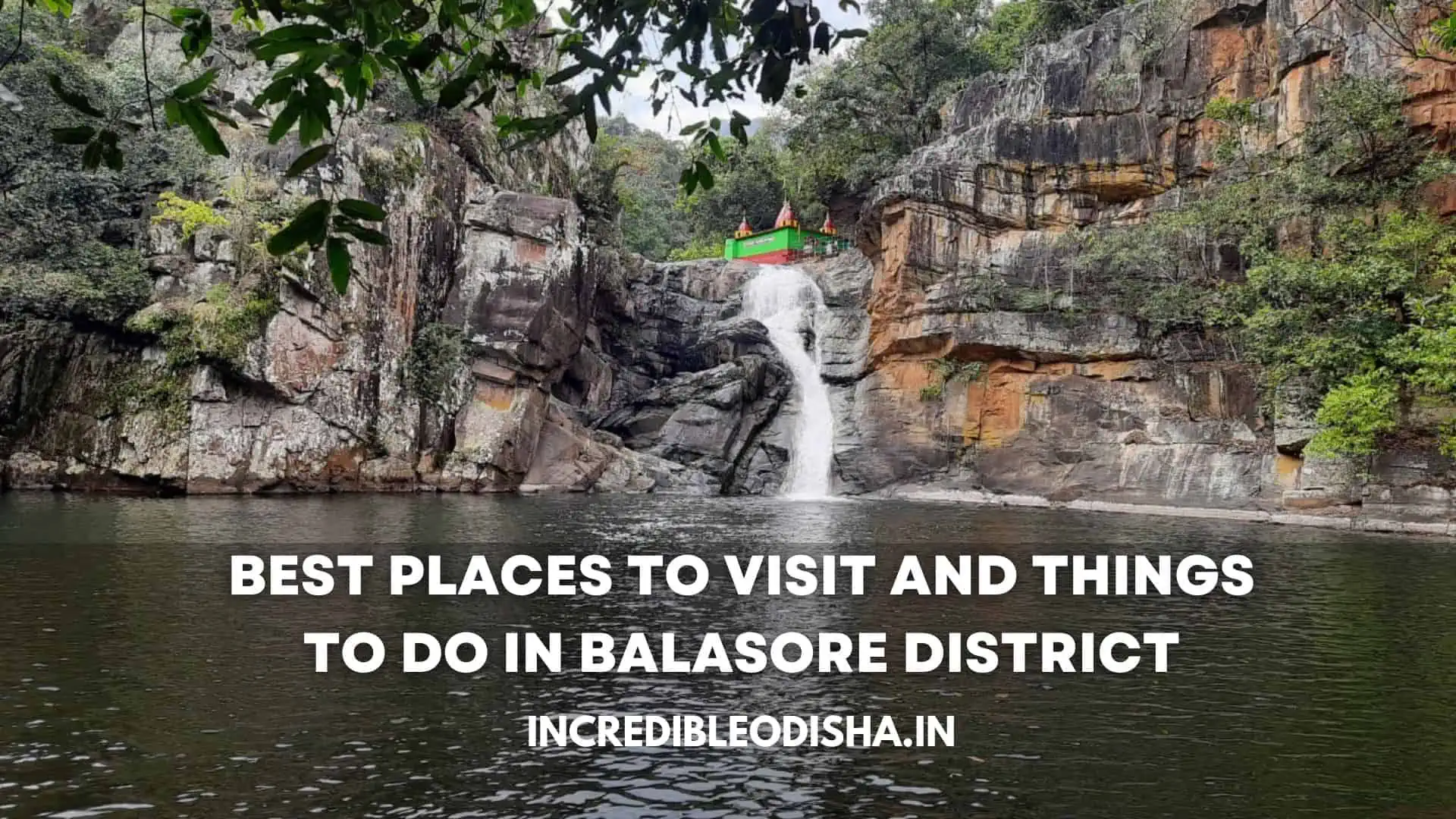
A crystal-clear mountain spring cascades over granite boulders directly beside the sanctum, where pilgrims bathe in natural stone pools before offering morning prayers. The temple is surrounded by rich deciduous forest reserves renowned for rare medicinal herbs cited in ancient Ayurvedic texts. Travelers trekking across the mountain range to the northern foothills can consult our comprehensive Bargarh district travel guide to explore the companion Nrusinghanath Temple.
2. Ranipur Jharial 64 Yogini Complex and Indralath Temple
Situated 104 km southwest of Balangir in Bangomunda block, Ranipur Jharial represents one of India’s most extraordinary medieval tantric archaeological sites. The complex sprawls across an enormous granite rocky hill, housing more than 50 stone monuments dating between the 8th and 10th centuries.
The centerpiece is the circular open-air Chausath Yogini Temple, one of only four surviving hypaethral Yogini temples in the entire country. Conserved under the regulatory care of the Archaeological Survey of India Protected Monuments directory, the circular sandstone wall encloses 64 carved niches depicting dancing female deities surrounding a central dancing Shiva.
Just meters away stands the majestic Indralath Temple, rising nearly 20 meters high. Built entirely of kiln-fired red brick during the Somavamshi period, it is recognized as the tallest surviving ancient brick temple in eastern India.
3. Patnagarh and Someswar Temple
Patnagarh, located 38 km west of Balangir, was the historic royal seat of the Chauhan kings. The town houses the historic Patneswari Temple, dedicated to the guardian goddess of the Patna State, displaying stone carvings and traditional festival courtyards.
Nearby stands the 12th-century Someswar Shiva Temple, an ancient stone monument featuring Somavamshi carvings and classical Sanskrit inscriptions left by Shaiva preceptors. Cultural travelers studying sacred architecture often compare these shrines with famous heritage temples across Odisha to observe stone carving evolution.
4. Saintala Chandi Shrine and Turekela Forest
Saintala, located 38 km south of Balangir on the Titilagarh road, houses an ancient open-air shrine displaying remarkably detailed ruined sculptures of Goddess Chandi slaying the demon Mahishasura. Archaeologists consider the stone carvings of the Dasavatara Vishnu panel here among the finest examples of early medieval sculptural craftsmanship in the state.
Further west along the Nuapada border, Turekela provides peaceful forest walking trails and wildlife watchtowers managed by the state forest department. The woodland shelters spotted deer, wild boars, and diverse resident birds.
Where to Stay: Heritage Lodges, Panthanivas, and Forest Camps
Balangir offers varied accommodation options to suit heritage explorers, pilgrimage travelers, and business professionals. Properties range from government-managed tourism lodges to modern town hotels.
Travelers visiting the Harishankar shrine can stay at the OTDC Panthanivas Harishankar, situated within walking distance of the temple and mountain stream. The lodge provides air-conditioned and non-air-conditioned rooms alongside a clean dining hall serving vegetarian meals. For deeper forest exploration, travelers can review the statewide nature camp network to identify community-run cottages and forest rest houses across the Gandhamardan circuit.
In Balangir town, comfortable hotels are clustered around Palace Line, Railway Station Road, and Titilagarh Road. Recommended options offer air-conditioned family rooms, multi-cuisine dining, and car rental desks for organizing day trips to Patnagarh and Ranipur Jharial.
Visitors can also find budget guesthouses and traveler lodges near Titilagarh and Kantabanji railway junctions, which are convenient for early train departures toward Raipur, Visakhapatnam, or Sambalpur.
Month-by-Month Climate and Seasonal Advisory
Balangir district experiences a tropical continental climate marked by mild, dry winters, scorching summers, and a humid monsoon season. Understanding seasonal conditions ensures a comfortable trip.
The winter period from October through March represents the ideal travel season across the district. Daytime temperatures range pleasantly between 14°C and 28°C with clear sunny skies and cool evening breezes, providing perfect weather for touring the open-air granite outcrops at Ranipur Jharial and hiking around Harishankar.
Summer between April and June is extremely hot across the interior Western Odisha plateau. The towns of Titilagarh and Balangir frequently record peak daytime temperatures exceeding 45°C, earning national attention for extreme heatwaves. Tourists traveling during summer should schedule heritage excursions strictly during early dawn hours and carry ample sun protection and drinking water.
The monsoon season spans July to September, bringing welcome relief from the summer heat and nourishing paddy fields across the district. Heavy rains replenish the streams and waterfalls of the Gandhamardan hills, making Harishankar especially scenic, though visitors should exercise caution on slippery granite rocks near the waterfall pools.
As highlighted by the Incredible India Official Odisha Tourism Portal, regional cultural vibrancy peaks during the post-monsoon autumn months when the harvest festival of Nuakhai unites communities in traditional celebration.
How to Reach Balangir by Train, Road, and Air
Balangir enjoys good transportation links, functioning as a key rail and road crossroads connecting Western Odisha to coastal hubs and central India.
Balangir Railway Station (station code: BLGR) and Titlagarh Junction (station code: TIG) are major stops on the East Coast Railway network. Express and superfast trains connect the district daily with Bhubaneswar, Cuttack, Puri, Sambalpur, Rourkela, Visakhapatnam, Raipur, Kolkata, and New Delhi. The newly completed Khurda Road to Balangir broad-gauge railway corridor, supported through the Railway Budget for Odisha, has dramatically reduced transit times between coastal Odisha and the western hinterland.
By road, National Highway 57 (NH-57) connects Balangir directly to Bhubaneswar via Boudh, Nayagarh, and Khordha, covering 320 kilometers in roughly 7 hours by car or OSRTC AC deluxe bus. Additionally, National Highway 26 (NH-26) runs through the district, linking Bargarh to the north with Bhawanipatna and Jeypore to the south.
For air travelers, the nearest domestic airport is Veer Surendra Sai Airport (JRG) in Jharsuguda, located 130 km to the north. Swami Vivekananda Airport (RPR) in Raipur lies 230 km to the west, offering frequent flights to major metropolitan cities across India.
Inter-City Road Distance and Driving Time Matrix
To assist travelers planning Western Odisha road journeys, the table below provides highway routes, travel distances, and average driving times from Balangir town to major regional centers.
| Destination City | Highway Route | Road Distance | Typical Driving Duration |
|---|---|---|---|
| Bhubaneswar | NH-57 via Boudh and Nayagarh | 320 km | 6.5 to 7.0 hours |
| Sambalpur | NH-26 direct via Bargarh bypass | 125 km | 2.5 to 3.0 hours |
| Bargarh | NH-26 direct | 80 km | 1.5 to 2.0 hours |
| Bhawanipatna | NH-26 via Saintala and Kesinga | 130 km | 2.8 to 3.2 hours |
| Titilagarh | State Highway 42 direct | 68 km | 1.3 to 1.5 hours |
| Patnagarh | State Highway 41 direct | 38 km | 45 to 55 minutes |
| Cuttack | NH-57 via Boudh and Cuttack bypass | 330 km | 7.0 to 7.5 hours |
| Raipur | NH-53 via Nuapada and Saraipali | 230 km | 4.8 to 5.2 hours |
Postal PIN Codes, Transport RTO, and Civic Helplines
Having access to local postal identification codes and administrative helplines is essential for travelers, businesses, and postal logistics across Balangir district.
| Administrative Post Office | Postal PIN Code | Covering Block / Jurisdiction |
|---|---|---|
| Balangir Head Post Office (HPO) | 767001 | Balangir Municipality and Sadar villages |
| Titilagarh Sub Post Office | 767033 | Titilagarh municipality, railway colony, and trade markets |
| Patnagarh Post Office | 767025 | Patnagarh NAC and historic royal quarters |
| Kantabanji Post Office | 767039 | Kantabanji town, trade mandis, and rail area |
| Loisingha Post Office | 767020 | Loisingha block and handloom weaver clusters |
| Saintala Post Office | 767032 | Saintala block and Ordnance Factory Badmal |
| Khaprakhol Post Office | 767028 | Khaprakhol block and Harishankar temple area |
| Belpara Post Office | 767026 | Belpara block and surrounding rural villages |
| Bangomunda Post Office | 767040 | Bangomunda block and Ranipur Jharial zone |
Motor vehicles registered in Balangir district carry the official Regional Transport Office designation OD-03. For civic assistance, medical emergencies, or administrative inquiries, travelers can refer to the helpline directory below.
| Emergency and Civic Service | Contact Number and Channel |
|---|---|
| District Emergency Operations Centre (DEOC) | 06652-232452 |
| Police Control Room (Balangir) | 112 / 06652-232333 |
| Bhima Bhoi Medical College (BBMCH) Ambulance | 108 / 06652-232444 |
| Fire and Disaster Rescue | 101 |
| District Collectorate Control Room | 06652-232222 |
| Balangir Forest Division (DFO Office) | 06652-232431 |
Frequently Asked Questions About Balangir District
In which state is Balangir located?
Balangir is a major administrative district situated in the western region of Odisha state in Eastern India. The district headquarters is the historic municipality of Balangir, positioned along the Tel and Suktel river basins.
How many blocks and subdivisions are there in Balangir district?
Balangir district is divided into 3 administrative subdivisions (Balangir Sadar, Patnagarh, and Titilagarh) and exactly 14 community development blocks. These 14 blocks oversee 317 Gram Panchayats and 1,794 revenue villages across Western Odisha.
What is Balangir district famous for?
Balangir is internationally famous for the 9th-century circular Chausath Yogini temple at Ranipur Jharial and the Harishankar temple on the Gandhamardan hills. The district is equally renowned for authentic Sambalpuri Ikat handloom weaving and its historic legacy as the Chauhan capital of Patna State.
What is the vehicle registration RTO code for Balangir?
The Regional Transport Office (RTO) vehicle registration code for Balangir district is OD-03. All motor vehicles registered through the Balangir transport authority carry this code on their license plates.
How far is Balangir from Bhubaneswar by road?
The road distance from Bhubaneswar to Balangir is approximately 320 kilometers via National Highway 57 passing through Nayagarh and Boudh. The journey takes roughly 6.5 to 7 hours by private car or regular state express bus.