Satkosia Tiger Reserve 2026 Guide: Gorge, Resort and Safari
Plan your Satkosia Tiger Reserve trip in 2026 with gorge views, resort options, boating, safari details, and practical travel tips.
The first time I stood on the banks of the Mahanadi at dawn, with the thick mist clinging to the sapphire-blue waters of the Satkosia Gorge, I realized that Odisha holds secrets far more profound than its temples. There’s a specific silence in Satkosia—a heavy, expectant quiet that only exists in places where the wild still reigns supreme. You don’t just visit Satkosia; you feel it in the rhythmic dip of a boatman’s oar and the distant, haunting call of a Sambar deer echoing through the hills.
Satkosia Tiger Reserve is often called the “Grand Canyon of India,” and while the comparison is physically apt, it doesn’t quite capture the soul of the place. Stretching across four districts—Angul, Nayagarh, Boudh, and Cuttack—this is where the Eastern Ghats meet the Deccan Plateau, creating a landscape so dramatic that it feels like nature was showing off. Whether you’re here for the luxury of the Eco Retreat or the raw adventure of a jungle trek, Satkosia in 2026 is a destination that demands your full attention.
Below, I’ll take you through everything you need to know about planning a trip to this 988-square-kilometer wilderness, from the exciting return of tigers to the best sand-bar camps you can book today.
What Makes Satkosia Tiger Reserve Unique?
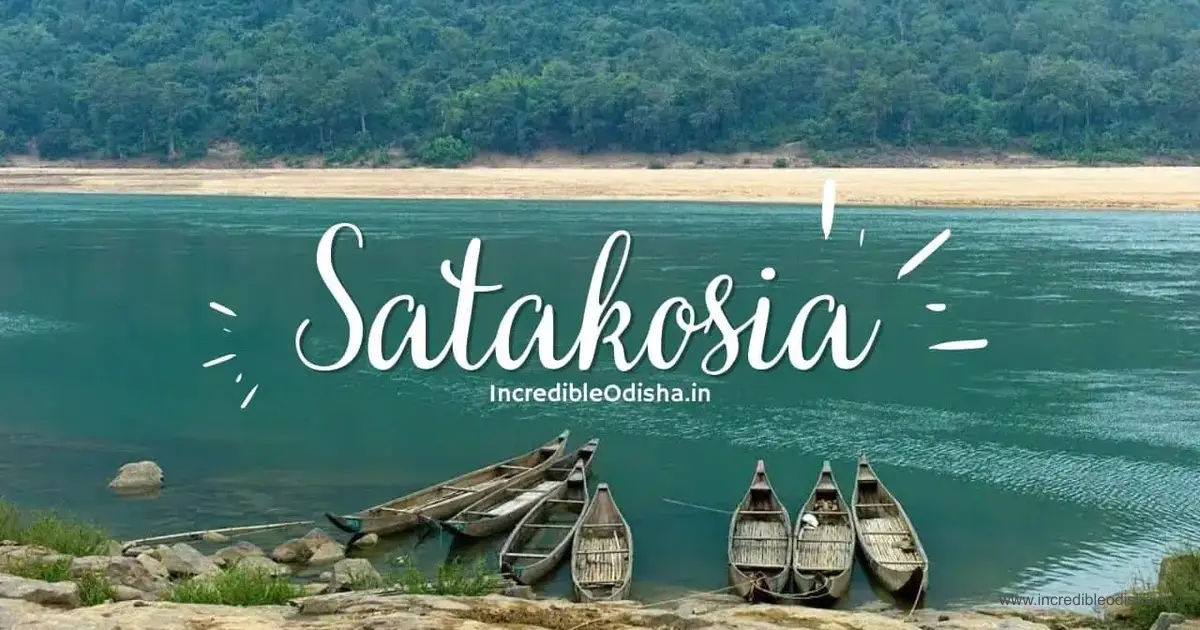
Satkosia is not your typical “drive-around-in-a-jeep” wildlife sanctuary. Its heart is the Satkosia Gorge, a 22-kilometer long stretch where the mighty Mahanadi river carves its way through the dense hills of the Eastern Ghats. The sheer scale of the gorge is breathtaking. In some places, the water is hundreds of feet deep, hiding crocodiles that have remained unchanged for millions of years. It is easily one of the most popular tourist places in Odisha for those who love the raw power of nature.
What really sets Satkosia apart is its dual personality. It is a Tiger Reserve, yes, but it’s also a wetland of international importance—recognized as a Ramsar site—a crocodile sanctuary, and a vital elephant corridor. The biodiversity here is staggering. You have the dry deciduous forests of the north meeting the moist peninsular sal forests, creating a canopy that changes colors with every season.
If you’re a bird watcher, Satkosia is nothing short of a pilgrimage. In 2026, we are seeing more sightings of the rare Indian Skimmer on the sandbars than ever before. It’s a place where you can spend hours just watching the river, only to be startled by the massive splash of a Mugger crocodile or the silent glide of a Gharial.
The Two Faces of Satkosia: Northern Bank vs Southern Bank
One of the biggest mistakes travelers make is not realizing that Satkosia has two distinct entry points that are not directly connected by a bridge within the forest. Choosing the “wrong” side can mean a 4-5 hour drive to reach the other. Trust me, I’ve seen many disappointed faces at the forest gates because they booked a resort on the opposite bank!
1. The Northern Bank (Tikarpada/Angul Side)
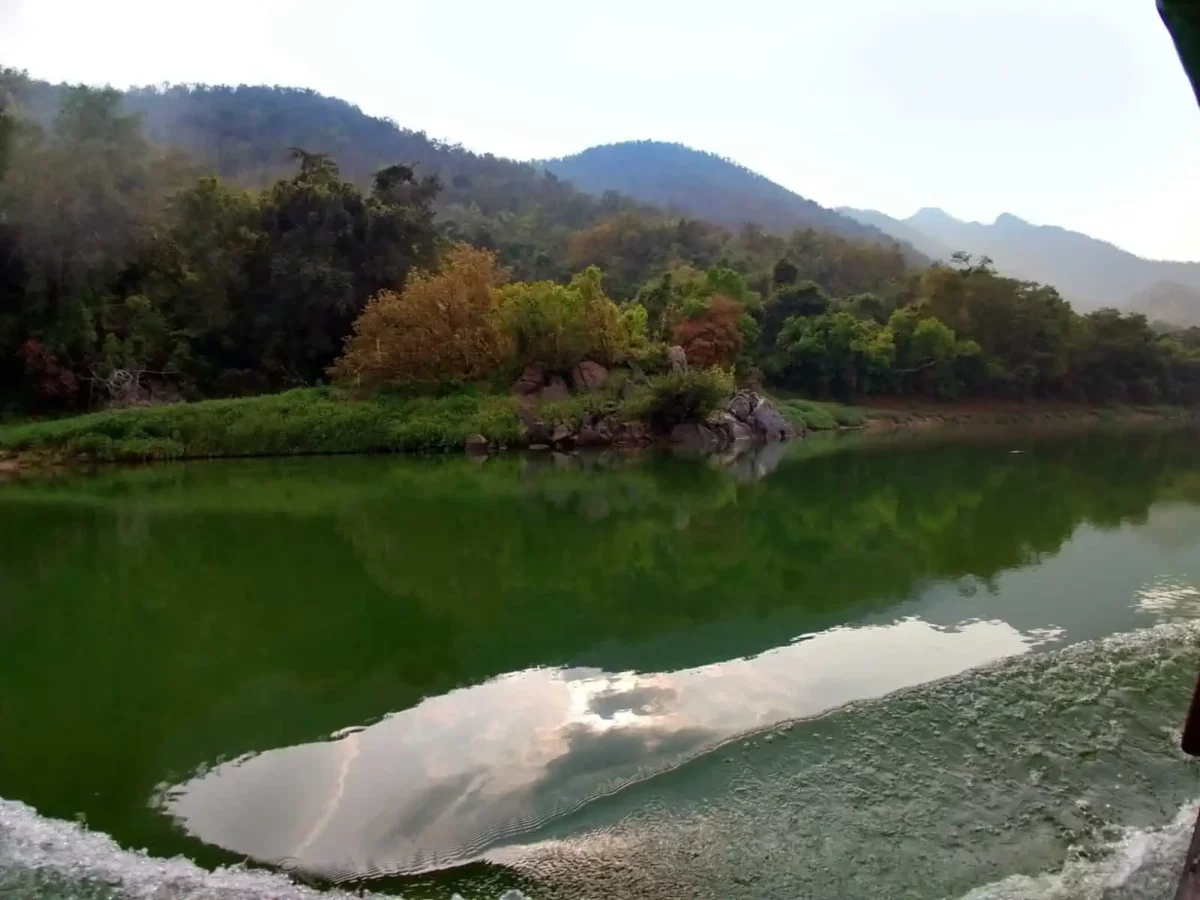
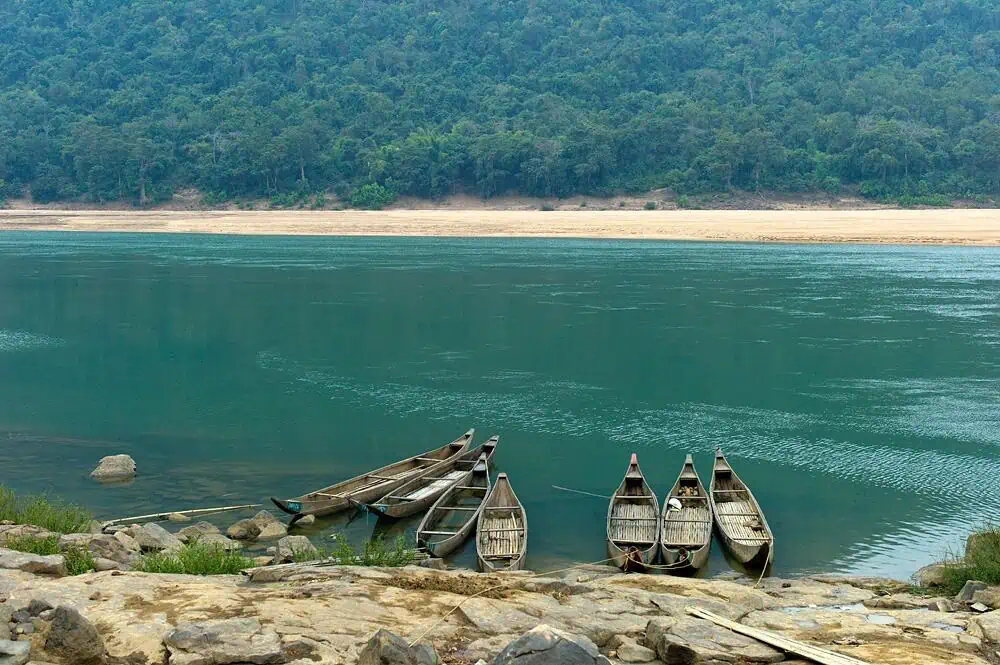
This is the “classic” Satkosia. Accessed via the industrial hub of Angul District, this side is famous for the Tikarpada Crocodile Sanctuary. If you want to see the Gharial Research and Conservation Unit (GRACU) or stay in the original forest rest houses, this is your destination. For more on this region, check out our guide to the Angul District.
The serene landscape of the Northern bank near Tikarpada.
2. The Southern Bank (Badmul/Nayagarh Side)
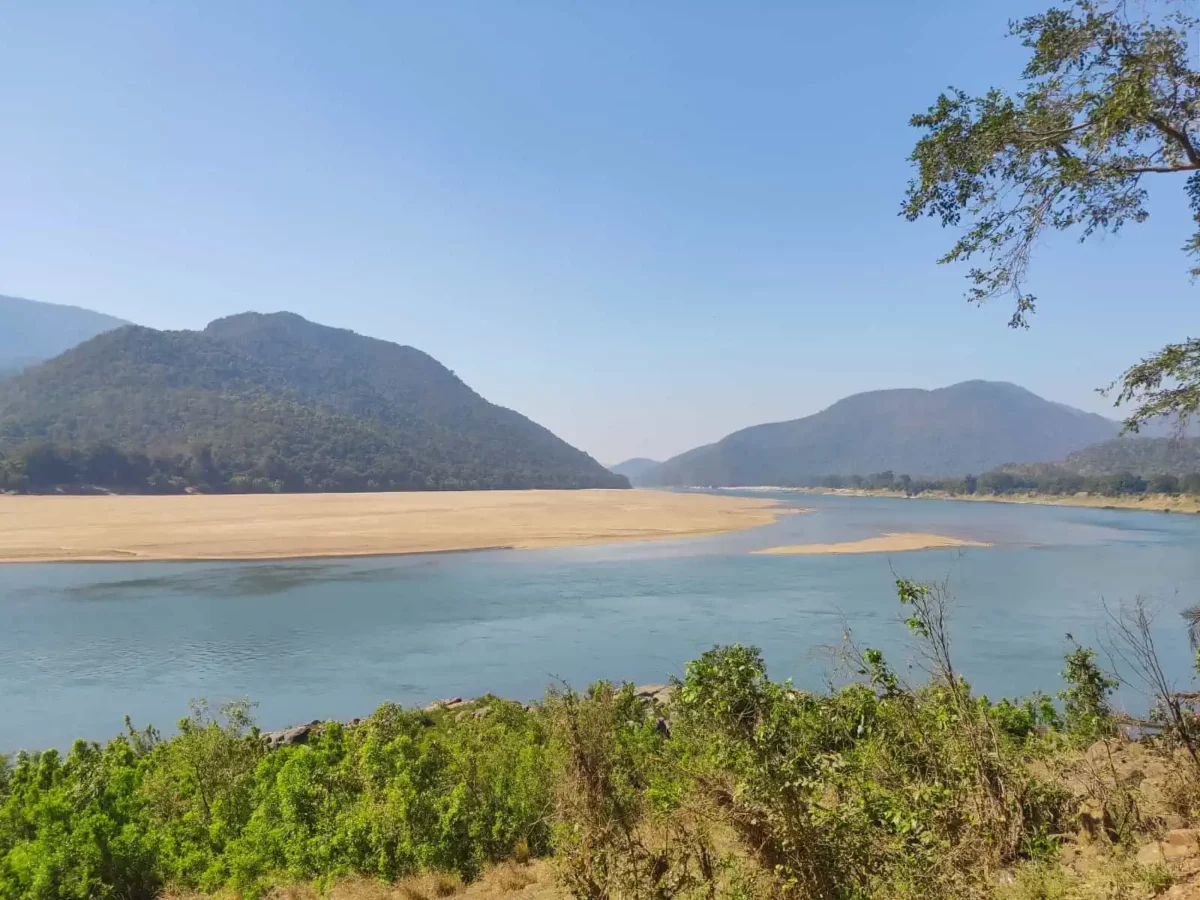
This is where the “New Satkosia” shines. Accessed via Nayagarh, the Southern bank is home to the famous Satkosia Sands Resort and the venue for the annual Eco Retreat Satkosia. It offers vast stretches of golden sand bars during the winter, luxury tented stays, and much better water-based activities. If you’re looking for a romantic getaway or a high-end family vacation, head south.
The majestic Satkosia Gorge as seen from the Southern bank.
The Return of the King: Tiger Translocation Project 2026
If you’ve been following Odisha’s wildlife news, you’ll know that Satkosia has had a rocky history with its tiger population. After the unsuccessful translocation attempt in 2018, the forest went through a quiet period. But 2026 marks a new era of hope.
The National Tiger Conservation Authority (NTCA) has approved a massive interstate translocation project to bring 14 tigers from Maharashtra’s Tadoba-Andhari Tiger Reserve to Satkosia. As of early 2026, the forest department has successfully relocated several villages from the core area to create an undisturbed habitat.
When you visit now, you’ll notice an increased presence of the Special Tiger Protection Force (STPF). While sightings are still rare as the new inhabitants settle in, the very air in Satkosia feels different—the “king” is coming home, and the entire ecosystem is being revived to welcome him. This conservation story is one of the most significant in India today, and being here to witness it is a privilege. For a comparison with Odisha’s other major tiger habitat, read our Similipal Tiger Reserve Guide.
Eco Retreat Satkosia 2025-26: Luxury in the Wild
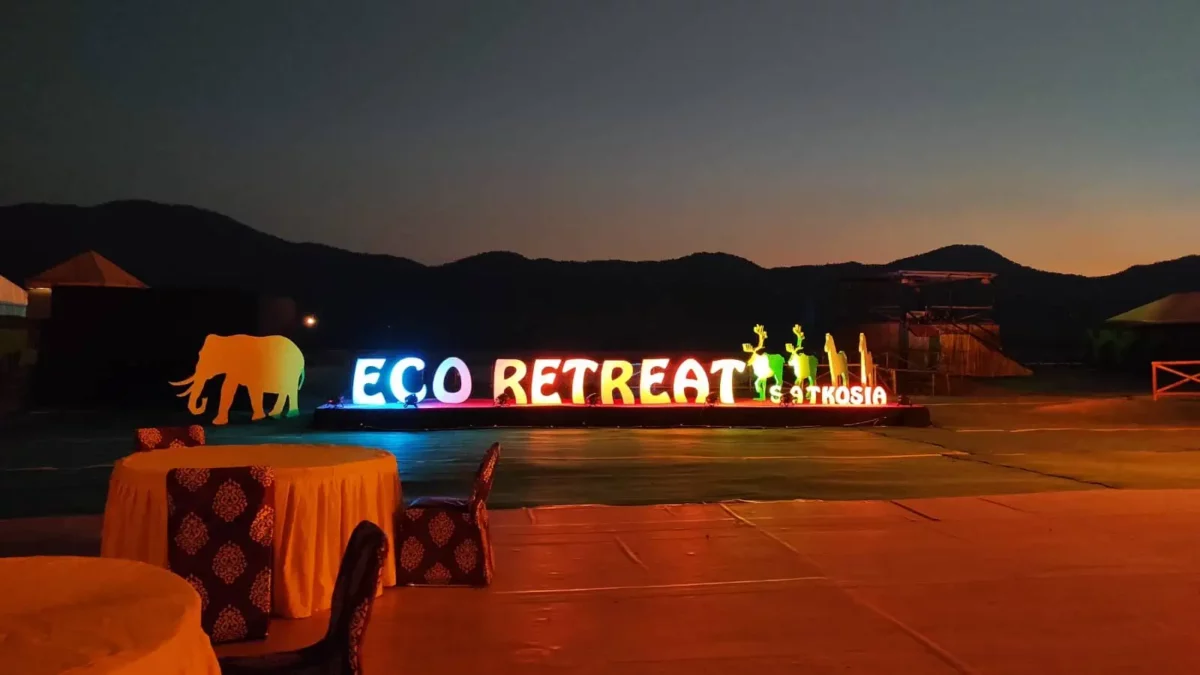
For the 2025-26 season, Eco Retreat Satkosia has outdone itself. Operating from November 15, 2025, to February 13, 2026, this glamping festival has become the gold standard for sustainable luxury in Odisha. Imagine waking up in a 5-star tent on a sandbar, with the Mahanadi flowing just meters from your deck. You can book your stay via the official Odisha Tourism website.
Luxury glamping at the Satkosia Eco Retreat.
What to Expect at the Eco Retreat:
- The Tents: These aren’t just tents; they are Swiss cottages with air conditioning, premium linens, and ensuite bathrooms that rival city hotels.
The interior of a premium Swiss cottage at Satkosia.
- The Food: The “Pakhala” spread here is legendary, but you also get gourmet multi-cuisine options and beachside barbeques under the stars.
- Activities: From rifle shooting and archery to beach volleyball and guided star-gazing sessions, there’s never a dull moment.
- Culture: Every evening, the campsite comes alive with Odissi dance performances and local folk music, making you feel deeply connected to Odisha’s heritage.
Pro-tip: Book the “Premium Swiss Cottage” if you can. The view of the gorge at sunset from these tents is worth every rupee.
Top Things to Do in Satkosia Tiger Reserve
Don’t just stay in your room! Satkosia is an active landscape. Here are the experiences you shouldn’t miss:
1. Boating in the Satkosia Gorge
This is the “Big One.” A 45-minute boat ride through the gorge is the only way to truly appreciate the scale of Satkosia. As the boat glides through the deep blue water, you’ll see Mugger and Gharial crocodiles basking on the rocks. The silence of the gorge, punctuated only by the lap of water, is meditative.
A traditional boat ride through the heart of the Satkosia Gorge.
2. Crocodile Sighting at Tikarpada
Visit the Gharial Research and Conservation Unit. It’s one of the few places in India where you can see the successful breeding of these fish-eating crocodiles. It’s an educational experience that kids especially love.
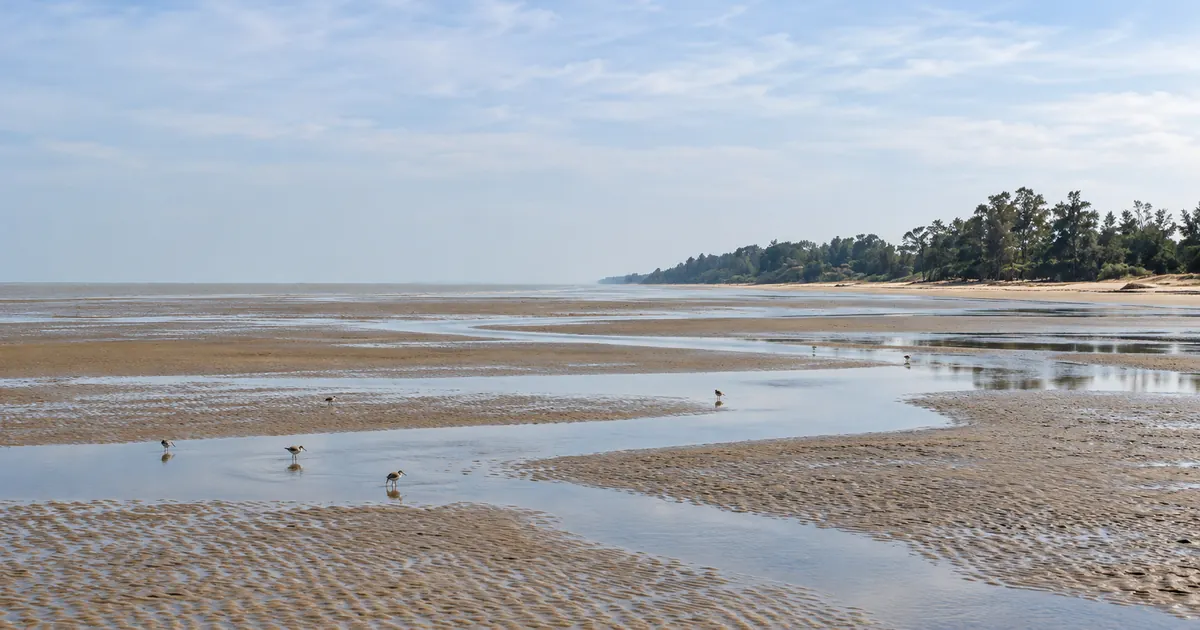
Glimpses of the river while exploring the Tikarpada area.
3. Jungle Safari and Nature Trails
While jeep safaris are available, I highly recommend the nature trails. Walking through the forest with a local guide is a sensory explosion. You’ll learn to identify the alarm calls of langurs and the distinct scent of the forest floor after a light winter dew.
4. Bird Watching (Spot the Indian Skimmer)
Keep your binoculars ready. Satkosia is home to over 300 species of birds. The sight of an Indian Skimmer flying low over the river, its bright orange bill cutting through the water, is a bucket-list moment for any birder.
The calm waters provide an excellent vantage point for bird watching.
5. Stargazing at Sands Resort
With almost zero light pollution, the night sky at Satkosia is a celestial masterpiece. At the Satkosia Sands Resort, you can lie on the sandbars and trace the Milky Way—a rare luxury for those of us living in “smart” cities.
Best Places to Stay: From Luxury Tents to Nature Camps
Accommodation in Satkosia ranges from rugged to royal. If you’re comparing different high-end stays, check out our list of the best Eco Retreats in Odisha to see how Satkosia stacks up. Here’s a breakdown of the best options in 2026:
1. Satkosia Sands Resort (Badmul)
Managed by the Mahanadi Wildlife Division, this is arguably the best-managed eco-tourism property in Odisha. The “Sands Resort” offers a mix of cottages and tents. The community-led hospitality here is heartwarming—the staff are mostly from local villages who take immense pride in showing you their home.
The iconic Satkosia Sands Resort at Badmul.
2. Tikarpada Nature Camp
For those who want to be in the thick of the action on the Northern bank. The tents here are basic but clean, and you are literally steps away from the river and the crocodile sanctuary.
3. Chhotkei and Purunakote Eco-Camps
These are perfect for serious wildlife enthusiasts. Located deeper in the forest, they offer a more raw experience. The Chhotkei Nature Camp sits on a hilltop, offering panoramic views of the forest canopy that are simply unbeatable.
Satkosia Tiger Reserve Entry Fees and Timings (Updated 2026)
To enter the reserve, you need a permit. While you can get them at the gates, I strongly recommend booking online at the Eco Tour Odisha portal to avoid disappointment, especially during the peak winter months.
| Category | Fee (INR) | Note |
|---|---|---|
| Indian Citizens | ₹20 | Per person/day |
| Foreign Nationals | ₹1000 | Per person/day |
| Students | ₹20 | Valid ID required |
| Children (Below 3) | Free | - |
| Jeep/Car/LMV | ₹5 | Per vehicle/day |
| Still Camera (Amateur) | ₹100 | First 3 days |
| Professional Cine Camera | ₹1000 | Per day |
Timings: The reserve is generally open from 6:00 AM to 6:00 PM. However, entry permits are usually issued until 4:00 PM.
How to Reach Satkosia: A Traveler’s Guide
Satkosia is well-connected, but the route depends on which bank you are visiting.
The entrance to the Satkosia Tiger Reserve via the river route.
- By Air: The nearest airport is Biju Patnaik International Airport (BBI) in Bhubaneswar. From here, it’s a 3.5 to 4-hour drive.
- By Rail: Angul Railway Station is the closest for the Northern bank (about 60 km). For the Southern bank, Nayagarh Town Station is becoming a popular choice. You can check train schedules on the official IRCTC website.
- By Road:
- To Tikarpada (North): BBSR -> Dhenkanal -> Angul -> Tikarpada (approx. 160 km).
- To Badmul (South): BBSR -> Khurda -> Nayagarh -> Gania -> Badmul (approx. 120 km). The road from Nayagarh to Gania is particularly scenic, winding through small villages and lush green fields. Buses are operated by OSRTC from major cities.
Best Time to Visit Satkosia Tiger Reserve
Timing is everything when it comes to the Satkosia experience.
- Winter (November to February): THE BEST TIME. The weather is cool (mornings can be chilly, around 10°C), the river is calm, and the sandbars are fully visible. This is also when the Eco Retreat is operational.
- Monsoon (July to September): The reserve often closes or has restricted access due to rising river levels. However, the greenery is hypnotic if you can find a stay on the periphery.
- Summer (March to June): It gets hot, often touching 40°C. But if you’re a serious tiger or elephant spotter, this is when animals congregate around the shrinking water holes.
Essential Travel Tips for Your Satkosia Trip
- Book Early: The Sands Resort and Eco Retreat sell out months in advance for December and January. Don’t leave it to the last minute.
- Pack for Layers: Even if it’s hot in Bhubaneswar, Satkosia is much cooler. Bring a light jacket for early morning boat rides.
- Respect the Silence: Satkosia is a “Silent Zone.” Avoid loud music and bright-colored clothing during safaris. Earth tones (khaki, olive green, brown) are best.
- No Plastic: The reserve has a strict no-plastic policy. Carry a reusable water bottle.
- Connectivity: Expect limited mobile network once you enter the deep forest. Use this as an opportunity for a digital detox!
Nearby Attractions: Expanding Your Journey
If you have an extra day, consider visiting:
- Kuanria Dam: A beautiful spot for bird watching near the Southern bank.
- Kantilo Nilamadhab Temple: An ancient temple perched on a hill overlooking the Mahanadi, just an hour’s drive from the Southern bank.
- Bhitarkanika National Park: If you love crocodiles, Bhitarkanika is the saltwater counterpart to Satkosia’s freshwater ecosystem.
A Journey Through Time: The Geological and Cultural History of Satkosia
To truly appreciate Satkosia, you have to look beyond the trees and the water. Geologically, the Satkosia Gorge is a marvel. It was formed millions of years ago when the Mahanadi River, one of the oldest rivers in the Indian subcontinent, began its relentless work of cutting through the ancient rocks of the Eastern Ghats. This isn’t just a valley; it’s a window into the Earth’s past. The Precambrian rocks you see lining the gorge have witnessed the shift of continents and the rise and fall of countless species.
The towering hills and deep valleys that define Satkosia’s unique geography.
Culturally, the history of Satkosia is deeply intertwined with its indigenous communities. The Kondh and Sahara tribes have lived in these forests for centuries, far before the area was ever designated as a “reserve.” For them, the forest isn’t a “tourist destination”—it’s a living deity. Their traditional knowledge of medicinal plants, forest cycles, and animal behavior is what allowed this ecosystem to survive the pressures of the modern world.
In the old days, the gorge was a treacherous route for spice traders and boatmen. Legends tell of “Mahanadi’s Wrath” during the monsoons, where the water levels in the narrow 14-mile (sat-kos) stretch would rise so rapidly that even the most experienced navigators would tremble. This is where the name “Satkosia” comes from—“Sat” meaning seven and “Kos” meaning a unit of distance (approx. 2 miles), referring to the 14-mile length of the majestic gorge.
Detailed 3-Day Satkosia Itinerary (The Ultimate Nature Escape)
If you’re planning a trip, don’t rush it. Satkosia operates on “forest time,” which is significantly slower than city time. Here is my recommended 3-day plan for the Southern Bank (Badmul side), which offers the best mix of luxury and wilderness.
Day 1: Arrival and Sandbar Serenity
- 10:00 AM: Depart from Bhubaneswar. The drive through Khurda and Nayagarh is beautiful. Stop at a local dhaba for some hot Chennapoda (Odisha’s famous burnt cheese dessert).
- 01:00 PM: Reach Satkosia Sands Resort or the Eco Retreat. Check-in and enjoy a traditional Odia lunch (Dalma, Rice, and Saaga are must-tries).
- 03:30 PM: Head for your first boat ride in the gorge. This is when the light is perfect for photography, and crocodiles are often seen basking in the late afternoon sun.
- 06:30 PM: Return to the camp. Enjoy a cultural performance by local tribal artists. There’s something magical about hearing the beat of the Dhole drum under a canopy of stars.
- 08:30 PM: Dinner by the campfire.
Day 2: The Heart of the Forest
- 06:30 AM: Wake up early for a guided nature trail. This is the best time for bird watching. Keep an eye out for the Malabar Giant Squirrel—they are surprisingly loud when they jump between the Sal trees!
- 10:00 AM: Breakfast and a visit to the nearby village. See how the local Eco Development Committee (EDC) manages the forest.
- 01:00 PM: Lunch and some downtime. I usually spend this time reading a book on my tent’s porch, listening to the river.
- 04:00 PM: Choose an adventure activity. Archery or a cycle trail around the periphery of the reserve is highly recommended.
- 07:00 PM: Documentary screening at the interpretation center. Learn about the tiger translocation efforts and the challenges of conservation.
Day 3: Spiritual Detours and Departure
- 07:30 AM: A final short boat ride or a visit to the Kuanria Dam for more bird watching.
- 10:30 AM: Check-out and head towards the Kantilo Nilamadhab Temple. Perched on a hill overlooking the Mahanadi, this temple is architecturally stunning and spiritually uplifting. It shares a deep connection with the Shree Jagannath Temple in Puri, as many believe the deity was originally worshipped here as Neela Madhava.
- 01:30 PM: Lunch at Kantilo and shop for famous brass and bell-metal handicrafts (Kansa).
- 04:30 PM: Arrive back in Bhubaneswar, refreshed and “wild-at-heart.”
Wildlife Spotlight: More Than Just the Striped King
While the tiger is the star of the show, Satkosia’s supporting cast is equally fascinating. If you focus only on seeing a tiger, you might miss the subtle wonders of this forest.
The Malabar Giant Squirrel
You’ll hear them before you see them. These squirrels are huge—nearly three feet long from nose to tail—and have stunning maroon and black fur. In Satkosia, they are quite active in the morning. Watching them leap 20 feet between branches is a masterclass in forest agility.
The Indian Skimmer
This bird is a miracle of evolution. With a lower bill longer than the upper one, it “skims” the water surface to catch fish. Satkosia’s sandbars are one of the few remaining breeding grounds for this endangered species. If you see a group of birds with bright orange bills resting on the sand, you’ve found them.
The Ghost of the Forest: The Leopard
Leopards are much more common in Satkosia than tigers, but they are masters of camouflage. They thrive in the rocky terrain around the gorge. While a sighting is rare, look for their pugmarks on the forest trails—they are smaller and more “flower-like” than a tiger’s.
The Gentle Giants: Indian Elephants
Satkosia is part of a vital elephant corridor connecting with the Mahanadi Wildlife Division. During the summer months, herds of elephants can be seen crossing the river—a sight that will leave you speechless.
The Green Canopy: Exploring the Flora of the Eastern Ghats
The vegetation in Satkosia is a fascinating mix. Because it sits at the confluence of two different climatic zones, you get a unique “ecotone” effect.
- Sal (Shorea robusta): The backbone of the forest. These tall, straight trees provide the canopy. In the spring, when the Sal flowers bloom, the entire forest is filled with a sweet, heady fragrance.
- Teak (Tectona grandis): Found mostly in the drier parts of the reserve. They are prized for their wood but play a crucial role in providing shade to the smaller mammals.
- Simul (Silk Cotton Tree): In late winter (February), these trees lose their leaves and burst into giant, waxy red flowers. They attract hundreds of birds and monkeys who come for the nectar.
- Orchids: If you look closely at the trunks of old trees during the monsoon and post-monsoon months, you’ll find delicate wild orchids. Odisha has over 130 species of orchids, and many are found right here in Satkosia. For a different landscape, you can also see unique flora at the Similipal National Park.
Photography Guide: Capturing the Spirit of the Gorge
Photographing Satkosia is both a joy and a challenge. The high contrast between the dark rocks and the bright water can be tricky.
- Golden Hour is Mandatory: The 45 minutes after sunrise and before sunset are when the gorge truly “glows.” The mist over the river acts as a natural softbox, giving your photos a dreamlike quality.
- Lenses: Bring a long telephoto (at least 400mm) for birds and crocodiles. For the gorge itself, a wide-angle (16-35mm) is essential to capture the scale.
- The “Crocodile Profile”: When photographing crocodiles, get as low as the boat allows. Eye-level shots create a much more intimate and powerful image than shooting from above.
- Candid Culture: Don’t forget to photograph the people. The boatmen, with their weathered faces and expert hands, tell the story of Satkosia better than any landscape.
Sustainable Travel: Supporting the Guardians of the Forest
When you stay at the Satkosia Sands Resort or the nature camps, you are directly contributing to conservation. These facilities are managed by the Eco Development Committees (EDCs). A significant portion of your booking fee goes directly to the local villagers.
Eco-friendly tourism initiatives on the banks of the Mahanadi.
This is the “Satkosia Model”: when locals benefit from tourism, they have a vested interest in protecting the forest. Many former poachers are now the best forest guards and guides because they know every inch of the terrain. By choosing to stay here, you are helping to prove that a living tiger is worth far more to a community than a dead one.
Comparison: Satkosia vs. Bhitarkanika vs. Similipal
If you’re wondering which Odisha park to visit, here’s a quick guide:
- Satkosia: Best for scenery, boating, and river-based wildlife. It’s the most “picturesque” of the three.
- Bhitarkanika: Best for saltwater crocodiles, mangroves, and boat safaris. It’s more “tropical” and feels like a mini-Amazon. Explore our full Bhitarkanika Travel Guide for details.
- Similipal: Best for waterfalls, vast landscapes, and a chance to see the rare “Melanistic” (black) tigers. It’s much larger and requires at least 3-4 days to explore.
- Daringbadi: If you prefer mist-covered hills and coffee plantations over river gorges, Daringbadi Hill Station is your best bet for a 2026 mountain getaway.
What to Eat: A Taste of the Forest and the River
The food in Satkosia is simple, fresh, and deeply satisfying. Most of the ingredients are sourced from nearby villages. If you want to dive deeper into the state’s culinary heritage, don’t miss our guide on the 10 Famous Odisha Foods You Must Try.
- Badi Choora: Sun-dried lentil dumplings crushed with garlic, green chilies, and mustard oil. It’s the perfect accompaniment to rice.
- Desi Kukhuda Jhola: Country chicken curry made with local spices. It has a depth of flavor that broiler chicken can never match.
- Fresh River Fish: If the Eco Tour Odisha community members allow (based on seasonal rules), try the small river fish fried with turmeric and salt.
- Pakhala: Especially during the summer or late spring, this fermented rice dish served with fried vegetables and curd is the ultimate “forest soul food.”
Frequently Asked Questions (FAQs)
What is Satkosia Tiger Reserve famous for?
Satkosia is famous for the Satkosia Gorge, a stunning 22-km natural canyon carved by the Mahanadi river through the Eastern Ghats. It is also renowned for being one of the best places in India to see Gharial and Mugger crocodiles in a freshwater ecosystem. Additionally, it has gained immense popularity for the Eco Retreat Satkosia, which offers world-class luxury glamping on the river’s sandbars.
How many tigers are there in Satkosia in 2026?
As of 2026, Satkosia is undergoing a revitalization of its tiger population through a structured translocation project from Maharashtra. While the exact census numbers are updated periodically by the forest department, the focus remains on the successful settlement of the newly introduced tigers from Tadoba-Andhari. The goal is to establish a stable breeding population of at least 14 tigers over the next few years.
Is Satkosia Tiger Reserve safe for family trips?
Yes, Satkosia is very safe for tourists, including families with children. The forest department and Eco Development Committees (EDC) strictly monitor all activities. However, it is a wild habitat, so you must follow your guide’s instructions, stay within designated areas, and avoid venturing out on foot without a forest guard, especially after sunset.
How much does the Eco Retreat Satkosia cost per night?
For the 2025-26 season, prices at the Eco Retreat typically start from around ₹4,400 per night for Deluxe Swiss Cottages on weekdays and can go up to ₹8,000 or more for Premium cottages during peak dates like Christmas and New Year. These rates usually include all meals, stays, and several in-house cultural activities.
Can we see crocodiles in Satkosia?
Absolutely! The Satkosia Gorge is one of the most reliable places to spot Gharials and Mugger crocodiles. They are most commonly seen during the winter months (November to February) when they come out to bask on the rocks and sandbanks to regulate their body temperature.
Is alcohol allowed inside Satkosia Tiger Reserve?
No, alcohol is strictly prohibited inside the Satkosia Tiger Reserve and the government-managed nature camps (like Tikarpada or Chhotkei). This is to maintain the tranquility and sanctity of the wildlife sanctuary. Visitors are expected to respect these rules to ensure a peaceful environment for the animals and other guests.
Which bank of Satkosia is better: North or South?
It depends on your preference. The Southern Bank (Badmul side) is better for those seeking luxury, sandbar experiences, and high-end camping (like the Eco Retreat and Sands Resort). The Northern Bank (Tikarpada side) is better for rugged adventure, trekking, and visiting the Gharial research center. Note that you cannot cross from one side to the other directly within the forest; you must drive around.
What is the best time to visit Satkosia for wildlife sightings?
While winter is the most comfortable time for humans, the peak summer months (April to June) are technically the best for spotting wildlife like elephants and leopards, as they frequently come to the Mahanadi river to drink. However, for a balanced experience of weather and wildlife, November to February is highly recommended.
How to reach Satkosia from Bhubaneswar by road?
To reach the Southern bank (Badmul), take the NH57 via Khurda and Nayagarh; it’s about a 120 km drive (3 hours). To reach the Northern bank (Tikarpada), take the NH55 via Dhenkanal and Angul; it’s about a 160 km drive (4 hours). Both routes offer beautiful scenery of the Odishan countryside.
Do I need to book my stay in advance?
Yes! Especially for popular sites like Satkosia Sands Resort and the Eco Retreat, bookings often fill up 2-3 months in advance for weekends and holidays. Always book your stay through the official Eco Tour Odisha website to ensure your permit and accommodation are secured.
A Journey into the Soul of Satkosia
Visiting Satkosia Tiger Reserve is more than just a wildlife trip; it’s a lesson in humility.
Standing before that massive gorge, you realize how small we are and how magnificent our natural heritage is. Whether you’re a photographer, a soul-searcher, or a family looking for a break from the screen, Satkosia in 2026 is waiting to tell you its story. Jai Jagannath!