Putsil Mountain Valley Koraput: Travel Guide
Explore Putsil Mountain Valley in Koraput with paragliding, eco retreat details, waterfalls, and practical local travel tips.
The first time I stood at the edge of Putsil Mountain Valley just as the sun began to peek over the Eastern Ghats, I felt like I had stepped into a different world. The entire valley was blanketed in a thick, rolling “carpet of clouds”—a white, fluffy sea that obscured everything except the highest peaks. As the cool mountain breeze carried the faint scent of blooming coffee blossoms, I finally understood why locals call this place the “Switzerland of Odisha.”
Putsil, a tiny village tucked away in the Koraput district, is no longer just a hidden secret among backpackers. By 2026, it has transformed into a premier destination for those seeking a mix of high-altitude adventure and deep cultural immersion. Whether you’re soaring through the sky on a paraglider or sipping locally grown organic coffee while watching the mist dance through the pine trees, Putsil offers a sensory experience that stays with you long after you’ve left the hills.
In this guide, I’ll take you through everything you need to know about planning your 2026 trip to Putsil Mountain Valley—from the adrenaline of paragliding to the luxury of the Eco Retreat and the timeless traditions of the Gadaba and Paraja tribes.
Putsil Mountain Valley – The Switzerland of Odisha.
The Magic of Putsil Valley: Why It’s Called the Switzerland of Odisha
When people talk about Odisha, they often think of the sun-drenched beaches of Puri or the ancient stones of Konark. But the southern highlands of Koraput offer a completely different side of the state’s beauty. Putsil Mountain Valley, situated at an altitude that rivals some of the more famous hill stations in North India, is characterized by its rolling green meadows, deep valleys, and a climate that remains refreshing even when the plains are sweltering.
The landscape here is dramatic. The Putsil Valley stretches for nearly 20 kilometers, a winding path of emerald hills and silver streams. What makes it truly special is the “Carpet of Clouds” phenomenon. During the winter months (especially between November and February), the temperature drop at night creates a thick layer of fog that settles in the valley. If you reach the Putsil hilltop by 5:30 AM, you’ll find yourself standing above the clouds. Watching the sun rise over this ethereal white sea is a spiritual experience.
As the sun climbs higher, the clouds begin to dissipate, revealing the intricately terraced fields where local tribes grow millets and vegetables. The valley is also a gateway to the Deomali Hills, the highest peak in Odisha. From certain vantage points in Putsil, you can see the towering silhouette of Deomali in the distance, its peak often lost in the mist.
The Jeypore Kingdom: A Legacy of the Eastern Ghats
To truly appreciate Putsil, you must understand the history of the land it sits upon. For centuries, this region was the heart of the Jeypore Kingdom, one of the most powerful princely states in Eastern India. The kingdom was established in the 15th century by the Silavamsi dynasty and later saw the rise of the Sankara dynasty.
Jeypore, the historic capital, was a center of art, culture, and power. The Maharajas of Jeypore were known for their patronage of the arts and their deep connection to the tribal communities. It was under their rule that many of the region’s traditions, including the cultivation of coffee, were first introduced. The British influence in the late 19th and early 20th centuries brought modern infrastructure, but the soul of the Jeypore hills remained fiercely tribal and independent.
Today, the remnants of this royal legacy can still be felt in the grand architecture of Jeypore town and the respect the local tribes still hold for their historic rulers. When you visit Putsil, you aren’t just visiting a hill station; you’re walking through a land that has seen centuries of royal history and tribal resilience.
Adventure activities like paragliding and trekking are major attractions in Putsil.
Paragliding at Putsil: Soaring Above the Eastern Ghats
If you’ve ever dreamed of flying like a bird, Putsil is the place to do it. Paragliding has become the “hero” activity of the region, attracting adventure enthusiasts from across India. The steady wind conditions and the vast, open landing zones in the valley make it one of the safest and most scenic spots for paragliding in Eastern India.
The paragliding operations are centered around the Deomali and Putsil ridges. Most flights are tandem, meaning you’ll be strapped into a harness with a certified, professional pilot who handles all the technical aspects while you focus on the view.
What to Expect During Your Flight
The experience starts with a short briefing at the take-off point. As the pilot lays out the colorful wing, you’ll feel a mix of nerves and excitement. Then, with a short run toward the edge of the hill, the wind catches the wing, and suddenly, your feet leave the ground.
The sensation isn’t one of falling, but of rising. You’ll soar at an altitude of approximately 4,000 feet above sea level, giving you a literal bird’s-eye view of the entire Koraput landscape. You can see the winding roads looking like tiny ribbons, the clusters of tribal huts, and the sparkling streams that feed the valley.
- Operator: Primarily managed by Greenscape Adventures in collaboration with Odisha Tourism.
- Cost: As of 2026, a 10-minute tandem flight costs approximately INR 2,500.
- Timing: Flights typically operate between 10:00 AM and 4:00 PM, depending on wind conditions.
- Best Time for Paragliding: The winter months (October to February) offer the most stable winds and the clearest views.
The luxury tents at Putsil Eco Retreat offer a unique stay experience.
Putsil Eco Retreat 2026: Luxury in the Heart of Nature
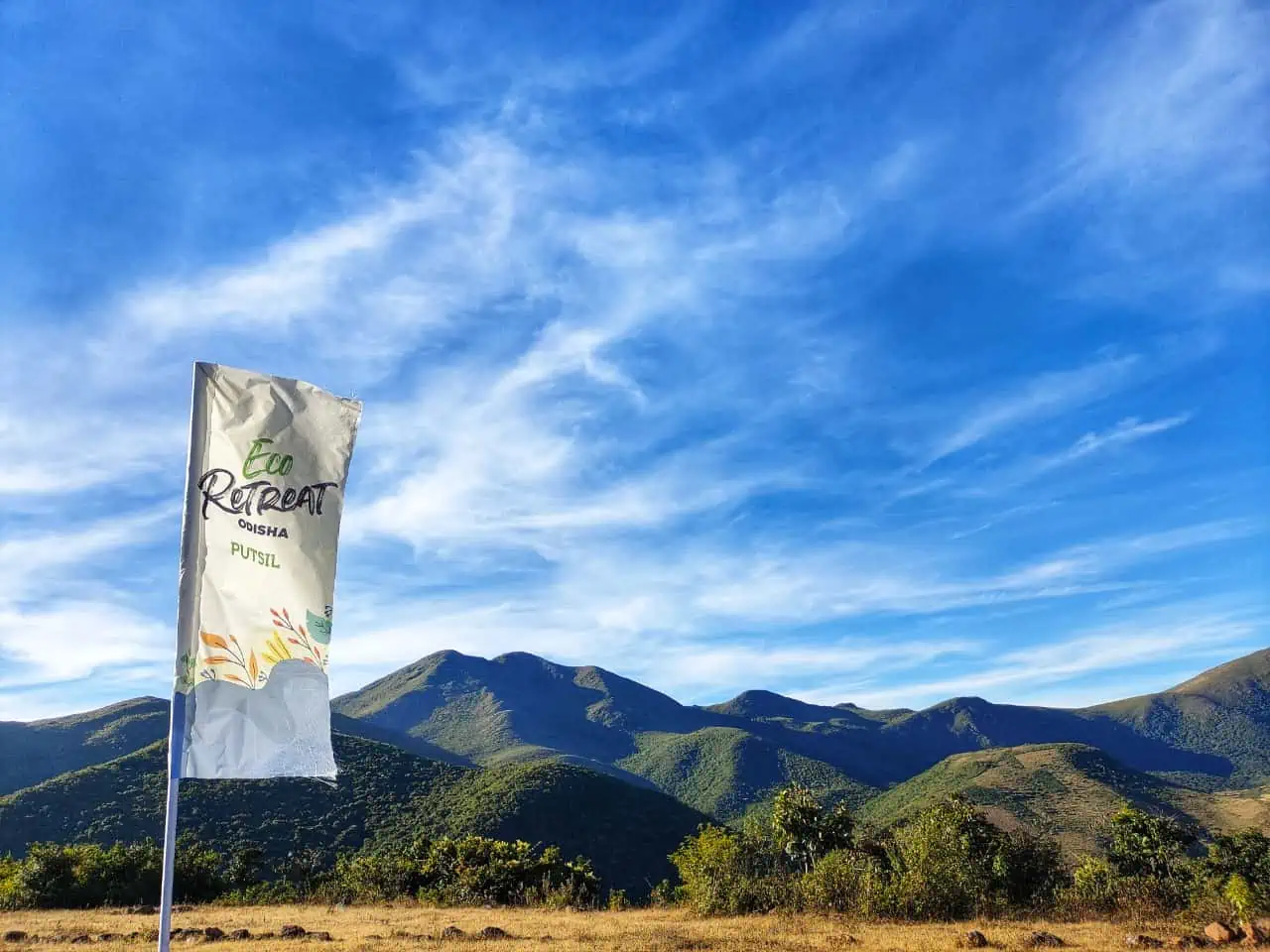
For those who want to experience the rugged beauty of the mountains without sacrificing comfort, the Putsil Eco Retreat is a game-changer. This seasonal luxury glamping site, an initiative by the Odisha Tourism Department, has become one of the most sought-after stays in the state.
Imagine waking up in a plush, weather-proof tent that feels more like a five-star hotel room. You step out onto your private deck with a steaming cup of Koraput coffee, watching the mist roll across the valley. The Eco Retreat is designed to be sustainable, leaving minimal impact on the environment while providing every modern luxury.
Facilities and Activities at the Retreat
The 2026 edition of the Eco Retreat offers a range of curated experiences:
- Guided Nature Treks: Professional guides take you on hidden trails through the pine forests and to secluded waterfalls that aren’t on the regular tourist map.
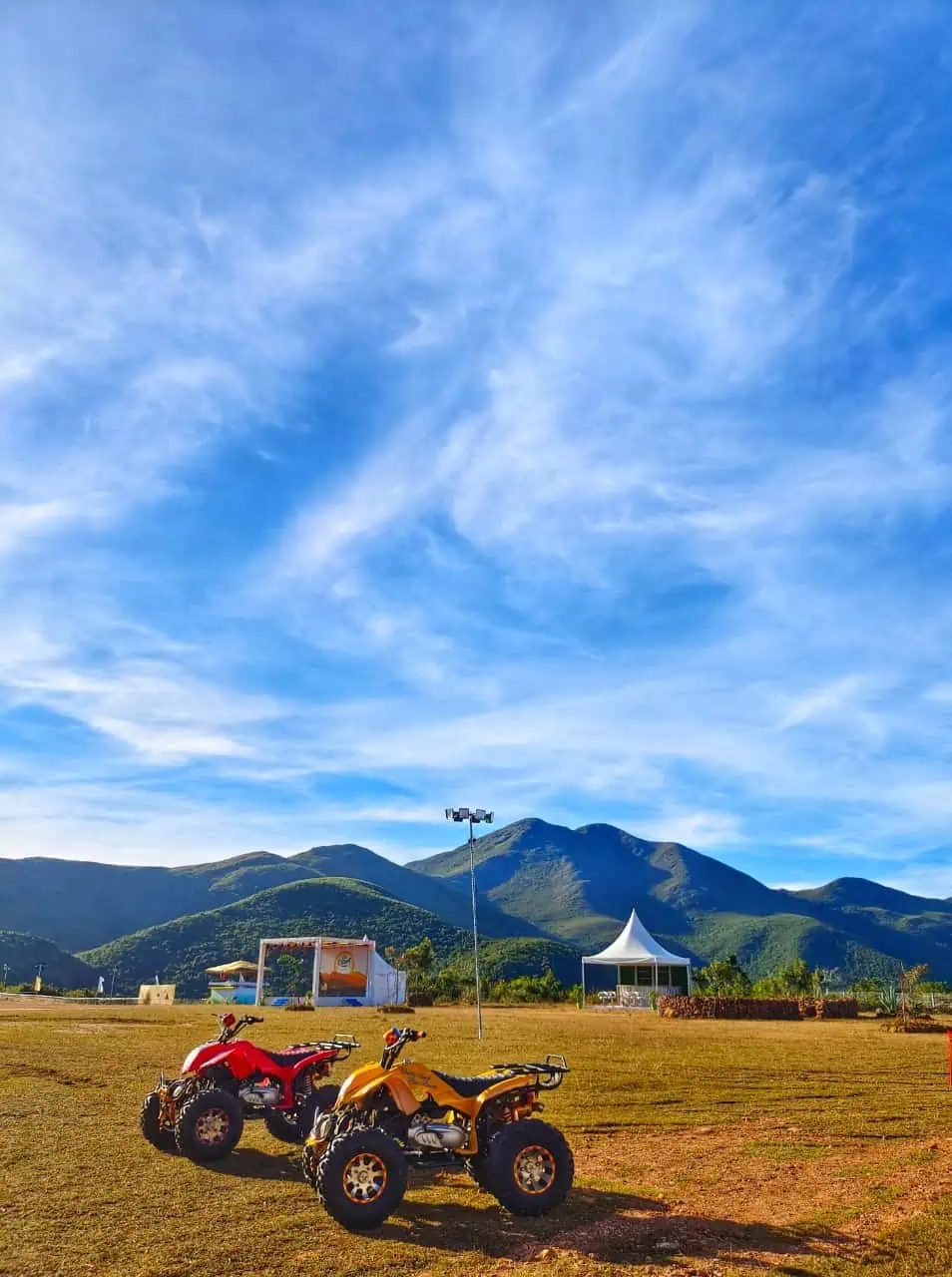
- Mountain Biking: For those who prefer wheels over wings, the retreat provides high-quality mountain bikes to explore the rugged terrain of the valley.
- Cultural Nights: Every evening, the retreat hosts performances by local tribal groups. Watching the rhythmic Dhemsa dance around a campfire is the perfect way to end a day of exploration.
- Star Gazing: With zero light pollution, the night sky at Putsil is a dazzling display of stars and constellations.
Booking and Pricing for 2026
- Season: Typically runs from November to March.
- Weekday Rates: Approximately INR 7,000 per night (plus GST).
- Weekend Rates: Approximately INR 8,000 per night (plus GST).
- Inclusions: The price usually includes all meals (breakfast, lunch, and dinner), a luxury stay, and access to several in-house activities.
You can book your stay through the official Eco Tour Odisha booking portal. It’s highly recommended to book at least a month in advance, especially for weekend stays.
The Soul of Koraput: Exploring Tribal Heritage
Putsil is not just a landscape; it’s a living cultural museum. The region is home to several indigenous communities, most notably the Gadaba and Paraja tribes. These communities have lived in harmony with the Eastern Ghats for centuries, maintaining traditions that are both beautiful and deeply significant.
The Gadaba Tribe: The Load Carriers of Tradition
The Gadabas are one of the most prominent tribes in the Putsil area. Their name is believed to have originated from the word “Goda,” referring to the Godavari River, near which they are said to have originally lived.
When you visit a Gadaba village, you’ll be struck by the unique attire of the women. They wear the Kerang, a traditional fabric made from the bark of trees and dyed with natural colors. They also wear large, heavy aluminum neckbands and brass earrings called murmuri. These ornaments aren’t just for decoration; they are symbols of status and identity. Their supreme deity is Bana Debta (the Nature God), reflecting their deep bond with the forest.
The Art of Kerang: A Rare Weaving Tradition
The weaving of Kerang is a fascinating process that is unique to the Gadaba women. It is a laborious task that begins with the collection of bark from the Kerang tree (Calotropis gigantea). The bark is stripped, dried, and then beaten repeatedly until the fibers are separated. These fibers are then twisted by hand into threads.
The threads are dyed using natural vegetable dyes—indigo for blue, madder for red—and then woven on simple ground looms. Traditionally, every Gadaba woman was expected to weave her own Kerang as a rite of passage. While the tradition is fading as modern fabrics become available, you can still see elderly Gadaba women meticulously working on their looms in the villages around Putsil. Buying a piece of Kerang fabric is one of the best ways to support the local economy and preserve this dying art.
The Paraja Tribe: The Guardians of the Soil
The Parajas (derived from the Sanskrit word Praja, meaning peasant) are the agricultural backbone of Koraput. They are deeply spiritual people who worship the Earth and their village deities, like Hundi Devta and Bhumu Mata.
One of the most beautiful aspects of Paraja culture is their music and dance. The Dhemsa dance is a communal celebration where women join hands in a semicircle and dance to the rhythmic beats of drums and the haunting notes of the mohri (a local flute). If you’re lucky enough to be invited to a village celebration, don’t hesitate to join in—the steps are easy to pick up, and the energy is infectious!
Festive Spirit of the Hills: Chaita and Pusha Parab
If you want to see Putsil at its most vibrant, you must visit during one of the major tribal festivals. These celebrations are not just religious events; they are the lifeblood of the community.
Chaita Parab: The Grand Spring Celebration
Held in the month of Chaitra (usually April), Chaita Parab is the most significant festival for the tribes of Koraput. It marks the end of the agricultural cycle and the beginning of a new year. For nearly 10 days, the entire valley erupts in joy.
- The Ritual Hunt: Traditionally, the men of the village go on a symbolic hunting expedition to the forests. It’s a test of their prowess and a way to seek the blessings of the forest gods.
- Feasting and Dancing: While the men are away, the women prepare massive feasts. When the men return, the village gathers for a night of non-stop Dhemsa dancing and drinking local rice beer.
- Bija Pandua: Among certain sub-tribes, this is the time for “Bija Pandua,” where seeds are blessed by the village priest before the sowing season begins.
Pusha Parab: The Winter Harvest
In the month of Pousha (December), the tribes celebrate Pusha Parab. This is a harvest festival where the community thanks Mother Earth for a bountiful crop. It’s a time of sharing, where families visit each other and exchange gifts of grain and homemade sweets.
The Annual “Parab” Festival
Apart from the village-specific celebrations, the Koraput District Council of Culture organizes the annual Parab Festival in November or December. This is a massive cultural extravaganza that brings together tribes from across the district. You can witness everything from traditional sports and archery to world-class tribal art exhibitions. It’s a photographer’s dream!
A Taste of Paradise: Coffee and Strawberry Plantations
Koraput is undergoing a green revolution, and Putsil is right at the heart of it. The cool climate and high altitude have proven to be perfect for two high-value crops: Arabica Coffee and Strawberries.
Organic Koraput Coffee
Coffee was introduced to this region by the Maharaja of Jeypore in the 1930s, but it’s only in recent years that it has become a global brand. Most of the coffee grown here is 100% Arabica, grown under the shade of native trees. This “Organic Koraput Coffee” is known for its mild acidity and chocolatey undertones.
Visiting a coffee plantation in Putsil is a sensory delight. During the flowering season (usually March/April), the plantations are covered in white, jasmine-scented blossoms. By winter, the branches are heavy with bright red “cherries” ready for harvest. Many local tribal families have shifted from traditional shifting cultivation to coffee farming, which has provided them with a sustainable and dignified livelihood.
The Strawberry Success Story
A more recent addition to the Putsil landscape is strawberry farming. Walking through a strawberry garden in the middle of Odisha feels like a bit of a surprise! These bright red, juicy berries are now grown by tribal women’s self-help groups with support from the Koraput District Administration.
You can often buy fresh, organic strawberries directly from the farmers along the road to Putsil. They are incredibly sweet and fresh, a perfect snack for your mountain trek.
Millet Magic: The Nutrition of the Highlands
No visit to Putsil is complete without tasting the local millets. Finger millet, known locally as Mandia, is the staple diet of the tribal communities. It’s a “superfood” that has been grown in these hills for thousands of years.
Mandia is incredibly nutritious—rich in calcium, iron, and fiber. The tribes consume it in various forms, most commonly as Mandia Jau (a fermented porridge) or Mandia Pitha (pancakes). The Odisha Millets Mission has been working to revive the cultivation of these ancient grains, and you can now find modern millet-based snacks in the local markets. Tasting Mandia Jau is a rite of passage for any traveler wanting an authentic taste of the Koraput highlands.
The Biodiversity of Putsil: A Paradise for Nature Lovers
Putsil is part of the Eastern Ghats, a global biodiversity hotspot. The geographical diversity—ranging from dense moist deciduous forests to high-altitude meadows—supports a staggering array of life.
Birdwatching in the Valley
For bird enthusiasts, Putsil is a hidden treasure. A study documented over 169 bird species in the Koraput region. As you walk through the pine forests or along the streams, keep your binoculars ready for:
- The Black Baza: A striking bird of prey with a distinct crest and bold black-and-white patterns.
- Jerdon’s Baza: A rare and elusive raptor that delights serious birders.
- Malabar Trogon: One of the most beautiful birds in India, with its brilliant crimson chest and haunting calls.
- Vernal Hanging Parrot: A tiny, bright green parrot often seen hanging upside down while feeding on the fruit trees.
- Heart-spotted Woodpecker: A small, charming woodpecker with distinct heart-shaped spots on its wings.
Sacred Groves (Gudi)
Scattered throughout the Putsil area are “Sacred Groves”—patches of pristine forest that are protected by the local tribes as the abode of their deities. These groves are reservoirs of genetic diversity, containing medicinal plants and ancient trees that have vanished from other parts of the district. Entering a sacred grove feels like entering a natural cathedral; the air is cooler, and the sense of peace is profound.
Trekking Trails and Nature Walks
For those who love to explore on foot, Putsil offers some of the best trekking trails in the Best Places to Visit in Koraput circuit.
1. The Putsil Hilltop Trek (The Cloud Walk)
This is a relatively easy trek that takes you from the valley floor to the highest ridge overlooking the Eco Retreat. The path winds through silver oak and eucalyptus trees. Once you reach the top, you’re rewarded with a 360-degree view of the entire valley. This is the best spot for sunrise photography.
2. The Pine Forest Trail
Located near the entrance of the valley, this trail takes you through a dense cluster of towering pine trees. The ground is carpeted with dried pine needles, making for a soft, fragrant walk. It’s a popular spot for birdwatching, as the forest is home to several unique species.
3. The Dudhari Jungle Trek
If you’re looking for something more adventurous, head toward the Dudhari jungle. This trek involves navigating through thicker vegetation and crossing small mountain streams. The highlight of this trail is the hidden Dudhari waterfall, a serene spot where you can enjoy a quiet picnic away from the crowds.
Capturing the Clouds: A Photography Guide to Putsil
If you’re visiting Putsil, you’ll want to capture that iconic “carpet of clouds” shot. Here’s how to do it like a pro:
- Timing is Everything: You need to be at the viewpoint before sunrise. Aim for 5:15 AM to 5:30 AM.
- The Best Viewpoint: The ridge just above the Eco Retreat offers the most unobstructed view of the valley below.
- Settings: Use a tripod for the low-light pre-dawn shots. A wide-angle lens (16mm to 24mm) is perfect for capturing the scale of the valley.
- Wait for the “Golden Hour”: As the sun breaks over the horizon, the clouds will turn from blue to a brilliant orange and gold. This is the moment to hit that shutter!
- Don’t Forget the People: The tribal women in their colorful Kerang attire against the green hills make for stunning portraits. Always ask for permission first.
Decoding the Waterfalls: Putsil vs. Punjisil
There is often a lot of confusion among tourists regarding the “Putsil Waterfall.” While the Putsil Valley is filled with dozens of small, nameless streams and seasonal falls that cascade down the hills during the monsoon, the large, accessible waterfall people often refer to is actually Punjisil Waterfall.
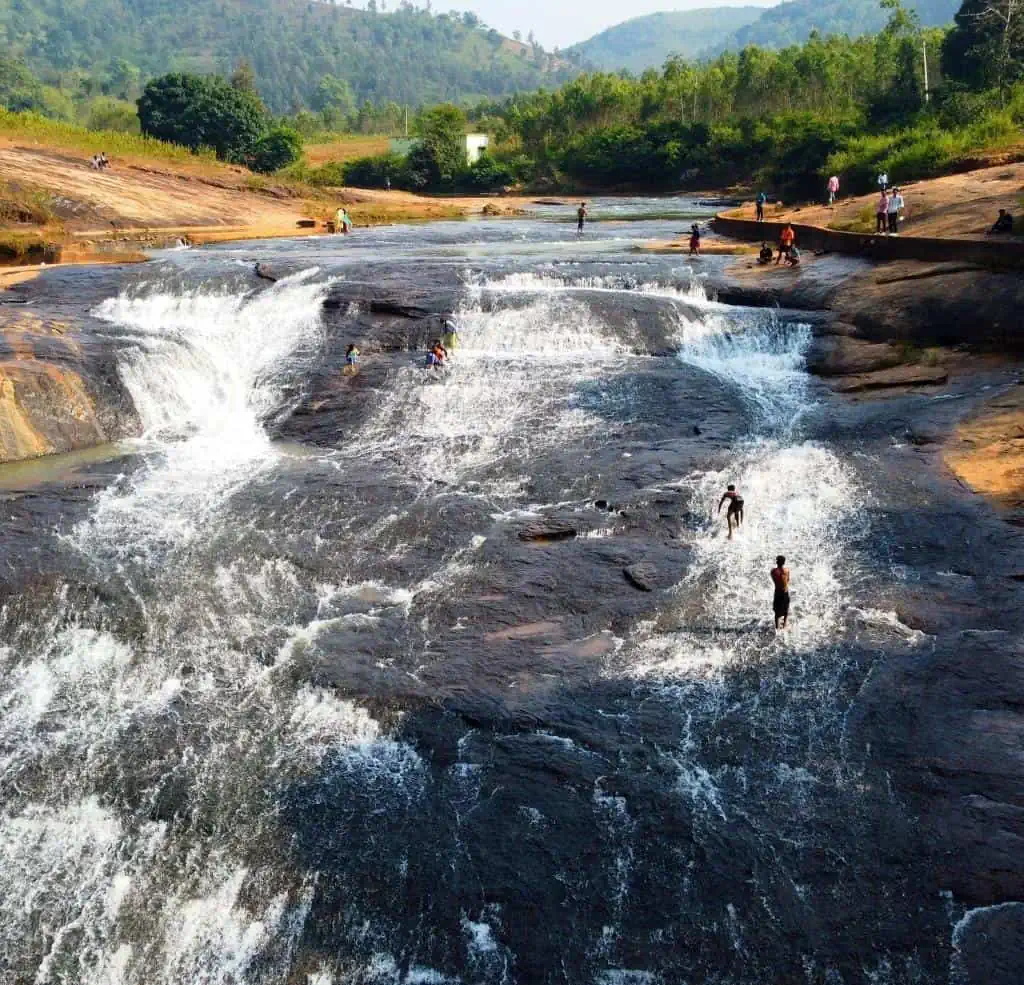
The tiered Punjisil Waterfall is a popular picnic spot near Putsil.
Punjisil Waterfall: The Perfect Picnic Spot
Located about 30 kilometers from Putsil (roughly an hour’s drive), Punjisil is a stunning multi-tiered waterfall. Unlike some of the more dangerous falls in the region, Punjisil is relatively safe for bathing. The water flows over smooth rocks into shallow pools, making it a favorite for families and groups.
The scenic winding roads leading to the Putsil Mountain Valley.
How to Reach Putsil Mountain Valley: Travel Logistics
Reaching Putsil requires a bit of planning, but the journey itself is part of the adventure.
By Air
The nearest airport is the Jeypore Airport (PYB), located about 70 kilometers away. While connectivity is still growing, there are regular flights from Bhubaneswar. Alternatively, you can fly into Visakhapatnam (VTZ), which is 200 kilometers away and offers much better connectivity.
By Train
The Koraput Railway Station (KRPU) is the most convenient railhead, located 45 kilometers from Putsil. The “Hirakhand Express” from Bhubaneswar and the “Visakhapatnam-Kirandul Express” are popular options. The latter is famous for its Vistadome coach, which offers panoramic views of the Araku Valley and the Eastern Ghats. You can book your tickets on the IRCTC official website.
The Scenic Road Trip from Visakhapatnam
One of the most popular ways to reach Putsil is a road trip from Visakhapatnam. The drive takes you through the famous Araku Valley and across the border into Odisha. As you ascend the Ghat roads, the temperature begins to drop, and the scenery changes from coastal plains to dense forests and high mountain ridges. You’ll pass through several tunnels and across bridges that offer breathtaking views of the valleys below. It’s a drive that every road-trip enthusiast should experience at least once.
Distance Table from Major Locations
| From | Distance (KM) | Estimated Time |
|---|---|---|
| Bhubaneswar | 500 KM | 12-14 Hours |
| Visakhapatnam | 200 KM | 4-5 Hours |
| Berhampur | 315 KM | 7-8 Hours |
| Jagdalpur | 145 KM | 3-4 Hours |
| Similiguda | 22 KM | 30 Minutes |
3-Day Ultimate Koraput & Putsil Itinerary
If you want to make the most of your trip, I recommend a 3-day itinerary that covers the best of the region.
Day 1: The Arrival and The Valley
- Morning: Arrive at Koraput/Similiguda. Check into your hotel or the Eco Retreat.
- Afternoon: Explore the Putsil Pine Forests and visit a local coffee plantation.
- Evening: Enjoy a cultural Dhemsa performance at the Eco Retreat.
Day 2: The High Altitude Adventure
- Early Morning (5:30 AM): Sunrise at Putsil Hilltop to witness the “carpet of clouds.”
- Late Morning: Tandem paragliding session.
- Afternoon: Drive to Deomali Hills for a sunset view from Odisha’s highest peak.
Day 3: Waterfalls and Culture
- Morning: Visit the majestic Duduma Waterfalls.
- Afternoon: Explore a local Gadaba village and buy some Kerang handicrafts.
- Evening: Departure from Koraput Railway Station.
Best Time to Visit Putsil Valley in 2026
Timing is everything when it comes to Putsil.
- Winter (October to February): The peak season. Perfect for the “carpet of clouds,” the Eco Retreat, and paragliding. Nights drop to 0°C or 1°C.
- Summer (March to June): A cool escape from the heat (28°C to 30°C). Great for seeing the coffee blossoms.
- Monsoon (July to September): Lush, emerald paradise, but trekking can be slippery and paragliding is closed.
Comparison: Putsil vs. Daringbadi
Many travelers ask if they should visit Daringbadi or Putsil. Here’s a quick breakdown:
| Feature | Putsil (Koraput) | Daringbadi (Kandhamal) |
|---|---|---|
| Vibe | Raw, adventurous, tribal-focused | Pine forests, coffee, and pepper gardens |
| Adventure | Paragliding, high-altitude trekking | Gentle walks, spice tours |
| Crowd | Lesser known, more secluded | More popular, developed tourist spots |
| Highlight | Carpet of Clouds & Deomali Peak | Coffee gardens & Midubanda Waterfall |
The Verdict: If you want adventure and a deep tribal experience, choose Putsil. If you want a more laid-back, “garden-like” hill station vibe, choose Daringbadi.
Camping under the stars is a favorite activity for many visitors to Putsil.
Local Food and What to Eat in Putsil
One important thing to remember is that Putsil is a remote area. There are no major restaurants or cafes within the valley itself.
What to Carry
If you aren’t staying at the Eco Retreat, you must carry your own food and water. I recommend packing a picnic lunch. Some local snacks you can carry include:
- Mandia Jau (Millet Porridge): A staple of the 10 Famous Odisha Foods list.
- Fresh Fruits: Buy seasonal strawberries or guavas.
- Water: Carry at least 2 liters per person.
For a proper meal, head back to Similiguda, where you can find hotels serving authentic Odia thalis. Don’t miss the local mutton curry!
Sustainable Travel: Protecting the Sacred Hills
As Putsil grows in popularity, we must protect its fragile ecosystem.
- Zero Littering: Carry all your plastic waste back to the towns.
- Support Local: Buy handicrafts directly from tribal artisans and strawberries from the SHG women.
- Stay on Trails: Avoid trampling on rare plants or entering sacred groves without a local guide.
- Conserve Water: Water is precious in the hills; use it mindfully.
FAQs on Putsil Valley
Is Putsil safe for solo female travelers?
Yes, Putsil and the Koraput region are generally very safe. The local people are incredibly kind. However, it’s best to finish your exploration before sunset.
Can I do paragliding if I’m afraid of heights?
Many find paragliding peaceful because there’s no “sensation of falling.” You’re sitting comfortably, and the movement is smooth.
Are there any luxury hotels in Putsil?
The only luxury accommodation within the valley is the Putsil Eco Retreat, which is seasonal.
Do I need to book paragliding in advance?
During peak winter weekends, it’s highly recommended to book in advance.
Final Thoughts on Putsil
There’s something about Putsil that changes you. Maybe it’s the silence of the pine forests, the warmth of a Gadaba smile, or the sheer thrill of floating 4,000 feet above the Earth. In a world that’s constantly rushing, Putsil invites you to slow down, breathe in the thin mountain air, and reconnect with the raw beauty of the natural world.
So, when are you planning your escape to the Switzerland of Odisha? Trust me, the carpet of clouds is waiting for you.
Jai Jagannath!