Famous Temples in Odisha: 2026 Pilgrim & Heritage Guide
Comprehensive 2026 travel guide to famous temples in Odisha. Explore the 4 Sacred Kshetras, Kalinga architectural marvels, Shakti Peethas, timings & rituals.
Revered across classical Sanskrit puranas as Utkala and Kalinga, the coastal state of Odisha preserves one of the densest and most architecturally sophisticated concentrations of sacred stone temples on the Indian subcontinent. Spanning more than 1,400 years of continuous stone-carving traditions—from the 7th-century CE Shailodbhava shrines of Old Town Bhubaneswar to the colossal 13th-century Eastern Ganga sun chariot at Konark and the 16th-century Chauhan riverfront temples of Sambalpur—Odisha’s sacred landscape serves as the living cradle of the classical Kalinga School of Architecture.
At the heart of Odisha’s sacred geography lie the Four Sacred Kshetras (Chari Kshetra), conceived in ancient Hindu cosmology to represent the four divine weapons (Ayudhas) of Lord Vishnu: Sankha Kshetra (Puri - The Conch), Chakra / Ekamra Kshetra (Bhubaneswar - The Discus), Gada / Biraja Kshetra (Jajpur - The Mace), and Padma / Arka Kshetra (Konark - The Lotus), alongside the holy basil sanctuary of Tulasi Kshetra (Kendrapada). Beyond these master pilgrimage epicenters, Odisha’s 30 districts harbor thousands of active Shaiva, Shakta, Vaishnava, Saura, and Tantric shrines that draw millions of pilgrims and cultural travelers each year.
This comprehensive 2026 guide profiles the 25 most famous temples in Odisha, detailing their architectural taxonomy, founding dynasties, presiding deities, sacred offerings (Bhoga/Prasad), annual festival calendars, and turnkey pilgrimage circuits.
Also explore our master state guide: 20 Best Tourist Places in Odisha
The Four Sacred Kshetras of Odisha (Chari Kshetra)
According to the Kapila Samhita and Brahma Purana, after Lord Vishnu vanquished the demon Gayasura, he cast his four divine emblems across the sacred land of Odisha, establishing four major pilgrimage epicenters:
| Sacred Kshetra Name | Divine Vishnu Emblem | Geographic Location | Presiding Deities & Spiritual Tradition | Primary Monument |
|---|---|---|---|---|
| 1. Sankha Kshetra | Sankha (Conch Shell) | Puri | Lord Jagannath, Balabhadra, Subhadra (Vaishnavism / Char Dham) | Shree Jagannath Temple (12th Century CE) |
| 2. Chakra / Ekamra Kshetra | Chakra (Discus) | Bhubaneswar | Lord Harihara / Shiva (Shaivism / Vaishnavism Synthesis) | Lingaraj Temple (11th Century CE) |
| 3. Gada / Biraja Kshetra | Gada (Mace) | Jajpur | Goddess Biraja (Shaktism / Adi Shakti Peetha) | Maa Biraja Temple (13th Century CE) |
| 4. Padma / Arka Kshetra | Padma (Lotus) | Konark | Lord Surya / Sun God (Saura Tradition) | Konark Sun Temple (13th Century CE) |
| 5. Tulasi Kshetra | Tulasi (Holy Basil) | Kendrapada | Lord Baladevjew / Balabhadra (Vaishnavism) | Sri Sri Baladevjew Temple (17th Century CE) |
At-a-Glance: Master Directory of 25 Famous Temples in Odisha
| # | Temple Name | Presiding Deity & Tradition | District | Historical Era & Dynasty | Major 2026 Festival | Nearest Major Transit Hub |
|---|---|---|---|---|---|---|
| 1 | Shree Jagannath Temple | Lord Jagannath (Vaishnava / Char Dham) | Puri | 12th Century CE (Eastern Ganga Dynasty) | Ratha Yatra (July 16, 2026) | Puri Railway Station (2 km) |
| 2 | Konark Sun Temple | Lord Surya (Saura / UNESCO Site) | Puri | 13th Century CE (Eastern Ganga Dynasty) | Konark Dance Festival (Dec 1–5) | Bhubaneswar Airport (65 km) |
| 3 | Lingaraj Temple | Lord Harihara (Shaiva / Vaishnava) | Khordha | 11th Century CE (Somavamshi Dynasty) | Maha Shivratri (Feb 15, 2026) | Bhubaneswar Station (5 km) |
| 4 | Maa Biraja Temple | Goddess Biraja (Shakta / Shakti Peetha) | Jajpur | 13th Century CE (Somavamshi/Ganga) | Dwisahasra Durga Puja (Oct) | Jajpur Keonjhar Road (25 km) |
| 5 | Maa Tara Tarini Temple | Twin Goddesses (Adi Shakti Peetha) | Ganjam | Ancient / Modern Granite Spire | Chaitra Mela (March–April) | Berhampur Station (32 km) |
| 6 | Sri Sri Baladevjew Temple | Lord Balabhadra (Tulasi Kshetra) | Kendrapada | 17th Century CE (Maratha/Ganga) | Baladevjew Ratha Yatra (July) | Cuttack Station (55 km) |
| 7 | Maa Samaleswari Temple | Goddess Samaleswari (Western Odisha) | Sambalpur | 16th Century CE (Chouhan Dynasty) | Nuakhai (August/September) | Sambalpur Junction (2 km) |
| 8 | Mukteshwar Temple | Lord Shiva (Gem of Kalinga Art) | Khordha | 10th Century CE (Somavamshi Dynasty) | Mukteshwar Dance Festival (Jan) | Bhubaneswar Station (4 km) |
| 9 | Rajarani Temple | Secular / Undeified (Love Temple) | Khordha | 11th Century CE (Somavamshi Dynasty) | Rajarani Music Festival (Jan) | Bhubaneswar Station (4 km) |
| 10 | 64 Yogini Temple | 64 Tantric Yoginis (Hypaethral) | Khordha | 9th Century CE (Bhauma-Kara Dynasty) | Maha Shivratri / Tantric Purnimas | Bhubaneswar Airport (15 km) |
| 11 | Kapilash Temple | Lord Chandrasekhar (Kailash of Odisha) | Dhenkanal | 13th Century CE (Eastern Ganga Dynasty) | Maha Shivratri (Jagara) | Dhenkanal Station (26 km) |
| 12 | Gupteswar Cave Temple | Lord Shiva (Natural Stalagmite Linga) | Koraput | Ancient Cave / Medieval Patronage | Maha Shivratri Forest Fair | Jeypore Railway Station (58 km) |
| 13 | Akhandalamani Temple | Lord Shiva (Baitarani Riverfront) | Bhadrak | 17th Century CE (Local Dynasty) | Maha Shivratri (Aradi Mela) | Bhadrak Railway Station (37 km) |
| 14 | Maa Tarini Temple | Goddess Tarini (Forest Guardian) | Keonjhar | Medieval Tribal / Modern Complex | Chaiti Yatra / Pana Sankranti | Keonjhar Station (45 km) |
| 15 | Dhabaleswar Temple | Lord Shiva (Mahanadi River Island) | Cuttack | 14th Century CE (Late Ganga/Surya) | Bada Osha (Kartika Month) | Cuttack Railway Station (27 km) |
| 16 | Khirochora Gopinatha | Lord Krishna (Milk-Stealing Deity) | Balasore | 12th Century CE (Eastern Ganga Dynasty) | Chandan Yatra (April/May) | Balasore Railway Station (9 km) |
| 17 | Alarnath Temple | Lord Vishnu (Anasara Sanctuary) | Puri | 12th Century CE (Eastern Ganga Dynasty) | Anasara Fortnight (June/July) | Puri Railway Station (25 km) |
| 18 | Panchalingeshwar Temple | 5 Natural Shiva Lingas (Perennial Stream) | Balasore | Ancient Springs / King of Nilagiri | Maha Shivratri & Magha Mela | Balasore Station (30 km) |
| 19 | Nrusinghanath Temple | Lord Nrusingha (Gandhamardhan Hills) | Bargarh | 14th Century CE (Patna State Chauhan) | Nrusimha Chaturdashi (May) | Bargarh / Kantabanji (100 km) |
| 20 | Harishankar Temple | Lord Shiva & Vishnu (Herbal Mountain) | Balangir | 14th Century CE (Chauhan Dynasty) | Sitalasasti (May/June) | Balangir Station (80 km) |
| 21 | Maa Sarala Temple | Goddess Sarala (Goddess of Wisdom) | Jagatsinghpur | 15th Century CE (Suryavamshi Gajapati) | Maha Bisuba Sankranti (April) | Cuttack / Rahama Station (45 km) |
| 22 | Nilamadhava Temple | Lord Nilamadhava (Mahanadi Hilltop) | Nayagarh | 10th Century CE (Bhauma/Ganga) | Magha Saptami Mela (February) | Nayagarh Town Station (40 km) |
| 23 | Maa Charchika Temple | Goddess Chamunda (Ruchika Parvata) | Cuttack | 13th Century CE (Ganga Dynasty) | Mahastami Durga Puja (October) | Cuttack Station (50 km) |
| 24 | Ghanteswari Temple | Goddess Ghanteswari (100,000 Bells) | Sambalpur | Medieval Confluence Shrine | Chhatar Mela & Nuakhai | Sambalpur Station (30 km) |
| 25 | Maa Mangala Temple | Goddess Mangala (Prachi Valley) | Puri | 15th Century CE (Gajapati Dynasty) | Jhamu Yatra (April/May) | Puri Railway Station (60 km) |
Architectural Anatomy: The Classical Kalinga Temple Style
Every classical Odishan temple adheres to the ancient architectural treatise Silpa Prakasa, featuring a precise, mathematical longitudinal progression of structural halls:
| Sequential Chamber Order | Classical Kalinga Name | Architectural & Spiritual Purpose |
|---|---|---|
| 1. Entrance Offering Hall | Bhogamandapa | The outer pavilion where sacred food offerings (Mahaprasad / Bhoga) are placed and consecrated |
| 2. Festive Dance Hall | Natamandira | The pillared festive pavilion historically utilized for sacred Odissi temple dance and musical prayers |
| 3. Assembly Porch | Jagamohana (Mukhasala) | The stepped pyramidal (Pidha) hall where devotees gather for congregational prayers and darshan |
| 4. Inner Sanctum Tower | Vimana (Bada Deula) | The soaring curvilinear (Rekha) tower enshrining the presiding deity on the Ratnavedi pedestal |
The Three Structural Orders of Kalinga Architecture
-
Rekha Deula (Tall Curvilinear Sanctum Tower):
- Built over a square ground plan that ascends vertically before curving inwards near the summit.
- Crowned by a flat, ribbed circular stone disc called the Amalaka (Amala), surmounted by a sacred water pot (Kalasha) and the deity’s sacred weapon (Ayudha - Chakra for Vishnu, Trishula for Shiva).
- Prime Examples: Shree Jagannath Temple Puri (214 ft), Lingaraj Temple Bhubaneswar (180 ft).
-
Pidha Deula / Bhadra Deula (Stepped Pyramidal Assembly Hall):
- A square hall characterized by a roof composed of receding horizontal stone tiers (Pidhas), crowned with a miniature Amalaka and Kalasha.
- Primarily used as the Jagamohana (audience porch) where devotees assemble for prayers.
- Prime Example: The massive surviving Jagamohana of the Konark Sun Temple (128 ft).
-
Khakhara Deula (Barrel-Vaulted Vaulted Shrine):
- A rare, semi-cylindrical rectangular shrine whose vaulted roof resembles a traditional Odia pumpkin (Khakhara or Boitalu).
- Exclusively reserved for fierce, Tantric manifestations of the Divine Mother (Shakta deities like Chamunda, Varahi, and Durga).
- Prime Examples: Vaital Deula in Bhubaneswar, Varahi Temple at Chaurasi, Maa Mangala sanctum at Kakatpur.
Granular Deep-Dives: Top 25 Famous Temples in Odisha
1. Shree Jagannath Temple, Puri (Sankha Kshetra)
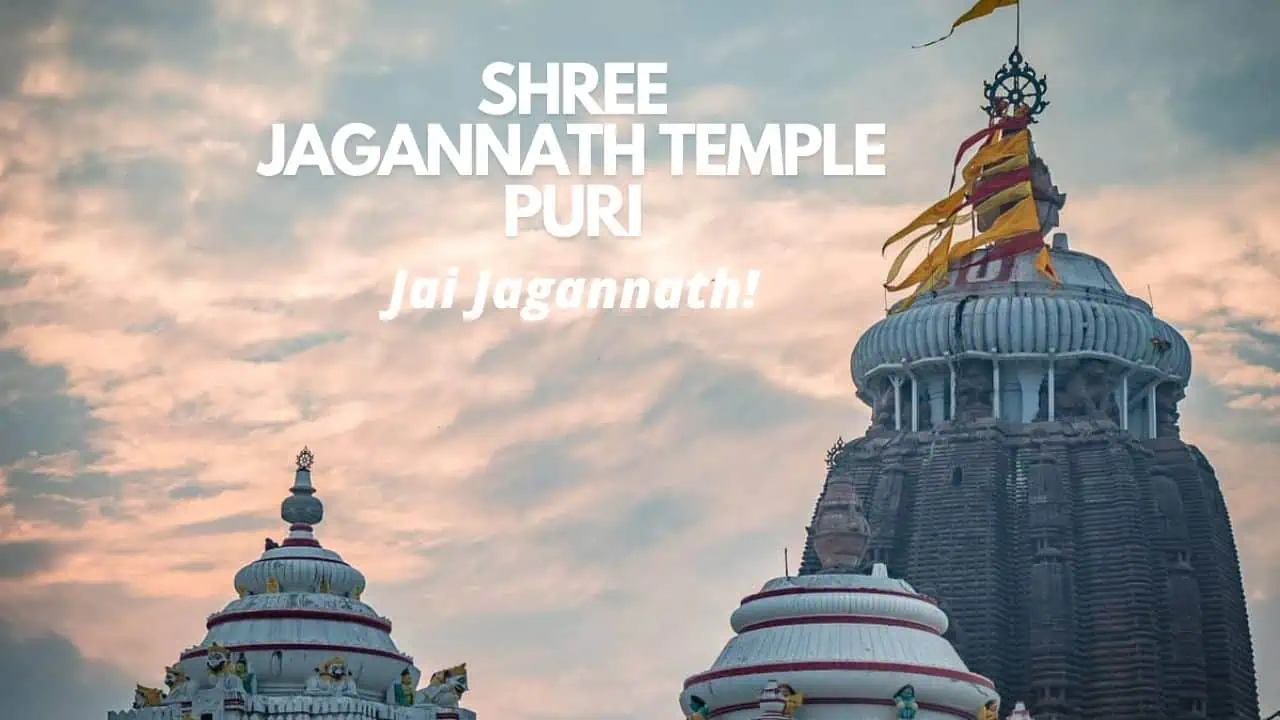
Rising 214 feet above the coastal plains of the Bay of Bengal, the Shree Jagannath Temple is one of India’s four sacred Char Dham pilgrimage sanctuaries and the spiritual epicenter of the Odia civilization.
- Presiding Deities & Mythological Context: Lord Jagannath, Lord Balabhadra, Devi Subhadra, and Sudarshana Chakra carved from sacred, fragrant Neem wood (Daru Brahma). Worshipped as Martya Vaikuntha (heaven on earth), where Lord Vishnu resides in his loving, all-inclusive form.
- Architectural Grandeur & Dynasty: Commissioned in the 12th century CE by King Anantavarman Chodaganga Deva of the Eastern Ganga Dynasty. A monumental 10-acre complex surrounded by two concentric stone walls—the Meghanada Pacheri (outer) and Kurma Bedha (inner). The 214-ft Rekha Deula spire is crowned with the 8-metal alloy Nilachakra (Blue Wheel), atop which the sacred Patitapabana flag is hand-changed daily at sunset by the Chunara servitors climbing 214 feet without safety harnesses.
- Sacred Food Offerings & Bhoga: Prepared in the world’s largest traditional wood-fired kitchen across 752 earthen stoves (Chulis). Food is cooked in stacks of unglazed clay pots (Kuduas) using only firewood, pure cow ghee, and spring water, offered first to Lord Jagannath and then to Goddess Vimala, transforming into sanctified Mahaprasad (Abadha, Kanika, Dalma, Besara, Khaja) sold at the Ananda Bazar.
- 2026 Timings, Accessibility & Transit Tips: Open 5:00 AM to 11:00 PM daily. Non-Hindus can view the temple from the elevated Raghunandan Library rooftop viewing platform. Puri Railway Station is 2.5 km away, with direct Mo Bus Route 50 connectivity from Bhubaneswar. The 75-meter Srimandir Parikrama Prakalpa provides shaded walking plazas and automated luggage cloakrooms.
Read our complete master guide: Shree Jagannath Temple Puri Complete Guide
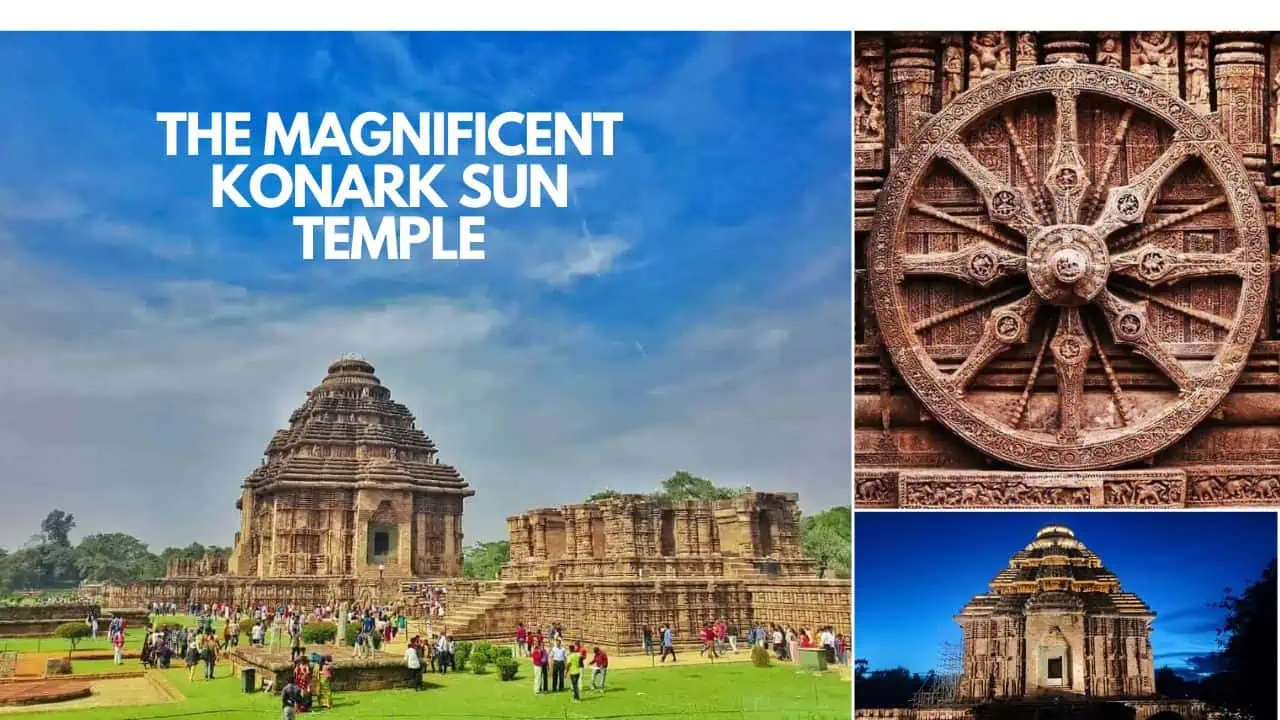
2. Konark Sun Temple, Puri District (Padma / Arka Kshetra)
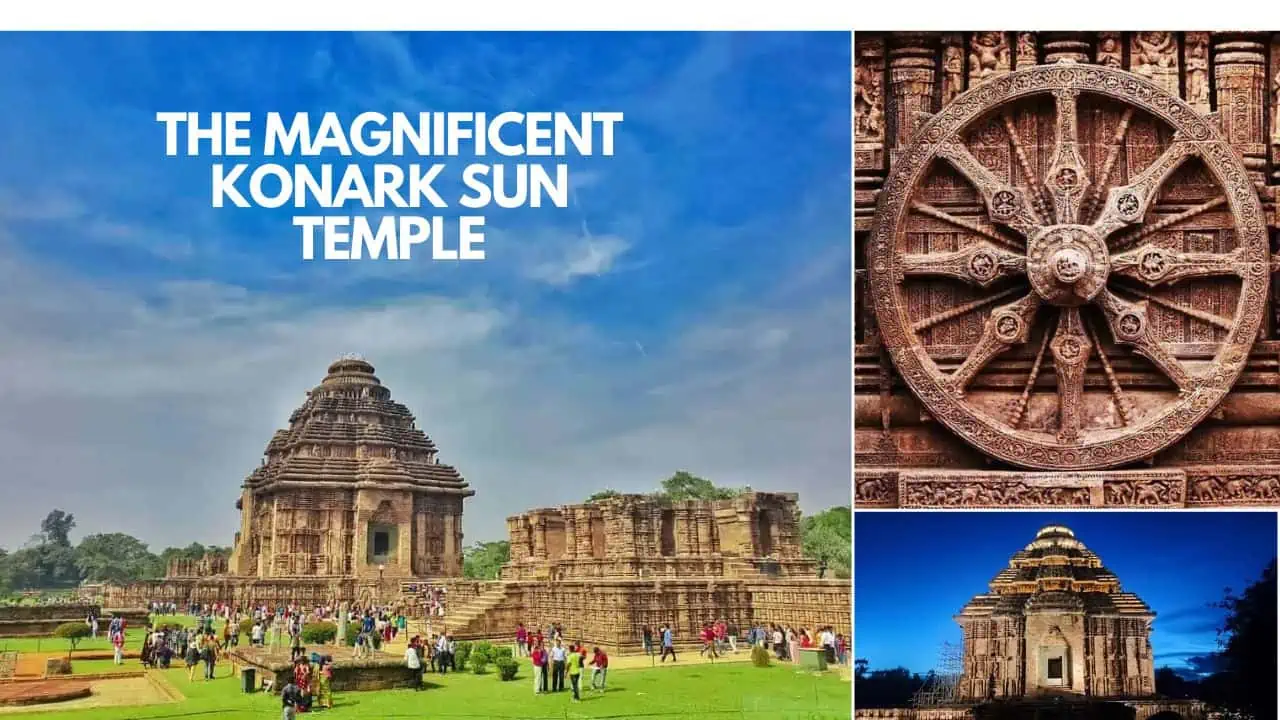
Inscribed as a UNESCO World Heritage Site in 1984, the 13th-century Konark Sun Temple represents the absolute architectural zenith of Kalinga stone sculpture.
- Presiding Deity & Mythological Context: Conceived as a colossal stone chariot carrying the Sun God Surya (Biranchi Narayana) across the heavens. Mythologically rooted in the Samba Purana, where Lord Krishna’s son Samba was cured of leprosy after 12 years of penance at the Chandrabhaga river mouth.
- Architectural Grandeur & Dynasty: Commissioned between 1238 and 1264 CE by King Narasimhadeva I of the Eastern Ganga Dynasty using 12 years of provincial revenue and 1,200 master stone sculptors under chief architect Bishu Maharana. The monument features 24 monumental stone wheels (each 9.7 feet in diameter) representing the 24 fortnights of the solar year, pulled by 7 galloping stone steeds representing the seven days of the week.
- Mathematical Sundials & Carvings: The 8 primary spokes on each wheel divide the day into 8 Prahars (3-hour intervals), with 30 sculpted beads between spokes allowing visitors to calculate exact local solar time within a 3-minute margin of error. The base plinth is adorned with Mithuna erotic sculptures, marching war elephants, and royal musicians (Alasa Kanyas).
- 2026 Timings, Accessibility & Transit Tips: Open 6:00 AM to 8:00 PM daily (ASI ticket: ₹40 for Indians, ₹600 for foreigners). Arrive at sunrise (6:00 AM) for razor-sharp sundial shadows and cool stones underfoot. Located 35 km from Puri along the Puri-Konark Marine Drive (Mo Bus Route 70).
Read our complete guide: Konark Sun Temple 2026 Master Guide
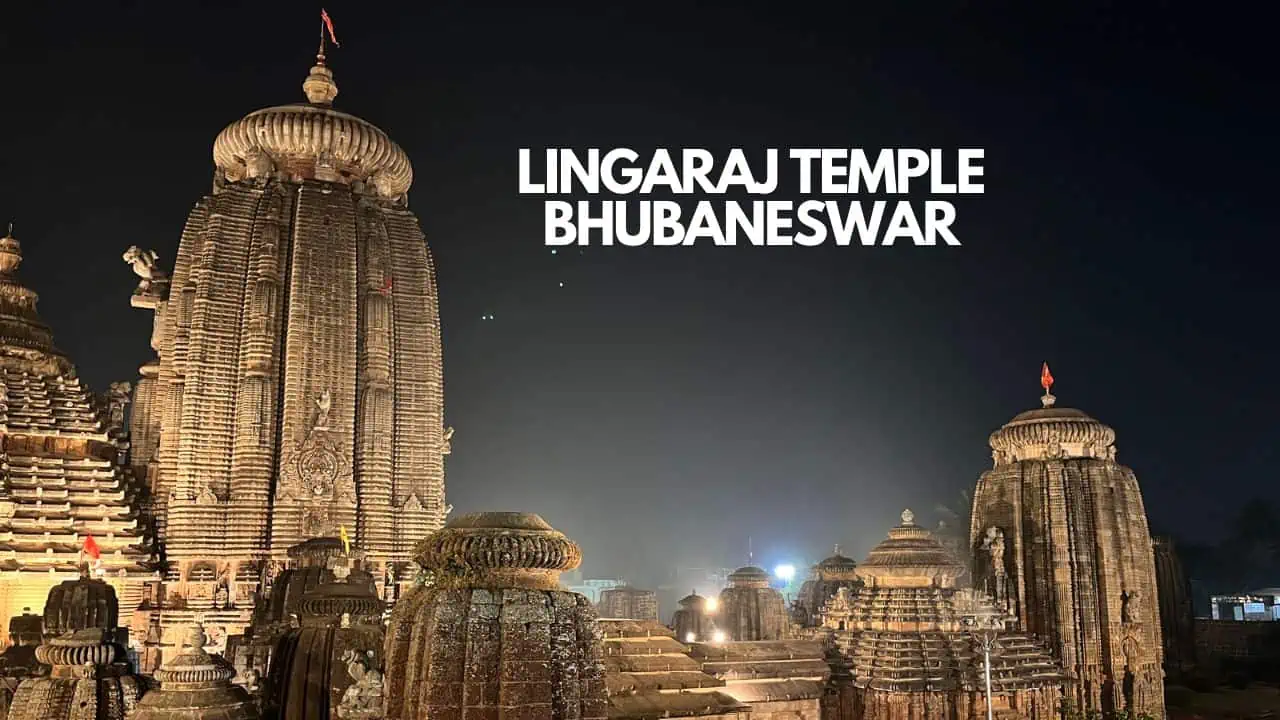
3. Lingaraj Temple, Bhubaneswar (Ekamra Kshetra)
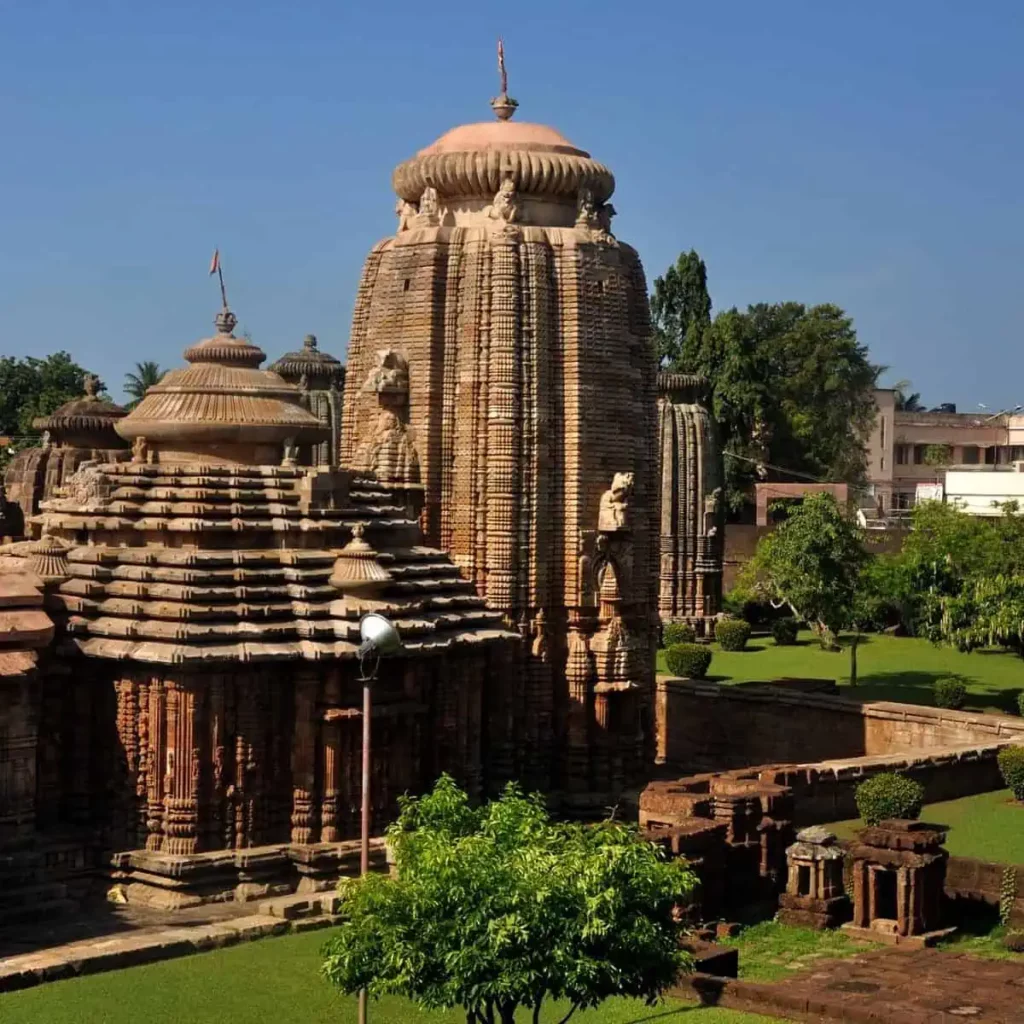
The largest and most imposing monument in the Temple City, the 11th-century Lingaraj Temple stands as the crowning jewel of the Somavamshi architectural empire.
- Presiding Deity & Mythological Context: Dedicated to Lord Harihara—a composite theological union of Lord Shiva (Hara) and Lord Vishnu (Hari). Bel leaves and sacred Tulasi leaves are offered simultaneously upon the uncarved, natural stone Swayambhu Lingam.
- Architectural Grandeur & Dynasty: Commissioned by King Jajati Keshari and completed by King Lalatendu Keshari of the Somavamshi Dynasty. The colossal 180-foot Rekha Deula spire dominates Old Town, surrounded by 150 subsidiary shrines within a massive Laterite compound wall protected by the ASI Bhubaneswar Circle.
- Sacred Food Offerings & Bhoga: The temple kitchen prepares daily sacred offerings including Kora Khai (caramelized puffed paddy flavored with cardamom and coconut slices) and traditional cooked rice offerings (Anna Bhoga).
- 2026 Timings, Accessibility & Transit Tips: Open 5:00 AM to 1:00 PM and 3:30 PM to 9:00 PM. Non-Hindus can view the courtyard from the northern exterior stone viewing platform. Located 5 km from Bhubaneswar Railway Station (Mo Bus Route 10, 12). Digital biometric cloakroom lockers operate at the Singhadwara gate.
Read our complete guide: Lingaraj Temple Bhubaneswar Guide
4. Maa Biraja Temple, Jajpur (Gada / Biraja Kshetra)
Situated along the sacred Vaitarani River in Jajpur, the Maa Biraja Temple is celebrated in classical Tantric treatises as one of India’s foremost Adi Shakti Peethas, marking where the navel (Nabhi) of Goddess Sati fell.
- Presiding Deity & Mythological Context: The sanctum enshrines an ancient two-handed black chlorite idol of Dvibhuja Mahishasuramardini—the goddess impales the buffalo demon with her spear (Trishula) in one hand while dragging his tail with the other, standing with her foot on the demon’s back.
- Architectural Grandeur & Dynasty: Built in the 13th century CE over earlier Somavamshi foundations. The compound houses sacred shrines dedicated to the Ashta Chandi, Sapta Matrikas, and the ancient Nabhi Gaya well.
- Sacred Ancestor Rites (Nabhi Gaya): Pilgrims travel from across India to perform Pinda Daan for their departed ancestors at the sacred Nabhi Gaya well, holding equal spiritual merit to Gaya in Bihar. Maa Biraja is also the only goddess in India who rides a ceremonial chariot (Singhadhwaja Ratha) during the 9-day Navaratri festival. Cultural travelers can explore nearby monastic heritage sites in our guide to the best places to visit in Jajpur district.
- 2026 Timings, Accessibility & Transit Tips: Open 5:00 AM to 1:00 PM and 3:00 PM to 8:30 PM. Located in Jajpur town, 25 km from Jajpur-Keonjhar Road Railway Station (direct OSRTC bus connectivity from Bhubaneswar and Cuttack).
5. Maa Tara Tarini Temple, Ganjam
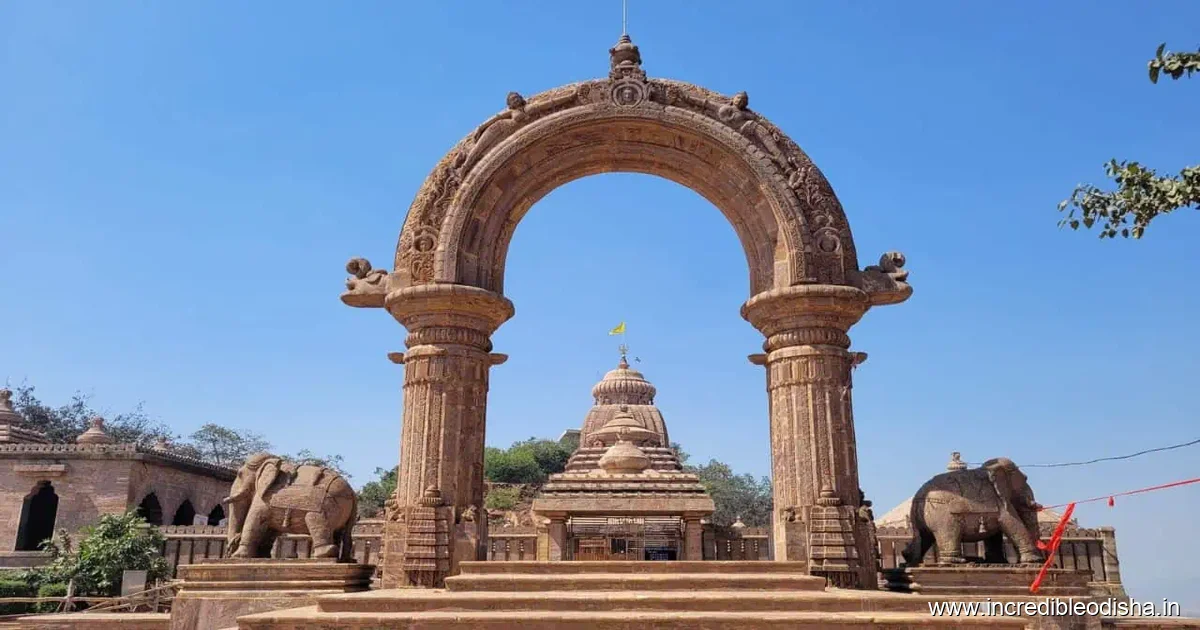
Perched atop the sacred Kumari Hills (708 feet above sea level) overlooking the winding Rushikulya River in Ganjam, Maa Tara Tarini is revered as the breast shrine (Stana Peetha) of Goddess Sati and the supreme household guardian of South Odisha.
- Presiding Deities & Mythological Context: Enshrines two ancient stone deities adorned with gold crowns and silver eyes, representing the divine twin sisters Tara and Tarini, manifestations of the supreme mother goddess.
- Architectural Grandeur & Hilltop Ascent: Reached via 999 granite stone steps or a modern passenger cable car ropeway operated by the District Administration of Ganjam. The new temple structure is carved entirely from heavy gray granite stone following pure Kalingan Rekha and Pidha proportions.
- Chaitra Mela & Tonsure Rituals: Every Tuesday during the Odia month of Chaitra (March–April), hundreds of thousands of parents bring their toddlers to perform the traditional Mundan (first hair-cutting) ceremony at the sacred Rushikulya riverbank before ascending the hill.
- 2026 Timings, Accessibility & Transit Tips: Open 5:00 AM to 9:00 PM (ropeway operates 6:00 AM to 6:00 PM; round-trip ticket ₹80). Located 32 km north of Berhampur Railway Station along NH-59.
Read our complete guide: Maa Tara Tarini Temple Guide
6. Sri Sri Baladevjew Temple, Kendrapada (Tulasi Kshetra)
Located in Ichhapur near Kendrapada, the Sri Sri Baladevjew Temple is the principal seat of Lord Balabhadra in Odisha, spanning a fortified 2-acre complex constructed in the 17th century.
- Presiding Deities & Mythological Context: Dedicated to Lord Balabhadra (the elder brother of Lord Jagannath), accompanied by Lord Jagannath, Devi Subhadra, and Sudarshana Chakra. Revered as Tulasi Kshetra because the region was historically blanketed with sacred Tulasi forests.
- Architectural Grandeur & Dynasty: Constructed in the 17th century by the local Maratha and Ganga kings over a 2-acre fortified compound. The main sanctum (Bada Deula) rises 75 feet and is surrounded by an imposing Laterite stone wall (Meghanada Pacheri).
- GI-Tagged Kendrapada Rasabali: The temple kitchen prepares the authentic Kendrapada Rasabali (Geographical Indication certified)—deep-fried cottage cheese patties simmered in thick, cardamom-seasoned condensed milk, offered alongside Potali Bhoga.
- 2026 Timings, Accessibility & Transit Tips: Open 6:00 AM to 1:00 PM and 4:00 PM to 8:30 PM. Baladevjew’s chariot (Brahma Taladhwaja Ratha) is one of the largest wooden chariots built in India. Located 55 km east of Cuttack Railway Station via the Cuttack-Kendrapada highway.
7. Maa Samaleswari Temple, Sambalpur
The spiritual epicenter of Western Odisha, Maa Samaleswari (affectionately called Maa Samlei) sits upon the banks of the Mahanadi River in Sambalpur.
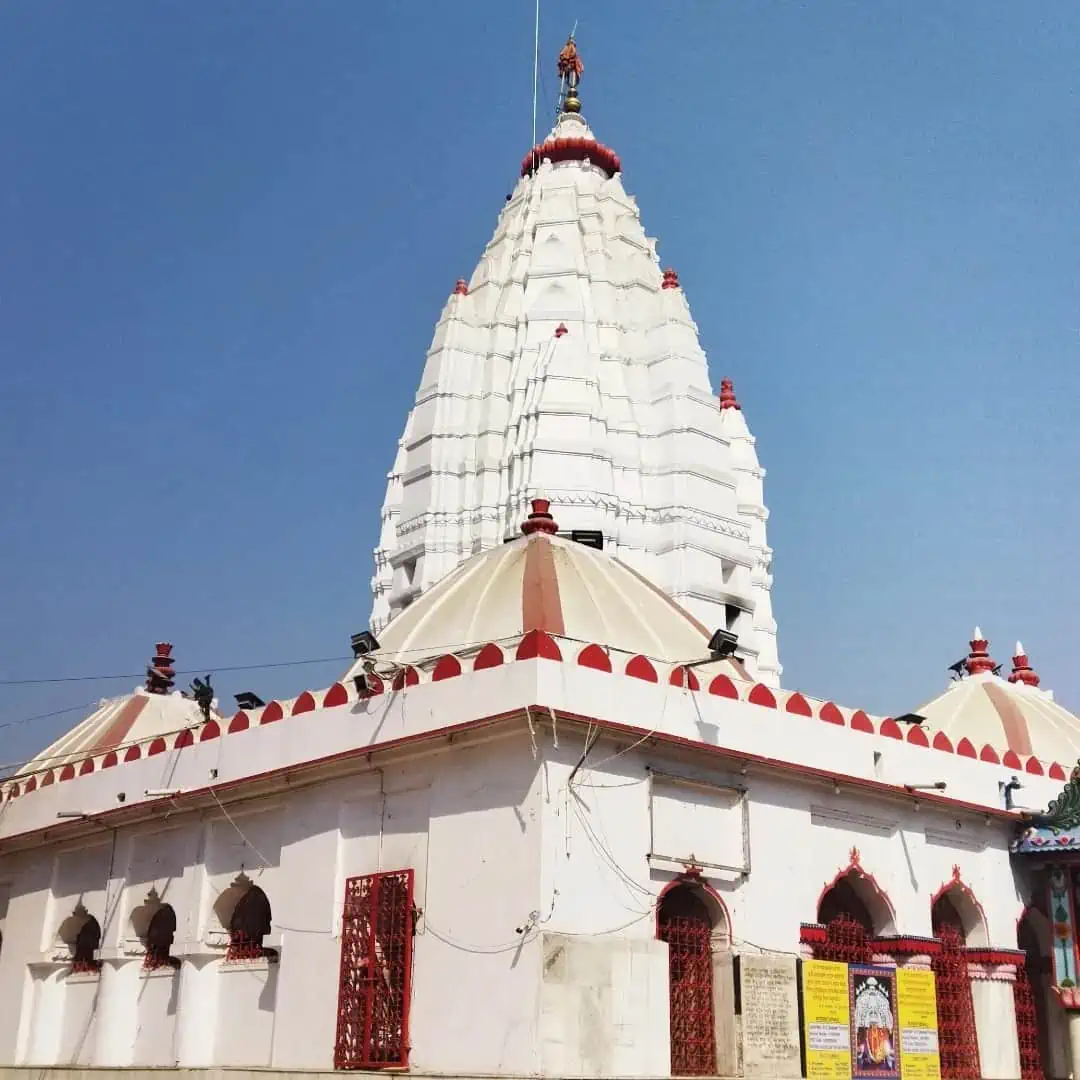
- Presiding Deity & Mythological Context: The sanctum houses a massive, ancient uncarved Laterite stone idol of Goddess Samaleswari, adorned with a large golden face, nose ring (Natha), and elaborate silver ornaments, worshipped by both indigenous tribal and non-tribal communities.
- 16th-Century Chouhan Architecture: Constructed during the reign of King Balaram Dev, the first Chauhan ruler of Sambalpur. Built in the distinctive Western Odishan Chouhan style featuring an elevated square sanctum with four-cornered Chhatris and an arched circumambulatory corridor.
- The 2026 SAMALEI Project: A ₹200-crore state riverfront redevelopment project that has transformed 39 acres around the temple with landscaped river promenades, heritage corridors, and modern pilgrim amenities.
- 2026 Timings, Accessibility & Transit Tips: Open 5:00 AM to 1:00 PM and 3:30 PM to 9:00 PM daily. Located 2 km from Sambalpur Junction Railway Station. During the Nuakhai festival (August/September), the first harvest of paddy crop (Nabanna) is offered to the goddess in an electric atmosphere of Dhol and Nishan folk music.
8. Mukteshwar Temple, Bhubaneswar
Hailed across global art history as the “Gem of Odisha Architecture,” the 10th-century Mukteshwar Temple marks the stylistic transition to mature Kalinga ornamentation.
- Presiding Deity & Mythological Context: Dedicated to Lord Shiva as Mukteshwar (the Lord of Spiritual Liberation). The adjacent Marichi Kunda stepped tank is believed to possess mineral properties that cure female infertility when bathed in during Ashokashtami.
- Architectural Grandeur & Dynasty: Constructed around 950 CE during the Somavamshi period. Its hallmark is the freestanding semicircular Torana (Ceremonial Archway)—supported by heavy fluted pillars and carved with smiling damsels, peacocks, and floral arabesques.
- Architectural Details: The 35-foot Deula features the earliest fully realized stepped pyramidal roof (Pidha Deula) over its Jagamohana, complete with sculpted monkey friezes and lion motifs.
- 2026 Timings, Accessibility & Transit Tips: Open 6:30 AM to 7:00 PM daily (Free entry, protected by ASI). Located in Old Town Bhubaneswar near Kedar Gouri temple (Mo Bus Route 12). Every January, the temple courtyard hosts the prestigious 3-day Mukteshwar National Odissi Dance Festival.
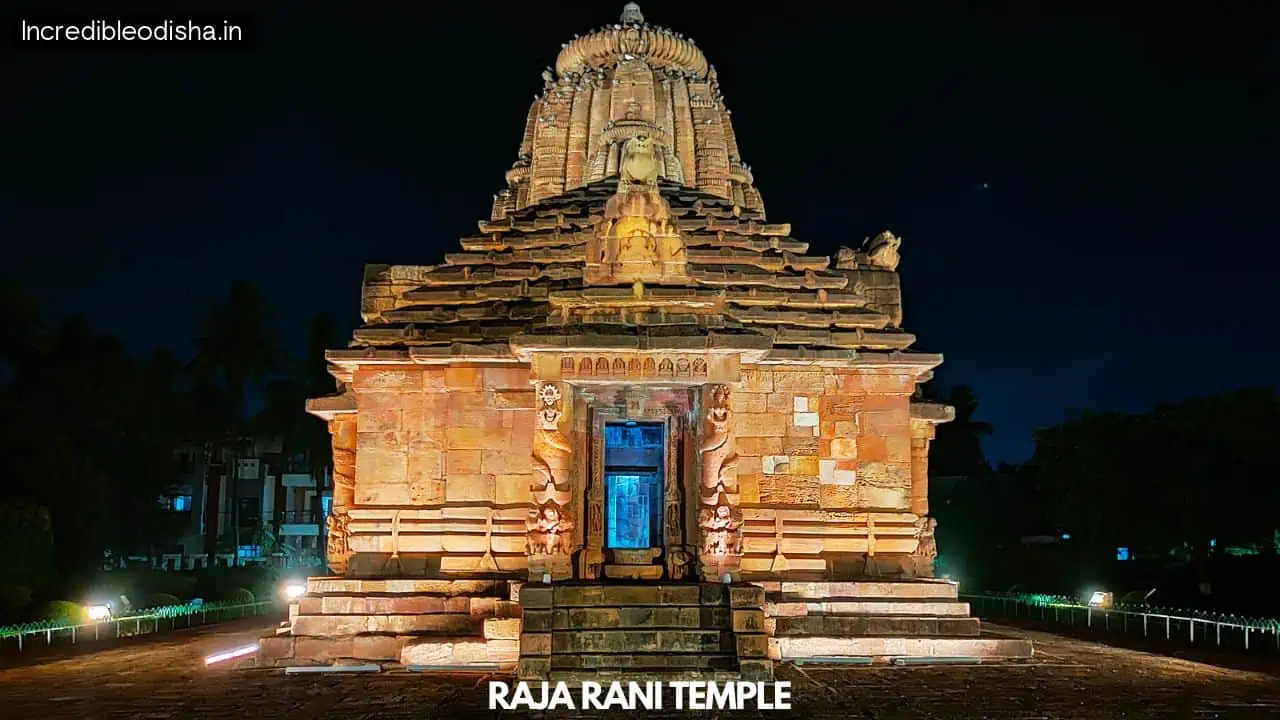
9. Rajarani Temple, Bhubaneswar
Known across India as the “Love Temple of the East,” the 11th-century Rajarani Temple is unique because it houses no consecrated deity in its sanctum, standing as a pure monument of architectural beauty.
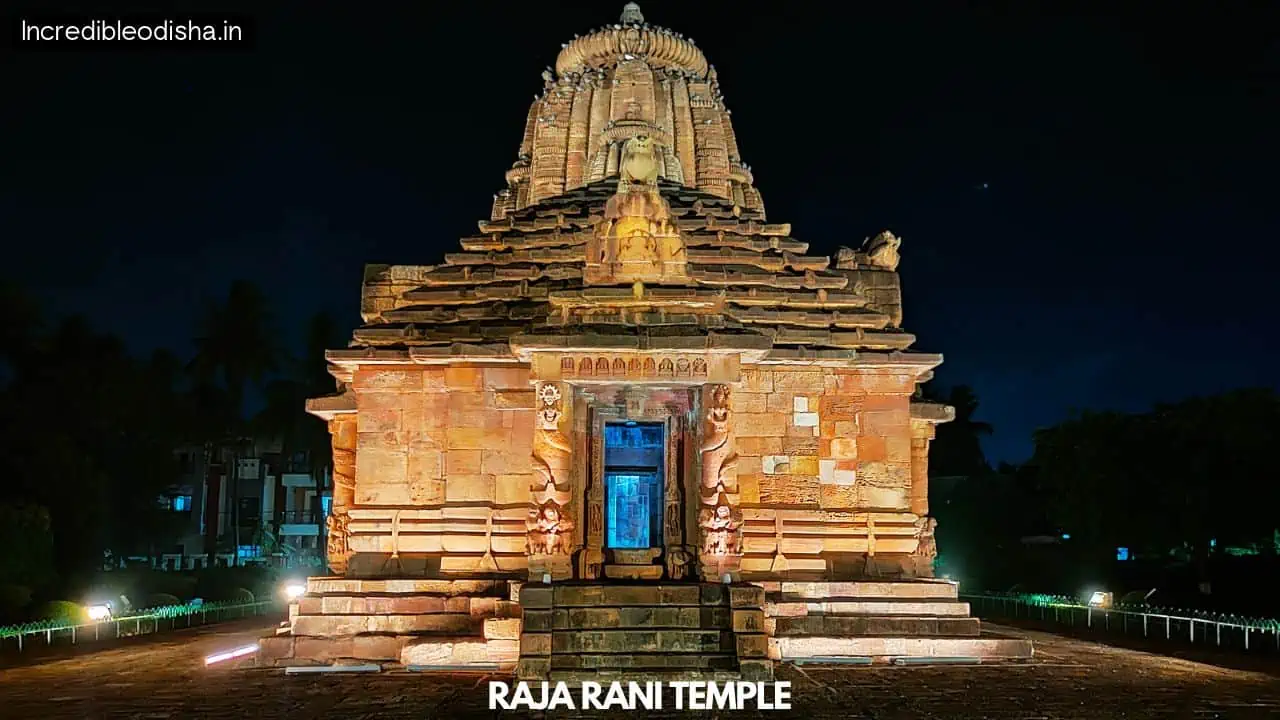
- Presiding Significance: Built as an architectural masterpiece during the Somavamshi golden age, celebrated entirely for its secular, artistic, and aesthetic sculptures.
- Rajaraniya Sandstone & Spire: Constructed from fine-grained golden-yellow and dull-red Rajaraniya sandstone. The sanctum tower is encircled by clusters of miniature spires (Angashikharas), anticipating the style of Khajuraho.
- Sculptural Friezes of Nayikas & Dikpalas: Famous for its exquisite three-dimensional friezes of graceful damsels applying makeup, holding mirrors, plucking blossoms, and playing with birds, alongside the Ashta-Dikpalas (guardians of the 8 directions) mounted on their celestial vehicles.
- 2026 Timings, Accessibility & Transit Tips: Open 6:30 AM to 6:00 PM (ASI ticket: ₹25 for Indians, ₹300 for foreigners). Late afternoon light (around 4:30 PM) causes the sandstone to glow deep amber. Host of the prestigious Rajarani Music Festival every January.
Read our complete guide: Rajarani Temple Guide
10. Chausathi Yogini Temple, Hirapur
Located in rural Hirapur (15 km from Bhubaneswar), this 9th-century shrine is one of only four surviving circular hypaethral (roofless) Tantric temples in India.
- Presiding Deities & Tantric Legacy: Dedicated to the 64 Tantric Yoginis—powerful female celestial deities associated with esoteric Tantric and yogic disciplines.
- Hypaethral Architecture & Queen Hiradevi: Constructed around 864 CE under the patronage of Queen Hiradevi of the Bhauma-Kara Dynasty. The temple is built in a 25-foot diameter circular sandstone plan with no roof, designed so the Yoginis could channel cosmic energy and fly into the night sky.
- 64 Black Chlorite Statues: The interior wall niches hold 64 masterfully sculpted black chlorite statues, each depicting a Yogini standing upon her unique animal or human mount (Vahana), ranging from eagles, snakes, and frogs to skulls and elephants. At the center stands the Chandi Mandapa housing four Bhairava statues.
- 2026 Timings, Accessibility & Transit Tips: Open 6:00 AM to 6:00 PM daily (Free entry). Hire an auto-rickshaw or taxi from Kalpana Square (15 km / 30 mins). Visit at dawn when the first rays of sunlight illuminate the dark chlorite statues.
11. Kapilash Temple, Dhenkanal (“Kailash of Odisha”)
Perched 2,239 feet high on the forested summit of Kapilash Mountain in Dhenkanal, this 13th-century Eastern Ganga temple is dedicated to Lord Chandrasekhar (Shiva).
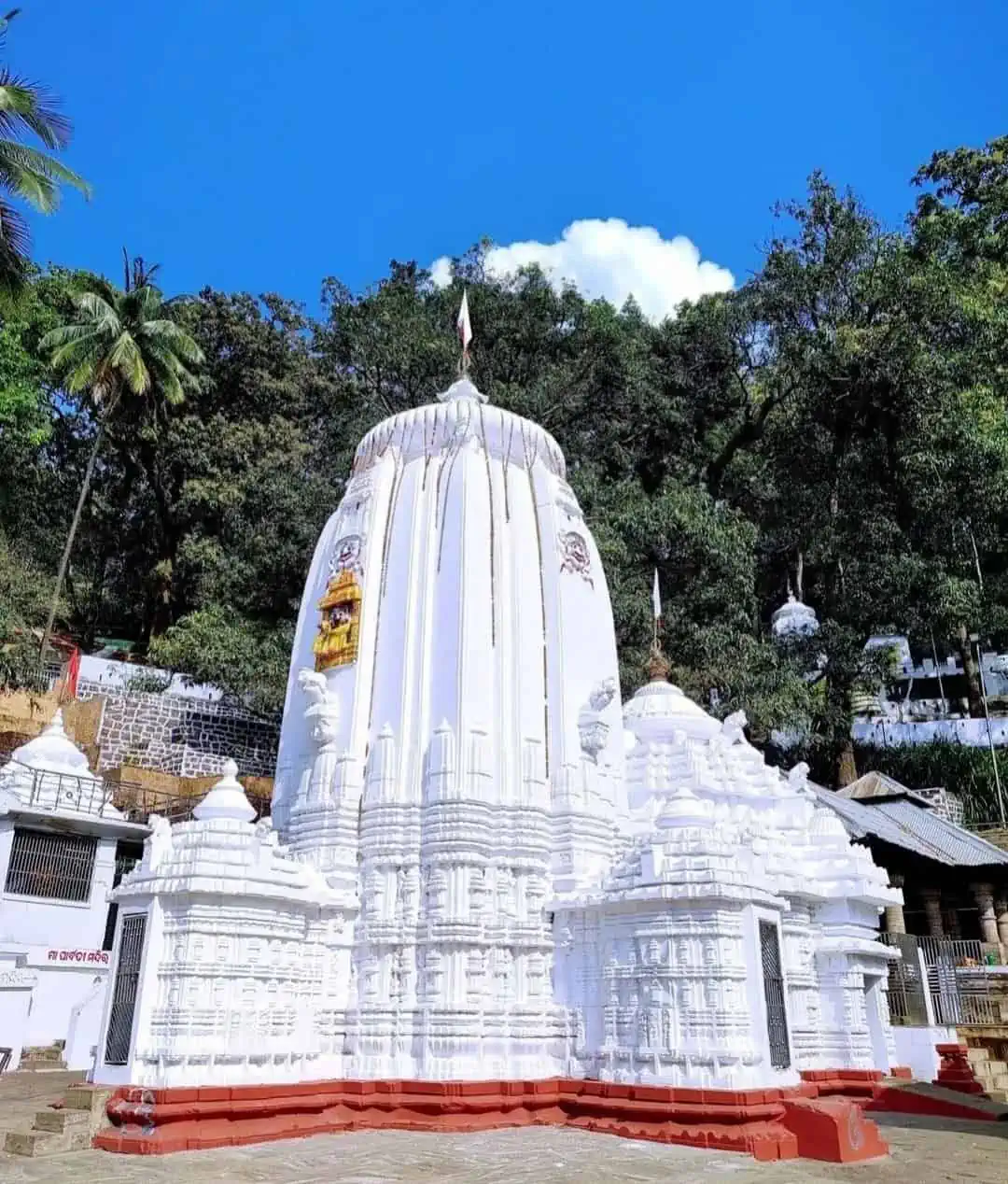
- Presiding Deity & Mountain Sanctum: Enshrines a sacred stone Shiva Lingam inside a 60-foot Rekha Deula tower on a misty mountain peak, revered as the spiritual abode of Lord Shiva in Central Odisha.
- Historical Dynasty & Construction: Commissioned in 1246 CE by King Narasimhadeva I of the Eastern Ganga Dynasty (the builder of the Konark Sun Temple).
- Ascent Options & Wildlife: Pilgrims can climb the traditional 1,352 stone steps winding through Sal forests or take the scenic 12-hairpin curve Barabanki Ghat Road. The forested slopes are home to wild deer, monkeys, and exotic birds.
- 2026 Timings, Accessibility & Transit Tips: Open 5:30 AM to 7:00 PM daily. During Maha Shivratri (Jagara), over 100,000 devotees carry brass pots of holy Mahanadi water up the mountain steps at night. Located 26 km from Dhenkanal Railway Station.
12. Gupteswar Cave Temple, Koraput
Hidden inside a subterranean limestone cavern in the dense Ramagiri forest near Jeypore, Gupteswar (meaning “Hidden Lord”) is one of India’s most atmospheric natural cave shrines.
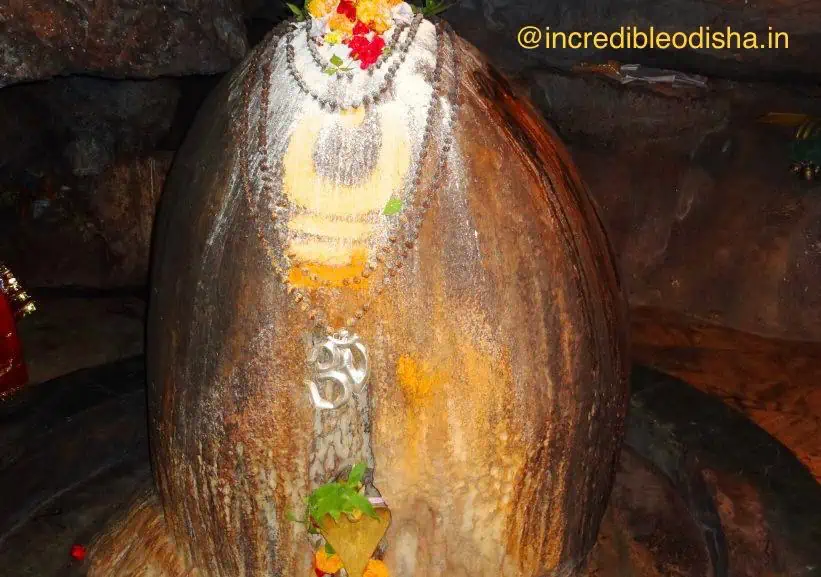
- Natural Stalagmite Lingam: The sanctum is a subterranean limestone cavern housing a gigantic 2-meter naturally formed stalagmite Shiva Linga that grows gradually through mineral deposits.
- Mythological Ramayana Connection: Legend holds that Lord Rama discovered and worshipped this hidden Lingam during his 14-year exile (Vanavasa) in the Dandakaranya forest.
- Sabari River Setting: Located along the pristine banks of the Sabari (Kolab) River along the border of Odisha and Chhattisgarh.
- 2026 Timings, Accessibility & Transit Tips: Open 6:00 AM to 6:00 PM daily. Located 58 km from Jeypore Railway Station (hire a private cab from Jeypore). Bring a pocket flashlight to inspect the natural limestone textures in the darker cave chambers.
13. Akhandalamani Temple, Aradi (Bhadrak)
Situated along the sacred banks of the Baitarani River in Bhadrak district, Baba Akhandalamani is one of the most revered Shaivite healing shrines in Eastern India.
- Presiding Deity & Miraculous Origins: Enshrines a natural Swayambhu Lingam discovered in the 17th century by a local farmer. Devotees believe that sincere prayer and bathing in the temple pond (Pahada) cures severe physical ailments.
- Sacred Gharshana Prasad: The sanctified paste of raw milk, curd, honey, and mashed banana washed off the Lingam (Gharshana Bhoga) is consumed by devotees as healing medicine.
- Riverfront Setting: Located directly on the confluence of the Baitarani and Salandi rivers, accessible via passenger river ferries and road bridges.
- 2026 Timings, Accessibility & Transit Tips: Open 5:00 AM to 9:00 PM daily. Located 37 km south of Bhadrak Railway Station (direct OSRTC bus and taxi connectivity). The annual Maha Shivratri Aradi Mela draws over 200,000 pilgrims for 5 consecutive days.
14. Maa Tarini Temple, Ghatagaon (Keonjhar)
Nestled within the Sal forests of Kendujhar along NH-20, Maa Tarini is the beloved guardian goddess of travelers and drivers across Odisha.
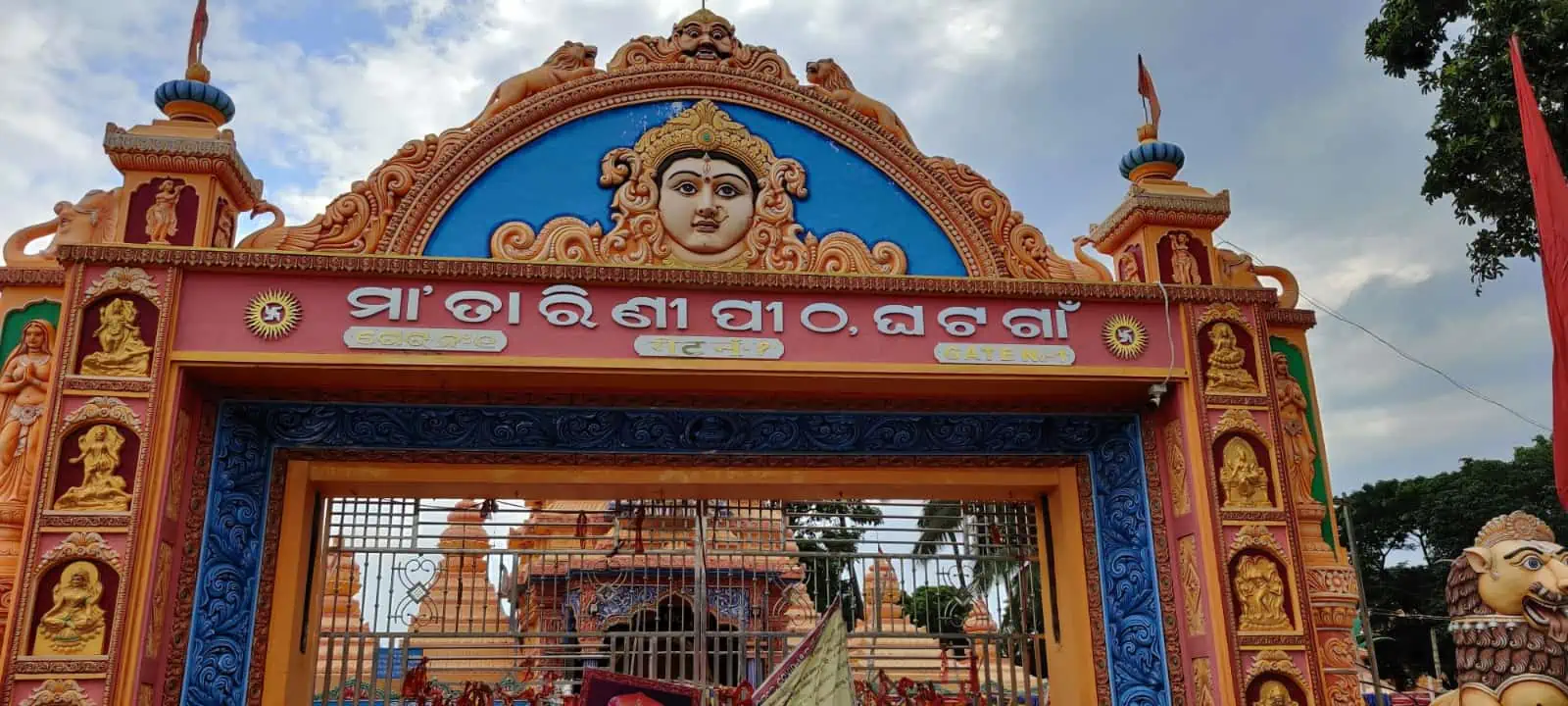
- Presiding Deity & Tribal Origins: Enshrines an unshaped, crimson-smeared sacred stone deity adorned with large silver eyes and gold ornaments, deeply rooted in indigenous tribal faith before receiving royal patronage from the King of Keonjhar.
- The Famous “Coconut Post” Tradition: Long-distance bus drivers and truck operators across Odisha collect fresh coconuts from passengers and deliver them to Ghatagaon. Local bus conductors statewide will accept a coconut from any traveler to deposit at the temple gates.
- Sacred Poda Pitha Offering: The temple kitchen prepares authentic Poda Pitha—slow-baked rice-and-jaggery cakes cooked inside Sal leaves over wood embers.
- 2026 Timings, Accessibility & Transit Tips: Open 5:30 AM to 8:30 PM daily. Located on National Highway 20, 45 km south of Keonjhar town and 140 km north of Bhubaneswar.
Read our complete guide: Maa Tarini Temple Ghatagaon Guide
15. Dhabaleswar Temple, Cuttack
Situated on a serene river island in the middle of the Mahanadi River near Athagarh, this 14th-century temple is dedicated to Lord Shiva as Dhabaleswar (the White Lord).
- Presiding Deity & Miracle Legend: Lord Shiva is worshipped as the one who turned a stolen black bull into a pure white one to save his devotee from execution, earning the title Dhabaleswar.
- Suspension Footbridge & Island Access: Pilgrims reach the island via a thrilling pedestrian cable suspension bridge spanning across the river or via motorized country boats.
- Bada Osha & Gaja Bhoga: Celebrated during the holy month of Kartika (November), where devotees observe strict waterless fasts and receive sacred Gaja Bhoga (spiced sweet rice cakes).
- 2026 Timings, Accessibility & Transit Tips: Open 5:00 AM to 8:30 PM daily. Located 27 km from Cuttack Railway Station via Athagarh Road.
16. Khirochora Gopinatha Temple, Remuna (Balasore)
Built in the 12th century by King Langula Narasimha Deva, this sacred Vaishnava shrine in Remuna is dedicated to Lord Krishna as Gopinatha.
- Presiding Deity & Legend of the Stolen Milk: Renowned for the medieval folklore where the stone idol of Krishna stole a pot of condensed sweetened milk (Khira) and hid it beneath his garments to feed his saintly devotee Madhavendra Puri.
- Amruta Keli Offering: Pilgrims line up every morning to purchase authentic terracotta pots of Amruta Keli—slow-caramelized condensed milk prepared with pure cow milk, sugar candy, and cardamom.
- Kalinga Architectural Style: A classic Ganga-dynasty Rekha Deula and Pidha Jagamohana surrounded by lush flower gardens and mango groves.
- 2026 Timings, Accessibility & Transit Tips: Open 6:00 AM to 12:30 PM and 3:30 PM to 8:30 PM. Located 9 km from Balasore Railway Station (auto-rickshaws available from station exit).
17. Alarnath Temple, Brahmagiri (Puri)
Located 25 km southwest of Puri in Brahmagiri, the 12th-century Alarnath Temple enshrines a magnificent four-armed black chlorite deity of Lord Vishnu (Alarnath).
- The Anasara Spiritual Sanctuary: When Lord Jagannath enters 15 days of secret medical seclusion (Anasara) after the bathing festival (Snana Yatra), it is believed that the divine presence shifts entirely to Alarnath. Devotees unable to see Jagannath receive identical spiritual merit by taking darshan here.
- Alarnath Sweet Kheer: The temple kitchen prepares authentic slow-reduced rice Kheer sweetened with pure jaggery, famous for its velvety texture and caramel aroma.
- Historical Chaitanya Legacy: Sri Chaitanya Mahaprabhu stayed here during every Anasara period, leaving behind a stone slab (Prema Shila) that melted under the intense heat of his ecstatic devotion.
- 2026 Timings, Accessibility & Transit Tips: Open 6:00 AM to 9:00 PM daily. Located 25 km from Puri on the Puri-Satapada Highway (NH-316A).
18. Panchalingeshwar Temple, Balasore
Perched upon the Nilagiri Hill range in Balasore, Panchalingeshwar features five naturally formed stone Shiva Lingams submerged beneath a perennial mountain spring.
- Tactile Devotion in Mountain Waters: To touch the five Lingams, devotees must climb 263 stone steps up the hill, lie flat on the bedrock, and immerse their hands into the ice-cold running spring water to feel the carved stone surfaces.
- Mythological Sita Connection: Folklore holds that King Banasura installed the five Lingams, which were later rediscovered by Sita during Lord Rama’s exile.
- Eco-Tourism Setting: Surrounded by dense deciduous forests and elephant corridors of the Kuldiha Wildlife Sanctuary.
- 2026 Timings, Accessibility & Transit Tips: Open 6:00 AM to 6:00 PM daily. Located 30 km from Balasore Railway Station. Wear shoes with good grip as the wet steps near the spring can be slippery.
19. Nrusinghanath Temple, Bargarh (Gandhamardhan Hills)
Located at the northern foot of the medicinal Gandhamardhan Mountain in Bargarh, this 14th-century temple was built by King Baijal Singh Dev of the Chauhan dynasty.
- Marjara Keshari Form of Vishnu: Enshrines Lord Vishnu in the unique form of a divine feline-lion hybrid (Marjara Keshari), who chased the demon Musika Daitya into the depths of the mountain.
- Perennial Mountain Waterfalls: Surrounded by pristine mountain cascades including Bhimadhar, Gokund, and Kapildhar, which flow through forests rich in Ayurvedic medicinal herbs.
- Chauhan Architecture: Features a 45-foot Rekha Deula sanctum adorned with carvings of the Dashavatara (ten incarnations of Vishnu).
- 2026 Timings, Accessibility & Transit Tips: Open 5:30 AM to 7:30 PM daily. Located 110 km from Bargarh and 160 km from Sambalpur.
20. Harishankar Temple, Balangir (Gandhamardhan Hills)
Resting on the southern slopes of the Gandhamardhan Hills directly opposite Nrusinghanath, Harishankar is a rare syncretic sanctuary where Lord Shiva (Hari) and Lord Vishnu (Shankara) are worshipped together.
- Natural Spring Stream: A cool perennial mountain stream flows directly past the temple courtyard, forming natural pools where pilgrims take ritual cleansing baths before darshan.
- 16-km Herbal Mountain Trek: Connects Harishankar to Nrusinghanath across the 3,000-foot Gandhamardhan mountain ridge, passing through ecosystems containing over 500 cataloged medicinal flora species.
- 2026 Timings, Accessibility & Transit Tips: Open 5:30 AM to 8:00 PM daily. Located 80 km from Balangir Railway Station. Combined pilgrimage visits to both Harishankar and Nrusinghanath can be completed across a weekend.
21. Maa Sarala Temple, Jhankada (Jagatsinghpur)
The foremost shrine dedicated to the Goddess of Learning and Wisdom in coastal Odisha, Maa Sarala is worshipped as a composite incarnation of Saraswati and Durga.
- Literary Genesis of Odisha: In the 15th century, the legendary peasant-poet Sarala Das received divine inspiration here to compose the monumental Odia Mahabharata (Sarala Mahabharata), establishing the very foundation of Odia literature and language.
- Unique Eight-Armed Idol: The black chlorite deity holds a book, a trident, a veena, and a skull cup, reflecting the synthesis of Tantric, Shakta, and literary devotion.
- 2026 Timings, Accessibility & Transit Tips: Open 5:00 AM to 1:00 PM and 3:30 PM to 8:30 PM. Located 75 km east of Bhubaneswar in Jhankada (direct bus service from Cuttack and Jagatsinghpur district).
22. Nilamadhava Temple, Kantilo (Nayagarh)
Perched upon the picturesque twin hills of Brahmadri overlooking the broad waters of the Mahanadi River, the Nilamadhava Temple is the mythological origin site of the Jagannath cult.
- The Legend of the Blue Deity: Ancient puranas record that the Sabara tribal chieftain Viswavasu secretly worshipped the original Nilamadhava sapphire-blue stone deity in a cave here before King Indradyumna was instructed to carve the wooden deities of Puri.
- Hilltop Architecture: Reached via a scenic flight of stone steps overlooking the river plains. A perennial natural spring flows from the feet of the presiding deity.
- Kantilo Brass & Bell Metal Market: Kantilo is globally renowned for its GI-tagged artisan workshops producing handmade brass and bell-metal cookware and temple lamps.
- 2026 Timings, Accessibility & Transit Tips: Open 5:30 AM to 8:30 PM daily. Located 100 km west of Bhubaneswar via the scenic Khordha-Nayagarh highway.
23. Maa Charchika Temple, Banki (Cuttack)
Situated upon the rocky knoll of Ruchika Parvata overlooking the Renuka River in Banki, Maa Charchika is an ancient 13th-century Shakti temple dedicated to the eight-armed Goddess Chamunda.
- Iconography & Divine Form: The presiding deity is an eight-armed black stone sculpture of Goddess Chamunda holding weapons while standing atop a prostrate demon, flanked by jackals and ganas.
- Kalinga Architectural Style: A classic Khakhara-Pidha temple complex with a spacious Natamandapa overlooking the river valley.
- 2026 Timings, Accessibility & Transit Tips: Open 6:00 AM to 1:00 PM and 3:30 PM to 8:00 PM. Located 50 km west of Cuttack.
24. Maa Ghanteswari Temple, Chipilma (Sambalpur)
Located at the turbulent confluence of the Mahanadi River in Chipilma (30 km from Sambalpur), this shrine is decorated with over 100,000 chiming bronze and brass bells.
- The Ancient Lighthouse of the Mahanadi: In pre-modern centuries, the constant ringing of the temple bells in the river wind warned navigators and boatmen of the dangerous whirlpools (Ghantas) ahead. Devotees tie bells of all sizes to the temple railings upon the fulfillment of their prayers.
- Natural Beauty: Offers stunning panoramic sunset views across the Mahanadi rocky riverbed and surrounding mango orchards.
- 2026 Timings, Accessibility & Transit Tips: Open 6:00 AM to 7:00 PM daily. Located 30 km from Sambalpur Junction (easily combined with a tour of the Hirakud Dam).
25. Maa Mangala Temple, Kakatpur (Puri)
Located in the sacred Prachi River valley, Maa Mangala is a 15th-century Khakhara-style Shakti shrine with an indispensable ceremonial link to the Shree Jagannath Temple in Puri.
- The Nabakalebara Divine Vision: During the sacred Nabakalebara festival (the ritual rebirth and recreation of the Jagannath deities), the head priests (Daitapatis) of Puri camp at the Kakatpur temple to perform secret rituals until Maa Mangala appears in a dream to reveal the exact locations of the holy Neem trees (Daru Brahma).
- Jhamu Yatra (April/May): Renowned for its thrilling fire-walking festival where hundreds of barefoot devotees walk across glowing charcoal trenches.
- 2026 Timings, Accessibility & Transit Tips: Open 5:30 AM to 9:00 PM daily. Located 60 km from Puri and 50 km from Bhubaneswar in the Prachi valley along the Konark-Kakatpur road.
2026 Odisha Temple Pilgrimage Calendar
| Month | Major Festival | Primary Temple Destinations | Pilgrim Significance |
|---|---|---|---|
| January | Rajarani & Mukteshwar Festivals | Rajarani & Mukteshwar (Bhubaneswar) | Premier national classical music and Odissi dance celebrations under illuminated spires |
| February | Maha Shivratri (Jagara) | Lingaraj, Kapilash, Gupteswar, Akhandalamani, Dhabaleswar | Night-long fasting, sacred bathing, and midnight hoisting of the Mahadipa lamp |
| March–April | Chaitra Mela & Pana Sankranti | Tara Tarini (Ganjam), Maa Tarini (Ghatagaon), Biraja (Jajpur) | Massive Shakti congregations, hair-tonsuring, and chariot processions |
| April | Ashokashtami (Rukuna Ratha) | Lingaraj Temple (Bhubaneswar) | The non-turning chariot (Analeuta Ratha) festival of Lord Lingaraj through Old Town |
| July 16, 2026 | Sri Gundicha Ratha Yatra | Shree Jagannath Temple (Puri), Baladevjew (Kendrapada) | The grand 9-day chariot journey of Lord Jagannath, Balabhadra, and Subhadra to Gundicha Temple |
| August/Sept | Nuakhai Parab | Maa Samaleswari (Sambalpur), Patneswari (Balangir) | Western Odisha’s harvest festival offering fresh paddy grains to the Divine Mother |
| October | Saradiya Durga Puja & Dussehra | Maa Biraja (Jajpur), Cuttack Chandi, Maa Charchika (Banki) | 16-day Tantric puja rituals, Chhatar Jatra, and silver filigree Medhas in Cuttack |
The Sacred Shakti Peetha & Tantric Landscape of Odisha
Odisha holds a preeminent position in the evolution of Indian Shaktism and Tantra, revered across the Kalika Purana, Yogini Tantra, and Devi Bhagavata as Uddiyana Pitha—one of the four foundational seats of Tantric mysticism:
| Shakti Shrine Name | Tantric Designation | Geographic Location | Divine Iconography & Significance |
|---|---|---|---|
| Maa Biraja Temple | Nabhi Peetha (Navel) | Jajpur (Baitarani River) | Two-handed Mahishasuramardini; site of the sacred Nabhi Gaya ancestor liberation well |
| Maa Tara Tarini Temple | Stana Peetha (Breasts) | Ganjam (Kumari Hills) | Twin goddess manifestation on a 708-ft summit overlooking the Rushikulya River |
| Maa Vimala Temple | Pada Peetha (Feet) | Puri (Inside Srimandir Courtyard) | Supreme Tantric guardian of the Char Dham; sanctifies food into Mahaprasad |
| Chausathi Yogini (Hirapur) | Circular Hypaethral Shrine | Khordha (15 km from Bhubaneswar) | 64 black chlorite Yoginis with distinct vahanas in a 25-ft open-air arena |
| Chausathi Yogini (Ranipur-Jharial) | Granite Outcrop Shrine | Balangir (Titilagarh) | 64 sandstone Yoginis surrounding Lord Shiva as dancing Nataraja on a rock hill |
| Maa Charchika Temple | Chamunda Peetha | Banki (Cuttack) | Ancient 8-armed Chamunda on Ruchika Parvata overlooking the Renuka River |
| Maa Bhattarika Temple | Mahanadi Riverfront Shrine | Badamba (Cuttack) | Goddess of victory worshipped by Lord Parashurama on the Ratnagiri hillock |
The Sacred Temple Cuisine of Odisha: Mahaprasad & Sacred Sweets
Food in Odishan temples is not merely sustenance; it is divine nectar (Prasad) prepared according to ancient culinary Vedic treatises using zero garlic, onion, or modern hybrid vegetables (potatoes and tomatoes are strictly omitted):
| Temple & Pilgrimage Center | Sacred Signature Offering | Cooking Method & Unique Ingredients |
|---|---|---|
| Shree Jagannath Temple (Puri) | Mahaprasad (56 Bhog) | Stacked unglazed clay pots (Kuduas) over wood fires; Arwa Anna, Dalma, Kanika, Besara, Poda Pitha |
| Ananta Vasudeva (Bhubaneswar) | Abadha Lunch Thali | Wood-fired earthen pot meals served on fresh Sal leaf plates in the temple courtyard |
| Sri Sri Baladevjew (Kendrapada) | Kendrapada Rasabali (GI Tagged) | Deep-fried cottage cheese patties simmered in thick, cardamom-seasoned condensed milk |
| Khirochora Gopinatha (Remuna) | Amruta Keli (Sweet Khira) | Slow-caramelized sweetened milk cooked in small terracotta pots with raisins and nuts |
| Alarnath Temple (Brahmagiri) | Alarnath Sweet Kheer | Rich, slow-reduced rice pudding prepared with cow milk, bay leaves, and sugar candy |
| Maa Tarini Temple (Ghatagaon) | Poda Pitha & Fresh Coconuts | Slow-baked rice-lentil cake cooked in Sal leaves with grated coconut and jaggery |
| Kapilash Temple (Dhenkanal) | Dhenkanal Magji & Khua Pera | Buffalo milk sweet prepared in earthen pans over slow wood embers |
Glossary of Kalinga Temple Architectural Elements
To appreciate the stone craftsmanship across Odisha’s temples, travelers should recognize these classical Kalingan architectural terms:
- Pabhaga: The base molding of the temple wall composed of five horizontal tiers representing the foot of the monument.
- Jangha: The vertical wall segment between moldings, divided into Tala Jangha (lower) and Upana Jangha (upper), adorned with sculptures of Nayikas, Dikpalas, and erotic couples.
- Baranda: The horizontal cornice separating the vertical wall (Bada) from the soaring curvilinear spire (Gandi).
- Gandi: The main curvilinear tower trunk of a Rekha Deula that curves inward toward the summit.
- Mastaka: The crowning architectural assembly at the very summit, consisting of:
- Beki: The cylindrical neck connecting the spire to the crown.
- Amalaka (Amala): The ribbed, circular stone disc resembling a gooseberry.
- Khapuri: The flat, bell-shaped stone cap resting over the Amalaka.
- Kalasha: The sacred stone pot of divine nectar.
- Ayudha: The metal weapon emblem of the presiding deity (Chakra or Trishula).
- Dhwaja: The sacred flag fluttering from the pinnacle.
- Gajasimha: A majestic monolithic sculpture of a rampant lion sitting atop a crouching elephant, carved on the front facade of Kalinga temples to symbolize the victory of spiritual wisdom (Lion) over material desire (Elephant).
3 Turnkey Odisha Pilgrimage Circuits
Circuit 1: The Golden Triangle Pilgrimage Circuit (3 Days)
- Day 1 (Bhubaneswar): Morning darshan at Lingaraj Temple and Bindu Sagar heritage corridor ➔ Mukteshwar Temple & Rajarani Temple ➔ Traditional Abadha lunch at Ananta Vasudeva ➔ Evening light and sound show at Dhauli Shanti Stupa.
- Day 2 (Puri): Morning drive via Pipili applique village to Puri ➔ Darshan of the Divine Trinity at Shree Jagannath Temple ➔ Afternoon Mahaprasad at Ananda Bazar ➔ Evening visit to Alarnath Temple in Brahmagiri and sunset at Blue Flag Golden Beach.
- Day 3 (Konark & Marine Drive): Sunrise along the Puri-Konark Marine Drive ➔ Comprehensive architectural exploration of the Konark Sun Temple ➔ Visit to Ramchandi Temple and Chandrabhaga Beach ➔ Return drive to Bhubaneswar Airport.
Circuit 2: The Western Odisha Heritage Circuit (3 Days)
- Day 1 (Sambalpur): Morning darshan at Maa Samaleswari Temple and walk along the SAMALEI riverfront ➔ Afternoon visit to the 100,000 chiming bells of Ghanteswari Temple at Chipilma ➔ Sunset over the world’s longest earthen dam at Hirakud.
- Day 2 (Bargarh - Nrusinghanath): Drive to the northern base of the Gandhamardhan Hills ➔ Explore the 14th-century Nrusinghanath Temple (Marjara Keshari idol) and forest waterfalls (Kapildhar).
- Day 3 (Balangir - Harishankar): Drive or trek around the mountain to Harishankar Temple on the southern slope ➔ Explore the herbal valleys ➔ Evening visit to the 9th-century granite Chausathi Yogini temple at Ranipur-Jharial.
Circuit 3: The Coastal Shakti Peetha Trail (4 Days)
- Day 1 (Jajpur): Explore Maa Biraja Temple (Adi Shakti Peetha), perform Pinda Daan at Nabhi Gaya, and visit the ancient Ashta Matrika ghats along the Baitarani River.
- Day 2 (Cuttack & Prachi Valley): Darshan at Cuttack Chandi Temple ➔ Cross the Mahanadi suspension bridge to Dhabaleswar Island Temple ➔ Drive through the Prachi Valley to visit Maa Mangala Temple at Kakatpur.
- Day 3 (Ganjam - Kumari Hills): Travel south along NH-16 to Ganjam ➔ Climb the 999 steps or take the scenic cable car ropeway to the hilltop shrine of Maa Tara Tarini overlooking the Rushikulya River.
- Day 4 (Gopalpur & Coastal South): Morning relaxation at Gopalpur-on-Sea beach and lighthouse ➔ Return transit to Bhubaneswar or Berhampur Railway Station.
Pilgrim Regulations, Dress Codes & Temple Etiquette
- Inner Sanctum Dress Codes:
- Men: Traditional cotton Dhoti / Kurta or modest trousers and shirts (shorts and sleeveless vests are strictly prohibited in all major active shrines).
- Women: Sarees, Salwar Kameez, or traditional clothing covering shoulders and knees.
- Strict Prohibition on Leather & Electronic Devices:
- Leather belts, leather wallets, shoes, smartwatches, and cameras are strictly banned inside the inner courtyards of Jagannath Temple, Lingaraj Temple, and Biraja Temple. Use the free digital biometric cloakroom lockers at the entrance gates.
- Non-Hindu Entry Guidelines:
- Traditional entry into the sanctums of the Puri Jagannath Temple and Bhubaneswar Lingaraj Temple is restricted to practicing Hindus. Both monuments feature elevated exterior stone viewing galleries for international visitors and non-Hindu travelers.
Frequently Asked Questions (2026 Edition)
1. Which is the oldest surviving temple in Odisha?
The Parasurameswara Temple in Bhubaneswar, constructed around 650 CE during the Shailodbhava Dynasty, is widely recognized as the oldest intact Kalinga sandstone temple in Odisha.
2. What are the Four Sacred Kshetras (Chari Kshetra) of Odisha?
The four sacred kshetras represent the four weapons of Lord Vishnu:
- Sankha Kshetra: Puri (The Conch Shell - Jagannath Temple)
- Chakra / Ekamra Kshetra: Bhubaneswar (The Discus - Lingaraj Temple)
- Gada / Biraja Kshetra: Jajpur (The Mace - Maa Biraja Temple)
- Padma / Arka Kshetra: Konark (The Lotus - Sun Temple)
3. Which temple in Odisha is an official Char Dham pilgrimage site?
The Shree Jagannath Temple in Puri is one of India’s four sacred Char Dham pilgrimage sanctuaries, alongside Badrinath (North), Dwarka (West), and Rameswaram (South).
4. What are the three distinct styles of Kalinga temple architecture?
The three architectural styles are:
- Rekha Deula: Tall curvilinear spire housing the inner sanctum (e.g., Jagannath Puri, Lingaraj).
- Pidha Deula / Bhadra Deula: Stepped pyramidal assembly porch (e.g., Konark Jagamohana).
- Khakhara Deula: Barrel-vaulted semi-cylindrical shrine dedicated to Shakta and Tantric goddesses (e.g., Vaital Deula, Maa Mangala Kakatpur).
5. When will Ratha Yatra take place in 2026?
The world-famous Puri Ratha Yatra will commence on July 16, 2026 (Ashadha Shukla Dwitiya).
6. Which temple in Odisha is famous for stalagmite cave formations?
The Gupteswar Cave Temple in the Koraput district houses a gigantic naturally formed 2-meter limestone stalagmite Shiva Linga inside a subterranean cavern.
7. What is the significance of the Maa Biraja Temple in Jajpur?
Maa Biraja is one of India’s foremost Adi Shakti Peethas where Goddess Sati’s navel (Nabhi) fell. It houses the sacred Nabhi Gaya well where devotees perform ancestor liberation rites (Pitru Shradha).
8. Which temple in Odisha is known as the “Second Konark”?
The Biranchi Narayana Temple in Buguda (Ganjam) and Palia (Bhadrak) is known as the “Second Konark” (Arka Kshetra) because of its rare solar worship traditions and intricate wooden carvings.
9. Where can I experience authentic Mahaprasad and temple Abadha?
Authentic wood-fired sacred meals can be purchased at:
- Ananda Bazar in the Shree Jagannath Temple, Puri (after 2:00 PM daily).
- Ananta Vasudeva Temple Courtyard, Bhubaneswar (between 12:30 PM and 2:00 PM daily).
10. How many days are recommended for an Odisha temple pilgrimage?
A 5 to 7-day itinerary is ideal to cover the core Golden Triangle (Bhubaneswar, Puri, Konark) alongside major regional Shakti Peethas in Jajpur and Ganjam.