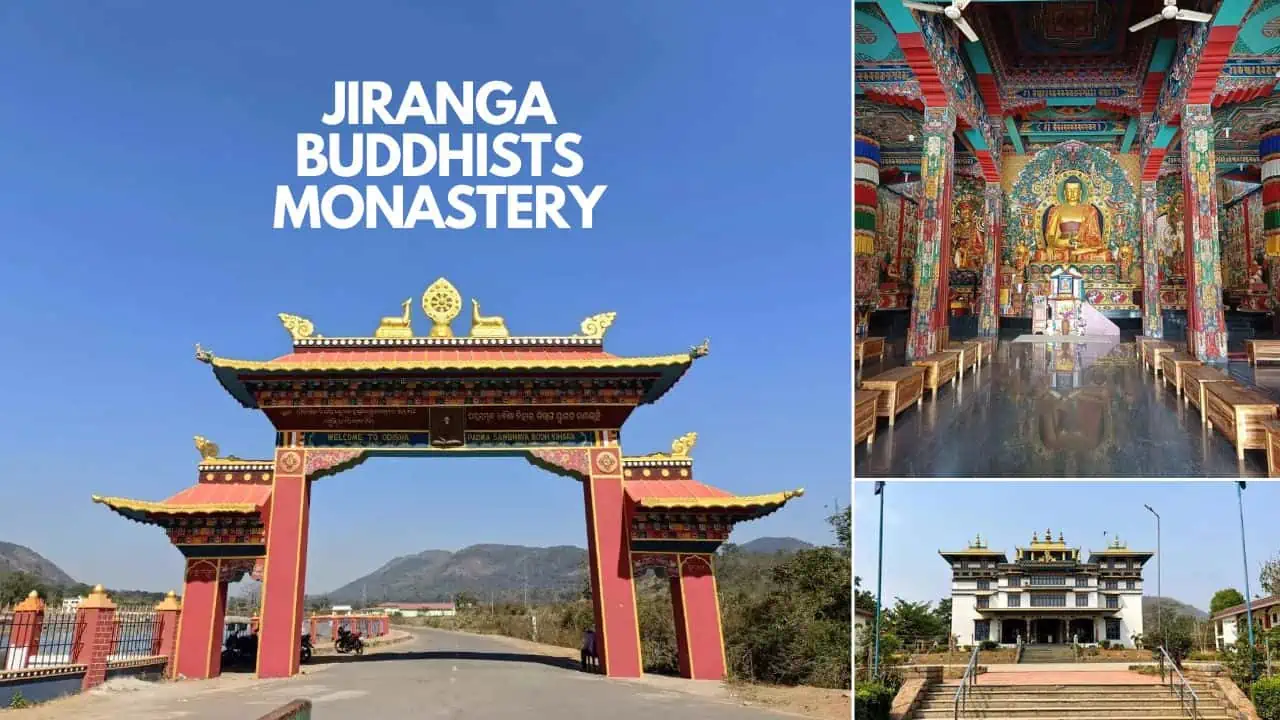
Featured image for Jiranga Buddhists Monastery Chandragiri: Travel Guide
Places To Visit · · 20 min read

Jiranga Buddhists Monastery Chandragiri: Travel Guide

Visit Jiranga Buddhists Monastery at Chandragiri with timings, history, Tibetan food, and travel tips for Odisha's Mini Tibet.

Hidden places in odishaJiranga Buddhists MonasteryPlaces to visitTemples in OdishaGajapati Tourism

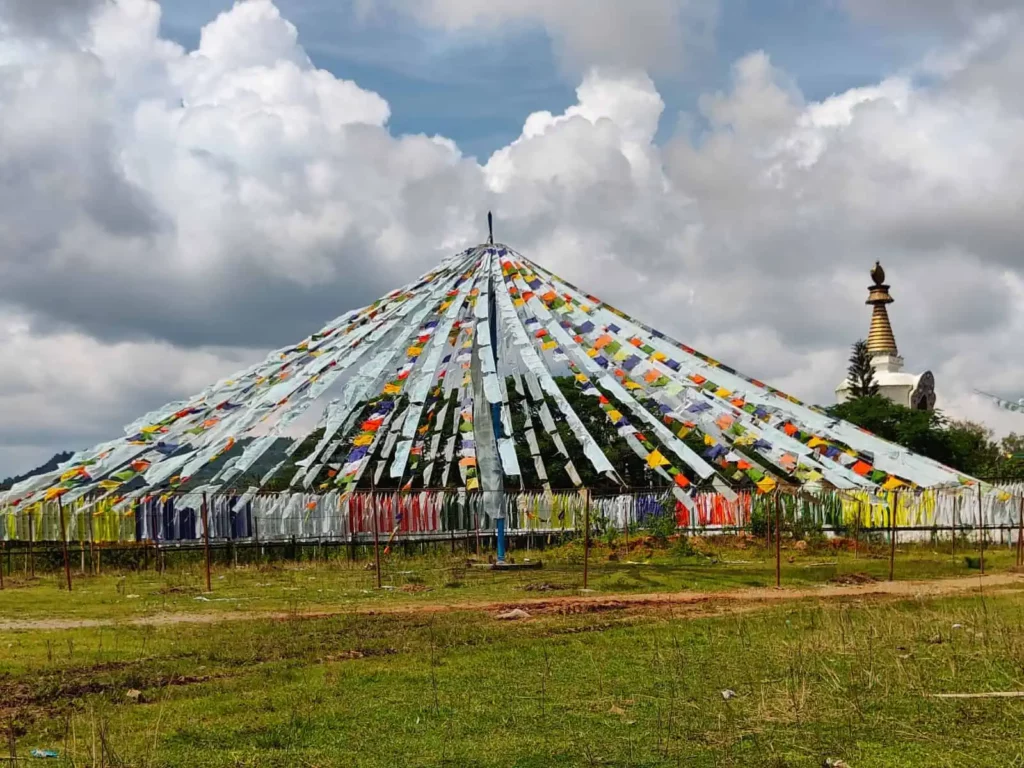
The first time I saw the golden spires of the Jiranga Buddhists Monastery rising above the emerald green canopy of the Gajapati hills, I had to remind myself I was still in Odisha. The air here feels different—crisp, thin, and carrying the faint, sweet scent of mountain pine mixed with the earthy aroma of burning juniper incense. As I stepped out of my car at the Chandragiri Tibetan Settlement, the rhythmic fluttering of hundreds of colorful prayer flags (Lungta) dancing in the wind whispered a greeting that felt worlds away from the bustling streets of Berhampur.

Known officially as the Padmasambhava Mahavihara, this magnificent sanctuary is often called the “Mini Tibet of Odisha.” It is a place where the soul finds a rare kind of silence, and the eyes are treated to a riot of colors that tell stories of faith, resilience, and a culture that has found a second home in the heart of Eastern India. Whether you’re a spiritual seeker or a curious traveler, the journey to Jiranga is more than just a trip—it’s an emotional encounter with a living heritage.

The majestic Padmasambhava Mahavihara Monastery at Jiranga, Gajapati.

The Soul of Mini Tibet: An Overview of Jiranga

Nestled in the remote hills of the Gajapati district, the Jiranga Buddhists Monastery is the spiritual heart of the Phuntsokling settlement. “Phuntsokling,” which translates to the “Land of Happiness and Plenty,” was established in the early 1960s to provide a home for Tibetan refugees. Today, it stands as the largest Buddhist monastery in Eastern India, a five-story architectural marvel that looks like it was plucked straight from the Himalayas and placed gently into the rolling landscape of Odisha.

What makes Jiranga truly special isn’t just the grand architecture—it’s the fusion. You’ll see Odia farmers walking past young Buddhist monks in maroon robes, and you’ll find shops selling both local Odia handicrafts and authentic Tibetan woolens. It’s a beautiful testament to the hospitality of Odisha and the enduring spirit of the Tibetan people.

As of February 2026, the monastery continues to thrive as a center of Vajrayana Buddhism. If you are planning your visit this month, you are in luck. The Losar festival (Tibetan New Year) is scheduled from February 18th to 20th, 2026, and the entire settlement is currently buzzing with preparation. It’s a time of vibrant dances, special prayers, and an infectious energy that you won’t find at any other time of the year.

History of Jiranga Buddhists Monastery: From the Himalayas to the Eastern Ghats

To understand the weight of the silence within the monastery walls, you have to understand the history of the people who built it. The story is one of profound loss followed by incredible resilience.

The Great Exodus of 1959

The history begins in 1959, following the Chinese occupation of Tibet. This period saw a massive exodus of approximately 85,000 Tibetans, including the 14th Dalai Lama, who sought refuge in India. They crossed the treacherous Himalayan passes, carrying little more than their faith and a few sacred relics. The Government of India, led by Prime Minister Jawaharlal Nehru, welcomed them, but the challenge of resettling such a large population was immense.

Odisha’s Compassionate Welcome

The then Chief Minister of Odisha, the legendary Biju Patnaik, showed immense compassion and foresight. He recognized the cultural value these refugees brought and offered land in the Chandragiri hills for their resettlement. The area, with its cool climate and hilly terrain, was reminiscent of the lower Himalayan foothills, providing a sense of familiarity to the displaced community. For more historical context, you can read about the history of Padmasambhava Mahavihara on Wikipedia.

The first batch of Tibetans arrived in Chandragiri on May 1, 1963. They didn’t just bring their families; they were bringing their ancient traditions, their scriptures, and their unwavering faith. For decades, they lived simply, focusing on agriculture—primarily maize and mustard—and preserving their culture through small home-shrines and community gatherings.

The Dream of Padmasambhava Mahavihara

While the community thrived as farmers and weavers, the dream of a grand monastery—a center for learning and spiritual practice—remained. In 1998, with the blessing of His Holiness the Dalai Lama, the foundation for the Padmasambhava Mahavihara was laid.

The construction was a monumental task, taking nearly a decade and costing approximately ₹8 crore. Architects from Tibet, Nepal, and Bhutan worked alongside local Odia masons to ensure every detail was authentic. Finally, in January 2010, the Dalai Lama himself traveled to this remote corner of Odisha to inaugurate the monastery. It was a day of immense pride, not just for the Tibetans but for all of Odisha.

The Significance of Guru Padmasambhava (Guru Rinpoche)

You might wonder why the monastery is named after Padmasambhava. In the Tibetan tradition, Guru Padmasambhava, also known as Guru Rinpoche (“Precious Master”), is considered the “Second Buddha.”

The Lotus-Born Master

According to Buddhist tradition, Padmasambhava was born from a lotus in the kingdom of Oddiyana (which many scholars believe was in the Swat Valley, though some historical traditions link Oddiyana to the ancient Kalinga/Odisha region itself). He is credited with bringing Buddhism to Tibet in the 8th century, overcoming local demonic forces and establishing the first Buddhist monastery there, Samye.

Why He Matters to Jiranga

For the monks at Jiranga, Guru Rinpoche is the embodiment of the transformative power of the dharma. He taught that even the most difficult obstacles could be turned into opportunities for spiritual growth. For a refugee community that had lost its homeland, this message was—and is—deeply resonant. Inside the monastery, you will see a magnificent 17-foot statue of Guru Padmasambhava alongside the main 23-foot Buddha statue.

Architecture and Symbols: A Visual Dharma

Standing at 70 feet tall and spanning 10 acres, the monastery is built in the Atanpuri style of architecture, which draws inspiration from the ancient Nalanda University.

The Ashtamangala: Eight Auspicious Symbols

As you walk around the monastery, you will notice eight symbols repeated in paintings, carvings, and even on the prayer flags. These are the Ashtamangala, and understanding them enriches your visit:

  1. The Precious Parasol (Chhatra): Symbolizes protection from the heat of suffering and the destructive forces of the world. Just as a physical umbrella protects us from the rain or sun, the Dharma protects the mind from the heat of negative emotions.
  2. The Two Golden Fish (Survanamatsya): Symbolizes fearlessness and freedom in the ocean of samsara. In ancient India, fish were symbols of the sacred Ganges and Yamuna rivers. Here, they represent the ability to move through life’s challenges without drowning in sorrow.
  3. The Treasure Vase (Kalasha): Represents an endless rain of long life, wealth, and prosperity. It is said that no matter how much is taken from the vase, it always remains full.
  4. The Lotus Flower (Padma): Symbolizes purity of body, speech, and mind. The lotus roots are in the mud, its stem is in the water, but its flower blooms pure and beautiful above the surface. This is the goal of every practitioner.
  5. The White Conch Shell (Sankha): Its deep, resonant sound awakens beings from the sleep of ignorance. It represents the fame of the Buddha’s teachings spreading in all directions.
  6. The Endless Knot (Srivatsa): Represents the ultimate unity of everything—the interdependence of religious doctrine and secular life, and the union of wisdom and compassion.
  7. The Victory Banner (Dhvaja): Symbolizes the victory of Buddha’s teachings over death, ignorance, and all obstacles. It celebrates the triumph of the enlightened mind.
  8. The Dharma Wheel (Dharmachakra): Represents the turning of the wheel of Buddhist law. The eight spokes represent the Noble Eightfold Path.

The Tiered Grandeur and Murals

The tiered roofs are adorned with golden finials. Inside, the Thangka paintings on the walls are not mere decorations. They are visual aids for meditation. Each color and posture has a specific meaning. The vibrant blues represent the vastness of the mind, while the reds represent energy and compassion.

I remember spending nearly an hour just tracing the details of a mural depicting the “Wheel of Life” (Bhavachakra). It’s a complex diagram showing the different realms of existence and the causes of suffering. It’s an airy, spacious hall where even a whisper seems to carry the weight of centuries of wisdom.

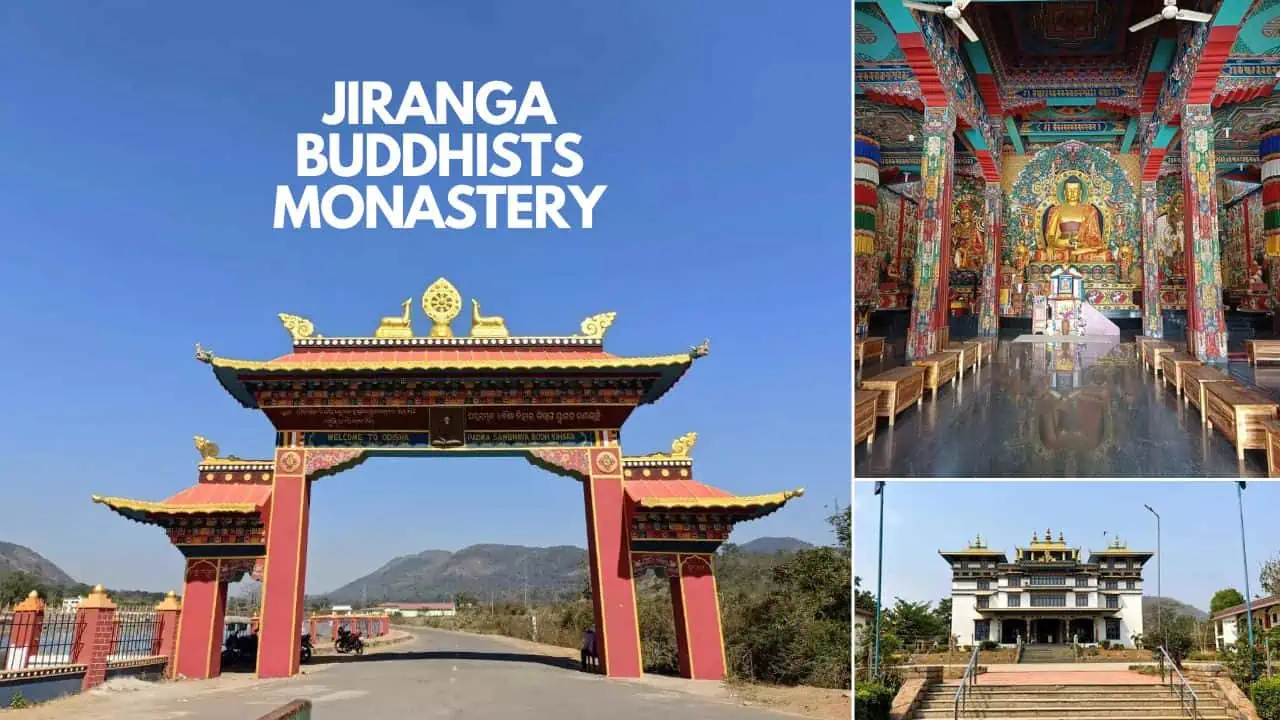
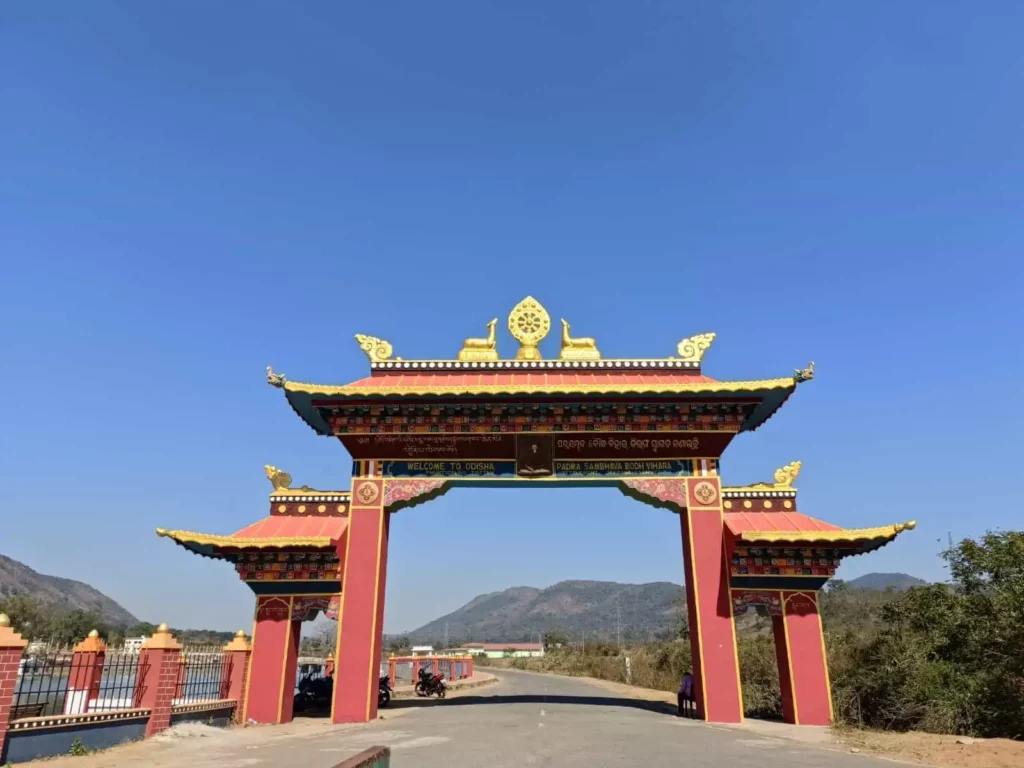
The grand entrance of the monastery reflecting traditional Tibetan aesthetics.

A Day in the Life of a Jiranga Monk

To truly appreciate the monastery, one must understand the discipline that happens behind the scenes. The monastery is home to about 200 monks, ranging from young novices (some as young as six) to elderly masters.

The Dawn Rituals

The day begins early, often at 4:30 AM, with the sound of a deep-toned bell or the blowing of the conch shell. The monks gather in the main hall for the morning Puja. The air is filled with the low, guttural chanting of scriptures, accompanied by the rhythmic beat of drums and the haunting sound of long Tibetan horns (Dungchen).

The Art of Monastic Debate

After breakfast, the younger monks attend the monastic school. One of the most fascinating things to witness is the “Monastic Debate.” This is not an argument in the common sense, but a dynamic method of learning. Monks gather in a courtyard, and one monk sits while the other stands. The standing monk asks a philosophical question and punctuates his point with a loud, rhythmic hand-clap and a stomp of the left foot.

This gesture is not just for drama; the clap symbolizes the “Sword of Wisdom” cutting through ignorance, and the stomp represents the “crushing of the ego.” It is a mentally taxing and physically energetic way of ensuring that the monks truly understand the nuances of Buddhist philosophy.

The Phuntsokling Library: A Treasure of Wisdom

Hidden within the monastery complex is a library that houses thousands of ancient Tibetan scriptures. Many of these are “Pecha” style books—long, narrow sheets of paper wrapped in silk. The monks take great care in preserving these texts, as they contain centuries of knowledge on medicine, philosophy, astrology, and spiritual practice. For a scholar, this library is one of the most important centers for Tibetan studies in India.

Phuntsokling: The Heart of the Tibetan Settlement

Chandragiri isn’t just a tourist spot; it’s a living, breathing community. The settlement is divided into five main camps, each with its own character.

The Carpet Weaving Industry

The Tibetan refugees brought their expertise in hand-knotted woolen carpets to Odisha. These carpets are known for their durability and intricate traditional patterns, often featuring dragons, phoenixes, and floral motifs. There is a community weaving center where you can see the looms in action. The rhythmic “thwack-thwack” of the weavers’ tools is the heartbeat of this industry.

The Agricultural Revolution in the Hills

The surrounding hills, once barren, have been transformed into fertile fields. The Tibetans introduced high-yield maize and mustard farming to the region. If you visit in January, the valleys are a sea of yellow mustard flowers, a sight that is truly breathtaking. In the summer, the maize stalks grow tall, turning the entire landscape into a vibrant green maze.

Intricate Buddha carvings that adorn the walls of the monastery.

Wildlife and Birds of the Gajapati Highlands

The area surrounding the monastery is a haven for nature lovers. The Gajapati hills are part of the Eastern Ghats and are rich in biodiversity.

  • Bird Watching: You can spot several species of birds, including the Malabar Whistling Thrush, the Indian Roller, and various species of sunbirds. The early morning hours near the monastery are filled with their melodic calls.
  • Flora: The hills are covered with Sal, Teak, and Sandalwood trees. The Tibetans have also planted several fruit trees like guava and mango, adding to the lushness of the settlement.

Authentic Tibetan Food: A Culinary Adventure in Gajapati

You cannot visit Jiranga and leave without treating your taste buds. The food here is a stark departure from the typical Odia cuisine, offering a comforting blend of mountain flavors.

Must-Try Dishes

  • Momos: Forget the street-side versions. These are succulent, filled with seasoned vegetables or meat, and served with a fiery tomato-garlic-chili chutney.
  • Thukpa: A hearty noodle soup packed with vegetables and mild spices. It’s the perfect meal for a cool afternoon in the hills.
  • Thenthuk: A hand-pulled noodle soup that is even heartier than Thukpa. The “Then” means “pull” and “thuk” means “noodles.”
  • Butter Tea (Po Cha): Made with tea leaves, yak butter (or cow butter here), and salt. It’s an acquired taste, but essential for the full experience. It’s surprisingly revitalizing after a long walk.

Best Places to Eat

Visit the small cafes near the monastery guest house for the most authentic experience.

  • Tibetan Kitchen: Known for its fresh momos and friendly service.
  • Lotus View Restaurant: Offers a great view of the monastery and excellent Thukpa.
  • Tibetan Daba (Jeerango Colony): A local favorite for its home-style cooking.

Local Souvenirs: Beyond Carpets

While the carpets are the main attraction, the local shops offer several other treasures:

  • Incense Sticks: Handmade using local Himalayan herbs and Gajapati mountain pine.
  • Singing Bowls: Used for meditation and relaxation. The resonant sound they produce is said to align the mind’s frequencies.
  • Prayer Wheels: You can buy small hand-held prayer wheels to take a piece of the monastery’s energy home with you.
  • Beaded Jewelry: Traditional Tibetan necklaces and bracelets made of turquoise, coral, and lapis lazuli.

Exploring the Gajapati District: Beyond the Monastery

While the monastery is the main draw, the Gajapati district has much more to offer. The district is named after the Gajapati Kings of the Suryavamsi dynasty who once ruled the region.

Parlakhemundi: The Royal Heritage

The headquarters of Gajapati, Parlakhemundi, is located about 80 km from Jiranga. It is famous for the Gajapati Palace, an architectural gem that reflects the grandeur of the local kings. The town is also a hub for Horn Work—intricate items made from cow and buffalo horns.

Mahendragiri: The Mythological Peak

Rising to 1,501 meters, Mahendragiri is the second-highest peak in Odisha. It is deeply connected to Indian mythology. Legend has it that the Pandavas from the Mahabharata stayed here during their exile. There are several stone temples dedicated to Yudhisthira, Bhima, and Arjuna at the peak. The trek to Mahendragiri is challenging but rewarding, offering a panoramic view of the Eastern Ghats and the distant Bay of Bengal.

The Lanjia Saora Tribal Culture

Gajapati is home to the Lanjia Saora tribe, famous for their unique “Idital” wall paintings. These paintings are not just art; they are spiritual expressions used during various rituals. Seeing these paintings in a local village is a stark and beautiful contrast to the Tibetan Thangka art.

Nearby Gems: Taptapani and Khasada Waterfall

No trip to Jiranga is complete without visiting these two natural wonders.

Taptapani Hot Springs: Nature’s Spa

Located 35 km from Jiranga, Taptapani is famous for its natural sulfur water springs.

  • The Legend of Taptapani: Local folklore says that the hot springs were discovered by Lord Rama during his exile. The water emerges from the earth at a constant temperature and is considered sacred by the locals.
  • The Experience: The water is believed to cure skin ailments and joint pains.
  • Where to Stay: The OTDC Panthanivas is the best place to stay here. They have rooms where the hot spring water is piped directly into your bathtub.

Khasada Waterfall: The Hidden Cascade

Just 8 km from the monastery, Khasada Waterfall is a serene spot near Kamalpur village.

  • The Vibe: Unlike many commercialized waterfalls, Khasada remains rustic. The water flows over wide, flat rocks, making it safe to walk through (be careful of moss!).
  • Picnic Spot: It’s a popular spot for locals during Sundays and holidays. If you want peace, visit on a weekday morning. Explore more: Full List of Waterfalls in Odisha

Monthly Weather Guide for Chandragiri

MonthTemp (Min/Max)What to Expect
Jan - Feb10°C - 24°CClear skies, mustard blooms, Losar Festival. Best Time.
Mar - Apr18°C - 32°CPleasant mornings, warm afternoons. Good for trekking.
May - Jun25°C - 38°CHot and humid. Visit early morning or late evening.
Jul - Sep22°C - 30°CHeavy rain. Hills are misty and green. Roads can be slippery.
Oct - Dec12°C - 26°CBeautiful weather. Post-monsoon greenery is at its peak.

Practical Tips for Different Travelers

For Solo Travelers

  • Transport: It’s easiest to hire a bike from Berhampur. If on a budget, use the OSRTC buses, but be prepared for long wait times.
  • Safety: The area is extremely safe, but avoid traveling on the ghat roads after dark due to limited lighting.

For Families

  • Food: Kids love the momos! However, carry some familiar snacks and bottled water as options can be limited in the remote camps.
  • Activities: The Khasada waterfall and the deer park at Taptapani are hits with children.

For Photographers

  • Golden Hour: The monastery looks magical at sunrise. The golden spires glow with an ethereal light.
  • People: Ask for permission before taking portraits of monks or locals. Most are happy to oblige if you show respect.

Cultural Etiquette: Respecting the Sanctuary

When you enter a Buddhist monastery, there are a few rules of etiquette that show respect to the community:

  1. Circumambulation: Always walk around the monastery, stupas, or prayer wheels in a clockwise direction.
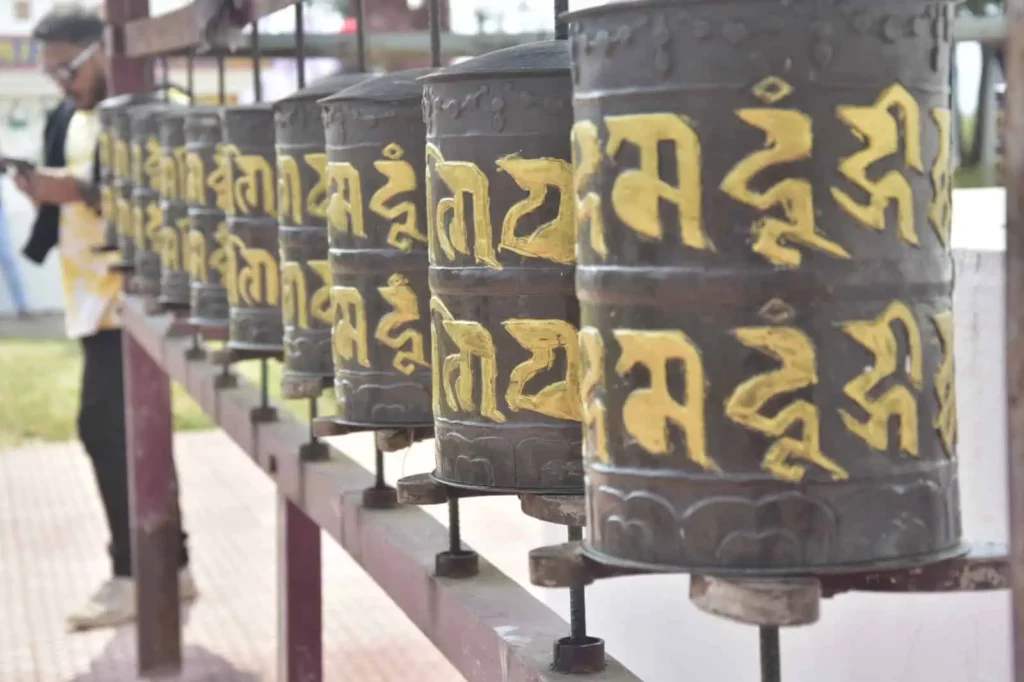
  2. The Prayer Wheels: If you spin them, use your right hand and spin them clockwise.
  3. Hats and Shoes: Remove your hat and shoes before entering the main prayer hall.
  4. Pointing: Avoid pointing your feet at statues or monks while sitting. The best way is to sit cross-legged.
  5. Voice: Keep your voice low. Many people come here for serious meditation and study.

Prayer flags carrying messages of peace across the Gajapati hills.

How to Reach Jiranga and Chandragiri Hills: 2026 Travel Info

Jiranga is located in the Mohana block of the Gajapati district. While it is remote, it is well-connected by road from major hubs in Southern Odisha. For official information, check out the Odisha Tourism official website.

By Air

The nearest airport is Biju Patnaik International Airport (BBI) in Bhubaneswar, located about 260 km away. From the airport, you can hire a private taxi (estimated cost ₹7,000 - ₹9,000 as of 2026) or take a bus to Berhampur and then onward to Chandragiri.

By Train

The Berhampur (Brahmapur) Railway Station (BAM) is the most convenient railhead, situated approximately 90 km from the monastery. Berhampur is a major station on the East Coast Railway.

  • Fare Update: A private cab from Berhampur station to Chandragiri usually costs between ₹3,500 and ₹4,500 for a round trip (including waiting).

By Road: Bus Timings and Routes

From Berhampur, you can take a bus or a private car. The drive takes about 3 to 4 hours and passes through the famous Taptapani ghats.

  • Buses: Regular OSRTC and private buses run from Berhampur to Mohana and Parlakhemundi.
    • Morning Bus: Leaves Berhampur at 06:30 AM and 08:00 AM.
    • Fare: Approximately ₹150 - ₹200 per person.
    • Pro-Tip: Ask the conductor to drop you at the Chandragiri junction. From there, local autos charge about ₹100 - ₹150 to reach the monastery entrance.

Google Maps Location: Jiranga Buddhists Monastery Location

Detailed 3-Day Itinerary: The Southern Odisha Circuit

Day 1: Bhubaneswar to Taptapani

  • 07:00 AM: Depart from Bhubaneswar.
  • 11:30 AM: Arrive at Berhampur and have a traditional Odia lunch.
  • 02:00 PM: Reach Taptapani. Check into the OTDC Panthanivas.
  • 04:00 PM: Relax in the natural hot springs.
  • 07:00 PM: Dinner and overnight stay at Taptapani.

Day 2: Taptapani to Jiranga (The Spiritual Heart)

  • 08:00 AM: Drive to Chandragiri.
  • 10:00 AM: Reach Padmasambhava Mahavihara. Explore the hall and gardens.
  • 01:00 PM: Authentic Tibetan lunch at a local cafe.
  • 03:00 PM: Visit the Carpet Weaving Center and the Monastic Library.
  • 04:30 PM: Head to Khasada Waterfall for a peaceful evening.
  • 06:30 PM: Return to Taptapani or stay at the Monastery Guest House.

Day 3: Jiranga to Gopalpur-on-Sea

  • 08:00 AM: Depart for Gopalpur.
  • 12:00 PM: Arrive at Gopalpur. Check into a beach-side hotel.
  • 04:00 PM: Relax at Gopalpur Beach.
  • 06:30 PM: Watch the sunset over the Bay of Bengal.

Essential Visitor Information (2026 Updated)

  • Entry Fee: Free.
  • Timings: 8:30 AM – 12:00 PM & 1:30 PM – 5:00 PM.
  • Dress Code: Modest (shoulders and knees covered).
  • Photography: Strictly prohibited inside the main prayer hall.
  • ATM/Cash: Carry enough cash from Berhampur or Mohana.

The Cultural Synthesis: Why Jiranga Matters

What truly touched my heart during my visit was seeing how two vastly different cultures have woven themselves together. In the local markets, you’ll hear a mix of Odia, Tibetan, and Telugu. The Tibetan settlement has contributed significantly to the local economy, while the people of Gajapati have protected this community like their own. This spirit of “Vasudhaiva Kutumbakam” (The World is One Family) is palpable here.

As you walk through the Jeerango colony, you might see a small roadside shrine dedicated to Lord Jagannath just a few meters away from a Buddhist stupa. It’s a beautiful reminder that while our paths to the divine may differ, the destination of peace and humanity is the same. For more inspiration on exploring the state, check out our guide on the 20 Must-Visit Best Tourist Places in Odisha.

FAQs on Jiranga Buddhists Monastery

What is the best way to reach Jiranga from Bhubaneswar?

Take a train to Berhampur and then hire a taxi. Alternatively, you can drive the entire 260 km.

Can I stay at the monastery?

Yes, there is a basic guest house within the monastery premises. For more details on staying in Southern Odisha, see our guide on Best Tourist Places in Berhampur.

Is photography allowed inside the monastery?

No, photography is strictly prohibited inside the main prayer hall. You are free to take photos of the exterior and the gardens.

What should I wear to Jiranga Monastery?

As it is a religious site, modesty is key. Wear clothes that cover your shoulders and knees.

Are there ATMs in Jiranga?

ATMs are limited. Carry enough cash from Berhampur or Mohana.

Is mobile connectivity good in Chandragiri?

Connectivity is decent for Jio and Airtel, but data speeds can be slow.

What is the height of the Buddha statue?

The main statue is 23 feet tall.

Final Thoughts: Finding Your Zen in Gajapati

As I sat on the steps of the monastery during my last evening there, watching the sun dip behind the Chandragiri hills, I realized that Jiranga is not just a destination on a map. It’s a feeling. It’s the sound of the evening gong echoing through the valley, the sight of a young monk sharing a laugh with an Odia fruit seller, and the profound peace that settles over you when you simply stop and breathe.

In our fast-paced 2026 world, places like the Jiranga Buddhists Monastery are essential. They remind us of the power of compassion, the strength of human spirit, and the beauty of diversity. If you are looking for a place to unplug, reflect, and discover a side of Odisha you never knew existed, pack your bags and head to the hills of Gajapati.

For more travel inspiration and local guides, explore our latest posts on the Incredible Odisha Blog. Jai Jagannath!