Nursinghanath Temple Bargarh: Timings, Trek & Guide
Plan your trip to Nursinghanath Temple Bargarh. Explore Marjara Kesari lore, Kapiladhar waterfalls, Gandhamardan hill trekking routes, and daily timings.
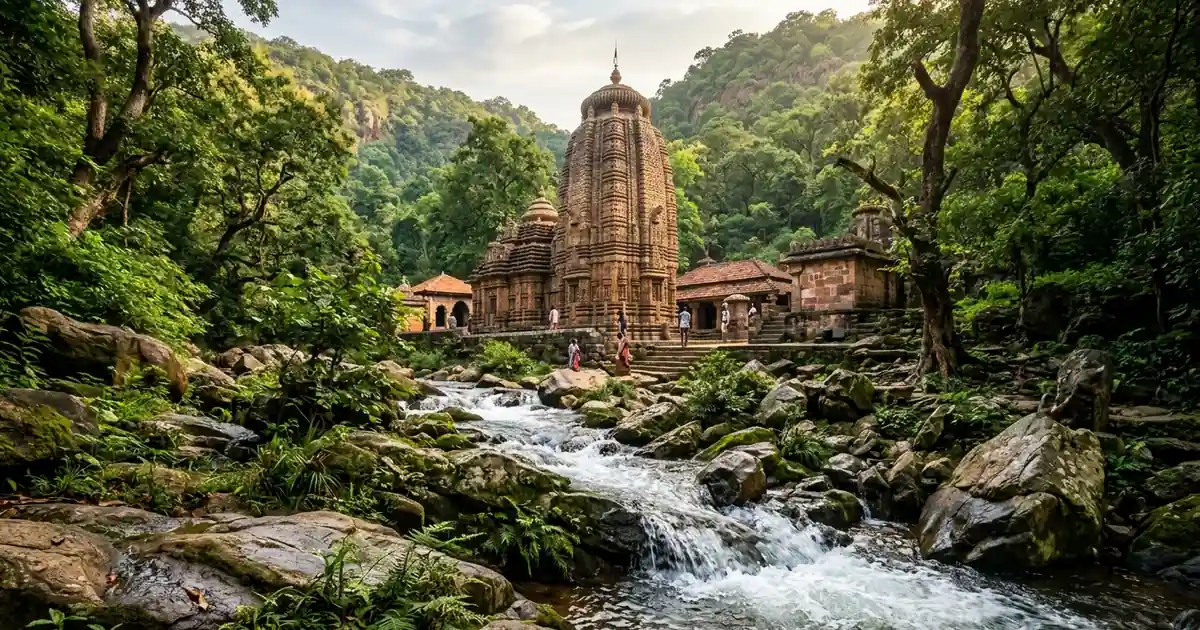
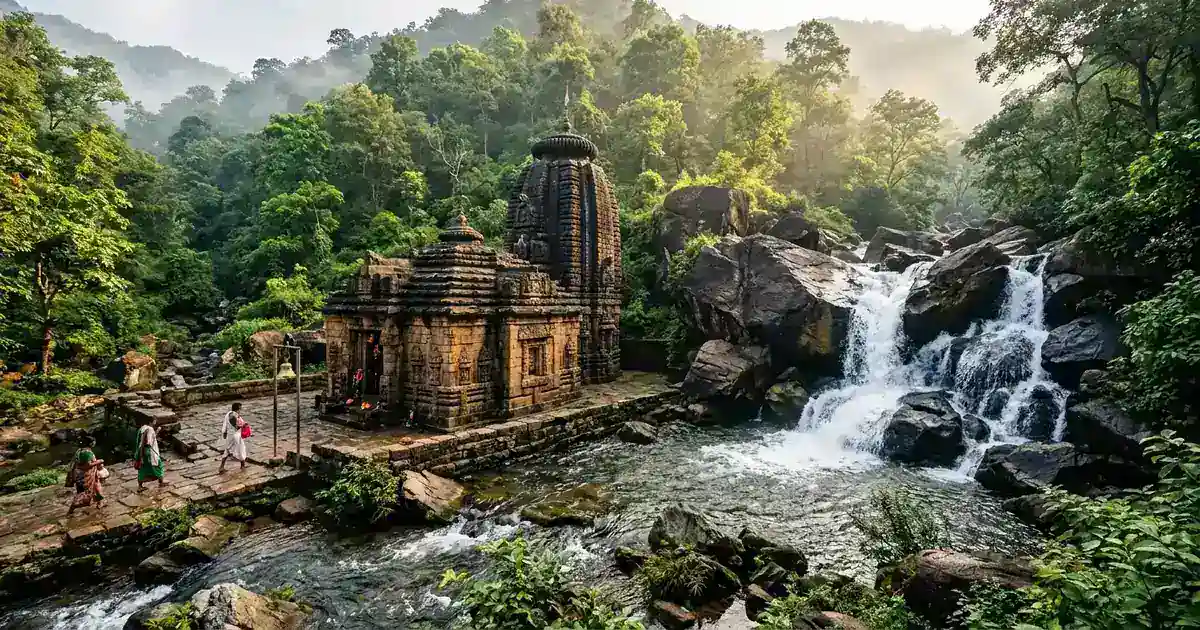
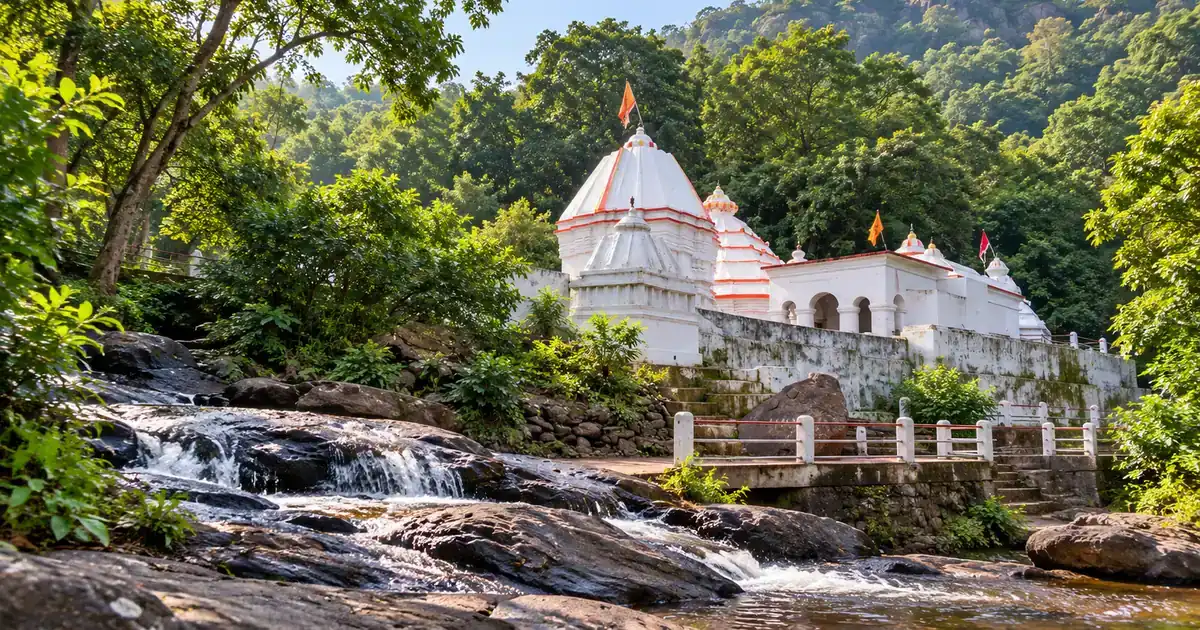
Spreading across the forested northern base of the legendary Gandhamardan mountain range, the ancient sanctuary of Lord Nrusinghanath is one of the most revered ecological pilgrimage sites in eastern India. Situated near Paikmal village in the southwestern corner of Bargarh district, this fourteenth-century shrine pairs ancient Vaishnavite folklore with refreshing mountain streams.
Travelers journey across western highways to visit nursinghanath temple bargarh to experience therapeutic natural spring waters, rare feline-man iconography, and deep jungle tranquility.
The location is famous for its unique presiding deity, Marjara Kesari, a divine form combining the features of a cat and a lion. Clean perennial streams fed by high mountain aquifers cascade over smooth boulders beside the sanctum walls, giving the temple campus an evergreen sanctuary feel. Devotees come to bathe in the holy Papaharana torrents, while outdoor adventurers arrive to explore legendary wilderness treks.
Exploring this sacred foothill connects medieval Kalinga architecture with dense medicinal forest ecosystems. Pilgrims touring famous temples in Odisha frequently connect their journey with the neighboring Balangir district across the mountain divide. The holy complex is regionally referred to as the sacred nrusinghanath temple paikmal.
Key Takeaways
- Unique Feline Manifestation: Worships Lord Vishnu in the rare form of Marjara Kesari, a cat-lion avatar.
- Gandhamardan Foothill Seat: Located at the northern base of the medicinal Gandhamardan range in Paikmal.
- Mountain Stream Sanctum: Blessed by perennial holy waters including the famous Kapiladhar and Bhimadhar cascades.
- Epic Mountain Ridge Trek: Connects across 16 km of rugged mountain trail directly to Harishankar Temple.
- Daily Temple Timings: Open daily from 5:00 AM to 12:00 PM and 2:00 PM to 8:00 PM with free public entry.
Nursinghanath Temple at a Glance: Timings, Location & Overview
Planning an excursion to Paikmal requires coordinating with temple aarti schedules and daylight mountain hours. The sanctuary opens early at dawn, observes a short afternoon closure for the deity’s rest, and welcomes pilgrims again until late evening.
The temple compound borders clear running water channels and shaded flagstone courtyards surrounded by towering sal, mahua, and amla trees. The natural setting creates a calm, soothing atmosphere where travelers can unwind after long road journeys.
The table below outlines operational hours and key visitor facts verified through Odisha Tourism:
| Dimension | Details |
|---|---|
| Temple Name | Sri Sri Nrusinghanath Temple (Marjara Kesari Pitha) |
| Presiding Deity | Lord Nrusingha (Cat-Lion Incarnation) |
| Construction Period | 14th Century CE (c. 1313 to 1413 CE) |
| Founding Ruler | King Baijal Singh Dev of Borasambar |
| Geographic Location | Gandhamardan Foothills, Paikmal Block |
| Administrative District | Bargarh District, Odisha |
| Morning Darshan | 5:00 AM to 12:00 PM (Daily) |
| Evening Darshan | 2:00 PM to 8:00 PM (Daily) |
| Public Admission Fee | Free entry for all devotees and tourists |
| Nearest Railway Station | Bargarh Road (110 km) or Khariar Road (40 km) |
Devotees find that early morning visits between 6:00 AM and 8:00 AM provide the clearest weather for bathing in the natural streams and admiring the architectural craftsmanship before midday warmth develops.
The temple is widely celebrated in historical texts for its continuous nursinghanath temple timings maintained across centuries.
Geographic Setting at Gandhamardan Foothills
The physical environment of Nrusinghanath is inseparable from the medicinal riches of the Gandhamardan hills. The mountain massif rises over one thousand meters above sea level, acting as a natural climatic wall between Bargarh and Balangir.
According to the Ramayana epic, Gandhamardan represents the sacred hillock carried by Lord Hanuman to revive wounded Lakshmana with the life-giving Sanjeevani herb. Modern botanists confirm that the range shelters more than three hundred documented medicinal plant varieties.
Mythological Origin: The Marjara Kesari Avatar and Musika Demon
The legend of Nrusinghanath is recorded in the ancient regional scripture, Nrusingha Charita. According to local Sthala Purana, a powerful demon named Musika Daitya assumed the form of a subterranean rat and wreaked havoc across the cosmic realms during Treta Yuga.
To evade divine retribution from Lord Rama, the demon fled into the dense wilderness of Gandhamardan and hid deep inside narrow underground rock clefts where standard weapons could not reach.
To flush out and subdue the elusive demon, Lord Vishnu manifested an extraordinary divine form combining the swift agility of a feline cat with the supreme strength of a man-lion. Assuming the name Marjara Kesari or Vidala Nrusingha, the deity guarded the mouth of the cavern, placing his divine foot over the hole.
Devotees believe that the sacred black stone within the sanctum marks the exact spot where the Lord holds the demon trapped for eternity, ensuring enduring peace for all beings.
Centuries later, historical accounts suggest that the seventh-century Chinese pilgrim Hiuen Tsang journeyed through this region. He documented an ancient monastic educational center called Parimalagiri situated high in the hills, suggesting that the area served as a thriving cultural hub long before the present medieval stone temple was erected.
The rich chronicle of nrusinghanath temple history continues to attract devotees and religious researchers from across India.
Architectural Design and 14th-Century Chauhan Inscriptions
The architectural layout of Nrusinghanath Temple reflects classic Western Kalinga deula conventions documented by the Archaeological Survey of India. Constructed from local red sandstone, the compact temple compound displays remarkable structural balance.
The complex comprises a curvilinear rekha vimana soaring forty-five feet above the ground, connected to an assembly hall known as the jagamohana.
The exterior walls of the jagamohana are adorned with sculpted depictions of the eight Dikpalas, celestial nymphs, and depictions of Vishnu’s Dashavatara incarnations.
Of immense historical importance is a stone inscription engraved in Proto-Odia script found within the jagamohana doorway. The epigraph records that King Baijal Singh Dev, the fifth Chauhan ruler of Borasambar and son of Raja Ramai Deo, built the temple to commemorate his devotion to Lord Nrusingha and granted extensive royal endowments for daily worship.
Inside the sanctum sanctorum, the murti of Marjara Kesari is carved from fine black chlorite stone, portraying the feline-lion deity resting above the subterranean entrance.
Pilgrims circumambulate the inner sanctuary in reverent silence, observing the sacred eternal oil lamps that illuminate the sanctum walls.
Perennial Streams & Waterfalls: Kapiladhar, Bhimadhar and Chaladhar
The crowning natural glory of Nrusinghanath is the network of perennial freshwater torrents rushing directly through the temple precincts. Known collectively as the sacred Papaharana stream, this clear mountain water originates from natural aquifers located high along the Gandhamardan ridge.
Pilgrims traditionally bathe in these gentle cascades to cleanse fatigue before entering the inner sanctum.
As travelers hike up the stone-paved trail leading along the stream gorge, they encounter a sequence of magnificent natural cascades:
| Waterfall / Feature | Distance from Main Temple | Setting & Highlights |
|---|---|---|
| Papaharana Stream | Surrounding main temple | Stone steps, bathing ghats, clear flowing mountain water |
| Bhimadhar Cascade | 1.5 km uphill along path | Rocky pool enclosed by mossy boulders and shady ferns |
| Chaladhar Waterfall | 2.5 km uphill along path | Rushing mountain rapids dropping through deep forest canopy |
| Sitakund Spring | 3.5 km uphill along trail | Natural cold water rock fountain amidst wild medicinal shrubs |
| Kapiladhar Waterfall | 4.5 km uphill along trail | Spectacular 40-foot single plunge drop into a deep mountain pool |
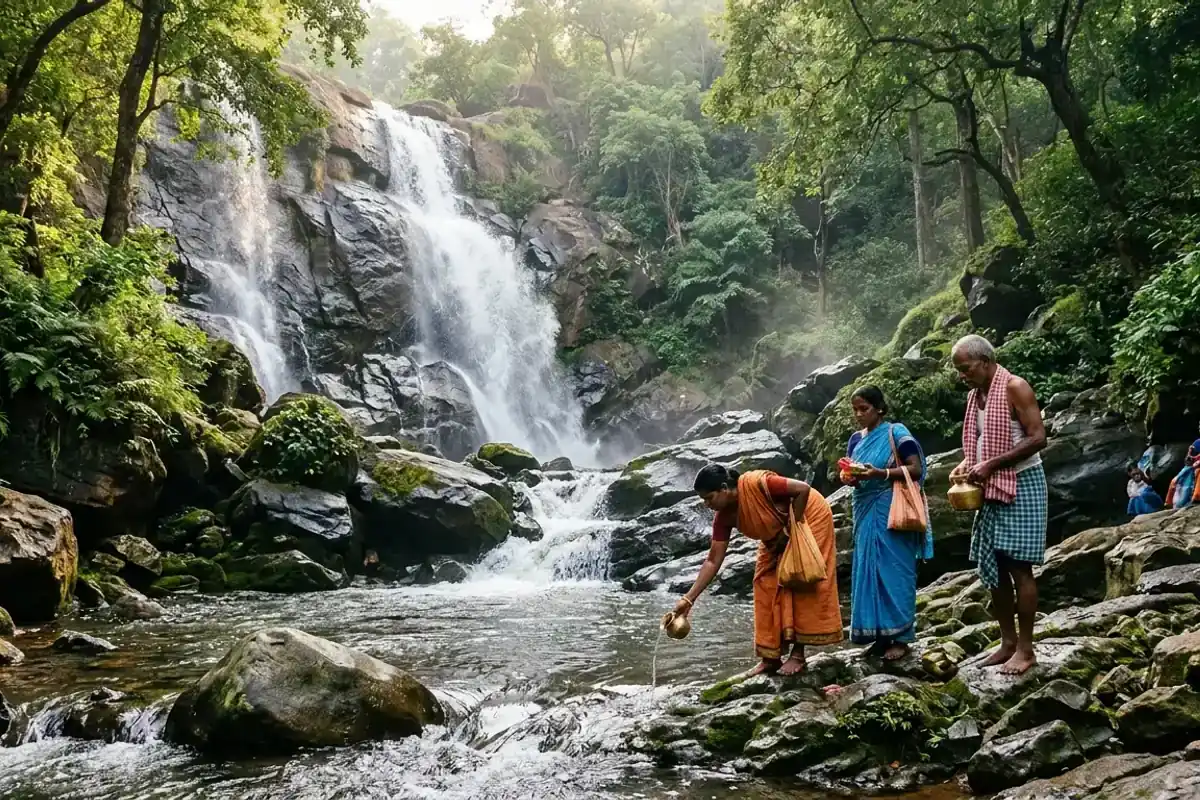
Visitors exploring waterfalls in Odisha will find Kapiladhar exceptionally rewarding for nature photography and peaceful meditation.
Because the rocky stream beds are coated with aquatic moss, travelers should exercise caution and wear footwear with sturdy rubber grips when walking along wet stone steps.
The Sacred Gandhamardan Mountain Trek: Nrusinghanath to Harishankar
One of the most thrilling trekking adventures in eastern India is the cross-mountain pilgrimage trail linking Nrusinghanath on the northern slope with Harishankar Temple on the southern slope.
Spanning a distance of sixteen kilometers over the mountain crest, this trail traverses dense tropical moist deciduous forests, high rocky ridges, and secluded stream gullies.
Comparing the gandhamardan north slope vs south slope reveals that the Bargarh side features deeper waterfall ravines, while the Balangir face offers wider stream banks. The journey requires approximately five to six hours of steady walking. Trekkers ascend from the Bargarh side past Kapiladhar waterfall, conquer the wind-swept plateau at the summit, and descend along the southern flank into Balangir district.
Along the trail, hikers can observe rare medicinal barks, wild orchids, and diverse bird species such as the Malabar pied hornbill and emerald dove.
Trekkers should depart early in the morning around 6:30 AM to complete the mountain crossing well before midday heat sets in.
Hiring an experienced local village guide from Paikmal is strongly recommended, as ridge trails can become confusing where multiple cattle tracks intersect. Carrying adequate drinking water and light refreshments is essential since no commercial stalls exist along the upper mountain ridges.
Festivals, Baisakha Mela & Travel Logistics from Bargarh and Sambalpur
The grandest annual cultural event celebrated at the shrine is the legendary Baisakha Mela, held annually in April or May during the auspicious occasion of Nrusingha Chaturdashi.
During this three-day fair, tens of thousands of pilgrims from Odisha, Chhattisgarh, and Madhya Pradesh converge upon Paikmal to offer prayers and participate in colorful community gatherings. Devotees observe customary sanctum photography restrictions during all worship hours.
A unique culinary tradition observed during the scorching summer mela is the offering of cold Pakhala bhoga. Cooked rice steeped in seasoned cool water with curd, ginger, and curry leaves is served to the deity and distributed among pilgrims, providing delicious and revitalizing nourishment.
Reaching Nursinghanath is straightforward via well-maintained road networks branching off National Highway 53:
| Departure Hub | Highway Distance | Typical Transit Time | Recommended Transit Mode |
|---|---|---|---|
| Bargarh Town | 110 km southwest | 2 hours 15 minutes | State Highway via Padampur and Paikmal |
| Sambalpur City | 160 km southwest | 3 hours 15 minutes | NH-53 to Bargarh, then state road to Paikmal |
| Raipur Capital (CG) | 160 km east | 3 hours 30 minutes | NH-353 through Khariar Road and Nuapada |
| Patnagarh Town | 65 km via road | 1 hour 30 minutes | State Highway connecting to Patneswari Temple |
| Bhubaneswar Airport | 410 km west | 8 hours 30 minutes | Direct express train to Bargarh or state highway drive |
Regular state transport buses connect Bargarh, Padampur, and Sambalpur to Paikmal bus station, located three kilometers from the temple entrance. From Paikmal, local auto-rickshaws provide frequent passenger transfers, while the total road distance from sambalpur to nrusinghanath is 160 km. Spacious parking near paikmal temple accommodates private tourist cars and tour coaches comfortably.
For overnight stays, the state tourism department operates the peaceful Nrusinghanath Nature Camp, offering comfortable eco-cottages surrounded by forest flora. Additional budget guest houses and dharamsalas are managed by the temple trust near the foothill entrance.
Frequently Asked Questions (FAQs)
What are the daily darshan timings at Nursinghanath Temple?
The temple welcomes devotees from 5:00 AM to 12:00 PM for morning darshan and reopens from 2:00 PM to 8:00 PM for evening prayers. Attending the morning aarti around 6:30 AM offers a peaceful devotional atmosphere amidst running mountain streams.
Why is Lord Nrusingha worshipped as Marjara Kesari at Nursinghanath?
According to ancient lore, Lord Vishnu assumed the form of Marjara Kesari, a cat-lion avatar, to pursue the demon Musika who was hiding inside mountain caves. The Lord trapped the demon subterraneanly and remains stationed here to protect the holy hills.
How far is Nursinghanath Temple from Bargarh and Sambalpur?
The temple is located approximately 110 kilometers southwest of Bargarh town and 160 kilometers from Sambalpur city. The journey takes around two to three hours by private vehicle or regular express bus via Padampur.
Can you trek from Nrusinghanath to Harishankar across Gandhamardan Hills?
Yes, a popular sixteen-kilometer mountain trail crosses the Gandhamardan ridge from Nrusinghanath in Bargarh to Harishankar in Balangir. The scenic hike takes approximately five to six hours and passes ancient waterfalls and rare medicinal plant forests.
What are the major waterfalls located near Nursinghanath Temple?
The scenic Kapiladhar waterfall drops forty feet down craggy rock faces approximately four kilometers uphill from the temple. Other nearby natural cascades along the stream trail include Bhimadhar, Chaladhar, and the holy Sitakund spring.
What is the significance of Baisakha Mela at Nrusinghanath?
The Baisakha Mela is the primary annual celebration held during Nrusingha Chaturdashi in late spring, attracting thousands of pilgrims from Odisha and Chhattisgarh. A celebrated tradition is the offering and distribution of cooling Pakhala bhoga cooked in earthen pots to soothe devotees from summer heat.