Patneswari Temple Balangir Patnagarh: Guide & Timings
Plan your trip to Maa Patneswari Temple at Patnagarh in Balangir. Explore 14th-century Chauhan history, Kosaleswar Shiva shrine, timings, and routes.
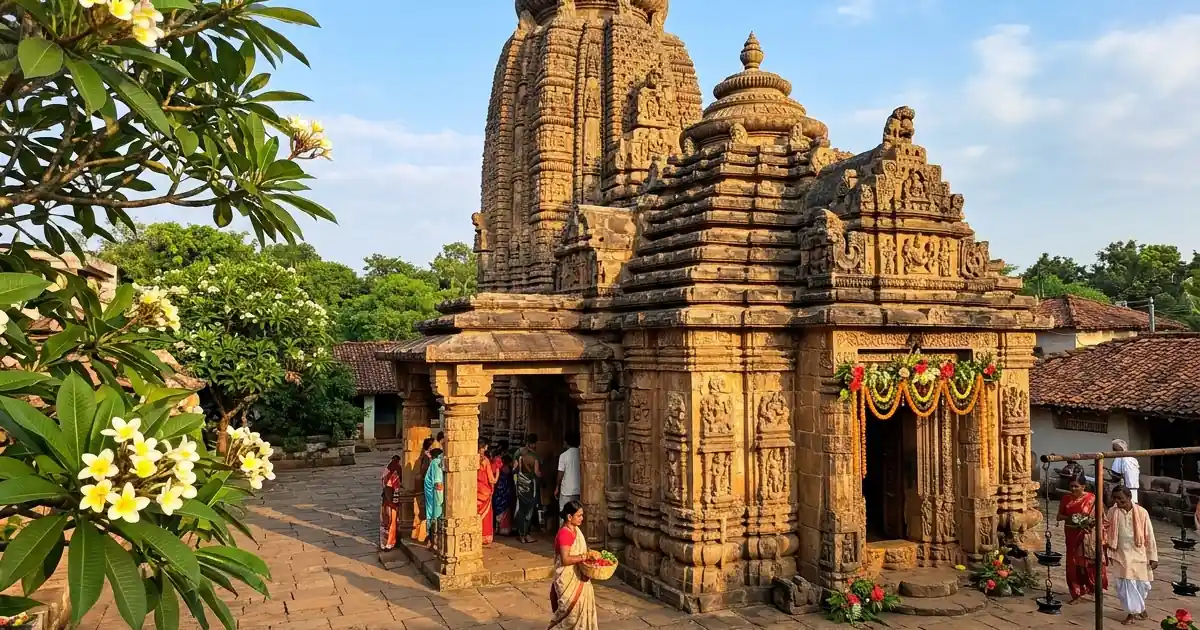
Standing proudly in the historic capital town of Patnagarh, the ancient sanctuary of Goddess Patneswari represents the cultural heart of the medieval Patna Kingdom. Located thirty-eight kilometers west of Balangir town, this fourteenth-century complex combines deep royal traditions with exceptional medieval stone carving.
Pilgrims and architecture enthusiasts frequently journey to patneswari temple balangir to witness a sacred site where Western Odisha royal history began.
The temple occupies a central role in the regional identity of Balangir district. Revered as the royal tutelary deity of the Chauhan rulers, Maa Patneswari is venerated as an incarnation of Mahishamardini Durga. The complex also shelters the remarkably intact Kosaleswar Shiva shrine, giving visitors a multi-faceted spiritual experience.
Exploring Patnagarh provides rich insights into the medieval heritage of the Kosala region. Devotees charting sacred journeys to famous temples in Odisha frequently link this site with neighboring Bargarh district and Sambalpur. The shrine is locally known and revered as the sacred maa patneswari temple patnagarh.
Key Takeaways
- Chauhan Dynasty Anchor: Established in the 14th century (c. 1360 CE) by Raja Ramai Deo, founder of Chauhan rule.
- Royal Tutelary Deity: Maa Patneswari served as the Ishta Devi for the rulers of the historic Patna State.
- Composite Heritage Complex: Features the primary Patneswari Durga sanctum alongside the ancient Kosaleswar Shiva temple.
- Accessible Location: Situated 38 km west of Balangir along State Highway 42 with regular road transport.
- Daily Worship Hours: Open daily from 6:00 AM to 7:30 PM with free public admission for all visitors.
Maa Patneswari Temple Patnagarh at a Glance: Timings & Core Highlights
Organizing an excursion to Patnagarh is simple due to its accessible position along the highway connecting Balangir to Harishankar. The shrine welcomes devotees throughout the daytime without midday closures.
The temple grounds sit amidst mature flowering champa trees and clean stone-paved walkways. The tranquil surroundings offer an inviting space for photography, prayer, and quiet exploration.
The table below summarizes essential visiting parameters verified through Odisha Tourism:
| Dimension | Details |
|---|---|
| Temple Name | Maa Patneswari Temple (Patneswari Mandir) |
| Presiding Deity | Goddess Patneswari (Mahishamardini Durga) |
| Historic Era | 14th Century CE (c. 1360 CE) |
| Founding Dynasty | Chauhan Dynasty of Patna State |
| Location | Patnagarh Town, Balangir District |
| Daily Darshan Hours | 6:00 AM to 7:30 PM (All days) |
| Entry Fee | Free public admission for all visitors |
| Companion Shrine | Kosaleswar Mahadev Temple (within compound) |
| Nearest Railway Station | Balangir Railway Station (39 km east) |
| Nearest Airport | Veer Surendra Sai Airport, Jharsuguda (175 km) |
Early morning visits allow pilgrims to attend the morning mangala aarti while enjoying peaceful flagstone courtyards before regional tour groups arrive.
Devotees locally refer to the shrine as the historic patneswari mandir balangir.
Geographic Setting in Ancient Patnagarh
Patnagarh occupies a strategic geographical position situated between the fertile Suktel river valley and the foothills of the Gandhamardan mountain range.
Historically known as Patan, this ancient fortified city served as the administrative headquarters of the Patna Kingdom for centuries before royal administration shifted to Balangir town in the nineteenth century.
Historical Genesis: Ramai Deo and the Chauhan Dynasty of Patna State
The recorded origins of Patneswari Temple reflect the foundational narrative of Chauhan sovereignty across Western Odisha. In the mid-fourteenth century, around 1360 CE, Prince Ramai Deo migrated to the region from northern India following political upheaval.
Recognized for his valor and administrative acumen, Ramai Deo unified the local chieftainships and established the independent Patna State.
To sanctify his new realm, Ramai Deo adopted Goddess Patneswari as the supreme tutelary deity of his dynasty. He founded his capital city around her holy seat, naming the stronghold Patnagarh in her honor.
For generations, Chauhan monarchs credited their military triumphs and agrarian stability to the protective grace of the Goddess.
Historical chronicles recount that every newly crowned Chauhan ruler was required to undergo royal consecration ceremonies before the sanctum of Patneswari before ascending the throne.
The rich chronicle of patneswari temple history continues to inspire deep cultural pride across Western Odisha, illustrating how royal patronage nurtured enduring spiritual traditions.
Architectural Elegance: Patneswari Deula and Kosaleswar Shiva Shrine
The architectural compound at Patnagarh holds immense value for scholars of medieval temple architecture. The complex displays stylistic elements that unite classical Kalinga stonework with indigenous Kosali design principles documented by the Archaeological Survey of India.
The primary sanctuary of Goddess Patneswari features a tall curvilinear vimana built with carefully dressed sandstone masonry. Within the sanctum, the primary deity is depicted as an imposing eight-armed Mahishamardini Durga slaying the buffalo demon Mahishasura.
Standing immediately beside the Shakta shrine is the renowned Kosaleswar Shiva Temple. This structure is famed for its hypostyle pillared hall, showcasing twenty-four elaborately sculpted stone columns adorned with intricate floral rosettes, mythical vyalas, and dancing celestial figures.
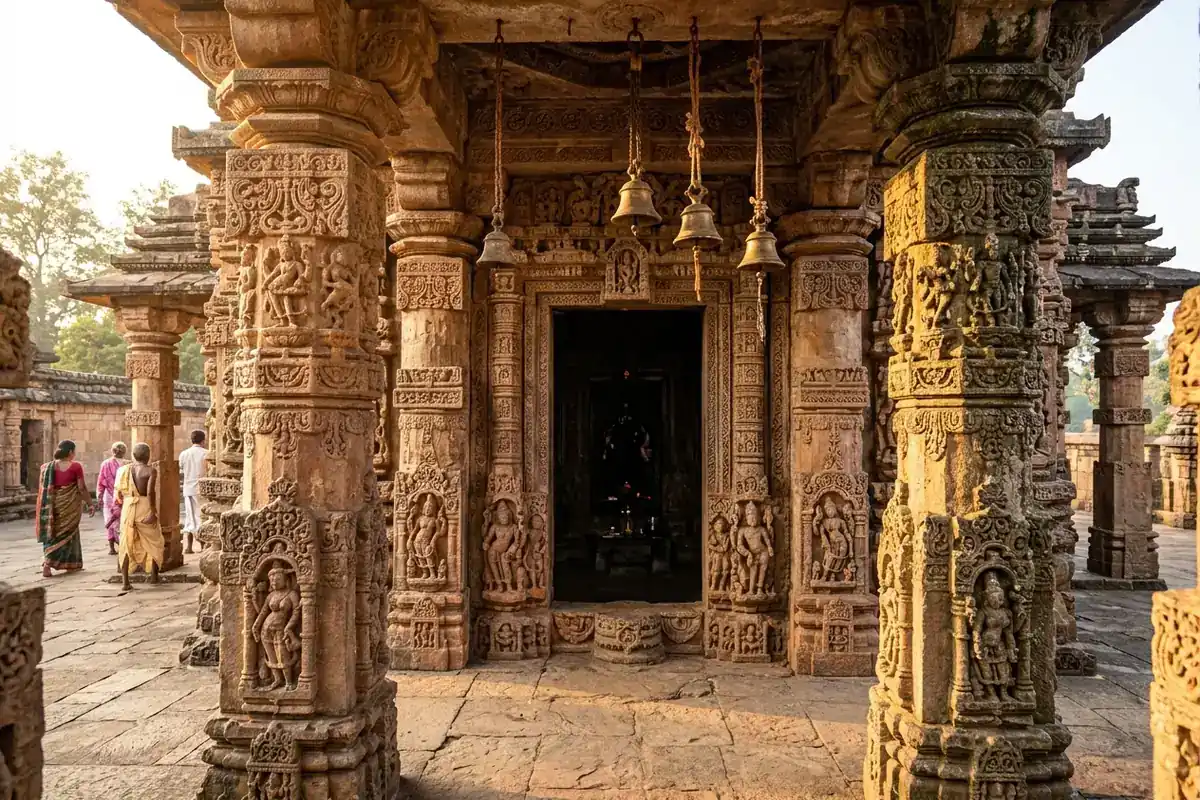
The presence of both a revered Shakta sanctuary and an ancient Shaiva shrine within the same enclosure highlights the syncretic religious culture of Western Odisha.
Art historians celebrate the site for its fine stone carving, noting that the decorative bands rival the artistic mastery found in prominent coastal heritage monuments.
Ritual Traditions, Royal Lineage Priesthood & Nuakhai Celebrations
The ceremonial rhythm of Patneswari Temple preserves several ancient practices unique to Western Odisha. Unlike shrines dominated solely by Brahminical priesthoods, the daily rituals at Patnagarh historically involve servitors connected to the royal lineage and indigenous clans.
Daily puja commences at dawn with the ceremonial awakening and bathing of the deity. Servitors adorn the image with fresh marigold garlands, vermilion, and ornate silver ornaments.
The temple becomes the focal point of community celebration during major annual festivals. During autumn Navaratri, thousands of pilgrims attend the grand Durga Puja festivities, highlighted by night-long homas and weapon-worship rituals.
During the harvest festival of Nuakhai, farmers from dozens of surrounding agrarian villages arrive to offer the first cooked grain of the new paddy harvest, known as Nabanna, to Maa Patneswari.
The spring festival of Chaitra Parva and Danda Jatra brings folk troupes and traditional musicians to the courtyard, filling the air with devotional hymns and percussive beats.
Devotees also look toward other major regional shrines such as Maa Samaleswari Temple in Sambalpur, honoring common Shakta heritage across the Mahanadi basin.
How to Reach Patnagarh from Balangir Town, Sambalpur and Bargarh
Reaching Patnagarh is convenient due to its direct road connectivity via State Highway 42. The roadway remains smoothly surfaced, offering comfortable motoring across rural agricultural plains.
Travelers arriving by train can alight at Balangir Railway Station, which connects with direct rail lines to Bhubaneswar, Raipur, and Kolkata.
The table below outlines transit distances, travel durations, and recommended routes from key regional centers:
| Origin Location | Road Distance | Approximate Travel Time | Recommended Highway Corridor |
|---|---|---|---|
| Balangir Town / Railway Station | 38 km | 45 to 55 minutes | Direct route via State Highway 42 |
| Harishankar Temple | 42 km | 50 minutes | State Highway westward toward Gandhamardan |
| Bargarh City | 90 km | 2 hours | Via Barpali and State Highway corridors |
| Sambalpur City | 165 km | 3 hours 30 minutes | NH-53 and NH-57 via Bargarh and Balangir |
| Bhubaneswar State Capital | 340 km | 7 hours | Via Boudh and Sonepur along NH-57 |
Regular government and private express buses operate every thirty minutes between the Balangir central bus terminal and Patnagarh. Local auto-rickshaws and rental taxis are easily hired outside Balangir station.
Adequate parking facilities are available in front of the temple complex for two-wheelers and private cars, with modest parking fees managed by the local civic authorities.
Nearby Balangir Travel Circuit: Harishankar & Ranipur Jharial Pairings
A visit to Patnagarh forms an essential anchor for a broader heritage itinerary through southwestern Odisha. Travelers can easily combine Patnagarh with iconic natural and archaeological treasures within a single day.
Among prominent patnagarh tourist places, a memorable travel pairing is the sacred foothill sanctuary of Harishankar Temple, situated just forty-two kilometers southwest on the scenic slopes of the Gandhamardan hills.
Travelers can also venture south toward the celebrated Tantric ruins of Ranipur Jharial, home to one of India’s rare circular 64 Yogini temples.
When visiting the temple, travelers should observe traditional dress code guidelines by wearing modest clothing covering shoulders and knees.
While photography is permitted in the open courtyards and around the carved Kosaleswar pillars, photography inside the inner sanctum is prohibited to maintain spiritual sanctity.
Frequently Asked Questions (FAQs)
What are the daily darshan timings at Patneswari Temple Patnagarh?
The temple is open for public darshan daily from 6:00 AM to 7:30 PM without any afternoon closures. Devotees are encouraged to attend the morning mangala aarti or evening sandhya aarti for a devotional experience.
Who built the historic Patneswari Temple in Balangir district?
The temple was founded in the fourteenth century around 1360 CE by Raja Ramai Deo, the founding monarch of the Chauhan dynasty in Western Odisha. He consecrated Goddess Patneswari as the tutelary guardian of the newly established Patna State.
What is the connection between Patneswari Temple and the Chauhan Dynasty?
Maa Patneswari was worshipped as the royal Ishta Devi by the Chauhan monarchs who ruled the Patna Kingdom from their capital at Patnagarh. Royal coronation ceremonies and state festivals were traditionally conducted under the blessings of the Goddess.
How far is Patneswari Temple from Balangir town?
The temple is located approximately thirty-eight kilometers west of Balangir town along State Highway 42. The drive takes around forty-five to fifty-five minutes by private car, taxi, or local express bus.
Which festivals are celebrated with grand devotion at Patneswari Temple?
The temple celebrates Durga Puja, Nuakhai Nabanna rituals, Danda Jatra, and Chaitra Parva with great enthusiasm. Thousands of devotees from across Balangir and neighboring districts gather during these festive occasions.
Is Kosaleswar Temple located inside the Patneswari Temple complex?
Yes, the ancient Kosaleswar Shiva Temple stands directly within the same fortified courtyard as Patneswari Temple. It features an exquisite pillared hall with twenty-four intricately carved sandstone columns representing early medieval Kosali architecture.