Harishankar Temple Balangir: Timings, History & Visitor Guide
Plan your visit to Harishankar Temple in Balangir. Discover daily darshan timings, the sacred Gandhamardan stream, Chauhan history, and trekking routes.
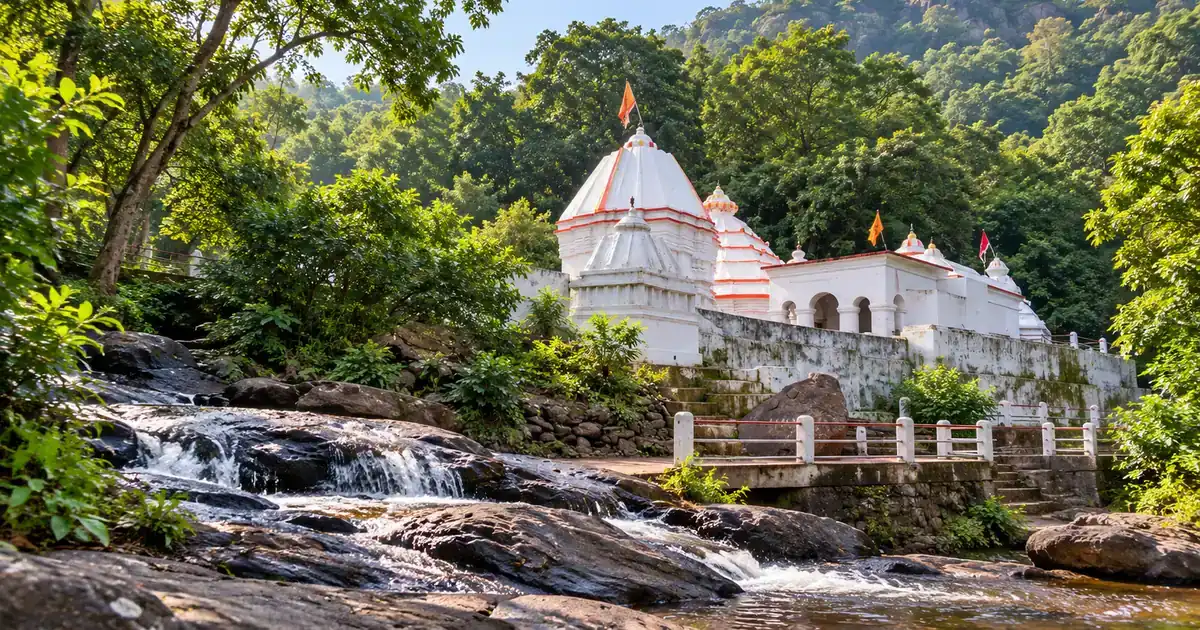
Planning a pilgrimage to the revered Harishankar Temple Patnagarh Balangir offers a rare spiritual encounter at the intersection of divinity, history, and tranquil mountain wilderness. Also celebrated across western districts as Sri Sri Harisankar Temple Odisha, this holy shrine celebrates the peaceful coexistence of Vaishnavism and Shaivism. Visitors discover an unbroken spiritual lineage where a perennial mountain stream cascades past ancient stone sanctums, soothing travelers and spiritual seekers alike.
Whether you travel to offer prayers, admire medieval Chauhan dynasty sculptures, or explore the mountain trails crossing into northern Bargarh, this comprehensive visitor guide provides verified darshan schedules, transportation logistics, trekking advice, and cultural background verified through the Odisha Tourism Official Portal and Archaeological Survey of India records.
Key Takeaways
- Unified Divinity: Enshrines a rare combined form of Lord Vishnu (Hari) and Lord Shiva (Shankar) established during the 14th century.
- Sacred Stream: A perennial spring cascades across natural granitic steps directly past the temple courtyard, providing sacred bathing ghats.
- Gandhamardan Hill Trek: Serves as the southern base for the famous 16-kilometer pilgrimage trek across the medicinal ridge to Nrusinghanath Temple.
- Convenient Transit: Located 81 kilometers from Balangir town and 32 kilometers from Harishankar Road railway station via State Highway 42.
- Admission and Timings: Open daily between 6:00 AM and 11:30 AM, and 12:30 PM to 7:00 PM with free entry.
Overview and Spiritual Confluence of Harishankar Temple
Harishankar Temple represents one of the most prominent spiritual landmarks in western Odisha. Set against the emerald backdrop of the Gandhamardan mountain range, the sanctuary has welcomed devout pilgrims, families, and nature lovers for centuries. The peaceful forested setting shields the temple complex from urban noise, creating an atmosphere that promotes meditation and reflection.
The sanctuary stands out across India because it does not separate Vishnu and Shiva into opposing traditions. Instead, the presiding deity fuses both supreme entities into a single sacred presence. This synthesis has historically united Shaivite and Vaishnavite devotees across the state.
The Unified Divinity of Hari and Shankar
The core theological significance of Harishankar Mandir Patnagarh centers on the joint worship of Hari Hara (Vishnu and Shiva). While most classical shrines in Odisha feature exclusive dedications to either Vishnu or Shiva, Harishankar honors both gods simultaneously. Devotees offer bilva leaves alongside tulsi sprigs on the same altar, symbolizing universal cosmic balance.
Local legends narrate that a tribal cowherd originally discovered the self-manifested deity hidden beneath lush roots. Milk flowed spontaneously from a cow’s udder onto the sacred stone, alerting local villagers to the presence of divine energy.
Geographical Splendor along Gandhamardan Hills
Geographically, the temple rests at the foothills of the southern face of the Gandhamardan range in Khaprakhol block. The mountain ridge rises steeply behind the stone vimana, cloaking the compound in dense sal and teak canopies. This hill ecosystem moderates local temperatures, providing cool breezes even during warmer seasons.
Because the Gandhamardan range is recognized as a major Biodiversity Heritage Site, travelers often observe langurs, giant squirrels, and diverse songbirds around the courtyard perimeter. Travelers exploring the wider region can consult our comprehensive travel guide to Balangir district to understand the administrative geography and nearby attractions.
Key Heritage Elements across the Temple Complex
The temple compound contains several secondary shrines, historic mandapas, and stone pavilions. A prominent shrine dedicated to Lord Bhairava guards the western entrance, while stone shrines honor Goddess Parvati and Lord Ganesha.
The stone courtyard opens directly to paved riverside steps where devotees prepare for worship. Natural stone channels route fresh spring water into bathing cisterns, ensuring continuous water exchange without modern electrical pumps.
| Attribute | Specification | Visitor Importance |
|---|---|---|
| Presiding Deity | Hari-Shankar (Vishnu and Shiva unified) | Rare syncretic theological worship |
| Historical Period | 14th Century CE (Chauhan Dynasty) | Protected regional architectural heritage |
| Geographic Location | Khaprakhol Block, Balangir District | Foothills of Gandhamardan range |
| Nearest Railhead | Harishankar Road (32 km) / Balangir (81 km) | Primary public transit connectors |
| Sanctum Entry Fee | Nil (Completely Free) | Accessible to all travelers |
| Sacred Waterbody | Perennial Gandhamardan stream | Natural bathing ghats on granite bed |
History, Legends, and Chauhan Dynasty Architecture
The documented historical foundation of Harishankar Temple traces back to the 14th century CE. During this era, the powerful Chauhan dynasty established its royal seat at Patna (modern-day Patnagarh), extending governance across the fertile plains of western Odisha. King Baijal Dev II patronized the stone shrine to memorialize royal devotion and safeguard regional pilgrimage routes.
Historical records preserved in local copper plate charters suggest that the king’s queen, Rani Durlabha Devi, played an influential role in commissioning the primary temple spire. Her royal patronage supported the construction of guest quarters and paved approach paths for itinerant ascetics.
Chauhan Royal Patronage under King Baijal Dev
Under Chauhan King Baijal Dev, western Odisha experienced a flourishing phase of stone temple construction. The monarch recognized the sacred sanctity of the Gandhamardan foothills, where hermits and sages had meditated since antiquity. Royal masons transformed the simple rock shelter into an enduring stone complex reflecting early Chauhan temple architecture.
The Chauhan rulers endowed the temple with extensive agricultural grants and tax-free land endowments. These royal gifts ensured that regular daily rituals, festive prasad cooking, and pilgrim hospitality continued uninterrupted across centuries.
Iconography and Sculptural Heritage
Architectural inspections reveal stylistic links between Harishankar and the classical rekha deula designs common in central Odisha. The main tower features modest exterior carvings suited to withstand heavy mountain rainfall. Stone lintels display motifs of Gajalakshmi, floral creepers, and protective celestial beings.
An extraordinary archaeological treasure inside the compound is a 12th-century dancing ganesha sculpture. This artifact predates the Chauhan structural temple, proving that sacred tantric and Shaivite ceremonies occurred at this site long before the formal masonry walls were raised.
[!NOTE] Archaeological surveys around Harishankar have documented ancient Buddhist rock carvings, including figures of Padmapani and multi-headed serpent canopies. These findings demonstrate that Gandhamardan served as a sanctuary for multiple spiritual traditions across different historical eras.
The Ramayana Lore and Gandhamardan Legend
Beyond recorded royal dynasties, the forested peaks sheltering Harishankar are deeply entwined with epic Ramayana lore. According to sacred tradition, the Gandhamardan hill represents the sacred parcel dropped by Lord Hanuman while flying the Sanjeevani herb from the Himalayas to Lanka. The mountain still harbors rare medicinal plants, attracting Ayurvedic doctors and researchers from across India.
Local folklore asserts that the healing properties of the herbs infuse the natural streams flowing down the mountain face. Pilgrims consider drinking or bathing in these mountain waters a powerful spiritual and physical rejuvenator.
The Sacred Gandhamardan Stream and Natural Waterfalls
The natural mountain stream running beside Harishankar Temple constitutes an indispensable part of the pilgrimage experience. Originating from deep subterranean aquifers high on the Gandhamardan plateau, the brook tumbles down steep ravines before spreading across wide granite slabs directly outside the temple walls.
The water remains remarkably clear throughout the year, sustaining lush riparian flora and sheltering small mountain fish. Granite boulders along the bank have been smoothed by centuries of steady current, creating natural steps where families rest and bathe.
The Perennial Mountain Stream and Bathing Ghats
Unlike rain-fed mountain torrents that run dry in winter, the Harishankar perennial stream flows continuously through every season. Even in peak summer months, cool mountain water glides over the granite bed. Devotees believe that a cleansing dip in this stream washes away spiritual impurities prior to offering darshan.
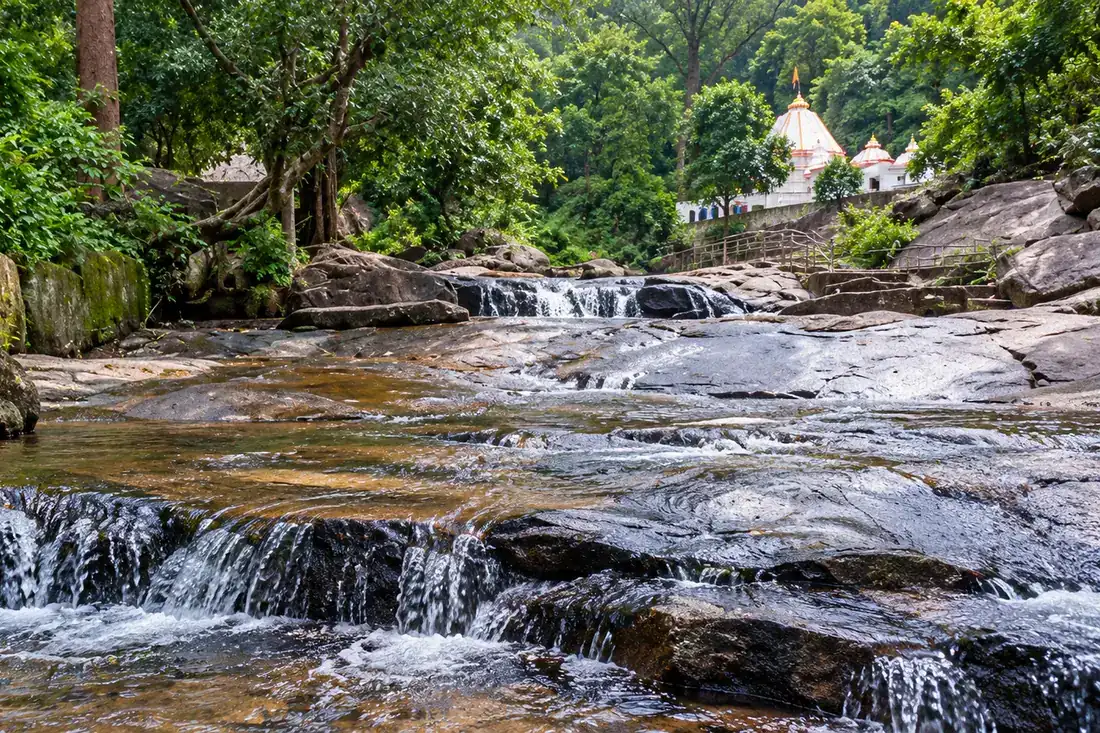
The district administration has built protective stone railings and changing rooms along designated sections of the stream. These improvements allow elders and children to step safely into the gentle currents without slipping into deeper pools.
Hydrotherapy and Medicinal Qualities of the Flow
Because the stream drains the forested slopes of Gandhamardan, its waters pass through dense root networks of rare medicinal herbs. Ayurvedic practitioners credit the stream with natural mineral enrichment that soothes skin irritations and relieves muscle fatigue. Trekkers returning from the high ridge frequently soak their feet in the shallow eddies to ease physical exhaustion.
The cooling sensation of the water provides immediate relief after a hot highway drive from Balangir or Sambalpur. Travelers interested in natural waterways can also read our guide to the waterfalls of Odisha to explore other scenic cascades statewide.
Safety Guidelines for Granite Slabs and Flowing Water
While the stream offers scenic refreshment, visitors must exercise caution around moving water. Submerged granite stones often develop thin coats of river algae, making them exceptionally slick. Visitors must tread carefully over slippery granite rocks near the water edge.
Devotees should respect local harishankar stream bathing rules by avoiding synthetic soaps and plastic wrappers. Observing sensible monsoon stream precautions ensures a safe and peaceful spiritual retreat.
[!WARNING]
- Never step into rapid currents during heavy monsoon downpours.
- Wear footwear with slip-resistant rubber soles on wet stone banks.
- Keep young children within arm reach near deeper natural plunge pools.
- Do not apply synthetic chemical soaps or shampoos in the sacred stream.
- Respect marked danger zones near steep cascading drops above the complex.
The 16 km Gandhamardan Hill Trek: Harishankar to Nrusinghanath
One of the most thrilling pilgrimage adventures in eastern India is the legendary harishankar to nrusinghanath trek across the Gandhamardan ridge. The 16-kilometer gandhamardan hills trek remains one of the most rewarding wilderness trails in Odisha. This historic mountain path connects Harishankar on the southern Balangir face with Nrusinghanath Temple on the northern Bargarh face. For centuries, sadhus and wilderness trekkers have walked this path during holy festivals.
The trail climbs steadily through dense bamboo groves, moist deciduous sal forests, and rocky escarpments before reaching the undulating summit plateau. At the crest, hikers enjoy panoramic views spanning both Balangir and Bargarh districts. When planning a western pilgrimage, comparing harishankar vs nrusinghanath helps travelers sequence their visits effectively across both districts.
Trail Overview and Terrain Profile
The trek begins directly behind the Harishankar deer park, following a rocky dirt track upward along the stream ravine. The initial 4 kilometers feature moderate incline across granite boulders and tree roots. The middle section traverses the breezy high plateau, passing freshwater mountain springs and medicinal plant sanctuaries.
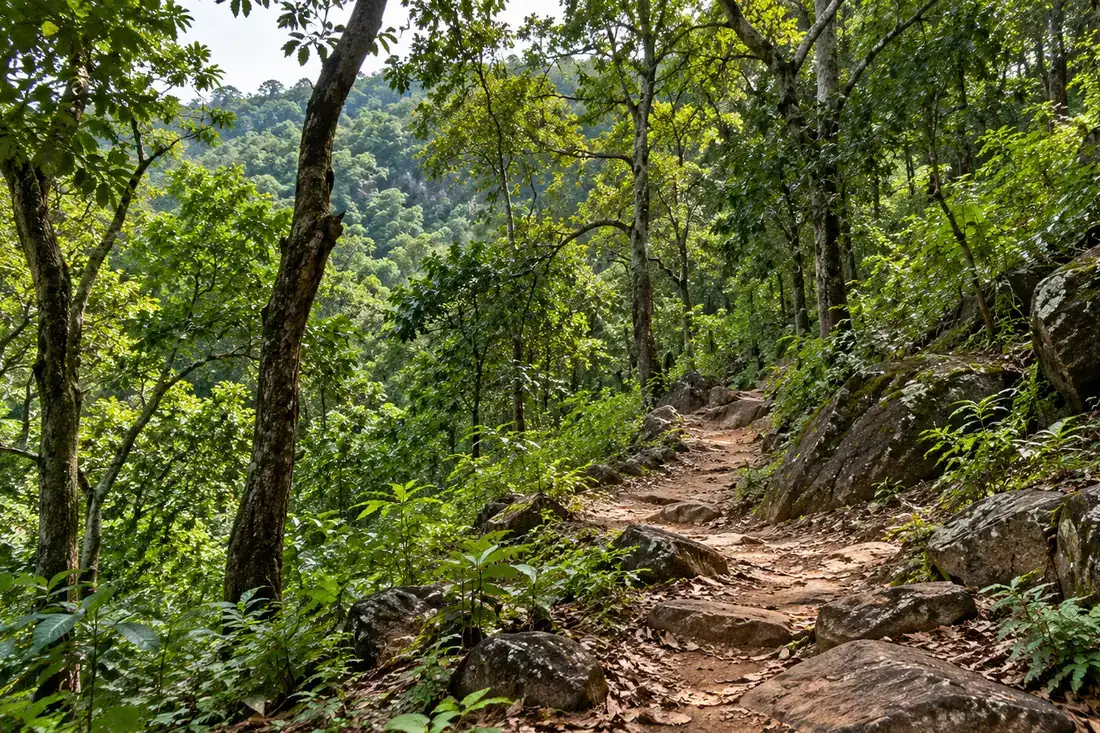
The northern descent toward Nrusinghanath drops past dramatic waterfalls such as Chaldhar and Bhimdhar. Completing the full one-way trek generally requires 5 to 7 hours of steady walking, depending on individual fitness levels and photo stops.
| Trek Stage | Distance | Elevation Profile | Key Landmarks |
|---|---|---|---|
| Stage 1: Harishankar Base | 0 to 4 km | Moderate ascent (+350 m) | Stream gorge, deer sanctuary boundary |
| Stage 2: Gandhamardan Plateau | 4 to 11 km | Undulating flat ridge (750 m MSL) | Medicinal herb zones, panoramic viewpoints |
| Stage 3: Northern Descent | 11 to 16 km | Steep downhill descent (-400 m) | Bhimdhar waterfall, Nrusinghanath shrine |
Seasonal Windows and Packing Essentials
The optimal season for the Gandhamardan hill trek runs from October through February. During these winter months, pleasant morning temperatures and dry paths make the strenuous hike comfortable. Monsoon hiking between July and September offers dramatic greenery but brings slippery mud and swollen water crossings.
Hikers should carry at least two liters of drinking water, high-energy snacks, a basic first-aid kit, and sturdy trekking shoes. Because mobile cellular signals are patchy across the high plateau, hiring a local forest guide from Khaprakhol or Harishankar village ensures smooth trail navigation.
Harishankar vs Nrusinghanath Comparative Experience
Travelers frequently compare Harishankar and Nrusinghanath when organizing western Odisha itineraries. While both temples share sacred ties to the Gandhamardan range and Chauhan dynasty history, their distinct geographical orientations shape the visitor atmosphere.
Harishankar offers a wider, sun-dappled stream bed with spacious stone courtyards that make family picnics and ritual bathing exceptionally relaxing. Nrusinghanath, set against deep northern ravines, features dramatic cascading drops like Kapildhar that appeal strongly to waterfall photographers. Visiting both temples reveals the full cultural and ecological majesty of the mountain.
Temple Darshan Timings, Daily Rituals, and Festive Melas
Visiting Harishankar Temple requires an understanding of traditional temple routines. Ritual worship begins in the early dawn hours, accompanied by the resonance of conch shells, brass bells, and Sanskrit hymns echoing off the mountain cliffs.
The daily puja cycle follows traditional Agamic principles adapted to local Chauhan customs. Priests prepare fresh herbal offerings, sacred tulsi leaves, and seasonal mountain flowers to adorn the unified Hari-Shankar lingam.
Daily Temple Timings and Puja Schedule
The temple gates open to the public at 6:00 AM every morning. Pilgrims checking the harishankar temple open and closing time will find the sanctum accessible from 6:00 AM onwards. Pilgrims who arrive early can observe the mangala aarti and witness the bathing of the deity using mountain stream water. The sanctum closes briefly around midday for the deity’s afternoon rest before reopening for evening prayers.
[!TIP] Arrive between 6:30 AM and 8:30 AM for the most peaceful darshan experience. Early morning visits allow travelers to enjoy the sacred bath in the stream before mid-morning tourist crowds arrive from Patnagarh.
- Morning Opening: 6:00 AM to 11:30 AM (Daily Darshan and Morning Aarti)
- Midday Break: 11:30 AM to 12:30 PM (Pahuda and Bhog Offering)
- Afternoon Session: 12:30 PM to 7:00 PM (Public Darshan)
- Evening Aarti: 6:30 PM (Sandhya Aarti accompanied by drum recitals)
- Night Closing: 7:00 PM (Sanctum doors secured for the night)
Maha Shivratri and Baisakha Mela Celebrations
Harishankar hosts massive annual gatherings during religious festivals. The annual maha shivratri celebrations draw tens of thousands of devotees to observe night-long fasts around the temple courtyard, lighting ghee lamps that illuminate the dark forest canopy until the sacred Mahadipa rises atop the temple shikhara.
Another major celebration is the Baisakha Mela, celebrated concurrently with Nrusingha Chaturdashi in May. During this fair, tribal communities and rural families gather from neighboring districts to trade handicrafts, enjoy traditional Sambalpuri folk music, and take holy baths in the stream.
Visitor Etiquette, Dress Code, and Temple Rules
Harishankar maintains respectful, welcoming customs for domestic and international travelers. While the harishankar temple dress code is informal, modest traditional attire is customary. Men typically wear dhotis or trousers, while women wear sarees or salwar kameez.
Under official harishankar photography rules, photography of the exterior temple architecture, courtyard, and flowing stream is freely permitted. However, cameras and smartphones must remain turned off or stowed inside bags while entering the inner sanctum. Leather belts and wallets should be left outside the inner doorway as a mark of ritual purity.
How to Reach Harishankar, Transit Logistics, and Regional Itinerary
Reaching Harishankar Temple is straightforward thanks to well-maintained road networks linking Balangir district with neighboring transport hubs. Situated in western Odisha, the shrine serves as an accessible day excursion or overnight pilgrimage destination.
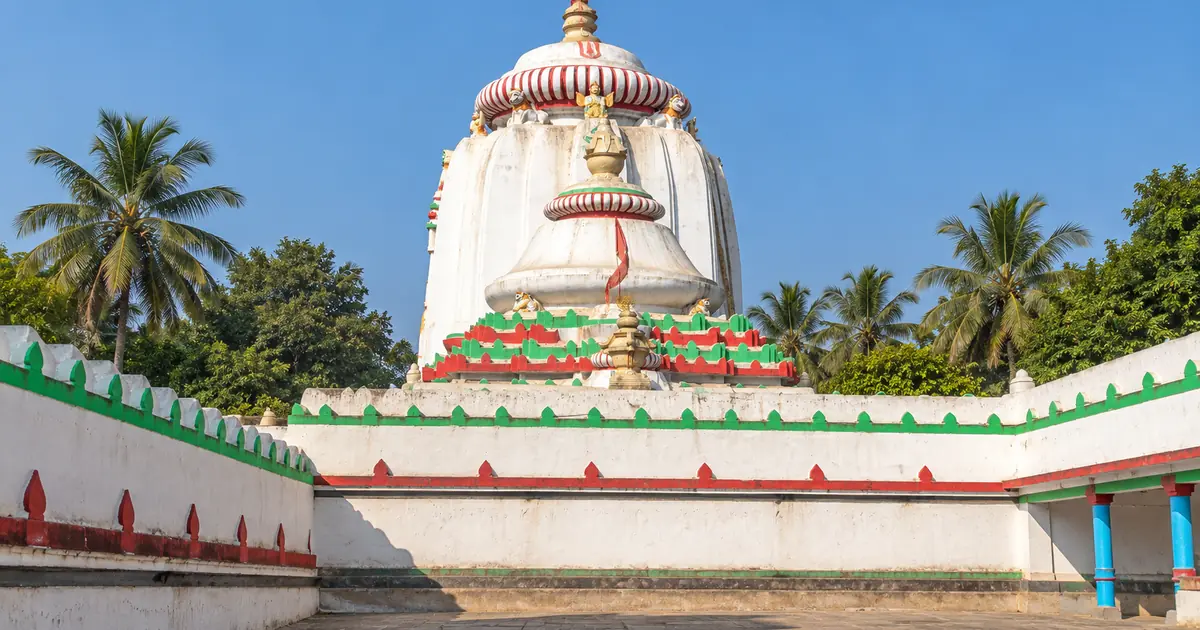
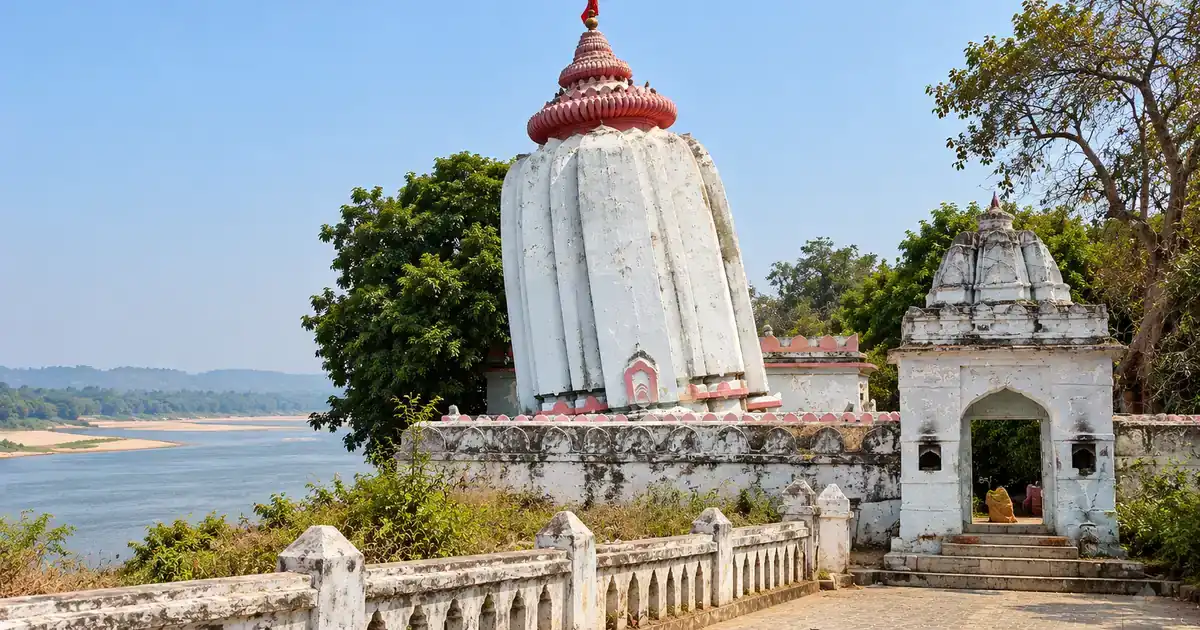
Travelers can combine a trip to Harishankar with heritage tours to Samaleswari Temple in Sambalpur or the unique Leaning Temple of Huma along the Mahanadi river basin. Contrasting harishankar vs huma temple highlights the diverse architectural styles across western Odisha.
Reaching by Air, Train, and Highway Network
The nearest commercial airport is Veer Surendra Sai Airport in Jharsuguda, located approximately 190 kilometers northeast. Swami Vivekananda Airport in Raipur, Chhattisgarh, sits 225 kilometers to the west, offering frequent flights from major Indian metropolitan cities.
For rail travelers, Harishankar Road station (station code: HSK) is the closest railhead, situated roughly 32 kilometers away near Lathore. Express trains running on the Raipur to Titlagarh line stop at this station. Alternatively, Balangir Railway Station (code: BLGR), 81 km away, offers direct connections across Odisha. Overnight lodging is available at the official OTDC Panthanivas located right next to the temple gardens.
Local Transit from Balangir and Patnagarh
Travelers planning how to reach harishankar temple from balangir can hire private taxis along State Highway 42 via Patnagarh and Khaprakhol, covering the 81 km route in approximately two hours. The roadway is fully asphalted and winds through peaceful rural hamlets, bamboo thickets, and agricultural fields. The harishankar temple distance from patnagarh is roughly 35 kilometers, taking under an hour by road.
Regular government and private buses operate from the Balangir central bus terminus to Patnagarh, with connecting minibuses and auto-rickshaws running onward to Khaprakhol and Harishankar. For optimal flexibility, hiring a private vehicle from Balangir or Titlagarh is recommended.
| Origin City | Distance | Recommended Route | Travel Duration |
|---|---|---|---|
| Balangir Town | 81 km | Via SH 42 through Patnagarh and Khaprakhol | 2 hours (Car / Taxi) |
| Patnagarh | 35 km | Direct Khaprakhol Road | 50 minutes (Car / Auto) |
| Harishankar Road Station | 32 km | Via Lathore and Khaprakhol Road | 45 minutes (Taxi) |
| Sambalpur City | 185 km | Via NH 53 and Bargarh or via Balangir | 4 hours (Car) |
| Bhubaneswar Capital | 380 km | Via NH 57 through Boudh and Balangir | 8 to 9 hours (Train/Car) |
Nearby Sightseeing: Deer Park, Patnagarh, and Balangir Circuit
Visitors spending a full day at Harishankar can explore several rewarding sights in the immediate vicinity. Just outside the temple gate, the state forest department maintains a peaceful Harishankar Deer Park where spotted deer graze in protected forested enclosures. The surrounding gardens offer quiet shaded spots for family lunches.
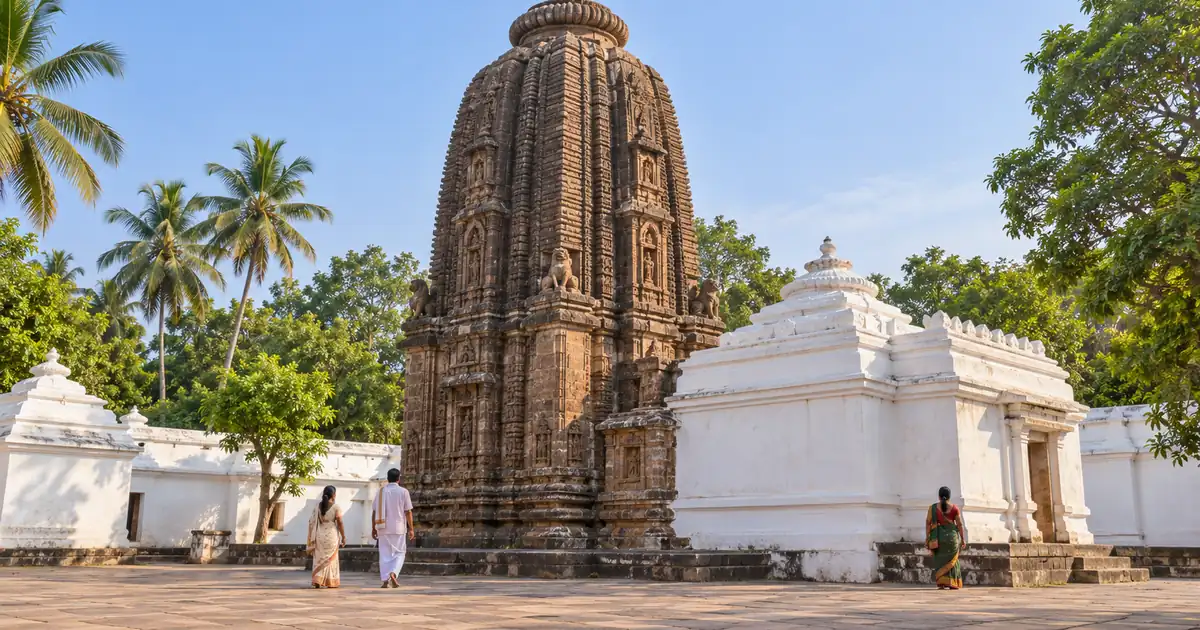
On the return journey toward Balangir, travelers can pause in historic Patnagarh to inspect the ancient Kosaleswara Temple, known for its exquisite 8th-century Somavamsi stone carvings. Heritage enthusiasts can also extend their circuit southward to visit the Ranipur Jharial 64 Yogini temple complex, home to one of India’s rare circular hypaethral shrines and the towering brick Indralath temple. Travelers continuing toward northern districts can explore our curated guides to western Odisha picnic spots and plan comprehensive regional road trips.
Frequently Asked Questions (FAQs)
What are the opening and closing timings of Harishankar Temple?
Harishankar Temple remains open daily from 6:00 AM to 11:30 AM in the morning and from 12:30 PM to 7:00 PM in the evening. Devotees can attend the morning rituals or participate in the evening sandhya aarti at 6:30 PM.
How far is Harishankar Temple from Balangir town?
Harishankar Temple is situated approximately 81 kilometers west of Balangir town by road via Patnagarh and Khaprakhol. The scenic drive across State Highway 42 takes roughly two hours by private taxi or personal vehicle.
Can visitors bathe in the Harishankar natural stream?
Yes, visitors and pilgrims regularly take holy purification baths in the natural mountain stream flowing over granite boulders outside the temple. Dedicated bathing ghats with safety railings allow travelers to enjoy the cool, clear waters safely.
How long is the trek from Harishankar to Nrusinghanath across Gandhamardan Hills?
The pilgrimage trek across the Gandhamardan ridge measures approximately 16 kilometers and takes between 5 and 7 hours to complete. The trail climbs through dense sal forests and high medicinal plateaus before descending into the Bargarh valley.
Which deities are worshipped inside Harishankar Temple?
The temple enshrines a unified divine manifestation of Lord Vishnu (Hari) and Lord Shiva (Shankar) on a single sanctum altar. This sacred union symbolizes the harmony between Vaishnavite and Shaivite traditions in western Odisha.
Is there an entry fee to visit Harishankar Temple?
No, entry into Harishankar Temple and its surrounding stream area is completely free for all visitors. Travelers only pay standard nominal parking fees for private cars and two-wheelers in the designated municipal lot.