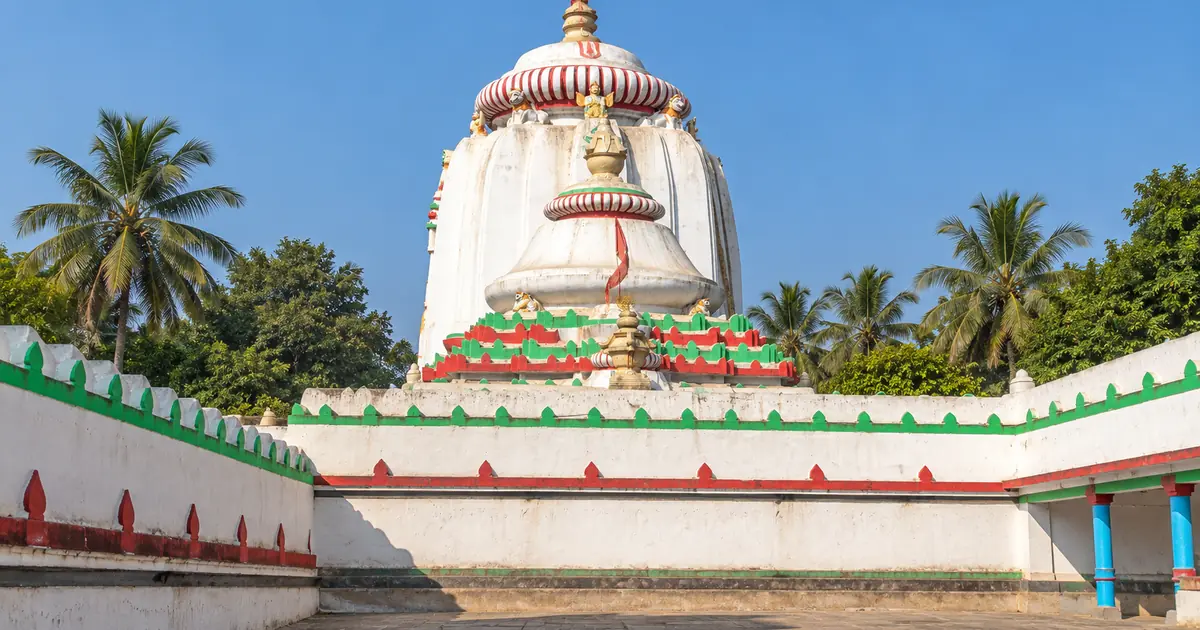
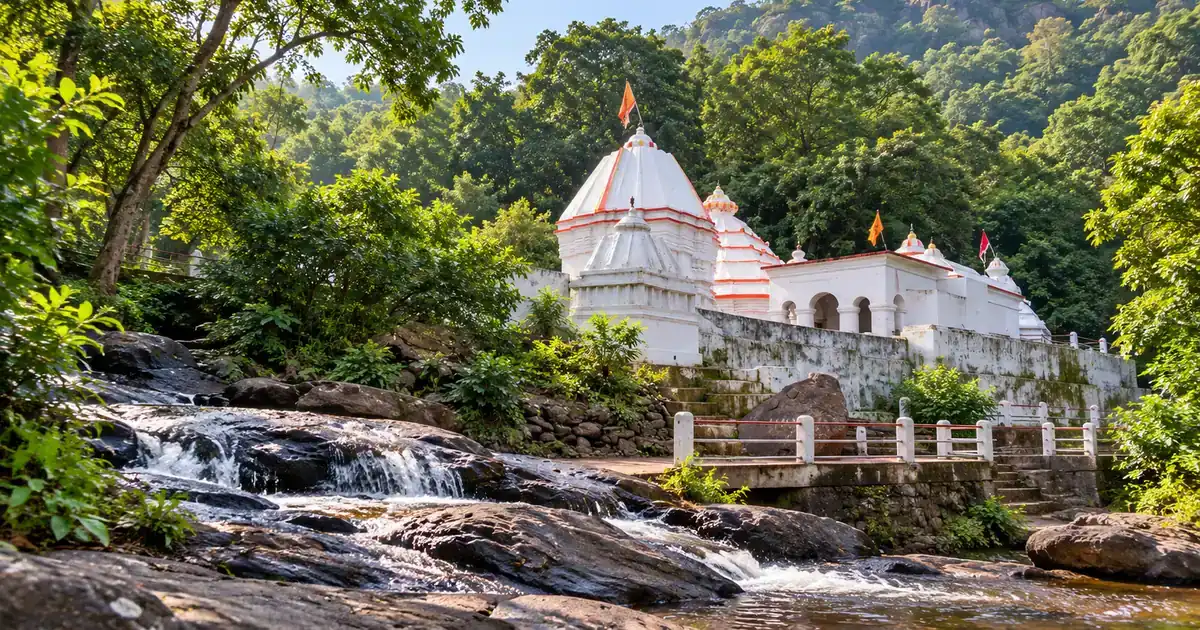
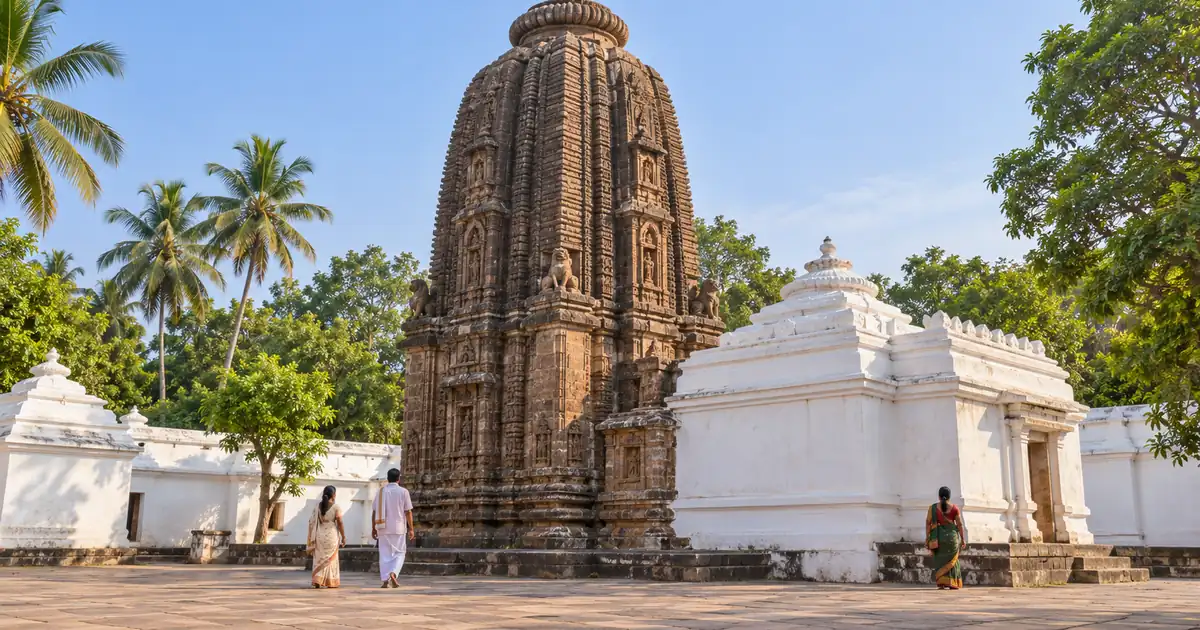
Huma Temple Sambalpur: Timings, History & Visitor Guide
Explore the Leaning Temple of Huma in Sambalpur. Discover verified timings, architectural mysteries, sacred Kudo fish feeding, history, and route guide.
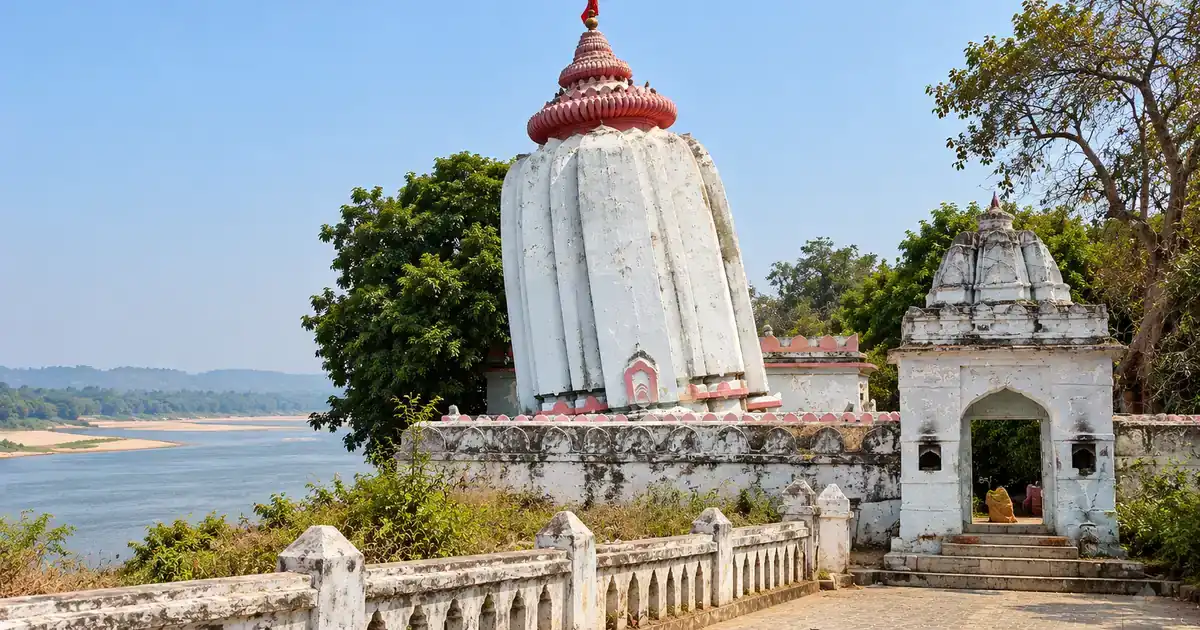
Rising beside the rocky southern banks of the Mahanadi River, the extraordinary huma temple sambalpur represents one of the world’s most intriguing architectural enigmas. Located 23 kilometers south of Sambalpur city in western Odisha, this 17th-century sanctuary honors Lord Shiva under the divine title of Lord Bimaleswar.
While travelers across the globe admire Italy’s Leaning Tower of Pisa, few realize that Odisha preserves its own centuries-old structural marvel. The main stone deula tilts distinctly to one side, while its subsidiary shrines tilt in opposite directions, creating a visual paradox that has fascinated geologists, engineers, and spiritual seekers for generations.
Beyond its leaning stonework, the temple courtyard leads down to Machindra Lipi, a granite river ghat celebrated for its population of friendly Kudo fish. Devotees routinely stand along the water’s edge to hand-feed sweets and puffed grain to these protected river creatures.
Documented alongside major regional attractions in our comprehensive Sambalpur district travel guide, Huma stands out as a rewarding cultural excursion. For travelers seeking to investigate its engineering origins or experience its quiet riverside setting, this article outlines practical timings, legends, and travel logistics.
Key Takeaways
- The Leaning Temple of Huma is one of only two leaning temples on earth, dedicated to Lord Bimaleswar (Shiva) on the banks of the Mahanadi River.
- While the primary spire, sub-shrines, and stone boundary walls lean noticeably, the pinnacle kalash remains perpendicular to the earth.
- The monument was constructed in the late 17th century by King Baliar Singh, the fifth monarch of the royal Chauhan dynasty of Sambalpur.
- The temple bathing steps host friendly red-hued Kudo fish that gather fearlessly to feed directly from the hands of visiting travelers.
- Located 23 kilometers south of Sambalpur city, the temple opens daily from 6:00 AM to 6:00 PM with completely free public entry.
At-a-Glance: Temple Timings, Location & Visitor Summary
Planning an excursion to Huma requires understanding the daylight hours of the river ghat and the ritual sequence followed by the local pujaris. The temple operates a steady daily schedule suitable for morning worship and afternoon sightseeing.
The temple surroundings are peaceful during morning hours before afternoon travelers arrive. Early visitors enjoy cool breezes along the river steps and get prime opportunities to feed the fish before midday heat settles over the valley.
Daily Darshan Schedule and Ritual Timeline
The temple opens its heavy wooden portal at 6:00 AM with the early morning Mangala Alati. Priests bathe the Shivalinga in fresh river water and milk, adorning the deity with bilva leaves and red hibiscus flowers.
The sanctum remains open through midday, though the pujaris observe a brief quiet period between 12:30 PM and 2:30 PM. Evening prayers conclude around 6:00 PM with the sunset Sandhya Alati, after which the complex closes for the night.
| Ritual / Darshan Slot | Scheduled Timings | Description for Travelers |
|---|---|---|
| Mangala Alati & Abhisheka | 5:30 AM to 6:30 AM | Sanctum opening, sacred Shivalinga bath, and morning lamp prayers |
| Morning Public Darshan | 6:30 AM to 12:30 PM | Continuous darshan and access to the Mahanadi river steps |
| Madhyanna Dhupa (Bhog) | 12:30 PM to 1:00 PM | Midday cooked offering presented to Lord Bimaleswar |
| Afternoon Quiet Hours | 1:00 PM to 2:30 PM | Quiet contemplation period within the temple courtyard |
| Afternoon Darshan | 2:30 PM to 5:30 PM | Prime hours for watching the sun illuminate the leaning stone tower |
| Sandhya Alati & Closure | 5:30 PM to 6:00 PM | Sunset prayer ceremony followed by evening gate closure |
During the high-traffic Maha Shivratri festival in February or March, huma temple timings undergo extensive expansion. The sanctum remains illuminated and accessible throughout the entire night to manage the vast influx of devotees observing the sacred Jagara vigil.
Essential Visitor Information & Quick Facts
Touring the village of Huma is simple and safe for families. Paved paths lead from the parking ground down to the temple archway and the riverfront steps.
Up-to-date travel notices and district guidelines are maintained on the Official Odisha Tourism Portal and the Archaeological Survey of India.
| Parameter | Practical Detail |
|---|---|
| Presiding Deity | Lord Bimaleswar (Adya Sambhu Shiva) |
| Location | Huma Village, Sambalpur District, Odisha 768323 |
| Huma Temple Entry Fee | Completely Free (No entry tickets for general public access) |
| Photography Regulations | Permitted in outer courtyard and river steps; barred inside inner sanctum |
| Recommended Dress Code | Modest attire (kurtas, dhotis, trousers, sarees; beach shorts not allowed) |
| Best Time to Visit | October to March for cool weather; February/March for Maha Shivratri Mela |
| Nearest Railway Station | Sambalpur Junction (SBP, 23 km); Sambalpur City (25 km) |
| Nearest Airport | Veer Surendra Sai Airport, Jharsuguda (78 km) |
Architectural Wonder: The Leaning Mystery of Lord Bimaleswar
The central feature that draws travelers to Huma is its extraordinary tilt. The temple belongs to the traditional Kalinga architectural school, yet it breaks the geometric symmetry observed in major shrines across eastern India.
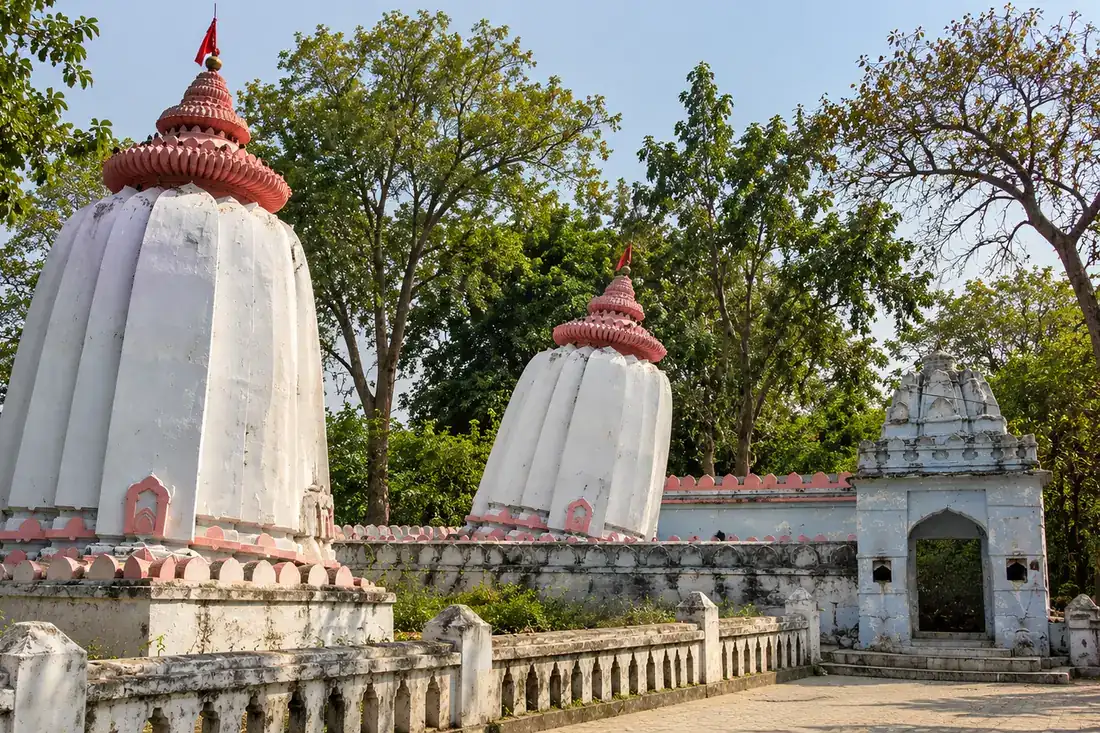
When viewed from the open riverbed, the entire structure tilts noticeably toward the northeast, creating an optical impression that defies gravity.
The Counter-Tilted Shrines and Vertical Kalash Enigma
The most puzzling characteristic of the complex is that its different components lean in opposing directions. Rather than all tilting uniformly toward a single point, each structure maintains its own distinct angle:
| Architectural Component | Direction & Angle of Tilt | Structural Observation |
|---|---|---|
| Main Bimaleswar Deula | Leans noticeably toward the Northeast | Primary spire displays an inclination of roughly 13.8 degrees |
| Subsidiary Bhairavi Shrine | Tilts toward the Northwest | Counter-balances the visual plane of the central shrine |
| Temple Compound Walls | Tilt outward toward the riverbank | Retaining stone walls show distinct outward curvature |
| Pinnacle Kalash (Finial) | Perfectly vertical to the ground | The sacred crowning urn stands straight without tilting |
Engineers often marvel at the pinnacle kalash. Despite the pronounced tilt of the main spire beneath it, the crowning finial was mounted so that its axis aligns perpendicular to the horizon.
This detail suggests that medieval Odia stone masons either adjusted the final stones during construction or deliberately calculated the structure’s center of mass to prevent catastrophic collapse.
Geological Substratum vs Engineering Intent: Why It Leans
Historians, geologists, and structural engineers have debated why does huma temple lean for over a century. Two primary theories dominate the scientific discussion.
The first theory attributes the tilt to uneven geological foundation settlement along the banks of the Mahanadi River. The temple stands upon rocky riverbed strata interspersed with soft alluvial soil.
Centuries of monsoon flooding, intense river currents, and subterranean water seepage may have caused selective soil displacement beneath the heavy sandstone foundation. The building settled unevenly into the softer riverbed strata while resting firmly on granite bedrock on the opposite side.
The second theory suggests intentional architectural design. Proponents note that King Baliar Singh’s engineers were master stone masons who understood soil dynamics along the Mahanadi.
By constructing counter-leaning subsidiary shrines and weighting the foundation against the prevailing river currents, they may have deliberately created a flexible, earth-resistant monument designed to withstand seismic tremors and seasonal river surges. The fact that the temple has survived four hundred monsoons without structural fissures strongly supports the resilience of its engineering.
Chauhan Dynasty History & The Sacred Milkman Legend
The cultural story of Huma is intertwined with the rise of the Chauhan royal dynasty that ruled western Odisha from the 14th century onward. The Chauhans were enthusiastic patrons of art, literature, and religious architecture, leaving an enduring footprint across the Sambalpur kingdom.
Long before royal stone masons arrived, the riverbank served as a rustic shrine venerated by local cowherd communities.
The Legend of the Cowherd and the Milk-Absorbing Rock
According to local folklore preserved in oral songs, a humble milkman used to graze his cows daily along the fertile grassy banks of the Mahanadi River. Among his herd was a gentle black cow that consistently failed to produce milk when brought home for the evening milking.
Suspicious of the animal’s behavior, the milkman quietly followed the cow across the rocky river shallows one afternoon. To his amazement, he observed the cow standing motionless over an exposed black rock jutting out from the sand.
Milk flowed spontaneously from her udders directly onto the surface of the stone, which immediately absorbed every drop without spilling. Overcome with awe, the milkman approached the stone and discovered a natural, self-manifested Shivalinga.
News of the miracle reached the village elders, who began offering daily prayers of bilva leaves and milk at the spot. Devotees believed that Lord Shiva had chosen this secluded river bank to establish his sacred presence as Adya Sambhu, the first among the ashta shambhu sambalpur shrines.
King Baliar Singh and the Royal Chauhan Legacy
During the 17th century, King Baliar Singh ascended the royal throne as the fifth Chauhan monarch of Sambalpur. A deeply religious ruler and skilled military strategist, the king recognized the profound spiritual devotion attached to the riverside linga.
King Baliar Singh ordered the construction of a permanent stone temple to enshrine the miraculous linga of Lord Bimaleswar. Construction began around 1670 CE, utilizing durable regional sandstone cut from surrounding hill quarries.
Following King Baliar Singh’s reign, subsequent Chauhan monarchs continued to patronize the shrine. King Ajit Singh, who ruled Sambalpur in the mid-18th century, added the stone compound walls, the gateway arch, and subsidiary shrines dedicated to Goddess Parvati and Lord Bhairava.
The Chauhan kings also granted fertile agricultural lands along the river to hereditary sevayat families, ensuring that the temple’s daily rituals, worship cycles, and prasad kitchens would continue undisturbed across generations.
Today, visitors often combine a pilgrimage to Huma with visits to other Chauhan monuments, such as the famous Maa Samaleswari Temple in Sambalpur city.
The Sacred Kudo Fish: Folklore, Feeding & Machindra Lipi Ghat
While the leaning deula captivates architects, the natural wonders of Huma captivate wildlife lovers and children. Immediately below the western wall of the temple compound lies Machindra Lipi, a series of broad granite steps that descend directly into the swirling waters of the Mahanadi.
This river pool is home to hundreds of large, red-hued carp known throughout western Odisha as the sacred Kudo fish.
Machindra Lipi Ghat and Hand-Feeding Sacred Fish
The Kudo fish belong to the Tor mahseer family, an indigenous freshwater carp native to the clean, oxygen-rich currents of the Mahanadi River basin. Unlike wild river fish that flee human presence, the fish at Huma are remarkably tame.
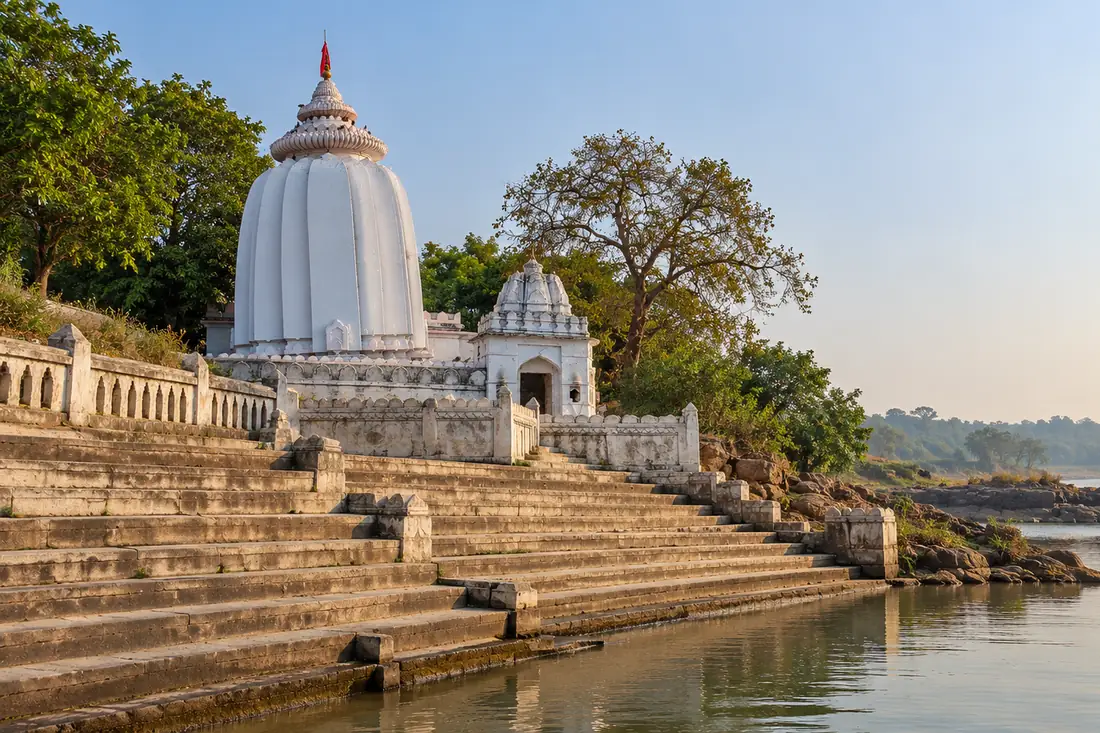
Centuries of peaceful coexistence and daily feeding by pilgrims have conditioned these river dwellers to trust human visitors completely. When travelers stand on the submerged granite steps, dozens of fish swim directly to the surface, their orange and reddish scales gleaming beneath the clear water.
Visitors purchase small packets of puffed rice (known locally as Khai), flattened rice, and sweet dough balls from local vendors outside the temple gates. As you lower your hand into the water holding a handful of grain, the fish approach fearlessly and nibble the food directly from your open palm.
The tactile experience of interacting with wild river creatures in their natural habitat is one of the most delightful travel memories Odisha offers. Feeding the fish is considered an act of deep spiritual merit that pleases Lord Shiva.
| Fish Feeding Guideline | Visitor Etiquette & Practice | Environmental Purpose |
|---|---|---|
| Approved Food Items | Puffed rice (Khai), rice flakes, natural dough | Prevents water contamination and protects fish health |
| Prohibited Food Items | Oily snacks, fried food, plastic wrappers | Protects aquatic fauna from toxicity and river pollution |
| Hand Contact Etiquette | Allow fish to nibble gently; do not grab or lift | Ensures gentle interaction without injuring fish scales |
| Water Level Safety | Remain on marked granite steps; avoid slippery edges | Protects visitors from sudden river drop-offs and currents |
The Petrified Woman Legend and Absolute Fishing Ban
Because the Kudo fish are revered as the living jewels and divine pets of Lord Bimaleswar, an absolute fishing ban has been enforced along this stretch of the river for centuries. Harming, catching, or consuming a Kudo fish is considered an unforgivable sin.
A famous regional legend serves as a cautionary tale for anyone contemplating violating this rule. Local folklore recounts that long ago, a foolish woman from a neighboring village caught a Kudo fish from the ghat and brought it home to cook.
As she placed the fish upon her curved cutting blade (known in Odia as a Paniki), divine wrath struck her immediately. The woman, her cutting blade, and the chopped fish instantly turned into solid stone.
To this day, a weathered stone carving depicting a woman petrified over a cutting board stands near the temple steps as a permanent warning. Local fishermen living upstream and downstream strictly avoid laying nets within the sacred boundaries of Huma, ensuring the fish thrive peacefully year after year.
Visitor Practicalities, Dress Code & Travel Routes
Visiting Huma makes for a rewarding half-day excursion from Sambalpur. Because the temple is located just off the state highway along the riverbank, access is straightforward for private vehicles and public transport.
Travelers can easily combine Huma with popular picnic spots near Sambalpur or enjoy sunset views over the massive reservoir at Hirakud Dam.
Temple Rules, Entry Fees, Photography & Dress Code
To preserve the sanctity and heritage character of the temple, the managing trust maintains simple visitor guidelines:
| Category | Temple Policy & Visitor Guidelines |
|---|---|
| Admission Charges | Entrance to the temple complex and river ghat is completely free for all visitors |
| Attire Guidelines | Traditional modest clothing expected (kurtas, dhotis, sarees); shorts prohibited |
| Footwear | Shoes and sandals must be left at the designated stand before entering the courtyard |
| Photography Rules | Courtyard and ghat photography allowed; cameras barred in inner garbhagriha |
| River Step Safety | Exercise caution on wet granite steps during the monsoon when water levels rise |
How to Reach Huma Temple from Sambalpur and Hirakud
The temple is located 23 kilometers south of Sambalpur city along the scenic Sambalpur-Sonepur highway corridor. The drive follows smooth, well-surfaced roads that run parallel to the Mahanadi River.
The standard sambalpur to huma distance of 23 kilometers takes roughly 40 to 45 minutes by car or auto-rickshaw through quiet rural farming villages.
| Transport Mode | Boarding Point & Route | Travel Duration | Estimated Cost (INR ₹) |
|---|---|---|---|
| Private Auto-Rickshaw | Sambalpur Junction Railway Station | 50 minutes | ₹450 to ₹600 (round trip with waiting) |
| Private Taxi / Cab | Anywhere in Sambalpur or Burla | 40 minutes | ₹1,000 to ₹1,400 (round trip) |
| Public Bus | Sambalpur Ainthapali Bus Stand toward Huma | 1 hour | ₹25 to ₹40 per person |
| From Hirakud Dam / Burla | Via Sambalpur bypass road (32 km) | 55 minutes | ₹1,200 to ₹1,600 (private cab) |
| From Jharsuguda Airport | Via Biju Expressway & Sambalpur (78 km) | 1 hour 45 mins | ₹2,200 to ₹2,800 (private taxi) |
App-based cabs and pre-paid auto-rickshaws are readily available outside Sambalpur Junction railway station. If you hire an auto-rickshaw, it is wise to negotiate a return fare that includes at least one hour of waiting time while you explore the temple and feed the fish.
Maha Shivratri Mela & Western Odisha Circuit Pairing
The best time of year to witness the cultural energy of Huma is during the annual Maha Shivratri festival in late winter. A massive seven-day country fair, known as the Huma Mela, takes over the open fields surrounding the village.
Hundreds of thousands of devotees assemble from across western Odisha, Chhattisgarh, and Jharkhand. Artisans display brass utensils, wooden handicrafts, agricultural tools, and local handloom fabrics, while open-air theaters stage traditional Sambalpuri folk plays late into the night.
For travelers undertaking a broader regional tour, Huma pairs seamlessly with a wildlife safari at Satkosia Tiger Reserve or an architectural tour of famous temples in Odisha.
Frequently Asked Questions (FAQs)
What are the daily darshan timings of the Leaning Temple of Huma?
The temple opens every morning at 6:00 AM and closes at 6:00 PM, with regular darshan continuing throughout the day. During the annual Maha Shivratri festival, opening hours extend through the entire night to accommodate pilgrims observing the sacred Jagara vigil.
Why does the Huma Temple in Sambalpur lean?
The temple leans toward the Mahanadi River due to a combination of geological riverbed displacement and sophisticated medieval engineering designed to counteract strong water currents. While the main spire and surrounding shrines tilt at distinct angles, the crowning pinnacle kalash remains perpendicular to the ground.
What is the legend of the sacred Kudo fish at Huma Temple?
The red-hued Kudo fish in the Mahanadi River are revered as the divine pets of Lord Bimaleswar and fearlessly eat puffed rice from the hands of human visitors. Local folklore warns that catching or eating these fish brings severe divine wrath, as commemorated by a historic stone carving of a petrified woman.
Who built the historic Leaning Temple of Huma?
The stone temple was constructed in the late 17th century by King Baliar Singh, the fifth Chauhan monarch of Sambalpur, over an ancient self-manifested Shivalinga. Later in the 18th century, King Ajit Singh added the surrounding compound walls and subsidiary shrines to complete the complex.
How far is Huma Temple from Sambalpur and how to reach?
The temple is situated approximately 23 kilometers south of Sambalpur city on the left bank of the Mahanadi River. Visitors can easily reach Huma within 45 minutes using private taxis, auto-rickshaws, or regular local buses departing from Sambalpur.
Are there any entry fees or camera restrictions at Huma Temple?
Admission to Huma Temple and its riverside bathing steps is completely free of charge for all visitors. Photography is permitted throughout the outer courtyard and along the riverfront steps, but cameras and mobile phones are strictly barred inside the inner sanctum.