Singhanath Temple Cuttack: Timings, History & Visitor Guide
Explore Singhanath Temple on the Mahanadi River in Baramba, Cuttack. Discover 9th-century Kalinga architecture, Ramayana carvings, T-Bridge route, and timings.
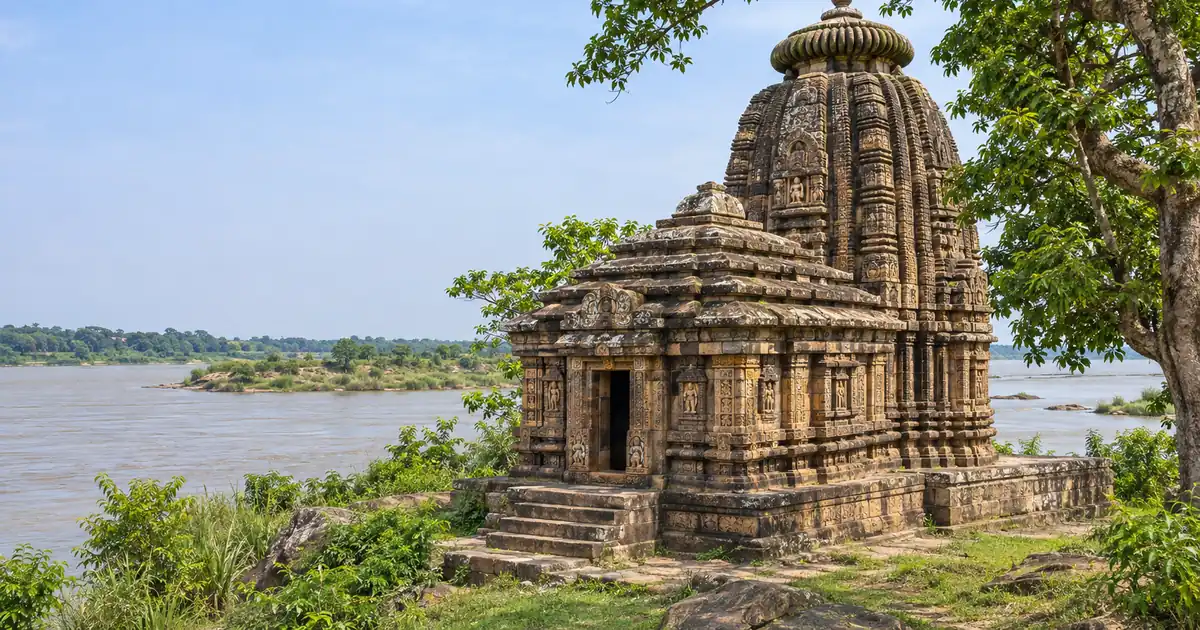
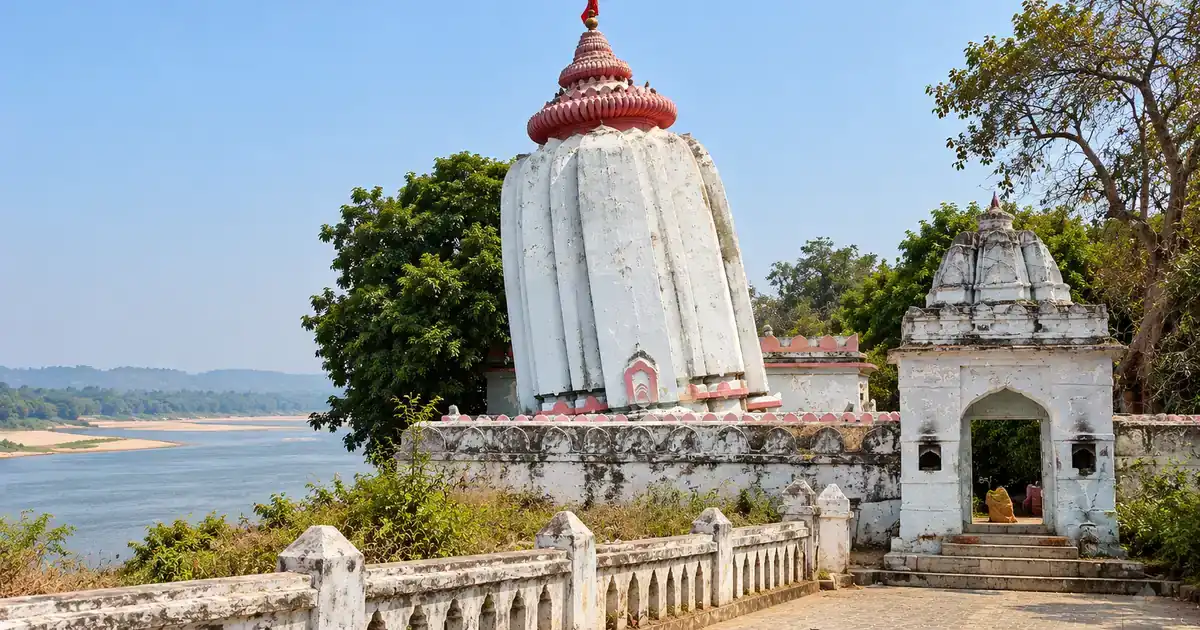
Rising majestically from a rocky island in the middle of the flowing Mahanadi River, the ancient singhanath temple cuttack stands as one of the most remarkable architectural treasures of medieval Odisha. Located near Gopinathpur village in the Baramba tehsil, this secluded 9th-century stone sanctuary combines spiritual devotion with sweeping riverine beauty.
What sets this sacred island apart from other heritage monuments is its exceptional synthesis of diverse Hindu traditions. Also recorded in state archives as simhanatha temple cuttack, its outer sandstone walls display elaborate narrative carvings depicting the Ramayana epic, Lord Narasimha, Goddess Durga, and celestial guardians.
Along with historic landmarks highlighted in our Cuttack district travel guide and places to visit in Cuttack, this river fortress represents an enduring pinnacle of early Odia craftsmanship. Whether you arrive to study ancient iconography, admire panoramic views from the modern T-bridge, or enjoy a quiet riverside retreat, this complete guide provides every detail for your journey.
Key Takeaways
- Singhanath Temple occupies a rocky river island in the Mahanadi River near Gopinathpur in Badamba block, roughly 75 kilometers west of Cuttack.
- The temple was built during the late 8th to early 9th century CE under the patronage of the Bhauma-Kara dynasty.
- Unlike traditional river shrines requiring boats, bridge access to singhanath island is now direct via the 3.4-kilometer Gopinathpur-Baideswar T-Bridge.
- The monument features rare Ramayana stone reliefs, including the abduction of Sita and the duel between Vali and Sugriva.
- Admission to the temple premises is completely free, opening daily for pilgrims and travelers from 6:00 AM to 7:00 PM.
At-a-Glance: Temple Timings, Location & Island Summary
Visiting Singhanath Temple offers a peaceful contrast to busy mainland pilgrimage destinations. Surrounded on all sides by the flowing waters of the Mahanadi, the island enjoys cool river breezes and an unhurried devotional rhythm.
Because the temple serves both as an active village worship center and an archaeological monument, it remains open throughout daylight hours. Visitors can easily plan a morning or late afternoon visit to catch the changing reflections across the river water.
Daily Darshan Timings and Visiting Windows
The main deula opens its wooden doors at 6:00 AM each morning. The resident priest performs morning ablutions using water drawn directly from the surrounding river before lighting the sanctum lamps.
The shrine does not observe a prolonged daytime closure, allowing tourists traveling from distant towns to complete their darshan between noon and early evening. Evening alati takes place at sundown around 6:30 PM before the sanctum is closed for the night.
| Darshan Phase | Scheduled Hours | Ritual Activity & Devotional Context |
|---|---|---|
| Morning Dwaraphita & Snana | 6:00 AM to 7:00 AM | Sanctum doors open, deity bath, and flower decoration |
| General Public Darshan | 7:00 AM to 12:30 PM | Open sanctum access for individual prayer and offerings |
| Madhyanna Puja (Noon Ritual) | 12:30 PM to 1:30 PM | Afternoon cooked offerings and priest prayers |
| Afternoon Visiting Window | 1:30 PM to 5:30 PM | Quiet darshan window ideal for architectural photography |
| Sandhya Alati & Evening Puja | 6:00 PM to 6:45 PM | Resonant evening lamp ritual with bells and incense |
| Temple Closing | 7:00 PM | Final evening closure of the island sanctum |
During major festivals like Maha Shivaratri and Makar Sankranti, timings extend significantly. Sevayats keep the island pathways illuminated with earthen oil lamps and temporary floodlights throughout the festive nights.
Essential Facts and Visitor Information Table
The island temple campus is maintained with clean flagstone pathways and masonry steps descending to the water line. Visitors can safely explore the outer shrines while admiring the surrounding river currents.
Official visitor regulations and heritage conservation updates are maintained on the Official Odisha Tourism Portal and the Archaeological Survey of India.
| Parameter | Practical Detail |
|---|---|
| Primary Deity | Lord Singhanath (Pancharatha Shivalinga) |
| Location | Island in Mahanadi River, Gopinathpur, Badamba Block, Cuttack 754031 |
| Entry Tariff | Completely free admission for all visitors |
| Photography Policy | Allowed on island grounds and outer walls; restricted inside inner sanctum |
| Prescribed Attire | Modest traditional attire recommended; footwear must be removed at gate |
| Best Season to Visit | October to March for pleasant temperatures and comfortable walking |
| Nearest Railhead | Cuttack Junction (75 km); Naraj Marthapur (60 km) |
| Nearest Airport | Biju Patnaik International Airport, Bhubaneswar (85 km) |
Sacred Mythology: Lord Rama’s Exile & Island Folklore
The religious sanctity of Singhanath Temple is deeply interwoven with the epic narratives of the Ramayana and local coastal legends. For centuries, folklore across the Baramba region has held that divine travelers sanctified this rocky river island long before permanent stone foundations were laid.
Unlike mainland shrines that honor a single tradition, Singhanath represents an early theological meeting point. The complex blends Shaivite lingam worship with rich Vaishnavite and Shakta iconographic traditions.
The Ramayana Legend of Three River Shivalingas
According to regional folklore, Lord Ramachandra, Mother Sita, and Lakshmana crossed the Mahanadi River at this very spot during their fourteen-year forest exile. Awestruck by the natural solitude of the river basin, Lord Rama resolved to offer prayers to Lord Shiva.
To honor the three worlds, Rama is said to have consecrated three Shivalingas in a sacred triangular layout across the river:
- The central lingam was installed upon the rocky island itself, which became the modern Singhanath Temple.
- The second lingam was consecrated along the northern riverbank at Ramanath.
- The third lingam was placed along the southern bank at Baidyanath near modern Gopinathpur.
Pilgrims who visit all three shrines within a single day believe they obtain the full spiritual merit of a complete Mahanadi pilgrimage.
Sage Singha, Narasimha Legacy & the Syncretism of Faiths
Another popular legend attributes the origin of the temple to a devout woodland sage named Singha, who spent decades meditating on this isolated rocky outcrop. Pleased with his unwavering penance, Lord Shiva appeared before him and agreed to make the island his eternal residence.
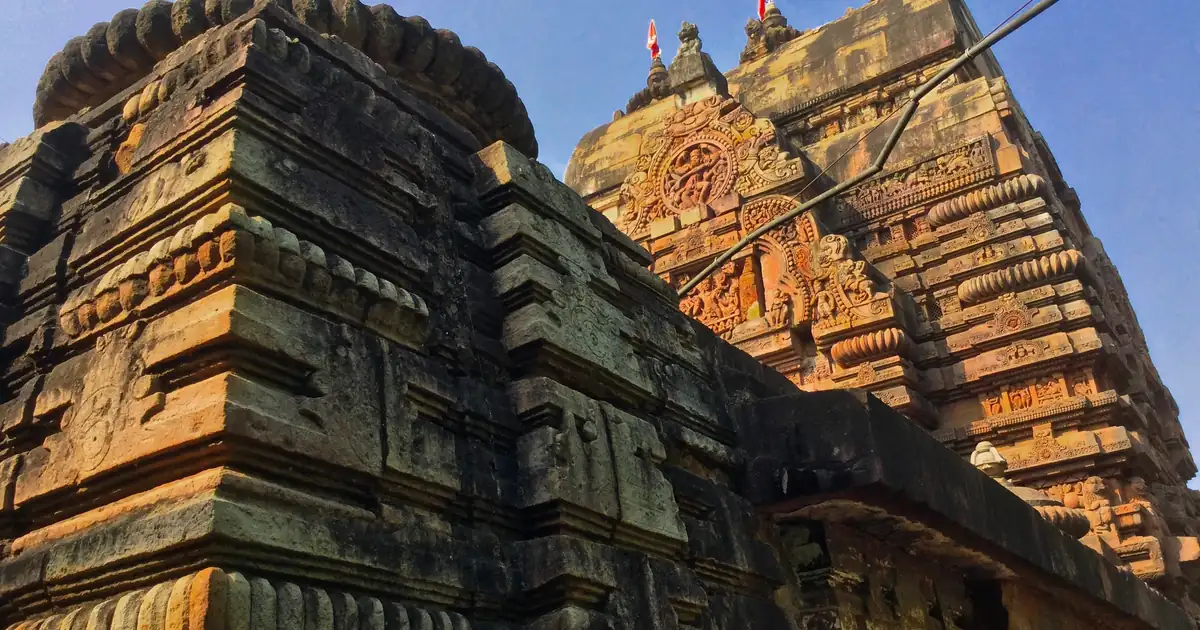
Scholars also point to the temple’s intimate association with Lord Narasimha, the half-man half-lion incarnation of Vishnu. The external niches feature dynamic stone carvings of Narasimha tearing through the chest of the demon king Hiranyakashipu, illustrating how early Odia craftsmen harmonized Shaiva, Vaishnava, and Shakta devotions within one unified campus.
This sectarian balance resembles the sacred syncretism found across famous temples across Odisha, demonstrating that early medieval builders celebrated spiritual unity rather than division.
Architecture: 9th-Century Bhauma-Kara Island Deula
From an archaeological viewpoint, Singhanath Temple is one of the most important surviving examples of transitional Kalinga architecture. Built between the late 8th century and early 9th century CE during the Bhauma-Kara kingdom, the monument bridges early decorative styles with mature structural engineering.
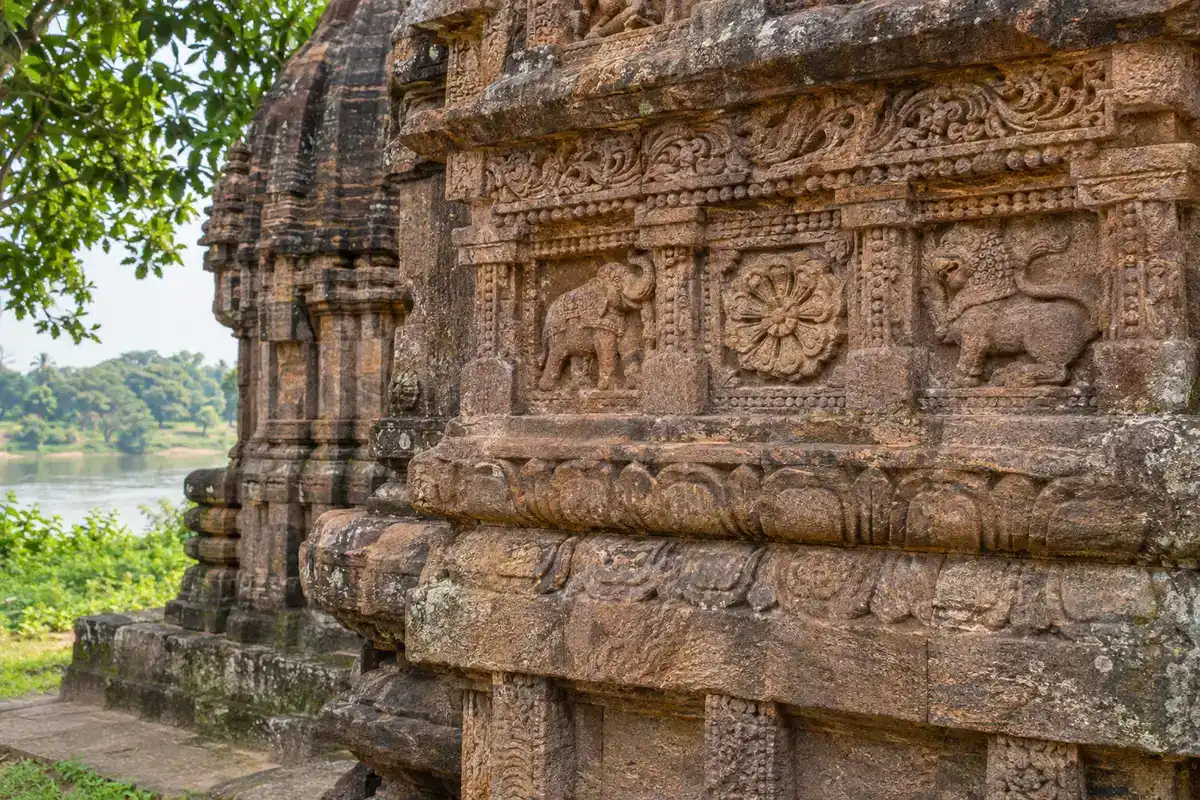
The temple sits atop a natural outcrop of hard granite and laterite rock that has resisted the turbulent currents of the Mahanadi for more than twelve hundred years. The entire monument is constructed from fine-grained khondalite sandstone transported by river barges from quarries upriver.
Pancharatha Vimana and Terraced Jagamohana Structure
The architectural layout features a classic panchayatana style vimana with an adjacent assembly hall. As an exemplary bhauma kara temple odisha preserves, the sanctum rises as a square Rekha Deula, featuring an early pancharatha projection where five vertical segments break the exterior wall into rich planes of light and shadow.
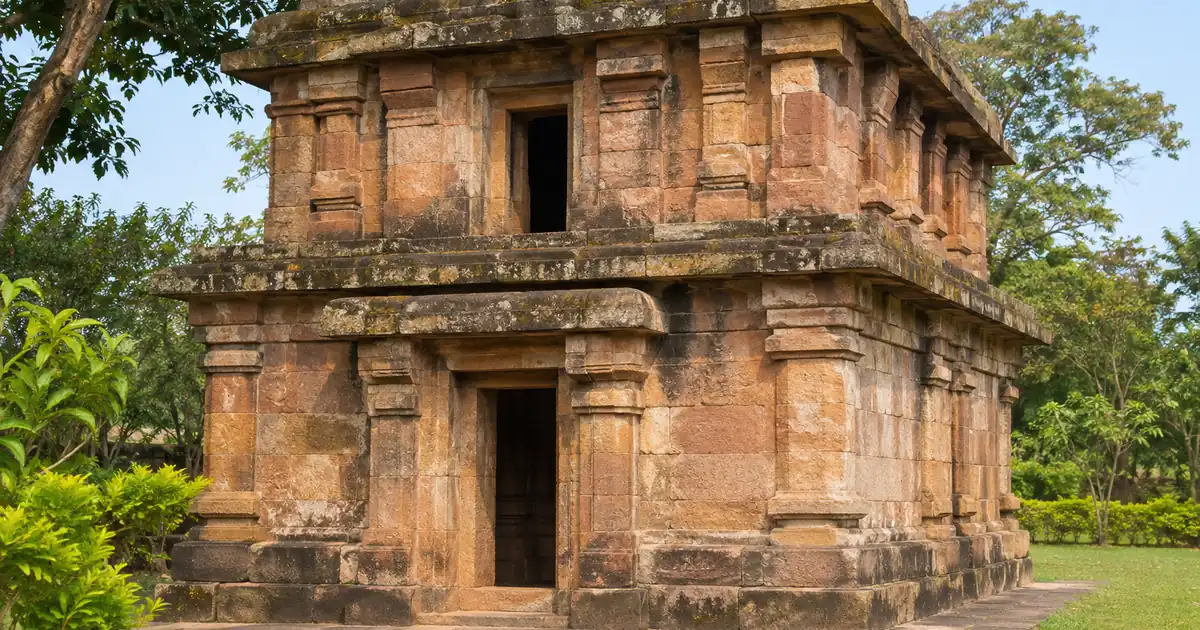
The Jagamohana presents a striking contrast to later stepped pyramid roofs. It features a rectangular floor plan covered by a flat, two-tiered terraced roof that reflects architectural influences from Central Indian Gupta traditions.
Pillared stone lattices allow natural river breezes and gentle sunlight to illuminate the interior assembly hall. Devotees moving through the hall experience a cool, cavernous quiet that heightens the sense of sanctity.
Ramayana Reliefs, Nataraja and Matrika Sculptural Panels
The exterior facade of Singhanath is celebrated among art historians for its dense narrative stone friezes. While later Odia temples often focused on stylized floral arabesques, Singhanath tells vivid epic stories directly on stone.
Key sculptural masterworks preserved on the temple walls include:
-
Ramayana Narrative Friezes: Stone panels depict the abduction of Sita by Ravana, the chase of the golden deer Maricha, and the duel between Vali and Sugriva.
-
Nataraja in Cosmic Dance: An exquisite ten-armed Dancing Shiva carved in high relief on the front gandi arch, displaying fluid anatomical movement.
-
Sapta Matrikas and Mahishasuramardini: Elegant female divinities holding celestial weapons, demonstrating the enduring strength of Shakta devotion in early medieval Cuttack.
-
Erotic and Courtly Scenes: Intricate mithuna couples and court musicians that foreshadow decorative programs later perfected at Konark.
River Island Setting, Sacred Tanks & Natural Beauty
Beyond its monumental stone heritage, Singhanath Temple captivates visitors with its tranquil natural environment. Understanding the unique simhanatha temple baramba history and timings helps travelers plan a peaceful visit away from mainland noise.
During the monsoon months, the swollen Mahanadi swirls past the rocky base in sweeping sheets of brown water. By winter, the river subsides into clear blue channels interspersed with broad sandy islands where migratory waterbirds forage.
The Island Ecosystem and Deodar Woodland Atmosphere
Dense groves of mature deodar, neem, banyan, and peepal trees shelter the stone courtyard from direct afternoon sunlight. The rustling of tree canopies combined with the rhythmic lapping of river currents creates an exceptionally calming atmosphere.
Visitors often spend hours sitting on the stone retaining walls watching local fishermen maneuver their wooden canoes through shallow currents. Birdwatchers regularly spot river terns, egrets, kingfishers, and cormorants resting on the river rocks around the island perimeter.
[!NOTE] The rocky island is home to the sacred Sitakund, a natural stone cistern fed by hidden rock fissures. Local belief holds that Mother Sita bathed at this spot, and the pool maintains a constant water level even during the scorching summer heat of April and May.
Seasonal Dynamics: Monsoons vs. Winter Visits
Traveling to Singhanath reveals dramatic seasonal changes across the year:
-
Winter Season (November to February): The absolute best time to explore the island. Daytime temperatures hover pleasantly between 22°C and 28°C, skies remain clear, and river waters are calm.
-
Monsoon Season (July to September): The Mahanadi swells dramatically, transforming the island into a dramatic fortress surrounded by rushing water. Bridge access stays open, though wet rocky steps require caution.
-
Summer Season (March to May): Mornings remain pleasant, but afternoon heat can make walking barefoot on stone flagstones uncomfortable. Early morning darshan before 9:00 AM is strongly recommended.
Travel Logistics: T-Bridge Route, How to Reach & Circuit Pairings
For decades, reaching Singhanath required hiring local wooden ferry boats from Gopinathpur ghat, which limited access during high monsoon floods. That changed dramatically with the construction of the landmark Gopinathpur-Baideswar T-Bridge.
Inaugurated as one of the longest river bridges in eastern India, the 3.4-kilometer concrete T-structure connects Badamba on the northern bank with Baideswar on the southern bank, featuring a dedicated mid-river branch that leads directly onto Singhanath island.
Reaching Singhanath from Cuttack and Bhubaneswar via the T-Bridge
The table below outlines common travel routes, road connections, and transit times to the temple:
| Starting Location | Recommended Road Route | Distance | Travel Time | Estimated Cab Fare (INR ₹) |
|---|---|---|---|---|
| Cuttack Badambadi | Via Athagarh and Badamba on SH-65 | 75 km | 1 hour 45 minutes | ₹2,200 to ₹2,800 (round trip) |
| Bhubaneswar Airport | Via Chandaka, Khurda, and Baideswar | 85 km | 2 hours | ₹2,600 to ₹3,200 (round trip) |
| Banki Town | Via Baideswar bridge approach | 35 km | 45 minutes | ₹1,000 to ₹1,400 (round trip) |
| Badamba Town | Direct south toward Gopinathpur | 8 km | 15 minutes | ₹150 to ₹250 (auto-rickshaw) |
Following the singhanath temple island mahanadi river route along the cuttack to badamba state highway makes for a scenic drive. The nearest railway station to singhanath is Cuttack Junction roughly 75 km away, with local passenger stops available at Naraj Marthapur. Ample vehicle parking is available at the entrance of the bridge spur leading onto the island.
Day Trip Circuit: Singhanath, Bhattarika Temple & Ansupa Lake
Because Singhanath lies in the scenic rural heart of western Cuttack district, pairing your visit with neighboring natural and religious attractions creates an unforgettable full-day itinerary.
- Bhattarika Temple (Badamba): Located just 25 kilometers west along the riverbank, this sacred riverside shrine honors Goddess Bhattarika. Set against the verdant slopes of the Ratnagiri hills, the sanctum overlooks rocky rapids and offers popular riverboat rides.
- Ansupa Freshwater Lake: Situated roughly 35 kilometers east toward Banki, Ansupa Lake and nature camp is Odisha’s largest natural freshwater horseshoe lake, featuring boating, lakeside eco-cottages, and winter migratory bird watching.
- Maa Charchika Temple: Positioned across the river in Banki, Maa Charchika Temple in Banki preserves an ancient 9th-century Chamunda shrine on the scenic Renuka riverbank.
- Dhabaleswar Island Temple: Devotees interested in comparing river island complexes can also visit Dhabaleswar Island Temple in Athagarh, famous for its historic suspension footbridge over the Mahanadi.
Frequently Asked Questions (FAQs)
Where is Singhanath Temple located in Odisha?
Singhanath Temple is situated on a rocky island in the middle of the Mahanadi River near Gopinathpur village in the Badamba block of Cuttack district. The island lies approximately 75 kilometers west of Cuttack city and is easily reached via the Gopinathpur-Baideswar T-Bridge.
How do visitors reach Singhanath Temple without taking a boat?
Visitors can reach the temple directly by vehicle or on foot using the 3.4-kilometer Gopinathpur-Baideswar T-Bridge across the Mahanadi River. A dedicated bridge spur branches off at mid-river, providing continuous all-weather road access onto the island campus.
What are the daily visiting hours and darshan timings at Singhanath Temple?
The temple opens daily at 6:00 AM and closes at 7:00 PM in the evening without prolonged afternoon shutdowns. The best visiting window for comfortable exploration and architectural photography is between 7:30 AM and 11:30 AM.
Why is the architecture of Singhanath Temple considered historically significant?
Singhanath Temple is historically significant because it represents an early 9th-century Bhauma-Kara architectural monument with a rare terraced flat-roof Jagamohana. Its exterior khondalite sandstone walls display rare narrative reliefs depicting scenes from the Ramayana alongside dancing Nataraja panels.
Is there an admission fee or photography charge at Singhanath Temple?
Admission to the island temple and its surrounding courtyards is completely free of charge for all pilgrims and tourists. Photography is permitted across the outer island grounds and carved wall panels, though visitors must refrain from taking photographs inside the inner sanctum.