Ghanteswari Temple Chipilima Sambalpur: Guide & Timings
Explore Ghanteswari Temple Chipilima Sambalpur. Discover the lighthouse without light on the Mahanadi River, bell offerings, timings, and travel guide.
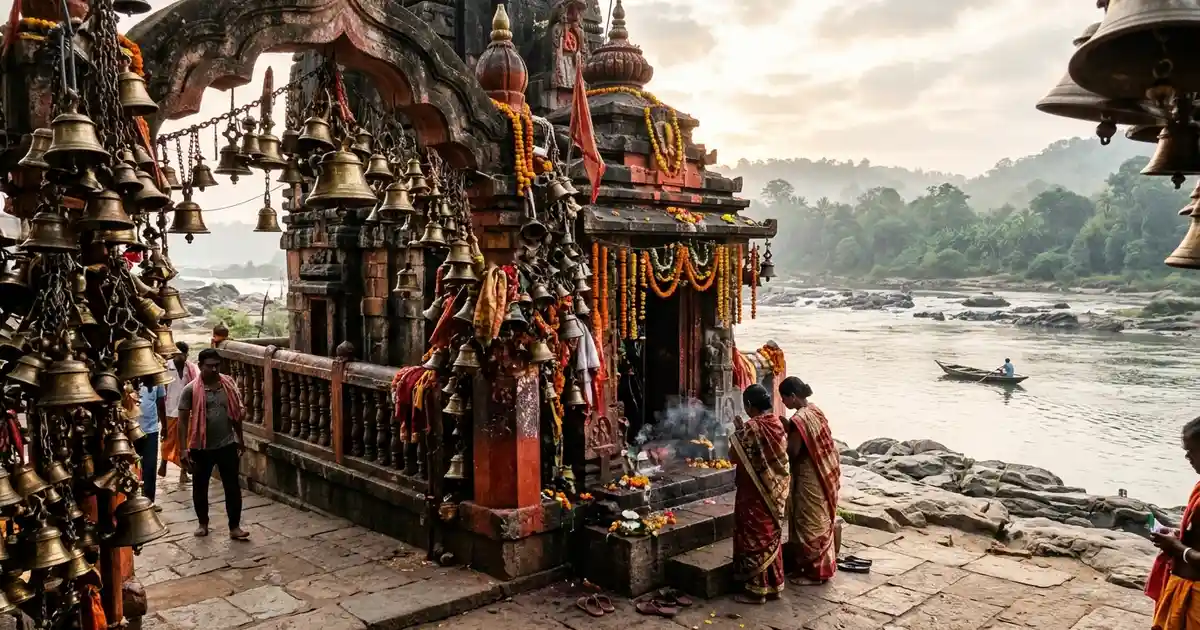
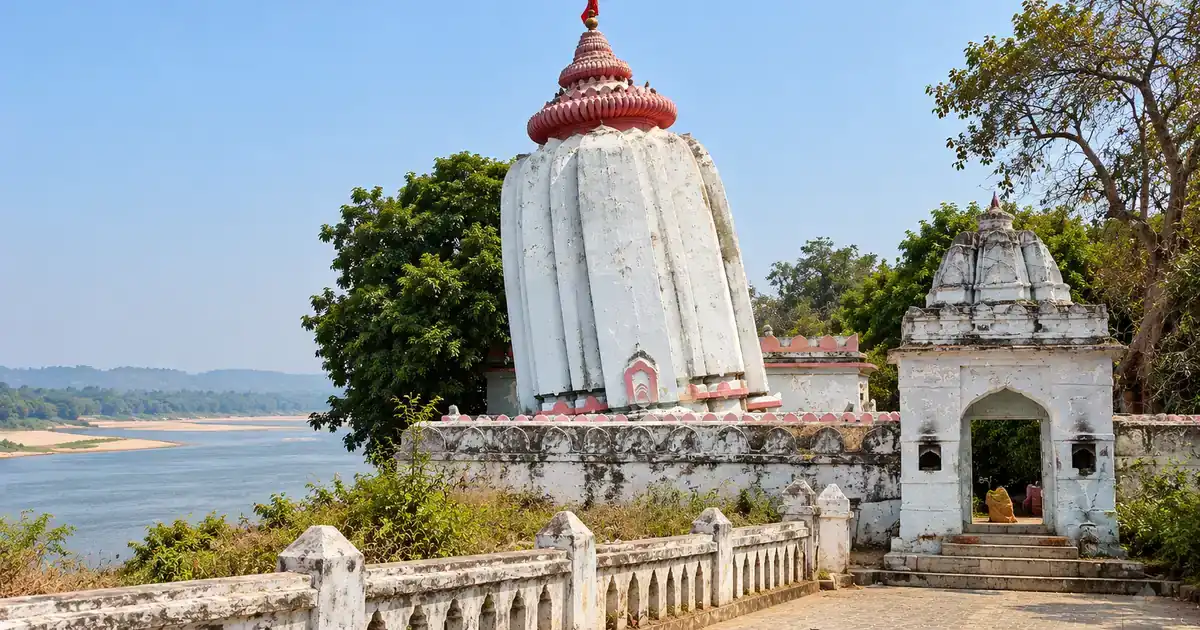
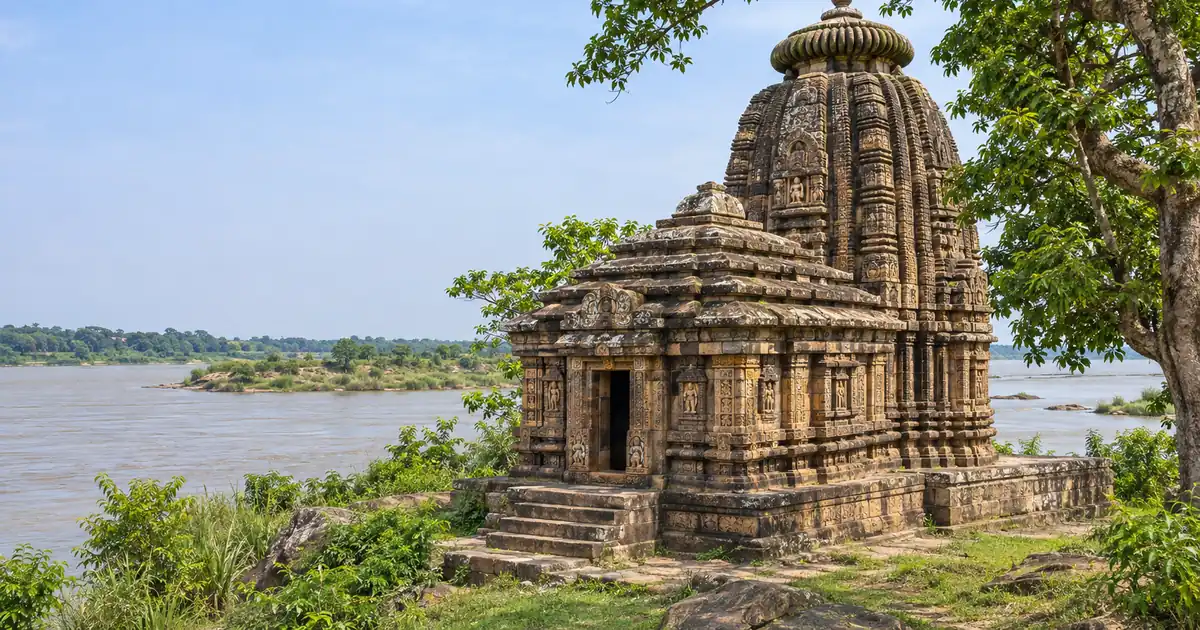
Ghanteswari Temple Chipilima Sambalpur sits along the rocky banks of the Mahanadi River in western Odisha. Positioned thirty-three kilometers southwest of Sambalpur city within Sambalpur district travel guide territory, this sacred shrine is celebrated for thousands of chiming brass bells that envelop its courtyards. The ringing bells create a continuous musical resonance carried by river breezes.
Devotees revere the presiding deity, Maa Ghanteswari, as a loving mother and protective manifestation of Goddess Shakti. The temple ranks high among the most cherished famous temples in Odisha due to its river setting, maritime folklore, and deep-rooted ritual customs.
Key Takeaways
- Lighthouse Without Light: Served historically as an acoustic warning system where giant bells alerted boatmen to dangerous river whirlpools.
- Devotional Bell Offerings: Devotees tie brass and bronze bells of all sizes across railings after their prayers and wishes are fulfilled.
- Mahanadi River Setting: Positioned at a scenic bend where the river carves through rugged granite rocks near Chiplima powerhouse.
- Annual Chhatar Jatra: Celebrates a grand cultural festival during Maha Ashtami of Durga Puja with traditional western Odia music.
- Free Public Access: Open daily from 6:00 AM to 8:30 PM with ample parking and riverside walking ghats.
The Lighthouse Without Light: Maritime History on the Mahanadi
Long before modern navigation systems and upstream river barriers like the monumental Hirakud Dam reservoir controlled water flows, the Mahanadi River formed a vital yet perilous waterway for trade. Heavy merchant boats carrying timber, iron ore, and farm harvests navigated downstream toward coastal ports.
Near Chipilima, the river encountered massive underwater granite rocks, creating violent whirlpools and deceptive underwater currents. Numerous boats capsized in this treacherous stretch during heavy monsoons and foggy winter mornings.
To safeguard sailors, early communities placed massive bronze bells on the high riverbank. High winds whipping across the river canyon caused the heavy bells to toll loudly across the water. The acoustic ringing warned approaching boatmen to alter course or moor safely along the shore, earning the site fame as the “Lighthouse Without Light.”
Over generations, grateful boatmen and merchants began attributing their safe journeys to the divine protection of Goddess Ghanteswari. Official heritage archives curated by the Odisha State Government document how local royal rulers of Sambalpur subsequently patronized the temple compound to support river travelers.
The Sacred Tradition of Bell Offerings
The most visually striking feature of Ghanteswari Temple is the extraordinary accumulation of bells that adorn every corner of the shrine. Devotees from across Odisha, Chhattisgarh, and Jharkhand visit to make a solemn vow, known as manaskamana.
When a devotee’s heartfelt prayer for health, family well-being, or professional success is answered, they return to the temple to offer a brass bell. These bells range from tiny hand bells weighing a few grams to massive ceremonial bells weighing upwards of one hundred kilograms.
Priests tie the bells along specialized iron frames, veranda columns, and courtyard walls using sacred red and yellow cotton cords. The gentle river wind continually sets thousands of metal clappers in motion, producing a soothing ambient hum that calms the mind.
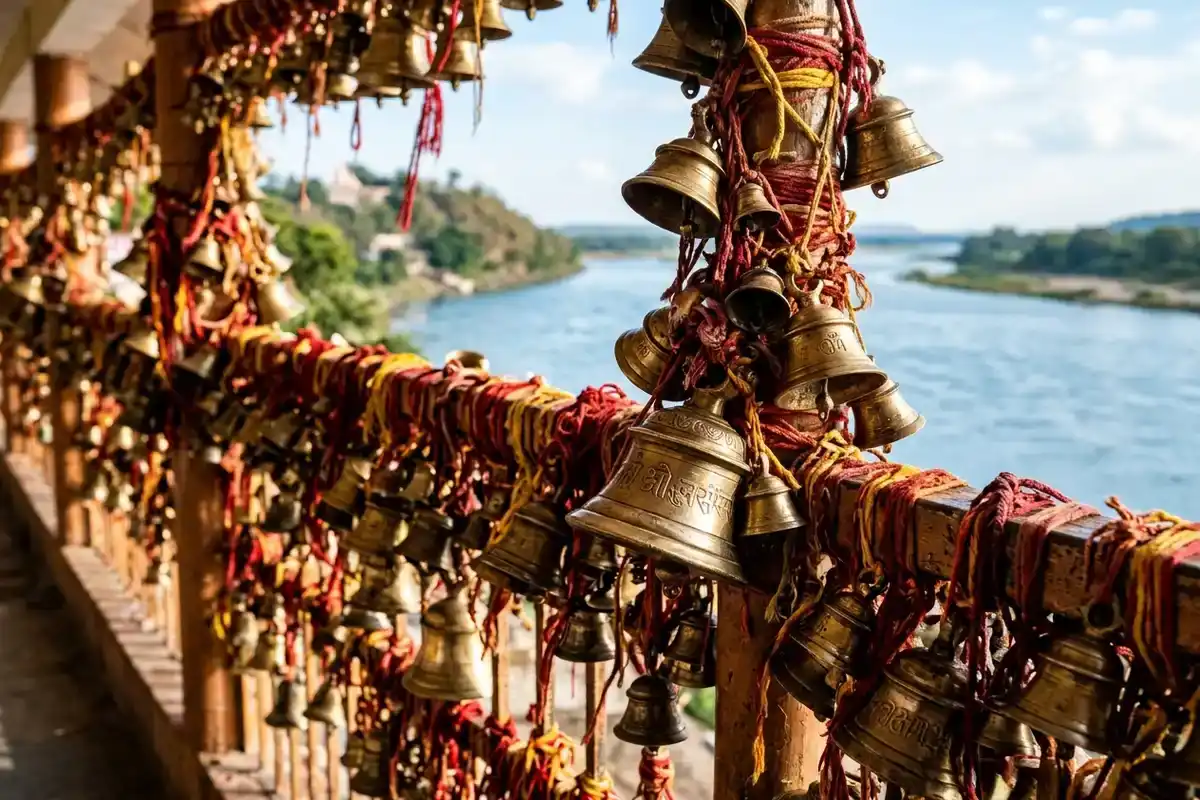
Local metal artisans from nearby villages craft these bells specifically for pilgrims. Visiting families frequently purchase their bells from small shops outside the gate before entering the sanctum for puja.
Temple Architecture and Riverside Compound
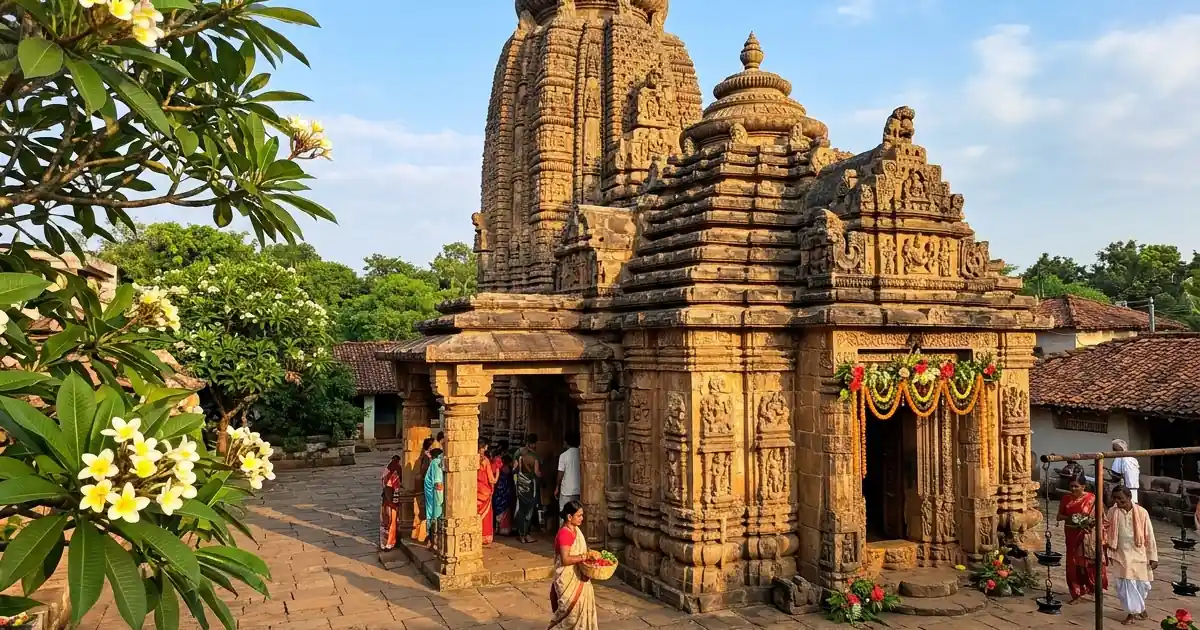
The architecture of Ghanteswari Temple combines traditional western Odisha temple design with practical open-air pavilions suited for large assemblies. The main sanctum features a curvilinear stone tower crowned with a sacred brass kalasha and trishula.
Inside the sanctum sanctorum, the sacred image of Maa Ghanteswari is decorated with bright vermilion paste, red silk attire, and fresh floral garlands. Oil lamps cast a warm glow over the deity, creating an intimate atmosphere for prayer.
Surrounding the main shrine, spacious open-air verandas are lined with rows of suspended bells. Broad stone staircases descend from the courtyard down to the waters of the Mahanadi River, where pilgrims perform ritual ablutions before entering the temple.
The compound also includes ancillary shrines dedicated to Lord Shiva and Lord Ganesha. Shady peepal and neem trees offer cool gathering spots along the perimeter, where families enjoy quiet river views after concluding their rituals.
Major Festivals: Chhatar Jatra and Navratri Celebrations
While pilgrims visit Ghanteswari Temple throughout the year, the complex experiences its greatest festivities during the autumn festival of Navratri and Durga Puja. The crowning celebration is the annual Chhatar Jatra held on Maha Ashtami.
During Chhatar Jatra, priests carry the sanctified bamboo umbrella emblem (Chhatar) of the goddess in a grand ceremonial procession around the temple grounds. Traditional musicians perform rhythmic beats on Sambalpuri dhol, nishan, and mahuri instruments as devotees offer prayers.
Thousands of families assemble early in the morning to witness the holy procession. The fairgrounds outside the temple fill with temporary stalls selling hot sweets, clay toys, glass bangles, and metal cookware.
Special rituals are also conducted during Chaitra Navratri in spring and Diwali in autumn. During these occasions, the entire riverside complex is illuminated with thousands of earthen butter lamps that reflect upon the dark surface of the river.
Temple Timings, Daily Puja, and Visitor Etiquette
Ghanteswari Temple maintains extended opening hours to accommodate both early morning worshipers and evening travelers.
| Activity / Session | Timing | Guidelines |
|---|---|---|
| Morning Mangala Alati | 6:00 AM to 6:30 AM | Open for all devotees to witness dawn rituals |
| General Darshan & Bell Offerings | 6:30 AM to 1:00 PM | Vows, special pujas, and archana conducted |
| Afternoon Bhog & Rest | 1:00 PM to 3:00 PM | Inner sanctum doors closed; courtyard remains accessible |
| Evening Reopening & Sandhya Alati | 3:00 PM to 8:00 PM | Evening river arati and lamp lighting |
| Temple Closing | 8:30 PM | Gates closed for the night |
Admission to the temple grounds and sanctum is free of cost. Devotees may purchase puja items, incense, and sweets from local vendors at reasonable prices.
Visitors must remove their footwear at the shoe stand near the main archway before stepping onto the temple floor. While photography of the bell-filled corridors and scenic river ghats is welcomed, taking photos inside the inner sanctum is not allowed out of respect for temple traditions.
How to Reach Chipilima from Sambalpur and Beyond
Chipilima is located thirty-three kilometers southwest of Sambalpur city center, making it readily accessible by private vehicle, taxi, or local bus.
| Travel Segment | Distance | Transit Time | Road Route |
|---|---|---|---|
| Sambalpur City to Chipilima | 33 km | 45 to 55 minutes | Via Burla and Chiplima Canal Road |
| Sambalpur Junction to Chipilima | 28 km | 40 to 50 minutes | Via NH-53 and local connecting bridge |
| Hirakud Town to Chipilima | 20 km | 30 minutes | Scenic riverside road via power canal |
| Jharsuguda Airport to Chipilima | 85 km | 1 hour 45 minutes | Four-lane Biju Expressway and NH-53 |
By Road
Travelers driving from Sambalpur can take the smooth four-lane highway through Burla, continuing along the canal road past the Chiplima hydroelectric facility. Rental cars, auto-rickshaws, and app-based cabs operate regularly from Sambalpur city center.
By Train
Sambalpur Junction (SBP) serves as the primary railway gateway, receiving express trains from Bhubaneswar, Kolkata, Delhi, and Mumbai. From the station, private taxis cover the twenty-eight-kilometer drive to Chipilima within forty-five minutes.
By Air
Veer Surendra Sai Airport in Jharsuguda is the nearest commercial airport, located eighty-five kilometers north. Taxis are available at the airport terminal for direct transit. Travel advisories on the Odisha Tourism Portal provide verified transport and route assistance.
Nearby Attractions: Western Odisha Heritage Trail
A trip to Ghanteswari Temple pairs naturally with several prominent historical, cultural, and ecological landmarks located nearby.
Chiplima Hydroelectric Project
Located just two kilometers from the temple, this hydroelectric powerhouse represents an important auxiliary unit of the greater Hirakud river valley system. Visitors can view the impressive water channels and spillway turbines that harness river power for state electricity generation.
Leaning Temple of Huma
Located approximately twenty-two kilometers east along the Mahanadi River, the leaning temple of Huma stands as one of only two leaning temples in the world. Dedicated to Lord Bimaleswar, the main spire leans noticeably toward the riverbed.
Maa Samaleswari Temple
In the heart of Sambalpur town, the monumental Maa Samaleswari Temple in Sambalpur honors the presiding deity of western Odisha. The newly developed Samalei heritage corridor offers wide riverside promenades and evening light shows.
Wildlife Excursions
Travelers heading northwest along the Hirakud shoreline can explore the lush forested trails of the Debrigarh Wildlife Sanctuary or continue southwest into the Bargarh district handloom circuit.
Travel Tips for a Fulfilling Pilgrimage
To ensure a peaceful and rewarding journey to Ghanteswari Temple, consider these practical recommendations:
- River Safety: The Mahanadi River near Chipilima features strong underwater currents and slippery stone rocks. Exercise extreme caution near the water and do not venture beyond the marked stone steps.
- Buying Bells: If you wish to offer a bell, multiple stalls outside the temple gates sell quality brass bells ranging from ₹50 for small bells to larger ceremonial designs. Inquire about red tie-cords (dori) for mounting.
- Cooler Visit Times: Visit during early morning hours between 7:00 AM and 10:00 AM or late afternoons from 4:00 PM to 6:00 PM when the stone flooring is cool and the river breeze is pleasant.
- Local Cuisine: Small roadside restaurants near Chipilima serve traditional Odia meals, hot pakodas, and tea. For complete multicuisine dining, Sambalpur city offers extensive restaurant choices.
- Dress Code: Wear modest, comfortable clothing appropriate for religious venues, covering shoulders and knees.
Frequently Asked Questions
Why is Ghanteswari Temple called the Lighthouse Without Light?
In medieval times, giant bells hung on the riverbank rang loudly in strong winds, alerting boatmen to dangerous whirlpools and sunken rocks along the Mahanadi River, functioning like an acoustic lighthouse.
Where is Ghanteswari Temple located?
The temple is located in Chipilima village along the banks of the Mahanadi River, approximately thirty-three kilometers southwest of Sambalpur city in western Odisha.
Why do devotees tie bells at Ghanteswari Temple?
Devotees tie brass and bronze bells as a traditional offering of gratitude after their personal wishes and prayers (manaskamana) are fulfilled by Goddess Ghanteswari.
What are the opening timings of Ghanteswari Temple?
The temple is open every day from 6:00 AM to 8:30 PM. The inner sanctum briefly closes for afternoon bhog between 1:00 PM and 3:00 PM.
Is there any entry fee to visit Ghanteswari Temple?
No, entry to the temple compound, river ghats, and sanctum darshan is completely free for all pilgrims and tourists.
How far is Ghanteswari Temple from Sambalpur Railway Station?
The temple is located approximately twenty-eight kilometers from Sambalpur Junction, which takes around forty to fifty minutes to travel by car or auto-rickshaw.