Dhabaleswar Temple Kumuda Pahad Balangir: Cave Guide
Explore Dhabaleswar Temple Kumuda Pahad Balangir in Titilagarh. Discover the naturally air-conditioned Shiva cave, timings, hill climb, and travel tips.
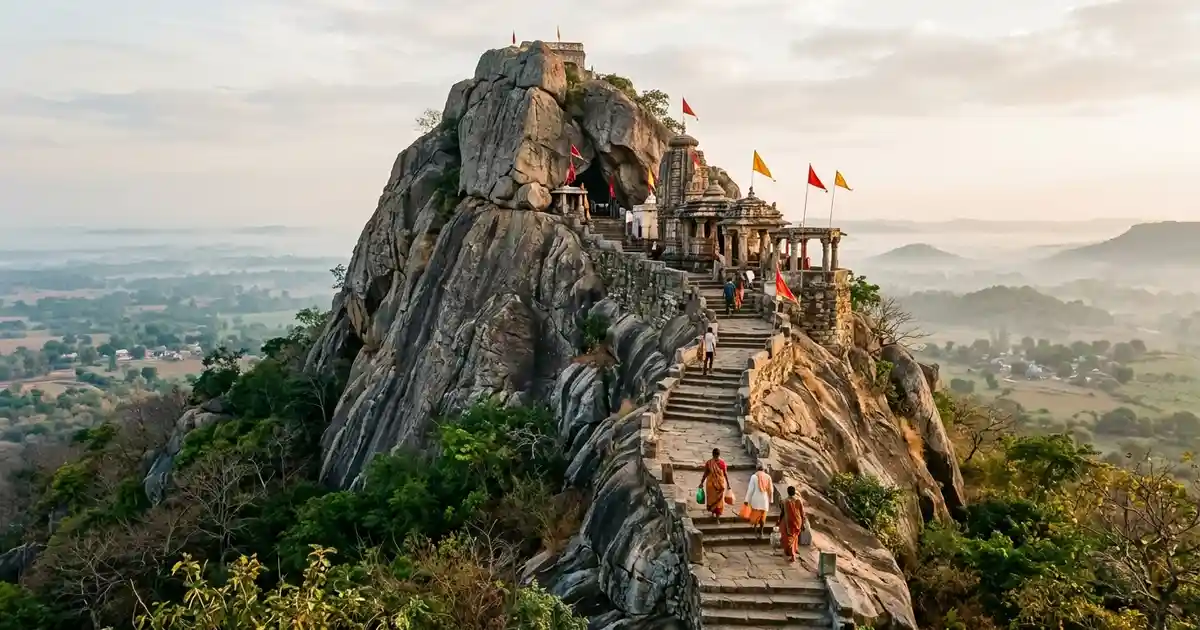
Dhabaleswar Temple Kumuda Pahad Balangir stands as one of the most intriguing geological and spiritual marvels in western Odisha. Located on the rocky slopes of Kumuda Hill in Titilagarh town within the historic bounds of Balangir district travel guide, this ancient rock-cut cave temple enshrines Lord Shiva as Dhabaleswar Mahadev. The sanctum occupies a natural cavern formed deep within monolithic granite formations.
While many hilltop shrines across the state attract pilgrims for scenic viewpoints, Kumuda Pahad holds fame for an extraordinary climatic anomaly. Despite Titilagarh recording some of the highest summer temperatures in the country, the interior of this subterranean cave remains astonishingly cold year-round. Devotees regard the site as a revered sacred stop among famous temples in Odisha.
Key Takeaways
- Natural Cave Sanctum: Enshrines a self-manifested Swayambhu Shiva Lingam inside an eighty-foot-long natural granite cavern.
- Subterranean Microclimate: Retains a comfortable temperature near 20°C even when outside summer heat exceeds 50°C.
- Hilltop Complex: Accompanied by three auxiliary natural caves, a Lord Rama temple, a Chandi shrine, and a perched water reservoir.
- Maha Shivratri Mela: Attracts tens of thousands of night-long pilgrims climbing the illuminated stone hill steps.
- Convenient Rail Hub: Located just two kilometers from Titilagarh Junction railway station with paved road access.
The Microclimate Wonder: Naturally Cool Cave of Titilagarh
Titilagarh is widely known throughout India for its extreme summer climate, with ambient outdoor mercury levels routinely climbing above 50°C between April and June. Pavements bake under relentless sunshine, and hot loo winds sweep across the plains.
Yet, stepping past the rock threshold into the Dhabaleswar cave sanctum brings an instant physiological shock. Within five paces, the oppressive external heat vanishes, replaced by a dense, chilled air current that hovers near 20°C or lower.
Geologists suggest that deep subterranean fissures, dense granite rock insulation, and subterranean water condensation create a natural refrigeration cycle. However, local devotees and hereditary servitors revere the phenomenon as the perpetual divine grace of Lord Shiva and Goddess Parvati.
Visitors frequently touch the cavern walls, feeling cold condensation dampening the stone surfaces. The coolness intensifies the deeper one ventures toward the inner sanctum, offering physical comfort and spiritual relief to summer travelers.
Cave Geology and Sacred Shrines of Kumuda Pahad
Kumuda Pahad rises dramatically above the surrounding Deccan plateau fringe, characterized by immense dark boulders, weathered granite tors, and natural fissures. The main temple cave measures approximately eighty feet in length and forty feet in breadth, providing ample interior space for assemblies of devotees.
At the focal center of the cavern rests the Swayambhu Shiva Lingam, permanently bathed by natural water trickling from rocky ceiling fractures. Priests adorn the stone lingam with fresh bilva leaves, fragrant marigold garlands, and sandalwood paste.
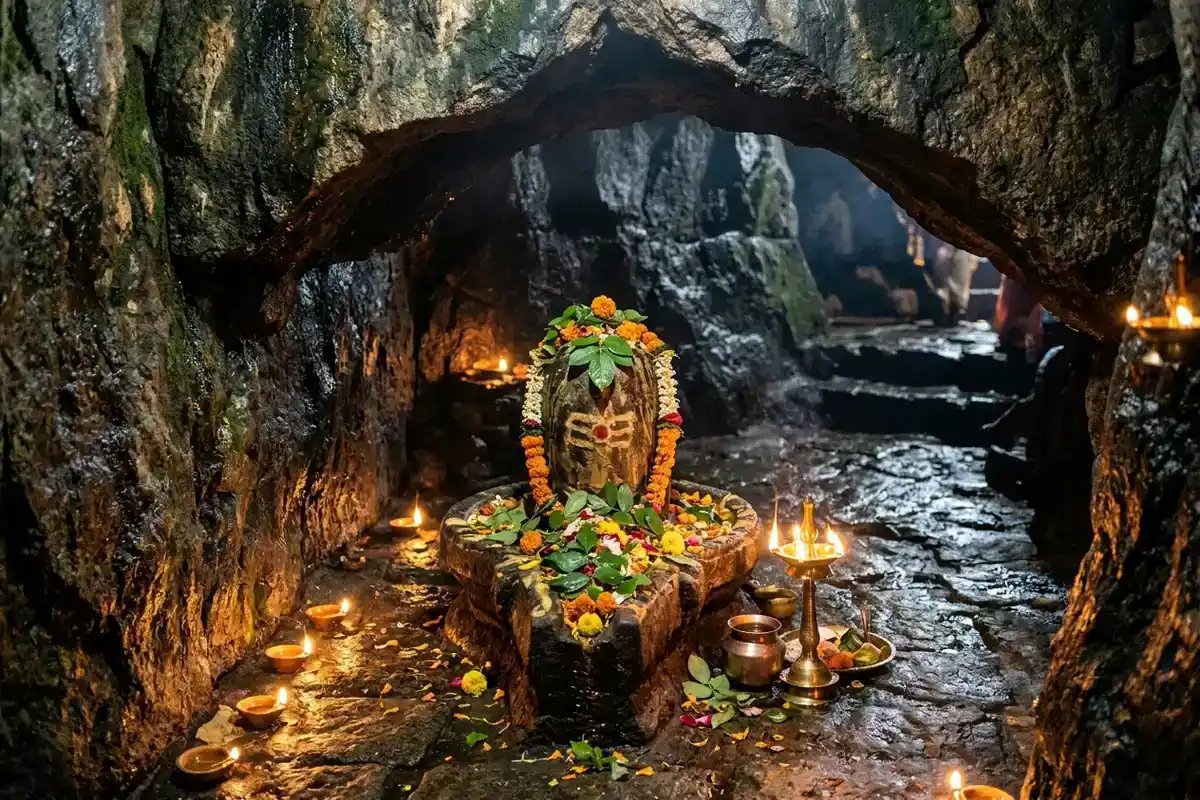
Beyond the central sanctum, Kumuda Pahad features three additional natural caverns. Among these, the famous Tiger Cave, known locally as Bagha Gumpha, is celebrated as a historical meditation refuge used by roaming sadhus and forest ascetics.
Along the hill terraces stand several ancillary structures, including a temple dedicated to Lord Rama, a Chandi shrine, a Ghantasini shrine, and an ancient stone reservoir. The natural reservoir retains water throughout dry seasons, historically supplying clean water to meditating hermits.
Spiritual History, Local Legends, and Royal Heritage
Local folklore associates Kumuda Pahad with the epic Ramayana. Oral legends recount that Lord Rama, Goddess Sita, and Lakshmana halted at Kumuda Hill during their fourteen-year forest exile, offering daily prayers to Lord Shiva before continuing southward through Dandakaranya.
In subsequent historical eras, regional monarchs recognized the spiritual sanctity of the hill cavern. Historical monographs documented by the Odisha State Government suggest that early medieval chieftains and Chauhan rulers of Patna State provided land grants and endowments for daily worship.
Centuries of ascetic meditation transformed the hill into a renowned Shaivite pitha. Ascetic saints who wandered along the Tel River basin selected these secluded granite caves to conduct deep yogic penance during severe summer seasons.
Today, hereditary priests from local Brahmin and Paik families conduct the traditional pujas according to centuries-old ritual schedules. Their recitations of ancient Sanskrit hymns echo powerfully against the granite walls of the cavern.
Maha Shivratri and Shravan Pilgrimage Celebrations
Maha Shivratri stands as the grandest annual festival celebrated at Kumuda Pahad, taking place during the dark fortnight of the Phalguna month. During this sacred festival, the entire hillside comes alive with thousands of glowing lamps.
Tens of thousands of devotees from Balangir, Kalahandi, Nuapada, and neighboring Chhattisgarh climb the illuminated hill stairway throughout the night. Pilgrims observe strict fasts, chanting “Om Namah Shivaya” while waiting patiently to pour holy milk and water over the Swayambhu Lingam.
At the stroke of midnight, priests hoist the sacred Mahadipa atop the highest boulder of Kumuda Pahad, greeted by joyous conch calls and devotional chants. A massive multi-day country fair sprawls across the base of the hill, featuring folk amusement rides, food stalls, and traditional handloom exhibits.
During the holy Hindu month of Shravan (July to August), thousands of saffron-clad Bolbom pilgrims trek barefoot from regional rivers to carry sanctified water pots on their shoulders. They climb Kumuda Pahad to offer ritual libations on consecutive Mondays.
Temple Timings, Daily Rituals, and Hill Climb Guide
Dhabaleswar Temple on Kumuda Pahad welcomes pilgrims throughout the week from early morning until evening.
| Activity / Service | Schedule | Visitor Notes |
|---|---|---|
| Morning Opening & Mangala Alati | 6:00 AM to 6:30 AM | Dawn worship and ritual bath of the Swayambhu Lingam |
| General Darshan & Abhishekam | 6:30 AM to 12:30 PM | Devotees can offer milk, bilva leaves, and flowers |
| Midday Pahada (Sanctum Closed) | 12:30 PM to 3:30 PM | Outer hill paths remain open; cave doors closed |
| Evening Reopening & Sandhya Alati | 3:30 PM to 7:30 PM | Evening oil lamp arati with deep resonant chanting |
| Night Closing | 8:00 PM | Cave doors locked; visitors descend before dark |
Admission to the hill and the cave temple is free of charge. Well-maintained masonry steps with sturdy iron handrails lead from the base parking area up to the cave entrance. The climb takes approximately fifteen to twenty minutes at a leisurely pace.
Visitors are advised to remove footwear before entering the cave vestibule. While personal mobile photography of the dramatic exterior rock formations and hill vistas is permitted, recording video or taking photos inside the sanctum cave is prohibited during puja rituals.
How to Reach Kumuda Pahad from Titilagarh and Balangir
Kumuda Pahad is situated on the southern fringe of Titilagarh municipality, making it exceptionally easy to reach for travelers arriving by road or rail.
| Route / Gateway | Distance | Driving Time | Transport Mode |
|---|---|---|---|
| Titilagarh Junction to Kumuda Pahad | 1.5 km | 5 to 10 minutes | Auto-rickshaw or Walk |
| Balangir Town to Kumuda Pahad | 65 km | 1 hour 25 minutes | State Highway 42 / Bus |
| Bhawanipatna to Kumuda Pahad | 35 km | 45 minutes | Direct SH-16 Highway |
| Jharsuguda Airport to Kumuda Pahad | 195 km | 3.5 to 4 hours | Biju Expressway & NH-53 |
By Train
Titilagarh Railway Junction (TIG) is a major zonal railway station connecting key trunk routes between Raipur, Visakhapatnam, and Sambalpur. Superfast trains, including the Samata Express and Koraput Express, stop here daily. Travelers can simply walk or hire an auto-rickshaw outside the station gates for a short five-minute ride to the hill base.
By Road
Smooth state highways connect Titilagarh to Balangir town (65 km north) and Bhawanipatna in Kalahandi (35 km south). Regular government and private express buses operate along these corridors. Travelers can also link their route with neighboring Kalahandi district border routes.
By Air
Veer Surendra Sai Airport in Jharsuguda (195 km) and Swami Vivekananda Airport in Raipur (210 km) serve as the closest commercial air terminals. Both offer car rental services for direct highway transit to Titilagarh. Consult the Odisha Tourism Portal for current travel guidelines.
Nearby Attractions in the Balangir Heritage Circuit
Kumuda Pahad serves as a gateway to Western Odisha’s fascinating historical, Tantric, and eco-tourism circuit.
Ranipur Jharial 64 Yogini Complex
Located approximately thirty-five kilometers southwest of Titilagarh, the renowned Ranipur Jharial 64 Yogini temple complex is one of only four surviving hypaethral Yogini temples in India. The sandstone rock outcrop features over fifty ancient monuments overlooking a scenic river basin.
Maa Patneswari Temple at Patnagarh
Situated sixty kilometers north, the historic Maa Patneswari Temple in Patnagarh stands as the royal Shakti citadel of the Chauhan dynasty. The temple displays fourteenth-century carvings and warrior history.
Harishankar Temple and Gandhamardan Hills
Located eighty kilometers northwest along the Gandhamardan mountain range, the ancient Harishankar Temple on Gandhamardan Hills features a perennial forest stream and natural healing herbal biodiversity. Travelers can continue onward into the Bargarh district regional connection.
Practical Travel Tips for Visitors and Trekkers
- Morning Climbing: During warmer months, begin your hill ascent before 8:30 AM to avoid the midday sun on the exposed rock staircases.
- Carry Water: While the cave interior is cool, climbing the open stone stairway can be strenuous; carry a refillable water bottle to stay hydrated.
- Footwear Selection: Wear supportive sports shoes or trekking sandals with good grip for climbing the granite steps, especially during the monsoon when rocks can become slick.
- Local Troop of Monkeys: Macaque monkeys reside on Kumuda Hill; avoid carrying exposed food bags or plastic packets in your hands while climbing.
- Local Snacks: Titilagarh town offers famous Western Odia refreshments, including warm chaula bara, spicy aloo dum, and fresh buttermilk, available at local bazaars near the station.
Frequently Asked Questions
Why is the Dhabaleswar cave temple on Kumuda Pahad naturally cool?
The cave interior maintains a constant chilled temperature around 20°C due to dense granite rock insulation, underground air drafts, and natural condensation, providing relief even when outside temperatures in Titilagarh exceed 50°C.
Where is Kumuda Pahad located?
Kumuda Pahad is situated in Titilagarh town within Balangir district, western Odisha, located approximately one and a half kilometers from Titilagarh Railway Junction.
What are the opening timings of Dhabaleswar Temple on Kumuda Pahad?
The temple is open daily from 6:00 AM to 8:00 PM. The inner sanctum temporarily closes for afternoon bhog between 12:30 PM and 3:30 PM.
How difficult is the hill climb to the cave temple?
The climb involves well-constructed masonry steps with safety railings, requiring approximately fifteen minutes of moderate walking suitable for visitors of all age groups.
What is the biggest festival celebrated at Kumuda Pahad?
Maha Shivratri is the most significant festival, celebrated with a massive night-long mela, lighting of the Mahadipa, and thousands of devotees fasting and chanting on the hill.
Is there an entry fee to visit Dhabaleswar Temple?
No, entry to Kumuda Pahad, the cave shrines, and the temple sanctum is completely free for all pilgrims and travelers.