Vaishno Devi Temple Jamukana Nayagarh: Timings & Guide
Explore Vaishno Devi Temple at Jamukana in Nayagarh. Discover the 180-foot artificial cave shrine, hill trek, darshan timings, and road routes.
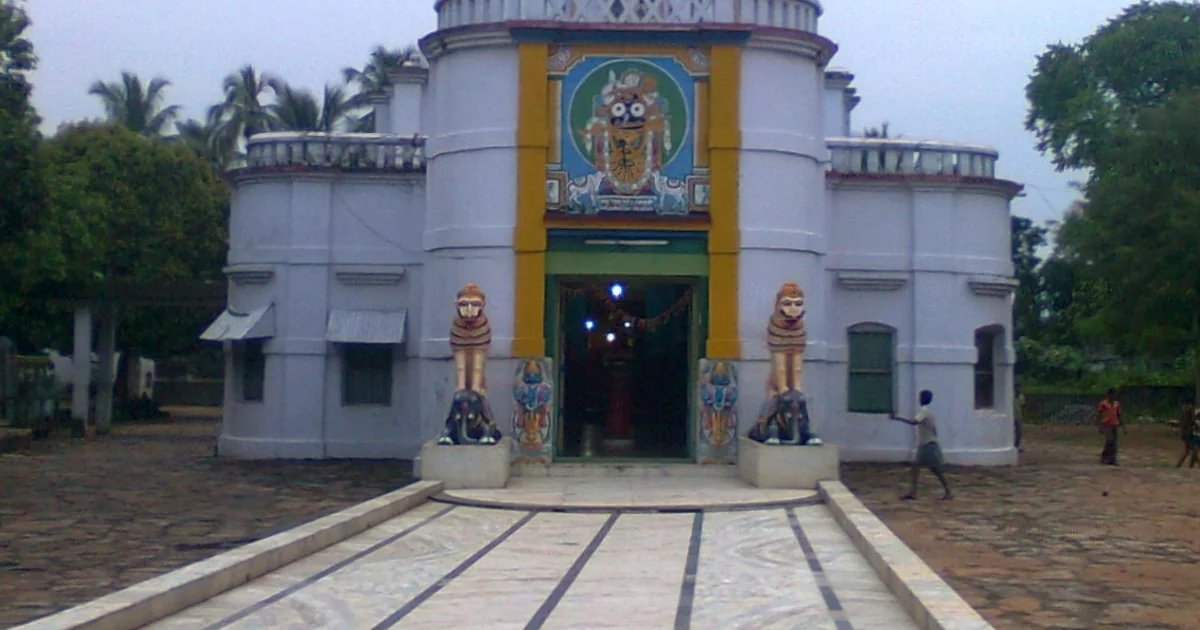
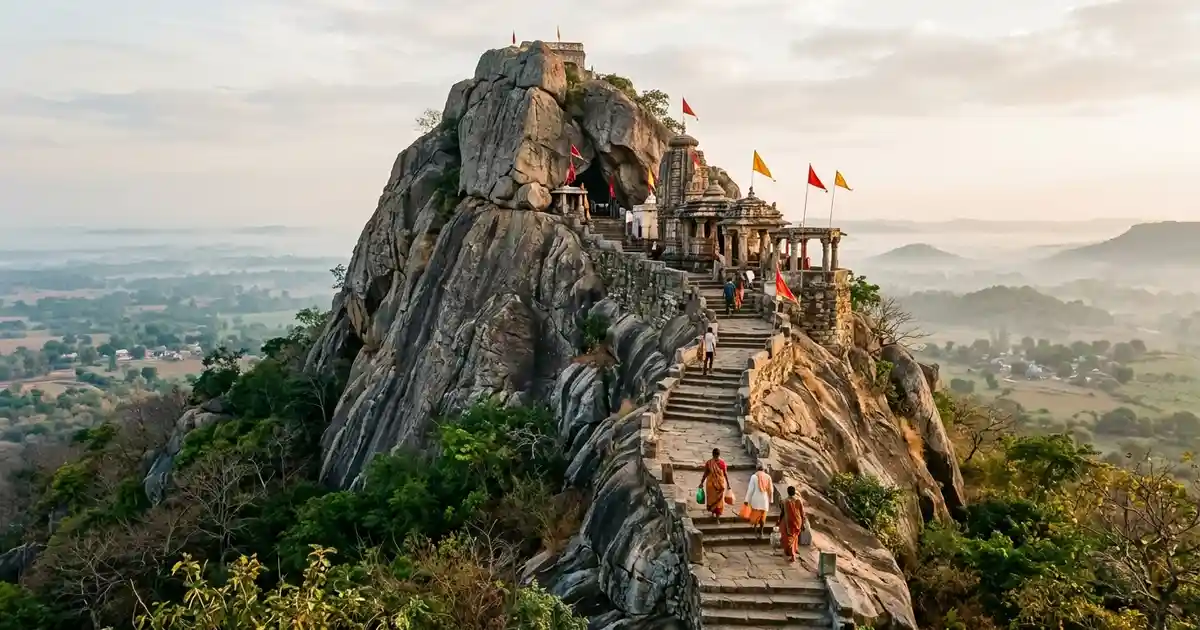
Rising amid the sal and teak forests of central Odisha, the sacred hilltop shrine of Jamukoli Pahada houses one of the state’s most intriguing modern pilgrimage experiences. Located near Saradhapur village in the Odagaon block of Nayagarh district, this peaceful retreat combines nature walks with intense devotional fervor. Among regional travelers, the destination is celebrated as the vaishno devi temple jamukana nayagarh.
What makes this sacred site distinct from standard temple complexes across the state is its dedicated 180-foot artificial cave tunnel. Conceived to recreate the mystical atmosphere of Jammu’s Holy Cave Shrine, the subterranean passage winds into the rocky hillside before opening into an intimate inner sanctum.
Devotees worship a radiant brass idol of Mata Vaishno Devi alongside the sacred Pindis. The vaishno devi temple jamukana draws thousands of pilgrims during seasonal festivals.
Together with heritage landmarks featured in our Nayagarh district guide and the ancient river shrine at Kantilo Nilamadhaba Temple, this sanctuary provides a memorable spiritual detour. This visitor guide details daily schedules, cave rules, walking trail conditions, and practical route logistics.
Key Takeaways
- Cave Wonder: Features a 180-foot winding artificial rock tunnel replicating the sacred Holy Cave Shrine of Katra, Jammu.
- Sacred Deities: Preserves a consecrated brass idol of Mata Vaishno Devi alongside the three divine stone Pindis.
- Hill Trek: Reached via a gentle 1-kilometer uphill trail through sal forests, equipped with concrete steps and rest benches.
- Darshan Hours: Open daily from 6:00 AM to 1:00 PM and 2:00 PM to 8:30 PM with free public admission.
- Road Access: Located 15 km southwest of Nayagarh town along the Odagaon road, easily accessed by auto or taxi.
Vaishno Devi Temple Jamukana Nayagarh at a Glance: Timings & Overview
Planning a trip to Jamukana requires coordinating your arrival with local temple timings and daylight conditions. Morning hours are particularly rewarding, as cool forest breezes sweep across the hill and birdsong echoes through the treetops.
The temple complex is located near Saradhapur village, approximately 15 kilometers southwest of the Nayagarh district headquarters. The site is managed by a local devotional committee that maintains clean walking paths, trash disposal bins, and shaded seating pavilions.
Locals also refer to the shrine as the jamukana temple nayagarh or Jamukoli Pahada mandir. Entry to the entire complex, including the hill trail and cave sanctum, is completely free of charge.
The following table summarizes essential operational metrics for the shrine:
| Operational Metric | Visitor Details |
|---|---|
| Temple Complex | Sri Sri Mata Vaishno Devi Mandir |
| Hill Name | Jamukoli Hill (Jamukana Pahada) |
| Location | Saradhapur, Odagaon Block, Nayagarh District |
| Morning Timings | 6:00 AM to 1:00 PM daily |
| Afternoon Timings | 2:00 PM to 8:30 PM daily |
| Cave Length | Approximately 180 feet (55 meters) |
| Trek Distance | 1 kilometer uphill trail with concrete steps |
| Trek Duration | 20 to 30 minutes at a moderate pace |
| Entry Fee | Free public admission for all visitors |
| Key Festivals | Chaitra Navratri, Sharadiya Navratri, Dussehra |
| Nearest Railway Station | Nayagarh Town Railway Station (18 km) |
| Nearest Airport | Biju Patnaik International Airport, Bhubaneswar (105 km) |
Quick Reference Schedule and Key Facts
The temple opens its gates at 6:00 AM with the morning Mangala Alati performed inside the cave sanctum. Devotees who climb early can observe the traditional dressing of the goddess in fresh silk garments and fragrant flower garlands.
General darshan continues without interruption throughout the morning until 1:00 PM, when the cave doors close briefly for the mid-day Bhoga and resting recess. The doors reopen at 2:00 PM for afternoon travelers.
The evening Sandhya Alati begins at 6:30 PM, creating a deeply spiritual environment as traditional oil lamps illuminate the rocky cave mouth while bells chime across the wooded ridge. The complex closes for the night at 8:30 PM.
Who Will Enjoy the Cave and Forest Setting
Nature enthusiasts and casual trekkers appreciate the peaceful walk beneath dense canopies of sal, mahua, and wild mango trees. The 1-kilometer ascent provides light cardiovascular exercise without being overly strenuous.
Devotees seeking solace in Mata Vaishno Devi find the quiet cave atmosphere conducive to meditation and prayer. Families traveling with children often find the subterranean rock passage an exciting and memorable adventure.
The hilltop observation points offer sweeping rural panoramas over fertile sugarcane fields and distant blue mountain ridges typical of central Odisha.
Sacred Layout: The 180-Foot Artificial Cave Tunnel & Deities
The primary spiritual attraction of Jamukana is the thoughtfully designed artificial cave passage. Engineered into the natural granite contour of Jamukoli hill, the tunnel curves inward for roughly 180 feet.
The interior walls are finished with textured plaster that mimics natural cavernous limestone formations. Soft, warm lighting is embedded along the baseboards, illuminating the cool stone path while keeping upper alcoves in meditative shadow.
| Pilgrimage Phase | Sacred Stage and Location | Devotional Purpose |
|---|---|---|
| 1. The Hill Walk | 1 km shaded forest ascent | Mental preparation and purification in nature |
| 2. Shoe Deposition | Marble terrace near cave portal | Leaving worldly dust and leather outside |
| 3. Tunnel Pilgrimage | 180-foot winding rock corridor | Reflecting on the Ardhkuwari cave passage of Katra |
| 4. Sanctum Darshan | Inner chamber altar | Paying homage to the brass idol and three holy Pindis |
| 5. Bhairon Ascent | Adjacent hilltop shrine | Fulfilling the essential concluding vow of the pilgrimage |
Navigating the Winding Rock Tunnel Corridor
Before entering the cave, visitors must leave shoes and socks at the free footwear counter near the arched portal. Devotees then step onto smooth stone tiles kept clean by temple volunteers.
The tunnel path bends gently, requiring visitors to adjust their eyes to the subdued lighting. The ambient temperature inside the tunnel drops noticeably compared to the outdoor hillside, offering refreshing relief during sunny afternoons.
Continuous soft chants of devotional hymns play through discreet sound systems, adding to the sacred ambiance. Handrails line steeper sections of the corridor to guide elderly pilgrims safely. Originally venerated as the sacred banadurga jamukana temple hill by local communities, this wooded knoll has long held deep spiritual meaning for surrounding villages.
The Sanctum Sanctorum: Brass Idol and Pindi Darshan
At the deepest point of the cave, the passage expands into a circular sanctum sanctorum. The centerpiece of the shrine is an exquisitely cast brass idol of Goddess Vaishno Devi, depicted in her royal eight-armed form seated upon a lion.
The deity holds traditional sacred emblems including the trident, conch, discus, and lotus, radiating maternal grace and protective power. In front of the brass sculpture sit three natural stone Pindis decorated with vermilion, chandan, and silver parasols.
These Pindis represent Maha Kali, Maha Lakshmi, and Maha Saraswati, mirroring the holy trinity worshipped at Katra. Devotees offer coconuts, flowers, and sweet batasha to the attending priest, receiving holy Charanamruta and sacred Raksha Sutra threads in return.
The Jamukoli Hill Trek: Sal Groves, Stone Steps & Bhairon Shrine
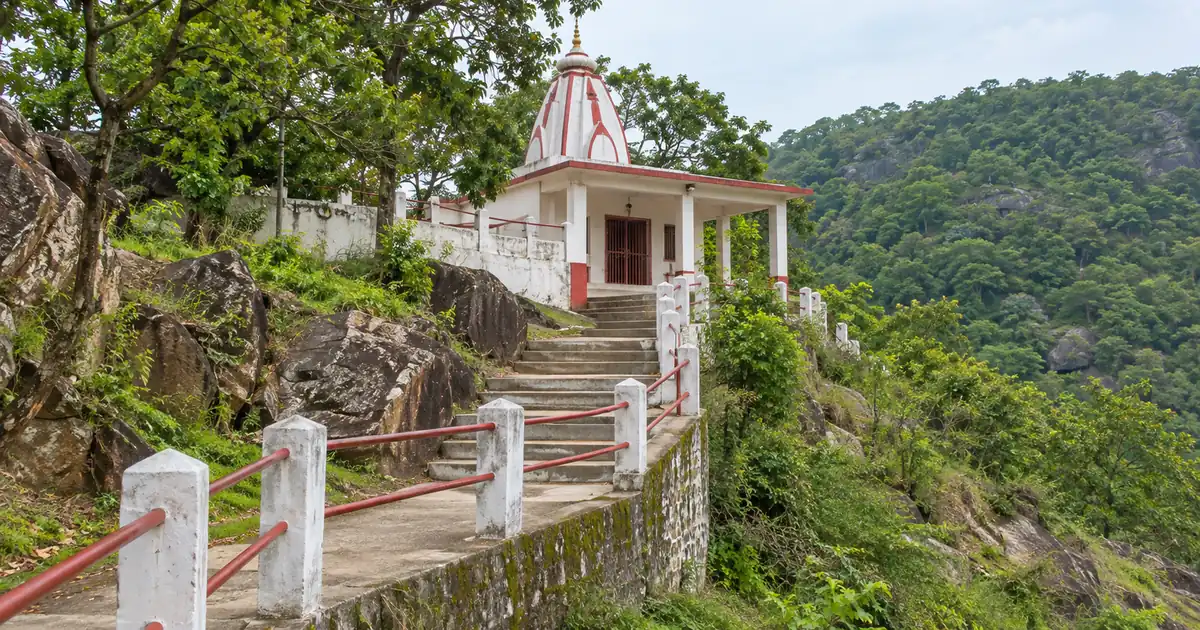
Reaching the cave temple involves walking a well-defined forest trail that ascends the eastern face of Jamukoli hill. The trek is widely considered one of the most scenic short hill walks in Nayagarh district.
The path is paved with wide concrete steps featuring moderate riser heights, making the ascent manageable for visitors of varied ages.
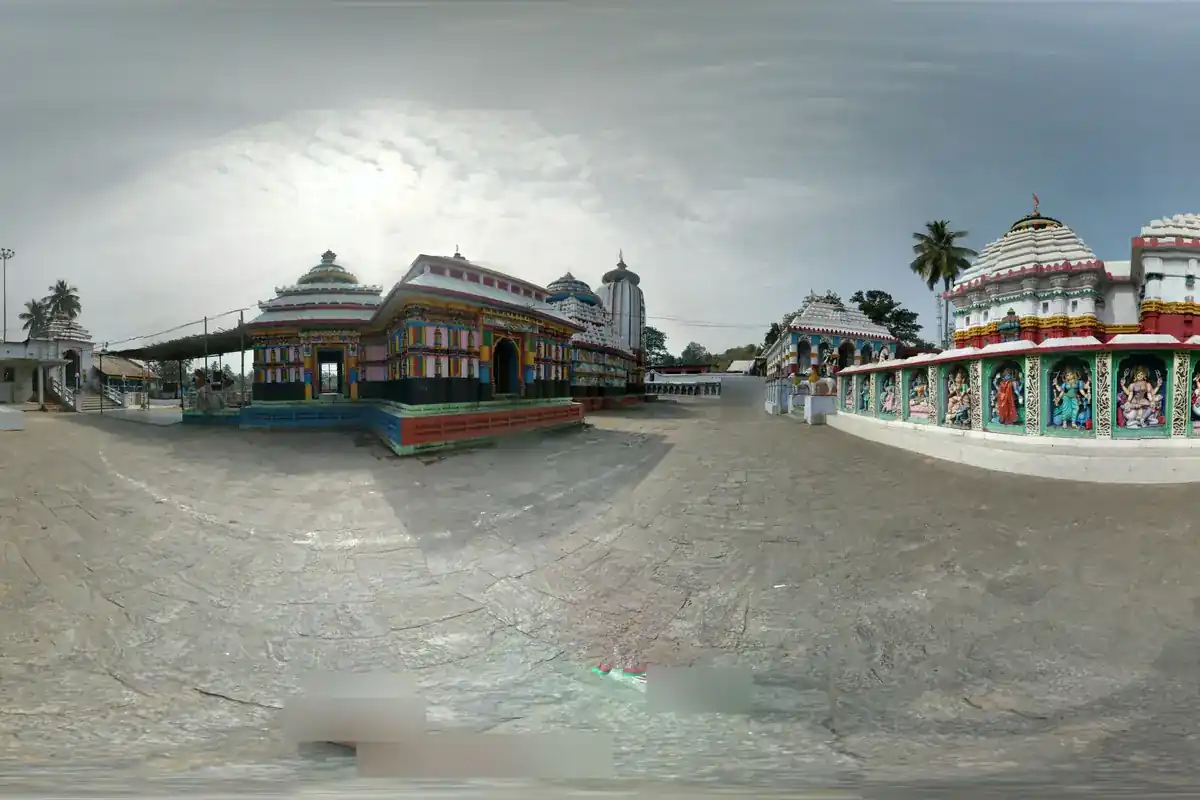
Forest Trail Gradient, Steps and Rest Pavilions
The 1-kilometer trail winds through protected deciduous forest dominated by tall sal trees, flowering Palash, and bamboo thickets. Shaded canopies shelter walkers from direct sunlight during most hours of the day.
Three covered resting sheds equipped with concrete benches are positioned along the climb, providing convenient stopping points to catch your breath. The overall ascent takes roughly 20 to 30 minutes at an easy, conversational pace.
Key guidelines for the climb include:
-
Wear comfortable walking footwear with non-slip rubber soles for the forest trail.
-
Carry drinking water, particularly during the warm summer months from March to June.
-
Keep to the paved path to protect the fragile forest undergrowth and avoid loose gravel slopes.
-
Allow 25 minutes for the descent, taking slow steps along steeper stair sections to protect your knees.
Families with toddlers should bring lightweight baby carriers, as strollers cannot be wheeled along the stepped segments.
The Companion Bhairon Baba Hilltop Shrine
In traditional Vaishno Devi devotion, no pilgrimage is considered complete without visiting the shrine of Baba Bhairavnath. Honoring this spiritual custom, the temple trust constructed a dedicated Bhairon temple atop a rocky ridge adjacent to the main cave portal.
A short flight of roughly 80 masonry stairs leads up to the Bhairon shrine. From this elevated platform, visitors enjoy uninterrupted 360-degree views of the surrounding rural landscape.
The panorama encompasses patchwork green agricultural fields, winding village streams, and the distant forested hills of Baisipalli Wildlife Sanctuary. Visiting this upper shrine during the late afternoon rewards travelers with sweeping golden-hour vistas.
Visitor Etiquette: Mobile Phone Bans, Dress Code & Photography Rules
To preserve the peace and spiritual sanctity of the cave sanctum, the temple trust strictly enforces several visitor guidelines. Being aware of these rules ensures a smooth and respectful visit.
Compliance with local customs helps maintain the sacred ambiance that makes this hidden forest shrine so special.
Security Rules, Cloakrooms and Mobile Prohibition
The most critical regulation at Jamukana is the complete prohibition of mobile phones, cameras, and electronic gadgets inside the cave tunnel.
Visitors must switch off mobile phones and deposit them in secure locker counters available outside the cave entrance. Alternatively, travelers can leave electronics inside their locked vehicles at the base parking lot.
Key visitor regulations include:
-
Strict Electronic Ban: Photography and videography inside the 180-foot artificial cave are strictly prohibited to maintain sanctity and prevent congestion.
-
Footwear Policy: All shoes, sandals, and leather accessories must be deposited at the entrance counter before stepping onto the cave threshold.
-
Modest Dress Code: Visitors must wear modest attire that covers both shoulders and knees. Traditional Indian clothing such as dhotis, kurtas, sarees, and salwar kameez is preferred.
-
Eco-Friendly Sanctuary: Jamukana hill is a designated plastic-free zone. Visitors are requested to carry their trash back down the hill and avoid discarding plastic bottles or wrappers in the forest.
Best Season and Time of Day for the Ascent
The most enjoyable season to visit Jamukana extends from October through February. During these winter months, temperatures range from a pleasant 18 to 26 degrees Celsius, making the 1-kilometer uphill walk crisp and delightful.
During monsoon months (July to September), the surrounding forest turns lush and verdant, though stone steps can become slick with rain moss. Extreme caution should be exercised when descending wet stairs.
The ideal time of day to start your ascent is between 7:00 AM and 9:00 AM, or in the late afternoon around 3:30 PM. Climbing during these windows avoids midday heat and allows you to enjoy peaceful forest silence.
How to Reach Jamukana & Nayagarh Spiritual Circuit Pairings
Jamukana is situated in rural Nayagarh district, accessible by well-paved state highways that link the coastal plains with the western tablelands of Odisha. Among all odagaon nayagarh tourist places, this hilltop cave offers the most unique combination of trekking and temple darshan.
Private taxis and personal vehicles offer the most convenient travel option for reaching the base of the hill.
Road and Transit Access from Nayagarh and Bhubaneswar
Travelers can reach Jamukana via several straightforward routes:
-
From Bhubaneswar (105 km): Drive west along National Highway 57 via Khordha town to Nayagarh. From the Nayagarh town bypass, turn southwest onto State Highway 1 toward Odagaon. At the Saradhapur junction, follow local signboards along the paved rural road leading 3 kilometers to the Jamukana hill base. The entire drive takes roughly 2.5 hours.
-
From Nayagarh Town (15 km): The temple is located only a short 25-minute drive southwest of the district headquarters. Hired auto-rickshaws and local taxis are readily available at the Nayagarh bus stand and railway station.
-
From Odagaon Town (12 km): Travelers staying near Odagaon can drive northeast along the highway, reaching the base of the hill in roughly 20 minutes.
-
By Train: Nayagarh Town Railway Station (18 km) connects to the Khurda Road Junction railway hub. Travelers arriving by train can board connecting local buses or hire private autos directly to Saradhapur.
The following transit table summarizes travel distances and modes from major hubs:
| Origin Hub | Route Distance | Primary Route | Transit Mode | Approx. Travel Time |
|---|---|---|---|---|
| Bhubaneswar Airport | 105 km | NH-57 via Khordha & Nayagarh | Private Taxi / Rental Car | 2 hours 30 mins |
| Nayagarh Bus Stand | 15 km | SH-1 via Saradhapur road | Hired Auto / Taxi | 25 mins |
| Odagaon Town | 12 km | Highway northeast to Saradhapur | Auto-Rickshaw / Car | 20 mins |
| Kantilo Town | 45 km | SH-1 through Nayagarh bypass | Private Car / Taxi | 1 hour 15 mins |
| Khurda Road Station | 88 km | NH-57 westbound | Taxi / Express Bus | 2 hours |
Official regional transit updates can be verified through the Odisha Tourism official portal and state monument listings under the Archaeological Survey of India.
Curated Day Itinerary: Jamukana, Odagaon & Kantilo
Because Jamukana is located close to other major cultural destinations in Nayagarh, travelers can craft an unforgettable one-day spiritual circuit across central Odisha.
Begin your morning around 7:30 AM with the scenic hill walk and cave darshan at Jamukana Vaishno Devi Temple. Enjoy the crisp forest air and panoramic views from the Bhairon shrine.
Next, drive 12 kilometers south to the historic Odagaon Raghunath Jew Temple. Admire its majestic golden kalash spire and observe the traditional noon puja dedicated to Lord Rama, Lakshmana, and Mata Sita.
After lunch featuring local Nayagarh delicacies such as authentic Daspalla Chhena Poda, drive 45 kilometers northeast to Kantilo Nilamadhaba Temple. Explore the sacred hilltop shrine overlooking the Mahanadi River, collect water from the perennial holy spring, and visit traditional bell-metal craft workshops.
Devotees wishing to expand their journey can travel toward Charchika Temple in Banki and Singhanath Temple in Cuttack, or continue southeast to Puri district to explore famous temples in Odisha.
Frequently Asked Questions (FAQs)
What is unique about the Vaishno Devi Temple at Jamukana Nayagarh?
The temple features an engineered 180-foot artificial rock cave tunnel modeled after the Holy Cave Shrine in Jammu. Inside the sanctum, devotees worship an eight-armed brass idol of Mata Vaishno Devi alongside the three holy stone Pindis.
What are the daily opening and darshan timings at Jamukana Temple?
The sanctum opens daily from 6:00 AM to 1:00 PM in the morning and from 2:00 PM to 8:30 PM in the evening. Gates remain open for extended hours during seasonal Navratri celebrations and major religious holidays.
Is there an entry fee or ticket required to visit Jamukana Cave Temple?
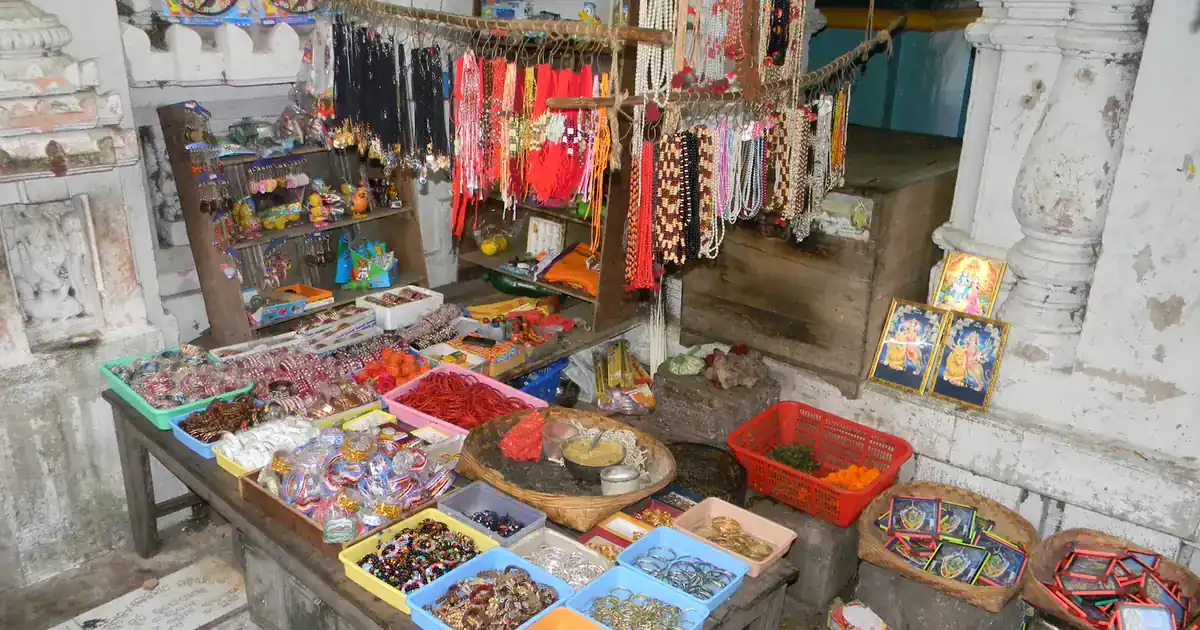
Entry to the temple grounds, the 1-kilometer forest trail, and the subterranean cave sanctum is completely free of charge. Optional puja materials and flowers can be purchased from small stalls at the base of the hill.
How difficult is the uphill trek to Vaishno Devi Temple at Jamukana?
The 1-kilometer trek follows a gentle to moderate gradient along wide, shaded concrete steps equipped with handrails and three rest pavilions. Most visitors comfortably reach the cave entrance within 20 to 30 minutes at a normal pace.
Are mobile phones and cameras allowed inside the Jamukana cave tunnel?
Mobile phones, digital cameras, and videography equipment are strictly prohibited inside the artificial cave to maintain sanctity and prevent crowds. Visitors must leave their devices in secure locker counters available outside the cave portal.