Vaishno Devi Temple Rourkela: Timings, Hill Climb & Guide
Explore Vaishno Devi Temple on Durgapur Hill in Rourkela, Sundargarh. Discover 600-stair climb, artificial cave sanctum, timings, and travel routes.
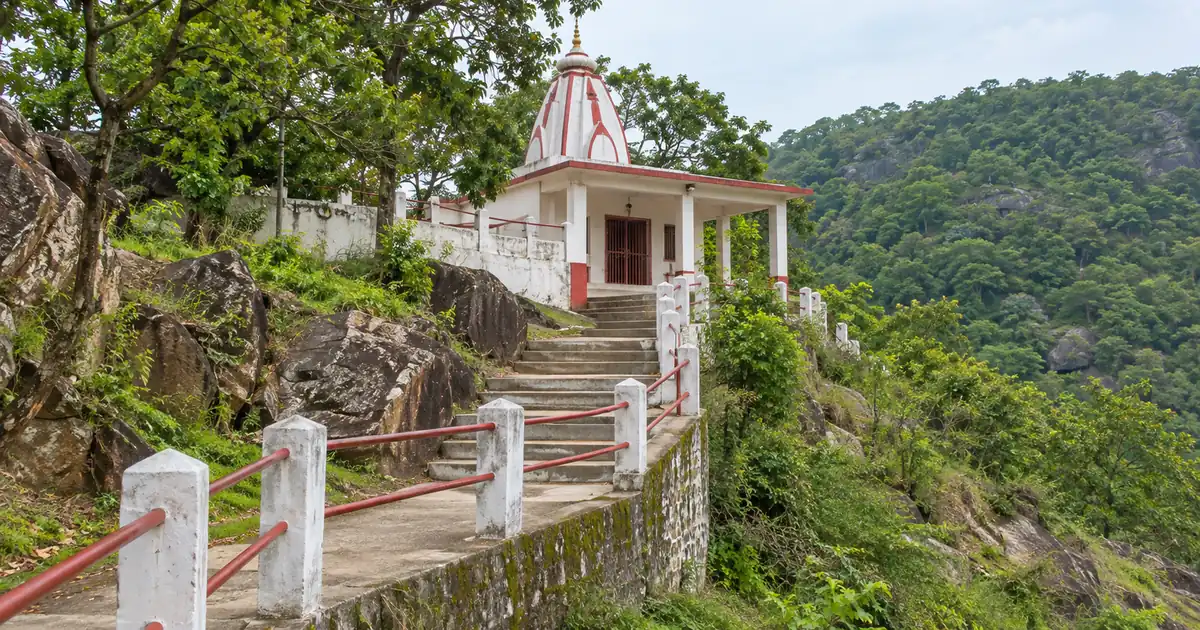
Perched high on the crest of Durgapur Hill overlooking Rourkela, the Vaishno Devi Temple stands as one of northern Odisha’s most popular pilgrimage landmarks. Designed as an authentic replica of the holy cave shrine in Jammu, this sanctuary draws devotees from across eastern India.
Across northwestern Odisha, the complex is known as the vaishno devi temple rourkela sundargarh.
The journey begins at the foot of Durgapur Pahadi, where pilgrims ascend roughly 600 stone stairs shaded by forest trees. At the summit, visitors enter an artificial cave tunnel carved to resemble the rocky passage of Katra.
Inside, the three divine Pindis of Maha Kali, Maha Lakshmi, and Maha Saraswati are enshrined in quiet sanctity. The celebrated vaishno devi temple rourkela offers spiritual fulfillment and sweeping views over the industrial valley.
Along with historic monuments featured in our Sundargarh district guide and nearby river spots highlighted in picnic spots near Rourkela, this modern hill shrine serves as a cornerstone of city life. This visitor guide details daily prayer schedules, stair climb advice, cave layout, and travel logistics.
Key Takeaways
- Sacred Concept: Faithful replica of the sacred Vaishno Devi cave shrine in Jammu, featuring an artificial tunnel and the three holy Pindis.
- Hill Climb: Requires climbing approximately 600 concrete and stone steps up Durgapur Hill, taking roughly 25 to 40 minutes.
- Darshan Timings: Open daily from 6:00 AM to 12:00 PM and 3:00 PM to 8:30 PM with free public admission.
- Summit Highlights: Includes the cave sanctum, a separate hilltop Bhairavnath temple, and panoramic viewpoints over Rourkela.
- Easy City Access: Located 8 km from Rourkela Junction railway station, easily reached by auto-rickshaw or city taxi.
Vaishno Devi Temple Rourkela Sundargarh at a Glance: Timings & Overview
Planning a trip up Durgapur Hill requires coordinating with daily temple timings and weather conditions. Morning and late afternoon hours offer comfortable climbing temperatures and clear vistas over the surrounding hills.
The complex was conceived around the year 2000 and consecrated in 2003 under the leadership of local industrialist and philanthropist Raju Chandak. Maintained meticulously by the Vaishno Devi Temple Trust, the site features clean pathways, drinking water kiosks, and resting benches along the stairs.
The temple is also known locally as durgapur hill temple rourkela among neighborhood residents. Admission to the entire complex is completely free for all devotees.
The following table summarizes essential operational metrics for the shrine:
| Operational Metric | Visitor Details |
|---|---|
| Temple Complex | Sri Mata Vaishno Devi Mandir |
| Hill Name | Durgapur Hill (Durgapur Pahadi) |
| City & District | Rourkela, Sundargarh District |
| Morning Timings | 6:00 AM to 12:00 PM daily |
| Evening Timings | 3:00 PM to 8:30 PM daily |
| Stairs Count | Approximately 600 stone and concrete steps |
| Ascent Duration | 25 to 40 minutes at normal walking pace |
| Entry Fee | Free public admission for all visitors |
| Special Festivals | Chaitra Navratri, Sharadiya Navratri, Diwali |
| Nearest Railway Station | Rourkela Junction (8 km) |
| Nearest Airport | Rourkela Airport at Chhend (5 km) |
Quick Reference Schedule and Key Facts
The vaishno devi temple rourkela timings accommodate both morning fitness walkers and evening temple pilgrims. Gates open at 6:00 AM as the morning Mangala Alati begins inside the cave sanctum.
Devotees can enter the cave tunnel throughout the morning until noon, when the sanctum briefly closes for the mid-day Bhoga offering and rest. The complex reopens at 3:00 PM for afternoon visitors.
The evening Sandhya Alati takes place at 7:00 PM, accompanied by devotional chants and brass bell chimes. The complex closes at 8:30 PM on regular weekdays, though temple gates remain open until 10:00 PM or midnight during Navratri celebrations.
Who Will Enjoy the Climb and Hilltop Setting
Fitness enthusiasts and morning walkers regularly ascend the 600 steps as part of their daily exercise routine. The shaded mountain path and fresh forest air offer a peaceful escape from the busy commercial markets of Sector-19 and Main Road.
Devotees seeking blessings from Mata Vaishno Devi appreciate the faithful recreation of the Katra pilgrimage rituals. Families with children enjoy the unique experience of walking through the artificial cave tunnel and viewing the city lights from the summit lookout pavilion.
Photography lovers will find sunrise and sunset particularly rewarding, with soft golden light casting long shadows across the Koel river valley.
Sacred Layout: Artificial Cave Tunnel, Pindi Darshan & Bhairon Temple
The spiritual core of the complex is designed to replicate the geographical layout and spiritual progression of the original Himalayan shrine. Visitors walk through a landscaped courtyard before entering the rocky mouth of the artificial cave tunnel.
The tunnel measures roughly 50 feet in length, built with contoured faux rock walls and low arched ceilings. Cool air circulates through the stone corridor, accompanied by the gentle sound of flowing water designed to evoke the Charan Ganga stream of Katra.
| Pilgrimage Phase | Ritual Step and Location | Devotional Purpose |
|---|---|---|
| 1. The Ascent | Climbing 600 steps up Durgapur Hill | Purification of mind and physical penance |
| 2. Cave Entry | Winding artificial rock tunnel | Simulating the journey through Ardhkuwari cave |
| 3. Pindi Darshan | Sanctum sanctorum altar | Worship of Maha Kali, Maha Lakshmi, and Maha Saraswati |
| 4. Bhairavnath Shrine | Elevated ridge above main temple | Fulfilling the essential concluding vow of the pilgrimage |
| 5. Prasada & Parikrama | Outer courtyard circumambulation | Receiving coconut, batasha, and blessed sacred thread |
Walking Through the Winding Cave Passage
Devotees must remove their shoes at the designated counters before stepping onto the marble floor approaching the cave entrance. The passage is illuminated by warm recessed lighting that creates an intimate, reflective atmosphere.
Visitors stoop slightly as they make their way through the narrower sections of the artificial cave temple rourkela. Devotional chants of Jai Mata Di echo softly off the textured plaster walls, creating a collective sense of shared reverence.
Paved drainage channels run alongside the walkway, keeping the stone pathway dry and safe even during heavy monsoon showers.
Darshan of the Three Sacred Pindis and Lord Bhairon
At the heart of the cave lies the inner sanctum, where the goddess is worshipped in her three-fold manifestation. Unlike anthropomorphic idols, the presiding deities are represented as three natural rock mounds (Pindis) decorated with silk chunnari fabrics, silver umbrellas, and fresh marigold garlands.
Maha Kali sits on the left, symbolizing cosmic dissolution and spiritual strength. Maha Lakshmi occupies the center, representing prosperity and sustenance, while Maha Saraswati on the right embodies knowledge, wisdom, and fine arts.
According to classical Vaishno Devi legend, a pilgrimage to the mother goddess remains incomplete without paying homage to Lord Bhairon, who was granted salvation by the goddess upon his defeat. Devotees climb an additional short flight of stairs behind the main shrine to visit the hilltop Bhairavnath temple rourkela before completing their worship.
The 600-Stair Hill Climb: Trek Difficulty, Resting Points & Views
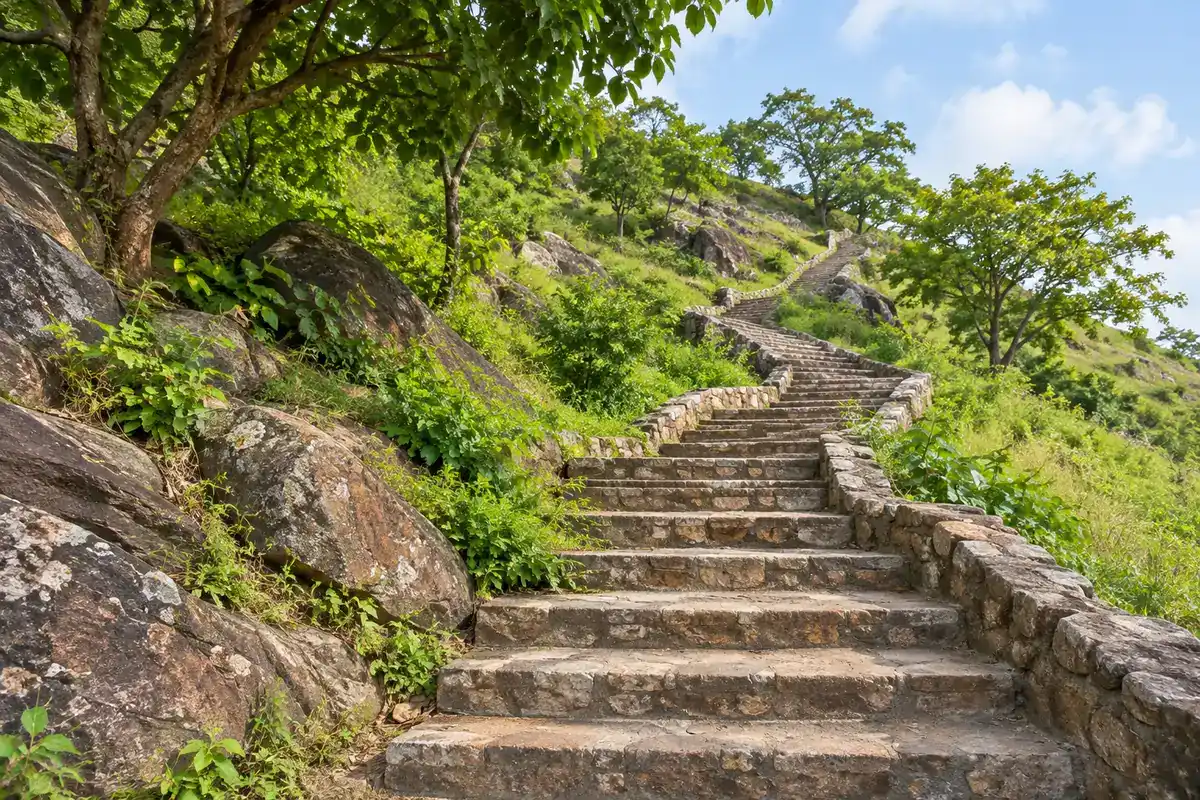
The physical climb up Durgapur Hill is an integral part of the spiritual experience at Rourkela’s Vaishno Devi shrine. Ascending the hill requires moderate physical effort, making proper pacing important for visitors of varying fitness levels.
The stone stairway is well maintained, featuring uniform step heights, protective metal railings, and non-slip masonry surfaces.
Step Count, Gradient and Ascent Guidelines
The stairway comprises roughly 600 steps divided into multiple inclined segments. The initial third of the climb follows a gentle gradient through leafy sal and neem trees, providing ample morning shade.
The middle segment steepens noticeably as the stairway rounds the eastern shoulder of the hill. Four covered resting pavilions with built-in stone benches are situated at regular intervals, allowing senior citizens and young children to rest comfortably.
Travelers should observe several practical climbing tips:
-
Climb at a steady, unhurried pace, resting for two to three minutes at each covered pavilion to prevent muscle fatigue.
-
Carry a refillable water bottle, particularly during warmer pre-monsoon months between March and June.
-
Wear sturdy walking shoes with good traction for the ascent, as steps can become slippery during rainy monsoon periods.
-
Avoid carrying heavy shoulder bags, keeping hands free to hold the metal support railings along steeper sections.
Elderly travelers or visitors with knee ailments should evaluate their physical comfort before attempting the full climb, as palanquin services are not permanently available on regular weekdays.
Panoramic Vistas of Rourkela City and Koel Valley
As you ascend higher along the ridge of durgapur pahadi rourkela, the tree canopy opens up to reveal commanding viewpoints over the urban layout of Rourkela.
From the observation decks near the summit, visitors can clearly see the sprawling industrial footprint of the Rourkela Steel Plant (RSP) to the south, the winding silver ribbon of the Koel River to the west, and the modern residential layout of Chhend Colony below.
Watching the evening sun sink behind the rugged forested hills of the Chota Nagpur plateau is an unforgettable highlight. After twilight, the twinkling streetlights of the city spread across the valley floor like a field of stars.
Navratri Celebrations, Festivals & Visitor Rules
While the shrine welcomes devotees throughout the year, the complex reaches the peak of its spiritual grandeur during the bianual Navratri festivals. Thousands of families from across Sundargarh, Jharsuguda, and neighboring Jharkhand travel to the hill to participate in special rituals.
Both the spring Chaitra Navratri (March-April) and the autumn Sharadiya Navratri (September-October) are celebrated with elaborate devotional ceremonies.
Nine Days of Navratri and Special Night Darshan
During Navratri, the entire Durgapur Hill is decorated with miles of colorful fairy lights, floral arches, and festive flags. Special high-power floodlights illuminate the 600-stair path, enabling safe night ascents for devotees.
Continuous Akhand Kirtan and devotional bhajans echo through outdoor loudspeakers from sunrise to midnight. The temple trust organizes free community meals (Langar) at the base of the hill, serving thousands of plates of nutritious vegetarian khichdi, poori, and halwa.
Devotees observe fasts and climb the steps barefoot as an act of personal devotion. Special police patrols and youth volunteers manage queue lines to ensure smooth movement through the cave sanctum.
During regional holiday periods, visitors often pair this temple with cultural events described in our Rourkela City Festival guide.
Temple Rules, Photography and Footwear Guidelines
Visitors must observe standard temple etiquette while on the premises:
-
Footwear: Shoes, sandals, and leather belts must be left at the free shoe counter located at the entrance to the marble sanctum terrace.
-
Photography: Taking pictures of the panoramic city views and exterior hill scenery is permitted. However, photography and video recording inside the artificial cave tunnel and inner Pindi sanctum are strictly prohibited.
-
Dress Code: Modest attire is required for all visitors. Shoulders and knees must be fully covered, and traditional clothing such as sarees, salwar suits, kurtas, or trousers is recommended.
-
Cleanliness: Durgapur Hill is a designated plastic-free zone. Visitors are requested to dispose of waste in designated rubbish bins and refrain from littering along the staircase.
How to Reach Durgapur Hill & Curated Rourkela City Circuit
Vaishno Devi Temple is situated in the western residential sector of Rourkela, easily accessible from all major neighborhoods, railway stations, and transit hubs across Sundargarh district.
Its convenient urban location makes it simple to integrate into a half-day or full-day sightseeing tour.
Road and Local Transit from Rourkela Junction and Chhend
The temple is well connected by paved municipal roads:
-
From Rourkela Railway Station (8 km): Pre-paid auto-rickshaws, shared autos, and app-based cabs are readily available outside the main platform entrance. The drive takes approximately 20 to 25 minutes through Uditnagar and Panposh.
-
From Panposh Bus Stand (5 km): Regular shared auto-rickshaws run between Panposh and Chhend along the main ring road. A brief five-minute connecting auto ride from the Chhend junction brings you directly to the temple parking lot.
-
From Rourkela Airport (5 km): The regional airport at Chhend is located just a short ten-minute drive from the foot of Durgapur Hill.
-
Parking Facility: A spacious open-air parking ground is available at the base of the hill for two-wheelers, private cars, and tour buses. Modest parking fees of 10 to 30 rupees are collected by the local municipality during festival days.
The following transit table summarizes travel options from key city locations:
| Departure Point | Travel Distance | Primary Transit Mode | Typical Travel Time |
|---|---|---|---|
| Rourkela Junction (Station) | 8 km | Auto-Rickshaw / Taxi | 20-25 mins |
| Panposh Junction | 5 km | Shared Auto / Car | 12-15 mins |
| Sector-19 Market | 10 km | City Bus / Auto | 25-30 mins |
| Chhend Main Market | 3 km | Auto / Cycle Rickshaw | 8-10 mins |
| Vedvyas River Confluence | 7 km | Taxi / Auto | 15-20 mins |
Official regional transit updates can be verified through the Odisha Tourism official portal.
One-Day Spiritual & Nature Circuit in Sundargarh
Travelers can easily combine the hilltop temple with other major spiritual landmarks across western Odisha.
Start your morning at 7:00 AM by visiting the celebrated Vedvyas Temple in Rourkela, located just seven kilometers southwest at the sacred confluence of the Sankha and Koel rivers. Explore the historic rock cave where sage Vyasa is believed to have compiled the epic Mahabharata.
Next, drive into the city center to visit Hanuman Vatika, a 13-acre landscaped temple complex featuring a majestic 75-foot statue of Lord Hanuman and peaceful garden pavilions.
Enjoy lunch at a local restaurant in Civil Township or Panposh, sampling traditional Odia dishes and fresh sweets.
In the late afternoon around 4:00 PM, drive to Durgapur Hill to climb the 600 steps to the Vaishno Devi Temple. Experience the cool cave tunnel darshan, pay respects at the Bhairavnath shrine, and watch the sun set over the city.
For longer regional excursions extending across western and central Odisha, travelers can also explore heritage sites documented under the Archaeological Survey of India database such as Singhanath Temple in Cuttack and Joranda Mahima Temple in Dhenkanal, alongside other famous temples in Odisha.
Frequently Asked Questions (FAQs)
How many steps are there in Vaishno Devi Temple Rourkela?
Devotees must climb approximately 600 concrete and stone steps to reach the hilltop cave complex atop Durgapur Hill. The staircase features handrails and four covered pavilions where climbers can rest along the way.
What are the daily opening and darshan timings at Rourkela Vaishno Devi Temple?
The temple opens daily from 6:00 AM to 12:00 PM in the morning and from 3:00 PM to 8:30 PM in the evening. During the nine days of Navratri, the temple remains open until 10:00 PM or midnight for night darshan.
Is there any entry fee or ticket required to visit Vaishno Devi Temple in Rourkela?
Entry to the temple complex, the cave tunnel, and the hilltop viewpoints is completely free of charge. Devotees may choose to purchase optional puja kits or flowers from stalls located near the base of the hill.
How far is Vaishno Devi Temple from Rourkela Railway Station?
The temple is located approximately 8 kilometers west of Rourkela Junction railway station on Durgapur Hill near Panposh. The trip takes roughly 20 to 25 minutes by local auto-rickshaw or taxi.
What are the main deities worshipped inside the cave sanctum?
The sanctum houses three natural sacred rock forms called Pindis, representing Goddess Maha Kali, Goddess Maha Lakshmi, and Goddess Maha Saraswati. A separate shrine dedicated to Lord Bhairavnath is located higher on the ridge.