Baliharachandi Temple and Sea Beach Puri: Visitor Guide
Explore Baliharachandi Temple Bali Harachandi Sea Beach Puri. Discover the sand dune Goddess Harachandi shrine, Bhargavi estuary, timings, and route tips.
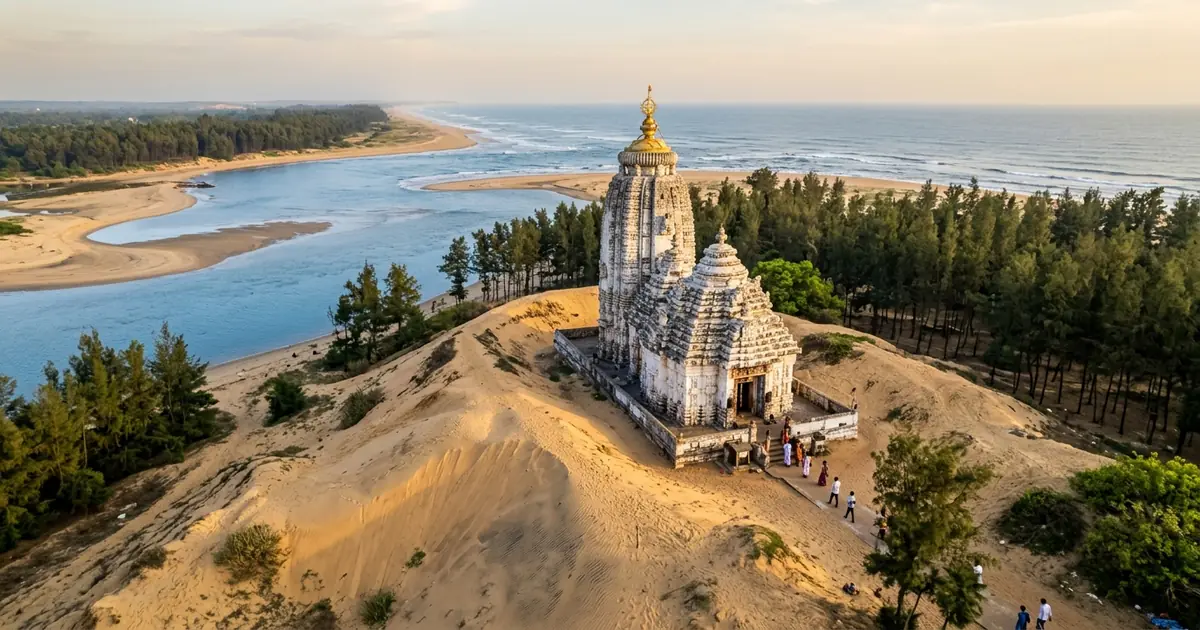
Baliharachandi Temple and Sea Beach Puri stands as an inspiring coastal destination where sacred Shakti worship blends with untouched maritime nature. Located near Palanka village in Brahmagiri block within Puri district travel guide, this holy shrine is perched atop high sand dunes.
What distinguishes this coastal spot is its dramatic natural setting. The temple stands at the precise confluence where the Bhargavi River empties into the Bay of Bengal. The tranquil setting makes it a cherished stop among the sacred famous temples in Odisha.
Key Takeaways
- Sand Dune Sanctuary: Historic temple perched atop rolling sand ridges overlooking the meeting point of river and sea.
- Presiding Goddess: Enshrines an eight-armed image of Goddess Mahisamardini Durga worshipped as Baliharachandi, protector of navigators.
- Estuary Boat Crossing: Country boats ferry visitors across the calm river mouth channel to reach the secluded open ocean beach.
- Casuarina Forest Trails: Framed by dense casuarina pine plantations offering shaded picnic grounds and coastal breezes.
- Accessible Day Trip: Located twenty-seven kilometers southwest of Puri town off the highway corridor leading to Brahmagiri.
Baliharachandi Temple Bali Harachandi Sea Beach Puri at a Glance
Travelers seeking respite from crowded urban shorelines will find Baliharachandi a peaceful escape. The site combines spiritual reverence with broad stretches of golden sand that stretch toward the horizon.
Local fishing families live in adjacent hamlets, launching wooden catamarans into the surf at dawn. The natural harmony between village livelihoods and coastal ecology creates an authentic atmosphere for weekend travelers and photographers visiting Bali Harachandi Beach Puri.
| Feature | Verified Information | Traveler Advice |
|---|---|---|
| Presiding Deity | Goddess Baliharachandi (Eight-Armed Durga) | Revered as protector of seafarers and water |
| Temple Location | Near Palanka, Brahmagiri Block, Puri District | 27 km southwest of Puri town |
| River Confluence | Bhargavi River meets the Bay of Bengal | Dynamic estuary with shifting sandbanks |
| Temple Timings | 6:00 AM to 6:30 PM | Open daily throughout the week |
| Admission Fee | Free entry for all visitors | Country boat ride ₹20 to ₹30 per passenger |
| Nearest Railway Hub | Puri Railway Station (PURI) | 28 km northeast via Brahmagiri road |
| Nearest Airport | Biju Patnaik Airport Bhubaneswar | 85 km north via NH-316 highway |
The sea breeze moderates daytime coastal warmth, while winter months from October to March offer pleasant conditions for walking across the sandy terrain.
Spiritual Lore and Iconography of Goddess Baliharachandi
The worship of Goddess Harachandi at this coastal location dates back several centuries in the sacred folklore of coastal Odisha. The word Bali signifies sand in the Odia language, reflecting the high dune ridge upon which the temple rests.
Inside the sanctum sanctorum sits an ancient black chlorite idol of the Goddess sculpted in the eight-armed (Asta-Bhuja) form of Mahisamardini Durga. The deity holds classical celestial weapons, including the trident, sword, shield, bow, arrow, and discus, while trampling the demon Mahishasura. Devotees also refer to this shrine as Harachandi Temple Puri.
In regional maritime tradition, local fishermen and seafaring merchants prayed to Goddess Baliharachandi before venturing into deep ocean waters. Devotees regard her as the supreme protector against dangerous tides, river whirlpools, and sudden coastal cyclones.
The temple also maintains ceremonial connections with the Shree Jagannath Temple in Puri. During the auspicious Mahanavami day of Durga Puja, traditional offerings and consecrated garments are sent from the Jagannath Temple to honor the goddess.
Temple Architecture and Sand Dune Setting
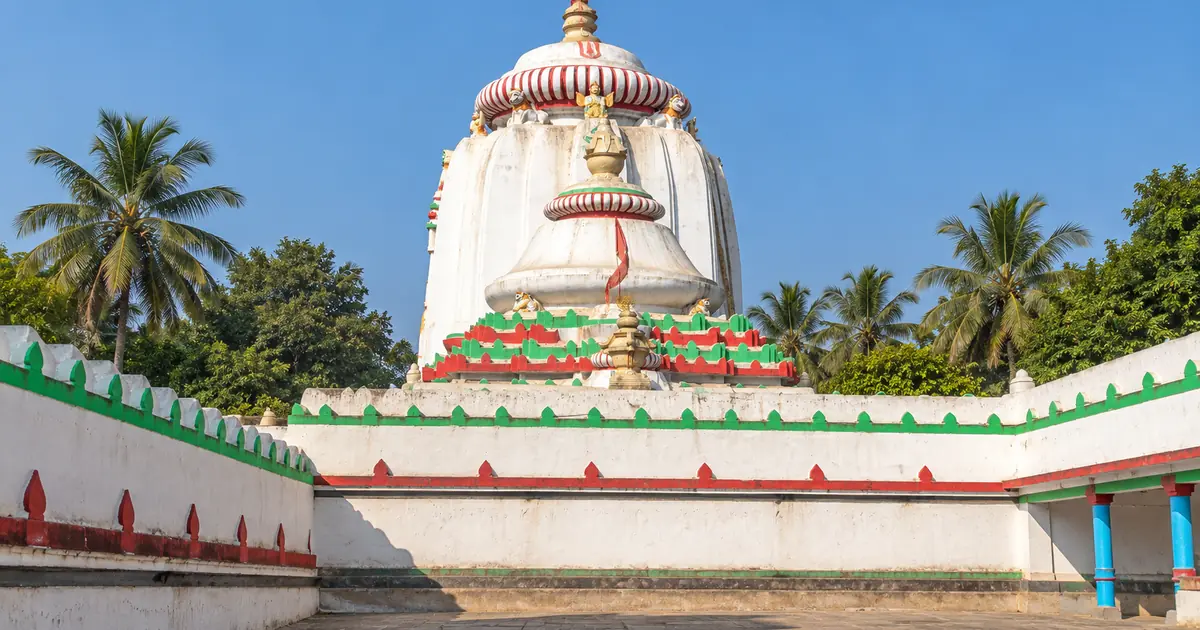
Baliharachandi Temple exemplifies the modest yet sturdy structural engineering developed for coastal Kalinga shrines. Because the temple faces fierce marine winds and salt spray, its exterior walls are coated with protective lime plaster over dressed laterite and khondalite blocks.
The complex consists of two primary contiguous structures: a compact sanctum tower (Vimana) and a square assembly hall (Jagamohana). The pyramidal shikhara rises gracefully above the surrounding sand ridges, topped by a fluted amalaka stone and a sacred brass flag.
A wide flight of masonry steps ascends the steep dune slope from the vehicle parking area to the main temple gate. Standing on the elevated temple terrace, visitors enjoy panoramic views of the river channel, green casuarina belts, and the crashing blue surf of the Bay of Bengal.
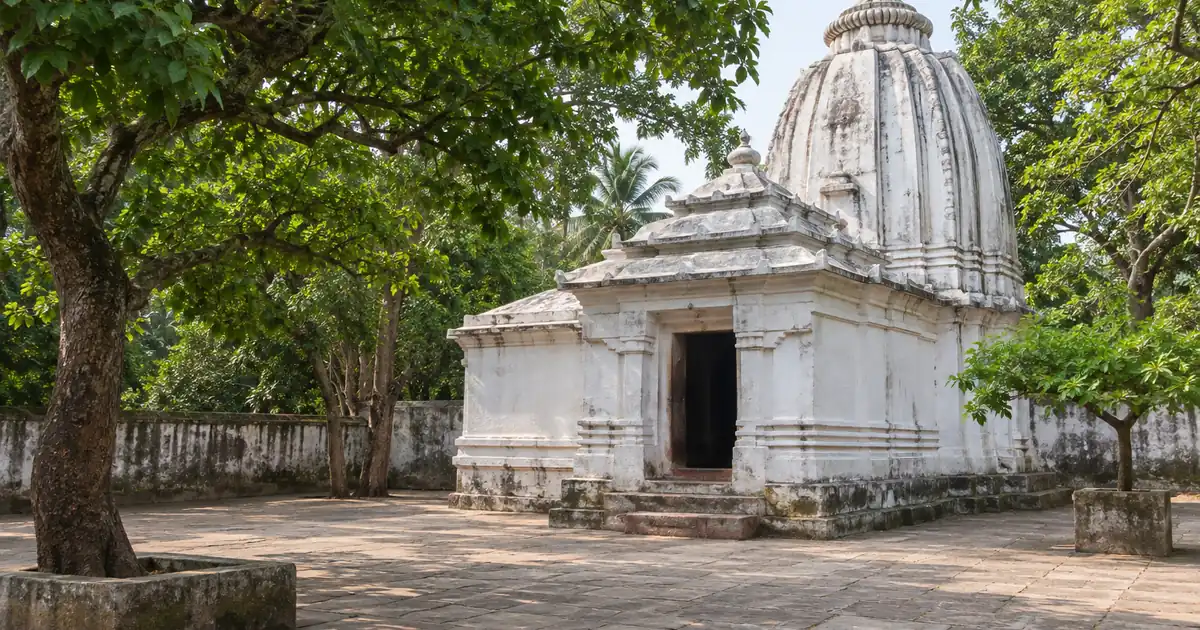
Modest ancillary shrines within the paved courtyard are dedicated to Lord Ganesha, Lord Shiva, and Lord Hanuman, providing a complete traditional worship circuit for visiting pilgrims.
Bali Harachandi Sea Beach and the River Estuary Boat Ride
One of the most enjoyable aspects of visiting Baliharachandi is the journey from the temple ridge across to the open sea beach. The main shoreline is separated from the temple hillock by a quiet inlet of the Bhargavi River.
Local boatmen operate traditional flat-bottomed wooden boats that ferry passengers across the shallow water channel in less than five minutes. The boat ride offers delightful views of water reflections and mangrove shrubs along the riverbanks.
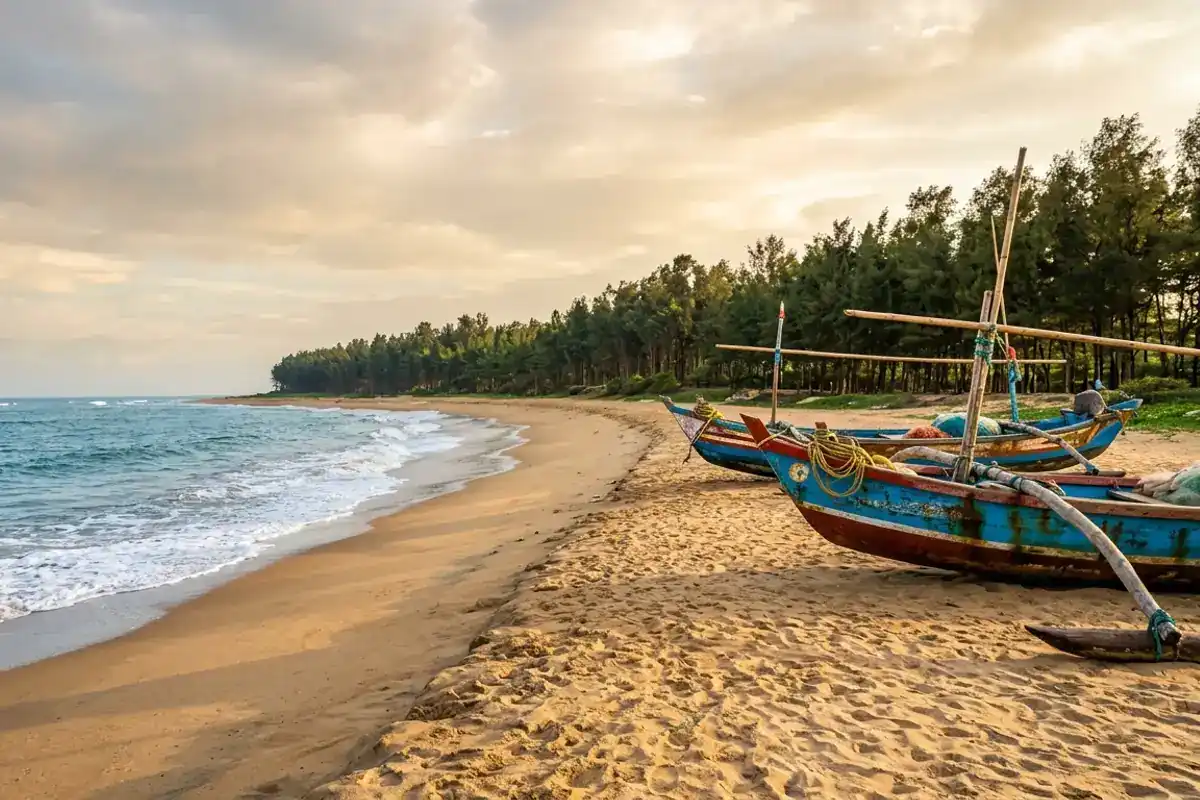
Once on the seaward sandspit, visitors step onto an expansive, uncrowded beach. The sands here are fine and golden, completely free from concrete buildings, loud souvenir stalls, or commercial beach clutter.
Travelers can take long barefoot strolls along the water’s edge, gather colorful sea shells, or watch red ghost crabs scuttling across the wet sand. The quiet ambiance provides a striking contrast to the busy atmosphere documented in our Puri Golden Beach guide.
Temple Timings, Daily Pujas, and Festive Celebrations
Baliharachandi Temple welcomes pilgrims and sightseers every day from dawn until dusk, following a disciplined schedule of daily services.
| Ritual Service | Scheduled Timing | Pilgrim Activity |
|---|---|---|
| Morning Mangala Alati | 6:00 AM to 6:30 AM | Dawn worship with bells, conch sounds, and camphor |
| Morning Darshan & Archana | 6:30 AM to 12:30 PM | Devotees offer flowers, coconuts, and red chunari |
| Midday Pahada (Sanctum Rest) | 12:30 PM to 2:30 PM | Inner sanctum doors closed; outer grounds open |
| Afternoon & Evening Darshan | 2:30 PM to 6:00 PM | Pleasant afternoon prayers as sea breezes strengthen |
| Sandhya Alati & Closure | 6:00 PM to 6:30 PM | Evening oil lamp arati before sunset gates close |
Entry to the temple and sand dunes is free of charge. Modest fees apply only for the country boat ride across the river channel, typically costing around twenty to thirty rupees per passenger for a two-way trip.
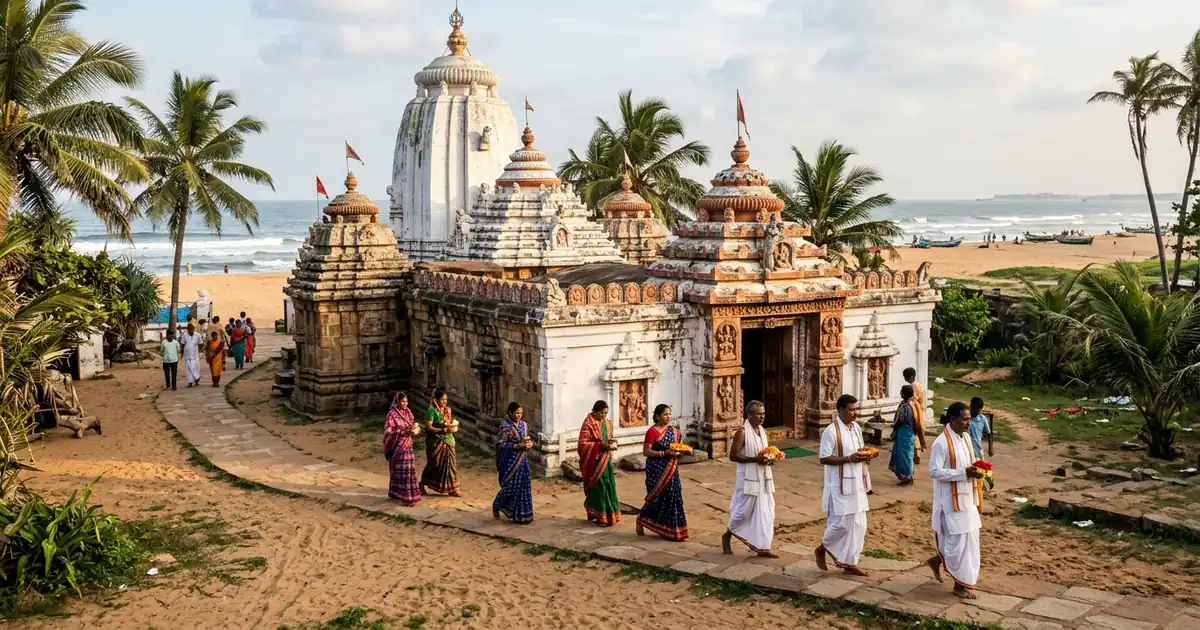
The temple experiences its largest annual crowds during the four-day Raja agricultural festival in mid-June. Village girls and women dress in traditional attire to celebrate womanhood and worship Goddess Harachandi with floral swings and sweet poda pitha.
During the autumn Durga Puja festivities, especially on Mahanavami, thousands of devotees travel from surrounding districts to offer special prayers and seek divine blessings. Verified state cultural dates are accessible on the Odisha State Portal.
How to Reach Baliharachandi from Puri and Brahmagiri
Baliharachandi is located in the southwestern quadrant of Puri district, twenty-seven kilometers from Puri town center along the road to Brahmagiri.
| Starting Location | Distance | Travel Duration | Primary Travel Route |
|---|---|---|---|
| Puri Town / Grand Road | 27 km | 40 to 45 minutes | Via Puri-Brahmagiri Road to Kathuabada Chhak |
| Puri Railway Station | 28 km | 45 minutes | Direct highway taxi or auto-rickshaw |
| Brahmagiri Town (Alarnath) | 12 km | 20 minutes | State Highway connecting east toward Palanka |
| Satapada (Chilika Lake) | 35 km | 50 minutes | Southward coastal highway corridor |
| Bhubaneswar Airport | 85 km | 2 hours | NH-316 to Puri bypass, then Brahmagiri road |
Transit by Road
The most convenient way to reach the site is by hiring a private taxi or auto-rickshaw from Puri town. Travel westward along the Puri-Brahmagiri road until reaching Kathuabada Chhak, where a prominent roadside signpost directs travelers down a peaceful five-kilometer rural lane toward Palanka village and the temple dunes.
Transit by Public Bus
Regular government and private buses run between Puri bus terminal and Brahmagiri town every fifteen minutes. Passengers can disembark at Kathuabada Chhak and hire a local shared auto-rickshaw for the short final drive to the temple. Official tourism information is available on the Odisha Tourism Portal.
Nearby Coastal Attractions in the Brahmagiri-Chilika Circuit
Visiting Baliharachandi pairs naturally with celebrated pilgrimage and nature destinations in southern Puri district, highlighting popular Brahmagiri tourist places. Travelers can easily organize an engaging full-day itinerary.
Alarnath Temple in Brahmagiri
Located just twelve kilometers west, the historic Alarnath Temple in Brahmagiri is dedicated to Lord Vishnu. Millions of pilgrims visit this sacred shrine during the Anavasara fortnight when the main Puri Jagannath Temple remains closed to the public.
Satapada and Chilika Lake
Continuing thirty-five kilometers southwest along the highway brings travelers to Satapada on Chilika Lake. Visitors can board motorized eco-tourism boats to spot playful Irrawaddy dolphins and visit the sea mouth, as detailed in our Satapada Chilika Lake travel guide.
Puri Town Sightseeing Highlights
Before or after your excursion to the dunes, explore the cultural riches of the town with our comprehensive guide to places to visit and things to do in Puri.
Practical Traveler Tips for Visitors and Picnickers
- Footwear Selection: Sand dunes heat up rapidly under direct sun; wear slip-on sandals or water shoes that are easy to remove at the temple entrance and comfortable for walking on loose sand.
- Carry Drinking Water: Aside from small village refreshment stalls near the parking ground, commercial amenities on the seaward beach are nonexistent; carry sufficient hydration.
- Boat Crossing Caution: Only board authorized country boats equipped with life rings, and avoid standing up while crossing the river mouth channel.
- Sea Swimming Warning: The estuary where the river meets the ocean creates strong undercurrents; deep swimming in the sea surf is hazardous and should be avoided.
- Eco-Cleanliness Responsibility: Pack all food containers and plastic waste back in your vehicle to protect the sensitive coastal nesting environment and keep the sand dunes clean.
Frequently Asked Questions
Where is Baliharachandi Temple located in Puri?
Baliharachandi Temple is located near Palanka village in Brahmagiri block, Puri district, Odisha. It is situated approximately twenty-seven kilometers southwest of Puri town along the coastal Bhargavi River estuary.
Why is the temple called Baliharachandi?
The name combines Bali, meaning sand in Odia, with Harachandi, referring to Goddess Durga. The temple earned this title because it is built atop natural elevated sand dunes overlooking the sea.
What is the presiding deity of Baliharachandi Temple?
The temple enshrines an eight-armed black stone sculpture of Goddess Mahisamardini Durga, locally worshipped as Baliharachandi and revered as the divine protector of water, fishermen, and seafarers.
What are the opening timings of Baliharachandi Temple?
The temple opens daily from 6:00 AM to 6:30 PM for public darshan, closing briefly for afternoon rest between 12:30 PM and 2:30 PM.
How do visitors reach the sea beach from the temple?
Visitors take a short country boat ride operated by local boatmen across the quiet Bhargavi River inlet, reaching the secluded golden sand beach in less than five minutes.
Is Baliharachandi Beach safe for swimming?
Walking along the sand and wading in shallow shoreline water is enjoyable, but swimming deep into the surf is dangerous due to strong tidal currents at the river mouth.