Chakra Tirtha Temple Puri: Sacred Daru Shrines & Guide
Explore Chakra Tirtha Temple Puri on CT Road. Discover the sacred Daru landfall site, Chakranarayana, three Nrusingha forms, timings, and pilgrim tips.
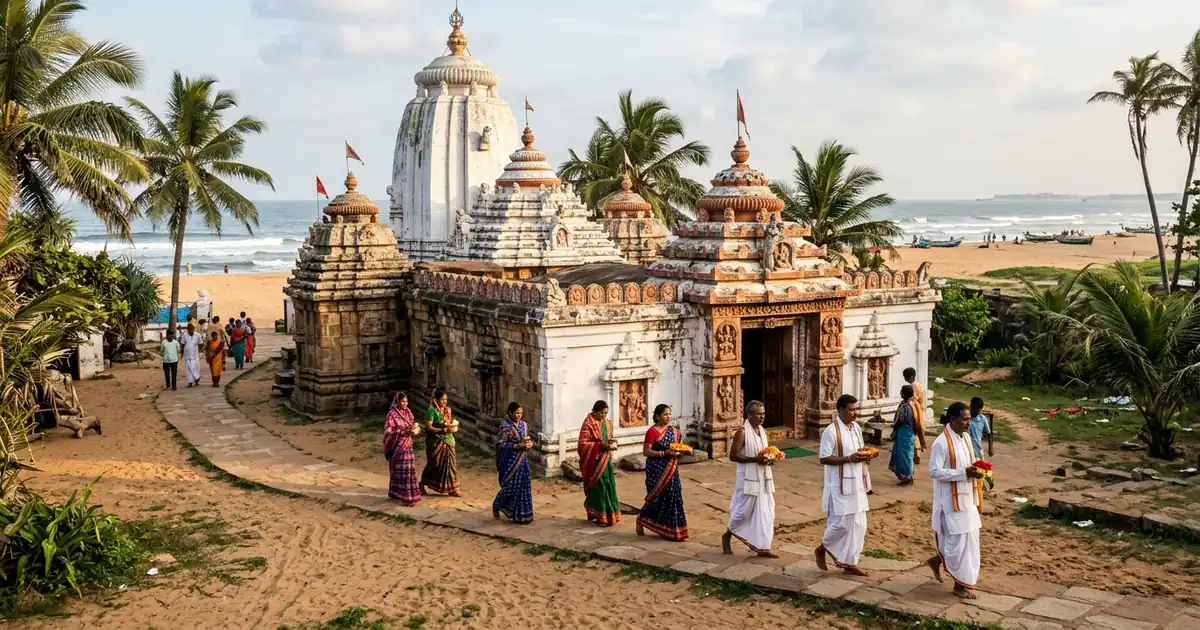
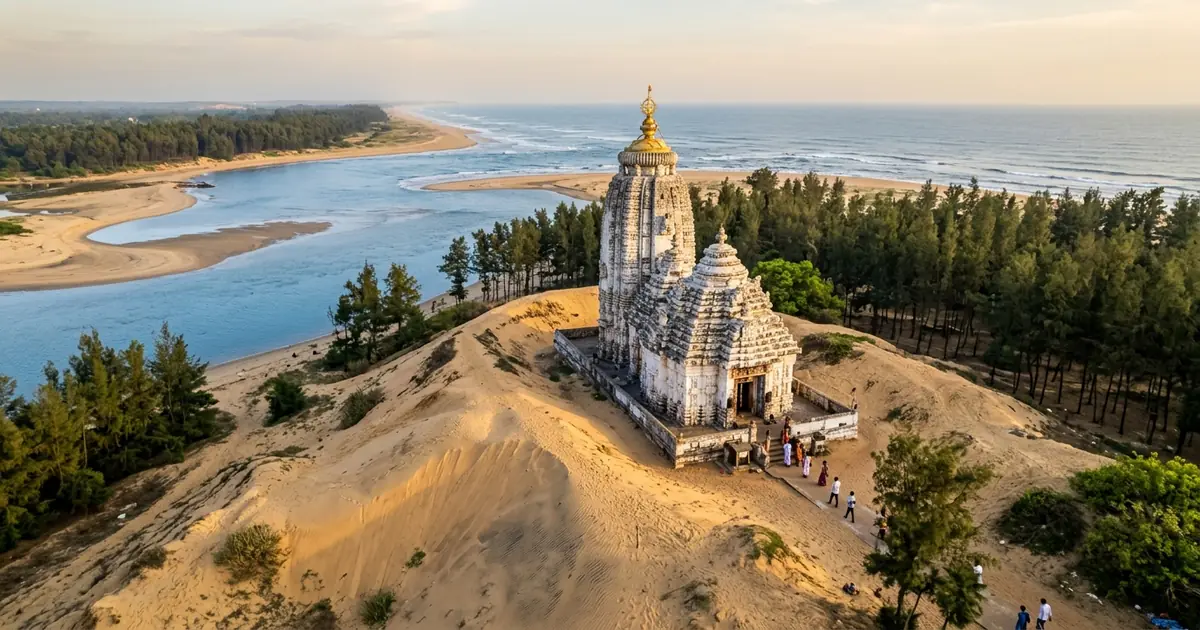
Chakra Tirtha Temple Puri stands as one of the most spiritually significant coastal sanctuaries in the holy town of Puri. Situated along Chakra Tirtha Road near the quiet sands of Penthakota within Puri district travel guide, this holy shrine occupies a revered position in Jagannath culture. Pilgrims and scholars also honor the shrine under the traditional titles of Chakra Narayana Temple Puri and Chakra Nrusingha Temple Puri.
The site is intrinsically connected to the foundational origins of Shree Jagannath Temple in Puri. According to sacred tradition, it was at this exact shoreline location where the celestial neem log floating across the ocean first touched earthly soil. The complex remains a vital spiritual stop among famous temples in Odisha.
Key Takeaways
- Sacred Daru Landfall: The revered seaside spot where the celestial timber log for carving the original idols of Lord Jagannath washed ashore.
- Chakranarayana Sanctum: Enshrines a submerged black granite Sudarshana Chakra alongside the image of Lord Narayana in holy water.
- Three Forms of Nrusingha: Houses rare murtis of Abhaya Nrusingha, Chakra Nrusingha, and Laxmi Nrusingha representing the divine triad.
- Ritual Temple Ties: Receives the sacred Agnyamala garland directly from the Shree Jagannath Temple during major festival observances.
- Coastal Location: Situated along peaceful Chakra Tirtha Road (CT Road), approximately three kilometers east of the main Jagannath shrine.
Chakra Tirtha Temple Puri at a Glance
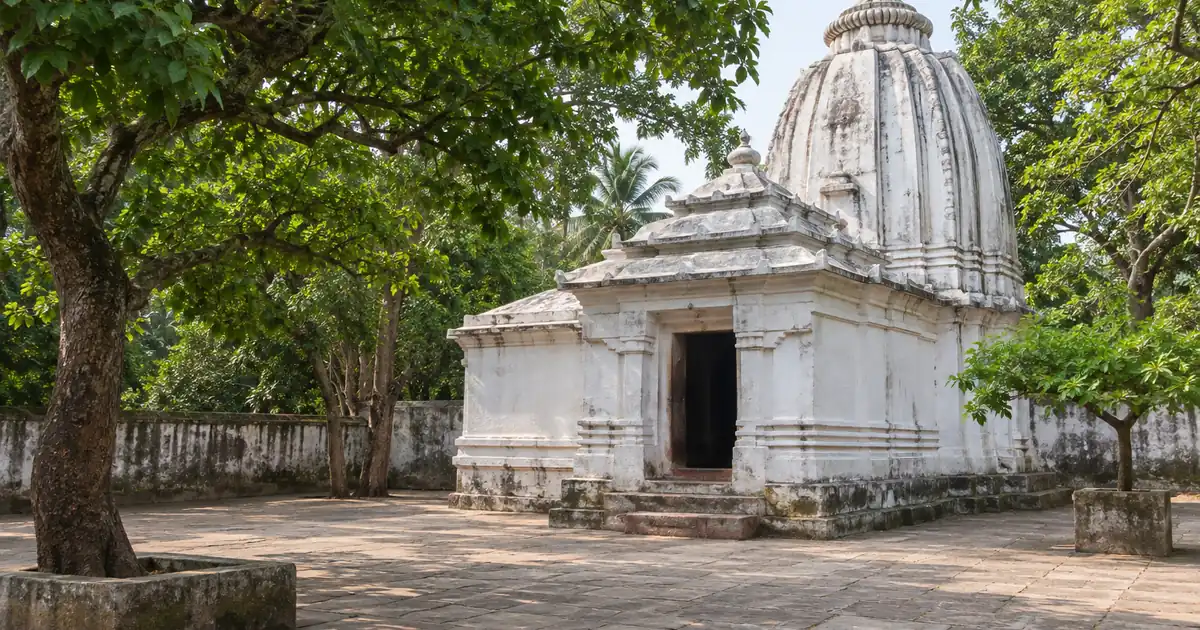
Travelers exploring the holy city often pass along Chakra Tirtha Road on their way to seaside resorts, yet this sacred temple provides an authentic glimpse into deep local customs. The compound displays classic Kalinga craftsmanship finished in protective lime plaster.
The surrounding neighborhood retains an unhurried, spiritual quality distinct from the crowded markets around Grand Road. Devotees gather in the cool morning air to recite sacred hymns before taking a quiet stroll along the adjacent shoreline.
| Feature | Verified Information | Pilgrim Notes |
|---|---|---|
| Presiding Deities | Lord Chakranarayana & Three Forms of Narasimha | Symbolizes divine protection and cosmic order |
| Temple Location | Chakra Tirtha Road (CT Road), Penthakota, Puri | 3 km northeast of Shree Jagannath Temple |
| Temple Timings | 6:00 AM to 9:00 PM | Open daily throughout the week |
| Admission Fee | Free entry for all devotees | Modest costs for puja offerings and lamps |
| Associated Water Body | Chakra Tirtha (Chakranarayana Kund) | Sacred coastal tirtha associated with Lord Varuna |
| Nearest Railway Station | Puri Railway Station (PURI) | 2 km north via station link road |
| Nearest Airport | Biju Patnaik Airport Bhubaneswar | 60 km north via NH-316 highway |
The sea breeze keeps the stone courtyards pleasantly cool during morning and evening darshan hours, making early visits particularly peaceful.
Sacred Lore: The Landfall of the Divine Daru Log
The mythological origins of Chakra Tirtha are recorded in ancient Odia texts, including the Skanda Purana and the Madala Panji temple chronicle. When King Indradyumna prayed to Lord Vishnu to manifest in tangible form, he received a divine vision directing him to the sea shore of Nilachala.
The king was told that a giant fragrant neem tree trunk marked with the symbols of Shankha, Chakra, Gada, and Padma would drift across the ocean waters. King Indradyumna arrived with royal servitors at the spot now known as Chakra Tirtha, where the celestial log miraculously drifted onto the sandbanks.
From this divine Daru wood, the primordial sculptor Vishwakarma fashioned the sacred forms of Lord Jagannath, Lord Balabhadra, Devi Subhadra, and Sudarshana Chakra. Because the wood touched the soil of Puri here, the site is venerated as the spiritual cradle of the deity.
A second popular legend recounts that during a destructive historic storm, the enormous iron Nilachakra resting on the spire of the Jagannath Temple was swept through the air. The sacred disc landed without damage at this coastal spot, blessing the soil with permanent divine sanctity.
Deities of the Sanctum: Chakranarayana and Three Forms of Nrusingha
The sanctum sanctorum of Chakra Tirtha Temple presents an uncommon iconographic arrangement. At the heart of the inner chamber rests a large black granite Sudarshana Chakra, partially submerged in a natural stone water tank.
At the exact center of this carved granite wheel sits the four-armed image of Lord Narayana, known as Lord Chakranarayana. Priests decorate the wheel daily with sandalwood paste, fragrant basil leaves, and bright red hibiscus blossoms.
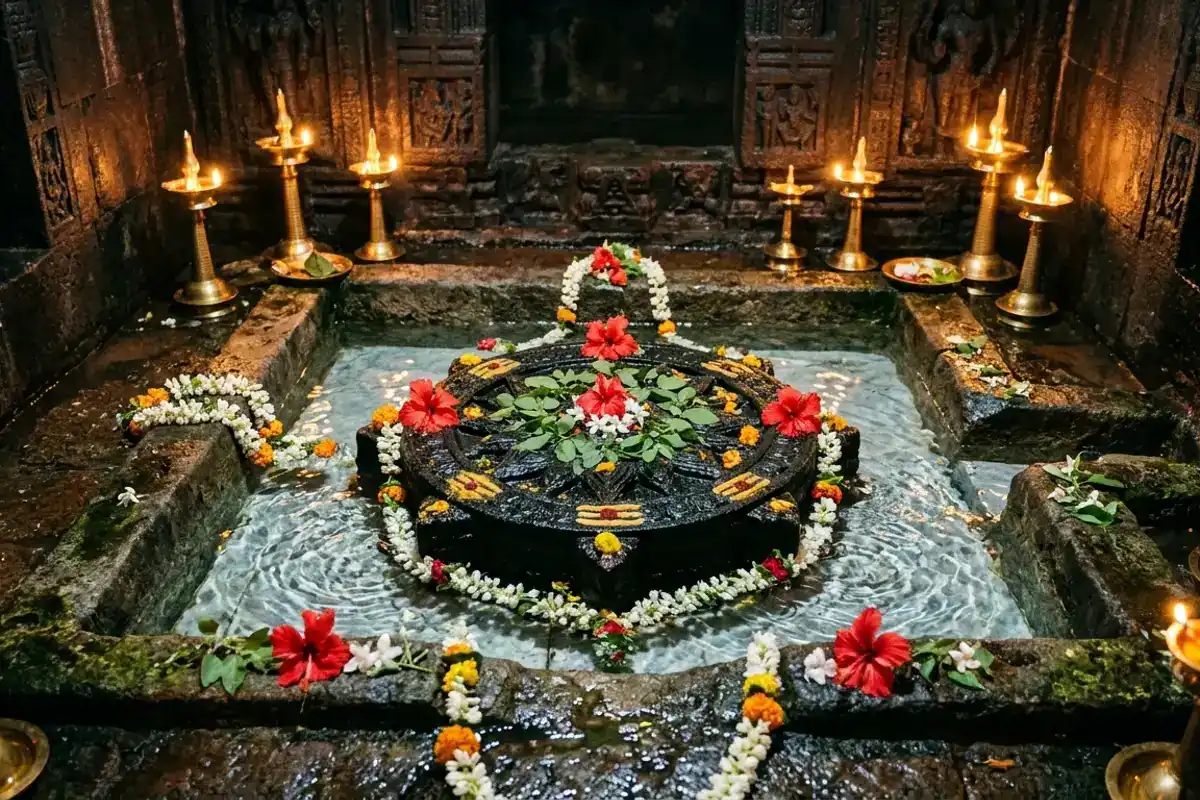
Surrounding the central sanctum are three separate forms of Lord Narasimha, each holding deep symbolic significance within Jagannath theology:
| Narasimha Murtis | Associated Deity | Theological Role |
|---|---|---|
| Abhaya Nrusingha | Lord Balabhadra | Bestows fearlessness and physical protection upon pilgrims |
| Chakra Nrusingha | Goddess Subhadra | Represents protective cosmic energy and spiritual grace |
| Laxmi Nrusingha | Lord Jagannath | Embodies supreme compassion and spiritual liberation |
Devotees believe that offering prayers before these three forms grants complete protection against planetary adversities and negative obstacles.
Ritual Ties to Shree Jagannath Temple and Annual Festivals
Chakra Tirtha maintains direct ceremonial protocol with the Shree Jagannath Temple. Unlike independent local temples, servitors here coordinate closely with official temple servitors for seasonal rites.
During the annual festival of Nrusingha Chaturdashi, senior temple priests carry a consecrated Agnyamala garland from the main Jagannath sanctum to Chakra Tirtha. This garland is formally draped over Lord Narasimha to grant divine sanction for the festival rituals.
The temple also plays an auxiliary role during the sacred Navakalevara ceremonies. When the timber-search committee leaves Puri to locate the sacred trees, prayers are offered at shrines associated with the divine origin of the deities.
Every year on the full moon day of the month of Kartika, thousands of devotees take a ritual bath in the coastal waters near the temple before offering ghee lamps inside the sanctum. Official administrative schedules can be verified through the Shree Jagannatha Temple Administration.
Temple Timings, Daily Rituals, and Visitor Etiquette
Chakra Tirtha Temple remains accessible throughout the day, following a structured schedule of morning, midday, and evening rituals.
| Scheduled Time | Daily Service | Pilgrim Participation |
|---|---|---|
| 6:00 AM to 6:30 AM | Mangala Alati | Early morning prayers with conch shells and brass lamps |
| 6:30 AM to 12:30 PM | Morning Darshan & Archana | Devotees offer tulsi malas, milk, and sweet fruits |
| 12:30 PM to 3:30 PM | Madhyanha Pahada (Sanctum Rest) | Inner sanctum doors closed; outer courtyard remains open |
| 3:30 PM to 7:30 PM | Evening Darshan & Sandhya Alati | Warm oil lamp arati with devotional chanting |
| 7:30 PM to 9:00 PM | Ratri Alati & Final Darshan | Quiet evening worship before nighttime closure |
Entry into the temple is free for all visitors. Modest charges apply only if devotees request personalized archana or purchase puja baskets from authorized temple stalls.
Visitors are requested to dress respectfully by avoiding beachwear or uncovered attire when entering the sacred compound. While personal photography of the exterior courtyard architecture is welcomed, taking photos or recording video inside the sanctum sanctorum is prohibited.
Chakratirtha Beach and the Surrounding Coastal Stretch
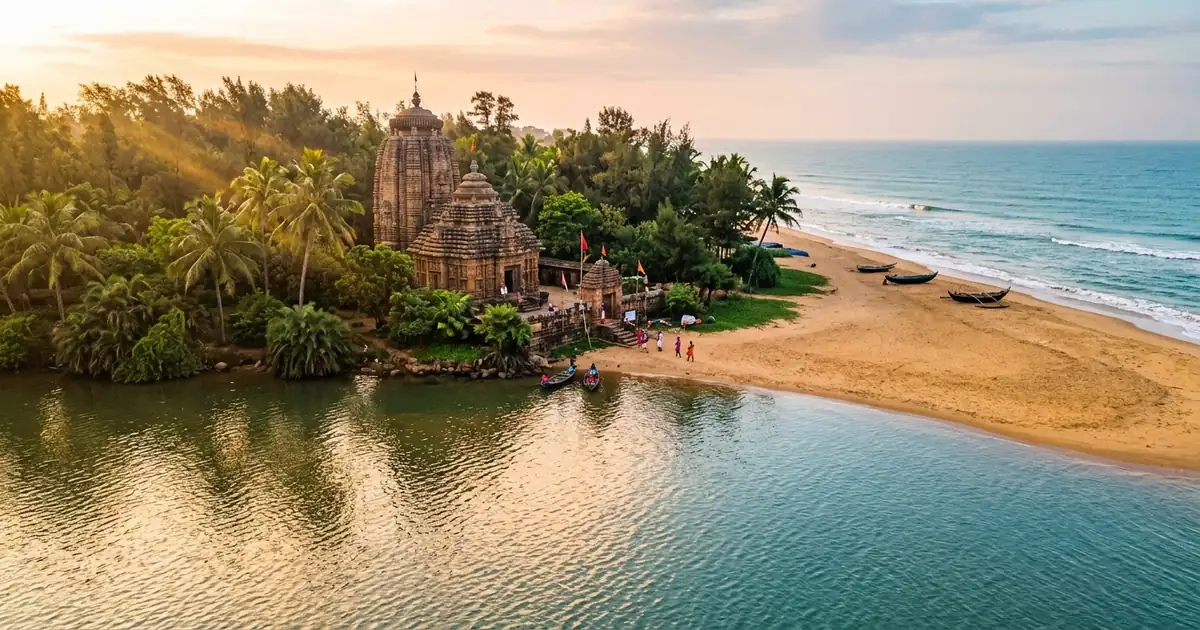
Adjacent to the temple lies Chakratirtha Beach, a quieter and less crowded stretch of coastline compared to the central tourist beach near Swargadwar. The shoreline features wide sand flats and gentle morning breezes.
Along the eastern edge of the beach sits Penthakota, an active traditional marine fishing settlement. In the early morning hours, colorful wooden fishing boats return through the surf laden with their daily catch, offering authentic glimpses into coastal Odia livelihoods.
Unlike the crowded commercial atmosphere of the main beach, Chakratirtha Beach provides a tranquil environment for meditative walking, sunrise viewing, and quiet contemplation. Travelers can read our comparative Puri Golden Beach and Blue Flag guide to understand regional coastal differences.
Situated a few steps away along the same sandy lane stands the ancient Bilweswara Shiva Temple. Dedicated to Lord Shiva, this shrine completes the sacred Shaivite and Vaishnavite balance of the Chakra Tirtha neighborhood.
How to Reach Chakra Tirtha from Jagannath Temple and Puri Station
Navigating to Chakra Tirtha is straightforward from any major location in Puri town. Paved roads link the coastal corridor to railway and highway junctions.
| Starting Point | Distance | Typical Travel Time | Recommended Transit Mode |
|---|---|---|---|
| Puri Railway Station | 2 km | 7 to 10 minutes | Auto-rickshaw or Cycle-rickshaw |
| Shree Jagannath Temple | 3 km | 12 to 15 minutes | Auto-rickshaw via Grand Road |
| Swargadwar Beach | 4 km | 15 minutes | Auto along Marine Drive corridor |
| Puri Bus Stand (Gundicha) | 2.5 km | 10 minutes | Direct auto-rickshaw |
| Bhubaneswar Airport | 60 km | 1.5 hours | Highway taxi via NH-316 |
Transit from Puri Railway Station
Puri Railway Station (PURI) is situated just two kilometers north of Chakra Tirtha. Upon exiting the main station building, auto-rickshaws and battery-operated e-rickshaws are readily available. The route proceeds through smooth residential avenues directly onto Chakra Tirtha Road.
Transit from Grand Road
Travelers departing from the Singhadwara entrance of the Jagannath Temple can hire an auto-rickshaw traveling eastward past Subhas Bose Chowk to join CT Road. The drive takes less than fifteen minutes through town streets. State tourism resources are documented on the Odisha Tourism Portal.
Nearby Pilgrimage Landmarks in the Puri Sacred Circuit
Visiting Chakra Tirtha enriches any journey through the sacred heritage geography of Puri. Several revered spiritual landmarks sit within convenient reach.
Pancha Tirtha Sacred Tanks
Puri features five holy bathing spots known collectively as the Pancha Tirtha. These include Markandeya Tank, Rohini Kunda inside the main temple, Swargadwar Sea Beach, Indradyumna Tank, and Narendra Tank. Explore our comprehensive guide to places to visit and things to do in Puri.
Sacred Shrines of the Outer Circuit
Pilgrims frequently continue their itinerary to the historic Lokanatha Temple in Puri, where a submerged Shiva Lingam is bathed by natural springs. Travelers during the holy month of Anavasara journey onward to the celebrated Alarnath Temple in Brahmagiri, or explore the divine courtyard of Sakhigopal Temple in Puri.
Practical Travel Tips for Pilgrims and Visitors
- Morning Darshan Timing: Arrive between 6:30 AM and 8:30 AM to witness the peaceful morning arati, hear temple conch shells, and enjoy cool ocean breezes across the open courtyard.
- Footwear Protocol: Remove shoes at the designated shoe counter near the outer temple archway before stepping onto the sacred stone flagstones.
- Shoreline Bathing Caution: The ocean surf near Penthakota can develop sudden drop-offs and strong undertows; swimming far into the waves is unsafe and strongly discouraged.
- Combine with Bilweswara Shrine: Reserve twenty extra minutes during your visit to explore the adjacent Bilweswara Shiva Temple situated just fifty paces down the sandy lane.
- Local Transport Convenience: Auto-rickshaws and cycle-rickshaws are readily available along Chakra Tirtha Road throughout daylight and evening hours, making return trips to Puri station or local hotels straightforward.
- Modest Temple Dress Code: Wear comfortable cotton attire covering your shoulders and knees to maintain traditional sanctity within the holy temple premises.
Frequently Asked Questions
Where is Chakra Tirtha Temple located in Puri?
Chakra Tirtha Temple is located along Chakra Tirtha Road (CT Road) near Penthakota in Puri, Odisha. It sits approximately three kilometers east of the Shree Jagannath Temple and two kilometers south of Puri Railway Station.
Why is Chakra Tirtha considered sacred in Jagannath tradition?
The temple marks the holy spot where the divine Daru wood log floating across the ocean first arrived on the shores of Puri. King Indradyumna recovered the celestial timber here to carve the original idols of Lord Jagannath, Balabhadra, Subhadra, and Sudarsana.
What deities are enshrined in the temple sanctum?
The central sanctum enshrines a large black granite Sudarshana Chakra partially submerged in holy water with Lord Chakranarayana, flanked by three distinct forms of Lord Narasimha: Abhaya Nrusingha, Chakra Nrusingha, and Laxmi Nrusingha.
What are the opening timings of Chakra Tirtha Temple?
The temple is open daily from 6:00 AM to 9:00 PM for public darshan, closing briefly for afternoon bhog between 12:30 PM and 3:30 PM.
Is there an admission fee to enter Chakra Tirtha Temple?
No, entry into Chakra Tirtha Temple is completely free for all devotees and visitors. Modest charges apply only for specialized archana or purchasing puja offerings.
How is Chakratirtha Beach different from Swargadwar Beach?
Chakratirtha Beach offers a peaceful and uncrowded coastline bordered by traditional fishing hamlets, making it ideal for quiet walks and sunrise viewing, whereas Swargadwar Beach is an active urban commercial hub.