Kapildhara Waterfall Bargarh: Best Time & Travel Guide
Plan your trip to Kapildhara Waterfall on Gandhamardan hills near Nrusinghanath Temple in Bargarh. Discover the sacred cascade, trek routes, and timings.
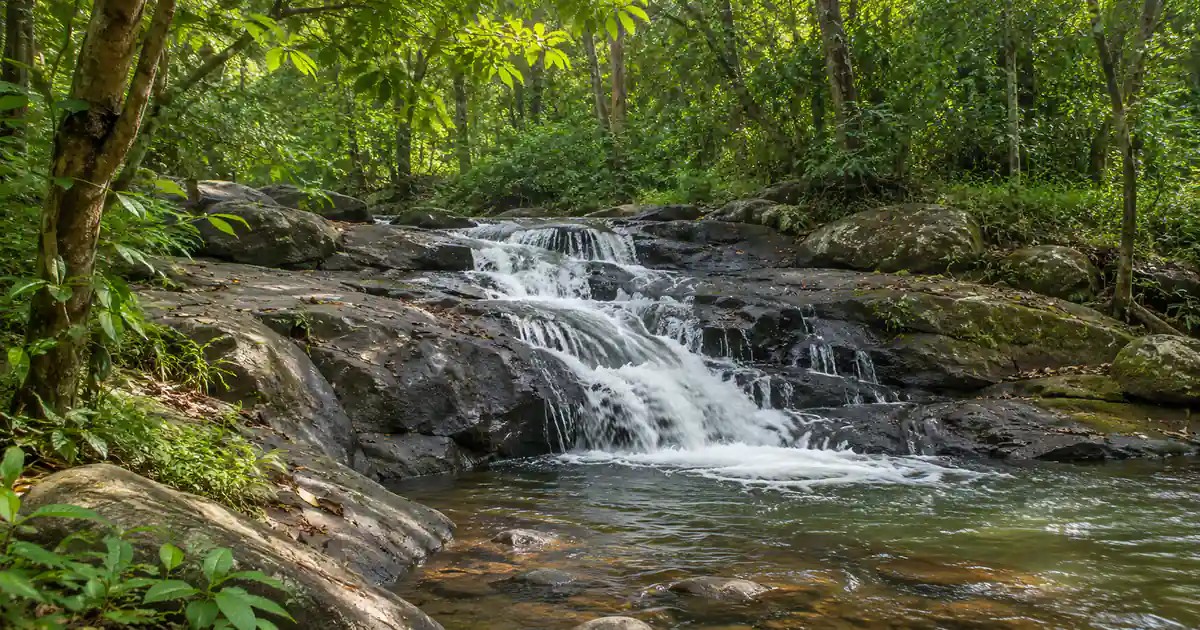
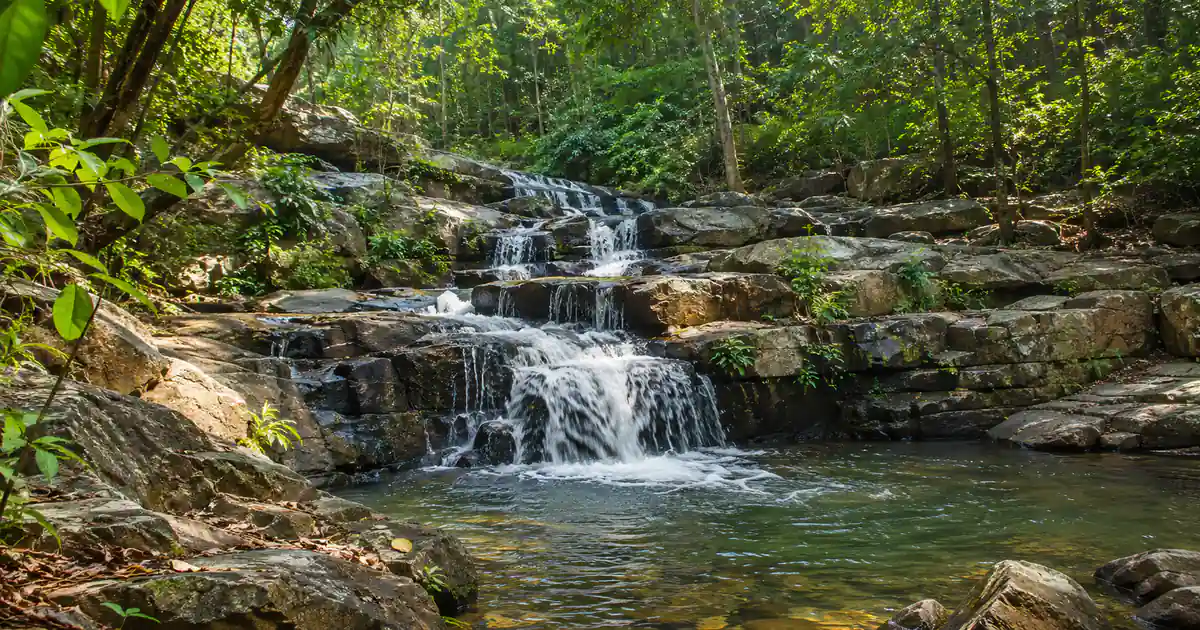
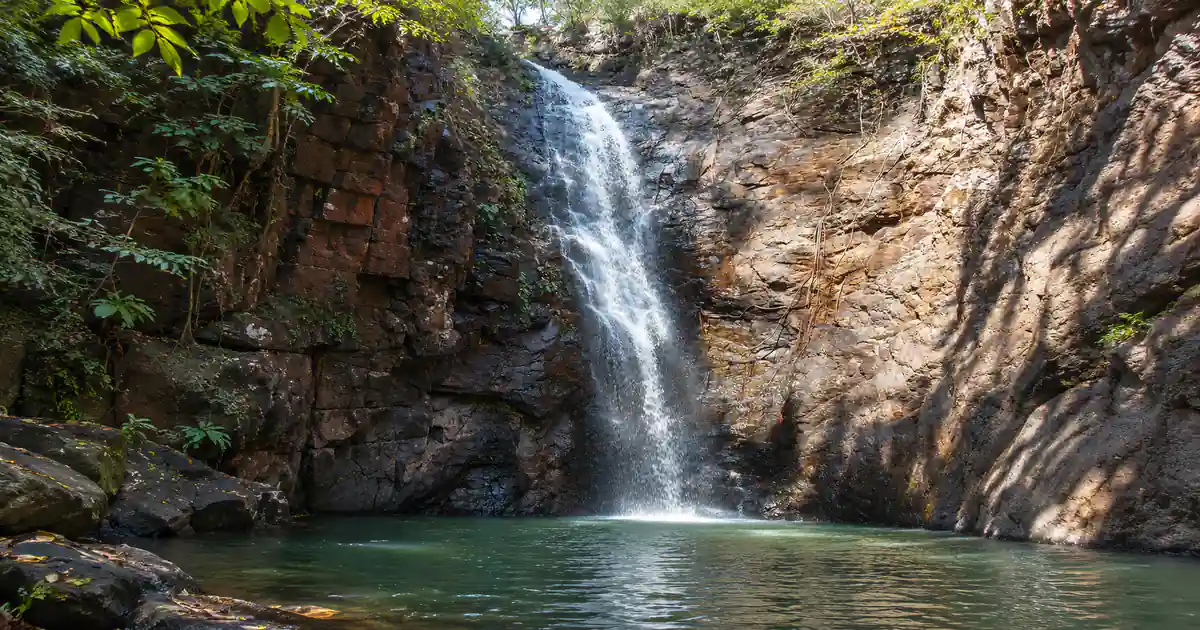
Kapildhara Waterfall Nrusinghanath Bargarh stands among the most sacred and ecologically celebrated mountain cataracts in western Odisha. Perched high on the northern face of the legendary Gandhamardan hill range in Paikmal block, this perennial spring cascade drops over steep quartzite cliffs surrounded by rare Ayurvedic flora. Travelers exploring western Odisha frequently integrate this pilgrim trek into our comprehensive Bargarh district travel guide to combine spiritual devotion with rugged mountain hiking.
The waterfall derives its sacred name from the ancient sage Kapila, author of the Samkhya philosophy. Regional traditions record that the venerable sage maintained his forest hermitage beside this mountain torrent for meditation and study.
Pilgrims visiting the 14th-century temple of Lord Marjara Kesari at the mountain base undertake a scenic uphill trek past stone shrines and cold natural springs to bathe in Kapildhara. Shaded by ancient sal, amla, and medicinal forest trees, the trail offers sweeping panoramic vistas across the western Odisha plains.
Key Takeaways
- Sacred Mountain Cascade: Natural hill stream drops down steep Gandhamardan rock faces into a revered bathing basin.
- Ancient Sage Hermitage: Historically associated with Sage Kapila and mentioned in centuries-old Odia spiritual literature.
- Challenging Pilgrim Staircase Trek: Reached via a four-kilometer uphill stone stairway ascending from the Nrusinghanath temple courtyard.
- Ayurvedic Mountain Ecosystem: Gandhamardan is recognized globally for its dense concentrations of rare medicinal herbs and roots.
- Cross-Hill Trail to Harishankar: Forms part of the famous trans-Gandhamardan trail connecting Bargarh with Balangir district.
Kapildhara Waterfall at a Glance: Key Travel Metrics
Planning an ascent to Kapildhara Waterfall requires preparing for a moderately demanding mountain staircase climb. The trail begins directly behind the historic temple complex of Nrusinghanath, ascending through dense forest canopies.
The route provides an uplifting experience for active travelers, pilgrims, and botanical researchers. Combining the waterfall with the ancient temples at the mountain base creates a rewarding full-day journey.
| Travel Feature | Verified Metric | Traveler Planning Notes |
|---|---|---|
| Waterfall Formation | Mountain cliff cascade | Perennial stream fed by high Gandhamardan springs |
| Drop Height | Approximately 40 to 60 feet | Drops into rocky pool before continuing downhill |
| Trek Distance | Roughly 4 km uphill climb | Concrete and stone steps with intermediate landings |
| Trek Duration | 1.5 to 2.5 hours ascending | Requires reasonable cardiovascular fitness and stamina |
| Temple Base | Sri Nrusinghanath Temple | 14th-century red sandstone shrine with pilgrim rest houses |
| Nearest Town | Paikmal (12 km north) | Local block center with pharmacies, fuel, and markets |
| District Headquarters | Bargarh Town (110 km northeast) | Major agricultural trade hub on National Highway 53 |
| Visiting Hours | 6:00 AM to 5:00 PM | Complete trek during daylight hours for safety |
| Admission Fee | Free public admission | Modest parking charge at Nrusinghanath temple complex |
Starting your ascent in the early morning between 6:30 AM and 8:00 AM ensures cool mountain air and comfortable temperatures. Midday heat can make the uphill stone climb tiring during warmer months.
Geological Setting and the Mountain Pilgrimage Stairway
The geological foundation of Kapildhara Waterfall Nrusinghanath Bargarh comprises the bauxite and charnockite-capped ridges of the Gandhamardan mountain block. Elevated mountain aquifers filter rainwater through porous stone layers before discharging it as crystal springs near the summit.
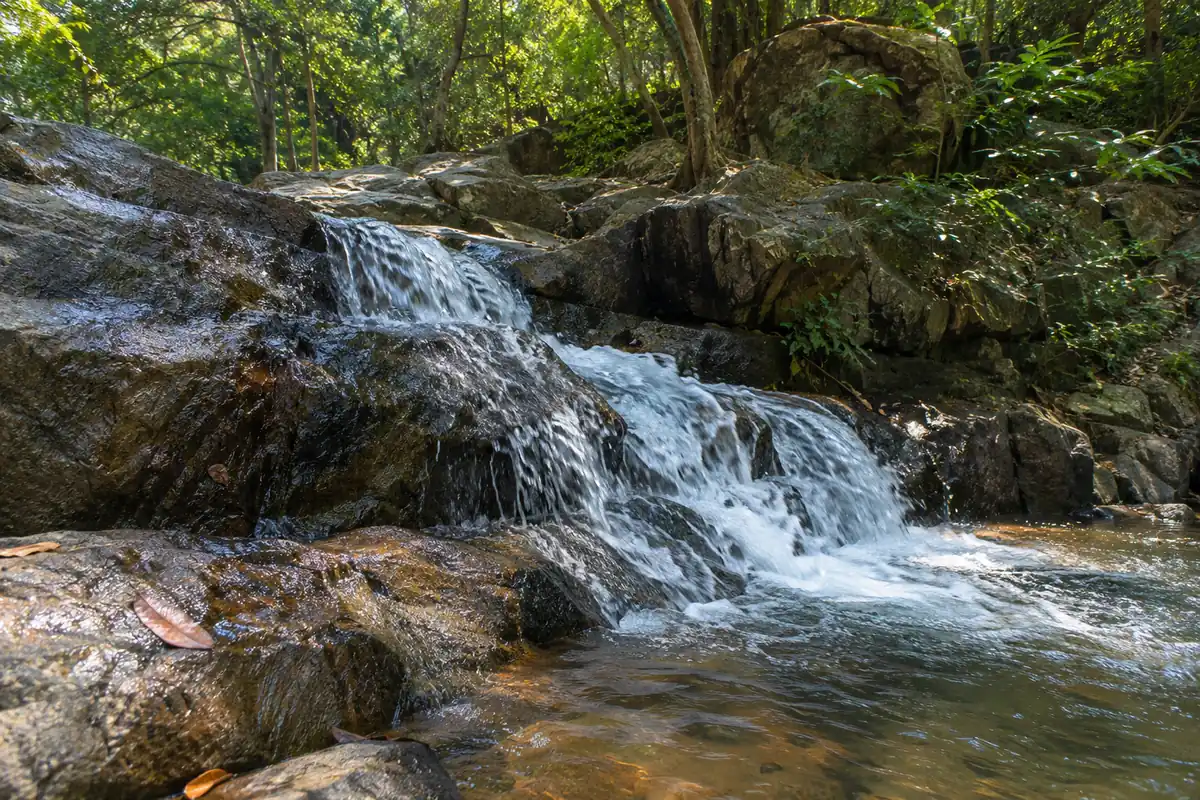
The stream courses down narrow stone chutes before dropping off a sheer granite cliff at Kapildhara. Below the drop, the torrent collects in an ancient stone-lined pool where pilgrims perform ceremonial ablutions.
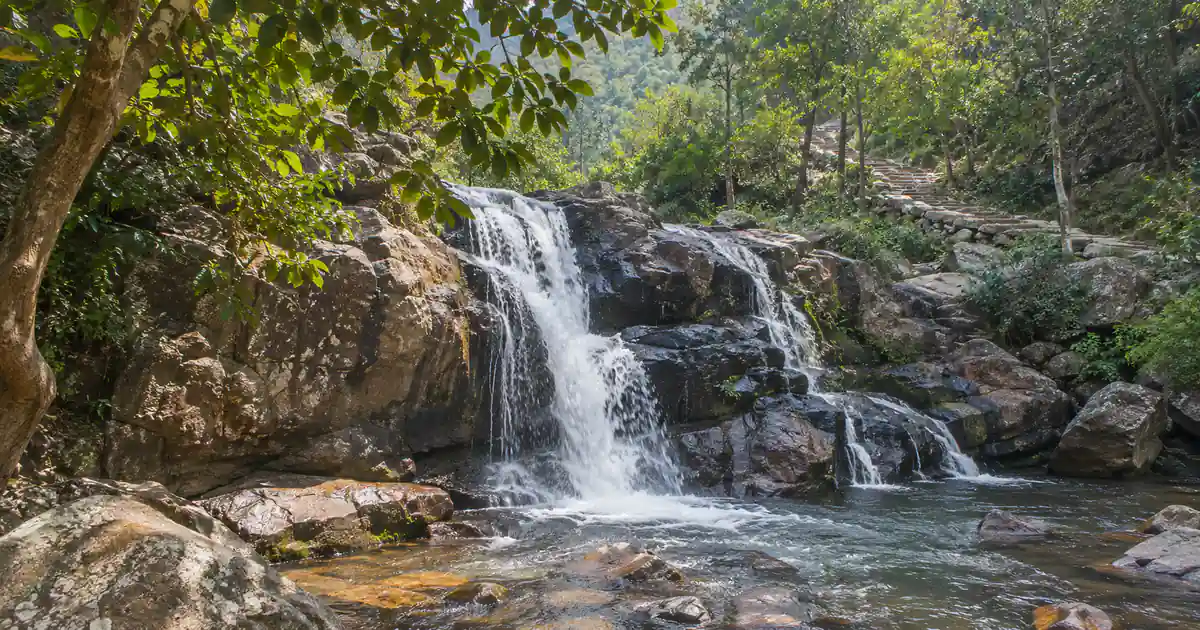
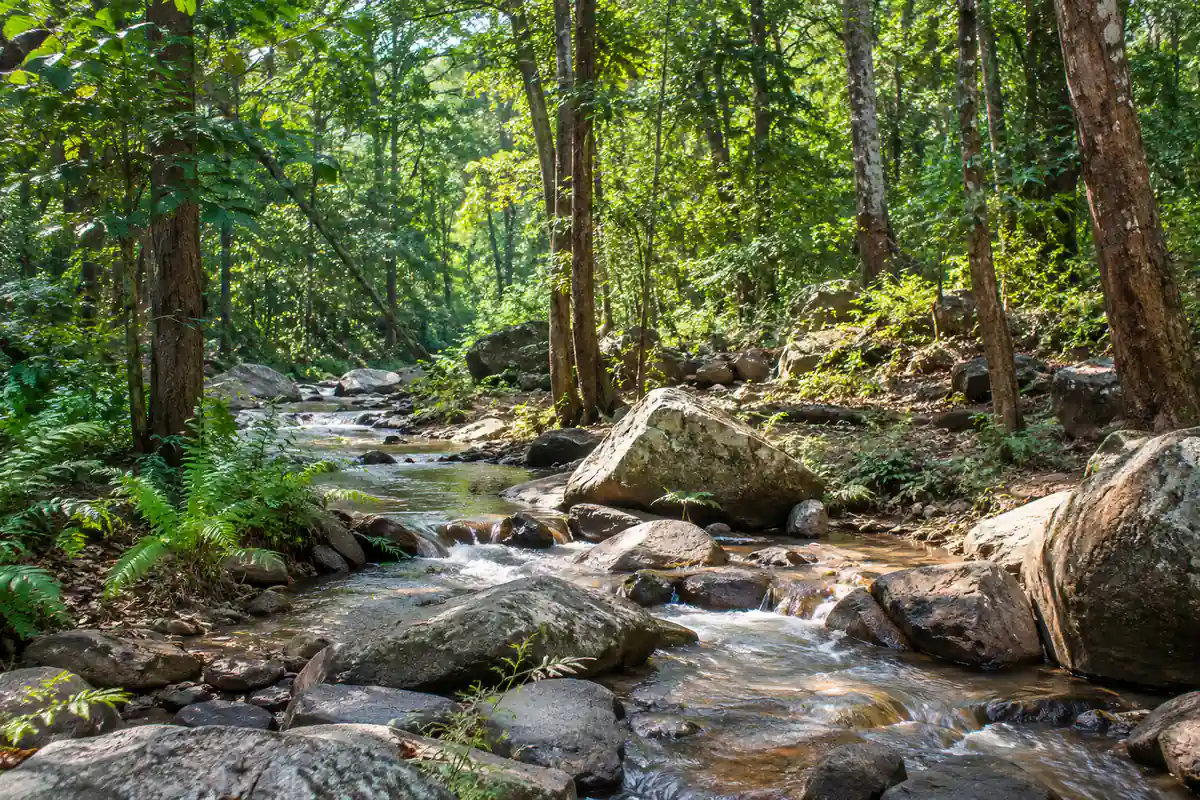
Stone-paved mountain pilgrimage stairway climbing through Gandhamardan forest.
The trail to the waterfall passes several intermediate sacred spots along the waterway. Pilgrims pause at Bhimdhar, where the second Pandava brother is said to have rested, and Sita Kund, a cold freshwater spring bubbling from stone fissures.
Locals commonly refer to the site as kapildhara waterfall bargarh or kapildhara waterfall gandhamardan. The crystal mountain water flows over moss-draped boulders before tumbling into the canyon below.
As one of the celebrated nrusinghanath tourist places, regional guidebooks also document the cascade as kapildhara falls nrusinghanath. The sound of tumbling water accompanies hikers along the entire shaded ascent.
Botanical Wealth and Ayurvedic Sanctuaries of Gandhamardan
The mountain range sheltering Kapildhara represents one of India’s most significant natural repositories of medicinal plants. Classical Hindu texts associate the Gandhamardan hills with the mythical Sanjeevani mountain brought by Lord Hanuman during the battle of Lanka.
Botanical surveys conducted across the slopes have cataloged more than 500 indigenous medicinal plant species, including endangered forest herbs used in classical Ayurvedic therapy.
Flora and Medicinal Species
The forest understory supports diverse herbal species prized by regional traditional healers.
- Wild ginger and arrowroot tubers growing along moist stream gullies.
- Amla, harida, and bahada forming the classic Triphala herbal base.
- Sarpagandha and ashwagandha roots flourishing on shaded rocky slopes.
- Deciduous sal and teak woodlands providing protective canopy cover.
Forest Conservation and Sanctity
The local community strongly protects Gandhamardan against industrial commercialization. Travelers are expected to observe strict environmental ethics by leaving all medicinal plants undisturbed, avoiding smoking on dry forest tracks, and packing out all trash.
Seasonal Stream Discharge Patterns: Best Travel Months
The flow volume of the sacred stream and the physical comfort of the mountain trek vary considerably throughout the calendar year.
| Calendar Season | Water Discharge & Mountain Weather | Trekking Experience |
|---|---|---|
| Winter (October to March) | Clear steady stream, pleasant 12°C to 26°C | Ideal period for mountain trekking, prayer, and photography |
| Monsoon (July to September) | Swollen torrential rush, humid 22°C to 28°C | Full water volume; stone steps can become slick and mossy |
| Summer (April to June) | Thin stream flow, warm 26°C to 42°C | Demanding climb; early morning starts before 6:30 AM essential |
The autumn and winter window from October through March represents the finest period for undertaking the Kapildhara climb. Post-monsoon air remains clear, mountain breezes keep the forest stairs cool, and the stream flows steady and transparent.
During the famous Nrusimha Chaturdashi festival in May, thousands of pilgrims brave the summer warmth to ascend the hill. For travelers planning broader statewide waterfall journeys, consult our complete full list of waterfalls in Odisha.
How to Reach Kapildhara Waterfall from Bargarh, Sambalpur, and Raipur
Reaching Kapildhara Waterfall involves traveling toward the southwestern frontier of Bargarh district along well-paved state highways.
| Travel Origin | Road Distance | Approximate Travel Time | Major Highway Route |
|---|---|---|---|
| Paikmal Block HQ | 12 km | 20 minutes | Via paved rural branch road |
| Khariar Road Rail Station | 32 km | 45 minutes | Via NH-353 and State Highway 3 corridor |
| Bargarh District HQ | 110 km | 2 hours 30 minutes | Via Padampur and Paikmal state highway |
| Sambalpur City | 160 km | 3 hours 30 minutes | Via NH-53 west to Bargarh, then south to Paikmal |
| Raipur Airport (CG) | 165 km | 3 hours 45 minutes | Via NH-53 east through Mahasamund and border |
| Bhubaneswar Airport | 425 km | 8 hours 30 minutes | Via NH-55 and NH-53 westbound highway |
Transit by Private Vehicle or Hired Taxi
Driving a personal vehicle or hiring a cab from Bargarh or Sambalpur offers the greatest travel flexibility. The highway passes through rural farming settlements, expansive sunflower fields, and sal forest edges before reaching the spacious temple parking lot at Nrusinghanath.
Public Bus and Rail Gateways
Regular state buses run from Sambalpur and Bargarh bus terminals to Paikmal and Padampur. From Paikmal, local auto-rickshaws and shared rural jeeps operate directly to the Nrusinghanath temple entrance. Rail passengers arriving from western India can alight at Khariar Road (KRAR), located only thirty-two kilometers away. Official transit and road updates can be checked on the Odisha State Portal and Odisha Tourism Portal.
[!TIP] Carry a refillable water flask and energy snacks for the four-kilometer staircase trek. Small tea stalls operate at intermediate landings, but prices are slightly higher due to porterage up the mountain.
Picnic Planning and Outdoor Recreation at Nrusinghanath
While the upper waterfall site at Kapildhara is reserved for prayer and quiet nature appreciation, the sprawling forested foothill gardens around the base temple provide favored grounds for outdoor family gatherings and picnics. When researching picnic spots in bargarh and waterfalls in bargarh, local families consistently rank the Nrusinghanath valley among the top forested day-trip destinations.
Preparation and Recommended Equipment
Visitors planning to undertake the climb and enjoy a day outing at the base should come prepared with suitable equipment.
- Supportive Trekking Footwear: Wear sports shoes or hiking sandals with textured rubber outsoles for safe grip on stone stairs.
- Drinking Water Storage: Carry at least one liter of filtered water per person for the ascent.
- Walking Stick Support: A bamboo trekking pole helps relieve knee strain during the steep downhill return.
- Heavy-Duty Trash Bags: Pack out all snack wrappers, water bottles, and fruit peels to keep the sacred mountain clean and undisturbed.
To discover additional scenic riverside and woodland picnic clearings across the state, browse our curated directory of picnic spots in Odisha.
Regional Touring Circuit: Combining Kapildhara with Western Landmarks
A day trip to Kapildhara Waterfall fits naturally into broader cultural and wildlife journeys through western Odisha. Travelers exploring this frontier can combine ancient pilgrim shrines, scenic hill paths, and tranquil reservoir backwaters within a single coordinated two-day itinerary.
14th-Century Sri Nrusinghanath Temple
Located at the foot of the mountain, our detailed Nrusinghanath Temple guide explores the unique feline avatar of Lord Vishnu worshipped as a cat-faced deity, while travelers can stay overnight at the overnight cottages of Nrusinghanath Nature Camp.
Cross-Mountain Trek to Harishankar Temple
Hardy trekkers can cross the sixteen-kilometer ridge trail over the mountain to reach the southern slope, detailed in our Harishankar Temple in Balangir guide, where twin shrines and natural cascades grace the Balangir border. When comparing kapildhara vs harishankar waterfall, Kapildhara demands a more rigorous uphill stair climb, while Harishankar offers direct vehicle access closer to the stream bed.
Wildlife Safaris at Debrigarh Sanctuary
Motorists returning eastward toward Bargarh and Sambalpur can schedule an afternoon eco-safari along the Hirakud reservoir in Debrigarh Wildlife Sanctuary to view wild bisons, leopards, and migratory waterfowl. Convenient highway connectivity links Paikmal to NH-53 within two hours.
Visitor Safety Advisory and Mountain Stairway Etiquette
Ascending the Gandhamardan stairway to Kapildhara requires following practical outdoor precautions.
- Pace Your Stair Climb: Take short resting pauses on intermediate stone landings to regulate breathing and heart rate during the steep climb.
- Step Carefully on Wet Stones: Water spray from natural mountain springs can make stone steps slippery near the summit. Walk slowly and avoid wet mossy patches.
- Respect Sacred Temple Customs: Remove footwear where indicated near intermediate shrines and refrain from using soaps in the sacred stream pool.
- Supervise Children Continuously: Keep children close and avoid letting them scramble near unfenced cliffside viewpoints.
- Begin Ascent Early in the Day: Start your climb before 10:00 AM to ensure you complete the descent well before sunset, as mountain trails have no artificial lighting.
- Cash Preparedness: Local parking attendants, shoe keepers, and fruit vendors operate strictly on cash due to limited mobile network coverage on the mountain.
Frequently Asked Questions
Where is Kapildhara Waterfall located in Bargarh?
Kapildhara Waterfall is situated on the northern slope of the Gandhamardan hills in the Paikmal block of Bargarh district, Odisha. It lies approximately four kilometers up the mountain trail from Sri Nrusinghanath Temple.
How difficult is the trek to Kapildhara Waterfall?
The trek to Kapildhara involves climbing approximately four kilometers of stone and concrete stairs up the mountain. It requires moderate cardiovascular stamina and typically takes between one and a half and two and a half hours.
What are the visiting hours for Kapildhara Waterfall?
The mountain trail to Kapildhara Waterfall is open daily from 6:00 AM to 5:00 PM. Visitors must begin their descent before 3:30 PM to reach the temple base safely before darkness sets in.
Is an entrance fee charged at Kapildhara Waterfall?
Access to the mountain trail and Kapildhara Waterfall is free for all visitors. A nominal vehicle parking fee of twenty to forty rupees is collected at the Nrusinghanath temple parking lot at the foot of the hill.
How far is Kapildhara Waterfall from Bargarh and Sambalpur?
Kapildhara Waterfall is approximately one hundred and ten kilometers from Bargarh town and one hundred and sixty kilometers from Sambalpur city. The nearest railway station is Khariar Road, located roughly thirty-two kilometers away.
What is the best season to explore Kapildhara Waterfall?
The best time to visit Kapildhara Waterfall is between October and March when daytime temperatures are pleasantly cool and the mountain stream flows clear. During these months, the forest trail remains comfortable for hiking.