Nrusinghanath Nature Camp Bargarh: Booking & Guide
Plan your trip to Nrusinghanath Nature Camp in Bargarh, Odisha. Explore Gandhamardan eco-cottages, Kapildhara trek, tariffs, route, and travel tips.
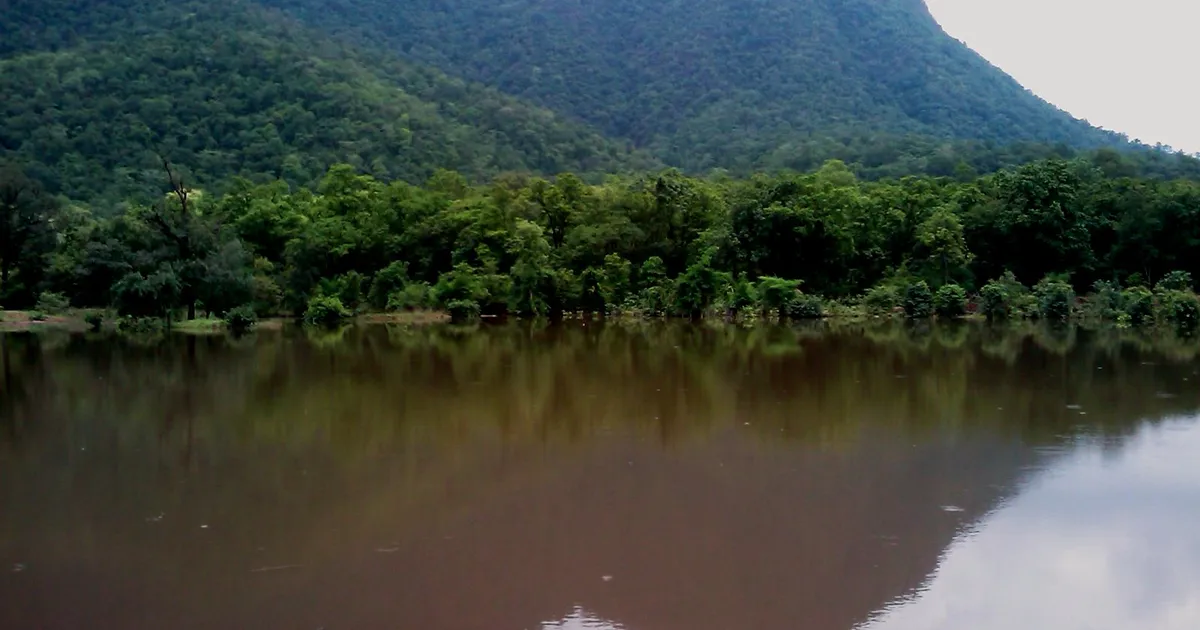
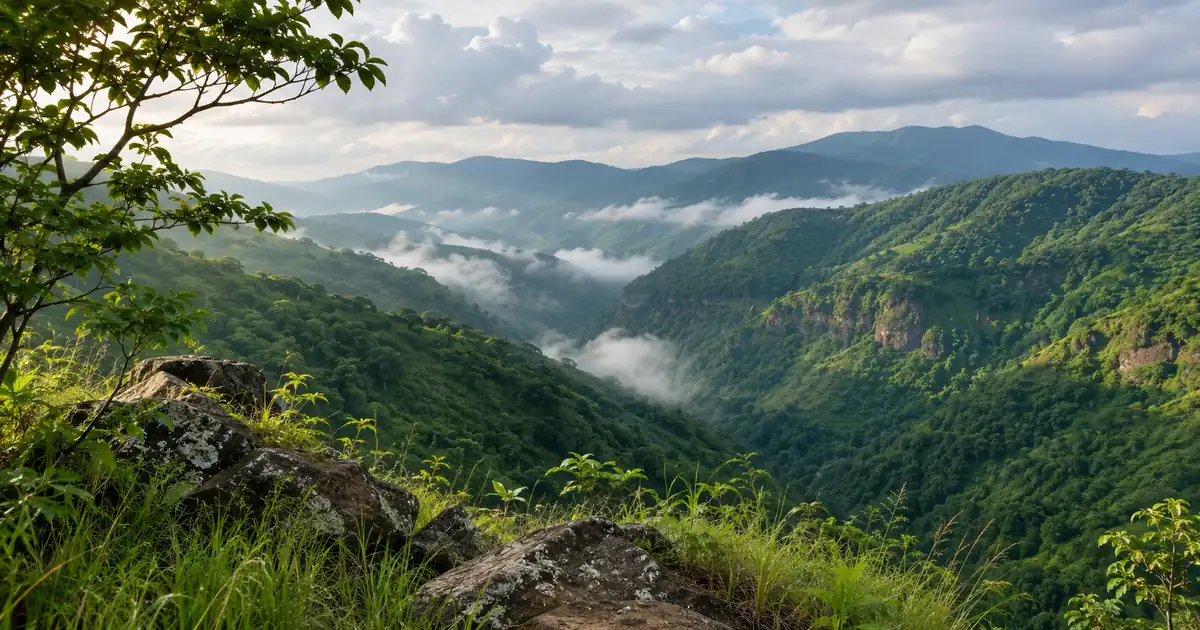
Rising majestically along the western border of Odisha, the forested Gandhamardan mountain range shelters one of India’s richest botanical treasures and oldest spiritual sanctuaries. At its northern base in Paikmal block, Nrusinghanath Nature Camp Bargarh provides a peaceful eco-tourism retreat where mountain wilderness, therapeutic herbal aromas, and medieval temple heritage come together.
Managed by local community forest protection committees under the state eco-tourism initiative, Nrusinghanath invites nature travelers, trekkers, and pilgrims to experience the tranquility of protected sal forests. Guests stay in comfortable eco-cottages overlooking wooded slopes, hike along perennial mountain streams to Kapildhara waterfall, and explore sacred shrines dating back over six centuries.
Key Takeaways
- Gandhamardan Foothill Setting: Located at the base of the Gandhamardan mountain range, officially designated as a Biodiversity Heritage Site for its rare medicinal flora.
- EcoTour Odisha Booking: Reservations are managed through the official state portal, featuring well-furnished wooden cottages with all daily meals included.
- Kapildhara & Perennial Streams: Sits within walking distance of famous natural water cascades including Kapildhara, Bhimdhar, and Chaladhar.
- Historic Pilgrimage Anchor: Located adjacent to the 14th-century Nrusinghanath Temple, dedicated to Lord Marjara Keshari (the feline manifestation of Vishnu).
- Trans-Mountain Trekking: Serves as the northern starting point for the scenic 16-kilometer mountain trek across Gandhamardan to Harishankar in Balangir district.
Nrusinghanath Nature Camp at a Glance: Tariffs, Booking & Mountain Facts
Before organizing your highland trip, review these operational details verified with EcoTour Odisha, the Bargarh District Portal, the Odisha Forest Department, and our comprehensive Bargarh district travel guide.
| Feature | Operational Detail |
|---|---|
| Location | Gandhamardan Foothills, Paikmal Block, Bargarh District, Odisha |
| Geographic Setting | Northern slopes of Gandhamardan Range (Biodiversity Heritage Site) |
| Accommodation Type | Eco wooden cottages and deluxe forest suites |
| Tariff Range | ₹3,500 to ₹4,500 per room per night (double occupancy, all-inclusive) |
| Meal Inclusions | Breakfast, lunch, evening tea with snacks, and dinner included |
| Key Attractions | Nrusinghanath Temple, Kapildhara Waterfall, medicinal plant trails |
| Booking Portal | Official state eco-tourism website at ecotourodisha.com |
| Nearest Railway Station | Khariar Road (40 km) and Bargarh Road (110 km) |
| Nearest Airport | Swami Vivekananda Airport, Raipur (160 km via NH 353) |
Highland Setting and Mountain Topography
The Gandhamardan range spans over three hundred square kilometers across Bargarh and Balangir districts, rising to an elevation of over 1,000 meters above sea level. The plateau top consists of ancient bauxite-rich rock formations that act as a colossal natural sponge, absorbing monsoon rainfall and releasing it through hundreds of perennial freshwater springs throughout the year.
Nrusinghanath Nature Camp is positioned beneath the shaded canopy of mature sal and asan trees along the lower northern terrace. Pathways paved with natural stone link the cottages to the surrounding forest, allowing visitors to walk between calm woodlands and gurgling streams in minutes.
Who Will Appreciate Nrusinghanath Nature Camp
Botanists, herbal medicine practitioners, and trekking enthusiasts will find the Gandhamardan hills an incomparable open-air classroom. The slopes contain more than 300 verified species of Ayurvedic medicinal plants, many of which have been utilized by local Vaidyas (traditional healers) for centuries.
Spiritual travelers and families seeking quiet reflection away from urban noise will enjoy the peaceful combination of temple bells, mountain breezes, and night skies free of artificial illumination.
Gandhamardan Hills: Biodiversity Heritage Site & Ancient Sanjeevani Lore
The Gandhamardan range holds an iconic position in both Indian classical mythology and contemporary environmental conservation.
The Legendary Mountain of Sanjeevani
According to local tradition recorded in the Ramayana epic, when Lakshmana was critically wounded in battle, Hanuman was sent to the Himalayas to fetch the life-saving herb Mritasanjeevani. Unable to identify the exact plant, Hanuman lifted the entire Gandhamardan mountain peak and flew southward.
Legend tells that while carrying the massive summit across eastern India, a substantial fragment slipped from his hands and landed here, creating this isolated medicinal mountain sanctuary. Today, local communities revere the range as a living storehouse of healing remedies.
Recognized Biodiversity Heritage Site
The Government of Odisha has officially declared the Gandhamardan Hills as the state’s third Biodiversity Heritage Site (BHS) under the Biological Diversity Act:
- Medicinal Plant Riches: Shelters over 500 species of angiosperms, including rare curative herbs such as Gloriosa superba, Rauvolfia serpentina, Plumbago zeylanica, and Asparagus racemosus.
- Faunal Sanctuary: Houses stable populations of Indian leopards, sloth bears, barking deer, four-horned antelopes (chousingha), pangolins, and giant flying squirrels.
- Microclimate Stability: The dense canopy tempers regional climate fluctuations, providing a cool highland environment throughout the year.
Eco-Cottages, Suites, and EcoTour Odisha Online Booking
Accommodations at Nrusinghanath Nature Camp provide comfortable lodging while preserving the delicate mountain environment.
Forest Cottages and Modern Comforts
The camp features detached cottages built with natural stone accents and local timber materials to blend with the forest landscape:
- Deluxe Forest Cottages: Feature spacious air-cooled bedrooms with double beds, mosquito netting, clean cotton linens, reading desks, and attached western-style bathrooms with hot water geysers.
- Private Shaded Verandas: Each cottage has a wide covered porch with outdoor cane chairs, offering restful views of green hill ridges where monkeys play in morning light.
- Solar Energy Integration: The complex utilizes solar-powered water heating and battery backup systems to ensure uninterrupted comfort during your stay.
Online Reservation via ecotourodisha.com
All room bookings for Nrusinghanath Nature Camp must be completed in advance through the official state eco-tourism portal:
- Visit the state portal at EcoTour Odisha.
- Select Bargarh district and choose Nrusinghanath Nature Camp.
- Select your intended check-in and check-out dates, check room availability, and pick your preferred cottage.
- Enter personal identification details for each guest matching government-issued identity cards.
- Pay through the secure online payment gateway to receive your confirmed digital voucher.
Carefully review the official Nrusinghanath nature camp cancellation policy on the state portal prior to final confirmation. In comparing Nrusinghanath nature camp vs Harishankar nature camp, Nrusinghanath provides immediate walking access to Kapildhara waterfall and historical 14th-century temple architecture, while Harishankar on the southern slope features natural cascading stream slides and dense foothill mango groves.
Traditional Western Odisha Cuisine and Local Flavors
Meals at Nrusinghanath are freshly prepared by members of the local forest protection committee using ingredients sourced from surrounding farming villages:
- Breakfast: Hot puris with aloo chana curry, suji halwa, or vegetable upma served with fresh tea.
- Lunch: Wholesome Odia thali including steamed rice, arhar dal with cumin tempering, seasonal vegetable bhaja, crispy papad, and sweet tomato-date khatta.
- Dinner: Hand-rolled rotis, seasonal mixed vegetable curry, yellow dal, and egg or country chicken curry prepared in traditional regional spices upon prior request.
Kapildhara Waterfall, Mountain Springs & Sacred Streams
The northern slope of Gandhamardan is renowned for its crystalline mountain streams and dramatic rock falls.
The Sacred Cascade of Kapildhara
Located roughly two kilometers uphill along a stone-paved stairway from the nature camp, the cascading perennial waters of Kapildhara Waterfall plunge from a height of approximately 40 feet over a polished granite cliff.
According to local legend, the ancient sage Kapila performed long penance beside this pool. The clear mountain water flows through dense groves of medicinal trees, and pilgrims believe bathing in its cool spray cleanses the body and relieves physical fatigue.
Upstream Waterfalls: Bhimdhar and Sitakund
More adventurous hikers can continue ascending the stone pathway past Kapildhara to explore higher water bodies:
- Bhimdhar: A secondary mountain cascade where rushing waters carve deep stone grooves into massive granite slabs.
- Sitakund: A quiet, crystal-clear mountain pool sheltered by overhanging cliffs where the stream rests before descending into the lower valleys.
- Gokund: A natural stone basin where wild mountain birds gather during morning hours to drink from bubbling springs.
Cultural and Heritage Highlights: 14th-Century Nrusinghanath Temple
No visit to the nature camp is complete without exploring the historical and architectural treasures of the ancient temple sanctuary.
Historical Origins and Eastern Ganga Architecture
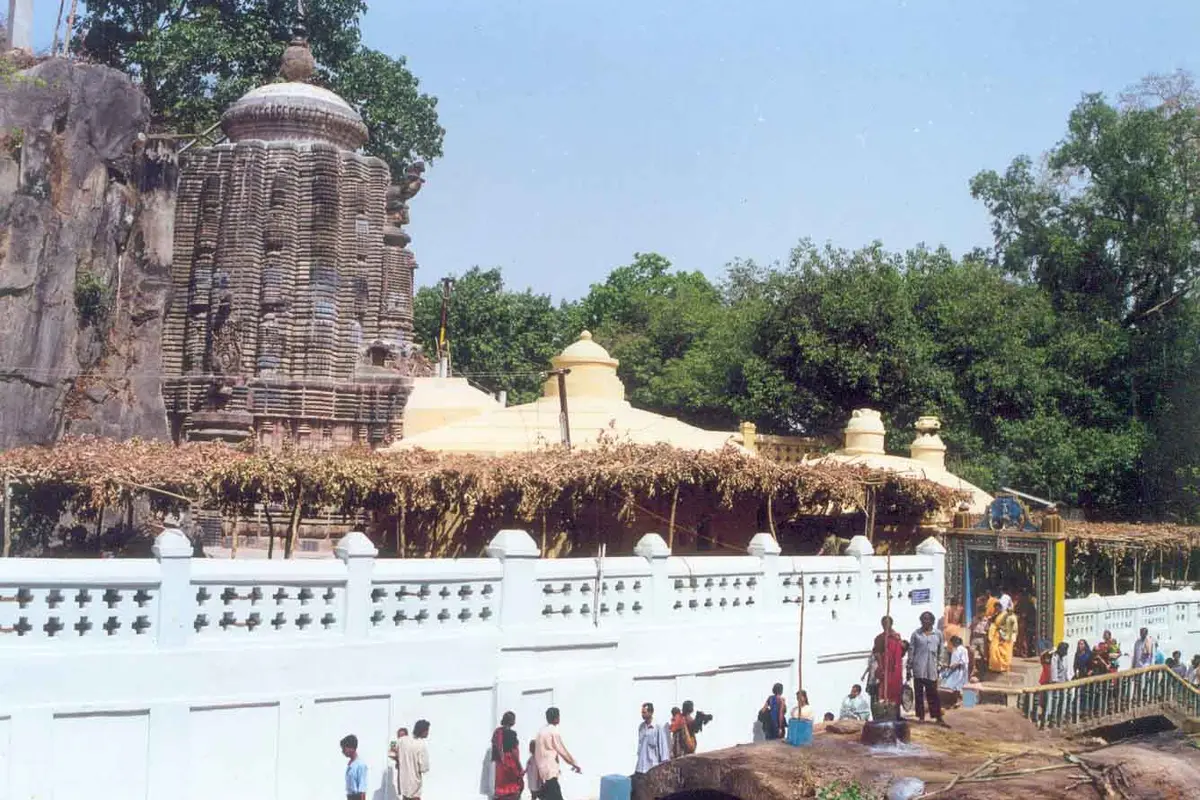
Situated at the very foot of the mountain stream, the historic 14th-century Nrusinghanath Temple was constructed in 1395 AD by King Baijal Singh Dev, the fourth Chauhan ruler of Patna State. The temple represents a magnificent example of post-Eastern Ganga stone architecture.
The shrine rises 45 feet high, displaying an intricately carved Rekha Vimana (tower) and a flat-roofed Jagamohana (hall). An ancient Odia inscription in proto-Odia script engraved on the temple wall records the royal grant of land and cows for the temple’s maintenance.
The Divine Deity: Lord Marjara Keshari
The presiding deity of the temple is worshipped as Marjara Keshari, a unique divine form possessing the head of a cat and the body of a lion:
- The Legend of Mushika Daitya: Ancient local lore recounts that a demon named Mushika assumed the form of a rat and fled into the mountain crevices to escape divine punishment.
- The Divine Cat Avatar: Lord Vishnu assumed the form of a celestial cat (Marjara) to trap the demon within the depths of the Gandhamardan hills, forever standing guard at the rock entrance.
- Living Devotion: Daily rituals and temple offerings of sweet condensed milk and fruit attract thousands of devotees during the annual Nrusimha Chaturdashi festival in May.
Trekking Trails: Gandhamardan Ridge Route to Harishankar
For experienced trekkers, Gandhamardan offers one of the most celebrated mountain ridge crossing routes in eastern India.
The 16-Kilometer Trans-Mountain Trek
A well-trodden pilgrimage and nature trail connects the northern slope at Nrusinghanath with the southern slope at Harishankar Temple in Balangir district:
- Trail Distance: Approximately 16 kilometers across the mountain plateau.
- Trekking Duration: 4.5 to 6 hours depending on hiking pace and rest intervals.
- Terrain: Begins with steep stone stairways climbing past Kapildhara, levels out onto the undulating high bauxite plateau, and descends through dense mixed forest into Harishankar.
Trekking Preparation and Local Tribal Guides
Crossing the mountain ridge requires reasonable physical fitness and practical preparation:
- Hire a Guide: Always hire a certified local tribal guide from the forest committee at Nrusinghanath; plateau trails can be disorienting when mountain mist rolls in.
- Water & Supplies: Carry at least two liters of drinking water and light energy snacks; no shops exist on the high mountain plateau.
- Footwear: Sturdy hiking boots or sports shoes with strong rubber grip are essential for hiking across uneven rocky surfaces and wet stream beds.
Best Time to Visit Nrusinghanath Nature Camp and Weather Guide
The climate at Nrusinghanath is characterized by pleasant winters, dry warm summers, and invigorating monsoons.
| Season | Months | Temperature | Travel Experience |
|---|---|---|---|
| Winter (Best Time) | October to March | 12°C to 28°C | Cool, crisp mountain air, clear sunny skies; ideal for temple visits, trekking, and nature photography. |
| Summer | April to June | 24°C to 42°C | Hot and dry; early mornings and evenings remain peaceful under forest shade. |
| Monsoon | July to September | 23°C to 32°C | Plentiful rains, full waterfalls, swollen streams, and emerald green mountain slopes. |
Winter Season (October to March)
Winter is the ideal time to visit Nrusinghanath Nature Camp. Cool morning temperatures make climbing the stairways to Kapildhara effortless, while clear mountain skies offer striking panoramic views across the Paikmal plains.
Evenings bring a brisk mountain chill, making warm jackets comfortable while sitting around the camp clearing.
Summer and Monsoon Considerations
Summer brings high daytime heat across western Odisha, but the perennial springs at Nrusinghanath continue to provide cool mountain breezes along the stream gorge.
Monsoon transforms the Gandhamardan range into a spectacular paradise of cascading water. While heavy downpours make trans-mountain ridge trekking slippery, the full roar of Kapildhara Waterfall during August and September is unforgettable.
How to Reach Nrusinghanath Nature Camp: Routes from Bargarh & Sambalpur
Nrusinghanath is well-connected by road from major transit hubs across western Odisha and eastern Chhattisgarh.
| Route Leg | Distance & Road | Travel Time | Travel Guidance |
|---|---|---|---|
| Bargarh to Nrusinghanath | 110 km via Barpali & Padampur | 2.5 hours | Travel west via State Highway 3 through Padampur to Paikmal; well-paved rural highway. |
| Sambalpur to Nrusinghanath | 160 km via Bargarh & Padampur | 3.5 hours | Drive via NH 53 to Bargarh, then follow state roads west through Padampur. |
| Khariar Road to Nrusinghanath | 40 km via Nuapada link road | 50 minutes | Nearest convenient railway access point; taxis readily available at the station. |
| Raipur to Nrusinghanath | 160 km via NH 353 & Nuapada | 3.5 hours | Excellent interstate highway connection from Chhattisgarh state capital. |
Driving Directions from Bargarh and Sambalpur
The paikmal nrusinghanath nature camp distance is roughly three kilometers from Paikmal town center:
- From Bargarh, head southwest through Barpali and continue along the highway to Padampur.
- From Padampur, proceed west along the direct road toward Paikmal.
- At Paikmal town junction, take the signposted mountain road heading south toward Nrusinghanath Temple.
- Pass the temple parking complex and follow the forest department signs to the nature camp gates.
Regular state and private buses connect Bargarh, Sambalpur, and Nuapada to Paikmal, from where local auto-rickshaws drive passengers directly to the nature camp.
Rail and Airport Transit Connections
- Nearest Railway Station: Khariar Road (KRAR), located 40 km west along the Raipur-Vizianagaram rail line, is the closest railhead with frequent express trains. Bargarh Road (110 km) on the Sambalpur line is also an active rail hub.
- Nearest Commercial Airport: Swami Vivekananda Airport (RPR) in Raipur, Chhattisgarh, sits roughly 160 km west, offering frequent direct flights from major Indian metropolitan centers.
Nearby Attractions in Western Odisha and the Gandhamardan Circuit
Extend your holiday by exploring other prominent natural, spiritual, and historical destinations in western Odisha.
Harishankar Temple on the Southern Slope
Located on the opposite flank of Gandhamardan in Balangir district, the sacred streams of Harishankar Temple in Balangir features a celebrated 15th-century Vishnu-Shiva shrine, natural rock water slides, and deer parks. Travelers can drive around the mountain base via Khariar or undertake the classic 16 km ridge trek across the high plateau.
Debrigarh Wildlife Sanctuary on Hirakud Reservoir
Situated approximately 140 km northeast along the Hirakud reservoir, the Hirakud reservoir wilderness at Debrigarh Wildlife Sanctuary shelters thriving populations of Indian bisons (gaur), leopards, sambar, and boat safari opportunities. The reserve offers peaceful lake-facing cottages and four-wheel-drive jungle safaris through dry deciduous woodlands.
Papaharini Snana Ghat and Bhim Mandir
Just three kilometers west of Nrusinghanath, pilgrims visit the sacred water pool of Papaharini, where mountain rivulets collect in natural stone basins surrounded by quiet rural hills. Local lore associates the rock caves here with the Pandava brothers during their period of exile.
Padampur Handloom Weaving Clusters
On the driving return toward Bargarh, travelers pass through Padampur and Barpali, home to renowned master weavers of Sambalpuri Ikat handloom cotton and silk sarees. Visiting cooperative weaving centers offers a firsthand look at complex tie-dye craftsmanship.
Mountain Safety Guidelines, Forest Etiquette & Pilgrim Rules
Visiting this sacred biodiversity sanctuary requires respect for local cultural traditions and delicate mountain ecosystems.
[!WARNING] Wet granite rocks near Kapildhara Waterfall and mountain stream pools are covered with slick moss. Never step onto wet boulder edges without holding safety railings, and wear shoes with reliable rubber tread grip.
Trail Safety and Water Etiquette
- Wear Proper Shoes: Use comfortable sports shoes or hiking footwear; open slippers can easily slip on steep stone steps.
- Stream Bathing Caution: Bathe only in designated public bathing ghats; avoid diving into deep rock hollows where hidden underwater currents exist.
- Watch for Monkeys: Troops of rhesus macaques live around the temple and stairway; keep food packets, fruits, and sunglasses concealed inside backpacks.
Biodiversity Protection and Zero-Waste Principles
- No Plant Removal: Gandhamardan is a legally protected Biodiversity Heritage Site. Plucking, uprooting, or taking medicinal plants or tree bark is strictly prohibited by forest law.
- Strict Plastic Ban: Dispose of all plastic water bottles and snack wrappers in camp dustbins; do not leave non-biodegradable waste along mountain trails.
- Respect Spiritual Sanctity: Maintain quiet behavior inside the temple precincts and along pilgrimage stairways; remove footwear before entering shrine courtyards.
Frequently Asked Questions (FAQs)
Where is Nrusinghanath Nature Camp located in Odisha?
Nrusinghanath Nature Camp is located at the foot of the Gandhamardan mountain range in Paikmal block of Bargarh district in western Odisha, approximately 110 km west of Bargarh town.
What is the primary attraction at Nrusinghanath?
The primary attractions include the 14th-century Nrusinghanath Temple dedicated to Lord Marjara Keshari, the cascading Kapildhara Waterfall, rare Ayurvedic medicinal plants, and trans-mountain trekking trails across Gandhamardan.
How do visitors book cottages at Nrusinghanath Nature Camp?
Cottage bookings must be completed online through the official state website at ecotourodisha.com. Advance reservation is recommended for winter weekends and holiday periods.
What are the room tariffs at Nrusinghanath Nature Camp?
Room tariffs range between ₹3,500 and ₹4,500 per room per night for double occupancy, following the American Plan with accommodations and all three daily meals included.
Can travelers trek from Nrusinghanath to Harishankar?
Yes, a popular 16-kilometer mountain ridge trail connects Nrusinghanath on the northern slope with Harishankar on the southern slope in Balangir district. The hike takes about 4.5 to 6 hours and requires a registered local guide.
What is the best time to visit Nrusinghanath Nature Camp?
The optimal time to visit is from October to March when pleasant winter temperatures average 12°C to 28°C, making temple visits, waterfall hiking, and mountain walks comfortable.
What is the nearest railway station to Nrusinghanath?
The closest railway station is Khariar Road (KRAR), located about 40 km west across the district border, followed by Bargarh Road Railway Station (110 km).