Odia Mahura Food Recipe: Authentic Temple Mixed Vegetable Curry
Master the authentic Odia mahura food recipe. Learn to cook sacred temple vegetables, sweet potatoes, and fried badis in roasted cumin coriander gravy.
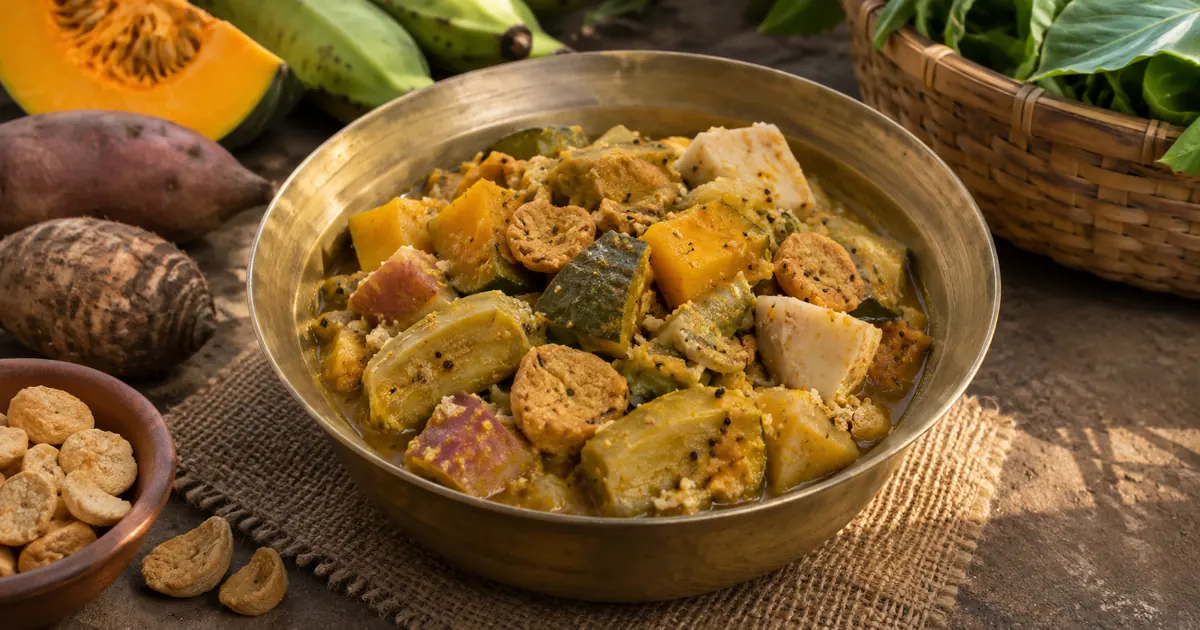
Cooking the traditional mahura food recipe brings the sacred flavors of Puri Shree Jagannath Temple directly into home dining. Known across the state as Mahura, this iconic mixed vegetable preparation forms an essential part of the divine Mahaprasad and Abadha banquets.
Unlike everyday household curries, traditional Mahura is prepared strictly without onion, garlic, or tomatoes (Bina Piaz Rasuna). Instead, it draws profound sweetness from native tubers like sweet potato, yellow pumpkin, and taro root, balanced by earthy roasted spices and fresh grated coconut.
Golden fried lentil dumplings (Badis) are folded into the simmering broth at the very end. The badis drink in the rich, ghee-tempered gravy while retaining a satisfying crumbly texture, creating an unforgettable temple-style feast.
Key Takeaways
- Divine Temple Origins: Mahura is one of the celebrated fifty-six dishes (Chappan Bhog) offered daily inside Puri Jagannath Temple.
- Strict Satvik Composition: Prepared completely without onion, garlic, red chili powder, or garam masala, relying purely on roasted cumin and coriander.
- The Role of Badis: Crisp fried urad dal dumplings absorb the seasoned vegetable juices, lending protein richness and textural body.
- Native Tuber Harmony: Combines yellow pumpkin, sweet potato (Kandamula), raw banana, and arbi for layered natural sweetness.
- Finishing with Pure Ghee: A generous pour of bubbling desi cow ghee over crackling panch phoron seals the authentic sacred fragrance.
Essential Recipe Metrics & Kitchen Equipment
An authentic Odia Mahura demands disciplined heat management, balanced vegetable moisture, and non-reactive cookware. Preparing this stew in heavy earthenware vessels or thick brass handis preserves the subtle floral aromas of roasted spices and pure cow ghee.
The culinary table below outlines the core specifications, preparation milestones, and kitchen equipment for cooking authentic Odia Mahura. Using indigenous earthenware clay pots (Kudua) or heavy brass vessels mimics traditional temple hearth cooking.
Clay pots maintain steady simmering temperatures between 85°C and 90°C, ensuring that dense tubers soften without dissolving into puree.
| Recipe Component | Specification Metric |
|---|---|
| Culinary Style | Sacred Odia Temple Mixed Vegetable Curry (Satvik) |
| Preparation Window | 25 minutes (washing, peeling, cubing vegetables) |
| Active Cooking Time | 30 minutes |
| Total Turnaround | 55 minutes |
| Serving Portion | 5 generous family servings |
| Estimated Ingredient Cost | ₹80 to ₹130 total per preparation |
| Dominant Flavor Profile | Naturally sweet, nutty, roasted cumin warmth, ghee-scented |
| Recommended Cookware | Earthenware pot (Kudua) or heavy brass handi |
| Primary Fat Medium | Pure Odia desi cow ghee |
Prepare and chop all root vegetables before starting. Because this dish does not rely on heavy oil frying, cutting vegetables into uniform chunky cubes ensures synchronized cooking times across different textures.
Selecting Traditional Cookware for Temple Curries
The traditional Odia terracotta pot (Kudua) is unglazed and porous. Microscopic air pockets in terracotta diffuse heat evenly across the entire surface of the pot, preventing hot spots that burn delicate sweet potatoes.
If terracotta pots are not accessible in modern kitchens, opt for a heavy-bottomed brass handi or an enameled cast-iron Dutch oven. Avoid thin non-stick pans because high surface heat scorches the natural starches in the broth.
Optimal Cooking Temperature and Simmering Rules
Keep the parboiling phase at a steady, gentle simmer around 90°C to 95°C. Rapid, violent boiling breaks down fragile yellow pumpkin cubes into an unattractive mush before the dense taro roots soften.
When adding the final ghee tadka, remove the pot completely from the direct flame. Covering the pot immediately traps the volatile terpenes of cumin, fennel, and bay leaves inside the steam.
Cultural Roots: The Pride of Anandabazar and Temple Feasts
In the religious and social life of Odisha, Mahura holds a position of supreme reverence. Inside the vast Anandabazar courtyard of Puri Shree Jagannath Temple, thousands of pilgrims gather daily to partake in shared Abadha meals served on woven palm-leaf platters. Travelers can plan their spiritual dining route using our guide to Puri district.
To understand how temple gastronomy shaped broader regional culinary identity, consult our comprehensive guide to 10 famous Odisha foods you must try. Official temple documentation and pilgrim heritage guidelines can be explored through the Odisha Tourism Official Portal and sacred records on the Shree Jagannatha Temple Administration Portal.
In ancient Odia domestic culture, Mahura is the mandatory vegetable centerpiece for religious rituals like Shraddha ancestral rites, Kartika Masa holy lunches, and Sudasa Brata fasts. Because ancient scriptures restrict non-indigenous vegetables, authentic Mahura strictly excludes New World produce like potatoes, cauliflower, peas, and green chilies.
Instead, the dish honors prehistoric Odia farm staples: sweet tubers unearthed from local loams, plantains cut from household backyards, and coconuts gathered from coastal groves. Diners often relish this alongside lentil staples like our authentic Odia Dalma recipe.
The Philosophy of the Rosha Ghara (Puri Temple Kitchen)
The kitchen of Puri Shree Jagannath Temple, known as the Rosha Ghara, is widely recognized as the largest traditional cooking facility on earth. Hundreds of temple cooks, designated as Suaras, cook thousands of kilograms of food daily over open firewood pits called Chulhas.
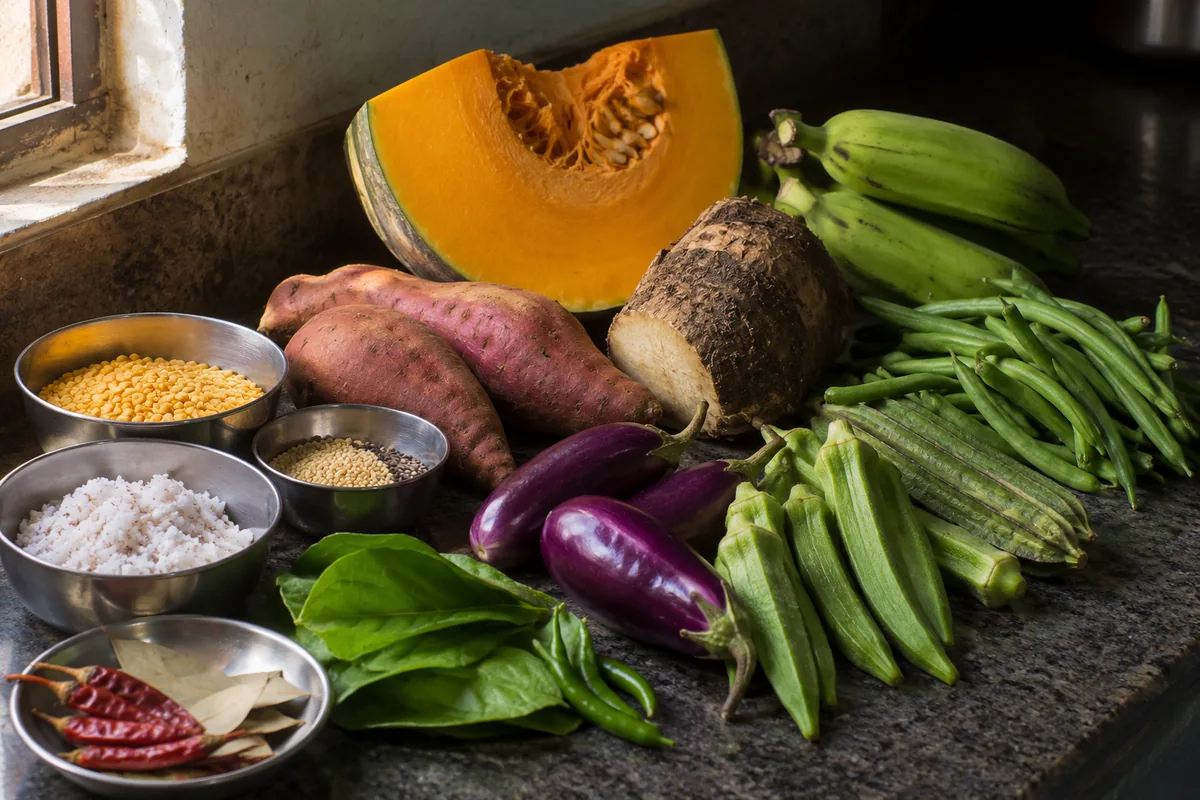
In the Rosha Ghara, food cooks inside earthen pots stacked vertically seven high on a single fire pit. The steam and heat rise through the stack, cooking vegetables through thermal convection without scorching the delicate ingredients.
Scriptural Exclusion of Foreign Produce
The culinary code of Shree Jagannath Temple strictly bars vegetables that arrived in India via European trade routes after the sixteenth century. Common commercial vegetables like potatoes, tomatoes, green chilies, and cabbage are barred from the sacred altar.
By retaining native ingredients like sweet potato (Kandamula), yam (Mati Aloo), and raw banana, Mahura preserves the authentic botanical flavors of prehistoric Odisha. Eating Mahura offers a direct culinary link to medieval Indian temple banquets.
Selecting Authentic Temple-Approved Vegetables
Choosing the proper selection of seasonal vegetables is essential for achieving the authentic flavor of temple Mahura. Standard market vegetables like cabbage or capsicum should never be used in this heritage recipe.
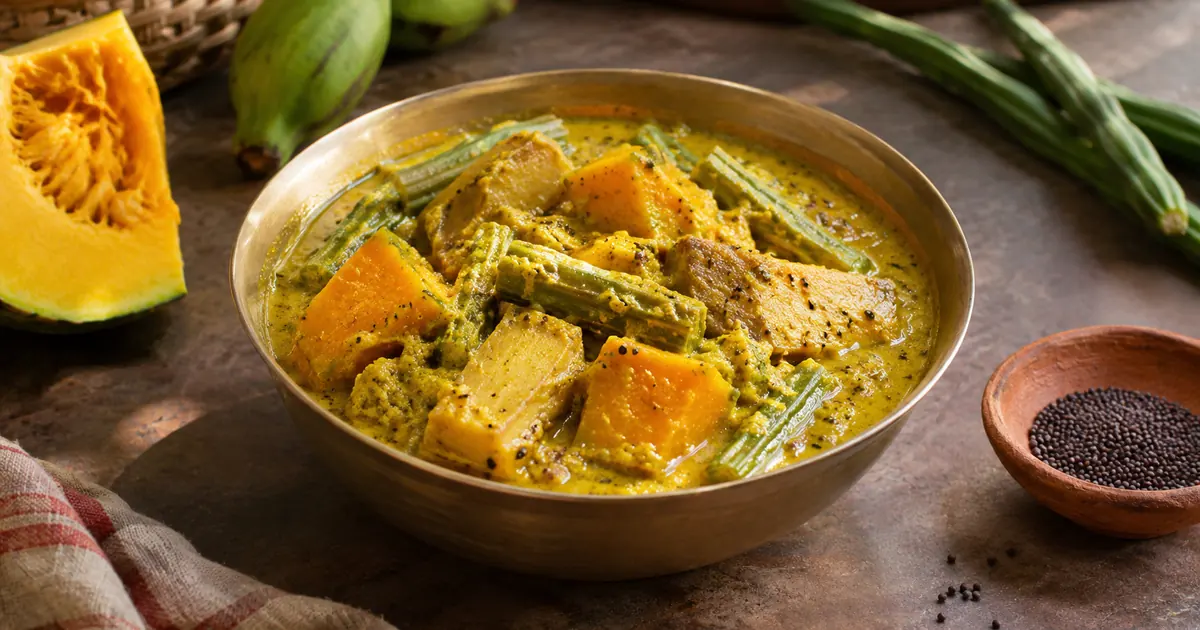
Focus on starchy, sweet vegetables that maintain their physical structure when boiled gently. Yellow pumpkin (Boiti Kakharu), sweet potato (Kandamula), raw green banana (Kancha Kadali), and taro root (Saru) form the sacred quadrilateral.
Many households also include pointed gourd (Potala), yam (Mati Aloo), and broad field beans (Simba). Thoroughly peel the fibrous skins from arbi and sweet potatoes, rinsing them in cold salted water to remove natural sap.
The Role of Fried Badi and Grated Coconut
The addition of fried urad dal badis transforms Mahura from a humble boiled vegetable medley into a hearty banquet dish. Traditional cooks prefer small, sun-dried lentil badis like our crisp sesame-studded Rashi Badi or plain sun-dried dumplings.
Fry the badis in half a teaspoon of pure desi ghee until pale golden and crisp, then lightly crush them into coarse nuggets. When folded into the hot vegetable broth, they soften gently, absorbing the sweet starch while offering nutty bites throughout the meal.
Freshly grated coconut is added alongside the roasted spice powder. The coconut provides a rich mouthfeel and pleasant natural fats that bind the light broth together.
Vegetable Slicing Dimensions and Texture Profile
To prevent uneven cooking, adhere to standard cutting sizes tailored to the density of each vegetable:
- Sweet Potato (Kandamula): Cut into 1.2-inch cubes; provides natural caramel sweetness and soft starchy body.
- Yellow Pumpkin (Boiti Kakharu): Cut into 1.5-inch cubes; dissolves partially to thicken the gravy naturally.
- Raw Plantain (Kancha Kadali): Cut into 1-inch discs; absorbs roasted spices without losing structural firmness.
- Taro Root (Saru): Cut into 1-inch chunks; releases natural starches that create silky gravy texture.
- Pointed Gourd (Potala): Scrape skin lightly, halve lengthwise; adds pleasant vegetal bite.
The Chemistry of Temple Spice Roasting (Mahura Bhaja Masala)
The defining flavor of Mahura originates from its dry-roasted spice blend, called Bhaja Jeera-Dhania Gunda. Unlike raw powdered spices that are fried in cooking oil, this blend relies on dry thermal roasting.
When cumin and coriander seeds are dry-toasted in an iron pan at 140°C to 150°C, the Maillard reaction triggers a transformation in their chemical structure. Essential volatile oils like cuminaldehyde and linalool concentrate, shedding raw herbal notes and producing warm, nutty aromatic pyrazines.
Stone-grinding the toasted seeds on a granite slab crushes the seed cells gently, releasing aroma without burning residual oils. This coarse powder dissolves smoothly into the hot ghee, perfuming every vegetable chunk.
[!TIP] Never allow cumin seeds to turn black during roasting. Dark burnt cumin introduces a bitter, charred aftertaste that overpowers the delicate natural sweetness of pumpkin and sweet potato.
Step-by-Step Cooking Instructions for Mahura Food Recipe
Follow these authentic temple stages to prepare a wholesome pot of traditional Odia Mahura with rich roasted aroma and natural sweetness.
Direct and careful sequencing ensures every vegetable reaches ideal tenderness without turning to mush before the aromatic tadka is applied.
1. Parboiling Root Vegetables with Turmeric
Place your diced taro root, raw banana, sweet potato, pumpkin, and pointed gourd into a heavy clay or brass pot. Pour in two cups of pure water, half a teaspoon of turmeric powder, and one teaspoon of sea salt.
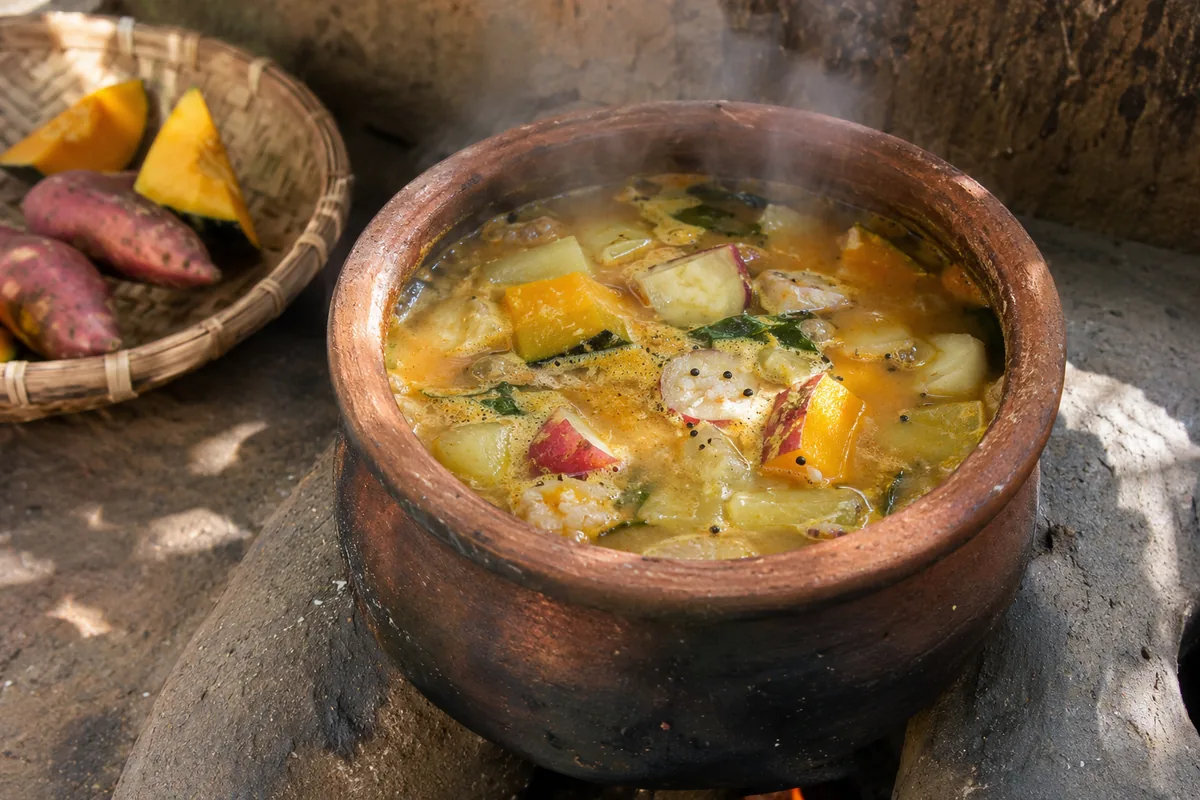
Bring the pot to a boil over medium burner heat. Cover with a fitted lid and allow the vegetables to simmer gently for twelve to fourteen minutes until the dense arbi and sweet potato are tender to the center.
2. Crafting the Roasted Jeera-Dhania Powder (Bhaja Masala)
While the vegetables simmer, heat a small dry iron skillet over low flame. Add one tablespoon of whole cumin seeds, one tablespoon of coriander seeds, and two whole dry red chilies.
Toast the spices dry for two minutes until they turn aromatic and darken slightly. Transfer immediately to a stone mortar or spice grinder and grind into a coarse, fragrant powder (Bhaja Jeera-Lanka Gunda).
3. Assembling Fried Badis and Grated Coconut
Once the root vegetables have softened, uncover the pot and reduce the heat to low. Gently stir in the lightly crushed fried badis and one-third cup of freshly grated coconut.
Allow the pot to simmer uncovered for four minutes. The badis will begin to swell as they drink up the spiced vegetable liquor, thickening the broth naturally.
4. Tempering with Desi Ghee and Panch Phoron
In a separate small tadka ladle, warm one generous tablespoon of pure desi cow ghee over medium heat. Add half a teaspoon of Odia panch phoron and one Indian bay leaf (Tejpatta).
As the cumin, fennel, and mustard seeds crackle and release their buttery aroma, pour the bubbling ghee directly over the simmering vegetable pot. Stir in two teaspoons of your freshly ground roasted spice powder, cover the lid immediately, and let the pot rest for five minutes before serving.
Authentic Serving Suggestions and Feast Pairings
In Odia dining tradition, Mahura is served hot as the primary vegetable curry during auspicious daytime feasts between 12:30 PM and 2:00 PM. Its soothing, gentle spice profile makes it universally beloved by children and elders alike.
Serve Mahura over steaming fragrant parboiled rice alongside sweet festival treats like traditional Odia Chaula Khiri or cooling rice bowls celebrated during Pakhala Divas festivities.
If you enjoy diverse regional curries, you can contrast Mahura with the bold mustard pungency of classic Odia Besara mixed vegetable curry or deep forest notes in authentic Odia Chhatu Besara mushroom curry.
Course Harmony in Odia Temple Meals
In formal temple feasts, Mahura provides gentle herbal sweetness between sharp khatta chutneys and rich lentils. It balances the palate and ensures satisfying nutrition without digestive heaviness.
When presented as part of an elaborate Abadha spread, Mahura occupies the central vegetable bowl. It bridges the gap between aromatic Kanika sweet rice and savory Mitha Dalma, tying the sacred meal together.
Frequently Asked Questions (FAQs)
What makes Odia Mahura different from other mixed vegetable curries?
Mahura is prepared strictly without onion, garlic, or tomatoes, using only sacred native root tubers, fried badis, and fresh grated coconut. Its distinct aroma comes entirely from roasted cumin-coriander powder and pure desi cow ghee.
Can I add potatoes or cauliflower to authentic Mahura?
Traditional temple guidelines forbid New World vegetables like potatoes, cauliflower, and green chilies. Authentic Mahura relies exclusively on indigenous tubers like sweet potato, pumpkin, raw banana, and taro root.
Why are the badis added towards the end of cooking?
Adding fried badis during the final five minutes allows them to absorb spiced vegetable juices without turning into mush. This preserves their pleasant crumbly bite and nutty sesame flavor.
How do I store and reheat leftover temple-style Mahura?
Store cooled Mahura in an airtight container in the refrigerator for up to two days. Reheat gently over low heat with two tablespoons of warm water, adding a fresh drop of ghee to revive its temple aroma.
Is Odia Mahura vegan?
Mahura is naturally plant-based, but traditional recipes use pure desi cow ghee for tempering. To make it strictly vegan, substitute the ghee with cold-pressed mustard oil or refined coconut oil.
What is the purpose of dry-roasting the cumin and coriander seeds?
Dry-roasting the seeds concentrates their essential oils and produces nutty pyrazines that give Mahura its signature temple aroma. This eliminates raw grassy notes and imparts deep, rounded flavor to the light vegetable broth.