Odia Chuda Ghasa Recipe: Authentic Odisha Festive Sweet
Master the authentic Odia Chuda Ghasa recipe at home. Learn the traditional hand-rubbing technique with coarse poha, fresh coconut, desi ghee, and spices.
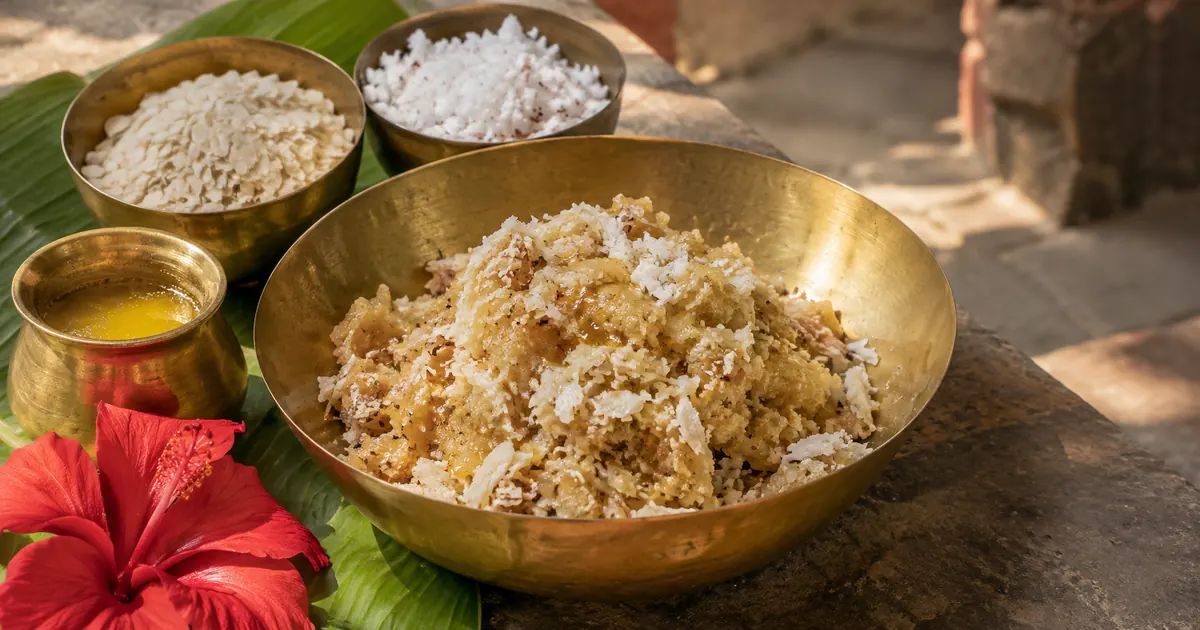
Preparing an authentic odia chuda ghasa recipe connects home cooks directly to centuries of sacred culinary rituals across eastern India. As celebrated in our definitive guide to 10 famous Odisha foods you must try, this no-cook festive delicacy holds deep spiritual significance during annual celebrations of Ganesh Puja and Saraswati Puja.
Derived from the Odia word Ghasa meaning to rub vigorously between open palms, this unique preparation requires zero stove heat. The warmth of your hands melts rich cow ghee and releases fragrant natural oils from freshly grated coconut into coarse flattened rice.
The result is a crumbly, aromatic sweet with an irresistible melt-in-the-mouth texture. It balances deep jaggery sweetness with the warm, peppery finish of crushed black peppercorns.
Key Takeaways
- Zero Cooking Required: Chuda Ghasa is a 100% no-cook sweet where texture develops purely through manual hand-rubbing (ghasa).
- Texture is Critical: Use thick flattened rice (mota chuda) pulsed to a coarse semolina texture, never a powdery fine flour.
- The Ghee and Coconut Alchemy: Rhythmic friction between palms releases rich coconut oils and incorporates cow ghee throughout each grain.
- Spiced Balance: Freshly ground black pepper (golmaricha) provides an essential spicy warmth that prevents the sweet from tasting heavy.
- The Classic Feast Pairing: In Odia homes and temple courtyards, Chuda Ghasa is traditionally served alongside piping hot, savory Dalma.
Quick Recipe Summary & Kitchen Metrics
The reference table below summarizes essential cooking timings, yields, and kitchen requirements before you begin preparation. Traditional festive food culture and ritual recipes can be explored on the Odisha Tourism Portal and compared with ancient temple prasad offerings on the Puri Shree Jagannath Temple Portal.
Because this recipe requires zero stove heat, kitchen prep centers entirely on measuring ingredients accurately and having a wide, flat work surface ready. A traditional brass thali or broad ceramic mixing platter provides sufficient space for vigorous two-handed friction.
| Recipe Metric | Detail Specification |
|---|---|
| Recipe Type | Traditional Odia No-Cook Sweet Prasad |
| Preparation Time | 20 minutes |
| Cooking Time | 0 minutes (no heat required) |
| Total Process Time | 20 minutes |
| Recipe Yield | 6 to 8 generous festive servings |
| Dominant Flavor Profile | Nutty, sweet, coconut-rich with warm cardamom and black pepper accents |
| Ideal Occasions | Ganesh Puja, Saraswati Puja, Radhashtami, Temple Bhoga |
| Primary Utensil Needed | Wide brass plate (thali) or large shallow mixing bowl |
Ensure your hands are completely clean and dry before starting. Any lingering moisture from unwashed or damp hands can cause the dry rice grains to clump prematurely before the ghee has coated the starch.
Cultural Heritage: The Sacred Offering of Ganesh Puja in Odisha
In every corner of Odisha, from the heritage neighborhoods of Cuttack district cultural heritage to coastal temple towns in Puri, the arrival of Ganesh Chaturthi is synonymous with Chuda Ghasa. While western India reveres the modak, Odia households celebrate Lord Ganesha with wide brass platters heaped with fragrant Chuda Ghasa and freshly simmered authentic Odia Dalma recipe.
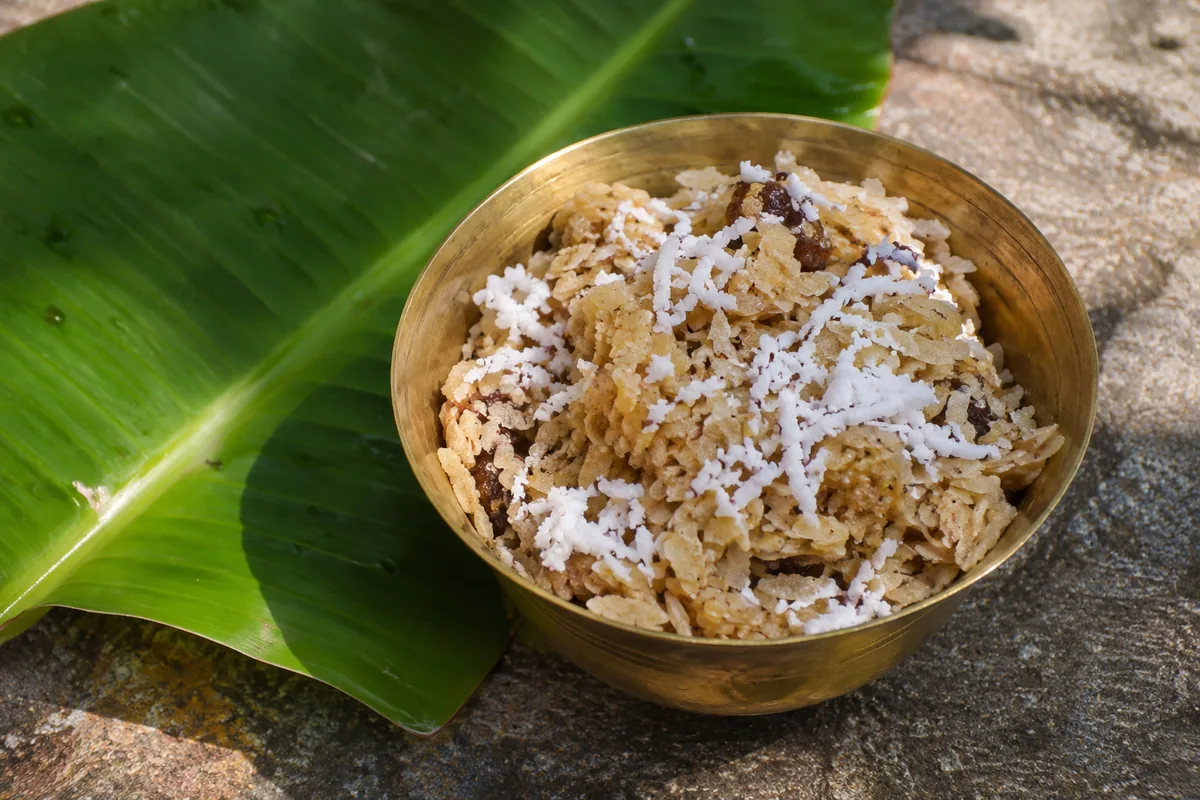
Official state cultural festivities and food heritage documentation are highlighted through the Odisha Tourism Official Portal.
The tradition of offering flattened rice to deities dates back over a millennium in Kalinga history. Uncooked beaten rice represents pure, unadulterated agrarian yield direct from post-monsoon paddy harvests. By preparing it without fire, devotees create a satvik offering that maintains maximum ritual purity.
Children in schools and youth clubs across Odisha eagerly await the midday prasad distribution on Ganesh Puja. Servers distribute paper bowls containing generous scoops of sweet Chuda Ghasa placed right next to hot, cumin-scented Dalma. The contrast between cool, sweet, crumbly grains and savory, vegetable-packed lentil stew remains one of the state’s most memorable culinary rituals.
Ingredients for Authentic Odia Chuda Ghasa
Authentic Chuda Ghasa relies on simple, wholesome pantry ingredients. Because the dish is completely uncooked, the freshness and quality of each component determine the final fragrance and texture.
| Ingredient | Measurement | Culinary Role & Selection Guidance |
|---|---|---|
| Thick Flattened Rice (Mota Chuda) | 2 cups | Provides the structural base; thick poha holds moisture without turning soggy |
| Fresh Grated Coconut (Nadia Kora) | 1 cup | Imparts moisture, rich sweetness, and essential plant fats during rubbing |
| Organic Jaggery (Guda) or Sugar | 1/2 cup | Traditional temple versions use dark palm or cane jaggery; bura sugar gives a pale hue |
| Pure Desi Cow Ghee (Ghia) | 3 tablespoons | Coats the dry rice starch, creates silkiness, and carries cardamom aromas |
| Black Pepper Powder (Golmaricha) | 1 teaspoon | Adds signature pungent heat that balances rich coconut fats |
| Green Cardamom Powder (Aleicha) | 1/2 teaspoon | Imparts warm floral fragrance typical of Odia temple offerings |
| Edible Camphor (Pacha Karpura) | 1 tiny pinch | Optional temple addition providing unmistakable sacred shrine fragrance |
| Cashews and Raisins | 2 tablespoons each | Provides textural crunch and sweet chewiness in every mouthful |
Choosing the Correct Variety of Chuda
Selecting the proper grade of flattened rice is the foundation of success. Always choose thick flattened rice, known in Odia bazaars as mota chuda or dhabala mota chuda.
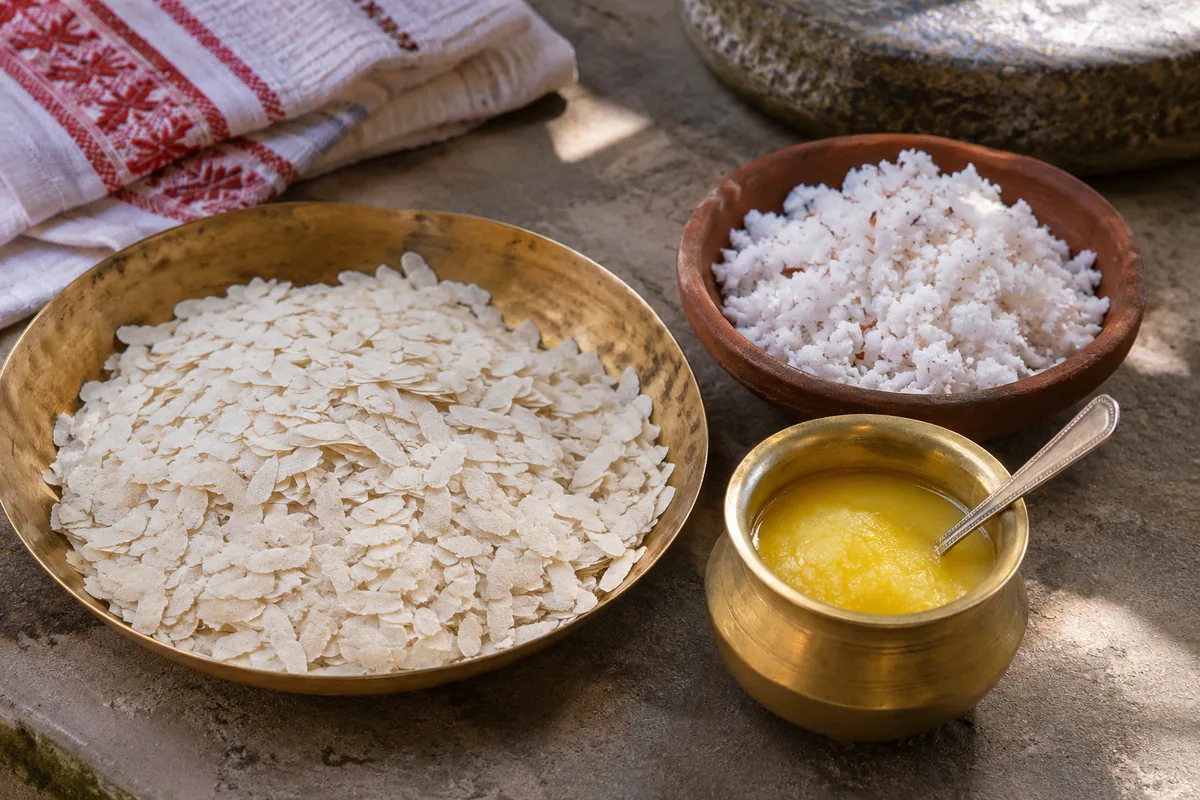
Thin nylon poha or paper poha should never be used for this recipe. Thin flakes disintegrate into a pasty, gummy mass once rubbed with ghee and moist coconut, destroying the signature loose, sand-like texture of authentic Chuda Ghasa.
Sugar versus Jaggery: Which is Traditional?
Both sweeteners hold authentic historical pedigree. Village households and rural temple shrines historically utilized nali guda (unrefined dark sugarcane jaggery) or date palm jaggery, yielding a rich golden-amber Chuda Ghasa with caramel undertones.
When learning how to make chuda ghasa in modern city kitchens, many cooks prefer refined sugar powder (bura chini). Fine sugar powder creates an attractive pale ivory-colored prasad that highlights the stark contrast of dark black peppercorns. You can select either sweetener based on personal preference.
Step-by-Step Preparation: Mastering the Hand-Rubbing Ghasa Technique
The defining secret of this dish is patience. The ingredients must not simply be tossed together with a spoon. True flavor develops only through continuous manual rubbing between your open palms. Practicing the traditional chuda ghasaa method ensures that dry starch granules absorb ambient coconut moisture and butterfat evenly.
Step 1: Pulsing the Flattened Rice
Take two cups of thick flattened rice and inspect it to remove any stray paddy husks. Transfer the dry flakes into a clean, moisture-free mixer grinder jar.
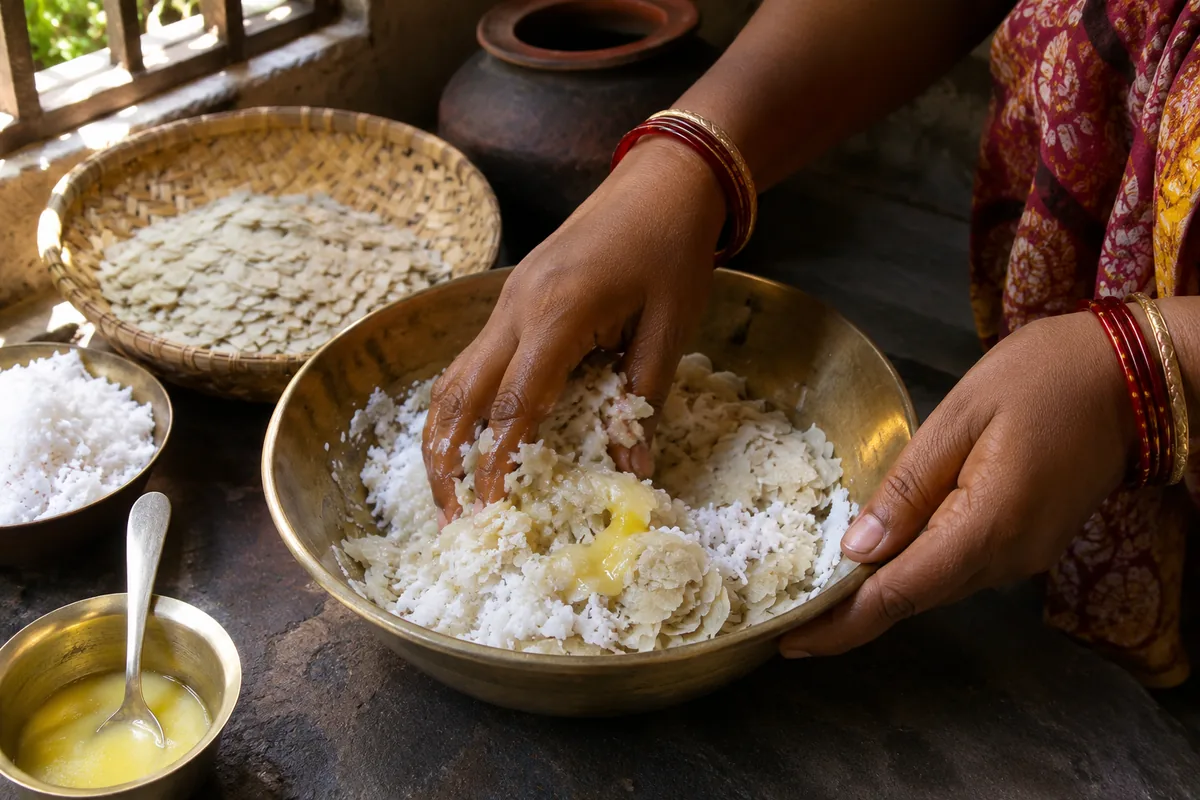
Pulse the mixer in short two-second bursts three to four times. Do not run the motor continuously. You are aiming for a coarse semolina (sooji) texture with distinct tiny granules, not a fine talcum-like flour.
Sieve the ground mixture through a medium-mesh kitchen sieve over a wide brass thali. Return any oversized flakes to the mixer for another quick pulse until all rice is uniformly coarse.
Step 2: The First Ghee Rub
Add three tablespoons of pure desi cow ghee directly over the coarse rice powder. Do not melt the ghee into hot liquid; semi-solid, room-temperature ghee works best.
Gather a portion of the mixture between your open palms. Rub your hands back and forth in a brisk, circular motion, allowing the grains to roll against your skin.
Continue this rubbing process across the entire platter for four to five minutes. The natural heat from your hands softens the ghee, ensuring every microscopic granule of rice is sealed in an imperceptible layer of fragrant butterfat.
Step 3: Incorporating Sweetness
Next, sprinkle half a cup of finely powdered jaggery or powdered bura sugar across the ghee-rubbed rice.
Resume the two-handed rubbing technique. As your palms generate friction, the sugar crystals begin to dissolve into the ghee barrier, softening the firm starch of the beaten rice. Spend five full minutes on this stage until the mixture turns pale and crumbly.
Step 4: Adding Coconut and Spices
Add one cup of freshly scraped coconut meat to the thali. Ensure the coconut is freshly grated from a juicy mature nut; dry desiccated coconut flakes will not yield sufficient moisture.
Sprinkle in one teaspoon of freshly ground black pepper, half a teaspoon of green cardamom powder, and an optional microscopic speck of crushed edible camphor.
Rub the entire mixture between your palms for another six to eight minutes. The friction extracts the natural milky oils from the fresh coconut shreds, hydrating the coarse rice grains. The mixture will visibly transform from a dry powder into a soft, damp, fragrant crumble that clumps together when squeezed in your fist.
Step 5: Final Garnish and Rest
Fold in lightly chopped cashew nuts and sweet raisins. If you are serving the dish immediately as puja prasad, you can gently mix in finely chopped ripe sweet bananas.
Cover the platter with a clean cotton towel and allow it to rest undisturbed for ten minutes. This short resting period allows the dry rice granules to absorb ambient coconut moisture and aromatic spice oils completely.
Crucial Texture Secrets: Achieving Aromatic Crumbly Perfection
Experienced Odia cooks judge a masterfully prepared Chuda Ghasa by its tactile consistency. It should feel moist and yielding like wet seashore sand, yet fall apart into distinct, delicate grains the moment it is touched.
[!TIP] The Squeeze Test: Take a small handful of Chuda Ghasa and close your fist firmly. It should form a cohesive lump holding the shape of your fingers. When tapped gently with a fingertip, that lump should effortlessly crumble back into fluffy separate grains. If it remains rock-hard, it needs more coconut or a splash of ghee; if it stays pasty, too much liquid was introduced.
How to Correct Dryness
If your mixture feels overly dry or powdery after rubbing, do not add water or milk. Adding water makes the rice gummy and drastically reduces shelf life.
Instead, scrape an additional two tablespoons of fresh juicy coconut or add half a teaspoon of warmed desi ghee, and rub vigorously for three minutes. The additional fat and natural plant water will promptly restore optimal texture.
Why Black Pepper is Indispensable
Novice cooks sometimes hesitate to add a full teaspoon of black pepper to a sweet dish. However, black pepper is the culinary genius of authentic Odia sweets, also seen in festive cakes like traditional Arisha Pitha and classic Rice Poda Pitha.
The mild piquancy of piperine cuts through the rich, heavy fats of coconut and ghee. It cleanses the palate, enhances digestion, and provides an addictive lingering warmth that sets apart Chuda Ghasa from ordinary sweet confections.
The Iconic Food Marriage: Why Chuda Ghasa and Dalma Are Inseparable
In the pantheon of regional Indian culinary pairings, few duos rival the harmony of Odia Chuda Ghasa and hot Dalma. This historic combination is central to community feasts and festival lunches across the state.
The culinary magic rests on dramatic textural and flavor contrasts:
- Sweet meets Savory: The comforting jaggery and coconut sweetness of Chuda Ghasa balances the earthy, turmeric-infused pigeon pea broth of Dalma.
- Cool meets Steaming Hot: Chuda Ghasa is served at room temperature, providing a soothing balance against steaming hot lentil stew fresh from the brass pot.
- Crumbly meets Velvety: The delicate, grainy texture of hand-rubbed flattened rice contrasts beautifully with the tender, fork-mashed root vegetables (raw banana, pumpkin, and taro root) simmered into authentic Dalma.
- Spice Harmonization: The black pepper in the sweet harmonizes with the roasted cumin and dry chili tempering (bhaja jeera lanka gunda) perfuming the savory stew.
When serving a festive meal, arrange a generous portion of Chuda Ghasa on one half of a broad banana leaf or sal-leaf platter, and ladle hot, ghee-tempered Dalma into an adjacent leaf bowl (dona). Diners take alternating spoonfuls, experiencing a symphony of regional flavors that has delighted Odia palates for generations.
Storage, Shelf Life, and Festive Serving Variations
Because Chuda Ghasa contains no water and utilizes raw coconut, understanding proper storage parameters ensures your prasad remains safe and flavorful.
| Storage Condition | Expected Shelf Life | Recommended Handling Method |
|---|---|---|
| Room Temperature (With Fresh Banana) | 4 to 6 hours | Best consumed immediately following puja rituals |
| Room Temperature (Without Banana) | 18 to 24 hours | Store in an airtight container in a cool, shaded corner |
| Refrigerated (Airtight Glass Jar) | Up to 4 days | Bring to room temperature for 20 minutes before serving |
Avoid Long Storage with Fresh Fruits
If preparing Chuda Ghasa for extended travel or gifting, strictly omit fresh banana and apple cubes. Fresh fruit juices ferment quickly in warm tropical climates, turning the sweet sour within several hours.
Stick to dry fruits like cashews, raisins, and dried dates (kharak) for long-lasting freshness.
Related Traditional Odia Sweets and Festive Delicacies
Exploring the confectionery heritage of Odisha reveals an extraordinary diversity of rice, lentil, and fresh cottage cheese preparations developed over centuries of festive celebrations. Alongside no-cook sweets, families celebrate annual milestones with slow-simmered puddings like traditional Odia Chaula Khiri made with short-grain Gobindobhog rice.
Fried and Baked Pithas of Coastal Odisha
Beyond no-cook flattened rice offerings, Odia festival calendars celebrate diverse dough-making techniques. During the agrarian Raja festival, families bake dense, caramelized cakes using our classic Rice Poda Pitha, or prepare crisp jaggery-infused patties following our traditional Arisha Pitha recipe.
Syrupy Confections and Savory Temple Snacks
Food lovers exploring coastal sweet hubs can also try frying syrup-soaked cheese patties using our Nimapada Chhena Jhilli recipe. When craving savory accompaniments for morning tea or evening snacks, home cooks can whip up fluffy lentil fritters with our guide to crisp Biri Bara vada.
Each of these traditional dishes honors the deep agrarian roots and spiritual devotion that characterize the living culture of Odisha.
Frequently Asked Questions About Odia Chuda Ghasa
What is Odia Chuda Ghasa made of?
Authentic Odia Chuda Ghasa is prepared with coarsely pulsed thick flattened rice, freshly grated coconut, pure cow ghee, powdered jaggery or sugar, and black pepper. Green cardamom powder and chopped cashews and raisins provide aromatic festive flavor.
Why is this dish called Chuda Ghasa?
The name comes from the Odia word ghasa, which translates to rubbing vigorously between open palms. The dish requires manual hand friction rather than stove cooking to melt the ghee and extract natural coconut oils.
Can Chuda Ghasa be made with jaggery instead of white sugar?
Yes, unrefined sugarcane jaggery is the historic traditional sweetener used in rural Odia homes and temple shrines. It imparts a warm caramel flavor and a golden amber color to the crumbly prasad.
What kind of poha or chuda should be used for this recipe?
Always choose thick flattened rice, known in markets as mota chuda, which can be pulsed into coarse semolina granules without collapsing. Thin nylon or paper poha should be avoided as it turns soggy and pasty when rubbed.
Why is Chuda Ghasa traditionally paired with hot Dalma?
The pairing provides a balanced balance between sweet, coconut-rich beaten rice and steaming hot, cumin-tempered lentil vegetable stew. This iconic sweet-and-savory combination is the hallmark of Odia Ganesh Puja and Saraswati Puja feasts.
How long does fresh Chuda Ghasa stay fresh at room temperature?
Chuda Ghasa prepared without fresh fruits keeps well at room temperature in an airtight container for up to twenty-four hours. If fresh banana pieces are mixed into the prasad, it should be consumed within six hours to prevent fermentation.