Rice Poda Pitha Recipe: Authentic Odisha Style Baked Cake
Bake authentic Rice Poda Pitha with this traditional Odisha recipe. Learn rice-urad dal ratios, jaggery sweetness, stovetop cooker methods, and baking tips.
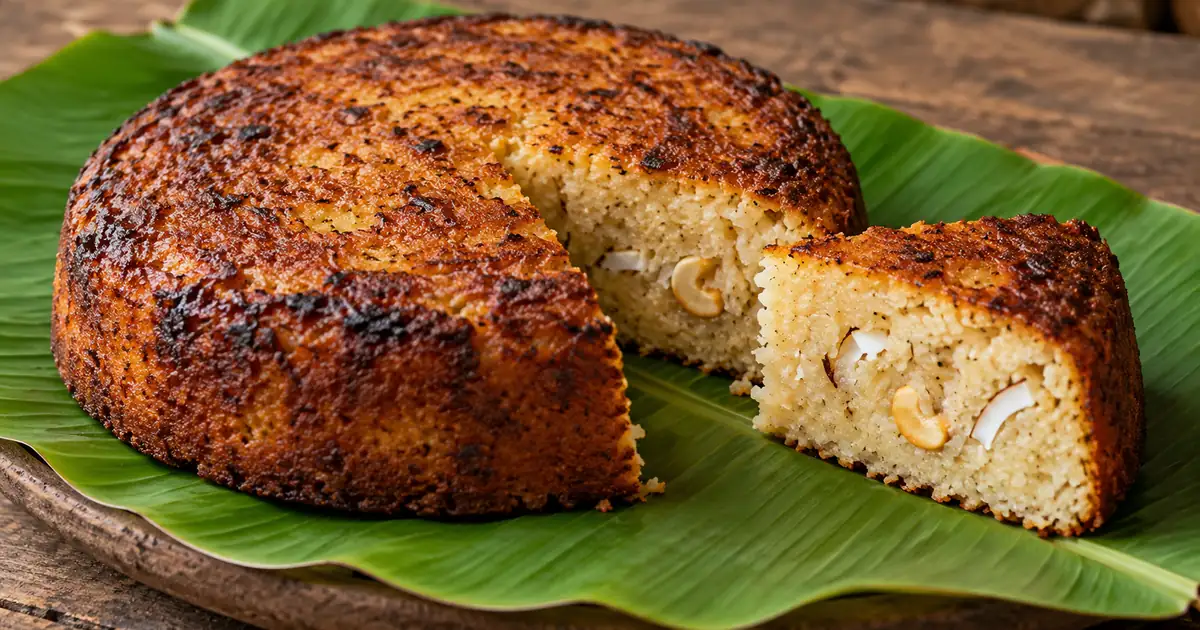
Mastering this authentic rice poda pitha recipe brings the signature festive taste of Odisha directly to your dining table. Celebrated across the state as a time-honored slow-baked delicacy, this traditional cake features a deeply caramelized, smokey crust and a tender, fragrant interior. Prepared by blending soaked raw rice and lentils with jaggery and coconut, it delivers an irresistible balance of sweetness and warming spice.
Key Takeaways
- Rice Poda Pitha is a slow-baked festive cake made from a fermented batter of soaked raw rice and skinless black gram.
- The signature flavor comes from deep jaggery caramelization, crushed black pepper, fresh ginger, and crunchy coconut bits.
- Traditionally baked overnight wrapped in banana leaves over earthen chulha embers, it cooks easily at home inside a stovetop pressure cooker.
- The cake serves as the culinary centerpiece of the four-day Raja festival and is offered to Lord Jagannath during Bahuda Yatra.
- Complete baking takes approximately 55 minutes on low heat until the bottom develops its iconic mahogany crust.
Every household across Odisha looks forward to slicing warm Poda Pitha during agrarian festivals and sacred holiday celebrations. The gentle tang of natural batter fermentation harmonizes with roasted cardamom and buttery ghee. To explore where this baked specialty fits within the state’s broader culinary heritage, discover our guide to 10 famous Odisha foods you must try.
At-a-Glance: Rice Poda Pitha Recipe Specifications
State cultural initiatives and regional culinary archives are officially maintained through the Official Odisha Tourism Portal. Before preparing your ingredients and lining your baking cookware, examine the standard recipe metrics outlined below.
| Recipe Metric | Preparation Specification |
|---|---|
| Preparation Time | 20 minutes active prep (excluding 4 hours soaking and fermentation) |
| Baking Duration | 50 to 60 minutes on slow stovetop heat |
| Total Active Time | 75 minutes from batter mixing to cooling |
| Yield & Portions | 6 to 8 thick, satisfying wedges |
| Primary Sweetener | Organic sugarcane or date palm jaggery (guda) |
| Grain Proportions | 2 parts raw rice (arua chaula) to 1/2 part urad dal (biri) |
| Cooking Vessel | Heavy pressure cooker (no whistle/gasket) or thick cast iron kadai |
| Signature Crust | Caramelized dark brown bottom infused with banana leaf aroma |
Using good quality parboiled or raw arua rice gives the pitha its characteristic bite without turning gummy. Allowing the batter to rest in a warm spot ensures natural aeration, which produces a fluffy crumb that absorbs melted jaggery evenly during the long bake.
Cultural Heritage: Raja Parba and the Sacred Bahuda Yatra Tradition
Poda Pitha holds deep emotional and spiritual reverence throughout Odisha, symbolizing familial affection, hospitality, and divine devotion. During the annual celebrations of Raja Festival in Odisha, village women hang decorative rope swings and enjoy respite from kitchen labor while savoring wedges of slow-baked pitha. The dish honors the fertility of mother earth before the seasonal onset of monsoon showers.
The delicacy also holds a celebrated role in ancient Jagannath temple lore. During the return chariot festival, the divine siblings halt their towering chariots outside the Mausi Maa shrine along Grand Road in Puri. There, temple servitors present Lord Jagannath with his favorite sacred Poda Pitha. Travelers can discover more about these sacred sites in our guide to places to visit in Puri.
Official accounts of temple food rituals are documented on the Shree Jagannath Temple Administration Portal. Whether enjoyed in sacred temple courtyards or prepared for village community gatherings, this baked cake remains a proud hallmark of Odia cultural identity.
Essential Ingredients and the Perfect Grain Ratio
Creating a tender pitha that stays moist without falling apart depends on maintaining the classic ratio of rice to black gram. Too much dal makes the cake heavy, while excess rice can lead to a dry, brittle texture.
Gather the following pantry staples before assembling the batter:
- Raw Rice (2 cups): Choose short-grained arua rice or standard pitha chaula. Soak thoroughly in clean water for at least four hours so grains grind smoothly.
- Urad Dal (1/2 cup): Split, skinless black gram provides structural lightness and allows natural batter fermentation.
- Pure Jaggery (1.5 cups): Deep-colored organic jaggery yields the authentic dark amber crumb and earthy caramel undertone.
- Fresh Coconut Duo: One cup of finely grated coconut adds moisture, while one-third cup of thinly sliced coconut bites provides crunchy contrast.
- Aromatics and Spices: Fresh crushed ginger (1 inch) and coarse black pepper (1/2 teaspoon) balance the sweetness with pleasant warmth.
- Ghee and Leaf Lining: Two tablespoons of pure cow ghee for enrichment and fresh green banana leaves to line the baking pan.
This wholesome recipe uses unrefined jaggery and stone-ground grains, offering sustained energy without artificial food coloring or chemical leavening agents.
Batter Preparation and Fermentation Secrets
Mastering the batter consistency ensures that your baked pitha rises gently without collapsing into a dense block. Follow these precise preparation steps:
- Soak the Grains: Place the measured rice and urad dal in separate bowls, rinsing multiple times before soaking for 4 to 5 hours.
- Grind Separately: Grind the urad dal with minimal ice-cold water until light, frothy, and completely smooth. Next, grind the soaked rice into a slightly coarse paste resembling fine semolina.
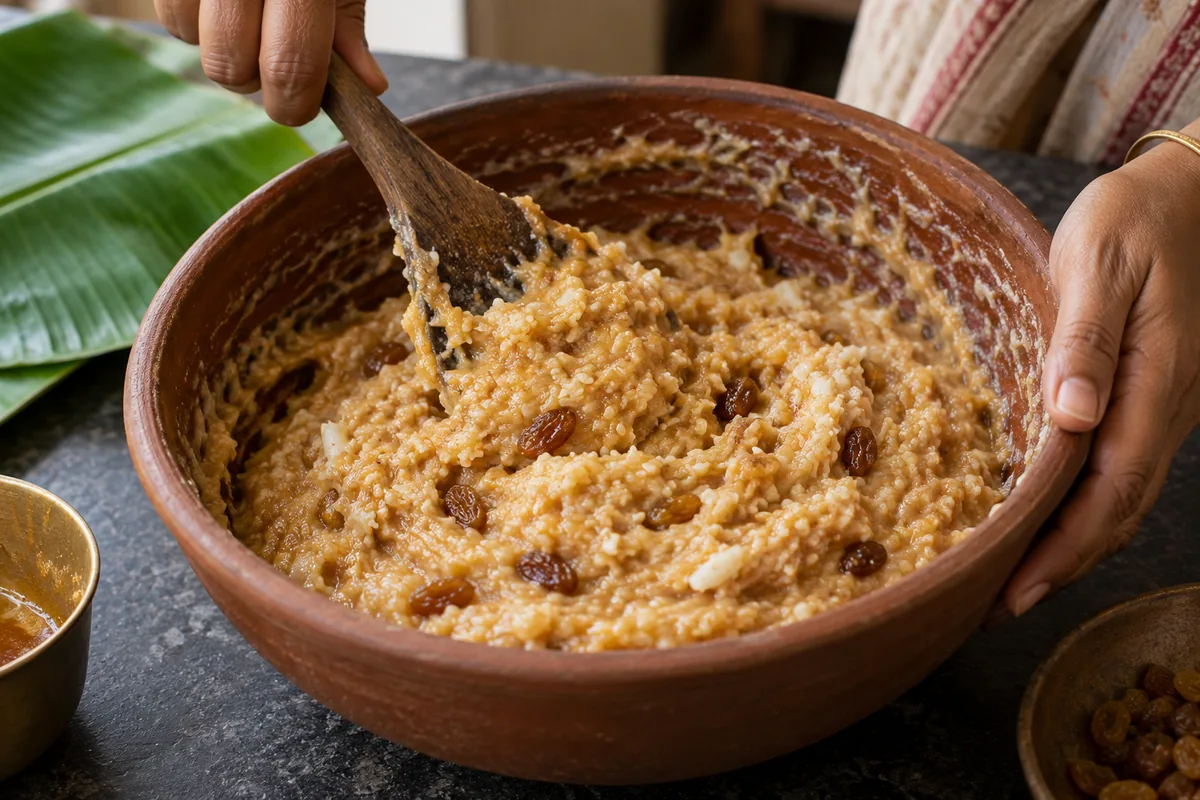
- Blend and Ferment: Combine the two batters in a large ceramic bowl, beating with your hand in a clockwise motion for two minutes to trap air. Cover and let the batter rest in a warm pantry for 4 to 6 hours.
- Dissolve the Jaggery: Warm the jaggery in a small pan with three tablespoons of water until completely melted. Strain through a fine metal sieve to remove sand particles, then let it cool to room temperature.
- Fold Flavorings: Gently fold the strained jaggery syrup, grated coconut, fried coconut chips, crushed ginger, black pepper, and cardamom into the fermented batter.
Traditional households often prepare this wholesome batter alongside a pot of Odia Dalma recipe to balance sweet and savory courses during festive lunches. Further regional baking traditions can be explored in our Nayagarh district guide.
Step-by-Step Cooking: Stovetop Pressure Cooker and Kadai Methods
While rural villages bake pitha over dying wood embers, modern home cooks achieve identical caramelized results using a standard stovetop pressure cooker or heavy cast iron pot. Culinary heritage preservation is highlighted across the Incredible India Odisha Tourism Directory.
Execute these straightforward cooking instructions:
- Prepare the Cooker: Take a heavy 4 to 5 liter pressure cooker. Smear one tablespoon of pure ghee generously across the bottom and inner walls.
- Layer Banana Leaves: Wash two fresh banana leaves and pass them quickly over a low gas flame to make them pliable. Line the greased cooker bottom and sides with overlapping leaves.
- Pour the Batter: Pour the spiced pitha batter over the banana leaf base, tapping the pot gently on your counter to release large trapped air pockets.
- Assemble the Lid: Remove the whistle weight and black rubber sealing ring from the cooker lid. Fasten the lid securely onto the pot.
- Cook on Low Flame: Place the cooker over a medium flame for three minutes, then immediately reduce heat to the lowest possible simmer. Allow the cake to bake undisturbed for 50 to 55 minutes.
- Test Doneness: Insert a clean wooden skewer or knife into the center of the cake. If it emerges clean without wet batter clinging to the surface, the pitha is fully baked.
Expert Tips for the Signature Caramelized Crust and Moist Crumb
Achieving the coveted smoky aroma and glossy browned bottom requires careful heat management during the final fifteen minutes of cooking. If the heat is too high, the sugar in the jaggery will scorch before the center cooks through.
Keep these practical chef guidelines in mind:
- Use a Tawa Diffuser: If your gas stove flame runs hot even on simmer, place an old flat iron tawa under your pressure cooker to diffuse direct heat evenly.
- Never Skip Cooling: Resist the urge to slice hot pitha straight from the cooker. Allow the cake to rest inside the pot for at least 45 minutes until lukewarm, enabling the crumb to set firmly.
- Invert with Care: Run a butter knife around the banana leaf edges, place an inverted dinner plate over the pot, and flip the vessel smoothly. Peel away charred leaf segments to reveal the glossy mahogany crust.
- Storage Life: Wrapped in parchment paper or clean cotton cloth, authentic Rice Poda Pitha stays fresh at room temperature for up to three days.
Pair your freshly sliced pitha with hot spiced tea or cold sweetened milk to experience the true warmth of festivals of Odisha.
Frequently Asked Questions About Rice Poda Pitha
Can Rice Poda Pitha be baked without an oven or tandoor?
Yes, traditional Rice Poda Pitha is easily baked on a standard stovetop using a heavy pressure cooker with the whistle and rubber gasket removed. Low heat allows the batter to steam and bake simultaneously while developing a rich caramelized crust.
What is the ideal ratio of rice to urad dal in Poda Pitha?
The ideal proportion is four parts raw rice to one part urad dal, or roughly two cups of rice to one-half cup of lentils. This balanced ratio ensures the cake develops structural tenderness without becoming overly soft or rubbery.
Why are banana leaves used to line the baking vessel?
Banana leaves prevent the sweet batter from sticking to the hot pan and protect the jaggery from burning directly against bare metal. They also release a delicate herbal aroma that infuses deeply into the crust during slow baking.
Is baking powder or baking soda necessary for Poda Pitha?
Traditional Odia recipes rely entirely on natural batter fermentation rather than chemical leavening agents like baking powder or soda. Allowing the ground rice and lentil batter to ferment for four to six hours creates natural lightness.
Why is black pepper added to sweet Poda Pitha?
Freshly crushed black peppercorns provide a subtle warmth and sharpness that cuts through the intense sweetness of rich jaggery. This classic sweet-and-spicy contrast is the defining signature of authentic Odia festival baking.
How long does homemade Rice Poda Pitha stay fresh?
Freshly baked Poda Pitha remains delicious at cool room temperature for up to three days without refrigeration. In warmer weather, refrigerate leftovers in an airtight glass container for up to one week and reheat gently before serving.