Odia Dalma Recipe: Authentic Temple Style Lentil Stew
Cook authentic Odia Dalma with this traditional recipe. Discover temple-style roasted spices, vegetables, toor dal tempering, ghee aroma, and cooking tips.
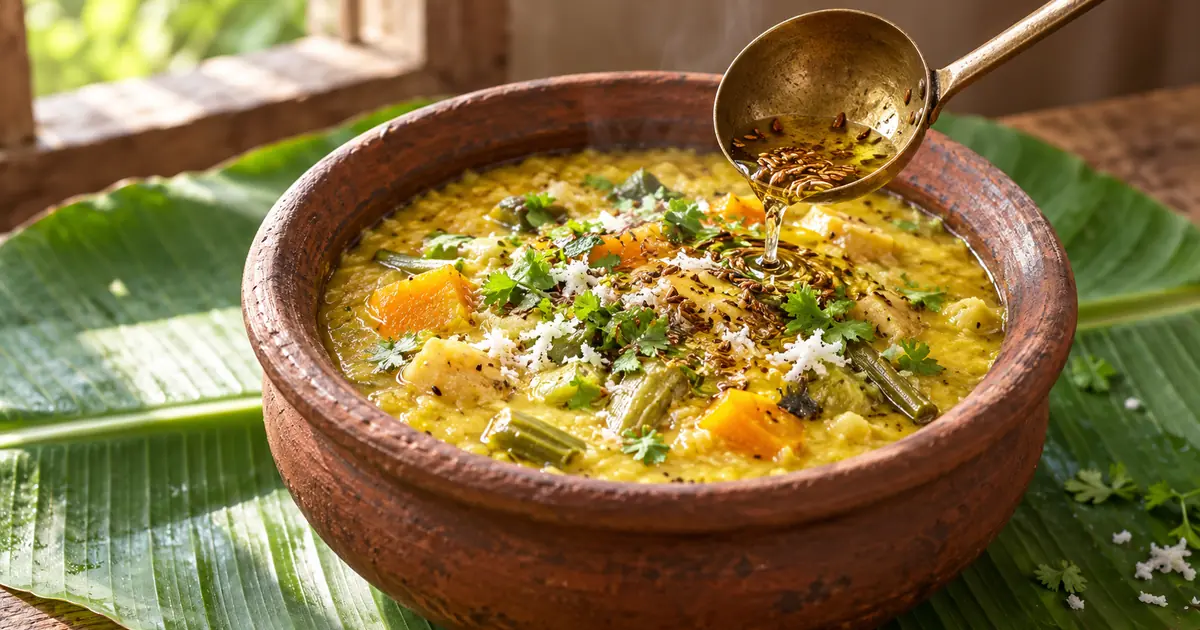
Cooking an authentic odia dalma recipe brings the comforting heart of Odisha’s culinary culture into your home kitchen. This slow-simmered stew combines split lentils with native root vegetables, pure cow ghee, and roasted spices. Prepared without onion or garlic in temple kitchens, it offers balanced nutrition and earthy flavor. Ladled over steaming rice, hot Dalma anchors everyday meals and festive feasts alike across the state.
Key Takeaways
- Authentic Odia Dalma is a nutritious one-pot stew made from split toor dal or moong dal cooked with native seasonal vegetables.
- The dish is completely satvik, prepared traditionally without any onion or garlic.
- The defining aroma comes from Bhaja Jeera Lanka Gunda, a freshly ground finishing powder of dry-roasted cumin seeds and dry red chilies.
- Dalma holds deep religious importance as a daily staple of Mahaprasad cooked inside the Rosaghara of the Puri Jagannath Temple.
- Total cooking time requires approximately 45 minutes from raw vegetable prep to aromatic ghee tempering.
Every district of Odisha celebrates subtle variations of this beloved dish, from festive Habisha Dalma to coastal homestyle renditions. The balance of creamy lentils, melting pumpkin, and earthy taro creates a comforting texture that appeals to all generations. To discover how Dalma anchors the broader gastronomic landscape of the state, explore our guide to 10 famous Odisha foods you must try.
At-a-Glance: Odia Dalma Quick Recipe Summary
Authentic recipes and state culinary traditions are documented through cultural heritage initiatives under the Official Odisha Tourism Portal. Before gathering your cooking pots and peeling vegetables, review the practical recipe specifications below to organize your kitchen workflow efficiently.
| Recipe Metric | Preparation Specification |
|---|---|
| Preparation Time | 15 minutes of chopping and peeling root vegetables |
| Cooking Time | 30 minutes of boiling and tempering |
| Total Time | 45 minutes from pantry to table |
| Servings | 4 to 6 generous adult servings |
| Course | Main course lentil and vegetable stew |
| Dietary Profile | Vegetarian, Satvik (No onion, no garlic), Gluten-free |
| Core Lentils | Split pigeon peas (toor dal / harada dali) or yellow moong dal |
| Key Cooking Medium | Pure desi cow ghee (2 tablespoons for chhunka tempering) |
| Signature Seasoning | Freshly ground Bhaja Jeera Lanka Gunda (roasted cumin and chili) |
| Traditional Garnish | Freshly grated coconut and chopped coriander |
Because Dalma relies on wholesome produce rather than commercial gravies, selecting fresh seasonal vegetables determines the overall quality of the dish. Cooking in an unglazed earthenware vessel enhances the natural sweetness of the pumpkin and plantain, producing a silky body without heavy thickening agents.
Cultural Significance: From Village Hearths to Puri Jagannath Rosaghara
Dalma represents far more than an everyday lentil curry across Odisha; it is an enduring cultural emblem woven into religious ritual and family life. In the legendary Rosaghara (temple kitchen) of the Puri Jagannath Temple, servitors cook dozens of earthen pots of Dalma every day over wood-fired ovens. Official kitchen records and temple ritual schedules are maintained on the Shree Jagannath Temple Administration Portal.
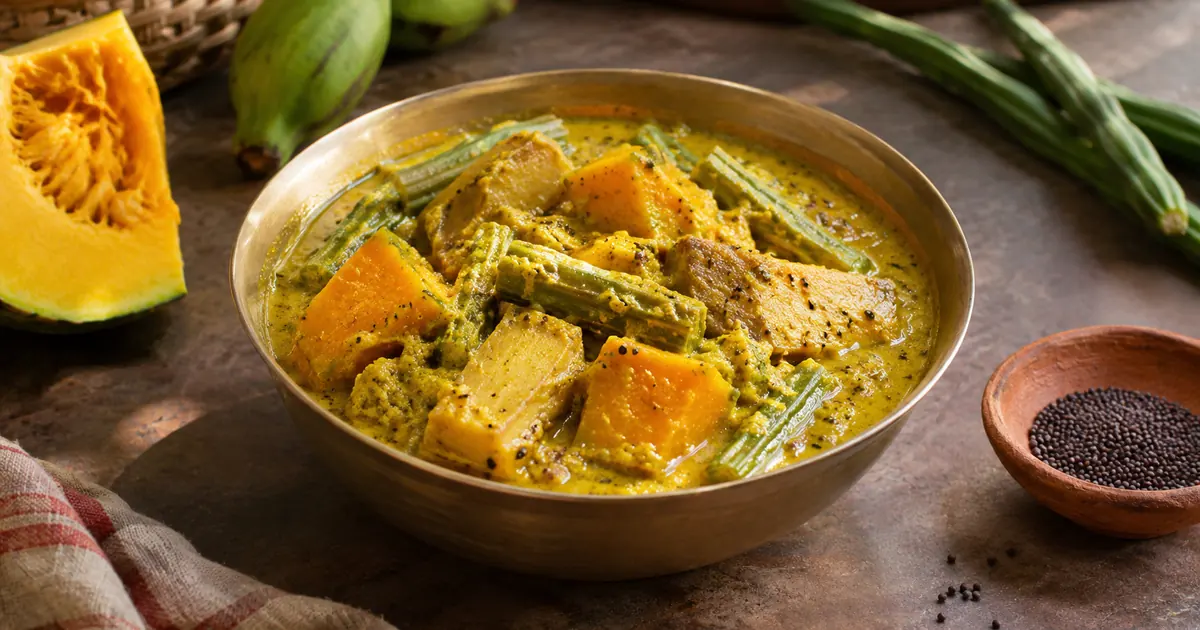
The temple version, prepared as part of the sacred Chhapan Bhog, adheres to strict Vedic culinary rules. Foreign vegetables introduced during colonial trade, such as tomatoes, potatoes, and cauliflower, are traditionally excluded from temple earthen handis. Instead, priests use ancient indigenous produce like raw plantain, sweet potatoes, taro root, and pumpkin. These same sacred vegetables also form the backbone of our sacred temple vegetable curry Odia Mahura, cooked with fried badis and grated coconut.
In village homes across coastal and western Odisha, Dalma serves as the centerpiece for wedding feasts, sacred thread ceremonies, and ancestral remembrance feasts. Its wholesome, balanced nutrition provides plant-based protein, dietary fiber, and complex carbohydrates in a single dish. To learn more about spiritual food offerings in Puri, browse our Jagannath Temple Puri guide.
Essential Ingredients: The Traditional Vegetable and Lentil Selection
Choosing the correct selection of vegetables is crucial for achieving authentic Odia texture and flavor. Traditional vegetables hold their structure during slow simmering without dissolving into a puree.
Assemble the following fresh ingredients before beginning preparation:
- Split Lentils (1 cup): Yellow pigeon peas (harada dali) are most popular for everyday homestyle Dalma. Roasted split yellow moong dal (muga dali) is preferred for sacred Habisha rituals during the holy month of Kartika.
- Sweet Pumpkin (Kakharu - 1 cup): Adds a natural caramel sweetness and deep yellow hue to the stew.
- Raw Green Banana (Kancha Kadali - 1 medium): Imparts body and mild astringency that balances the rich ghee.
- Colocasia / Taro Root (Saru - 4 small pieces): Provides a velvety, creamy consistency as it cooks down.
- Raw Papaya (Amrutabhanda - 1/2 cup): Acts as a natural digestive tenderizer and adds tender bite.
- Potatoes (Aloo - 1 medium): Soaks up the fragrant broth and provides satisfying density.
- Aromatics and Tempering: Pure cow ghee (2 tablespoons), panch phoron or whole cumin seeds (1 teaspoon), dry red chilies (2 pieces), bay leaf (1 leaf), and freshly crushed ginger (1 inch).
- Finishing Garnishes: Grated fresh coconut (2 tablespoons) and Bhaja Jeera Lanka Gunda (1 tablespoon).
Travelers who wish to sample traditional preparations before cooking at home can explore authentic Odia thalis featured across our guide to the best restaurants in Bhubaneswar.
The Secret Flavor: Preparing Bhaja Jeera Lanka Gunda
The unmistakable signature flavor of authentic Odia Dalma comes from a special roasted spice powder known as Bhaja Jeera Lanka Gunda. Without this finishing sprinkle, Dalma tastes like an ordinary vegetable sambar or dal.
Preparing this spice blend at home takes less than five minutes:
- Heat the Skillet: Place a heavy iron skillet or tawa over medium-low flame.
- Toast the Spices: Add 2 tablespoons of whole cumin seeds (jeera) and 2 to 3 whole dry red chilies to the dry pan without oil.
- Stir Continuously: Roast the seeds for 2 to 3 minutes until the cumin turns dark brown and releases an intense smoky perfume.
- Cool and Grind: Transfer the hot spices immediately to a dry plate to prevent burning. Once cooled, crush them into a coarse powder using a mortar and pestle or spice grinder.
Always prepare this spice mix fresh or store it in an airtight glass container for up to two weeks to preserve its volatile aromatic oils.
Step-by-Step Cooking Instructions: The Authentic One-Pot Method
Cooking Dalma is remarkably straightforward when following the traditional one-pot sequence. Regional culinary arts and ethnic food traditions are cataloged through the Incredible India Odisha Tourism Directory.
Follow these step-by-step directions for perfect results:
- Rinse and Soak: Wash 1 cup of split toor dal thoroughly in water until the liquid runs clear. Soak the lentils in clean water for 20 minutes to reduce cooking time.
- Chop the Vegetables: Peel and cut raw banana, taro root, pumpkin, papaya, and potato into uniform 1-inch cubes so they cook at an even rate.
- Simmer the Pot: In a deep heavy-bottomed pot or clay handi, combine the soaked lentils, chopped vegetables, 1 inch of finely crushed ginger, 1/2 teaspoon of turmeric powder, 1 teaspoon of salt, and 4 cups of water.
- Cook until Tender: Bring the liquid to a rolling boil over high heat, then lower the flame to medium-low. Cover the pot with a tight-fitting lid and simmer for 20 to 25 minutes until the lentils are soft and root vegetables yield easily to a fork.
- Check Consistency: If using a modern pressure cooker, cook over medium heat for 2 whistles, then turn off the flame and let pressure release naturally. The consistency should be medium-thick rather than watery.
The Aromatic Ghee Chhunka: Perfuming the Stew
The defining final stage of Dalma preparation is the chhunka, or hot oil and ghee tempering. This technique infuses the earthy boiled lentils with aromatic roasted whole spices.
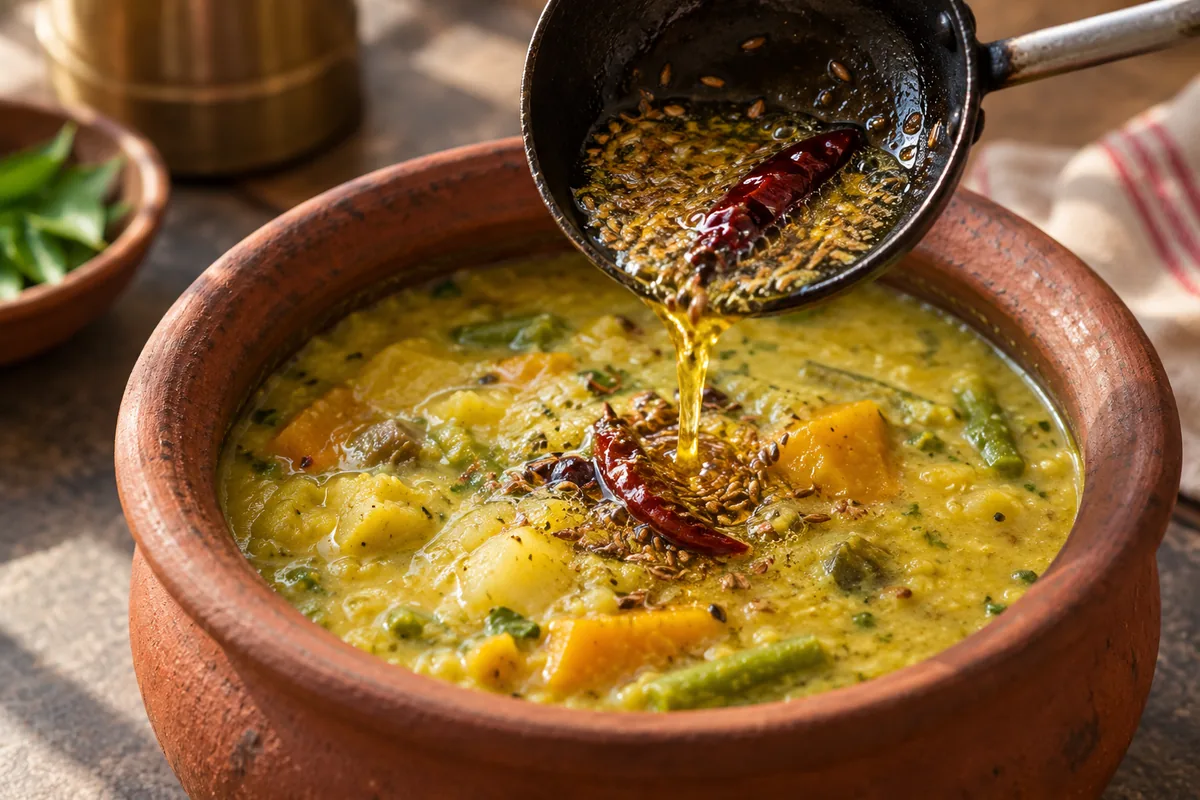
To execute the tempering:
- Heat the Ghee: Heat 2 tablespoons of pure desi cow ghee in a small tempering ladle or frying pan over medium heat.
- Bloom the Spices: Add 1 teaspoon of panch phoron (the traditional Odia five-spice blend of cumin, mustard, fenugreek, nigella, and fennel seeds) or plain cumin seeds, 2 whole dried red chilies, and 1 bay leaf.
- Listen for the Crackle: Allow the seeds to sputter and release their nutty fragrance for roughly 30 seconds.
- Combine with Care: Pour the sizzling ghee and spice mixture directly into the simmering pot of cooked Dalma, immediately covering with a lid for two minutes to trap the aromatic vapor.
- Garnish and Rest: Remove the lid, gently stir the stew, and sprinkle 1 tablespoon of freshly ground Bhaja Jeera Lanka Gunda and 2 tablespoons of grated coconut over the surface.
Popular Regional Variations of Odia Dalma
While the classic toor dal preparation is standard across central coastal Odisha, several beloved regional styles exist:
- Habisha Dalma: Cooked exclusively during the sacred Kartika month by devotees observing daily religious vows. It uses roasted yellow moong dal, ginger, and ghee, strictly omitting turmeric, potatoes, and modern hybrid vegetables.
- Puri Temple Harada Dalma: Prepared in the Jagannath Temple Rosaghara using earthen pots stacked atop wood fires. It features sweet plantains, elephant apple (ouu), and rich ghee infusions.
- Sambalpuri Dalma: Common across western Odisha, this version incorporates a light seasoning of crushed garlic and mustard oil alongside seasonal wild forest greens.
- Chana Dal Dalma: Prepared with split Bengal gram (chana dal) for community feast celebrations, delivering a firmer texture with rich coconut slivers.
To discover other festive regional sweets and accompaniments across Odisha, read about the origins of the state dessert in our Odisha Rasagola Dibasa guide.
How to Serve Dalma for an Authentic Odia Feast
An authentic Odia meal is incomplete without hot Dalma served directly over a mound of freshly steamed white rice. For a memorable festive lunch, ladle the aromatic stew generously across the center of your plate so the fragrant ghee broth seeps into the grains. Accompany the meal with a crisp side dish such as aloo bhaja (thin potato fries), roasted papad, and a wedge of fresh local lime.
During humid summer afternoons, Dalma also pairs remarkably well as a warm, comforting side with fermented rice water, celebrated statewide during Pakhala Divas in Odisha. In village homes, elders often mix a spoonful of raw mustard oil into lukewarm Dalma for an extra rustic kick. During festive celebrations like Ganesh Puja, hot savory Dalma is famously paired with our sweet crumbly Chuda Ghasa recipe for a classic contrast of spices and ghee-rubbed flattened rice. Diners who appreciate a sweeter balance can pair the savory stew with caramelized treats like Khaja or Rasagola.
Frequently Asked Questions About Odia Dalma
Which dal is best for cooking authentic Odia Dalma?
Split yellow pigeon peas (toor dal or harada dali) are the most popular choice for homestyle Dalma, while dry-roasted split yellow moong dal is traditionally used for sacred temple and Habisha preparations. Both lentils provide a creamy, velvety texture when slow-cooked with root vegetables.
Why is roasted cumin and chili powder essential for Dalma?
Roasted cumin and chili powder, known in Odia as Bhaja Jeera Lanka Gunda, imparts the signature smoky aroma and warm finishing heat that defines authentic Dalma. Adding it at the very end of cooking ensures the roasted volatile oils perfume the entire dish without turning bitter.
Can Dalma be cooked without a pressure cooker?
Yes, traditional Odia Dalma is historically cooked in an unglazed earthen clay pot or heavy brass handi over an open flame. Slow boiling on a stovetop takes approximately 35 minutes and produces deeper sweetness as root vegetables soften gradually in the lentil broth.
Is Odia Dalma completely vegetarian and gluten-free?
Yes, authentic Odia Dalma is strictly vegetarian, satvik (made without onion or garlic), and naturally gluten-free when cooked without commercial compounded asafoetida. It offers a balanced, nutrient-dense meal rich in plant proteins and complex dietary fiber.
Can I substitute moong dal for toor dal in Dalma?
Yes, yellow moong dal can be used instead of toor dal and is in fact the mandatory lentil for sacred temple and Habisha preparations. Roasting the moong dal dry in a skillet until slightly golden before boiling yields a nutty, authentic aroma.
How long can cooked Dalma be stored safely in the refrigerator?
Cooked Dalma keeps well in an airtight glass container in the refrigerator for up to 48 hours without losing flavor. When reheating, add 2 to 3 tablespoons of warm water and a tiny pinch of fresh roasted cumin powder to revive its original aroma.