Puri Feni Khaja Recipe: Authentic Odisha Temple Sweet
Prepare authentic Puri Feni Khaja with this traditional Odisha recipe. Learn dough kneading, satta paste layering, ghee deep-frying, and sugar syrup glaze.
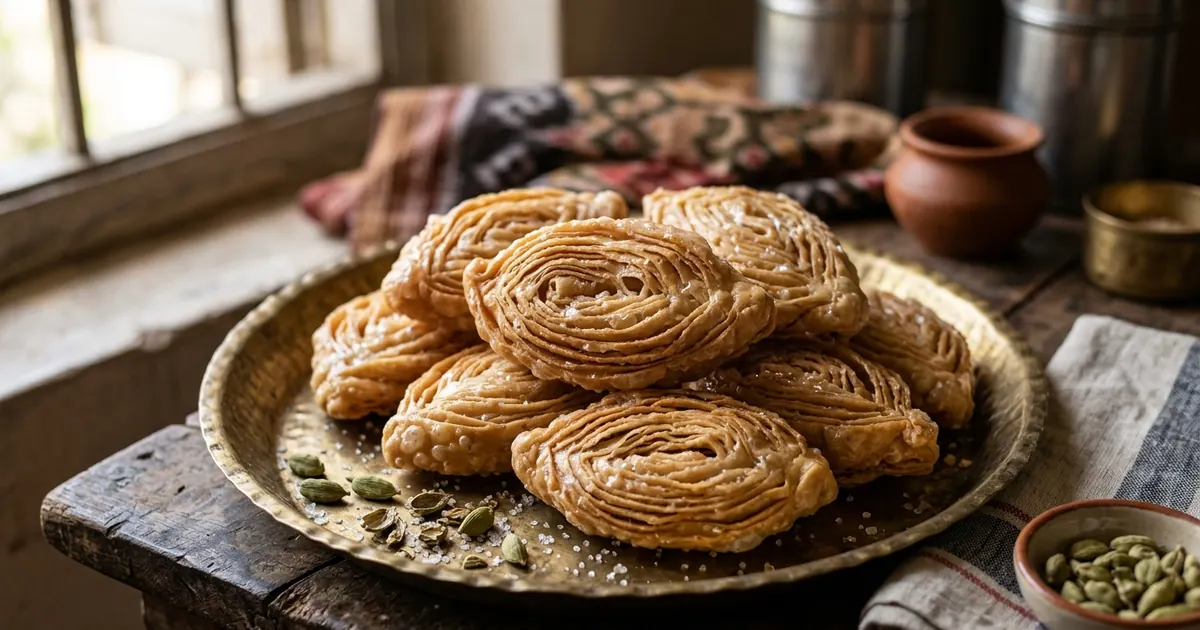
Mastering this authentic feni khaja recipe puri pheni allows home cooks to recreate the celebrated temple sweet of Lord Jagannath in their own kitchen. Famous across eastern India for its feather-light crunch and delicate layered pastry ribbons, this traditional Odia delicacy is fried in pure cow ghee and dipped into a fragrant cardamom sugar glaze. Each bite delivers a satisfying balance of crispy golden layers and mellow caramel sweetness.
Key Takeaways
- Puri Feni Khaja is a multi-layered crisp pastry and a primary dry sweet offering (Sukhila Mahaprasad) of the Puri Jagannath Temple.
- The signature flakiness comes from satta, a whipped paste of pure ghee and rice flour spread between stacked dough sheets.
- Traditional preparation requires slow deep-frying in pure desi cow ghee over medium-low flame so internal layers separate and crisp thoroughly.
- A warm single-string sugar glaze seasoned with cardamom and black pepper gives the pastry its glossy sheen without turning soft.
- When stored in clean airtight containers at room temperature, authentic Khaja stays fresh and crisp for up to 20 days.
Pilgrims traveling along the holy coastal corridors of Odisha regularly purchase palm-leaf boxes of fresh Khaja along Grand Road in Puri. The delicate pastry layers crumble gently upon the palate, offering a sweet experience unmatched by commercial confectioneries. To discover how this temple pastry compares with other regional delicacies, explore our comprehensive guide to 10 famous Odisha foods you must try.
At-a-Glance: Puri Feni Khaja Recipe Specifications
Official cultural heritage documentation and traditional culinary archives are maintained through the Official Odisha Tourism Portal. Review the essential recipe specifications below before measuring ingredients and heating your frying pan.
| Recipe Metric | Preparation Specification |
|---|---|
| Preparation Time | 25 minutes of kneading, laminating, and rolling |
| Cooking & Frying Time | 35 minutes of gentle batch frying and syrup dipping |
| Total Active Time | 60 minutes from pantry to cooling rack |
| Batch Yield | 12 to 16 large, flaky pastry ribbons |
| Primary Pastry Flour | Fine all-purpose wheat flour (maida) |
| Laminating Agent | Whisked satta paste of melted cow ghee and fine rice flour |
| Frying Temperature | Medium-low heat (approximately 150°C to 160°C) |
| Syrup Consistency | Warm single-string sugar glaze (ek taar chasni) |
| Storage Shelf Life | 15 to 20 days at room temperature without refrigeration |
The key to achieving bakery-quality Khaja lies in keeping the dough firm and rolling the individual sheets as thin as tissue paper. When heated in pure ghee, the trapped moisture between the starch layers vaporizes, puffing each layer into an airy, crispy pastry shell.
Sacred Origins: Lord Jagannath 56 Bhog and the Bada Danda Khaja Trail
Khaja holds an esteemed position in the ancient temple culture of Puri, serving as an indispensable component of the sacred Chhapan Bhog (56 food items). Recorded in medieval temple manuals, servitors have prepared earthen trays of Khaja daily within the vast Rosaghara kitchens of the Jagannath Temple in Puri. Official details on temple offerings and ritual schedules are recorded on the Shree Jagannath Temple Administration Portal.
Unlike moist lentil stews and rice preparations, Khaja belongs to the category of Sukhila Prasad (dry offerings). Because it contains no water once fried and glazed, it does not spoil quickly in coastal humidity. Historically, pilgrims traveling on foot from distant provinces carried boxes of Khaja home as sacred proof of their pilgrimage to Jagannath Puri.
Outside the temple gates, the wide three-kilometer boulevard known as Bada Danda (Grand Road) forms the cultural sweet corridor of the town. Historic confectioneries such as Nrusingha Sweets, Kakatpur Sweets, and Ganguram fry golden trays of Khaja throughout the day. Travelers can discover where to sample authentic street foods and sweets in our comprehensive guide to places to visit in Puri.
Essential Ingredients: Selecting Flour, Pure Cow Ghee, and Cardamom
Authentic Odia Khaja requires simple pantry ingredients combined with disciplined technique. Choosing high-quality ingredients ensures that the pastry achieves its delicate aroma and crisp mouthfeel:
- All-Purpose Flour (Maida - 2 cups): High-grade unbleached flour forms the structural foundation. Sift the flour twice through a fine mesh to aerate the particles before kneading.
- Pure Desi Cow Ghee (3 tablespoons for dough): Incorporating cold ghee into dry flour (moyan) coats the gluten strands, ensuring tenderness. Additional melted ghee is used to prepare the laminating paste.
- Fine Rice Flour (2 tablespoons): Adding fine rice flour to the laminating paste provides crispness that lasts for weeks without becoming soggy.
- Granulated Sugar (2 cups): White refined sugar produces a clean, transparent glaze that lets the golden color of the pastry shine through.
- Green Cardamom and Black Pepper: Freshly powdered green cardamom provides floral sweetness, while a subtle pinch of crushed black pepper cuts through the richness of the ghee.
- Cold Water: Use chilled water to knead a tight, non-sticky dough that holds its shape during rolling.
For more regional food recommendations and district culinary specialties, explore our cultural guide to Puri district.
The Secret of Flaky Multi-Layers: Preparing the Satta Laminate
The secret behind the light, separate layers of Puri Khaja is the traditional satta paste. This emulsion of melted ghee and rice flour functions as a physical barrier between dough layers, preventing them from fusing together when rolled:
- Whisk the Paste: In a clean ceramic bowl, combine three tablespoons of melted warm cow ghee with two tablespoons of fine rice flour.
- Aerate the Mixture: Using a small wire whisk or fork, beat the mixture vigorously for two to three minutes. The paste will transform from a translucent yellow liquid into a thick, frothy white cream.
- Roll Thin Sheets: Divide your rested dough into four to five equal balls. On a lightly floured surface, roll each ball into an exceptionally thin rectangular sheet of uniform thickness.
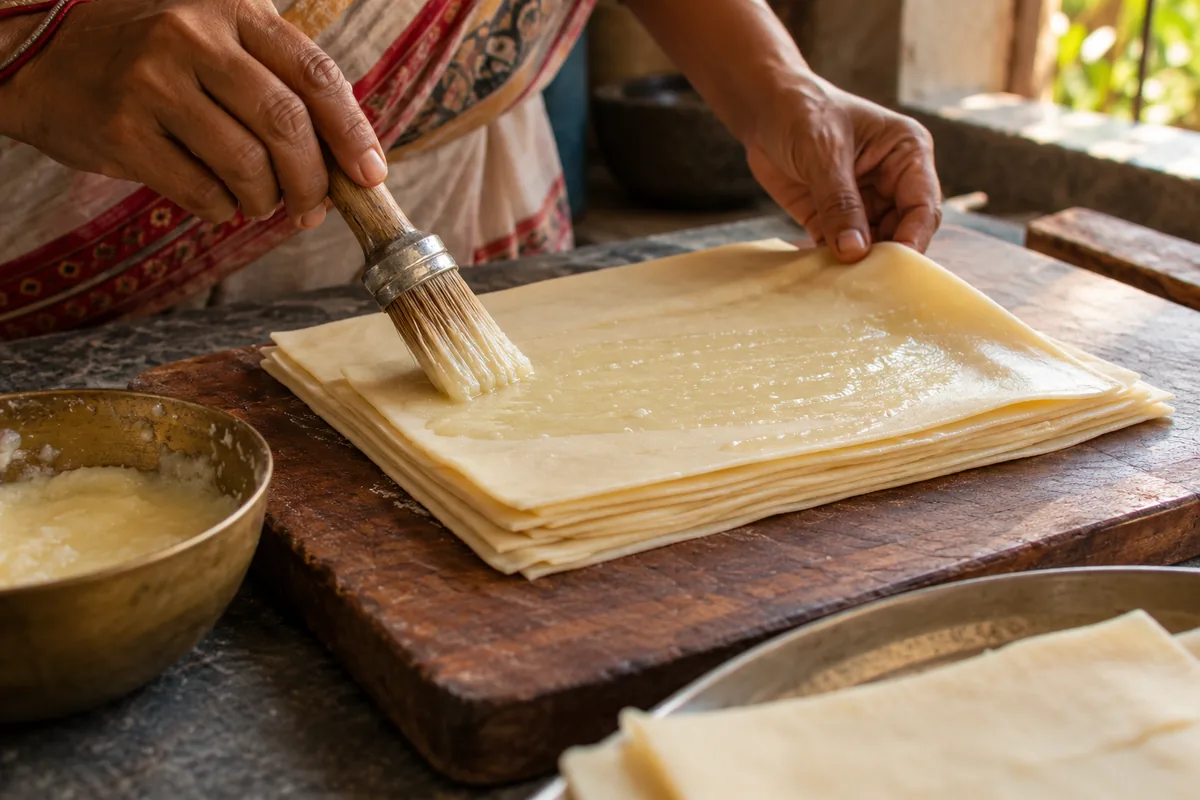
- Apply Evenly: Lay the first rolled dough sheet on your work surface. Using clean fingers or a pastry brush, spread a thin, even film of the satta paste across the entire surface.
- Stack the Layers: Carefully drape the second rolled sheet over the first, gently pressing out trapped air bubbles. Repeat the process of applying satta paste and layering until all sheets are stacked.
- Roll and Slice: Starting from the long edge, roll the stacked sheets tightly into a compact cylindrical log. Using a sharp knife, trim the uneven ends and slice the log diagonally into one-inch segments.
- Flatten Lightly: Place each diagonal slice cut-side up on your board. Gently roll over the center once or twice with a rolling pin to flatten into an elongated oval ribbon.
Step-by-Step Cooking: Rolling, Deep-Frying, and Sugar Syrup Glazing
Proper frying technique is essential for allowing the internal layers to bloom. Follow these systematic instructions documented in the Incredible India Odisha Tourism Directory:
- Heat the Frying Medium: Heat pure cow ghee or clean cooking oil in a wide, heavy-bottomed kadai over medium flame. The oil should be moderately hot, reaching roughly 150°C.
- Test the Temperature: Drop a tiny scrap of dough into the fat. If it sinks to the bottom and rises slowly to the surface within ten seconds without browning immediately, the temperature is ideal.
- Fry on Low Heat: Slide three to four prepared khaja ribbons gently into the hot ghee. Immediately lower the heat to a gentle simmer.
- Encourage Layering: As the pastries float to the surface, use wooden tongs or a slotted spoon to gently fan hot ghee over the tops. The laminated layers will fan outward like the pages of a book.
- Cook Until Crisp: Fry the pastries for 12 to 15 minutes, turning occasionally until they turn a uniform pale golden hue. Remove with a skimmer and drain on paper towels.
- Prepare the Syrup: While the pastries fry, combine two cups of sugar with one cup of water in a saucepan. Bring to a boil over medium heat until the syrup reaches single-string consistency (ek taar chasni). Stir in cardamom powder and black pepper.
- Glaze and Drain: While the sugar syrup remains warm, submerge the freshly fried warm khajas into the syrup for one to two minutes. Lift them out and transfer to a metal wire cooling rack.
Home cooks often prepare sweet temple treats like Khaja alongside savory stews like our authentic Odia Dalma recipe to present a multi-course festive luncheon.
Storage Guidelines and Serving Suggestions for Flaky Crispness
Allow the glazed Khaja to cool completely on wire racks for at least two hours. As the sugar syrup cools, it forms a delicate, crystalline glaze that seals in crispness without creating sticky residue.
Keep these practical storage guidelines in mind:
- Airtight Storage: Store the fully cooled pastries in a clean, airtight stainless steel or glass container. Line the base with clean parchment paper to absorb stray moisture.
- Avoid Refrigeration: Never store Khaja inside a refrigerator. The moisture and condensation will soften the crispy layers and dissolve the sugar crust.
- Room Temperature Stability: Under typical indoor storage conditions, authentic homemade Khaja maintains its crunchy flakiness for 15 to 20 days.
- Traditional Gifting: In Odisha, families gift boxes of Khaja wrapped in palm-leaf containers during weddings, festive housewarmings, and religious holidays.
To explore the rich history of other traditional confections celebrated across the state, read about regional sweets in our Odisha Rasagola Dibasa guide.
Frequently Asked Questions About Puri Feni Khaja
What is the primary difference between standard Khaja and Puri Pheni?
While both sweets use laminated wheat dough and sugar syrup, Puri Pheni is rolled into thinner, more delicate circular or elongated ribbons with tighter layer spacing. This delicate lamination creates an airy, melt-in-the-mouth texture compared to denser rectangular Khaja varieties.
How does Puri Khaja achieve its distinct multiple layers?
The multiple layers are created using satta, a whipped emulsion of pure cow ghee and fine rice flour spread between stacked, paper-thin sheets of dough. When fried over gentle heat, the moisture between the layers expands, causing the separate pastry leaves to fan outward.
Can Puri Feni Khaja be fried in refined oil instead of pure ghee?
Yes, you can fry Khaja in refined sunflower or peanut oil for everyday home snacking. However, authentic temple-style Khaja prepared for Lord Jagannath Mahaprasad uses pure desi cow ghee, which imparts a rich nutty aroma and extended shelf life.
What is the correct sugar syrup consistency for glazing Khaja?
The sugar syrup must reach a warm single-string consistency (ek taar chasni), where a drop cooled between your thumb and index finger forms a thin unbroken thread. Thin syrup will make the pastry soggy, while thick syrup will form an unappealing white crust.
How long does homemade Puri Khaja stay fresh and crispy?
Properly fried and glazed Puri Khaja stays exceptionally fresh and crispy for 15 to 20 days when stored at room temperature in an airtight glass or metal container. Avoid plastic wraps and never refrigerate the pastry, as humidity softens the delicate crust.
Why is black pepper added to the sweet sugar syrup for Khaja?
A subtle pinch of freshly crushed black pepper provides a gentle warming note that balances the intense sweetness of the sugar glaze. This ancient temple seasoning technique enhances flavor complexity without overpowering the sweet floral cardamom aroma.