Odia Besara Recipe: Traditional Panchmel Vegetable Curry Guide
Master the authentic Odia Besara recipe. Learn to cook mixed vegetables in a pungent yellow mustard garlic gravy with ambula and panch phoron.
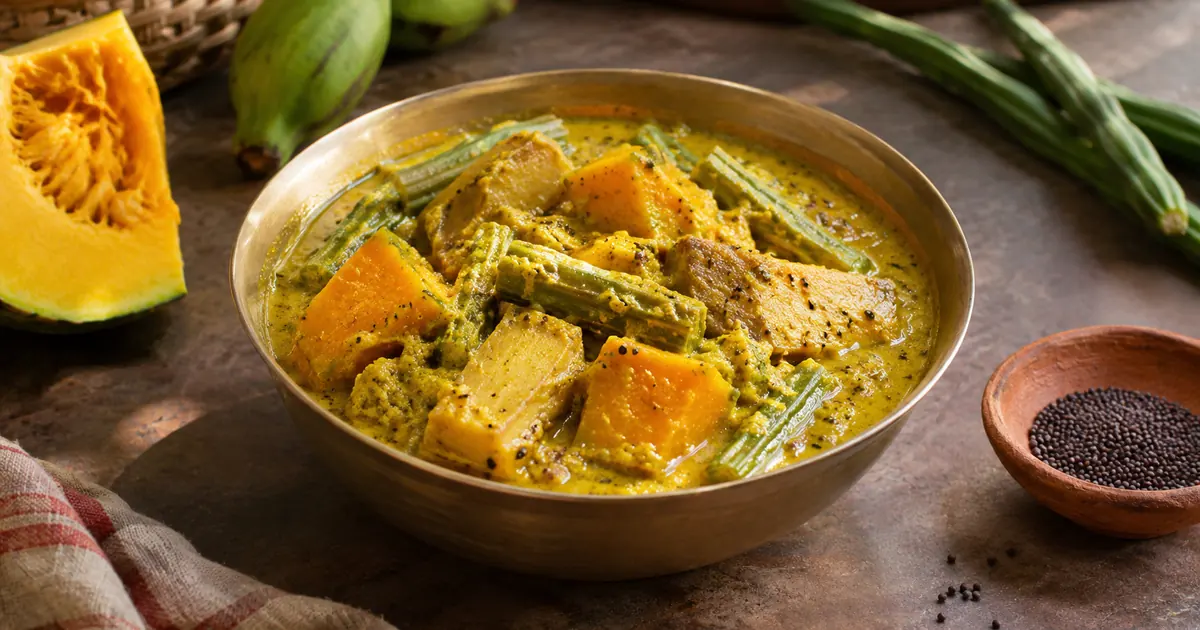
Preparing the traditional besara recipe odia invites food lovers into the beating heart of Odisha domestic cooking. Across the coastal delta and western river valleys, an authentic besara tarkari represents the classic mixed vegetable preparation of everyday family meals.
Unlike rich cream-based north Indian curries, Odia Besara derives its signature character from stone-ground yellow mustard seeds, raw garlic, and sun-dried green mango (Ambula). The resulting gravy is light yet pungent, offering an irresistible balance of tart fruitiness and mustard warmth.
Whether cooking a festive panchmel besara odisha style for guests or assembling a quick weekday lunch, this hearty dish pairs peerlessly with plain rice. It remains an enduring culinary landmark across rural and urban Odia kitchens alike.
Key Takeaways
- The Definition of Besara: In Odia cuisine, Besara refers specifically to any curry flavored with stone-ground mustard seed and garlic paste.
- Vegetable Medley: Authentic recipes combine earthy tubers, sweet pumpkin, tender drumsticks, and raw plantains for contrasting textures.
- Tart Balance of Ambula: Sun-dried salted green mango slices (Ambula) lend a distinctive tangy fruitiness that balances mustard oils.
- Gentle Simmering: Ground mustard paste should always be added on low flame and simmered gently between 85°C and 90°C to prevent bitterness.
- Raw Oil Drizzle: Finishing the dish with half a teaspoon of cold-pressed raw mustard oil seals its authentic village fragrance.
Essential Recipe Metrics & Kitchen Equipment
An authentic Odia Besara requires precise ingredient balance, steady flame regulation, and non-reactive cookware. Cooking in heavy earthenware pots or seasoned iron vessels ensures that dense root vegetables soften thoroughly without disintegrating into mush.
The table below summarizes the key operational metrics, ingredient allocations, and cookware needed to execute an authentic batch of Odia Besara. Using yellow mustard seeds instead of brown seeds is vital because yellow seeds provide sharp heat without astringent harshness.
A heavy earthenware pot or cast-iron kadai provides uniform heat retention, allowing dense tubers like taro and raw banana to cook through evenly.
| Recipe Component | Specification Metric |
|---|---|
| Dish Classification | Authentic Odia Mixed Vegetable Mustard Curry |
| Preparation Window | 25 minutes (washing, peeling, slicing vegetables) |
| Active Cooking Time | 30 minutes |
| Total Turnaround | 55 minutes |
| Serving Portion | 5 generous family servings |
| Estimated Ingredient Cost | ₹90 to ₹140 total per preparation |
| Dominant Flavor Profile | Pungent, garlicky, citrus-tangy, naturally sweet |
| Recommended Cookware | Heavy-bottomed kadai or seasoned clay handi |
| Signature Cooking Oil | Pure cold-pressed mustard oil (Kachi Ghani) |
Organize and chop all vegetables before heating the pan. Ground mustard paste oxidizes and releases its volatile essence rapidly, so prepare the paste fresh just before introducing it into the simmering vegetables.
Cookware Selection for Mustard Curries
Traditional Odia households favor unglazed terracotta clay pots called Handi or seasoned cast-iron Kadai. Terracotta promotes gentle heat transfer, preventing mustard paste from scorching against the pot base.
Never prepare mustard-based gravies in unlined copper or reactive aluminum vessels. The fruit acids in soaked Ambula react negatively with bare metals, creating metallic off-flavors and degrading the golden turmeric hue.
Timing and Temperature Standards
Parboil the root vegetables between 95°C and 100°C during the initial boiling stage. Once you pour in the ground mustard emulsion, drop the flame to maintain a gentle simmer between 80°C and 88°C.
Hard boiling mustard paste at rolling temperatures above 95°C breaks the delicate emulsion, separating mustard oils from water. Gentle simmering preserves the smooth, comforting body of traditional home gravy.
Cultural Roots: The Pride of Everyday Odia Meals
In the cultural memory of Odisha, Besara is more than just a vegetable dish; it is a symbol of regional abundance. Odia home cooks pride themselves on balancing fresh farm produce with ancestral spice-blending techniques.
To understand how daily curries connect to wider culinary traditions, consult our foundational guide to 10 famous Odisha foods you must try. Official food heritage archives and regional lifestyle insights can be explored through the Odisha Tourism Official Portal and sacred traditions documented on the Shree Jagannatha Temple Administration Portal.
Understanding the besara vs santula difference is helpful when exploring Odia culinary diversity. While Santula is mildly boiled with milk and vegetables, Besara features bold mustard heat.
Cooks often debate the yellow mustard vs brown mustard besara choice. Yellow seeds provide smooth heat without harshness. Knowing how to avoid bitterness in odia besara and monitoring the ambula soaking time for besara guarantees a balanced curry.
From coastal villages in Puri and Cuttack to western agrarian towns in Balangir and Sambalpur, Besara appears on household lunch menus at least twice a week. It celebrates whatever vegetables are freshest in the garden, turning humble produce into an aromatic feast.
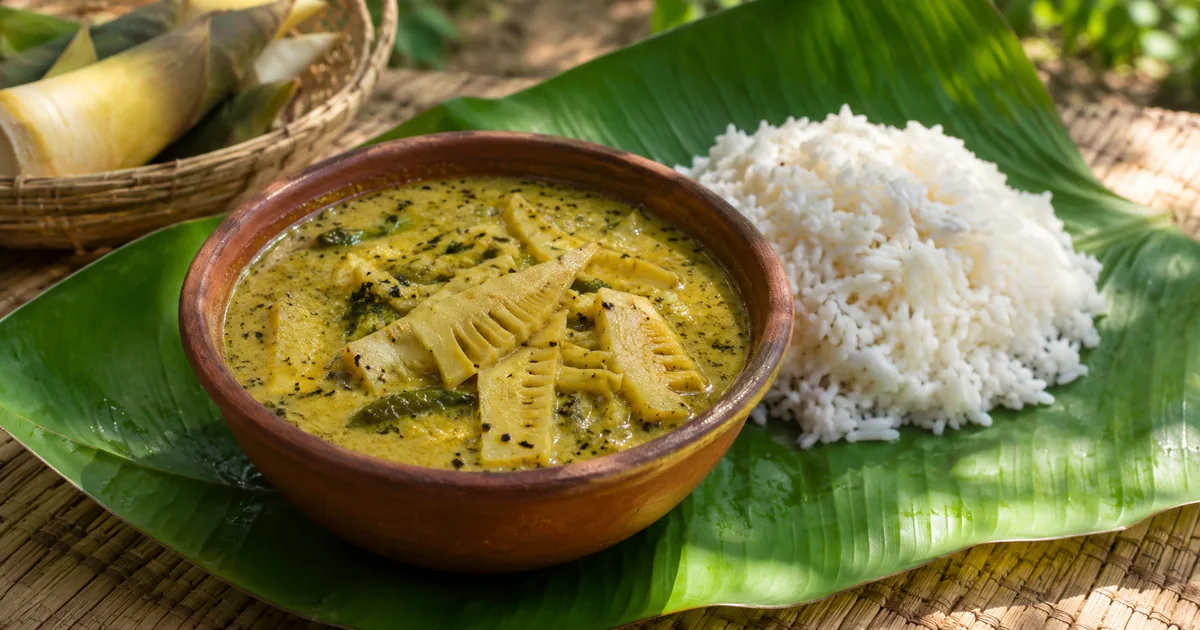
While temple kitchens prepare satvik versions without garlic, home cooks favor generous amounts of crushed garlic cloves, which infuse the yellow mustard gravy with rustic vigor. Diners often compare this with forest-foraged meals like our authentic Karadi Besara bamboo shoot curry.
The Philosophy of Everyday Odia Curries
Unlike the elaborate onion and tomato reductions of Mughal-influenced northern curries, classic Odia cooking emphasizes the innate sweetness of garden vegetables. Spices serve to complement rather than mask fresh farm flavors.
Besara represents the ultimate expression of this culinary minimalism. A handful of mustard seeds, cloves of garlic, and a dried green mango half are all that a skilled cook requires to build memorable depths of flavor.
Temple Satvik Adaptations in Puri
Inside the holy kitchens of Puri Shree Jagannath Temple, cooks prepare a renowned satvik variation known as Mahaprasad Besara. Because garlic and onions are forbidden within the temple complex, temple cooks rely entirely on mustard seeds, fresh ginger root, and cumin.
This satvik preparation demonstrates that mustard pungency alone, when sweetened with pumpkin and raw plantain, creates rich savory complexity without alliums. Many Odia families follow this satvik version on religious fasting days like Ekadashi and Manabasa Gurubara.
Choosing and Prepping the Traditional Vegetable Medley
Selecting the right combination of fresh vegetables creates the signature texture of authentic Odia Besara. Avoid water-heavy vegetables like zucchini or leafy greens, which dilute the pungent mustard base.
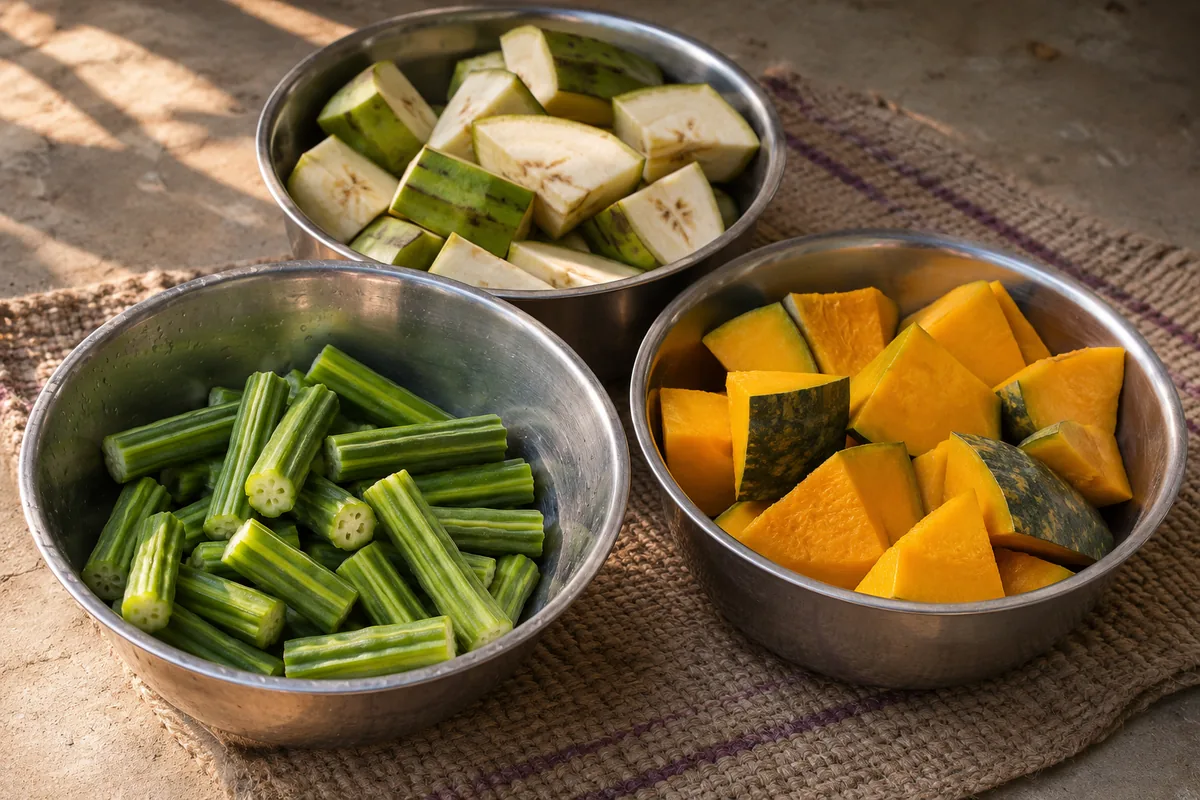
Focus on firm, starchy vegetables that absorb gravy without turning mushy. Raw green plantain, yellow pumpkin, drumsticks, taro root, and brinjal represent the classic five-vegetable foundation.
Peel the tough green skin from raw plantains and taro roots, cutting them into thick uniform chunks. Drumsticks should be lightly scraped with a paring knife to remove fibrous outer skin before chopping into three-inch segments.
Vegetable Proportions and Slicing Guidelines
Cut all vegetables into roughly similar dimensions so they cook at a synchronized pace. Slicing pumpkin into slightly larger cubes prevents it from dissolving completely before the dense taro root becomes tender.
Soak cut raw banana slices in a bowl of cold water with a pinch of turmeric powder. This simple step prevents the natural iron content in raw plantains from oxidizing and darkening the golden color of your curry.
The following guide details the ideal cutting specifications and preparation steps for each key vegetable in the Besara medley:
- Yellow Pumpkin (Boiti Kakharu): Cut into 1.5-inch cubes with peel retained or lightly scraped; provides essential natural sweetness.
- Raw Plantain (Kancha Kadali): Peel outer green skin, cut into 1-inch thick rounds, and soak in turmeric water immediately.
- Drumsticks (Sajana Chhuin): Scrape fibrous outer membrane lightly, cut into uniform 3-inch segments; provides aroma and mineral richness.
- Taro Root (Saru): Peel skin thoroughly under running water, slice into halves or thick wedges; adds creamy starchy thickness.
- Brinjal (Baigana): Halve and cut into 1.5-inch chunks; adds tender succulence that absorbs mustard essence.
Seasonal Vegetable Substitutions
While the five-vegetable medley forms the gold standard, traditional home cooks readily incorporate seasonal produce from their homestead plots. Pointed gourd (Potala), broad beans (Sima), and ridge gourd (Jahni) make excellent additions.
Avoid sweet carrots or green peas, which alter the authentic historical flavor profile of coastal Odisha. Always maintain at least two starchy tubers to anchor the body of your broth.
Crafting the Signature Odia Mustard Paste (Besara Bata)
The heart of this curry is the freshly ground paste, known across Odisha as Besara Bata. Traditional cooks grind the seeds on a heavy granite Silaputa, grinding in smooth rhythmic strokes until the paste resembles yellow silk.
Measure three tablespoons of yellow mustard seeds and one teaspoon of whole cumin seeds into your blender jar. Add ten cloves of peeled garlic and two green chilies, pouring in just enough cold water to allow the blades to catch.
[!TIP] Always grind your mustard seeds using ice-cold water. High-speed blender motors generate friction heat that oxidizes mustard oils, producing an unpleasant bitter aftertaste.
Blend on short pulse intervals until completely smooth. Strain the paste through a fine tea strainer to eliminate seed husks if you prefer a lighter, silkier dining texture.
The Chemistry of Mustard Pungency
Mustard seeds contain the glucosinolate compound sinigrin alongside the active enzyme myrosinase. When whole seeds are crushed in the presence of cold water, myrosinase hydrolyzes sinigrin, producing allyl isothiocyanate.
This volatile compound creates that familiar, delightful sinus-clearing warmth characteristic of authentic Odia cooking. Grinding with chilled water slows thermal degradation, locking in pleasant pungency while preventing bitter sulfur development.
Yellow Mustard vs Brown Mustard Ratios
Odia home cooks strictly prefer yellow mustard (Haladi Sorisa) over darker brown or black varieties. Yellow mustard delivers a smoother, milder heat that coats the palate gently without astringency.
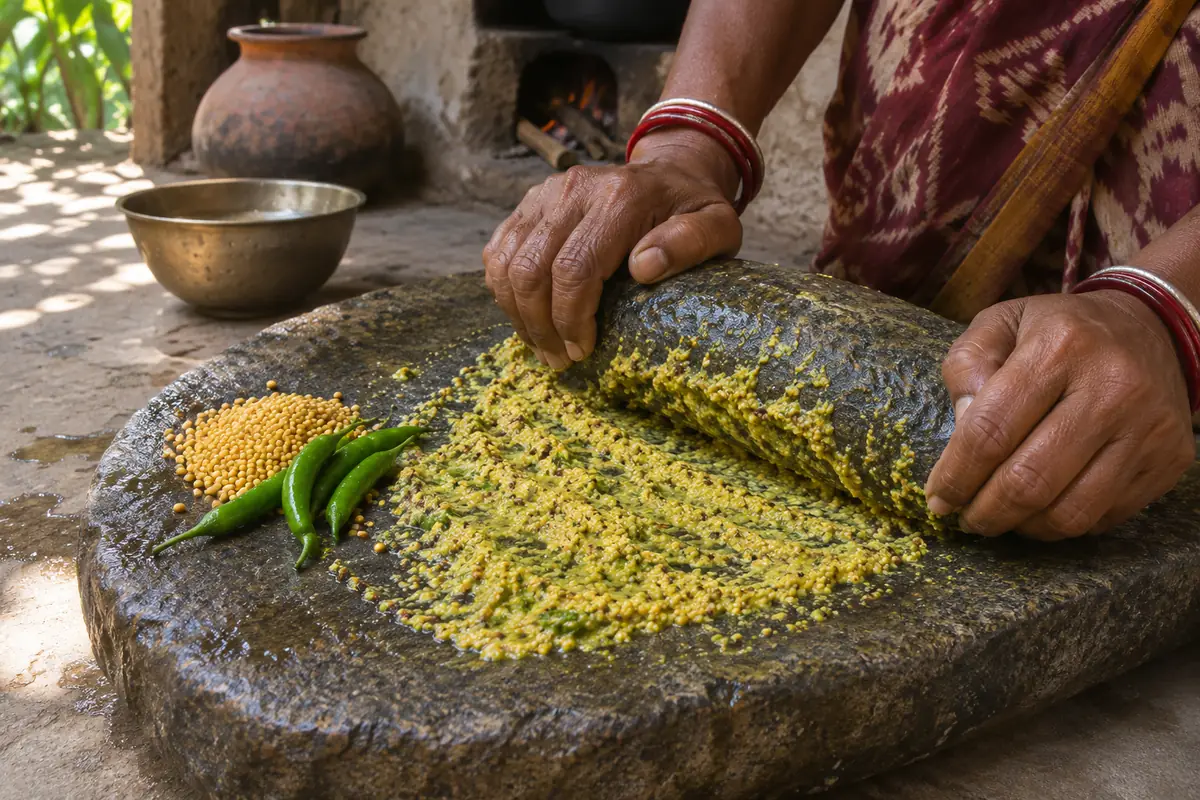
If using brown mustard seeds because yellow seeds are unavailable, reduce the quantity by half and blend with equal parts cumin seeds. This softens the aggressive bitterness inherent to darker mustard strains.
Step-by-Step Besara Recipe Odia: Cooking Instructions
Follow these clear culinary stages to cook a fragrant pot of authentic Odia Besara with balanced pungency and tartness.
Direct and careful sequencing ensures every vegetable reaches ideal tenderness without turning to mush before the aromatic tadka is applied.
1. Parboiling the Vegetables with Turmeric and Salt
Place the chopped taro root, raw banana, drumsticks, pumpkin, and brinjal into your kadai. Pour in two cups of water, half a teaspoon of turmeric powder, and one teaspoon of sea salt.
Bring the pot to a steady boil over medium heat. Cover with a fitted lid and allow the vegetables to simmer gently for twelve to fourteen minutes until they can be easily pierced with a fork.
2. Adding the Soaked Ambula
Drop two pieces of sun-dried salted green mango (Ambula) into the simmering pot along with its sour soaking water. The tart mango acids will immediately permeate the tender vegetables.
Simmer uncovered for an additional three minutes so the fruits and vegetables absorb the pleasant tanginess before the mustard paste is introduced.
3. Incorporating the Mustard Paste Gently
Lower the burner flame to low heat. Dilute your freshly ground mustard paste with half a cup of lukewarm water and pour it evenly across the simmering vegetables.
Stir very gently with a wooden spoon to avoid crushing the soft pumpkin and plantain pieces. Allow the gravy to simmer uncovered on low heat between 85°C and 90°C for six to eight minutes as the flavors marry.
4. Tempering with Panch Phoron and Hot Mustard Oil
In a small separate tadka pan, heat two tablespoons of cold-pressed mustard oil until it reaches its light smoking threshold near 200°C. Lower the heat and add half a teaspoon of Odia panch phoron along with two whole dry red chilies.
Once the spices splutter and release their fragrant aroma, pour the crackling oil directly over the simmering Besara. Cover immediately with a lid to trap the aromatic vapors for five minutes before serving.
Regional Variations Across Coastal and Western Odisha
Across Odisha thirty districts, home cooks introduce subtle regional accents to their family Besara pots. These micro-regional differences reflect the adaptability of Odia culinary customs across distinct geographical terrain.
In the coastal plains of Puri and Cuttack, the emphasis remains on fresh drumsticks, tender pumpkin, and copious soaked Ambula. The gravy tends to be medium-thin, designed for pouring generously over steaming mound of white parboiled rice.
Further west in Sambalpur, Balangir, and Bargarh, cooks frequently incorporate sun-dried lentil dumplings or crisp fried badis into the vegetable mix. The badis absorb the mustard broth, adding a savory crunch that locals cherish.
In southern districts such as Ganjam, home cooks occasionally temper their Besara with curry leaves (Bhrusanga Patra) alongside panch phoron. They also favor a slightly thicker, paste-like gravy consistency that coats each vegetable chunk like a glaze.
Regardless of these regional variations, the core pairing of yellow mustard, crushed garlic, and sun-dried green mango remains the unbroken golden thread binding all Odia kitchens together.
Authentic Serving Suggestions and Meal Pairings
In traditional Odia culture, Besara is served hot during lunch, typically between 12:30 PM and 2:00 PM. Its assertive mustard character provides an ideal counterpoint to mild starch bases, creating a harmonious midday meal.
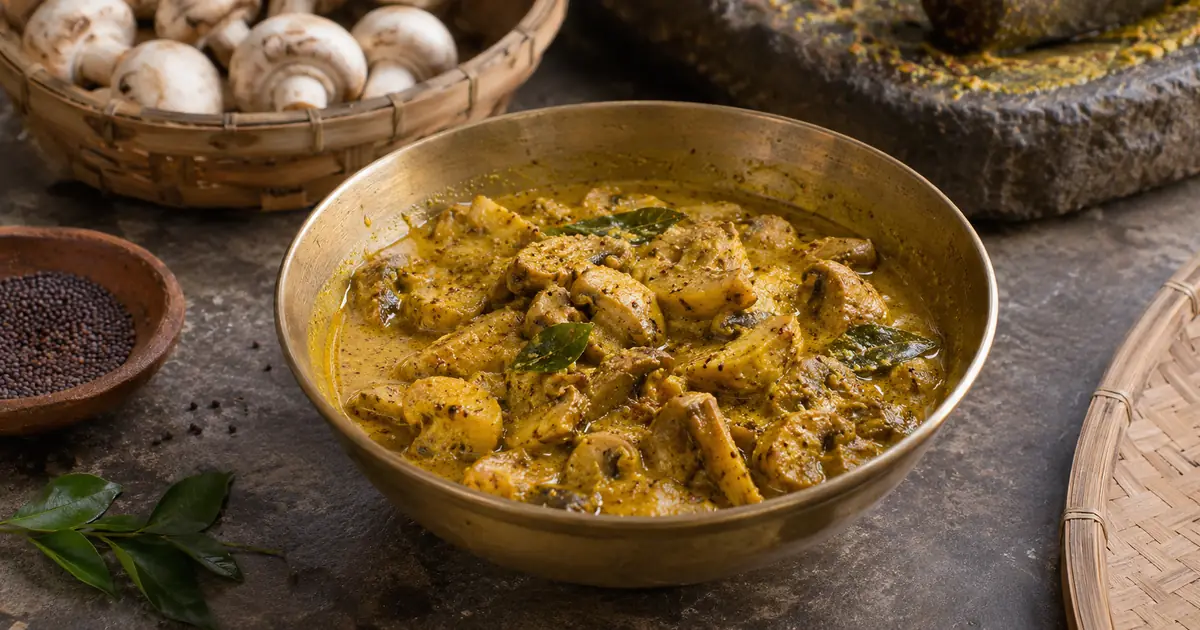
Pair this comforting vegetable curry with steaming hot short-grain parboiled rice and a bowl of fragrant authentic Odia Dalma recipe. If you enjoy mushroom preparations, you can also explore our authentic Odia Chhatu Besara mushroom curry.
During warm festive afternoons, serve Besara alongside cooling water rice celebrated during our celebrated Pakhala Divas culinary tradition. Conclude your midday meal with a classic sweet like the festive sweet Chuda Ghasa recipe.
Traditional Feast Course Sequencing
In multi-course Odia dining, Besara occupies the second savory vegetable slot following Dalma. Placing the pungent mustard dish between mild lentils and sweet chutney helps cleanse the palate and aids smooth digestion.
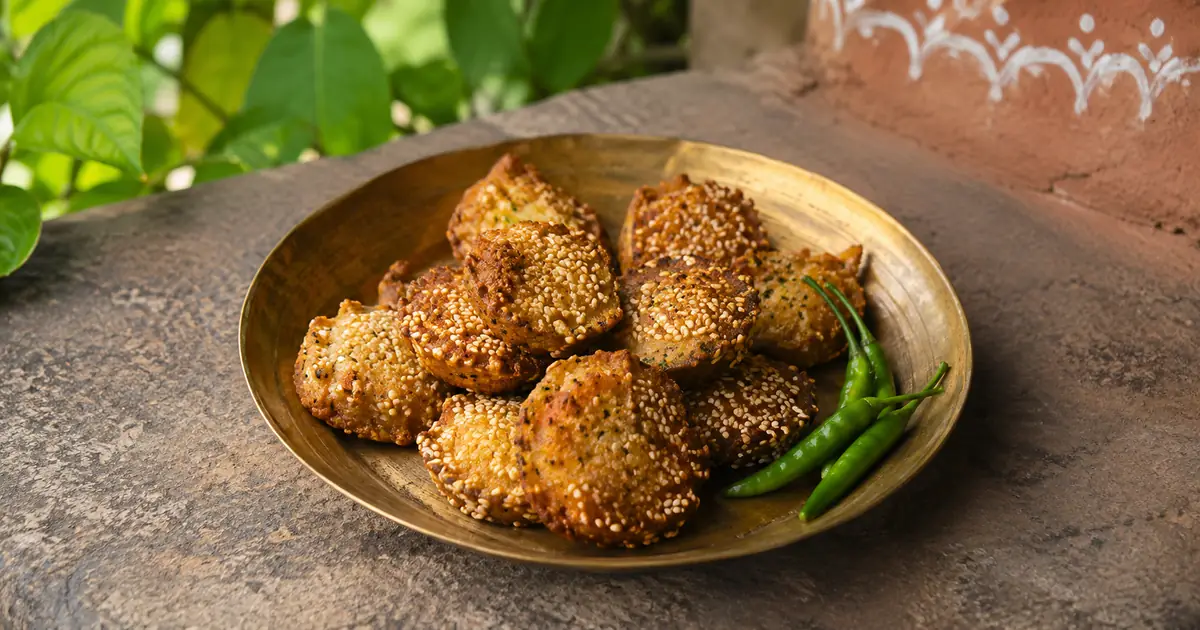
Home cooks often prepare crisp papads and fried sun-dried lentil dumplings alongside Besara. This adds a delightful textural crunch that contrasts beautifully with the soft, yielding tubers and tender drumsticks.
Frequently Asked Questions (FAQs)
What vegetables are essential for an authentic Odia Besara?
Raw green banana, sweet yellow pumpkin, drumsticks, and taro root form the traditional vegetable core. Some households also add brinjal, pointed gourd, or ridge gourd depending on seasonal garden availability.
Why does my mustard gravy taste bitter instead of pungent?
Mustard gravy turns bitter if cooked over violently high heat or if ground using warm blender blades. Always blend with cold water and simmer gently on low heat without hard boiling.
Can I make Besara without onion and garlic for festive fasting?
Yes, traditional temple Besara is prepared entirely without onion and garlic. Simply grind yellow mustard and cumin seeds with green chilies and fresh ginger for a pure satvik preparation.
What is Ambula and can it be substituted?
Ambula is sun-dried green mango cured with sea salt, providing an indispensable fruity tartness. If unavailable, substitute with dried kokum petals, raw mango slices, or a gentle squeeze of fresh lemon juice before serving.
How should leftover Besara be stored and reheated?
Store leftover Besara in a covered glass container in the refrigerator for up to two days. Reheat gently over low burner heat with a splash of warm water to prevent the mustard paste from drying out.
Why do cooks use yellow mustard seeds instead of black mustard?
Yellow mustard seeds provide smooth, warming heat without the sharp astringent bitterness of black mustard. This produces a mellow, fragrant gravy that highlights the natural flavors of the vegetables.