Rashi Badi Recipe: Authentic Odia Sesame Lentil Dumplings
Master the authentic Odia Rashi Badi recipe. Learn to whip black gram batter with white sesame seeds and sun-dry crisp dumplings for Pakhala.
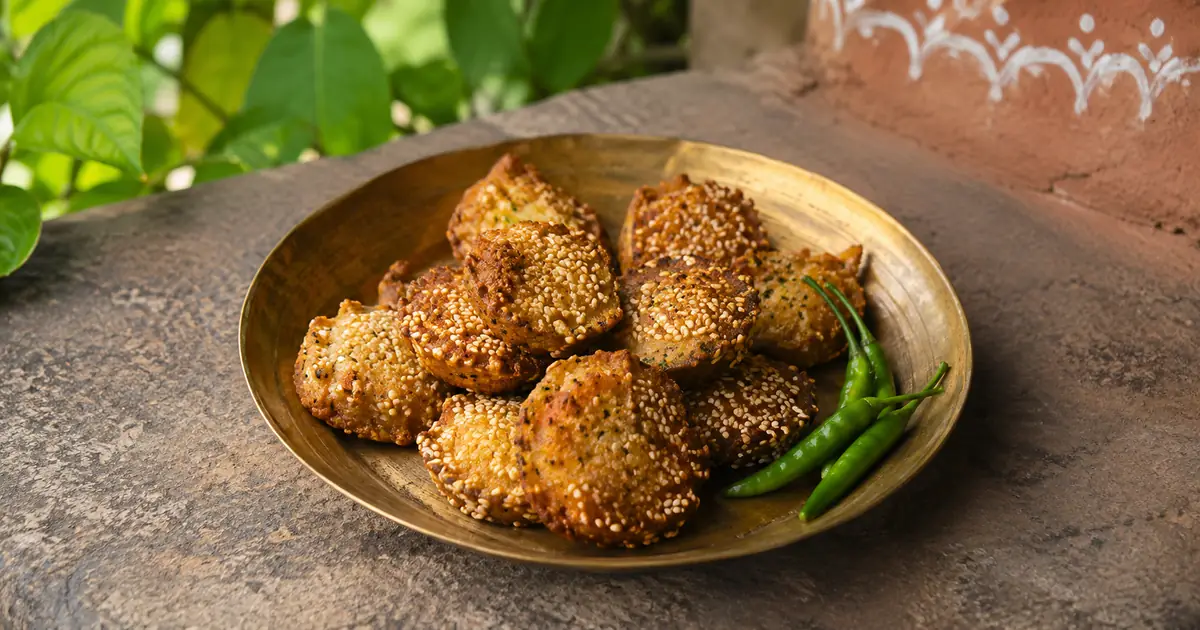
Making the traditional rashi badi recipe connects home cooks to the ingenious food preservation heritage of western and central Odisha. Known locally as Rashi Badi, these petite sun-dried black gram dumplings encrusted with toasted white sesame seeds are an indispensable side dish.
While coastal Odisha is famous for spicy curries and seafood, agrarian heartlands like Keonjhar, Balangir, and Dhenkanal take immense pride in their Badi craftsmanship. Whipping soaked black gram batter into an airy, cloud-like mousse yields badis that fry up light, brittle, and melt-in-the-mouth crisp.
Whether crushed into savory Badi Chura with onions and green chilies or eaten whole as a crunchy accompaniment for summer water rice, Rashi Badi brings comforting texture to simple everyday meals.
Key Takeaways
- The Sesame Distinction: Unlike plain Urad Badi, Rashi Badi is rolled generously in white sesame seeds (Rashi), which impart a rich nutty aroma during frying.
- The Floating Batter Test: Whipping the soaked dal batter until a small spoonful floats freely on water is the crucial secret to achieving light, porous dumplings.
- Natural Solar Dehydration: Two full days of direct tropical sunlight between 35°C and 42°C removes all moisture, enabling year-long room-temperature storage.
- Gentle Flash-Frying: Always fry dried badis in medium-low oil for thirty to forty seconds; excessive heat scorches the delicate sesame seeds.
- Versatile Pantry Staple: Beyond Pakhala meals, fried Rashi Badi adds textural crunch to vegetable curries like Santula, Besara, and Dalma.
Essential Recipe Metrics & Preservation Equipment
Preparing authentic Odia Rashi Badi relies on strict water control, thorough manual aeration, and dedicated solar drying days. Working in unhurried stages during clear spring or early summer weather yields crisp, hollow dumplings that fry up feather-light.
The table below summarizes the core ingredient proportions, dehydration milestones, and kitchen equipment required for preparing authentic Odia Rashi Badi. Clean cotton fabric or food-grade plastic sheets provide an ideal non-stick drying surface.
Preserving badis properly requires complete moisture removal. Storing semi-dry badis risks mold formation, so plan your preparation during clear, sunny weather between February and May.
| Recipe Specification | Detail Metric |
|---|---|
| Culinary Category | Traditional Odia Sun-Dried Lentil Dumpling (Side Dish) |
| Active Preparation Time | 30 minutes (soaking, grinding, aeration) |
| Solar Drying Window | 2 full days in direct sunlight (14 to 16 hours total) |
| Active Cooking Time | 10 minutes (batch frying) |
| Total Process Yield | Approximately 50 to 60 petite dumplings |
| Estimated Ingredient Cost | ₹60 to ₹90 total per batch |
| Dominant Flavor Profile | Nutty, toasted sesame, savory, peppery crisp |
| Recommended Cookware | Wet grinder or stone silaputa, shallow frying pan |
| Storage Medium | Dry airtight glass jar with moisture-proof seal |
Organize clean trays or cotton sheets in advance. Working swiftly while the whipped batter remains airy ensures every dumpling maintains its rounded dome shape without flattening.
Selecting the Ideal Drying Surface
Traditional Odia village households spread badis on white handloom cotton sarees or clean muslin sheets laid across rooftop bamboo mats. The fine cotton fibers wick away moisture from the bottom of the dumpling, speeding up early dehydration.
Modern cooks can use heavy food-grade plastic sheeting or food-grade silicone mats lightly brushed with mustard oil. These smooth synthetic surfaces allow bone-dry badis to peel off effortlessly without leaving behind broken crumbs.
Sun Exposure and Atmospheric Standards
Direct tropical sunlight with low relative humidity below 45% creates the ideal conditions for badi preservation. Rooftop temperatures between 35°C and 42°C evaporate moisture steadily without cooking the raw proteins.
Never attempt to make badis on overcast or humid monsoon days. Slow, damp drying allows airborne fungal spores to colonize the moist lentils, creating sour odors and ruining the batch.
Cultural Roots: The Badi-Making Traditions of Odisha
The tradition of making sun-dried badis represents an ancient feminine craft passed through generations of Odia mothers and daughters. During early spring and summer, neighborhood courtyards across western Odisha echo with rhythmic morning chatter as women gather to whip batter.
To discover how sun-dried pantry staples complete traditional dining spreads, consult our foundational guide to 10 famous Odisha foods you must try. Official handicraft initiatives and rural livelihood profiles can be explored through the Odisha Tourism Official Portal and cultural archives on the Incredible India Official Portal.
In districts like Dhenkanal district and Keonjhar, making badis is tied to community gifting culture. When newly married daughters visit their maternal homes, mothers send them back with large brass jars filled with homemade Phula Badi and sesame-encrusted Rashi Badi.
White sesame seeds (Sesamum indicum) hold sacred status in Odia culture, symbolizing longevity and agricultural abundance. Coating protein-rich urad dal with calcium-packed sesame seeds created an ingenious nutritional powerhouse for agrarian families.
Social Rituals and Courtyard Gatherings
In rural Odisha, badi making is rarely an isolated domestic chore. Women from neighboring households coordinate their soaking schedules, rising before daybreak to grind lentils collaboratively on stone Silaputa slabs.
The courtyard becomes a social pavilion where grandmotherly matriarchs oversee the manual whipping of the batter. Superstition holds that speaking pleasant words while shaping badis ensures sweet, hollow dumplings that puff up evenly in hot oil.
Ancient Gifting Traditions (Badi Bhara)
When agricultural families in western Odisha travel to visit relatives, a woven bamboo basket filled with sun-dried badis (Badi Bhara) is the customary gift of honor. Presenting handmade badis demonstrates domestic diligence, culinary skill, and familial generosity.
During traditional wedding negotiations, the groom family often inspects sample badis whipped by the prospective bride. A light, airy badi that floats effortlessly on water was historic proof of a disciplined home cook.
Sourcing Urad Dal and Sesame Seeds
The quality of your raw ingredients directly dictates the lightness of the finished dumpling. Avoid split or polished urad dal treated with chemical glazes, as these glazes inhibit the natural foaming capacity of dal proteins.
Select whole white skinless urad dal (Biri Chaula), which contains intact starch granules. Thoroughly wash the dal three times in cold water, then soak for five to six hours until the grains swell to twice their initial size.
White sesame seeds should be sifted through a fine mesh sieve to remove dust or grit. Lightly sunning the sesame seeds before rolling ensures they adhere smoothly to the moist dal paste.
The Science of Whipping Dal Batter (Biri Pheta)
Whipping the ground dal batter is the most critical manual step in the entire process. Traditional cooks call this step Biri Pheta.
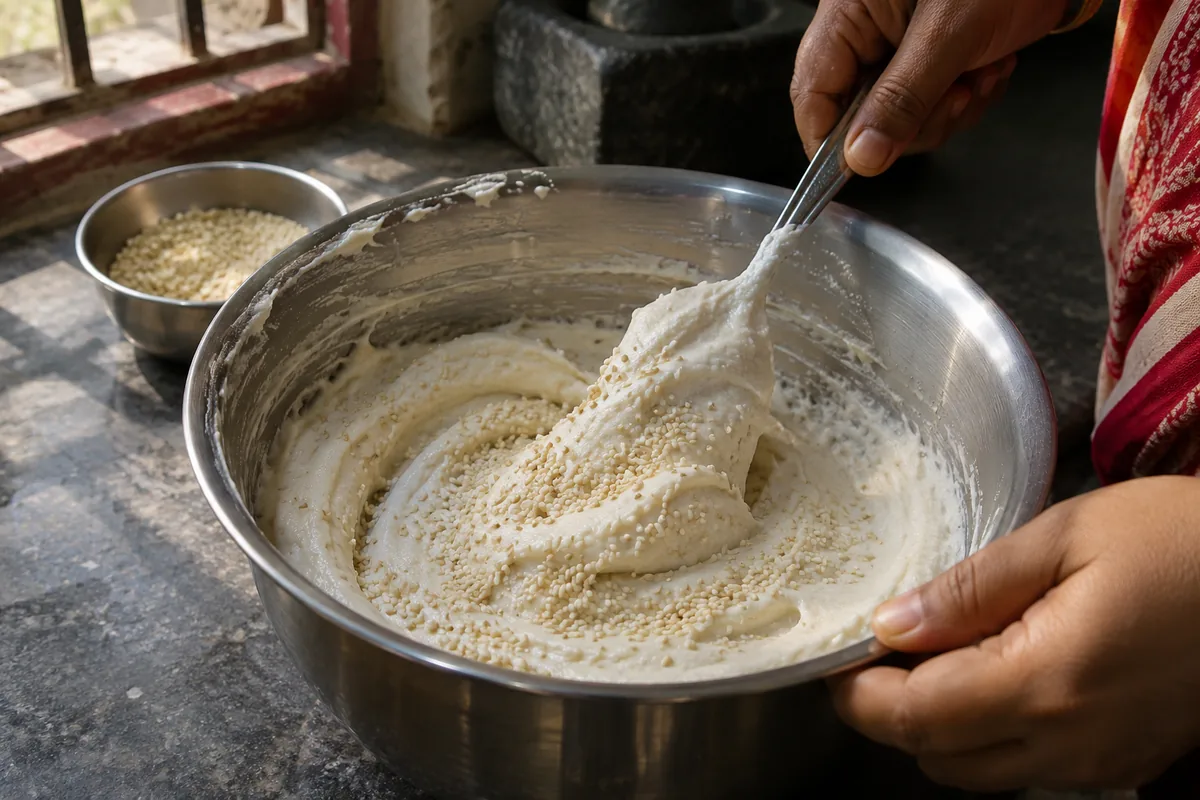
Using the palm of your hand, beat the thick ground batter in a single continuous clockwise direction for eight to ten minutes. This mechanical action traps microscopic air bubbles within the dal protein matrix, transforming a dense paste into a pale, pillowy foam.
To test if your batter has reached optimal lightness, drop half a teaspoon into a small bowl of room-temperature water. If the dollop floats effortlessly like a cork on the surface, your batter is ready; if it sinks, continue whipping for another three minutes.
Protein Chemistry of Urad Dal Foaming
Black gram (Vigna mungo) contains unusually high levels of surface-active globulin proteins and mucilaginous arabinogalactan polysaccharides. When whipped mechanically, these proteins uncoil and align at the liquid-air interface, forming elastic interfacial films.
These elastic protein films trap thousands of microscopic air pockets throughout the batter. During subsequent deep frying, trapped air expands thermally, causing the dumpling to puff up instantly into a delicate, honeycomb sponge.
Step-by-Step Cooking Instructions for Rashi Badi Recipe
Follow these time-tested village steps to craft crisp, aromatic Odia Rashi Badi that stay fresh in your pantry for up to twelve months.
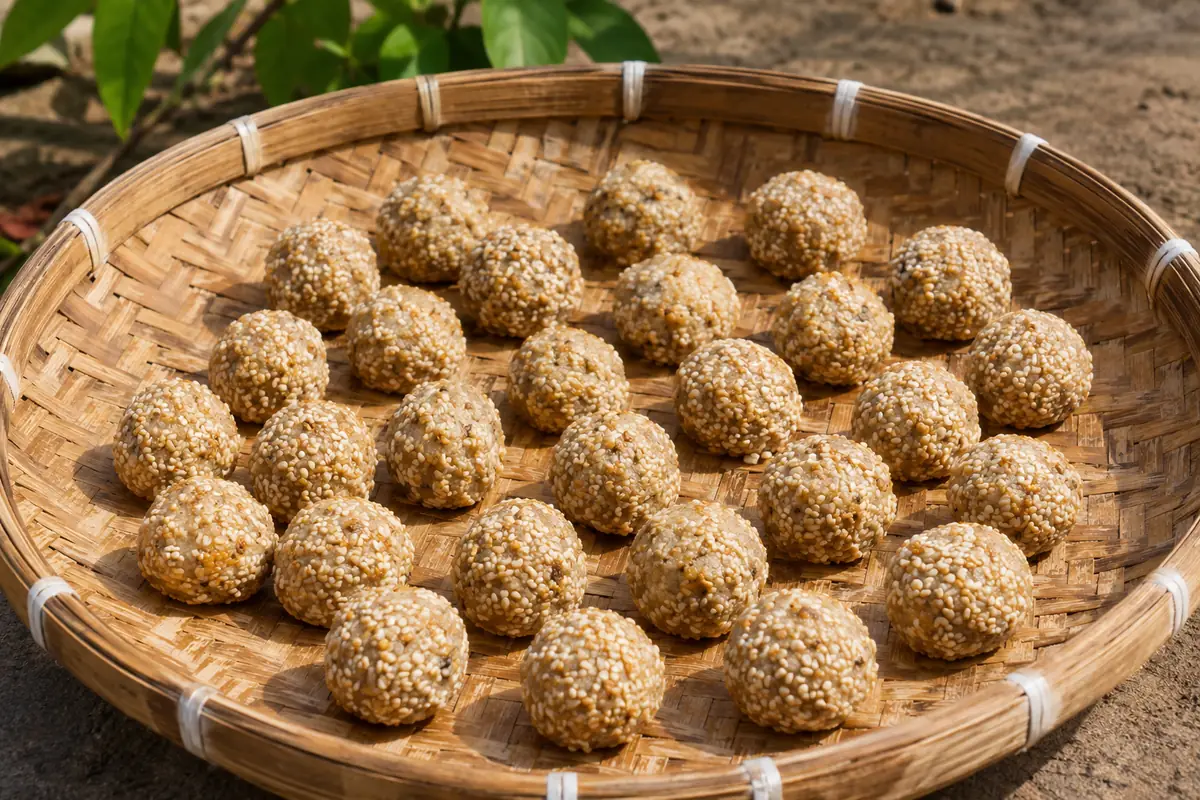
Direct and patient adherence to each preparation milestone prevents dense cores and ensures that the white sesame seeds toast evenly without burning.
1. Grinding with Minimal Water
Drain your soaked urad dal thoroughly through a colander for ten minutes. Transfer the dal to a stone wet grinder or heavy-duty mixer jar.
Grind the dal in brief pulses, adding no more than one or two tablespoons of ice-cold water. The paste must remain thick, dense, and slightly coarse to hold its shape during sun-drying.
2. Seasoning and Incorporating Aromatics
Transfer the ground dal into a wide brass thali. Whip the batter vigorously with your palm until it passes the floating water drop test.
Gently fold in whole cumin seeds, coarsely crushed black peppercorns, and a pinch of asafoetida (Hing). If preparing badis for temple bhog or strict festival fasting, omit salt, as salt draws moisture and slows down the sun-drying process.
3. Shaping and Rolling in White Sesame
Spread your polished white sesame seeds across a broad shallow plate. Pinch small marble-sized portions of the whipped batter using the tips of your thumb and forefinger.
Drop each moist dumpling into the sesame seeds, gently rolling it to coat the exterior evenly. The natural stickiness of the whipped dal batter will hold hundreds of tiny sesame seeds tightly across its dome.
4. Solar Dehydration and Storage
Place the coated badis in neat, spaced rows on a clean cotton cloth or oiled tray placed on an open rooftop. Expose to direct tropical sunlight for eight hours on the first day.
Carefully peel the badis off the cloth at sunset and dry for a second full day on a wide tray until they produce a hollow, dry click when gently clinked together. Store in an airtight container with a dry bay leaf to prevent humidity absorption.
5. Flash-Frying for Service
To serve, warm two tablespoons of pure cold-pressed mustard oil in a small kadai over medium-low heat. Add a handful of dried badis and fry for thirty to forty seconds, tossing constantly until the sesame seeds turn pale golden.
Remove immediately with a slotted spoon onto paper towels. The residual oil heat will finish crisping the dumplings into delicate crunchy morsels.
The Art of Crafting Authentic Odia Badi Chura
While whole fried badis are delicious on their own, the ultimate Odia preparation is Badi Chura. This rustic relish combines crushed fried badis with pungent aromatics and cold-pressed mustard oil.
Place eight to ten freshly fried, cooled Rashi Badis into a heavy stone mortar (Kundi). Crush the dumplings coarsely with a pestle so they break into uneven pebble-sized shards rather than fine powder.
Toss in finely minced red shallots, chopped green chilies, grated fresh garlic cloves, and a pinch of rock salt. Drizzle half a teaspoon of raw, pungent cold-pressed mustard oil over the mixture and toss lightly with your fingertips.
The contrast between the toasted sesame crunch, sharp mustard oil vapors, and sweet raw shallots creates an irresistible side dish that enriches even the simplest bowl of rice.
Serving Suggestions: The Ultimate Partner for Pakhala
In authentic Odia home dining, fried Rashi Badi is the celebrated soulmate of fermented water rice, spotlighted during our celebrated Pakhala Divas culinary tradition. The satisfying crunch and toasted sesame warmth contrast exquisitely with cooling probiotic rice.
For a comforting midday meal, pair fried Rashi Badi alongside rich lentil stews like our authentic Odia Dalma recipe. The badis provide pleasant textural contrast to soft simmered lentils and sweet root vegetables.
Fried Rashi Badi also makes an outstanding crunchy topping for fragrant vegetable preparations like authentic Odia Besara mixed vegetable curry and forest-harvested authentic Odia Chhatu Besara mushroom curry. This beloved pantry treasure continues to define rural domestic culinary pride across Odisha.
Texture Pairing Across the Odia Thali
In a traditional multi-course meal, dishes alternate between yielding textures and crisp bites. While dals and vegetable gravies are soft, badis provide the acoustic crunch that makes dining satisfying.
Place four to five whole fried badis directly alongside the rice mound rather than soaking them in liquid. Serving them dry on the Kansha plate allows diners to crush them into their curries at their own preferred pace.
Frequently Asked Questions (FAQs)
Why do my badis turn hard and dense after drying?
Badis turn rock-hard if the urad dal batter is not whipped sufficiently before shaping. Always beat the batter until a spoonful floats freely in a cup of water before rolling in sesame seeds.
Can I dry Rashi Badi indoors or in a food dehydrator?
While direct sunlight yields the best flavor, an electric food dehydrator set to 55°C for eight hours works effectively. You can also dry them under a high-speed ceiling fan, though solar drying imparts superior crispness.
Why is salt often omitted from traditional Badi recipes?
Salt is hygroscopic, meaning it absorbs moisture from surrounding air and slows down solar dehydration. Omitting salt prevents mold formation and allows badis to be used during religious fasts.
How long does homemade Rashi Badi stay fresh?
Bone-dry badis stored in an airtight glass jar remain perfectly crisp and fresh for up to twelve months. Ensure the storage spoon is completely dry to prevent accidental moisture contamination.
Can Rashi Badi be deep-fried or air-fried?
Yes, badis can be air-fried at 160°C for four minutes with a light oil spray. However, traditional shallow frying in pure cold-pressed mustard oil yields the most authentic toasted sesame fragrance.
What is the purpose of the water float test for badi batter?
The water float test verifies that sufficient air bubbles have been trapped within the whipped dal protein matrix. If the batter floats like a cork, the badis will fry up porous and brittle rather than dense and stone-like.