Biri Bara Recipe: Authentic Crispy Odia Urad Dal Vada
Cook authentic crispy Odia Biri Bara at home. Step-by-step urad dal vada recipe with secret sooji crunch, batter aeration tips, and ghuguni pairing.
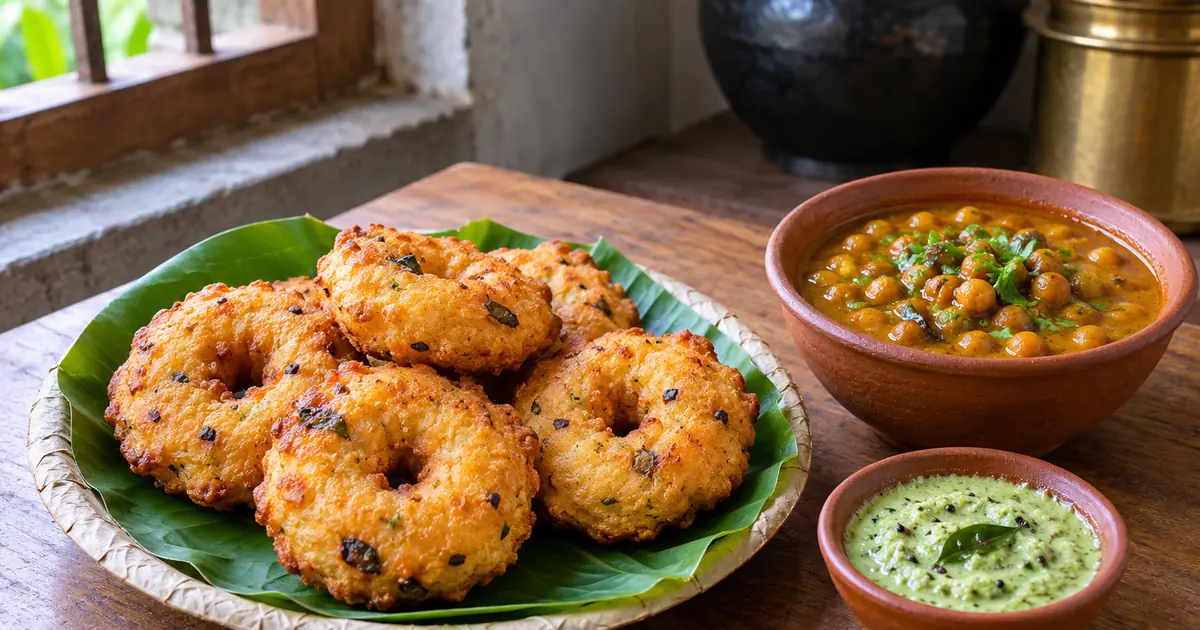
Mastering this authentic biri bara recipe urad dal vada unlocks the defining flavor of Odisha’s street food culture. From busy market squares in Cuttack to tranquil roadside tea stalls across coastal highways, hot Biri Bara served with spicy Ghuguni is the state’s undisputed breakfast champion.
Unlike heavy lentil fritters, authentic Odia biri bara achieves an exceptional balance of textures. A thin, crackling golden shell yields to an airy, cloud-like interior scented with crushed ginger, whole cumin, and fragrant curry leaves.
The secret behind its signature crispness lies in folding a small measure of fine semolina (sooji) into the aerated black gram batter. To discover how this savory fritter fits into the broader gastronomic map of the state, explore our guide to 10 famous Odisha foods you must try.
This culinary guide outlines proper dal grinding ratios, hand aeration testing, shaping techniques with wet palms, and frying heat management for maximum crunch.
Key Takeaways
- Biri Bara is an iconic savory Odia breakfast snack made from soaked, aerated urad dal (black gram).
- Adding fine semolina (sooji) to the whipped batter produces an exceptionally crisp outer shell that stays crunchy longer.
- Hand-whipping the batter in one direction incorporates micro air pockets, ensuring the interior remains light and spongy.
- The donut-style center hole ensures even thermal penetration so the fritter cooks through without greasy raw batter pockets.
- In Odisha, hot Biri Bara is traditionally served bathed in spicy dried yellow pea Ghuguni and fresh chopped red onions.
At-a-Glance: Biri Bara Recipe Metrics and Cookware
Checking basic culinary parameters before grinding your lentils ensures a stress-free cooking session. State food traditions and culinary heritage are documented through initiatives on the Official Odisha Tourism Portal.
Because whipped urad dal batter loses air if left standing for hours, having your frying station prepared beforehand ensures optimal puffiness.
Kitchen Specifications & Timings
Once the black gram has finished soaking, active preparation requires minimal time. The preparation time fifteen minutes covers grinding and hand whipping, while frying takes approximately twenty-five minutes.
One standard batch using a single cup of dry dal provides four to six adult servings, yielding 14 to 16 golden vadas.
| Culinary Metric | Standard Kitchen Value | Practical Guidance |
|---|---|---|
| Active Preparation Time | 15 minutes | Batter grinding and hand whipping |
| Frying Duration | 25 minutes | Deep-frying in batches of four |
| Total Time to Table | 40 minutes | Best served immediately while piping hot |
| Recipe Yield | 14 to 16 vadas | Serves 4 to 6 people as breakfast or snack |
| Course Classification | Savory Breakfast / Evening Jalakhia | Traditional Odia lentil street snack |
| Primary Starch Base | Soaked whole skinless urad dal (biri dali) | Ground with minimal cold water |
| Crispness Enhancer | Fine semolina (sooji / rava) | Absorbs moisture and creates crunch |
| Frying Medium | Refined sunflower oil or groundnut oil | High smoke point prevents burning |
| Traditional Accompaniment | Yellow pea Ghuguni & tomato chutney | Submerged or served alongside |
Essential Cookware and Preparation Tools
Assemble these simple kitchen utensils before heating your cooking oil:
- Heavy Mixer Grinder or Wet Grinder: A strong motor grinds soaked lentils into a smooth paste without overheating.
- Deep Cast Iron Kadai: Distributes heat evenly when deep-frying, preventing temperature drops when cold batter enters.
- Wide Ceramic Mixing Bowl: Provides ample room for vigorous circular hand whipping to incorporate air.
- Small Water Bowl: Placed beside the stove to wet your palms before shaping each vada.
- Slotted Skimmer Spoon: Lifts fried vadas cleanly from hot oil while draining excess surface fat.
Cultural Heritage: The Morning Jalakhia Staple of Odisha
Across every corner of Odisha, breakfast is colloquially known as jalakhia, and no dish embodies this morning ritual quite like freshly fried Biri Bara. In coastal urban centers, office commuters, students, and morning walkers gather around street carts as massive brass kadhais bubble with fresh oil.
The culture of serving hot baras in clay bowls or sal leaf plates dates back generations. Explore regional culinary stops in our Cuttack district travel guide and discover top morning dining spots in our curated index of best restaurants in Bhubaneswar.
Street Food Culture in Cuttack and Bhubaneswar
In the historic lanes of Cuttack, street vendors begin frying baras by 6:30 AM every morning. Customers order a plate of two to three hot baras, which the vendor lightly crushes with a spoon before dousing them in steaming, ladled Ghuguni.
A spoonful of sweet-and-sour tomato-coriander chutney, a pinch of roasted cumin-chili powder, and raw chopped onions complete the dish. This affordable, protein-rich meal fuels millions of citizens daily across the state.
Satvik Temple Variations and Festive Offerings
Beyond busy highway carts, Biri Bara holds sacred status in Odia religious rituals. During Prathamastami, mothers prepare satvik baras without onions or garlic as offerings to household deities.
In temple kitchens, priests fry vadas in pure cow ghee, seasoning the batter with ginger, crushed black pepper, and rock salt. These sacred offerings highlight how a simple lentil fritter bridges humble street corners and high temple altars.
Essential Ingredients: The Batter and Crunch Enhancers
Selecting quality biri bara ingredients ensures your fritters emerge light and crisp rather than heavy and oily. The heart of the dish is soaked skinless black gram urad dal.
Choose whole white urad or split urad dal with uniform kernels that smell fresh and clean.
Pantry Checklist for Dough and Seasoning
Measure these ingredients accurately before turning on your mixer:
- Whole Urad Dal (1 cup / 200 g): Washed clean and soaked in room-temperature water for six hours.
- Fine Semolina / Sooji (2.5 tablespoons): Added directly to the whipped batter to build a crunchy outer crust.
- Minced Red Onion (1 medium): Adds sweet crunch and moisture inside the batter (omit for satvik days).
- Green Chilies (2 chilies): Finely minced for sharp warmth throughout the dough.
- Fresh Ginger Root (1 inch): Finely grated or crushed to balance the heavy protein of the dal.
- Curry Leaves (10 leaves): Roughly torn by hand to release herbal citrus oils.
- Cumin Seeds (1 teaspoon): Whole toasted seeds that pop pleasantly under tooth.
- Asafoetida / Hing (1 pinch): Aids digestion and complements black gram aromas.
The Semolina (Sooji) Crunch Secret
Traditional Odia home cooks rely on crunchy semolina sooji binding as their secret weapon. While South Indian Medu Vada uses pure dal paste or rice flour, Odia cooks favor fine semolina.
Semolina granules absorb residual surface moisture from the ground lentils. When exposed to hot frying oil, the sooji grains blister rapidly, forming a protective outer armor that stays crunchy even when bathed in hot gravy.
Aromatic Tempering: Ginger, Chilies and Curry Leaves
Fresh aromatics should be chopped extremely fine so they distribute evenly without puncturing the vada walls. Grated ginger imparts warmth that cuts through the rich starch of the lentil.
Tear curry leaves rather than chopping with a knife, as tearing fractures the oil glands and disperses aroma thoroughly into the whipped batter.
| Ingredient | Metric Amount | Household Measure | Culinary Role |
|---|---|---|---|
| Skinless Urad Dal | 200 grams | 1 measuring cup | Protein base and internal sponge structure |
| Fine Semolina (Sooji) | 25 grams | 2.5 level tablespoons | Exterior crunch factor and moisture control |
| Finely Minced Onion | 60 grams | 1 medium onion | Sweet textural crunch in interior crumb |
| Minced Green Chilies | 10 grams | 2 fresh chilies | Piquant warmth |
| Grated Ginger Root | 10 grams | 1 tablespoon | Aromatic digestif |
| Fresh Curry Leaves | 2 grams | 10 to 12 leaves | Fragrant herbal note |
| Whole Cumin Seeds | 5 grams | 1 teaspoon | Earthy crunch |
| Table Salt | 5 grams | 1 teaspoon (to taste) | Flavor enhancement |
Step-by-Step Preparation Method: From Grinding to Golden Frying
Learning how to make biri bara with light, airy texture requires proper moisture balance and temperature control. Keep your hands clean and moist while working near hot oil.
Prepare your side dishes beforehand so you can enjoy the baras immediately upon emerging from the pan.
Step 1: Soaking and Minimal-Water Grinding
Following this biri bara step by step method begins with washing the urad dal thoroughly under running water until the rinse is clear. Soak in three cups of water for six hours.
Drain the dal completely in a colander, letting it rest for five minutes so excess moisture drips away. Transfer the drained lentils to your mixer jar.
Grind the dal in short pulses. Add only two to three teaspoons of ice-cold water, stopping to scrape down the jar walls. The finished batter should feel thick, dense, and slightly grainy like wet sand, holding its shape on a spoon.
Step 2: Whipping and the Cold Water Float Test
Transfer the thick batter into your wide ceramic mixing bowl. Using your clean fingers or a wire whisk, beat the batter vigorously in a single clockwise direction for three full minutes.
This manual whipping forces air into the lentil proteins, lightening the batter and turning its color from ivory to pale white.
To verify readiness, drop a teaspoon of batter into a bowl of cold water. If it floats buoyantly on the surface without dissolving, your batter is perfectly aerated. If it sinks, continue whipping for two more minutes.
Step 3: Folding Aromatics and Semolina
Sprinkle the sooji, minced onions, green chilies, grated ginger, torn curry leaves, cumin seeds, hing, and salt over the whipped batter.
Fold gently using a spatula just until the aromatics are evenly distributed. Avoid vigorous stirring at this stage, which can knock out the delicate air pockets you just created.
Let the seasoned batter rest for five minutes while your frying oil comes up to temperature.
Step 4: Wet-Hand Doughnut Shaping
Heat three inches of oil in your kadai over medium-high heat. Place a small bowl of clean water beside your cooking station.
Dip both hands in the water to prevent sticking. Scoop a lemon-sized portion of batter (about two tablespoons) onto the fingers of your dominant hand.
Roll it into a smooth ball, flatten the top gently, and use your wet thumb to press a clean hole through the exact center.
Step 5: Golden Frying to Crisp Perfection
Lower your hand close to the oil surface and tilt your fingers gently; the shaped vada will slide effortlessly into the hot oil.
Fry three to four vadas at a time. The vadas will sink momentarily, then rise to the surface and puff up. Maintain a steady medium flame, turning the baras with your skimmer spoon until both sides become an even golden brown.
Lift the crisp baras and drain them over paper towels for one minute before serving hot with Ghuguni.
To explore traditional lunch menus across coastal districts, consult our classic authentic Odia Dalma recipe.
Perfecting the Batter: Grinding Thickness and Hand Aeration
The difference between a dense, oily fritter and an ethereal, cloud-soft vada lies in batter preparation. Mastering the urad dal batter water ratio tip is the foundation of success.
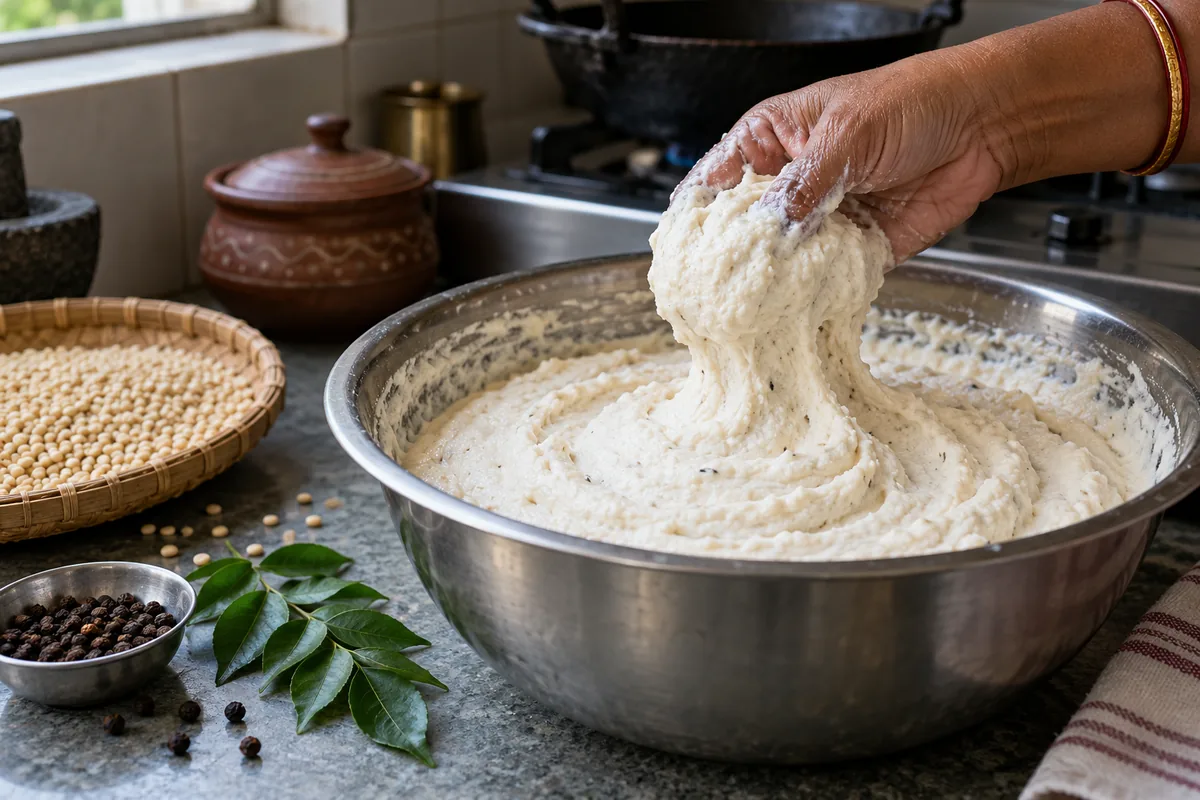
Too much water turns the paste runny, making it impossible to shape doughnut holes without adding excessive flour.
Why Batter Water Control Is Essential
Urad dal has an exceptional capacity to absorb and trap water. However, excess water causes the batter to thin rapidly during grinding.
Always use cold or iced water when grinding. The heat generated by blender blades can warm the dal paste, weakening protein strands and preventing proper air retention.
Add water only by the teaspoonful, and only when the blades struggle to turn. A thick paste can always be adjusted, but watery batter cannot be rescued easily.
The Science of Hand-Whisking and Aeration
Manual aeration is non-negotiable for traditional Odia baras. Whisking incorporates micro air bubbles that expand when exposed to hot oil.
This rapid expansion creates millions of tiny interior air pockets, resulting in a fluffy inside crispy outside biri bara that never feels greasy or heavy.
For weekend road trips and highway street food stops, browse our curated ideas for weekend getaways from Bhubaneswar.
| Batter Characteristic | Ideal Standard | Error Indicator | Corrective Action |
|---|---|---|---|
| Grinding Moisture | Thick, fluffy paste | Runny, spreadable liquid | Add 1 tbsp sooji or rice flour |
| Batter Temperature | Cool to touch | Warm or overheated | Chill in refrigerator for 15 minutes |
| Cold Water Test | Floats buoyantly on surface | Sinks to bottom of cup | Whip vigorously for 3 more minutes |
| Resting Time | 5 minutes post-mixing | Left sitting for 2+ hours | Re-aerate lightly before frying |
Frying Technique and Temperature Control in Hot Oil
Proper oil temperature ensures the exterior crisps instantly, sealing the surface against grease penetration. Frying over low heat causes the porous batter to soak up oil like a sponge.
Conversely, excessively high heat burns the onion bits on the outside while leaving the interior raw and doughy.
Oil Temperature and Sizzle Testing
Test your frying oil before sliding in the first vada. Drop a tiny speck of batter into the pan: it should sink halfway and rise to the surface within two seconds, surrounded by lively sizzling bubbles.
Maintain medium high oil frying temperature throughout the cooking process. When you add cold batter, the oil temperature drops naturally, so keep the burner adjusted to compensate.
Fry each batch for five to six minutes, flipping twice to ensure uniform golden color and deep structural crispness.
Preventing Heavy Oil Saturation
Home cooks often ask why biri bara absorbs excess oil during cooking. Aside from low oil temperature, the primary reason is watery, under-aerated batter.
The doughnut hole in the center is functional rather than decorative: it increases the surface area, allowing hot oil to cook the inner walls simultaneously with the outer crust.
Drain every batch on wire racks rather than piling hot baras on flat plates, which traps steam and softens the crispy shell.
Authentic Odia Pairings: Spicy Ghuguni and Tangy Chutneys
In Odisha, enjoying a dry vada is virtually unheard of. The snack reaches its true potential when paired with hot accompaniments that complement its crisp texture.
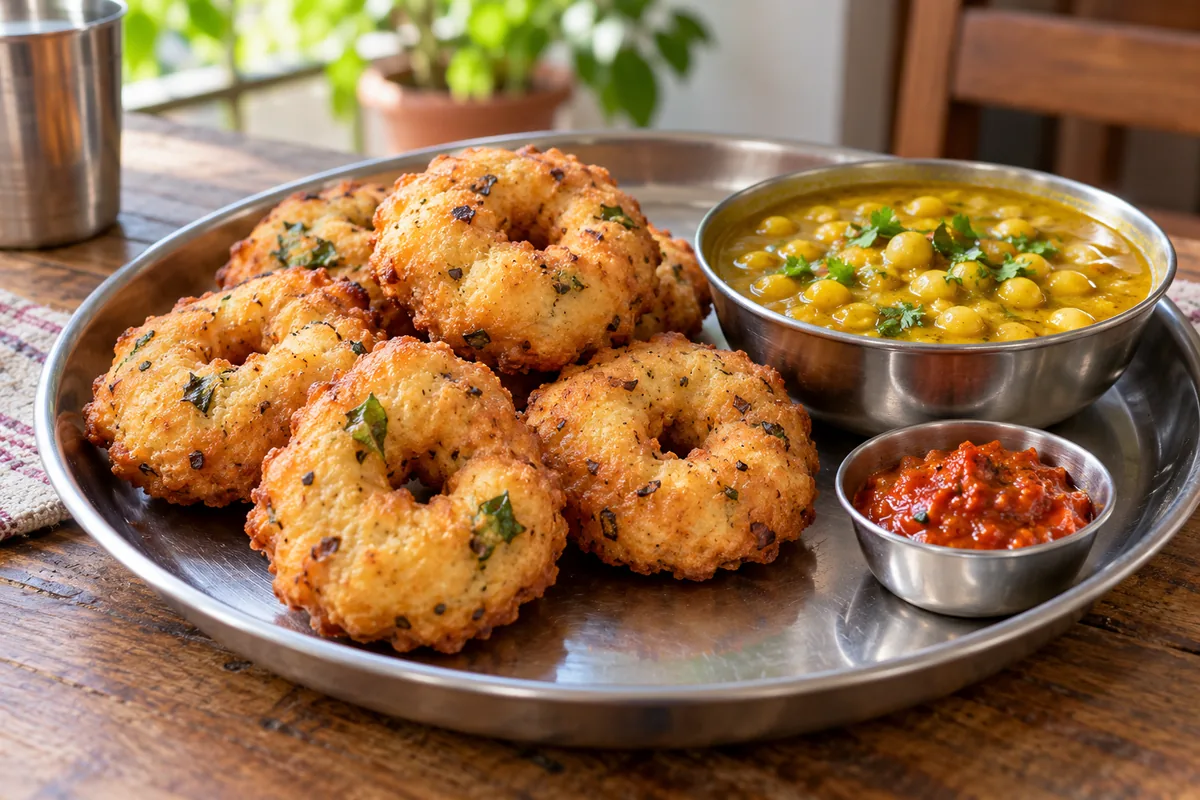
Learning the traditional biri bara with ghuguni presentation completes the authentic street experience.
Odia Yellow Pea Ghuguni Recipe Essentials
Ghuguni is a slow-simmered curry made from dried yellow or white peas (desi matar) soaked overnight. The peas are boiled with potatoes and simmered in an aromatic gravy of mustard oil, ginger-garlic paste, tomatoes, and ground spices.
A pinch of meat masala or garam masala gives the gravy its signature street-style kick. Ladle the boiling curry generously over hot baras so the crisp shells soften slightly while retaining their crunch.
Tangy Tomato-Coriander Chutney and Aloo Dum
Street vendors accompany the dish with a tangy red tomato khatta, prepared by simmering ripe tomatoes with panch phoron, green chilies, and a touch of jaggery.
In Cuttack, vendors also spoon spicy Aloo Dum over the plate, finishing with raw chopped onions and green chilies. Discover more about regional food customs in our review of Pakhala Divas food guide.
Regional Snack Comparisons: South Indian Medu Vada vs Cuttack Dahi Bara
While deep-fried urad dal fritters appear across the Indian subcontinent, regional culinary traditions adapt the dish to local palates. Understanding these variations highlights the distinctive personality of Odia cooking.
Traditional odia biri bara holds a unique place alongside coastal southern and northern counterparts.
Texture and Flavor Profile Contrasts
When comparing biri bara vs medu vada, the most noticeable difference is texture. South Indian Medu Vada uses pure dal paste or rice flour, resulting in a smooth, uniform crust served with coconut chutney and sambar.
The Odia specialty incorporates coarse semolina and chopped onions, giving it a rougher, blistered, extra-crisp exterior built to hold up inside hot Ghuguni gravy.
Evaluating biri bara vs dahi bara reveals a difference in serving medium. While the classic snack is served sizzling hot with spicy legume curry, Dahi Bara is soaked in tempered, sour yogurt water and eaten cool.
Explore other sweet and savory Odia culinary traditions in our guides to traditional Chhena Jhilli recipe and traditional Arisha Pitha recipe.
State ecotourism programs and rural food trails documented on the Eco Tour Odisha Official Portal frequently feature these authentic regional breakfast traditions.
| Dimension | Odia Bara (Ghuguni Style) | South Indian Medu Vada | Cuttack Dahi Bara |
|---|---|---|---|
| Texture Secret | Semolina (sooji) in batter | Aerated dal, sometimes rice flour | Fine dal paste, soaked soft |
| Crust Quality | Rough, blistered, crackling crisp | Smooth, golden, light crispness | Soft, spongy, no crispness |
| Accompaniment | Boiling yellow pea Ghuguni | Coconut chutney and sambar | Tempered yogurt water and aloo dum |
| Internal Inclusions | Minced onion, ginger, cumin | Peppercorns, ginger, curry leaves | Mild ginger and cumin |
| Serving Temperature | Sizzling hot from the kadai | Warm from the frying pan | Chilled or room temperature |
Frequently Asked Questions (FAQs)
What are the main ingredients of Biri Bara?
The snack is made from soaked, aerated skinless urad dal (black gram) mixed with fine semolina, crushed ginger, green chilies, curry leaves, and cumin seeds. The seasoned batter is shaped into doughnut discs with wet hands and deep-fried in hot vegetable oil.
Why do Odia cooks add semolina to the batter?
Adding fine semolina (sooji) absorbs excess surface moisture from the ground lentils and creates a blistered, crackling exterior crust. This extra crunch ensures the vadas remain crisp even when smothered in hot yellow pea Ghuguni.
Why does homemade vada absorb too much oil?
Vadas absorb excess oil when the batter contains too much water or when the frying oil is not hot enough. Whipping the batter thoroughly and maintaining steady medium-high oil heat prevents grease absorption.
How do I know if the urad dal batter is light enough?
Drop a small teaspoon of whipped batter into a bowl of cold room-temperature water. If the batter floats buoyantly on the water surface without dissolving, it is properly aerated and ready for frying.
How does this snack differ from South Indian Medu Vada?
The Odia preparation incorporates coarse semolina and minced onions for a blistered, crunchy shell, whereas South Indian Medu Vada features a smoother exterior and excludes semolina. Furthermore, the local version is traditionally eaten submerged in spicy Ghuguni rather than sambar.
What is the traditional way to serve Biri Bara in Odisha?
In local towns, hot vadas are served in shallow bowls bathed in steaming yellow pea Ghuguni and tangy tomato chutney. The plate is garnished with freshly chopped raw red onions, green chilies, and roasted cumin-chili powder.