Dhenkanal District: History, Geography, Temples & Travel Guide
Explore Dhenkanal district in Odisha. Discover Kapilash Temple, Joranda Mahima Gadi, Saptasajya, GI Magji, administrative blocks, history, and travel tips.
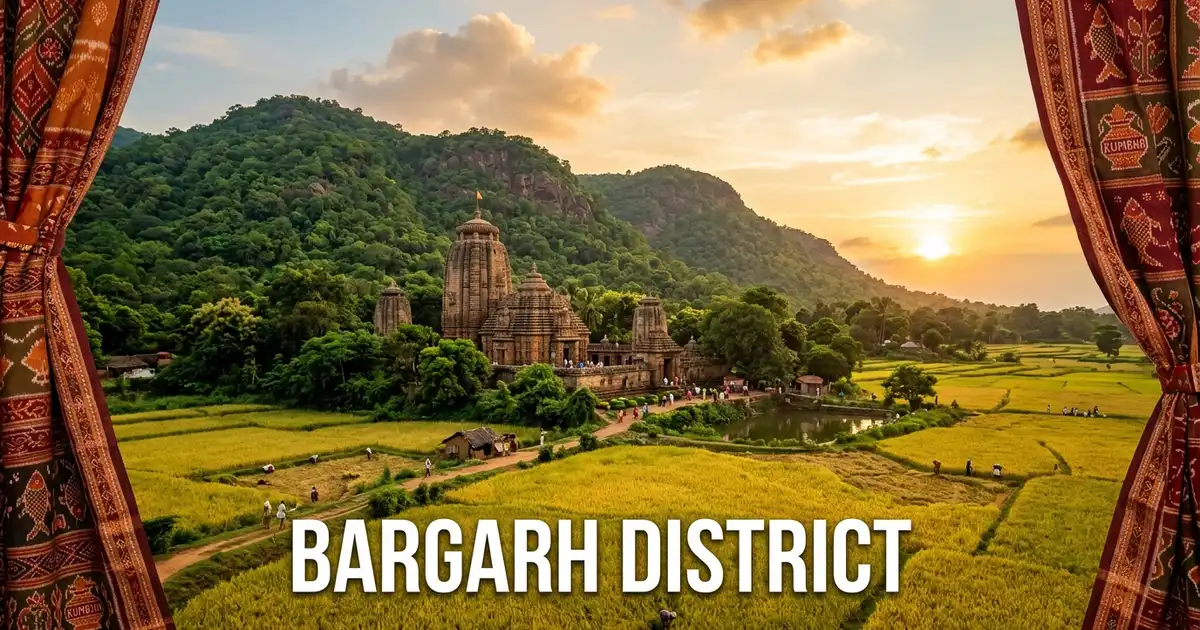
Dhenkanal district occupies a central geographical and cultural location in central Odisha. Situated between the coastal plains of Cuttack and the mineral uplands of Angul, this highland region combines dense deciduous forests, sacred hilltops, and fertile river plains. The district functions as a key industrial corridor along the Brahmani river basin while serving as an important center of spiritual reform and anti-colonial resistance.
The district owes its enduring reputation to a convergence of faith, craftsmanship, and natural beauty. Millions know Dhenkanal as the home of Kapilash, the celebrated hilltop shrine of Lord Chandrasekhar often called the Kailash of Odisha. The district also serves as the international headquarters of Mahima Dharma at Joranda, where ascetics observe prayers before sacred fires.
From ancient rock carvings at Kualo to the artisan settlements of Sadeibareni, the region rewards visitors with deep cultural heritage. Its famous street food stalls and quiet hill valleys make it one of the most distinctive destinations in central Odisha.
Key Takeaways
- Dhenkanal spans 4,452 square kilometers across eight community development blocks and three subdivisions.
- The district recorded a population of 1,192,811 in Census 2011, with an above-average literacy rate of 78.76%.
- Major spiritual centers include the 13th-century Kapilash Temple and the international Mahima Dharma headquarters at Joranda.
- Cultural treasures include GI-tagged Dhenkanal Magji buffalo cheese sweets, crispy Dhenkanal Bara, and Sadeibareni Dokra metal craft.
- National Highway 55 and Dhenkanal railway junction (DNKL) connect the district directly to Cuttack and Bhubaneswar.
Demographic & Geographic Profile of Dhenkanal District
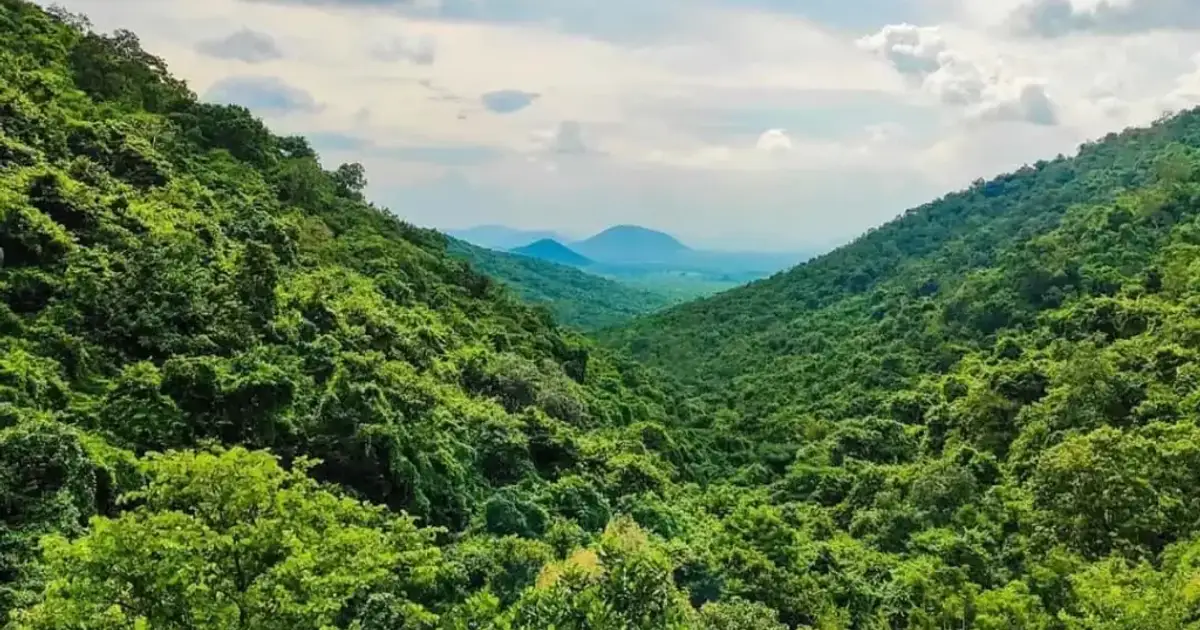
Geographically, Dhenkanal district sits along the middle basin of the perennial Brahmani River in central Odisha. The territory is bounded by Kendujhar district to the north, Jajpur district to the east, Cuttack district to the south, and Angul district to the west. The landscape consists of undulating plains broken by rugged ridges belonging to the Eastern Ghats, including the Kapilash and Saptasajya hill ranges.
The Brahmani River enters the district from the northwest near Parjanga and cuts across the central tablelands before flowing into Jajpur. Broad alluvial belts flank both banks of the river, providing rich farmland for paddy, vegetables, and fruit orchards.
Further away from the river, the landscape transitions into gravelly red laterite soils and upland sal forests that cover more than thirty-five percent of the total area.
Official demographic numbers from the Registrar General of India highlight a growing and largely rural population. According to the Census 2011 Official Dhenkanal District Directory, Dhenkanal recorded a total population of 1,192,811 residents. Over eighty-nine percent of the population lives in rural settlements across 1,208 inhabited villages, while the urban population is concentrated in Dhenkanal town, Bhuban, and Kamakshyanagar.
The region enjoys a tropical monsoon climate marked by hot summers, refreshing monsoon rains, and mild winters. Summer temperatures from April to June regularly climb past 42 degrees Celsius, while the southwest monsoon between July and September brings an average annual rainfall of 1,421 millimeters.
The forested ridges and mountain shrines rank among the prominent tourist places in Odisha for weekend travelers and pilgrims seeking respite from the coastal heat. Additional state tourism profiles can be explored through the Incredible India Official Odisha Tourism Portal.
| Demographic & Geographic Indicator | Statistical Measurement | State Comparison & Context |
|---|---|---|
| Total Geographical Area | 4,452 sq km | Central highland territory of Odisha |
| Total Population (Census 2011) | 1,192,811 citizens | 612,593 males and 580,218 females |
| Population Growth Rate (2001–2011) | 11.82% decadal increase | Steady sustainable demographic expansion |
| Population Density | 268 persons / sq km | Moderate density across river plains |
| Sex Ratio | 947 females / 1,000 males | Balanced gender ratio across rural blocks |
| Child Sex Ratio (0–6 years) | 877 females / 1,000 males | Focal priority for district welfare programs |
| Overall Literacy Rate | 78.76% | Significantly above the state baseline |
| Male Literacy Rate | 86.18% | Strong primary and secondary education reach |
| Female Literacy Rate | 71.00% | High rural female literacy gains |
| Forest Cover Percentage | ~38.2% of landmass | Kapilash Wildlife Sanctuary and reserve tracts |
| RTO Registration Code | OD-06 | Dhenkanal Regional Transport Office |
Administrative Divisions, Subdivisions & Community Development Blocks
Administrative governance in Dhenkanal district operates under a three-tier hierarchy managed by the District Collector and District Magistrate headquartered in Dhenkanal town. For administrative efficiency, revenue collection, and law enforcement, the district is split into three administrative subdivisions: Dhenkanal Sadar, Kamakshyanagar, and Hindol.
Below the subdivision level, grassroots rural development is carried out through eight Community Development (CD) blocks. These eight blocks oversee 212 Gram Panchayats and 1,208 revenue villages. Revenue and land administration mirror these boundaries through eight corresponding tahsils, ensuring that local farmers and property owners have accessible land registries within their respective blocks.
Urban governance is managed by four Urban Local Bodies (ULBs). Dhenkanal Municipality serves as the primary civic body for the district headquarters, while Kamakshyanagar, Bhuban, and Hindol function as Notified Area Councils (NACs). The urban centers oversee water supply, sanitation, civic roads, and local marketplaces.
| Subdivision | Community Development Block | Tahsil Center | Gram Panchayats | Headquarters Character |
|---|---|---|---|---|
| Dhenkanal Sadar | Dhenkanal Sadar | Dhenkanal | 27 GPs | Administrative capital, trade, and education hub |
| Dhenkanal Sadar | Gondia | Gondia | 27 GPs | Rural farming plain along the Ramial river |
| Dhenkanal Sadar | Odapada | Odapada | 28 GPs | Heavy industrial corridor, Meramandali rail line |
| Kamakshyanagar | Kamakshyanagar | Kamakshyanagar | 21 GPs | Subdivisional trade hub and agrarian market |
| Kamakshyanagar | Bhuban | Bhuban | 18 GPs | Traditional metalwork and brass artisan hub |
| Kamakshyanagar | Parjanga | Parjanga | 26 GPs | Brahmani river valley agriculture and thermal energy |
| Kamakshyanagar | Kankadahad | Kankadahad | 24 GPs | Forested upland bordering Keonjhar mineral belt |
| Hindol | Hindol | Hindol | 41 GPs | Former princely estate, timber and agriculture |
The administrative decentralization allows the district administration to execute statewide welfare schemes efficiently. Key focus areas include rural road connectivity under the Pradhan Mantri Gram Sadak Yojana, minor irrigation projects fed by the Rengali canal network, and public health delivery across primary healthcare centers.
Assembly & Parliamentary Constituencies
Dhenkanal district holds a significant voice in state and national politics. The entire territory falls under the jurisdiction of the Dhenkanal Parliamentary Constituency (Lok Sabha Seat 9), which represents the region in the Parliament of India. The parliamentary constituency encompasses all four assembly segments of Dhenkanal district alongside three adjacent assembly segments from Angul district: Pallahara, Talcher, and Angul.
At the state legislative level, the district is divided into four Vidhan Sabha (Legislative Assembly) constituencies. Each constituency elects one representative to the Odisha Legislative Assembly. The electoral boundaries balance rural farming communities, indigenous tribal hamlets in Kankadahad, and the growing industrial workforces in Odapada and Parjanga.
Constituency boundaries and reservation statuses are officially published in the Election Commission of India Delimitation Directory.
| Constituency Number | Assembly Constituency Name | Category | Administrative Extent & Geographic Coverage |
|---|---|---|---|
| AC-55 | Dhenkanal | General | Dhenkanal Municipality, Gondia Block, and parts of Dhenkanal Sadar Block |
| AC-56 | Hindol | Scheduled Caste (SC) | Hindol NAC, Hindol Block, and Odapada Block |
| AC-57 | Kamakshyanagar | General | Kamakshyanagar NAC, Bhuban NAC, Bhuban Block, and western Kamakshyanagar Block |
| AC-58 | Parjanga | General | Parjanga Block, Kankadahad Block, and northern Kamakshyanagar Block |
Elections across Dhenkanal typically witness strong civic participation. High voter turnouts reflect a politically active electorate that values local infrastructure, industrial jobs, and water irrigation networks.
Deep History, Princely State Heritage & Freedom Movement
Human civilization has thrived in Dhenkanal for thousands of years. Early stone tools, microliths, and iron-age pottery uncovered in the Brahmani River basin reveal active prehistoric settlements.
Local tradition records that the region takes its name from Dhenka, an indigenous Savara tribal chieftain who governed the forested hill tracts in ancient times. According to regional lore, Dhenka was defeated in battle, but his dying wish was that the territory carry his name forever.
Around 1530 CE, during the reign of the imperial Gajapati monarchs of Odisha, a military commander named Harisingh Vidyadhara established the independent princely state of Dhenkanal. Harisingh Vidyadhara pacified local feudal chiefs, built hill fortifications, and laid the foundations of the Bhoi solar dynasty. Over the following two centuries, royal successors expanded the kingdom by defeating neighboring rulers of Angul, Hindol, and Keonjhar.
The rulers of Dhenkanal maintained a royal palace, built irrigation reservoirs, and patronized classical Odia literature and temple architecture. During the Maratha incursions into Odisha in the eighteenth century, King Trilochan Singh Deo defended Dhenkanal against Maratha armies led by Chimna Bapu. The heroic battle inspired the famous Odia epic poem Samar Taranga, composed by court poet Brajanath Badajena.
Key Historical Milestones of Dhenkanal District:
- Prehistoric Era: Stone-age microlithic cultures along the Brahmani River valley.
- 1530 CE: Harisingh Vidyadhara founds the Dhenkanal princely state.
- 1781 CE: Battle of Dhenkanal against Maratha forces, immortalized in the poem Samar Taranga.
- 1922–1938: The historic Prajamandal Movement mobilizes peasants against feudal oppression.
- October 11, 1938: Twelve-year-old boat boy Baji Rout is martyred by British police at Nilakanthapur.
- 1948 CE: Princely state accedes to the Indian Union; later reorganized as modern Dhenkanal.
- 1993 CE: Undivided Dhenkanal district is split to form independent Angul district.
Dhenkanal earned an honored place in India’s independence struggle through the heroic Prajamandal Movement during the 1930s. Led by visionary freedom fighters such as Sarangadhar Das, Harmohan Patnaik, and Baishnab Charan Patnaik, the local peasantry rose in mass protest against royal tyranny, exorbitant taxes, and the cruel practice of Bethi (forced unpaid labor).
The defining moment of the struggle occurred on the night of October 11, 1938, at Nilakanthapur ghat along the Brahmani River in Bhuban block. British troops ordered a twelve-year-old boat boy named Baji Rout to ferry them across the swollen river so they could arrest fleeing freedom fighters.
Baji Rout bravely refused to ferry the soldiers. Enraged by the child’s defiance, British police shot Baji Rout dead along with five companion activists. Baji Rout remains celebrated as the youngest martyr of India’s freedom struggle, and his sacrifice galvanized anti-colonial resistance across eastern India.
Spiritual Heartland: Kapilash Temple & The Kailash of Odisha
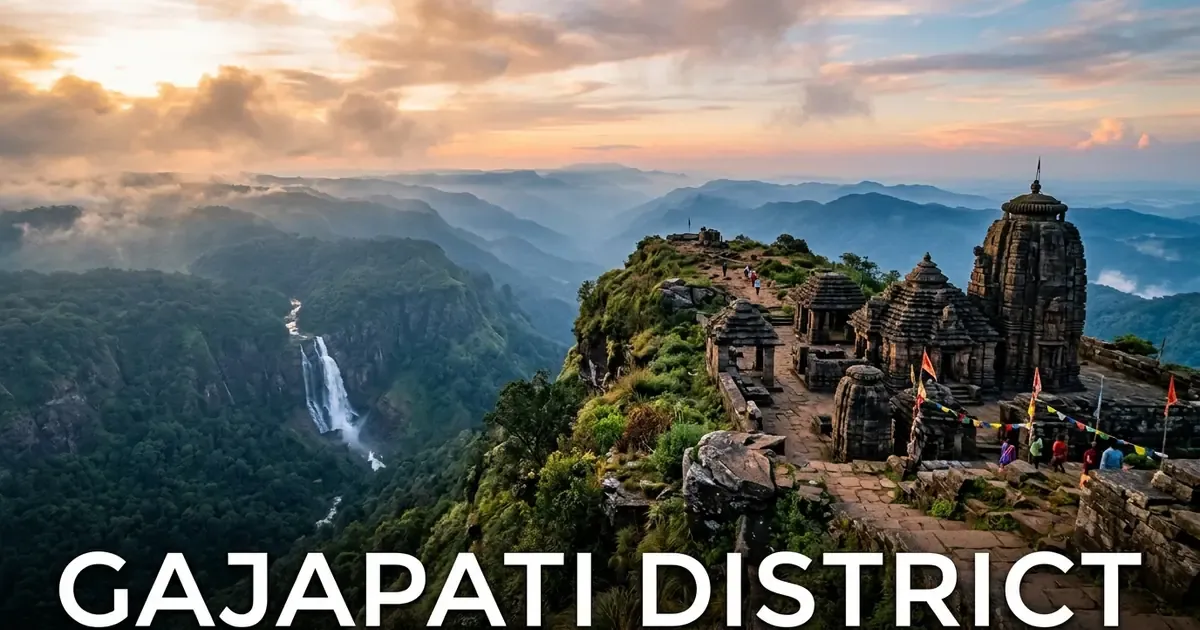
Rising 457 meters above the surrounding green canopy, Kapilash Hill represents the primary spiritual landmark of Dhenkanal. The hilltop hosts the historic Chandrasekhar Temple dedicated to Lord Shiva, constructed in 1246 CE by King Narasingha Deva I of the Eastern Ganga dynasty.
Because of its mountain setting, spiritual sanctity, and cool microclimate, devotees across eastern India revere Kapilash as the Second Kailash or the Kailash of Odisha.
Pilgrims can reach the temple summit through two distinct paths. Devotees seeking physical penance climb a steep stone staircase comprising 1,352 steps that ascends through dense sal forests and moss-covered rock faces. For elderly travelers and families, a well-paved 5-kilometer winding ghat road with multiple hairpin curves carries cars and auto-rickshaws directly to the temple parking terrace.
The main deula stands 18 meters tall, featuring intricate Kalinga stone carvings depicting celestial nymphs, guardian deities, and ornate floral motifs. Within the inner sanctum, Lord Chandrasekhar is worshipped in the form of an ancient stone Shiva lingam. Natural freshwater springs named Manikagomukha and Sita Poka trickle down from rocky fissures within the temple grounds, providing cool holy water for ritual ablutions.
The annual Maha Shivaratri festival turns Kapilash into a sea of devotion. More than five hundred thousand pilgrims climb the mountain carrying brass pots filled with river water and earthen lamps. The hill glows throughout the night as devotees chant hymns until the sacred Mahadipa is hoisted atop the temple spire at midnight.
At the foot of the hill, visitors can tour the Kapilash Science Centre, a deer park, and a wildlife rescue center. Travelers planning an excursion can explore the complete circuit of places to visit in Dhenkanal.
World Center of Mahima Dharma: Joranda Gadi & Sacred Traditions
Located 24 kilometers northeast of Dhenkanal town, the quiet village of Joranda serves as the international spiritual headquarters of Mahima Dharma. Founded in the nineteenth century by the mystic saint Mahima Gosain, Mahima Dharma is a revolutionary monotheistic reform movement that rejected caste hierarchies, idol worship, and elaborate priestly rituals. The philosophy teaches devotion to Alekh Brahma, the formless, unwritten, and omnipresent Supreme Reality.
The spiritual nucleus at Joranda is known as the Joranda Gadi or Mahima Gadi. The monastic compound encompasses several unique architectural structures:
- Sunya Mandira (Temple of the Void): Built without an enclosed roof to symbolize the formless nature of the creator.
- Dhuni Mandira: A sacred brick pavilion where an eternal sacred fire has burned without interruption for more than a century.
- Gadi Mandira: The memorial shrine honoring the sacred seat and burial place of Mahima Gosain.
Ascetic monks belonging to the Kumbhipatia and Kanapatiya orders reside inside the monasteries of Joranda. These monks wear simple loincloths fashioned from the treated bark fibers of the Kumbhi tree and carry palm-leaf fans.
Monks observe strict daily routines across the ashram. They rise before dawn, perform prostrations toward the sun, and take food only before sunset, refusing to eat after darkness falls.
The greatest celebration at Joranda is the annual Joranda Magha Mela, held during Magha Purnima in January or February. Hundreds of thousands of monks and householder devotees gather around the sacred Dhuni Mandira.
At sundown, pure cow ghee, camphor, and sandalwood are poured into the eternal fire pit, sending fragrant smoke rising into the winter sky. Pilgrimage accommodation and transport assistance are available through the Odisha Tourism Development Corporation Official Portal.
Ancient Sculptures & Rock Art: Kualo Ashtasambhu & Saranga Anantasayana Vishnu
Dhenkanal preserves remarkable archaeological treasures dating back to the eighth and ninth centuries, created under the patronage of the Sulki dynasty who ruled Kodalaka Mandala from their capital at Kualo. Located 45 kilometers north of Dhenkanal town near Kamakshyanagar, the village of Kualo preserves the legendary Ashtasambhu temple complex.
The central monument is the Kanakeswar Temple, surrounded by seven smaller shrines dedicated to Swapneswar, Aisanyeswar, Kapileswar, Baidyanath, Baneswar, Lokanath, and Pasupateswar. Although time and river floods have weathered parts of the stone structures, the surviving friezes illustrate early Kalinga temple architecture with carvings of multi-armed deities, gajamukha motifs, and decorative chaitya arches that predate the major temples of Bhubaneswar.
Another extraordinary archaeological marvel rests along the sandy banks of the Brahmani River at Saranga, roughly 67 kilometers north of Dhenkanal town. Carved directly out of a natural horizontal sandstone bed lies the colossal open-air image of Anantasayana Vishnu.
Dating to the ninth century CE, the reclining statue measures an astounding 15.4 meters in length. This makes it one of the largest rock-cut Vishnu images anywhere in India.
The carving depicts Lord Vishnu resting upon the coiled body of the cosmic serpent Sheshanaga. The deity wears a tall crown and holds a mace, disc, conch, and lotus in his four hands.
During the monsoon season, the waters of the Brahmani River wash directly over the feet of the carving in natural adoration. Regional rock art and historical shrines remain preserved under the mandate of the Archaeological Survey of India Protected Monuments Directory, ranking among the historic temples in Odisha.
Scenic Eco-Tourism & Hill Landscapes: Saptasajya, Sapua Dam & Kapilash Sanctuary
Beyond its ancient temples, Dhenkanal attracts outdoor enthusiasts and nature lovers with its tranquil forested hills, wildlife sanctuaries, and mountain reservoirs. The district features three popular eco-tourism hubs that provide memorable weekend getaways.
1. Saptasajya Hill Retreat
Resting 12 kilometers southwest of Dhenkanal town at an altitude of 300 meters, Saptasajya derives its name from the seven surrounding hill ranges that resemble a row of cushioned beds. Hindu mythology associates the forested valley with the hermitage of the seven great sages (Saptarshi) and the secret forest exile of the Pandava brothers during their twelve-year forest wanderings.
The forest retreat houses an ancient temple dedicated to Lord Ramachandra, Lakshmana, and Sita, built by the royal queen of Dhenkanal. Natural perennial springs flow past shaded stone benches, mango groves, and hiking trails. The state forest department operates the eco-friendly Saptasajya Nature Camp, featuring tented cottages, nature walking tracks, and guided birdwatching tours where visitors spot peacocks, barking deer, and hornbills.
2. Sapua Dam Reservoir
Constructed across the Sapua stream in Hindol block, the Sapua Dam reservoir has emerged as one of central Odisha’s most scenic water bodies. The reservoir is framed by green hill ridges on three sides and features an undulating curved embankment designed to prevent soil erosion. During winter mornings, the calm green waters reflect the surrounding hills, drawing hundreds of photographers, day picnickers, and boating enthusiasts.
3. Kapilash Wildlife Sanctuary
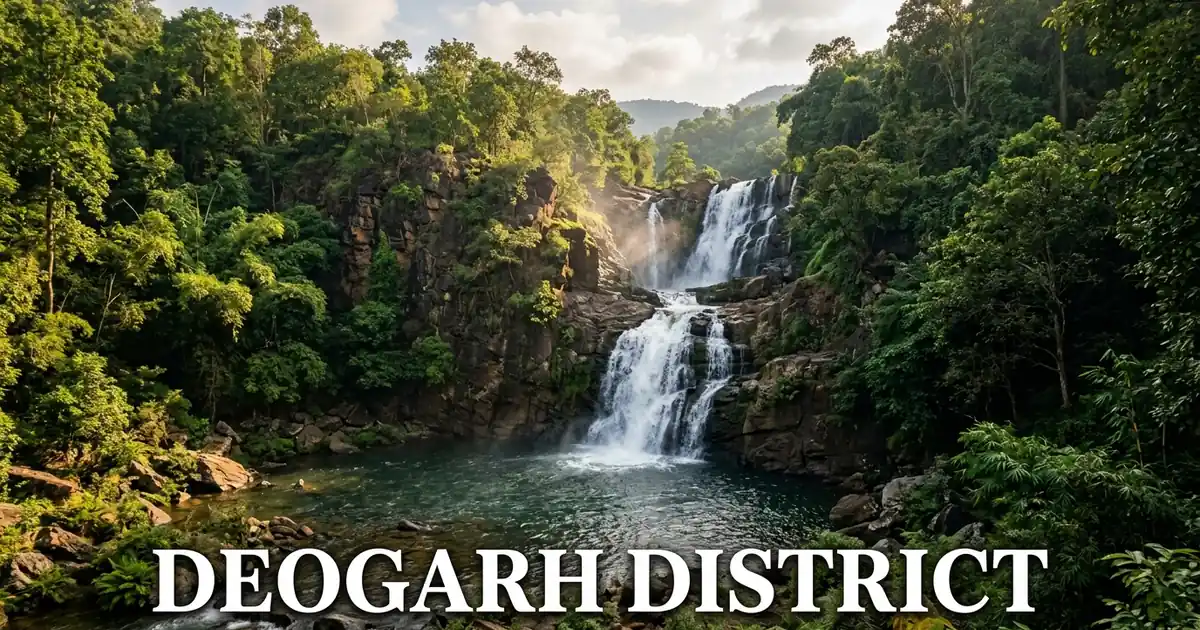
Encompassing 39.8 square kilometers around Kapilash Hill, this protected sanctuary acts as an ecological buffer and elephant corridor connecting Satkosia gorge with the Keonjhar highlands. The sanctuary hosts rich floral biodiversity dominated by sal, asan, piasal, bamboo, and amla trees.
Resident fauna includes Asian elephants, leopards, striped hyenas, wild boars, and spotted deer. Over 140 species of native and migratory birds also inhabit the canopy.
Traditional Handicrafts & Cottage Industries: Sadeibareni Dokra & Bhuban Bell Metal
Dhenkanal maintains an active living tradition of metal craftsmanship that has earned national and international recognition. The district is home to two specialized metalworking clusters whose traditions have been passed down unbroken through family lineages.
Sadeibareni Dokra Craft Village
Located just 7 kilometers from Dhenkanal town, the village of Sadeibareni is home to the indigenous Ghantra community who specialize in ancient Dokra metal casting. Dokra uses the traditional lost-wax technique, a non-ferrous metal casting method that traces its origins back to the bronze dancing girl of Mohenjo-daro over four thousand years ago.
Artisans gather clay from local stream beds to form a core mold, wrapping it with fine wax threads to shape intricate geometric patterns. They then cover the wax model with another layer of tempered clay.
When heated in open charcoal kilns, the melted wax drains away and molten brass fills the cavity. The resulting statues of tribal deities, elephants, and lamps carry an authentic rustic texture that has earned multiple National Crafts Awards.
Bhuban: The Brass and Bell-Metal Capital
Situated 40 kilometers north of Dhenkanal town, Bhuban holds the distinction of being the largest brass and bell-metal artisan village in Odisha. Hundreds of families belonging to the Kansari artisan caste maintain traditional workshops equipped with manual forges and heavy wooden anvils.
Craftsmen in Bhuban hammer red-hot brass and bronze ingots into household utensils, dinner platters, water flagons, and ceremonial temple bells. Bell-metal utensils from Bhuban are renowned for their strength, acoustic resonance, and natural therapeutic properties when used for serving food and drinking water.
Renowned Culinary Heritage: Dhenkanal Magji & Famous Dhenkanal Bara
No journey to Dhenkanal is complete without experiencing its distinctive culinary delicacies. The district has given Odisha two of its most iconic food treasures: a savory deep-fried snack that defines local evening street life, and a historic sweet that has earned official Geographical Indication (GI) status.
Dhenkanal Magji: The GI-Tagged Buffalo Cheese Sweet
The Government of India officially awarded the prestigious Geographical Indication (GI) tag to Dhenkanal Magji under Application Number 724 in Class 29, honoring its unique regional heritage and century-old preparation technique.
Unlike conventional Odia sweets made from cow milk, authentic Dhenkanal Magji is made exclusively from the fresh cheese (chhena) of indigenous buffalo milk. The sweet was developed over a century ago in the Mandar and Gondia blocks, where local herdsmen maintained large herds of buffaloes grazing on the nutrient-rich grasses of the Brahmani river basin.
To prepare Magji, fresh buffalo chhena is drained through coarse cotton cloth, mixed with sugar and cardamom, and gently roasted in iron cauldrons until it caramelizes into a golden paste.
The warm mixture is then shaped into round laddus and dusted with cardamom powder. The natural butterfat of buffalo milk gives Dhenkanal Magji a rich texture and an extended shelf life without preservatives.
Dhenkanal Bara: The Legendary Street Food Snack
Walk through the evening bazaar of Dhenkanal town or the bus stations of Kamakshyanagar, and the aroma of sizzling Dhenkanal Bara is unmistakable. This savory fritter is made from a finely ground batter of black gram lentil (biri dali) and rice, seasoned with cumin, crushed green chilies, grated ginger, and curry leaves.
The batter is whipped until airy, shaped into small round patties, and deep-fried in hot oil until the crust turns golden and crisp while the interior remains soft.
Dhenkanal Bara is traditionally served hot on fresh sal leaf plates with spicy aloo dum and yellow pea ghoogni. It serves as the classic morning breakfast and afternoon comfort snack for residents and travelers alike.
Industrial Infrastructure & Mineral Processing Hubs
While Dhenkanal celebrates its ancient heritage, the district has also transformed into an engine of modern heavy industry in Odisha. Situated along the mineral transit corridor connecting the coalfields of Talcher with the deepwater port of Paradip, Dhenkanal provides abundant raw water from the Brahmani River, vast industrial land banks, and direct railway infrastructure.
The primary industrial clusters are concentrated around Meramandali, Odapada, and Parjanga. Major industrial complexes operating within the district include:
- Tata Steel BSL (Meramandali): One of the largest integrated steel manufacturing facilities in eastern India, producing millions of tons of hot-rolled and cold-rolled steel coils for automotive and construction markets.
- GMR Kamalanga Energy Limited: A mega 1,050 MW coal-fired thermal power generation station situated at Kamalanga, providing electricity to Odisha and neighboring states.
- Navabharat Ferro Alloys (Kharagprasad): A pioneer in ferrochrome and ferromanganese manufacturing supporting national steel production.
- MGM Minerals and Sponge Iron Plants: Industrial facilities processing iron ore pellets and structural metals.
| Industrial Facility | Location Block | Primary Product / Output | Infrastructure Advantage |
|---|---|---|---|
| Tata Steel BSL | Meramandali, Odapada | Integrated Steel, HR/CR Coils | Meramandali Railway Junction, NH-55 corridor |
| GMR Kamalanga Power | Kamalanga, Odapada | 1,050 MW Thermal Electricity | Proximity to Talcher coalfields and Brahmani river |
| Navabharat Ferro Alloys | Kharagprasad, Odapada | High-Carbon Ferrochrome | Direct rail siding and industrial power grid |
| MGM Minerals Plant | Motanga, Odapada | Sponge Iron and Steel Billets | High-speed cargo freight access |
Alongside large-scale manufacturing, the district administration actively promotes the Dhenkanal District Industries Centre (DIC) to incubate agro-processing units, rice mills, and food packaging ventures that utilize locally harvested paddy, mangoes, and cashew nuts.
Agriculture, River Irrigation & Forest Resources
Agriculture remains the economic lifeline for over seventy percent of Dhenkanal’s workforce. The district covers a net sown agricultural area of roughly 185,000 hectares. The fertile floodplains of the Brahmani and Ramial rivers allow farmers to cultivate multiple crop cycles each year.
Paddy serves as the principal kharif crop, cultivated across river valleys and terraced lowlands. During the rabi season, farmers make extensive use of residual soil moisture and borewell irrigation to grow black gram, green gram, mustard, groundnut, and sesame.
In recent years, commercial vegetable farming and fruit orchards have expanded rapidly across Kamakshyanagar and Gondia. The red sandy loam soils on upland slopes are well suited for premium mango varieties such as Amrapali, Dasheri, and Mallika, alongside cashew plantations and guava groves.
The agricultural landscape has benefited from the Rengali Left Bank Irrigation Canal project, which channels water from the Rengali dam on the Brahmani River across Parjanga, Kamakshyanagar, and Bhuban blocks. The network of distributaries has converted thousands of formerly drought-prone upland acres into fertile double-cropped fields.
Forest resources also contribute significantly to rural livelihoods. The vast timber and sal reserves yield non-timber forest produce including kendu leaves, sal seeds, mahua flowers, wild honey, and medicinal herbs. Tribal communities in Kankadahad and Hindol gather forest produce under regulated village cooperative societies, generating steady household income during the dry summer months.
Educational Institutions & Healthcare Infrastructure
Dhenkanal has developed an established reputation as a regional educational hub in central Odisha, combining traditional collegiate institutions with specialized national centers of higher learning.
The most distinguished academic landmark is the Indian Institute of Mass Communication (IIMC) Dhenkanal, established by the Ministry of Information and Broadcasting, Government of India, in 1993. Perched atop the scenic slopes of Sanchar Gram on the outskirts of Dhenkanal town, IIMC Dhenkanal is eastern India’s leading journalism school. The institute trains top journalists in English and Odia journalism, digital media communication, and television reporting.
Other prominent higher education institutions in the district include:
- Dhenkanal Autonomous College: Founded in 1959, this historic college offers undergraduate and postgraduate degrees across arts, science, and commerce disciplines.
- Indira Gandhi Institute of Technology (IGIT), Sarang: Located near the Brahmani River on the border of Dhenkanal and Angul, this leading state government engineering university educates thousands of engineering and technology graduates.
- Synergy Institute of Engineering and Technology: A private technical education institute situated on the outskirts of Dhenkanal town.
Healthcare delivery has seen substantial modern investment. The Dhenkanal District Headquarter Hospital (DHH), situated in the center of Dhenkanal town, provides 300-bed inpatient care, trauma surgery, maternal health wards, and diagnostic pathology. A network of Community Health Centres (CHCs) in Kamakshyanagar, Hindol, and Bhuban ensures that quality primary healthcare remains accessible across rural blocks without requiring long trips to Cuttack or Bhubaneswar.
Transportation Logistics: How to Reach Dhenkanal by Rail, Road & Air
Thanks to its strategic position along major transport corridors in central Odisha, Dhenkanal enjoys direct connectivity by highway, railway, and commercial airways.
Reaching Dhenkanal by Road
National Highway 55 (NH-55) functions as the main highway lifeline for the district, linking Dhenkanal town directly with the coastal hubs of Cuttack (60 km) and Bhubaneswar (75 km) to the southeast, and the industrial centers of Angul (60 km) and Sambalpur (210 km) to the northwest. Modern four-lane highway upgrades have reduced driving time from Bhubaneswar to Dhenkanal to just ninety minutes.
State Highway 61 and secondary arterial roads link Dhenkanal with Kamakshyanagar, Sukinda, and the mining belts of Jajpur and Keonjhar. State-run OSRTC buses and private luxury coaches operate frequent services round the clock connecting Dhenkanal with all major cities in Odisha.
Reaching Dhenkanal by Rail
Dhenkanal Railway Station (Station Code: DNKL) is a major railway junction situated on the Cuttack-Sambalpur mainline under the Khurda Road Division of East Coast Railway. The double-electrified rail line handles frequent express and passenger train services, including:
- Tapaswini Express (Puri to Rourkela/Hatia)
- Puri-Durg Express
- Bhubaneswar-Rourkela Intercity Express
- Visakhapatnam-Amritsar Hirakud Express
- Regular EMU and passenger shuttles connecting through Cuttack district to Bhubaneswar
Travelers arriving from northern India or southern states can easily disembark at Cuttack or Bhubaneswar railway stations, where frequent connecting trains reach Dhenkanal within forty-five minutes.
Reaching Dhenkanal by Air
The nearest commercial airport is Biju Patnaik International Airport (BBI) in Bhubaneswar, located approximately 75 kilometers south of Dhenkanal town. The airport offers daily nonstop flights connecting Odisha with Delhi, Mumbai, Bengaluru, Hyderabad, Kolkata, Chennai, and Dubai. Travelers landing at Bhubaneswar can hire pre-paid taxis or board air-conditioned intercity buses for a comfortable 90-minute drive to Dhenkanal.
| Origin City | Distance to Dhenkanal | Primary Route | Travel Time by Car |
|---|---|---|---|
| Cuttack | 60 km | NH-55 via Choudwar and Manguli | 1 hour 15 minutes |
| Bhubaneswar | 75 km | NH-16 to Manguli, then NH-55 | 1 hour 30 minutes |
| Angul | 60 km | NH-55 via Banarpal and Hindol Road | 1 hour 15 minutes |
| Jajpur Town | 85 km | SH-61 via Bhuban and Kamakshyanagar | 2 hours |
| Rourkela | 260 km | NH-55 and Biju Expressway | 5 hours 30 minutes |
Practical Travel Tips, Best Time to Visit & Ideal Itineraries
To help visitors plan a memorable journey to Dhenkanal district, the following practical guidelines outline optimal travel seasons, local transport tips, and a curated two-day travel circuit.
Optimal Travel Season
The best time to visit Dhenkanal spans the winter months from October through March. During this period, daytime temperatures range comfortably between 18 and 28 degrees Celsius with clear blue skies, crisp mountain breezes, and low humidity. This weather is ideal for climbing the stone staircases of Kapilash, trekking through Saptasajya forests, and exploring outdoor archaeological ruins at Saranga.
Monsoon months from July to September reveal the hills at their greenest, with gushing seasonal streams and misty mountain peaks, though heavy downpours can occasionally slow rural road travel. Summer months from April to June should be avoided due to intense afternoon heat and dry winds.
Local Transport & Accommodation
Dhenkanal town offers comfortable budget and mid-range hotels, guest houses, and government inspection bungalows near the railway station and college road. For an immersive nature retreat, visitors can book tented cottages at the Saptasajya Nature Camp through the state eco-tourism portal. Auto-rickshaws, app-based cabs, and private rental cars are readily available in Dhenkanal town for local sightseeing circuits.
Recommended 2-Day Dhenkanal Heritage & Nature Itinerary
- Day 1: Spiritual Heights & Sacred Fires:
- Morning: Depart Dhenkanal town early to climb Kapilash Hill via the 1,352 steps or ghat road. Darshan at the Chandrasekhar Temple, explore the hilltop springs, and visit the Kapilash Science Centre and deer park at the base.
- Afternoon: Enjoy hot Dhenkanal Bara and aloo dum for lunch in town. Head to Sadeibareni craft village to watch master artisans cast authentic Dokra brass art.
- Evening: Drive to Joranda Gadi (24 km) to observe the quiet evening prayer rituals and the sacred eternal Dhuni fire of the Mahima Dharma monks. Sample freshly prepared Dhenkanal Magji on your return.
- Day 2: River Giants & Mountain Forests:
- Morning: Drive north along the Brahmani River to Saranga to witness the colossal 15.4-meter rock-cut Anantasayana Vishnu. Continue to Kualo to explore the eighth-century Ashtasambhu stone temple complex.
- Afternoon: Return toward Dhenkanal and head southwest to the peaceful forested valley of Saptasajya. Hike to the Raghunath temple and enjoy the mountain springs.
- Evening: Visit the scenic Sapua Dam reservoir to photograph sunset reflections over the water before departing for Bhubaneswar or your next destination.
Frequently Asked Questions (FAQ) About Dhenkanal District
What is Dhenkanal district famous for?
Dhenkanal district is famous across India for the 13th-century Kapilash Temple dedicated to Lord Chandrasekhar (known as the Kailash of Odisha), the international spiritual headquarters of Mahima Dharma at Joranda, the scenic Saptasajya eco-retreat, GI-tagged Dhenkanal Magji buffalo cheese sweet, crispy Dhenkanal Bara, and the lost-wax Dokra brass craft of Sadeibareni.
What is Dhenkanal Magji and does it have a GI tag?
Dhenkanal Magji is a century-old traditional Odia sweet made from the roasted cheese (chhena) of indigenous buffalo milk, mixed with sugar and cardamom. Dhenkanal Magji was officially awarded the Geographical Indication (GI) tag under Application Number 724 in Class 29, recognizing its exclusive regional origin and culinary heritage.
How many steps are there to reach the top of Kapilash Temple?
There are 1,352 stone steps that climb through dense sal forests to reach the summit of Kapilash Temple at an elevation of 457 meters. For travelers who prefer not to walk the stairs, a well-paved 5-kilometer winding ghat road allows private vehicles and auto-rickshaws to drive directly to the temple entrance terrace.
How far is Dhenkanal from Bhubaneswar and what is the best way to travel?
Dhenkanal is situated approximately 75 kilometers north of Bhubaneswar. The best way to travel is by road via National Highway 16 and National Highway 55, which takes about 90 minutes by car or bus. Alternatively, frequent express and passenger trains run daily between Bhubaneswar railway station and Dhenkanal railway station (DNKL) in approximately 60 to 75 minutes.
Who was Baji Rout and what was his connection to Dhenkanal?
Baji Rout was a twelve-year-old boat boy from Nilakanthapur village in Bhuban block of Dhenkanal district. During the Prajamandal freedom movement on October 11, 1938, he refused orders from British police to ferry them across the Brahmani River to arrest freedom fighters. British troops shot him dead on the spot, making Baji Rout the youngest martyr of India’s freedom struggle.