Biraja Temple Jajpur: Timings, History & Visitor Guide
Visit Maa Biraja Temple in Jajpur. Discover verified darshan timings, Nabhi Gaya Pinda Dana rituals, Simhadhwaja Ratha Yatra, history, and route guide.
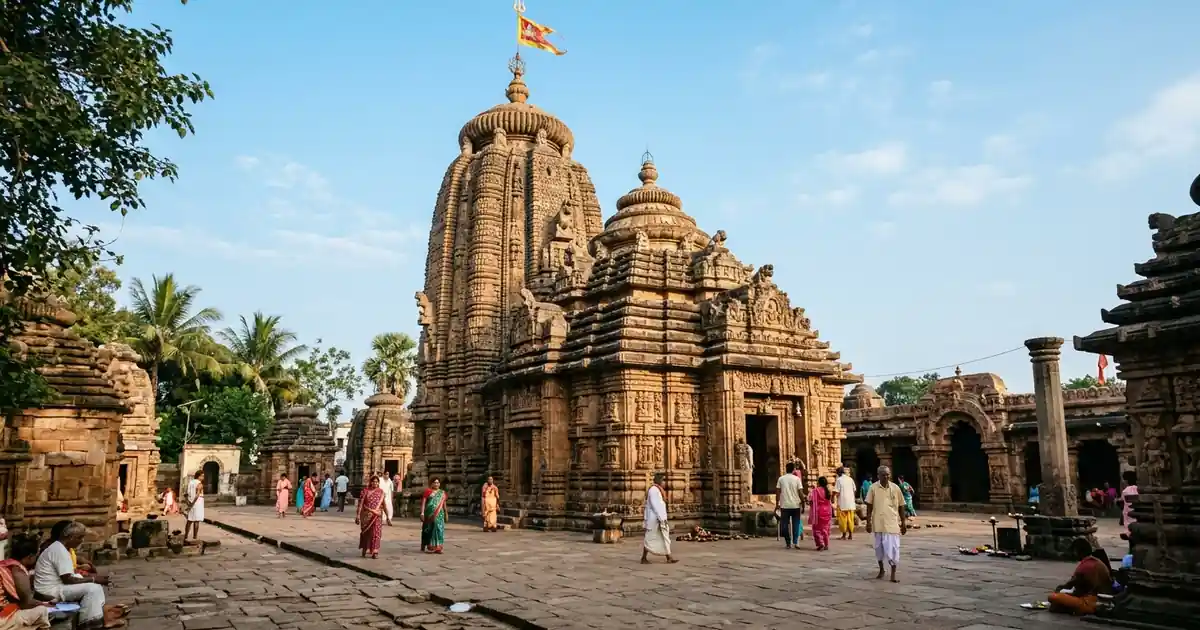
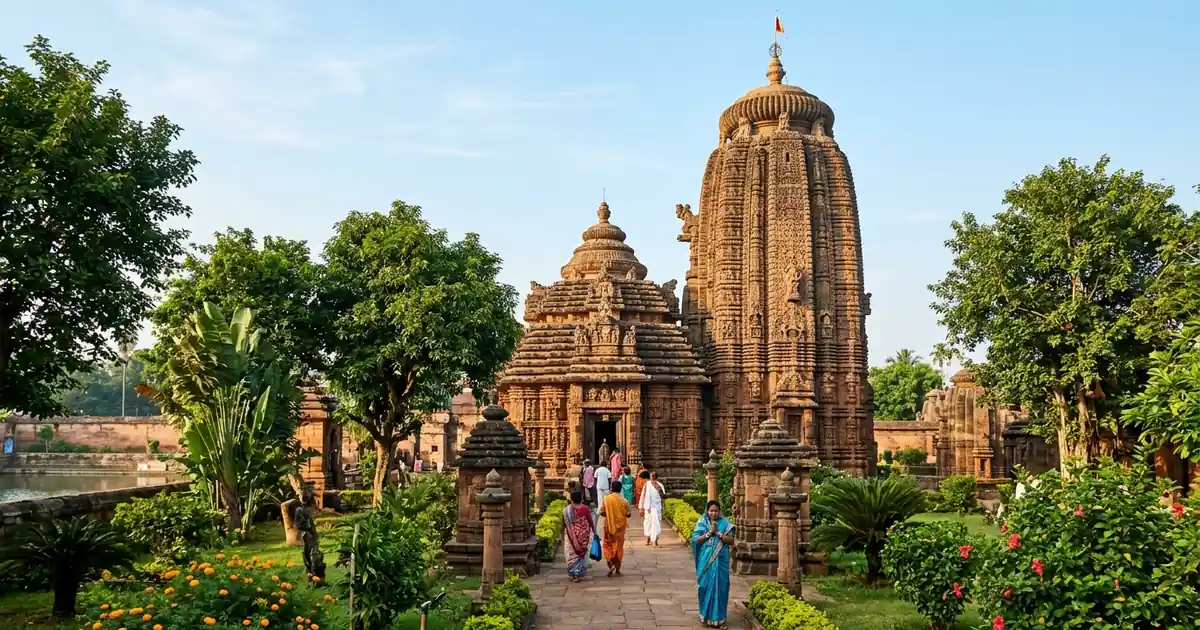
Standing along the sacred banks of the perennial Baitarani River, the venerable biraja temple jajpur represents one of the most sacred pilgrimage centers in eastern India. Known in traditional Hindu cosmology as Gada Kshetra or Viraja Kshetra, Jajpur is celebrated as a revered Adi Shakti Peetha marking the sanctified site where Goddess Sati’s navel fell.
Devotees travel from across the subcontinent to perform ancestral rites and seek the protective grace of Goddess Biraja. Alongside coastal sanctuaries such as Maa Sarala Temple, Maa Tara Tarini Temple, and Ghatagaon Maa Tarini Temple, this monumental complex preserves deep Shakta rituals dating back over a thousand years.
Key Takeaways
- Biraja Temple is an ancient Maha Shakti Peetha revered as Nabhi Gaya, where performing ancestral Pinda Dana bears equal religious merit to Gaya in Bihar.
- The presiding deity is a rare two-armed stone image of Mahishasuramardini, holding a trident with one hand and pulling the demon’s tail with the other.
- It is the only Shakti shrine in India that conducts an annual nine-day Ratha Yatra, pulling Goddess Biraja on the sacred Simhadhwaja chariot during Navaratri.
- The temple opens daily for morning prayers from 5:00 AM to 1:00 PM and reopens for evening darshan from 4:00 PM to 9:00 PM.
- Located in Jajpur town, the complex sits 30 kilometers east of Jajpur Keonjhar Road railway station and connects smoothly with National Highway 16.
Pilgrims often combine morning prayers at the sanctum with peaceful walks along the historic riverside ghats. For travelers organizing extended heritage circuits across the region, our Jajpur district guide provides additional context on administrative history, logistics, and accommodations.
At-a-Glance: Temple Timings, Location & Visitor Summary
State temple documentation and festival schedules are maintained through the Official Odisha Tourism Portal. The reference table below details verified darshan hours, ritual periods, entry protocols, and transit coordinates for your upcoming visit.
| Pilgrimage Parameter | Practical Specification |
|---|---|
| Presiding Deity | Maa Biraja (Two-armed Mahishasuramardini / Dwi-bhuja Durga) |
| Cosmological Status | Adi Shakti Peetha (Nabhi Peetha / Nabhi Gaya) |
| Historical Period | 10th to 11th Century CE (Somavamsi dynasty under King Yayati Kesari) |
| Morning Darshan Timings | 5:00 AM to 1:00 PM daily |
| Evening Darshan Timings | 4:00 PM to 9:00 PM daily |
| Midday Temple Closure | 1:00 PM to 4:00 PM for deity rest and noon bhog preparations |
| Mangala Alati | 5:30 AM daily |
| Sandhya Alati | 7:00 PM daily |
| Entry Fee | Completely free entry; nominal fees for specialized ritual receipts |
| Location | Jajpur Town, Jajpur District, Odisha |
| Nearest Railway Station | Jajpur Keonjhar Road (JJKR, 30 km) |
| Nearest Commercial Airport | Biju Patnaik International Airport, Bhubaneswar (BBI, 105 km) |
Visiting between 6:00 AM and 8:30 AM allows travelers to witness morning aarti rituals in a peaceful courtyard environment before noon crowds gather. Pilgrims scheduling ancestral Pinda Dana rituals should arrive before 9:00 AM to coordinate with licensed temple priests.
Temple Schedule & Daily Darshan Slots
The biraja temple timings follow ancient Shakta canonical schedules. The main temple gateway opens before dawn at 5:00 AM. Priests perform the sacred ceremonial bath (Mahasnana), adorn the deity in fresh silk garments, and conduct Mangala Alati around 5:30 AM.
Throughout the morning, devotees line up along barricaded corridors for individual darshan, offering red hibiscus flowers, coconuts, and traditional vermilion. The doors close briefly between 1:00 PM and 4:00 PM while servitors prepare the afternoon cooked bhog offerings. The evening prayer cycle begins at 4:00 PM, concluding with Badasinghara Alati at 9:00 PM.
Key Facts & Architectural Heritage
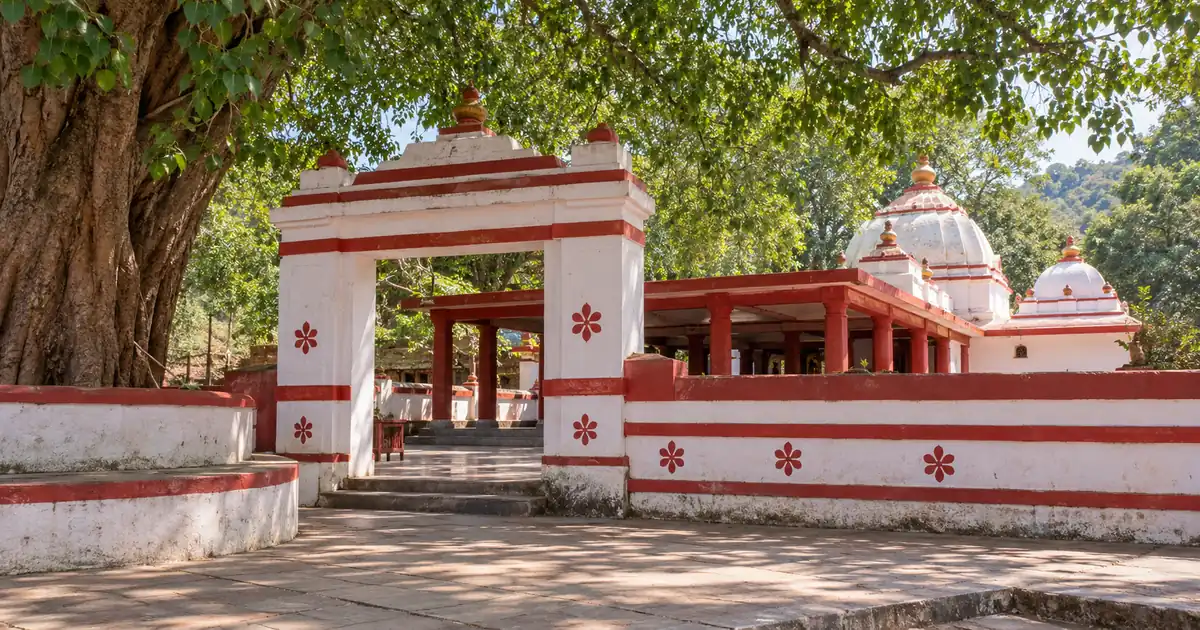
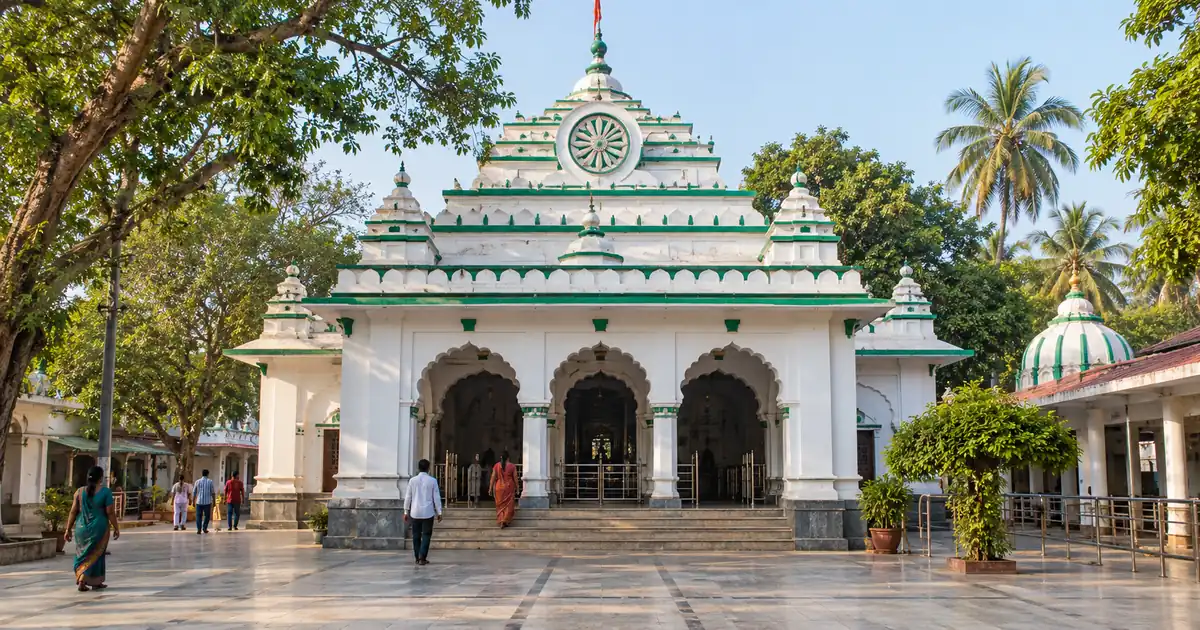
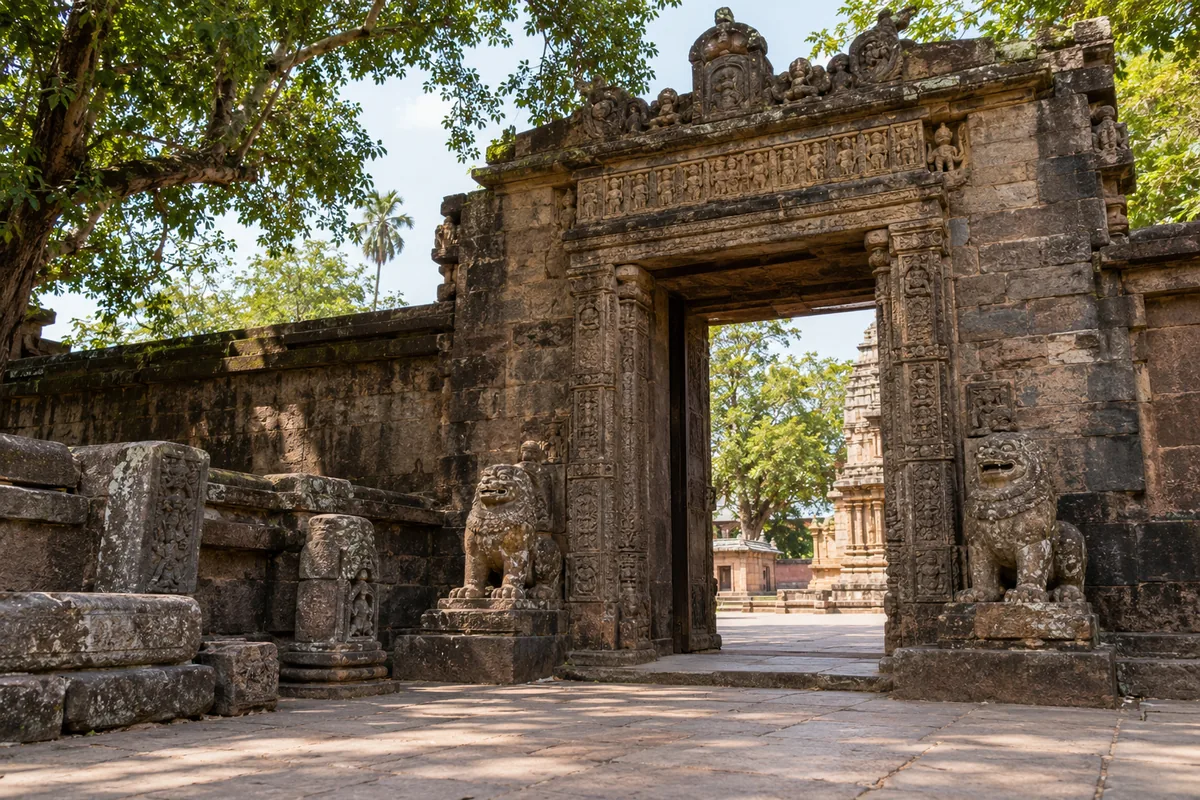
The temple property spans several acres of stone-paved compounds encircled by high laterite masonry walls. Within the perimeter stand numerous subordinate shrines honoring regional manifestations of Shiva, Ganesha, and the guardian Matrikas.
The architectural profile displays early Kalinga craftsmanship, featuring curvilinear sandstone towers that have survived centuries of coastal weather. Visitors can observe intricate friezes depicting musicians, mythological beasts, and floral creepers carved along the exterior base courses.
Sacred Origins: Adi Shakti Peetha & Somavamsi Royal Capital
The sacred origins of Biraja Kshetra are intertwined with the classical Daksha Yajna narrative recorded in the Devi Bhagavata Purana and Kalika Purana. When Goddess Sati gave up her life in the sacrificial fire of her father, Lord Shiva wandered across creation carrying her sacred form. To preserve cosmic order, Lord Vishnu released his Sudarshana Chakra to dismember her physical remains into fifty-one holy pieces.
Her navel (Nabhi) fell upon the sanctified soil of Jajpur along the Baitarani River, transforming the site into an imperial Adi Shakti Peetha. Because the navel represents the primordial center of biological and spiritual sustenance, the shrine gained profound sanctity as a realm for ancestor liberation.
The territory is celebrated as Gada Kshetra, honoring the mace (gada) of Lord Vishnu, forming an integral part of the four sacred quadrants of ancient Odisha alongside Puri, Bhubaneswar, and Konark.
Mythology of the Nabhi Peetha on the Baitarani River
Puranic accounts also connect Jajpur with the cosmic demon Gayasura. According to regional legend, Gayasura performed austere penance to attain absolute purification, asking that anyone who beheld his body achieve immediate salvation.
When the gods sought to restrain his overwhelming spiritual power, they placed him beneath the earth with Lord Vishnu pressing his divine feet upon the demon’s head at Gaya in Bihar, his chest resting in Andhra Pradesh (Pada Gaya), and his navel resting at Jajpur (Nabhi Gaya). Performing funeral oblations at the sacred Baitarani River and Nabhi Kunda ensures everlasting peace for deceased ancestors.
Yayati Kesari and the Somavamsi Golden Era
While archaeological excavations reveal cultural settlements dating to the Gupta and Bhauma-Kara eras, Jajpur reached its political peak during the 10th and 11th centuries under the Somavamsi dynasty. King Yayati Kesari established Jajati Nagara as his imperial capital along the Baitarani River.
The monarch performed a celebrated Dashashwamedha Yajna (ten-horse sacrifice) on the riverbank, inviting ten thousand Vedic scholars from Kanauj to settle in Odisha. He rebuilt the stone sanctuary of Maa Biraja, constructing monumental ghats and temples that turned Jajpur into a flourishing center of Sanskrit learning and administrative power.
Those curious about dynastic developments can explore our historical guide to famous temples in Odisha to see how imperial patrons influenced temple architecture across the region.
Ancient Two-Armed Iconography & Early Kalinga Architecture
Among the most venerated shakti peethas odisha celebrates, the central icon of Goddess Biraja is an extraordinary antiquarian treasure. While most Mahishasuramardini statues across India feature eight or ten arms, the deity at Jajpur is sculpted with only two arms (Dwi-bhuja).
Art historians date this singular visual style to the early medieval period. The two-armed form underscores the antiquity of the shrine, reflecting an ancient sculptural idiom that predates classical medieval developments.
The idol is carved from fine-grained black chlorite and stands upon a stone pedestal:
- Right Hand: The goddess firmly drives a long three-pronged spear (Trishula) into the chest of the demon Mahishasura.
- Left Hand: Her left hand pulls forcefully on the tail of the buffalo demon, pulling him upward to deliver the final strike.
- Divine Stance: Her right foot presses upon the back of a crouching lion, while her left foot treads upon the chest of the decapitated buffalo.
The divine crown (Kiritamukuta) features miniature carvings of a Shiva lingam, a crescent moon, and Lord Ganesha, symbolizing the harmonious unification of Shaiva, Shakta, and Ganapatya devotional paths.
Early Kalinga Stone Deula Architecture
The temple complex consists of a four-fold architectural layout aligned on an east-west axis:
- Vimana (Inner Sanctum): Built in the classical rekha deula design with a soaring curvilinear tower topped with an amalaka stone and sacred kalasha flag.
- Jagamohana (Audience Hall): A pyramidal pidha deula structure where devotees gather for congregational prayers.
- Nata Mandapa (Festival Hall): A pillared pavilion utilized for devotional dances and musical recitals during festive months.
- Bhoga Mandapa (Offering Pavilion): The dedicated chamber where consecrated food trays are received from the kitchen.
Surrounding the central tower are satellite shrines dedicated to Bagalamukhi, Goddess Kali, and the sacred well of Nabhi Gaya. The complex is maintained with care by the State Endowment Department and local hereditary servitors.
Nabhi Gaya: Ancestral Pinda Dana Rites & Spiritual Merit
Adjacent to the southern wall of the main temple stands the sacred well of Nabhi Gaya (Nabhi Kunda). Covered by a protective stone pavilion, this deep natural cistern is regarded as the literal umbilical center of Gayasura and Goddess Sati.
Pilgrims from across India travel to Jajpur specifically to perform Pinda Dana (ancestral rice ball offerings) and Pitru Shraddha rituals at this spot. According to the Garuda Purana, offering oblations at Nabhi Gaya frees departed ancestors from karmic entanglements, granting them liberation in higher celestial realms.
The ritual procedure is conducted with dignity by licensed temple priests (Tirthapurohitas):
- Devotees first take a purificatory bath in the sacred waters of the nearby Baitarani River at Dashashwamedha Ghata.
- Wearing clean white cotton clothing, they prepare small spherical balls of cooked rice, black sesame seeds, and pure ghee.
- Chanting Vedic mantras, pilgrims lower the offerings directly into the waters of the Nabhi Kunda well.
Standard fees for conducting ancestral rituals range between ₹150 and ₹500 depending on the complexity of the rites. Official receipts are available at the temple administration counter.
The Historic Simhadhwaja Ratha Yatra & Major Festivals
Maa Biraja Temple is renowned throughout India for conducting an annual nine-day chariot festival (Ratha Yatra) dedicated to a female deity. While chariot festivals are customary for male deities such as Lord Jagannath, Jajpur is the unique exception where a goddess mounts a grand wooden chariot:
| Festival Name | Calendar Occurrence | Signature Rituals & Cultural Spectacle |
|---|---|---|
| Simhadhwaja Ratha Yatra | Ashwin Navaratri (September to October) | 9-day chariot journey of Goddess Biraja around the temple compound |
| Triveni Amavasya & Baruni Snana | Magha to Phalguna (February to March) | Mass holy dips in the Baitarani River to wash away lifetime transgressions |
| Sharadiya Durga Puja | Ashwina (September to October) | 16-day Shodasha Upachara rituals culminating in grand Aparajita Puja |
| Chaitra Mela | Chaitra (March to April) | Devotional fasting, tonsuring ceremonies, and temple circumambulations |
Simhadhwaja: The Navaratri Chariot Festival
The processional chariot of Goddess Biraja is known as the Simhadhwaja (“the chariot with the lion emblem”). Constructed fresh each year from specific forest timbers, the chariot stands over thirty feet tall, supported by twelve wooden wheels and wrapped in bright red and yellow fabrics.
During the nine nights of Sharadiya Navaratri, the bronze representative idol (chalanti pratima) of Goddess Biraja is carried out of the sanctum in royal procession and seated upon the chariot. For nine consecutive days, thousands of ecstatic pilgrims pull the chariot along the designated avenue around the temple perimeter. The festival concludes on Vijaya Dashami with traditional Aparajita Puja and festive blessings.
Triveni Amavasya & Baruni Snana
During Triveni Amavasya and the sacred Baruni Snana in spring, hundreds of thousands of pilgrims assemble along the stone embankments of Dashashwamedha Ghata on the Baitarani River. Taking a holy dip during this auspicious planetary alignment is believed to confer the spiritual merit of bathing in the Ganges, Yamuna, and Saraswati rivers combined.
Festive dates and local administration circulars can be consulted through the Odisha State Archaeology Portal.
Visitor Guidelines: Dress Code, Photography & Practical Logistics
Observing traditional temple decorum ensures a pleasant pilgrimage for everyone:
- Dress Code: Conservative traditional attire is expected. Men should wear dhotis or trousers with kurtas. Women wear sarees or modest salwar kameez. Western beachwear, sleeveless tops, and shorts are strictly discouraged.
- Footwear & Leather Policy: All footwear, leather belts, and leather bags must be deposited at the complimentary storage counter outside the main entrance.
- Photography Prohibitions: Photography and videography are strictly prohibited inside the inner sanctum and around the Nabhi Gaya well. Courtyard exterior photos are permitted with discretion.
- Cleanliness: Avoid littering within the courtyard. Discard flower garlands and coconut fibers in designated stone bins.
[!TIP] If you plan to perform Pinda Dana at Nabhi Gaya, reach the temple by 7:00 AM on weekdays. The morning light is comfortable, and priests have ample time to guide you through the prayers without rush.
Temple Bhog and Traditional Odia Prasad
Following the noon rituals around 1:00 PM, the temple distributes traditional sanctified food offerings (Bhog). Prepared according to strict Sattvic principles without onions or garlic, the meal includes steaming parboiled rice, sweet Kanika, hearty vegetable Dalma, and rich milk Khiri.
Devotees can purchase individual portions or earthenware pots of bhog from the temple prasad counter at nominal rates ranging from ₹50 to ₹120.
How to Reach Biraja Temple Jajpur & Nearby Heritage Pairings
Situated in northern coastal Odisha, Jajpur town is accessible via key highway and railway corridors:
| Transit Corridor | Starting Point | Distance & Duration | Best Transportation Options |
|---|---|---|---|
| From Jajpur Road Stn | Jajpur Keonjhar Road (JJKR) | 30 km (40 to 45 minutes) | Local auto-rickshaws, shared taxis, or direct town buses |
| From Cuttack | Badambadi Bus Stand | 75 km (1.5 to 2 hours) | NH-16 to Kuakhia, then direct state highway east |
| From Bhubaneswar | Biju Patnaik Airport (BBI) | 105 km (2 to 2.5 hours) | NH-16 express drive via Panikoili junction |
| From Balasore | Balasore Town | 110 km (2 to 2.5 hours) | NH-16 southbound highway express buses or car |
By Road and National Highway Networks
Travelers driving from Bhubaneswar or Cuttack can take National Highway 16 north toward Panikoili or Kuakhia. From Kuakhia or Panikoili junction, well-maintained state highways lead directly east into Jajpur town. The road travels through fertile delta plains and small trading towns, offering an easy driving experience.
Train and Airport Logistics
The nearest major railhead is Jajpur Keonjhar Road (JJKR), located 30 kilometers to the west on the Howrah-Chennai mainline. Almost all express and superfast trains connecting Kolkata, Bhubaneswar, Chennai, and Puri stop here. Regular shared auto-rickshaws and state transport buses wait outside the station exit to carry arriving passengers into Jajpur town.
Arriving air passengers land at Biju Patnaik International Airport (BBI) in Bhubaneswar. Hired taxis make the direct 105-kilometer drive in approximately two hours via the four-lane highway.
Diamond Triangle Buddhist Site Combinations
Cultural travelers can easily combine Biraja Temple with the world-famous Buddhist heritage ruins of Odisha:
- Morning (7:00 AM to 10:30 AM): Attend morning darshan at Maa Biraja Temple and visit the sacred Dashashwamedha Ghata on the Baitarani River.
- Midday (11:30 AM to 2:30 PM): Drive south to explore the monumental stone monasteries and carved votive stupas of Ratnagiri and Udayagiri.
- Afternoon (3:30 PM to 5:30 PM): Tour the archaeological museum at Ratnagiri and browse local tussar silk handlooms in nearby artisan villages before returning via NH-16.
For complete sightseeing options throughout the district, browse our curated guide to the best places to visit in Jajpur district.
Frequently Asked Questions About Biraja Temple
What are the daily darshan timings of Biraja Temple in Jajpur?
The temple opens daily for morning prayers from 5:00 AM to 1:00 PM and reopens for evening darshan from 4:00 PM to 9:00 PM. The complex closes briefly in the afternoon between 1:00 PM and 4:00 PM for ritual deity rest and meal preparations.
Why is Biraja Temple in Jajpur called Nabhi Gaya?
In Hindu tradition, Sati’s navel (Nabhi) fell at Jajpur, making it the cosmic center where the navel of demon Gayasura rests. Performing ancestral Pinda Dana rituals at the sacred Nabhi Kunda well grants the same spiritual liberation for departed ancestors as Gaya in Bihar.
What makes the Ratha Yatra of Maa Biraja unique in India?
Maa Biraja Temple is the only Shakti shrine in India where a female deity rides a ceremonial wooden chariot for nine consecutive days during Navaratri. The chariot is named Simhadhwaja and carries her bronze representative idol around the temple perimeter in grand festive processions.
Which dynasty built the historic stone structure of Biraja Temple?
While the shrine’s sacred origins date back to the 8th-century Bhauma-Kara era, the grand stone deula structure was rebuilt during the 10th and 11th centuries by King Yayati Kesari of the Somavamsi dynasty. Subsequent rulers of the Ganga dynasty also added commemorative halls and outer walls.
How far is Biraja Temple from Jajpur Keonjhar Road Railway Station?
The temple is situated approximately 30 kilometers east of Jajpur Keonjhar Road Railway Station (JJKR). Commuters can easily reach the shrine in about forty minutes using local auto-rickshaws, shared taxis, or direct state transport buses.
What are the rules and dress code for visiting Biraja Temple?
Visitors are expected to dress in modest traditional Indian attire, such as dhotis, kurtas, or sarees. Shoes and leather articles must be left at outer footwear booths, and photography is strictly forbidden inside the inner sanctum sanctorum.