Sarala Temple Jagatsinghpur: Timings, History & Visitor Guide
Plan your visit to Maa Sarala Temple in Jhankad, Jagatsinghpur. Discover verified darshan timings, Adikabi Sarala Das history, Jhamu Yatra, and routes.
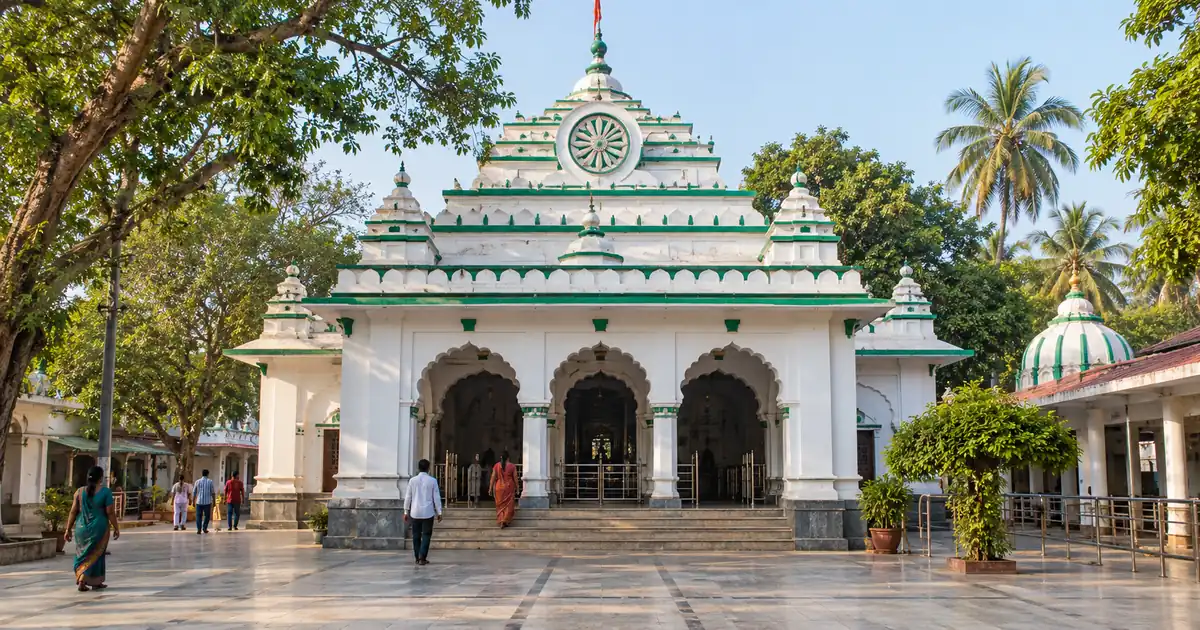
Revered across coastal Odisha as the spiritual cradle of classical Odia literature, the sacred sarala temple jagatsinghpur stands amidst lush green paddy fields and coconut groves in Jhankad. Devotees honor Goddess Sarala as a divine synthesis of Maa Durga and Maa Saraswati, uniting warrior courage with transcendental wisdom.
Along with famous shrines like Maa Tara Tarini Temple and Ghatagaon Maa Tarini Temple, this medieval temple forms an integral pillar of regional Shakta pilgrimage.
Key Takeaways
- Maa Sarala Temple in Jhankad is an ancient 8th-century Shakti sanctuary patronized across the Bhauma-Kara and Somavamsi dynasties.
- The presiding deity is an eight-armed stone image of Mahishasuramardini who wields a sword of righteous defense and holds a palm-leaf scripture of knowledge.
- The shrine is globally celebrated as the creative birthplace of the monumental Odia Mahabharata, composed in the 15th century by farmer-poet Adikabi Sarala Das.
- General darshan runs daily from 5:00 AM to 1:00 PM and from 3:30 PM to 8:30 PM with free public admission.
- The dramatic annual Jhamu Yatra festival in mid-April witnesses devout servitors performing miraculous barefoot fire-walking across glowing charcoal embers.
Pilgrims from across the coastal plains gather throughout the year to pray for academic excellence, family welfare, and agricultural abundance. For travelers planning a comprehensive journey through the port and delta region, our Jagatsinghpur district guide provides complete geographic overviews, transportation options, and local accommodations.
At-a-Glance: Temple Timings, Location & Visitor Summary
State cultural events and district administration notices are published on the Official Odisha Tourism Portal. The reference table below details verified temple timings, daily ritual periods, entry fees, and route logistics to assist your travel planning.
| Pilgrimage Metric | Practical Specification |
|---|---|
| Presiding Deity | Maa Sarala (Eight-armed composite of Durga and Saraswati) |
| Historical Period | 8th Century CE (Bhauma-Kara era origins with 15th-century rebuilding) |
| Morning Darshan Timings | 5:00 AM to 1:00 PM daily |
| Evening Darshan Timings | 3:30 PM to 8:30 PM daily |
| Midday Temple Closure | 1:00 PM to 3:30 PM for deity resting rituals |
| Mangala Alati | 6:00 AM daily |
| Sandhya Alati | 7:00 PM daily |
| Entry Fee | Completely free entry; nominal charges for specific puja receipts |
| Location | Jhankad (Kanakpur), Tirtol Block, Jagatsinghpur District |
| Nearest Railway Station | Rahama Railway Station (RHMA, 12 km) & Cuttack Junction (CTC, 75 km) |
| Nearest Airport | Biju Patnaik International Airport, Bhubaneswar (BBI, 90 km) |
Early morning hours between 6:00 AM and 8:30 AM provide a quiet atmosphere before day-tripper buses arrive from neighboring towns. Devotees seeking to participate in noon bhog distribution should plan their visit between 11:30 AM and 12:30 PM.
Temple Schedule & Daily Aarti Slots
The sarala temple timings adhere strictly to ancient coastal ritual protocols. The sanctum doors open at 5:00 AM, welcoming local sevaks who initiate the sacred morning bath (Mahasnana) and apply fragrant sandalwood paste and vermilion onto the deity. The morning Mangala Alati is conducted around 6:00 AM with resounding brass gongs, conch shells, and traditional percussion drums.
Following the noon Madhyanha Dhupa offering of cooked rice and dalma, the inner sanctum remains closed from 1:00 PM to 3:30 PM. The evening schedule commences with Sandhya Alati at 7:00 PM, concluding with the royal Badasinghara Alati at 8:30 PM, after which the sanctum closes for the night.
Key Facts & Cultural Significance
Maa Sarala holds an affectionate place in the cultural imagination of the Odia people. Unlike typical fierce warrior goddesses who require solemn awe, Maa Sarala is approached as a loving maternal mentor who grants the gift of speech, artistic inspiration, and academic prowess.
Students, authors, and folk artists regularly lay schoolbooks, notebooks, and pens before the temple altar to receive divine blessings before academic examinations or creative undertakings. This literary connection distinguishes the shrine as an intellectual sanctuary revered across eastern India.
Sacred Origins: Legend of Parashurama & Adikabi Sarala Das
The sacred origins of the temple combine mythological lore with documented literary milestones. Puranic tradition recounts that the warrior sage Parashurama, after cleansing the earth of tyrannical kings, sought penance and carved the sacred idol of Maa Sarala with the tip of his divine battle-axe (Parashu). He established her shrine along the meandering streams of the ancient Prachi and Mahanadi delta to bless the coastal kingdom with enduring peace.
Centuries later during the 8th century CE, the devout rulers of the Bhauma-Kara dynasty erected a formal stone sanctum. They recognized the goddess as an imperial protector of maritime commerce and agricultural fertility. The temple evolved alongside regional Shakta traditions, maintaining ritual ties with Maa Samaleswari Temple in western Odisha.
Adikabi Sarala Das and the Epic Odia Mahabharata
The crowning historical milestone of the temple occurred during the 15th century under the reign of Emperor Kapilendra Deva. A peasant farmer named Siddheswara Parida from the nearby village of Tentulipada lived a life of rigorous devotion, tending paddy fields by day and praying at the temple gates by night.
Legend tells that Goddess Sarala appeared to the humble cultivator in an auspicious vision, touching his tongue and commanding him to sing the glory of the divine epics in the language of the common people. Adopting the pen name Sarala Das (“the humble servant of Goddess Sarala”), he composed the immortal 18-parva Odia Mahabharata.
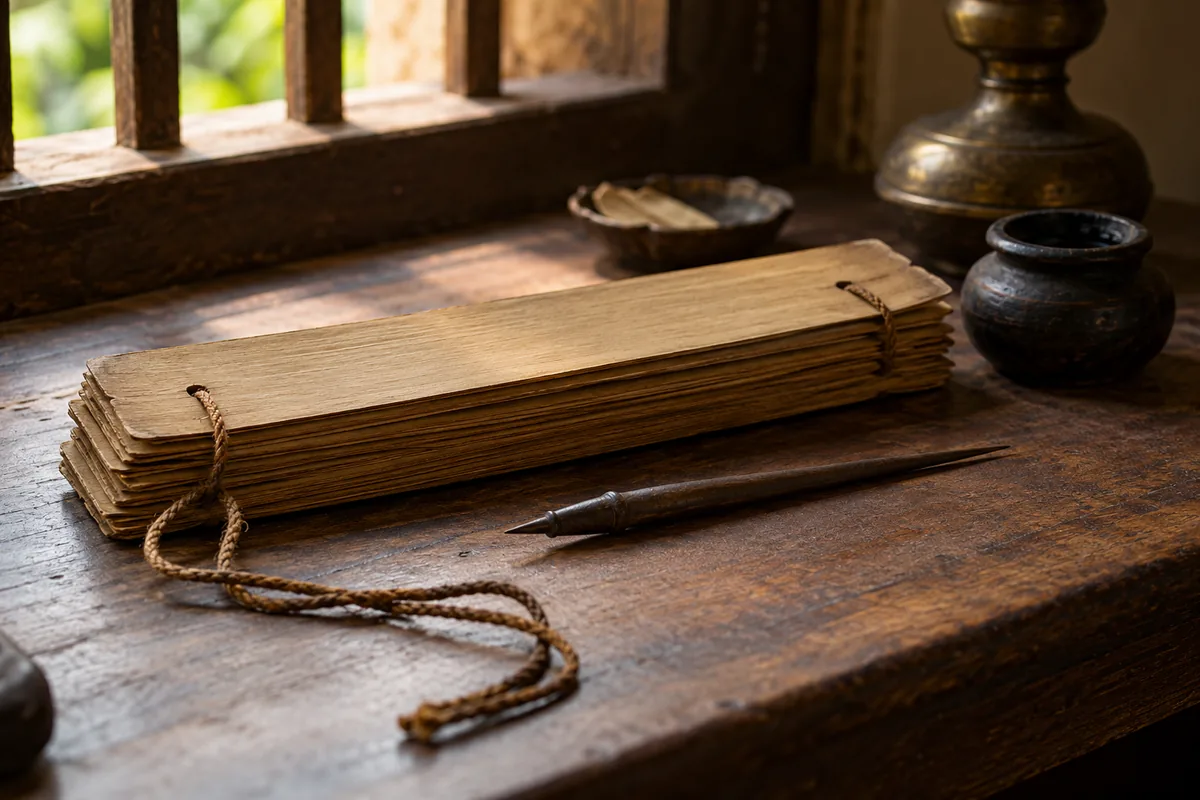
[!NOTE] The composition of the Odia Mahabharata at Jhankad transformed regional culture. Sarala Das adapted classical Sanskrit themes into the colloquial idioms, village landscapes, and social realities of 15th-century Odisha, establishing the foundational classic of the Odia language.
Sarala Das also authored the celebrated Chandi Purana and Vilanka Ramayana at this shrine. For deeper insights into the royal dynasties and literary movements of that era, explore our overview of the history of Odisha.
The Sacred Bel Tree and Historical Eras
Directly within the outer complex stands a venerated ancient wood-apple tree (Bel tree), preserved through generations as the sacred spot where Sarala Das sat in deep meditation while dictating his epic verses. Devotees tie sacred yellow and red protective cords onto the branches of this tree, whispering prayers for wisdom and creative inspiration.
During medieval military conflicts in the 16th and 17th centuries, the original riverside structure sustained significant damage. Devout local servitors safeguarded the sacred stone idol by concealing it in forested groves until the present temple complex was constructed at Kanakpur, where the goddess has been worshipped continuously for over three hundred years.
Unique Eight-Armed Iconography and Temple Architecture
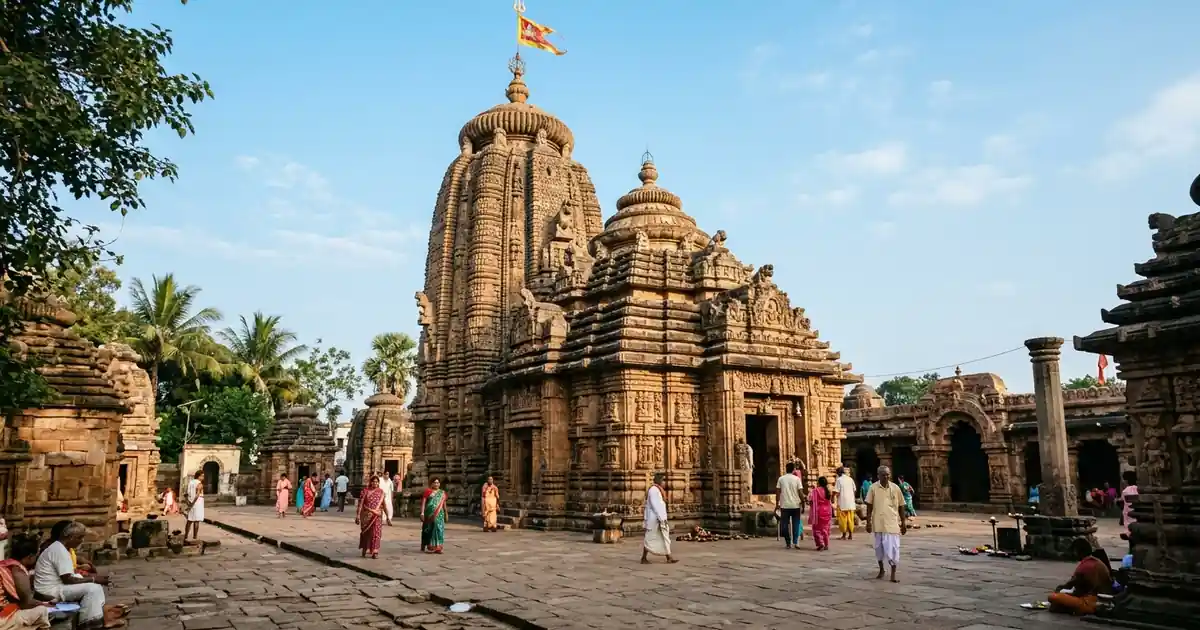
The visual form of Goddess Sarala is an artistic masterwork displaying classical Kalinga stone carving techniques. Sculpted from fine-grained black chlorite stone, the idol depicts an eight-armed goddess standing victorious over the demon Mahishasura.
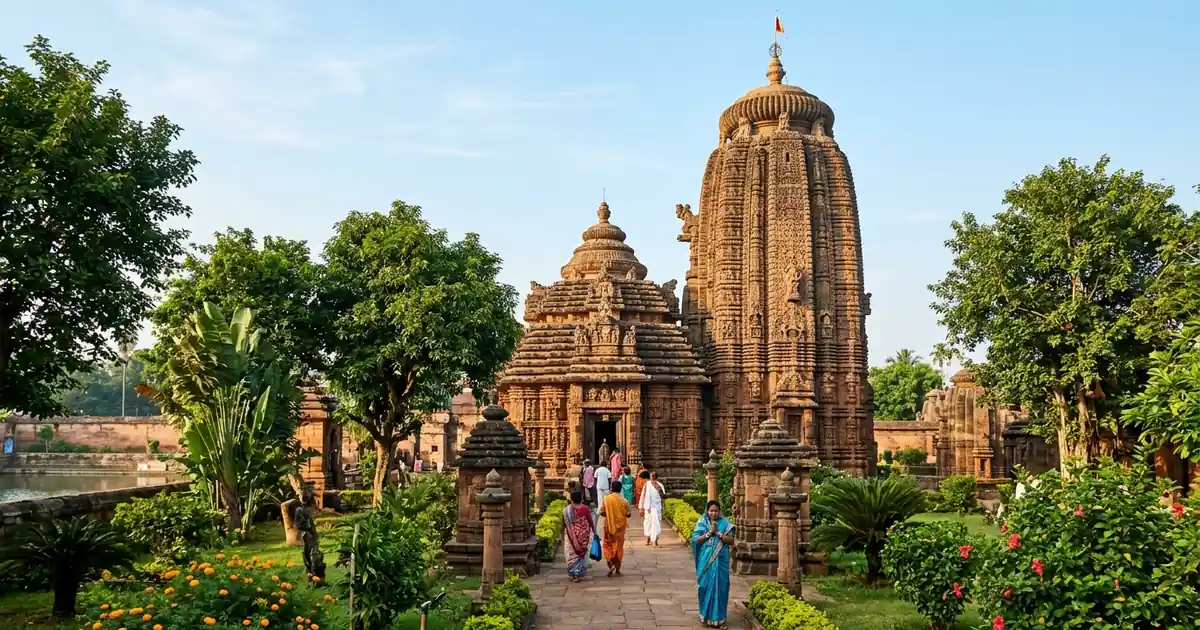
The monument’s layout reflects the traditional three-chamber architectural style: the high-rising Vimana housing the inner sanctuary, a pillared Jagamohana for devotee assembly, and a spacious Bhoga Mandapa where consecrated foods are prepared and distributed.
Surrounding the main tower are satellite shrines dedicated to Lord Ganesha, Kartikeya, Lord Shiva, and Lord Jagannath, illustrating the inclusive harmony that defines traditional Odia temples.
Synthesis of Power and Wisdom: Eight-Armed Mahishasuramardini
Among the most venerated shakti peethas odisha celebrates, the iconography of Maa Sarala displays a unique theological balance rarely encountered elsewhere in Indian Shakta art:
- Attributes of Power: In her right hands, the goddess holds a gleaming sword (Khadga), a trident (Trishula), an arrow (Bana), and a sacred wheel (Chakra), symbolizing her ability to destroy injustice and spiritual darkness.
- Attributes of Wisdom: In her left hands, she holds a palm-leaf manuscript (Pothi), a bell (Ghanta), a battle shield, and a bow, representing learning, literary insight, and protective guardianship.
- Divine Stance: Her right foot rests upon a roaring lion, while her left foot presses down upon the back of the vanquished demon Mahishasura.
This dual depiction explains why she is worshipped simultaneously as Tantric Chandi, compassionate Durga, and learned Saraswati. Devotees find comfort in her benevolent gaze, which radiates parental warmth rather than wrathful fury.
Kalinga Deula Architecture and Courtyard Shrines
The main temple tower rises in the classical rekha deula design, featuring vertical stone bands (pagas) adorned with intricate carvings of dancing damsels, mythical lions, and floral arabesques. The exterior surfaces have weathered centuries of coastal monsoons, acquiring an antique terracotta-red patina.
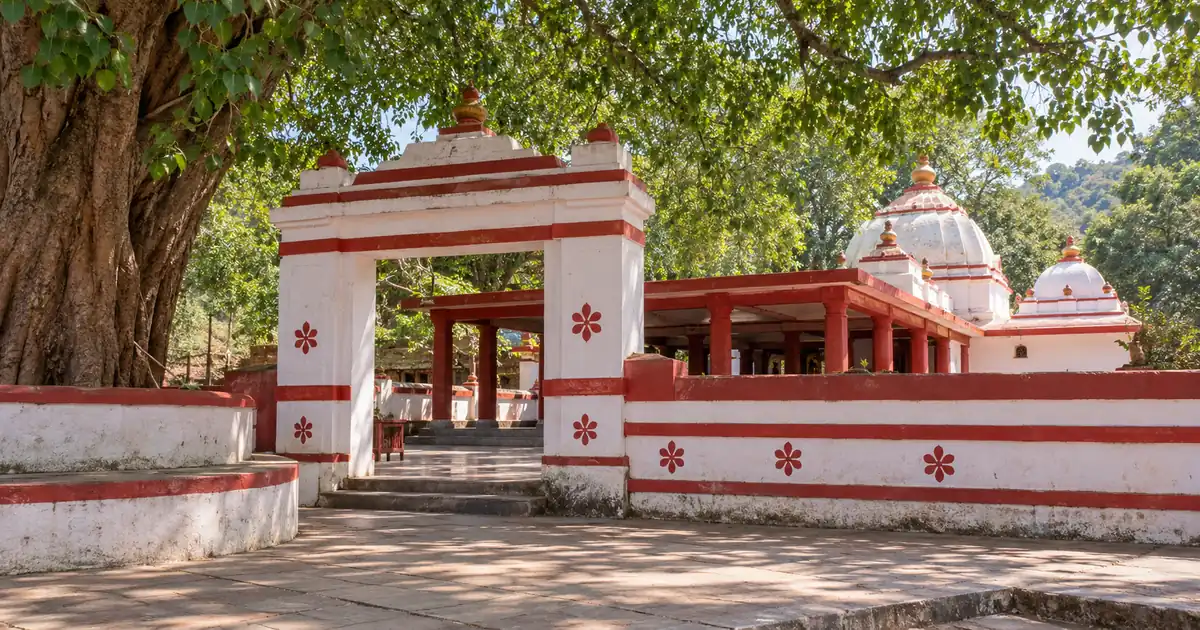
A stone-paved inner courtyard permits circumambulation (pradakshina) around the sanctum. Shaded stone verandahs offer shelter for visiting pilgrims during hot summer afternoons. The complex is maintained with care by the State Endowment Department and the local temple managing committee.
Devotees can explore other outstanding examples of religious heritage across the state by browsing our guide to famous temples in Odisha.
Grand Festivals: 16-Day Durga Puja, Jhamu Yatra & Fire Walking
Religious celebrations at Maa Sarala Temple are celebrated with infectious enthusiasm, drawing thousands of devotees from Cuttack, Jagatsinghpur, Kendrapada, and Puri:
| Festival Name | Lunar Calendar Occurrence | Signature Rituals & Cultural Spectacle |
|---|---|---|
| Sharadiya Durga Puja | Ashwina (September to October) | 16-day Shodasha Upachara rituals, daily special Beshas, and grand Suna Besha |
| Jhamu Yatra | Pana Sankranti (Mid-April) | Miraculous barefoot fire-walking by Roul servitors over a 30-foot charcoal pit |
| Chaitra Parba | Chaitra (March to April) | Month-long village fasts, musical recitals, and temple circumambulations |
| Chandan Yatra | Baisakha (April to May) | Swan-boat cruises for the festival brass idols in the temple water tank |
| Dola Purnima | Phalguna (February to March) | Colorful swing festivals and traditional sprinkling of fragrant natural pigments |
Sharadiya Durga Puja and Suna Besha
While most temples celebrate Durga Puja over four or five days, Maa Sarala Temple observes an extensive 16-day festival starting from the auspicious Mulashtami tithi. The goddess undergoes elaborate morning cleansing ceremonies (Mahasnana) utilizing sanctified river water and fragrant herbs.
Each day of the festival, the goddess is decorated in distinct traditional costumes (Beshas), portraying divine maternal aspects such as Mahakali, Mahalakshmi, and Mahasaraswati. On the festive nights of Mahanavami and Vijaya Dashami, she is adorned in dazzling solid gold jewelry (Suna Besha), creating a spectacle that draws massive crowds.
Jhamu Yatra: The Miraculous Fire-Walking Ritual
The most sensational annual event at Jhankad is the Jhamu Yatra, celebrated during Pana Sankranti (Maha Vishuva Sankranti) in mid-April. Dedicated male servitors known as Roul sevaks observe strict austerities and fasts for twenty-one days prior to the event.
On the festival afternoon, a 30-foot-long trench filled with red-hot glowing wood charcoals is prepared in the temple courtyard. Carrying sanctified water pots (Ghatas) balanced on their heads and accompanied by the thunderous roar of temple drums, the Roul sevaks walk barefoot across the blazing embers without showing discomfort or physical burns. Hundreds of thousands of pilgrims gather along surrounding embankments to witness this awe-inspiring demonstration of faith.
Chaitra Parba and Chandan Yatra
Throughout the spring month of Chaitra, thousands of rural women observe holy vows, traveling barefoot from remote coastal villages to offer earthen lamps at the temple shrine. During the scorching summer days of Baisakha, the festive representative idols are anointed with sandalwood paste during Chandan Yatra, cruising upon decorated boats across the sacred temple pond.
Cultural guidelines and state holiday calendars can be accessed through the Odisha State Archaeology Portal.
Visitor Guidelines: Dress Code, Bhog Offerings & Etiquette
Following traditional temple customs guarantees an enjoyable and respectful spiritual visit:
- Dress Code: Visitors are encouraged to dress in modest traditional attire. Men typically wear dhotis, kurtas, or neat trousers. Women wear sarees or salwar kameez. Short dresses, beachwear, and sleeveless clothing are inappropriate.
- Footwear & Leather: All shoes, sandals, and belts should be deposited at the outer shoe storage booths near the main gate for a small fee of ₹5 to ₹10.
- Photography Rules: Photography is strictly prohibited within the inner sanctum sanctorum. Devotees may take photos of the outer deula spires, courtyard pavilions, and the sacred Bel tree.
- Cleanliness: Avoid littering within the courtyard. Place flower waste, coconut husks, and paper wrappers inside designated waste bins.
[!TIP] Purchase fresh coconut offerings and sweet pedas from authorized stalls situated directly within the temple perimeter. Always request a clear receipt when offering donations for special pujas or vehicle blessings at the temple office.
Daily Bhog: Traditional Odia Khichdi and Sweets
Devotional life at the temple is enriched by its traditional culinary offerings. The temple kitchen prepares delicious Sarala Bhoga, centering around sweetened rice and split-pea khichdi cooked in unglazed clay pots.
The savory dishes are delicately flavored with fragrant desi cow ghee, freshly crushed ginger, roasted cumin, and whole black peppercorns. Devotees can purchase earthenware cups of khichdi, sweet Kheer, and dried wheat confections (Ukhuda) from the authorized prasad counter for nominal prices ranging from ₹40 to ₹100.
How to Reach Sarala Temple Jhankad by Road, Train, and Air
Jhankad is conveniently situated along major highway routes in coastal Odisha, ensuring smooth connections for day-trippers:
| Travel Route | Starting Hub | Distance & Transit Duration | Transport Mode Options |
|---|---|---|---|
| From Cuttack | Badambadi Bus Stand / Cuttack Stn | 75 km (1.5 to 2 hours) | Direct state transport buses, hired cabs, or SH-12 |
| From Bhubaneswar | Baramunda / Master Canteen | 90 km (2 to 2.5 hours) | NH-16 to Cuttack, then Cuttack-Tirtol-Paradip Road |
| From Paradip Port | Paradip Marine Drive | 38 km (45 to 50 minutes) | Local express buses or rental cars via SH-12 |
| From Jagatsinghpur Town | Jagatsinghpur Bus Terminal | 15 km (20 to 25 minutes) | Local auto-rickshaws or shared feeder vans |
Road Routes from Cuttack and Bhubaneswar
Travelers driving from Bhubaneswar should head northeast along NH-16 to Cuttack, crossing the Kathajodi and Mahanadi river bridges. From Cuttack, proceed east along the well-paved Cuttack-Tirtol-Paradip state highway (SH-12).
At Tirtol market, turn right onto the scenic country road that winds toward Kanakpur and Jhankad. The drive passes lush green coastal waterways, historic canals, and peaceful rural settlements.
Railway and Airport Connections
The nearest local railway station is Rahama Railway Station (RHMA), situated just 12 kilometers east of the temple along the Cuttack-Paradip passenger line. Local shared auto-rickshaws and auto vans meet arriving trains and complete the journey in approximately twenty minutes.
For long-distance train travelers from Delhi, Kolkata, Chennai, or Mumbai, Cuttack Junction (CTC) is the most convenient railway station. Taxis and regular express buses depart frequently from Cuttack toward Paradip via Jhankad.
Arriving air passengers land at Biju Patnaik International Airport (BBI) in Bhubaneswar, located 90 kilometers to the west. Pre-paid airport taxis make the scenic direct drive in approximately two and a half hours.
Coastal Jagatsinghpur Itinerary Pairings
Visitors can easily integrate a trip to Maa Sarala Temple into a captivating coastal weekend excursion:
- Morning (7:30 AM to 11:30 AM): Visit Maa Sarala Temple in Jhankad for morning prayers, explore the sacred Bel tree of Sarala Das, and sample authentic temple khichdi.
- Afternoon (1:00 PM to 4:00 PM): Drive east to the active deepwater harbor at Paradip Port, visit the Marine Museum, and climb the Paradip Lighthouse for panoramic ocean views.
- Evening (4:30 PM to 6:30 PM): Relax on the uncrowded sands of Siali Beach or explore the scenic mangrove estuaries where the Mahanadi River meets the Bay of Bengal.
Frequently Asked Questions About Sarala Temple
What are the daily darshan timings of Sarala Temple in Jagatsinghpur?
The temple opens daily for morning darshan from 5:00 AM to 1:00 PM and reopens for evening rituals from 3:30 PM to 8:30 PM. The inner sanctum remains closed between 1:00 PM and 3:30 PM for afternoon deity resting rituals.
Why is Maa Sarala Temple in Jhankad historically significant for Odia literature?
The temple is revered as the birthplace of classical Odia literature where 15th-century peasant-poet Adikabi Sarala Das was divinely inspired to compose the Odia Mahabharata. His monumental epic established the linguistic and cultural foundation of written Odia.
What is the significance of the fire walking Jhamu Yatra at Sarala Temple?
The Jhamu Yatra is celebrated in mid-April during Pana Sankranti, where devout Roul servitors walk barefoot across a 30-foot pit of glowing red charcoal coals. This remarkable fire-walking demonstration is undertaken to fulfill religious vows and demonstrate unwavering devotion.
Which form of Goddess Durga is worshipped at Sarala Temple?
The presiding deity is an eight-armed stone image of Mahishasuramardini who harmonizes the warrior strength of Goddess Durga with the intellectual wisdom of Goddess Saraswati. She holds martial weapons like a sword and trident alongside a palm-leaf manuscript of knowledge.
How far is Sarala Temple from Cuttack and Bhubaneswar?
Maa Sarala Temple is situated approximately 75 kilometers east of Cuttack Junction and 90 kilometers east of Bhubaneswar. Travelers can easily reach the shrine by road in less than two to two and a half hours.
Is there an entry fee to visit Maa Sarala Temple?
Entry into the temple complex is completely free for all pilgrims and visitors. Nominal regulated fees apply only for specialized puja receipts, vehicle blessing rituals, or purchasing containers of consecrated bhog.