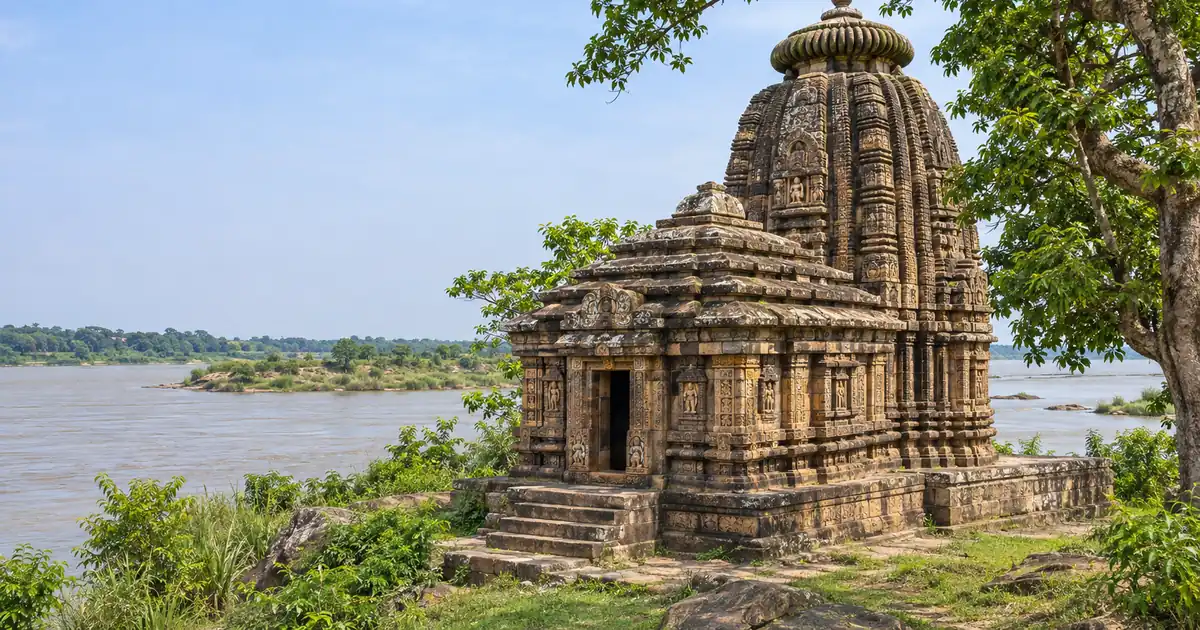
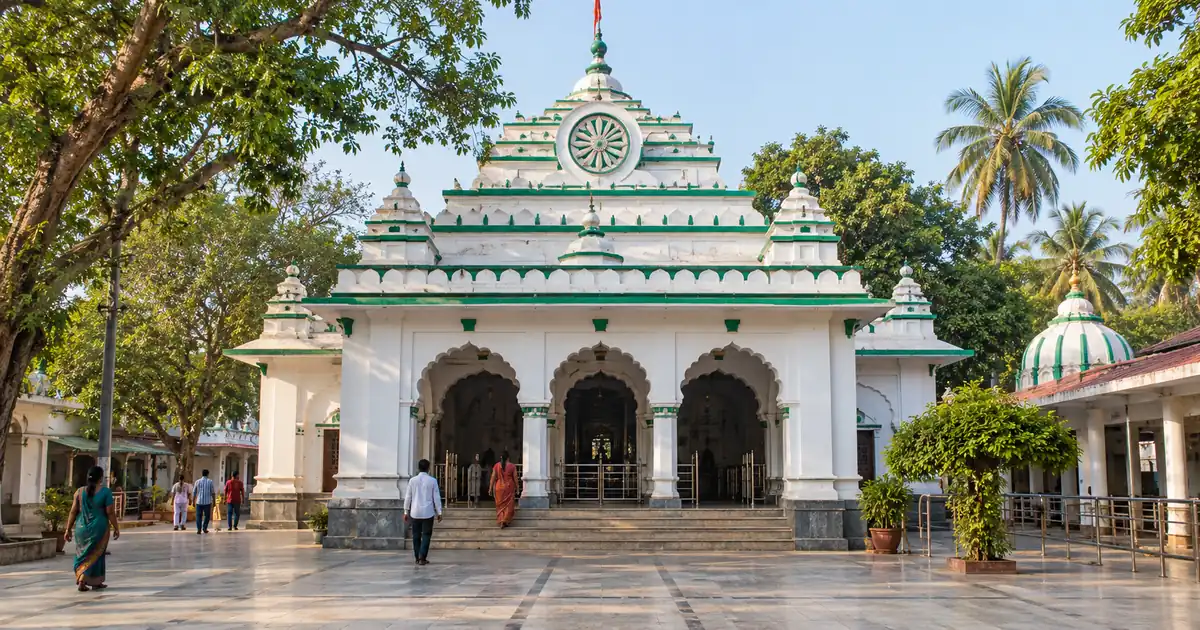
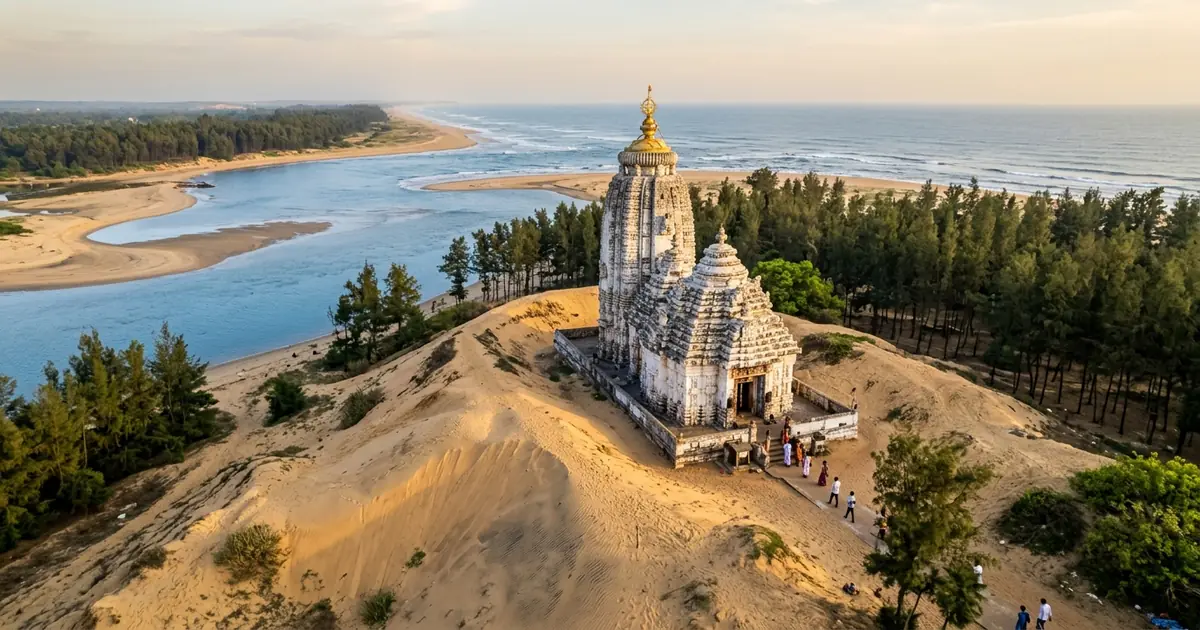
Nemala Achyutananda Pitha Cuttack: Guide & Timings
Explore Nemala Achyutananda Pitha in Cuttack. Discover the sacred Sunya Samadhi of Saint Achyutananda, Malika prophecies, river ghats, and daily timings.
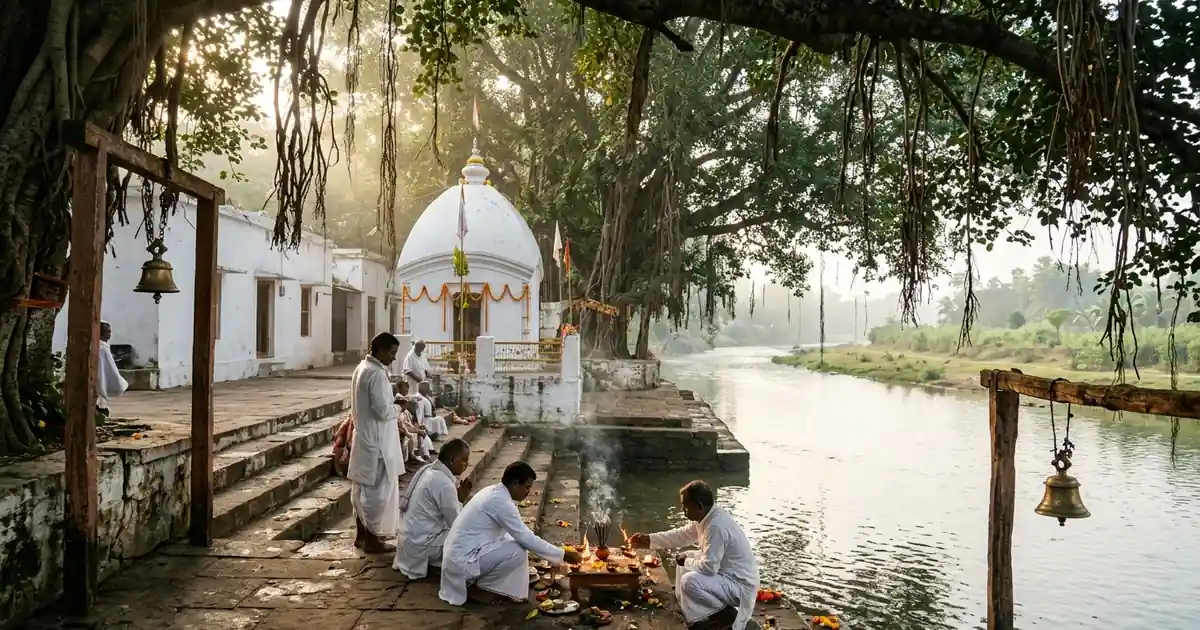
Resting peacefully on a fertile river delta enclosed by the winding waters of the Chitrotpala and Luna rivers, the sacred sanctuary of Nemala holds a legendary place in Odisha’s spiritual history. Situated forty-two kilometers east of Cuttack city in Nischintakoili block, this sixteenth-century monastery marks the eternal meditation seat of Mahapurusha Achyutananda Das.
Devotees and literary scholars regularly travel to nemala achyutananda pitha cuttack to study holy palm-leaf manuscripts and experience deep riverfront quietude.
The hermitage occupies an indispensable role in the cultural heritage of Cuttack district. As one of the prominent leaders of the medieval Panchasakha movement, Achyutananda broke classical Sanskrit barriers by composing profound philosophical treatises and future prophecies in lucid Odia verse. The monastery grounds feature the revered Sunya Samadhi, surrounded by fragrant banyan trees and traditional chanting halls.
Exploring Nemala allows travelers to connect spiritual philosophy with rural delta landscapes. Pilgrims visiting famous temples in Odisha frequently combine this sacred seat with regional shrines like Dhabaleswar Temple and Charchika Temple. The sanctuary is known across coastal districts as the sacred mahapurusha achyutananda pitha nemala.
Key Takeaways
- Panchasakha Spiritual Seat: Serves as the primary sadhana and Sunya Samadhi pitha of 16th-century saint Mahapurusha Achyutananda Das.
- Sacred Malika Origin: World-famous birthplace of prophetic Malika manuscripts detailing cosmic and societal transformations.
- Tranquil Island Setting: Located along a scenic delta formed by the Chitrotpala and Luna distributaries of the Mahanadi.
- Communal Harmony Tradition: Revered across faiths, honoring the historical fellowship between Achyutananda and his Muslim disciples.
- Daily Darshan Hours: Open daily from 5:00 AM to 8:30 PM with completely free public admission for all visitors.
Nemala Achyutananda Pitha at a Glance: Timings & Location Overview
Organizing a day trip to Nemala requires familiarity with village road routes and daytime prayer routines. The monastery complex remains open from before daybreak through the completion of late evening devotional bhajans.
The temple compound borders clear river channels where pilgrims can walk along shaded stone embankments. The calm waters reflect white temple spires and spreading banyan canopies, creating an environment well suited for meditation.
The table below provides verified visitor details and operational schedules per Odisha Tourism:
| Dimension | Details |
|---|---|
| Pitha Name | Mahapurusha Sri Achyutananda Das Gadi (Padmabana Pitha) |
| Central Spiritual Feature | Sunya Samadhi (Void Tomb of Saint Achyutananda) |
| Historical Period | 16th Century CE (c. 1482 to 1580 CE) |
| Geographic Location | Nemala Village, Nischintakoili Block |
| River Basin | Chitrotpala and Luna River Delta (Mahanadi System) |
| Daily Darshan Hours | 5:00 AM to 8:30 PM (All days) |
| Entry Fee | Free public admission for all visitors |
| Distance from Cuttack City | 42 km east via Salipur and Nischintakoili |
| Nearest Railway Station | Cuttack Junction (43 km west) |
| Nearest Airport | Biju Patnaik International Airport, Bhubaneswar (68 km) |
Visiting during early morning hours allows travelers to participate in traditional dawn prayers while birds sing across the river shallows.
Devotees throughout the region rely on regular nemalo gadi temple timings to plan their devotional gatherings.
River Delta Setting: Chitrotpala and Luna Estuary
The unusual geography of Nemala enhances its reputation as an ancient spiritual hermitage. The village occupies an inland island formed by the bifurcation of the Mahanadi river network.
The gentle Chitrotpala River curves along the western boundary, while the Luna River flows past the east. Rich silt deposits nurture extensive coconut plantations, mango orchards, and lush rice fields that insulate the monastery from urban noise.
Who Was Mahapurusha Achyutananda Das? The Panchasakha Legacy
To understand the reverence surrounding Nemala, visitors must appreciate the monumental role played by Mahapurusha Achyutananda Das during Odisha’s golden age of Bhakti literature. Born in nearby Tilakana village along the Chitrotpala around 1482 CE, he dedicated his youth to intense yogic discipline and scriptural study.
Achyutananda became a core member of the Panchasakha, five revered mystic-poets that included Balarama Das, Jagannatha Das, Jasobanta Das, and Ananta Das.
Together, these five spiritual masters initiated a profound social revolution under the patronage of Gajapati King Prataprudra Deva. They translated Vedic wisdom into everyday Odia, empowering common farmers, artisans, and rural communities to access spiritual knowledge directly without caste barriers.
Achyutananda established his permanent hermitage at Nemala, founding monastic schools and authoring dozens of revered texts including the Harivamsa, Kaibarta Gita, and Gurubhakti Gita.
His life work established the sacred achyutananda pitha cuttack as an enduring monument to egalitarian philosophy and devotional literature.
The Achyutananda Malika: Prophetic Verses and Cosmic Foresight
Throughout Odisha and neighboring states, Achyutananda Das is legendary as the author of the Malika. This extensive body of prophetic poetry was inscribed on palm-leaf folios, detailing future events across the unfolding Kali Yuga.
The saint is credited with extraordinary trikaladarsi vision, the spiritual ability to perceive the past, present, and future with equal clarity.
The prophetic verses describe dramatic geopolitical upheavals, unusual weather cycles, shifting river courses, and changing human moral values.
The texts foretell a time of great cleansing leading to the arrival of Kalki Avatar and the dawn of a righteous golden era called Satya Yuga.
Pilgrims visit Nemala to seek spiritual clarity and discuss Malika interpretations with resident monastic scholars.
Devotees consider the sacred nemala achyutananda samadhi a powerhouse of spiritual consciousness where prayers for inner peace find quick response. Traditional offerings of seasonal fruits and sweet pedi bhoga offering are distributed to visitors throughout the day.
The Sunya Samadhi at Padmabana: Architecture & Spiritual Void
The core spiritual sanctum at Nemala is fundamentally different from typical Hindu shrines. Instead of housing carved stone idols, the inner sanctum celebrates the philosophy of Sunya, representing the formless, infinite void of supreme divinity.
Historical records preserved under the Archaeological Survey of India survey note the unique sacred nature of this monastic seat.
According to regional tradition, after living an ascetic life spanning over a century, Achyutananda entered deep subterranean samadhi inside an underground stone chamber known as Padmabana. When royal officials and devotees subsequently opened the chamber, they discovered that his mortal body had dematerialized completely, leaving only clean white river sand.
A graceful whitewashed dome stands above the samadhi platform, draped in sacred tulsi leaves and fresh flower garlands.
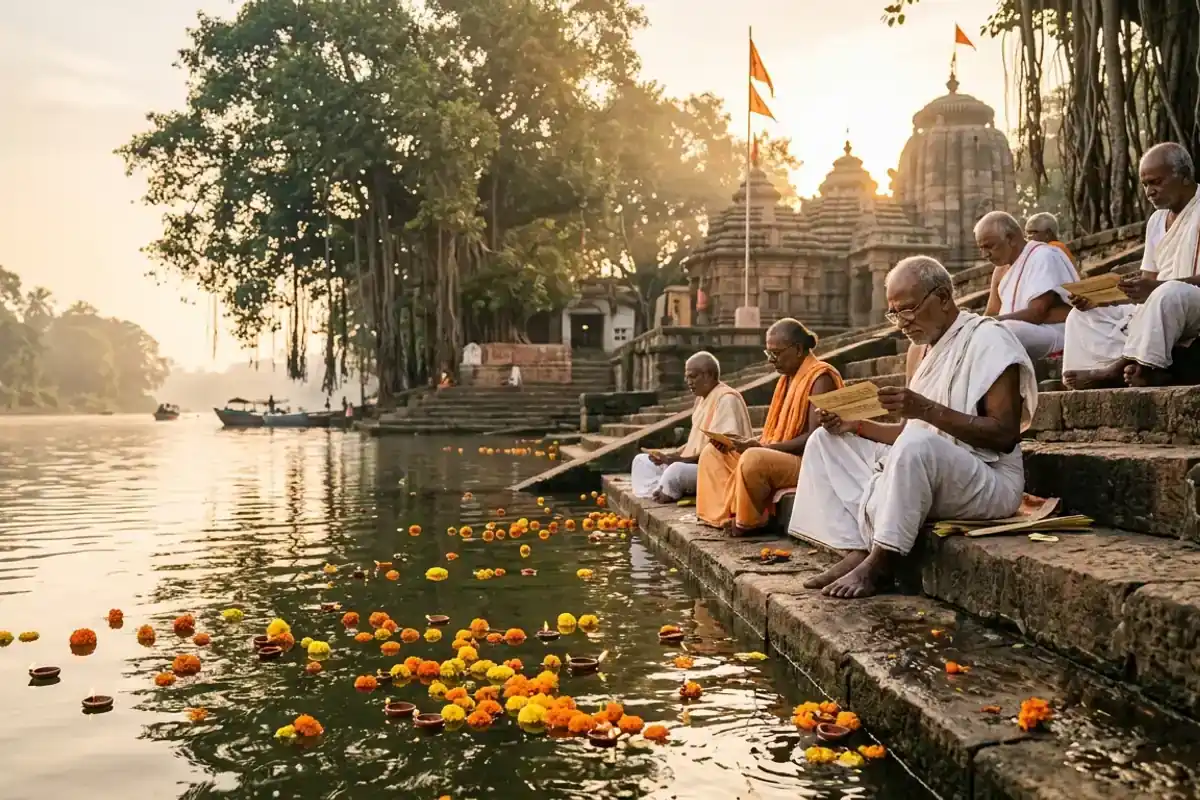
The pitha is also celebrated as an enduring symbol of historical communal harmony. Achyutananda accepted disciples irrespective of religious dogma, countenancing close followers including the revered Muslim disciple Achyuta Khan.
To this day, both Hindu and Muslim devotees visit the shrine to pay respects, carrying forward a five-hundred-year tradition of fraternal coexistence.
Festivals at Nemalo: Jyeshta Purnima, Balimela & Snana Purnima Legend
The quiet riverbank of Nemala transforms during major festive milestones on the Odia calendar.
The primary festival occurs during Jyeshta Purnima in May or June, celebrated as the Sunya Samadhi Divas. This holy day coincides directly with Lord Jagannath’s celebrated Snana Purnima in Puri.
Local folklore narrates that Lord Jagannath granted a divine boon to Achyutananda, promising to make a mystical spiritual journey to Nemala every year on Snana Purnima to visit his beloved devotee.
Over one hundred thousand pilgrims gather on the sandbanks of the Chitrotpala River to take part in the historic Balimela fair.
Pilgrims shape small sand sculptures of Lord Jagannath and Saint Achyutananda along the dry riverbed, spending the night singing bhajans under the full moon.
Another major spiritual observance is Magha Sukla Ekadasi in mid-winter, marked by week-long recitation of the Malika, community feasts, and sacred meetings of monastic leaders belonging to the historic Chari Baithaka order.
How to Reach Nemala Pitha from Cuttack, Bhubaneswar and Kendrapara
Reaching Nemala is simple thanks to well-paved roadways crossing the agricultural heart of Cuttack district. The drive from Cuttack takes travelers through peaceful village corridors bordered by canals and coconut palms.
Travelers departing Cuttack should head east toward Salipur along the state highway, continuing past Nischintakoili until reaching the Nemala approach road.
The table below outlines driving distances, estimated travel durations, and transit modes from major regional points:
| Origin Hub | Highway Distance | Typical Transit Time | Recommended Route Corridor |
|---|---|---|---|
| Cuttack Railway Station (CTC) | 42 km east | 1 hour 15 minutes | State Highway via Salipur and Nischintakoili |
| Bhubaneswar Airport (BPIA) | 68 km northeast | 1 hour 50 minutes | NH-16 to Cuttack, then state road eastward |
| Salipur Town | 18 km east | 25 minutes | Direct rural highway road through green fields |
| Kendrapara Town | 35 km south | 50 minutes | Rural highway corridor via Marsaghai road |
| Barabati Fort Cuttack | 44 km east | 1 hour 20 minutes | Via Mahanadi ring road and Salipur state route |
Regular state and private passenger buses operate between Badambadi bus stand in Cuttack and Nischintakoili. From Nischintakoili market, local auto-rickshaws and shared jeeps provide quick five-kilometer connections directly to the monastery gates.
Travelers can easily pair a morning visit to Nemala with historic stops in Cuttack such as Barabati Fort or explore Shakta pilgrimage centers like Sarala Temple in neighboring Jagatsinghpur.
When visiting the shrine, devotees should maintain a calm demeanor and follow customary temple dress code guidelines. Photography is welcome across the outer garden grounds and river embankments, but visitors should avoid photographing inside the samadhi room during prayer services.
Frequently Asked Questions (FAQs)
What are the daily darshan timings at Nemala Achyutananda Pitha?
The pitha is open for public darshan daily from 5:00 AM to 8:30 PM without any afternoon closures. Devotees are encouraged to visit during early morning aarti or sunset bhajan sessions for a deeply peaceful spiritual experience.
Who was Mahapurusha Achyutananda Das and what is the Malika?
Achyutananda Das was a celebrated sixteenth-century mystic poet and one of the revered Panchasakha who popularized spiritual wisdom in simple Odia verse. His famous work, the Malika, contains prophetic verses inscribed on palm leaves that forecast future global events and social transformations.
What is the significance of Sunya Samadhi at Nemala?
The Sunya Samadhi marks the sacred meditation chamber where Saint Achyutananda entered a state of formless spiritual absorption after a century of ascetic life. Tradition recounts that his physical form dissolved completely into white sand, symbolizing the formless void of supreme divinity.
How far is Nemala Pitha from Cuttack city?
The shrine is located approximately forty-two kilometers east of Cuttack city in the Nischintakoili administrative block. The journey takes around one hour and fifteen minutes by private car, taxi, or local bus via Salipur.
Which festivals draw the largest gatherings at Nemalo Gadi?
The grandest celebration is Jyeshta Purnima in May or June, marked by the famous Balimela fair on the Chitrotpala riverbed when over one hundred thousand pilgrims gather. Another major event is Magha Sukla Ekadasi, celebrated with week-long spiritual discourses and choral bhajans.
Why do both Hindus and Muslims revere Nemala Pitha?
Achyutananda taught universal spiritual brotherhood and initiated disciples across religious backgrounds, including his celebrated Muslim follower Achyuta Khan. Both communities continue to visit the monastery in peaceful fellowship, preserving a five-hundred-year legacy of communal harmony.