Bhima Bhoi Samadhi Pitha Subarnapur: Khaliapali Guide
Explore Bhima Bhoi Samadhi Pitha Subarnapur at Khaliapali. Discover the Sunya Mandir, Mahima Dharma history, Akhanda Dhuni, timings, and route tips.
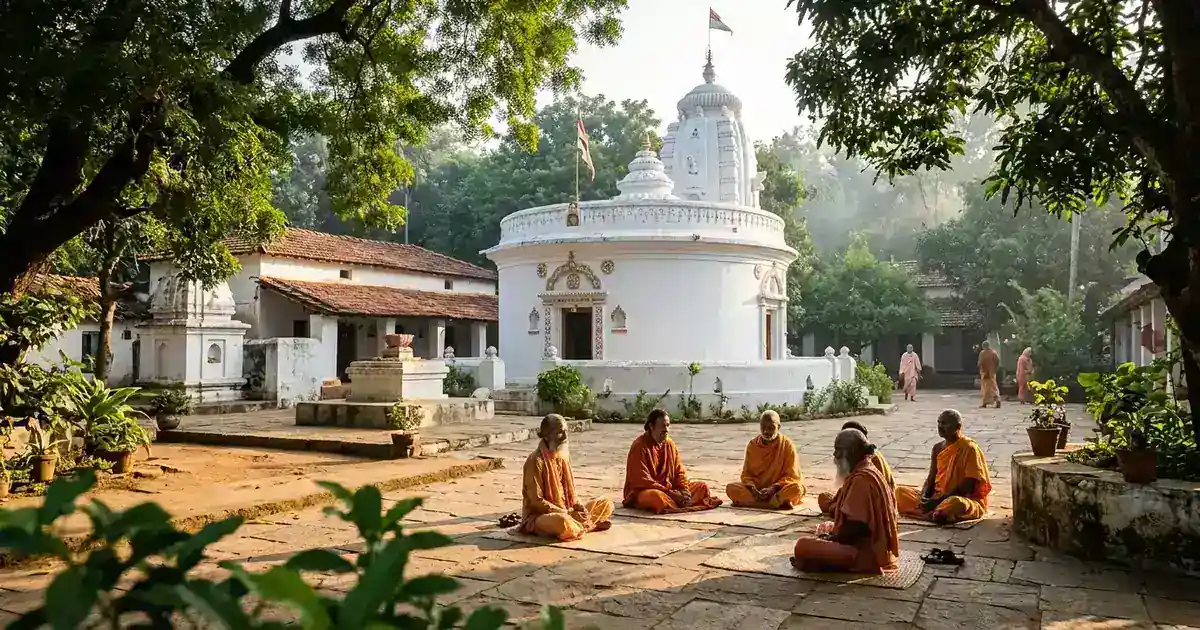
Bhima Bhoi Samadhi Pitha Subarnapur stands as a sacred spiritual retreat dedicated to one of India’s most profound mystical poets and social reformers. Located in the quiet agrarian village of Khaliapali within Subarnapur district travel guide, this revered hermitage preserves the memory of Saint-Poet Bhima Bhoi. Devotees and scholars also know this sanctuary as the Bhima Bhoi ashram Khaliapali or Khaliapali samadhi pitha Sonepur.
Established in 1877, the ashram served as the epicenter from which Bhima Bhoi spread the message of Mahima Dharma across western Odisha. Rather than promoting ritualistic orthodoxy, his verses championed radical social equality and devotion to the formless supreme reality. The memorial remains a profoundly peaceful destination among the famous temples in Odisha.
Key Takeaways
- Monastic Memorial: Sacred hermitage and final resting place of Saint-Poet Bhima Bhoi, who lived and composed literature here from 1877 until 1895.
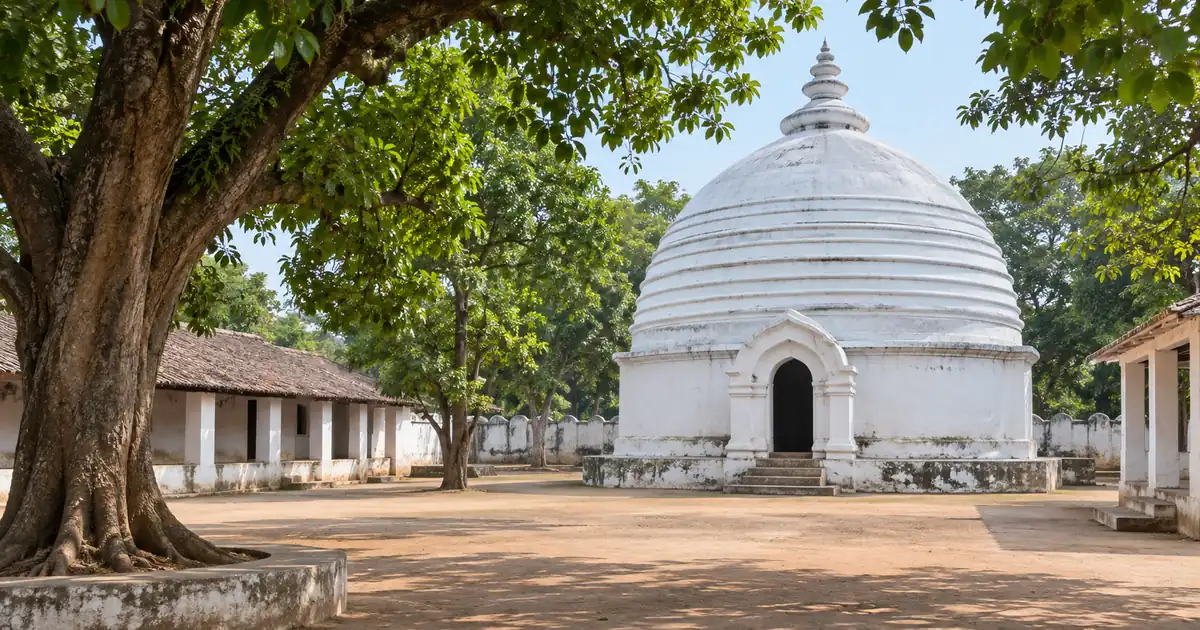
- Sunya Mandir Architecture: Features the distinctive white circular Temple of the Void, embodying devotion to the formless divine without physical idols.
- Eternal Akhanda Dhuni: Maintains a perpetual sacred fire altar nourished by pure cow ghee, continuing centuries-old monastic rites.
- Annual Magha Mela: Attracts thousands of saffron-robed Mahima ascetics, philosophers, and literature researchers during late winter celebrations.
- Accessible Location: Situated thirty kilometers south of Sonepur town, reachable by smooth highway networks connecting toward Balangir.
Bhima Bhoi Samadhi Pitha Subarnapur at a Glance
Travelers journeying through the river plains of Subarnapur discover at Khaliapali an atmosphere of rare meditative calm. The ashram compound is surrounded by ancient neem trees, mango orchards, and neat whitewashed boundary walls maintained by the local monastic trust.
Unlike grand stone temples with soaring shikharas, the buildings here reflect monastic austerity. Modest prayer halls, library rooms preserving palm-leaf manuscripts, and open brick courtyards invite visitors to sit and reflect on humanitarian philosophy.
| Feature | Verified Information | Pilgrim Advice |
|---|---|---|
| Presiding Saint | Saint-Poet Bhima Bhoi (1850–1895) | 19th-century apostle of Mahima Dharma |
| Site Location | Khaliapali Village, Subarnapur District | 30 km south of Sonepur town |
| Foundational Year | 1877 CE | Established as Bhima Bhoi’s main hermitage |
| Key Monuments | Samadhi Mandir, Sunya Mandir, Akhanda Dhuni | Free from physical idols or animal sacrifices |
| Ashram Timings | 6:00 AM to 8:30 PM | Open daily throughout the entire year |
| Admission Fee | Free entry for all visitors | No commercial tickets or camera charges |
| Nearest Railway Station | Balangir Railway Station (BLGR) | 50 km west via state highway corridor |
| Nearest Airport | Veer Surendra Sai Airport Jharsuguda | 145 km north via Biju Expressway |
The village remains quiet through most of the year, providing scholars and travelers with an undisturbed setting for literary research and quiet contemplation.
Life and Legacy of Saint-Poet Bhima Bhoi
Bhima Bhoi was born in the mid-19th century into a Kondh tribal family in western Odisha. Despite losing his eyesight in early youth and enduring severe social hardship, he possessed an extraordinary spiritual intellect and an innate gift for poetic composition.
After meeting Mahima Gosain, the founder of the faith, Bhima Bhoi embraced the monastic path with total conviction. In 1877, he moved with his disciples to Khaliapali, where the local village community gifted him land to build an ashram.
Over the next eighteen years, Bhima Bhoi dictated thousands of philosophical verses that transformed Odia literature. His landmark masterwork, Stuti Chintamani, contains over two thousand couplets exploring universal suffering, divine grace, and spiritual liberation.
His most celebrated verse is inscribed on the walls of the Parliament of India in New Delhi: “Witnessing the endless suffering of humanity, who can remain unmoved? Let my soul descend to hell if it brings salvation to the universe.”
Mahima Dharma and the Concept of Alekha Parabrahma
The spiritual foundation of Khaliapali rests upon the principles of Mahima Dharma. Founded in the 19th century as an indigenous monotheistic movement, the faith rejects the caste system, elaborate priestly rituals, and temple idol worship.
The philosophy teaches that the ultimate reality is Alekha (unwritten), Nirakara (formless), and Anadi (eternal). Devotees focus their spiritual awareness on the formless void, conceptualized as Sunya Brahma.
Ascetics in the tradition wear unstitched saffron bark cloth or pure cotton robes, practice strict vegetarianism, and eat only before sunset. Their morning and evening prayers involve prostrating toward the rising and setting sun in open courtyards without touching any idols.
The teachings spread rapidly among tribal communities and marginalized farmers across western Odisha, offering dignity, moral discipline, and direct access to spiritual devotion without intermediate priests.
Sacred Shrines of the Khaliapali Ashram: Sunya Mandir and Akhanda Dhuni
The layout of Bhima Bhoi Samadhi Pitha reflects the central ideals of Mahima philosophy. The complex comprises three primary spiritual focal points that pilgrims visit in sequence.
The first structure is the Samadhi Mandir, a peaceful white memorial building constructed over the mortal remains of Bhima Bhoi following his passing in 1895. The chamber remains completely empty of images, allowing visitors to sit in silent meditation.
Adjacent stands the Sunya Mandir, or Temple of the Void. Built with a circular ground plan, its interior features no altar, no statues, and no decorative iconography. Devotees face the open central expanse to contemplate the formless presence of the supreme divine.
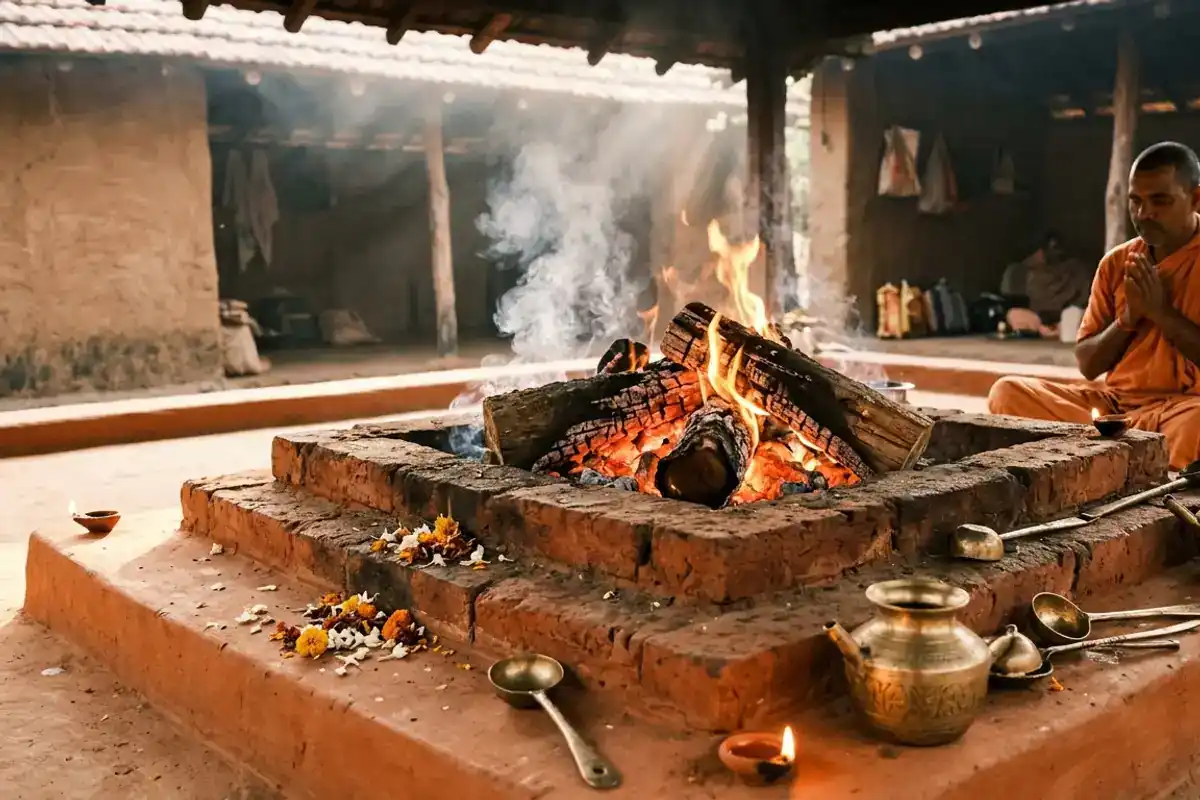
The third sacred monument is the Akhanda Dhuni, an enclosed brick hearth where an eternal fire burns perpetually day and night. Monks continuously replenish the fire with seasoned hardwood and ritual ladles of pure cow ghee, symbolizing the eternal light of divine wisdom dispelling spiritual ignorance.
Adjacent shrines within the compound honor Maa Annapurna and Sri Hari, revered women disciples and companions who helped manage the monastic household during Bhima Bhoi’s lifetime.
Magha Mela Celebrations and Monastic Traditions
While Khaliapali offers quiet solitude for most of the year, the ashram transforms during the annual Magha Mela festival, held on the full moon of the Hindu month of Magha (January or February).
Thousands of Mahima sadhus, known as Tyakti Sanyasis, travel from distant corners of Odisha, Chhattisgarh, Assam, and Bengal to attend the gathering. Pilgrims walk barefoot along country lanes singing Bhima Bhoi’s hymns accompanied by traditional castanets (khanjani).
| Festival Event | Observance Time | Spiritual Significance |
|---|---|---|
| Special Akhanda Dhuni Ahuti | Dawn on Magha Purnima | Massive offerings of pure cow ghee to the eternal flame |
| Recitation of Stuti Chintamani | Throughout day and night | Continuous group singing of Bhima Bhoi’s devotional poetry |
| Sarvadharma Mahasabha | Afternoon assembly | Discourse on humanism, caste equality, and ethical living |
| Community Prasad Distribution | Before sunset | Simple cooked rice and dal served equally to all attendees |
The atmosphere during the mela is deeply moving, characterized by brotherhood, community kitchen dining, and open philosophical discussions under village banyan trees.
Ashram Timings, Visitor Conduct, and Free Entry Details
Bhima Bhoi Samadhi Pitha welcomes pilgrims and travelers throughout the year. The site operates with complete hospitality and zero commercialization.
| Time Slot | Daily Program | Visitor Recommendation |
|---|---|---|
| 6:00 AM to 8:00 AM | Morning prayers and dhuni seva | Best time for peaceful morning meditation |
| 8:00 AM to 12:00 PM | Open library and samadhi darshan | Scholars can inspect publications and archival exhibits |
| 12:00 PM to 2:00 PM | Midday rest period | Ashram grounds remain open; quiet hours observed |
| 2:00 PM to 5:30 PM | Afternoon reading and courtyard walks | Soft natural lighting for outdoor photography |
| 5:30 PM to 6:30 PM | Sunset prayer (Balyaleela) | Devotees assemble to face the setting sun |
| 6:30 PM to 8:30 PM | Evening bhajan singing | Soulful recitation of Bhima Bhoi’s verses |
Entry to the ashram, the Sunya Mandir, and the library is entirely free. The trust does not solicit donations or charge any fees for cameras or vehicle parking.
Visitors should maintain calm decorum, silence mobile phones, and wear modest clothing that covers shoulders and knees. Smoking, alcohol consumption, and non-vegetarian food are strictly prohibited across the village ashram perimeter.
How to Reach Khaliapali from Sonepur, Balangir, and Sambalpur
Khaliapali is located in southern Subarnapur district, conveniently accessible by road from major regional transport centers.
| Origin Point | Distance | Driving Time | Primary Highway Corridor |
|---|---|---|---|
| Sonepur Town Center | 30 km | 45 minutes | Direct paved district road southward |
| Balangir Town & Station | 50 km | 1 hour 15 minutes | State Highway via Tarbha bypass |
| Boudh Town | 62 km | 1.5 hours | National Highway 57 via Sonepur bridge |
| Sambalpur Junction | 110 km | 2.5 hours | Biju Expressway / SH-15 corridor |
| Jharsuguda Airport | 145 km | 3 hours | Biju Expressway southbound |
Transit from Sonepur
Travelers staying in Sonepur can easily hire a private taxi or auto-rickshaw from the main town bazaar. The route winds through quiet agrarian landscapes, crossing small irrigation canals before reaching Khaliapali village.
Transit from Balangir
Balangir Railway Station (BLGR) offers convenient rail access for travelers arriving from Raipur, Sambalpur, or coastal Odisha. Regular express buses operate from Balangir toward Tarbha and Sonepur, from where local shared autos link directly to Khaliapali. Official travel resources are hosted on the Odisha Tourism Portal.
Nearby Cultural Attractions in the Subarnapur Region
A visit to Bhima Bhoi Samadhi Pitha can easily be incorporated into an enriching travel circuit across western Odisha’s cultural heartland.
Sacred Confluence of Sonepur
Located thirty kilometers north, Sonepur town is famous for the meeting point of the Mahanadi and Tel rivers. The town is home to historic royal shrines, including the Subarnameru Shiva Temple, Rameswar Temple, and the riverbank temple of Maa Sureswari.
World-Famous Bomkai Silk Weaving
Subarnapur is celebrated across India for its handloom textile legacy. Visitors can tour master weaver hamlets in Sagarpali and Manamunda to witness artisans crafting intricate Bomkai and Bandha silk sarees on traditional wooden pit looms.
Joranda Mahima Gadi Connection
Travelers fascinated by Mahima philosophy can extend their pilgrimage to the supreme monastery of the faith at the Joranda Mahima Temple in Dhenkanal, where Mahima Gosain entered samadhi.
Western Odisha Heritage Circuits
From Khaliapali, travelers can journey west to explore Chauhan dynastic monuments in Balangir district travel guide, head east into Boudh district travel guide, or journey north toward Bargarh district travel guide. More state travel options are documented on the Odisha State Portal.
Practical Travel Tips for Visiting Khaliapali
- Visit During Magha Mela: If your travel dates coincide with January or February, attending the Magha Purnima gathering offers an unforgettable cultural experience.
- Observe Silent Meditation: Spend thirty quiet minutes inside the Sunya Mandir to appreciate the peace of an altar free from images or distractions.
- Explore the Literature: The on-site trust maintains a modest publication stall where authentic Odia and English translations of Bhima Bhoi’s poetry are available.
- Footwear Protocol: Remove your shoes at the outer entry arch before stepping onto the stone pavings of the memorial courtyard.
- Combine with Sonepur Town: Dedicate your morning to Sonepur’s riverbank temples and silk handloom centers, followed by an afternoon excursion to Khaliapali.
- Support Local Artisans: When traveling through surrounding villages, consider purchasing handwoven textiles directly from rural weaver families.
- Vegetarian Dining Options: Local dhabas in nearby Tarbha and Sonepur town offer traditional Odia pakhala, dalma, and chhena sweets throughout the day.
Frequently Asked Questions
Where is Bhima Bhoi Samadhi Pitha located?
Bhima Bhoi Samadhi Pitha is located in Khaliapali village within Subarnapur (Sonepur) district, Odisha. It sits approximately thirty kilometers south of Sonepur town and fifty kilometers east of Balangir.
Who was Saint-Poet Bhima Bhoi?
Bhima Bhoi was a celebrated 19th-century tribal mystic poet, philosopher, and social reformer who preached the casteless philosophy of Mahima Dharma. He composed enduring literary classics such as Stuti Chintamani and fought against caste discrimination.
What is the Sunya Mandir at Khaliapali?
The Sunya Mandir, or Temple of the Void, is a unique white circular shrine built without any idols, altars, or physical statues. It serves as an open meditative space symbolizing devotion to the formless cosmic supreme reality.
What are the opening timings of the Khaliapali ashram?
The ashram and memorial shrines are open daily to all visitors from 6:00 AM to 8:30 PM. Admission is completely free, and no tickets or parking fees are charged.
When is the best time to visit Bhima Bhoi Samadhi Pitha?
The optimal period to visit is between October and March when the weather is pleasant. Visiting during the annual Magha Mela in January or February provides a unique opportunity to witness traditional Mahima monastic gatherings.
How can travelers reach Khaliapali from Balangir?
Travelers can take a train to Balangir Railway Station, located fifty kilometers west, and complete the journey in approximately seventy-five minutes via private taxi or regional express bus through Tarbha.