Barabati Fort Cuttack: History, Architecture & Visitor Guide
Explore historic Barabati Fort in Cuttack. Discover the medieval Ganga dynasty citadel, 9-storey palace ruins, stone moat, entry timings, and directions.
Exploring the historic Barabati Fort Cuttack transports travelers into the imperial military heart of medieval Odisha. Erected in the 13th century at the strategic confluence of the Mahanadi and Kathajodi rivers, this fortress defended the capital for centuries.
Today, it stands as an esteemed protected monument under the Archaeological Survey of India. Heritage travelers and architecture enthusiasts visit to walk along its medieval stone ramparts and wide defensive moat.
Whether you travel to photograph the imposing 14th-century laterite arched gateway, explore ancient palace mound excavations, or stroll through quiet riverside gardens near Barabati Stadium, this comprehensive guide offers verified historical facts, visiting hours, and travel directions verified through the Archaeological Survey of India and Odisha Tourism Official Portal.
Key Takeaways
- Imperial Citadel: Founded circa 1229 CE by King Anangabhima Deva III to establish the medieval capital of the Eastern Ganga dynasty.
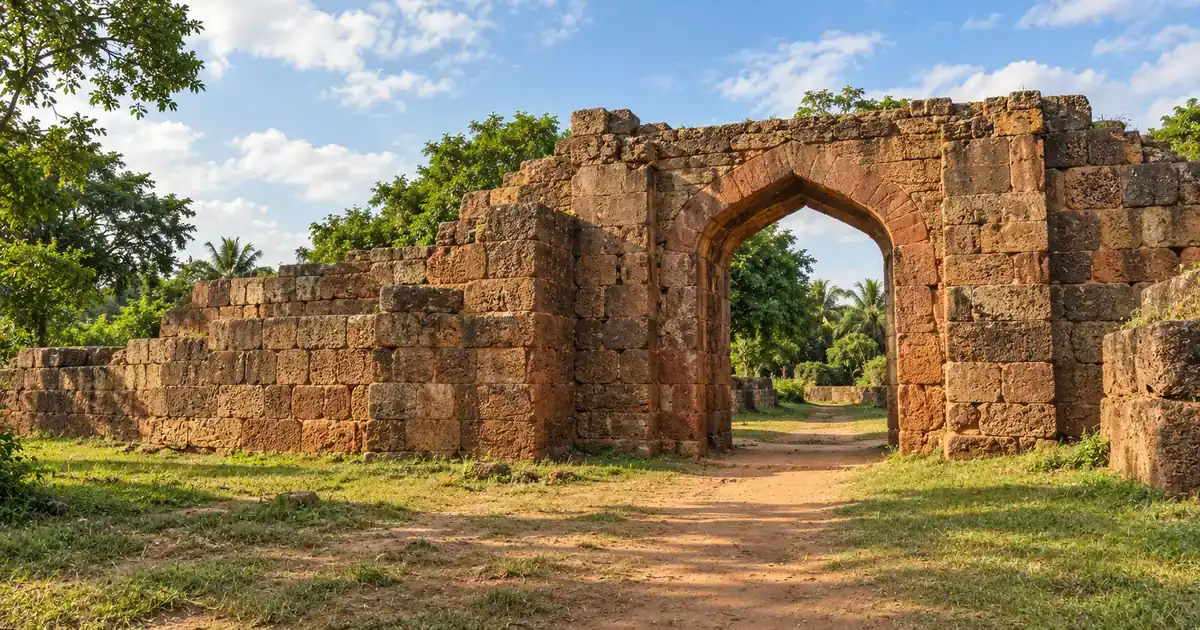
- Monumental Gateway: Features a magnificent laterite arched entrance gate dating to the 14th century, flanked by guardian towers and stone ramparts.
- The Nine-Storey Palace: Chronicled in Persian texts as a luxurious multi-level palace (naba-tala prasada), now preserved as an excavated central mound.
- Defensive Moat: Surrounded by the historic Gadakhai, a stone-faced water trench measuring up to 20 meters wide that once housed defensive crocodiles.
- Visitor Access: Open daily from 6:00 AM to 6:00 PM with completely free public admission for tourists and morning walkers.
Overview and Strategic Importance of Barabati Fort
Barabati Fort occupies a foundational position in the urban identity of Cuttack. While modern Cuttack is celebrated for its renowned silver filigree workshops and riverfront embankments, the city owes its historical existence to this formidable river fortress. By constructing a secure military stronghold between two powerful waterways, medieval Odia rulers created a near-impregnable fortress that resisted numerous invasions.
The citadel acted as the primary administrative seat for successive imperial dynasties. Over five hundred years, rulers commanded armies, hosted foreign emissaries, and conducted royal rituals from within its stone-lined ramparts.
A Medieval Citadel between Twin Rivers
The geographic positioning of Barabati Fort was an engineering masterstroke. By placing the fortress at the apex where the Mahanadi River splits into the Kathajodi, medieval architects utilized the wide rivers as natural defensive moats. Invading cavalries struggled to cross the wide riverbeds during rainy seasons, granting defenders natural protection.
Travelers exploring the wider district can consult our guide to Cuttack district to explore the waterways, trade centers, and administrative boundaries that grew outward from this military nucleus.
The Symbolism of Cuttack as the Millennium City
In Odia history, the establishment of Barabati Fort solidified Cuttack’s status as the political center of the realm. The city earned the title of the Millennium City because its urban roots trace back over a thousand years. The fort symbolized royal prestige, asserting sovereign control over both coastal trade networks and interior river valleys.
During autumn, the surrounding grounds near the riverfront host the famous Bali Jatra festival, commemorating ancient maritime trade voyages departing from these riverbanks to Southeast Asia.
Preserved Remnants and Modern Heritage Status
Today, the Archaeological Survey of India oversees the preservation of Barabati Fort. Although colonial demolitions damaged the upper residential towers, key monumental structures remain intact. Visitors can examine the monumental laterite gateway, trace the outer earthen walls, and climb the excavated palace mound.
The monument grounds feature landscaped lawns, mature banyan trees, and clean stone pathways. Adjacent to the fort lies the historic Barabati Stadium, uniting medieval architecture with modern sporting legacy.
| Parameter | Historical Specification | Traveler Relevance |
|---|---|---|
| Founding Ruler | King Anangabhima Deva III | Eastern Ganga Dynasty monarch |
| Year of Inception | Circa 1229 CE | Over 800 years of documented history |
| Protected Area | Over 102 Acres | Expansive urban archaeological park |
| Defensive Feature | Stone-paved moat (Gadakhai) | 20-meter wide perimeter trench |
| Monument Status | Centrally Protected ASI Monument | Maintained under Bhubaneswar Circle |
| Daily Timings | 06:00 AM to 06:00 PM Daily | Free admission throughout the year |
History and Royal Foundations under the Ganga Dynasty
The history of Barabati Fort begins with the eastward expansion of the imperial Eastern Ganga Dynasty. King Anangabhima Deva III, renowned for patronizing religious monuments across Odisha, decided to relocate his administrative capital from Jajpur (Chaudwar) to a more central river confluence.
Epigraphic copper plates and medieval temple chronicles confirm that royal construction commenced around 1229 CE. The king laid the foundations of a fortified city named Abhinava Varanasi Kataka, establishing a prosperous capital that endured through multiple royal dynasties.
Anangabhima Deva III and the Legend of the Hawk and Heron
Local tradition preserves a colorful legend regarding the fort’s selection. According to folklore, King Anangabhima Deva III crossed the Mahanadi while hunting and witnessed an extraordinary natural spectacle: a small heron fiercely counterattacking and defeating an aggressive falcon.
Interpreting this unusual display of avian bravery as evidence of heroic earth energy (vira-bhumi), the king chose that exact site to erect his royal fortress. He believed that troops stationed on this sacred ground would fight with unconquerable courage against all external adversaries.
The Gajapati and Mughal Military Eras
Following the Ganga dynasty, the illustrious Suryavamshi Gajapati kings utilized Barabati Fort as their imperial headquarters. Famous monarchs like Kapilendra Deva and Purushottama Deva mobilized formidable armies of war elephants, infantry, and cavalry from the gates of Barabati to expand Odia sovereignty from the Ganges to the Kaveri.
In the late 16th century, the Sultanate of Bengal and later the Mughal Empire took possession of the fortress. Mughal subahdars added secondary residential structures, including the nearby Shahi Mosque, blending Islamic architectural styles with native Kalinga stone masonry.
[!NOTE] Unlike early urban centers like Sisupalgarh Fort or medieval strongholds like Chudangagada Fort and Raibania Fort, Barabati Fort operated as an active royal palace-fortress throughout medieval and early modern times.
The Maratha Occupation and British Demolition
During the mid-18th century, the Marathas captured Cuttack and made Barabati Fort their provincial military center. They reinforced the stone ramparts and deepened the defensive moat to withstand artillery bombardments.
In October 1803, British troops commanded by Colonel Harcourt assaulted the fort, breaching the laterite gateway after fierce fighting. Under British rule, the fort fell into unfortunate decline. Colonial administrators dismantled much of the nine-storey palace masonry, reusing hand-cut stones to build river embankments, bridges, and cantonment barracks.
Architectural Anatomy: Arched Gateway, Nine-Storey Palace, and Moat
The architecture of Barabati Fort represents an exceptional synthesis of defensive fortification and palatial grandeur. Medieval builders combined thick earthen ramparts with heavy laterite masonry to withstand siege machinery and monsoonal soil erosion.
The fortress was laid out on a roughly rectangular ground plan, fortified by high stone-revetted walls and reinforced circular watch bastions at every corner.
The Monumental Laterite Arched Gateway
The most iconic surviving structure of the fort is its monumental eastern arched gateway, known traditionally as the Singhdwara. Constructed from dressed laterite blocks during the 14th century, the gateway features a soaring pointed archway reflecting refined medieval stonework.
Flanking the central arch are two projecting octagonal guard bastions that once housed royal guards and defensive archers. The gateway retains decorative stone brackets, floral medallions, and carved sockets where massive iron-studded wooden gates hung.
The Nine-Storey Palace in Historical Chronicles
Historical documents from the Mughal court provide tantalizing descriptions of the fort’s vanished splendor. In the Ain-i-Akbari, court historian Abul Fazl noted that Barabati contained an opulent nine-storey royal palace (naba-tala prasada).
According to Abul Fazl’s account, each floor served a designated courtly purpose:
- Ground Floor: Royal elephant and horse stables.
- Second Floor: Artillery storehouses, weapons armory, and soldier quarters.
- Third Floor: Servants and sentry barracks.
- Fourth Floor: Workshops for court artisans, jewelers, and metal craftsmen.
- Fifth Floor: Royal state treasury and account halls.
- Sixth to Eighth Floors: Private royal chambers and residential apartments.
- Ninth Floor: The Emperor’s open-air observation terrace offering commanding river views.
The Defensive Stone-Faced Moat (Gadakhai)
Encircling the entire 102-acre fortress was a formidable stone-faced moat known locally as the Gadakhai. Measuring between 15 and 20 meters in width and up to 5 meters in depth, the trench was paved with interlocking laterite blocks to prevent erosion.
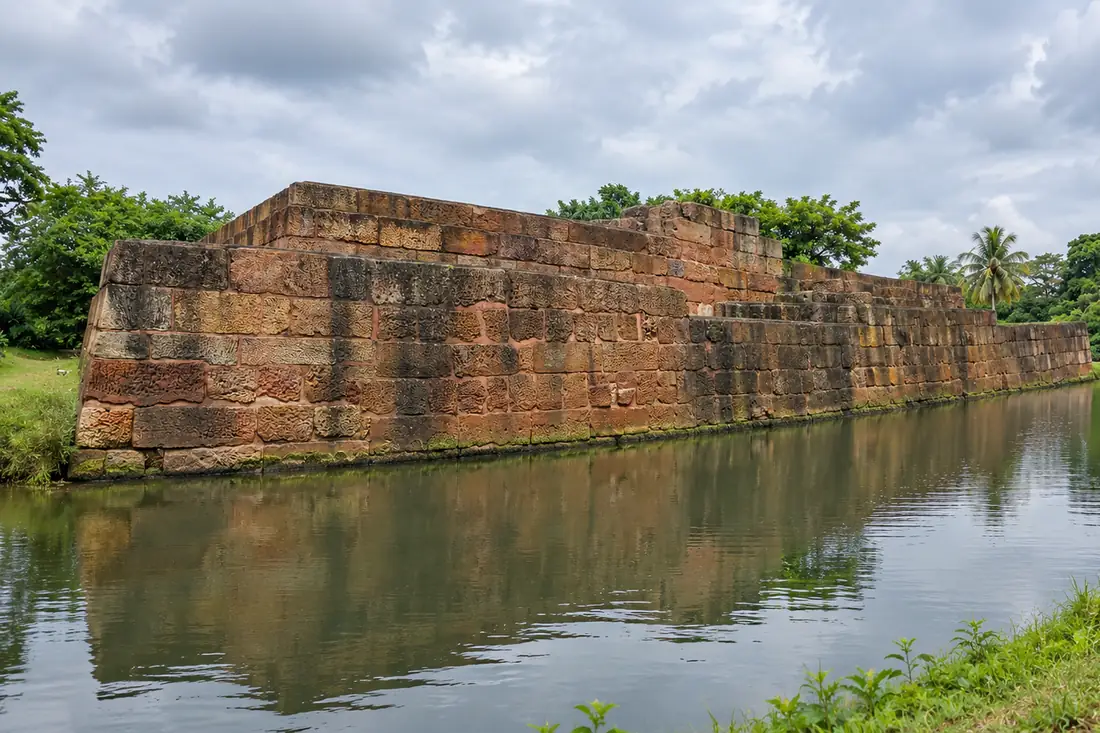
The moat drew freshwater directly from the Mahanadi River through regulated water sluices. Historical accounts relate that royal authorities maintained hungry mugger crocodiles within the trench, deterring enemy sappers from scaling the walls. Today, preserved sections of the moat survive as tranquil lily ponds bordering the eastern gateway.
Archaeological Excavations and Discoveries by ASI
In 1989, the Archaeological Survey of India launched extensive scientific excavations across the central earthen mound of Barabati Fort. Archaeologists aimed to uncover the architectural foundations of the legendary palace described in Mughal chronicles.
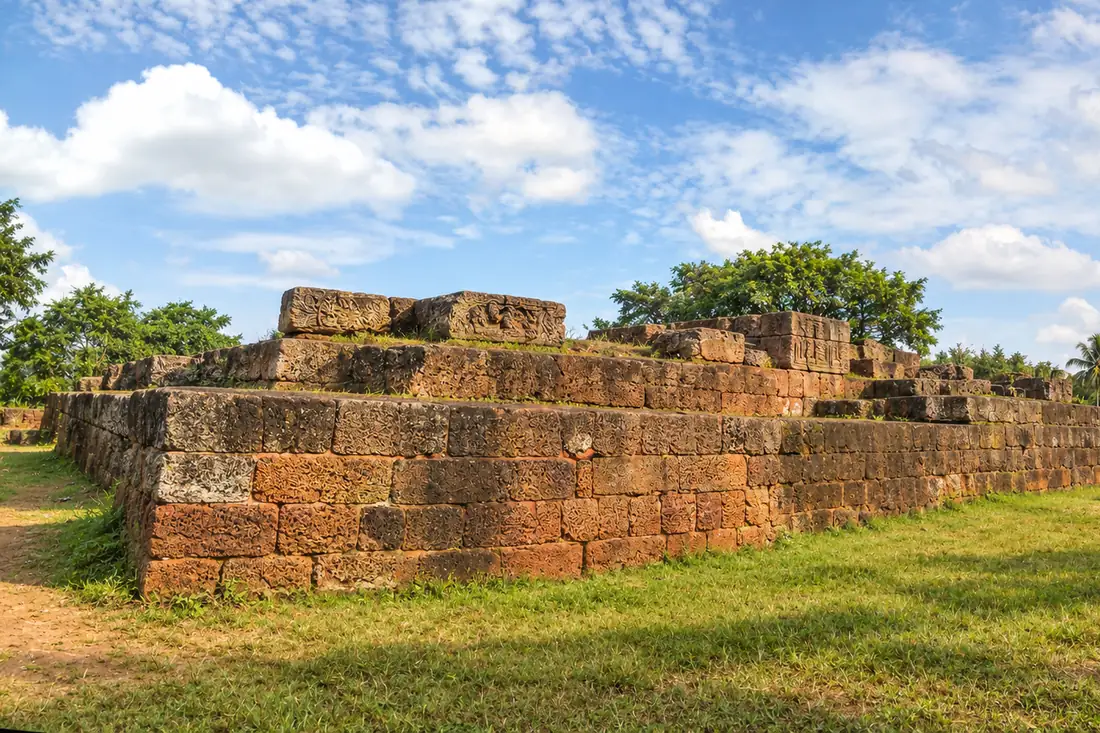
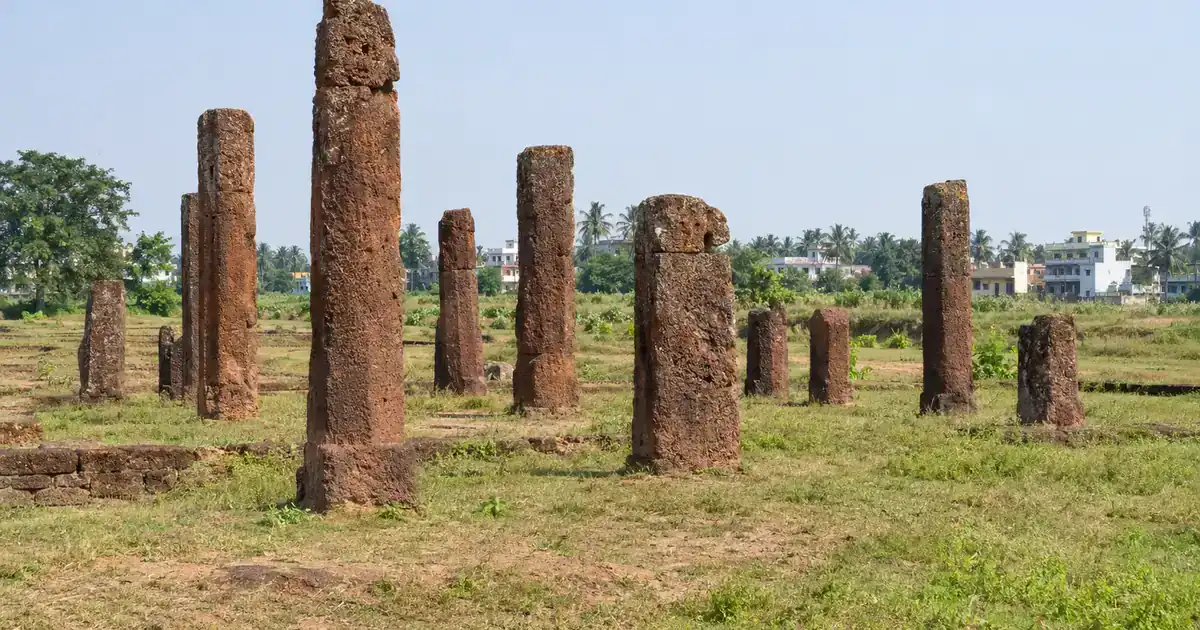
The multi-year excavation proved remarkably fruitful, exposing the stone basements of grand secular structures that had remained buried beneath centuries of debris.
Unearthing the Central 32-Pillared Hall
The crowning achievement of the ASI excavations was unearthing a monumental 32-pillared hall located at the center of the mound. The square pillared pavilion was constructed over a raised laterite plinth measuring over 30 meters on each side.
Archaeologists identified the square stone sockets that supported massive carved pillars, believed to have carried wooden roof beams. The design of the hall indicates it served as a royal audience chamber (darbar-i-khas) where kings held council with generals and ministers.
Chlorite Sculptural Relics and Decorative Panels
During the clearing of the palace rubble, excavators recovered a rich collection of medieval stone carvings. Highlights included exquisitely carved chlorite stone friezes depicting caparisoned war elephants, marching infantry, royal court dancers, and celestial maidens.
Numerous architectural elements displayed motifs of Kalinga temple art, including miniature rekha shikhara relief panels and decorative kirtimukha faces. These discoveries confirmed that royal palace architecture in Odisha shared identical artistic idioms with celebrated religious monuments.
[!TIP] Visitors interested in admiring the recovered chlorite sculptures from Barabati Fort can view curated collections displayed inside the State Museum in Bhubaneswar and the nearby Netaji Birthplace Museum in Cuttack.
Ongoing Conservation and Heritage Park Planning
The ASI regularly carries out stone restoration and chemical preservation along the laterite gateway and excavated plinths. Mortar joints are repointed using traditional lime-surkhi blends to prevent water seepage during the monsoon.
Local municipal authorities and the tourism department have introduced ornamental gardens, night illumination lighting, and pedestrian pathways around the moat perimeter. These initiatives preserve the historic site as an accessible public park for residents and travelers.
Visiting Hours, Admission Rules, and Touring Experience
Visiting Barabati Fort is an easy and rewarding cultural excursion in Cuttack. The spacious green grounds offer a refreshing escape from crowded bazaar lanes, making it popular with morning joggers, photography enthusiasts, and history lovers.
The site is well-maintained with clear informational display boards installed by the ASI explaining the architectural layout and excavation history.
Opening Timings and Free Public Entry
Barabati Fort remains open to visitors every day of the week throughout the year:
- Opening Time: 6:00 AM (Gates open for morning visitors)
- Closing Time: 6:00 PM (Gates close at sunset)
- Weekly Holidays: None (Open on all public holidays and weekends)
- Admission Fee: Completely Free (No ticket required for Indian or foreign tourists)
- Suggested Visit Duration: 1 to 2 hours for a thorough walking tour
Photography Guidelines and Walking Tours
Amateur photography and personal mobile filming are freely permitted across the grounds. Travelers can capture dramatic wide-angle photographs of the 14th-century arched gateway framed by the surrounding moat.
Commercial film shoots, tripod use, or drone operations require prior written authorization from the Archaeological Survey of India Bhubaneswar Circle office. Visitors should wear comfortable walking shoes, as exploring the gateway, moat perimeter, and central mound involves easy walking over grassy lawns and stone stairs.
Best Season and Practical Traveler Advice
The best time to visit Barabati Fort is between October and March. During these cooler winter months, pleasant morning temperatures ranging from 16°C to 26°C make exploring the open-air grounds comfortable.
[!TIP]
- Carry an umbrella or hat during sunny midday excursions.
- Keep the monument clean by disposing of plastic wrappers in trash bins.
- Do not climb over fragile excavated laterite walls or plinths.
- Combine your visit with evening strolls along the nearby Mahanadi ring road.
How to Reach Barabati Fort and Nearby Cuttack Heritage Circuit
Barabati Fort is centrally located in the historic Cantonment area of Cuttack, making it effortlessly accessible by car, auto-rickshaw, or public city bus from anywhere in the twin cities of Cuttack and Bhubaneswar.
Travelers can easily incorporate the fort into a broader heritage day trip exploring our curated list of places to visit in Cuttack district.
Reaching from Cuttack Railway Station and Bhubaneswar
Cuttack Junction Railway Station (CTC) is situated roughly 6 kilometers southeast of the fort. Pre-paid auto-rickshaws, shared autos, and app-based cabs connect the station to the fort in about 15 to 20 minutes.
From Bhubaneswar capital, travelers can drive northward along National Highway 16, crossing the Kathajodi River bridge into Cuttack. The 30-kilometer drive takes approximately 45 to 60 minutes depending on traffic. Regular Mo Bus air-conditioned public transit routes run directly between Bhubaneswar railway station and Cuttack High Court, stopping within walking distance of the fort.
| Departure Point | Distance | Recommended Route | Travel Duration |
|---|---|---|---|
| Cuttack Railway Station | 6 km | Via Buxi Bazaar and Cantonment Road | 15 minutes (Auto / Taxi) |
| Badambadi Bus Stand | 5 km | Via Link Road and Stadium Road | 15 minutes (Auto) |
| Biju Patnaik International Airport | 32 km | Via NH 16 and Kathajodi Bridge | 50 minutes (Car / Taxi) |
| Bhubaneswar Station | 30 km | Via Mo Bus Route or NH 16 | 45 minutes (Mo Bus / Taxi) |
| Choudwar Industrial Hub | 12 km | Via Mahanadi Bridge | 20 minutes (Car) |
Local Transport and Parking near Barabati Stadium
Visitors arriving by private vehicle can utilize spacious municipal parking areas located adjacent to the Barabati Stadium and the nearby indoor sports complex. Parking charges are nominal, typically ₹10 for two-wheelers and ₹20 for four-wheelers.
Local cycle-rickshaws and auto-rickshaws are plentiful outside the fort gate, providing convenient short-distance hops to nearby bazaar areas.
Connecting Sightseeing: Chandi Temple, Stadium, and Riverfront
A visit to Barabati Fort connects naturally with other iconic Cuttack destinations within a short 2-kilometer radius:
- Maa Cuttack Chandi Temple: The beloved presiding Shakti shrine of Cuttack, located just 1.5 km south of the fort.
- Barabati Stadium: The legendary historic cricket stadium situated directly opposite the fort gates.
- Netaji Birthplace Museum: The ancestral home of Netaji Subhas Chandra Bose at Odia Bazar, 2.5 km away.
- Odisha State Maritime Museum: Located at Jobra (4 km), documenting the rich boat-building and trade heritage of the state.
- Mahanadi Riverfront Ring Road: A breezy tree-lined boulevard perfect for evening tea and authentic street food like Cuttack dahi bara aloo dum.
Travelers venturing deeper into central Odisha can also explore natural getaways like Deojhar Waterfall or sacred river island shrines like Dhabaleswar Temple along the upper Mahanadi.
Frequently Asked Questions (FAQs)
Who built Barabati Fort in Cuttack and when?
Barabati Fort was built around 1229 CE by King Anangabhima Deva III of the Eastern Ganga Dynasty. The king established the citadel at the bifurcation of the Mahanadi and Kathajodi rivers to serve as the imperial capital of medieval Odisha.
What are the opening and closing timings of Barabati Fort?
Barabati Fort is open to visitors daily from 6:00 AM to 6:00 PM throughout the year. The open grounds welcome morning walkers, tourists, and history enthusiasts every day without any weekly closure.
Is there an entry ticket fee to visit Barabati Fort?
No, admission into Barabati Fort is completely free for all Indian and international visitors. The Archaeological Survey of India maintains the open monument grounds without charging any gate entry fee.
What ruins can visitors see inside Barabati Fort today?
Visitors can inspect the magnificent 14th-century laterite arched gateway, the excavated foundations of the 32-pillared palace hall, and the surrounding stone-lined defensive moat. The spacious landscaped park also features informative display signboards installed by the ASI.
How far is Barabati Fort from Cuttack railway station?
Barabati Fort is situated approximately 6 kilometers northwest of Cuttack Junction railway station in the Cantonment area. The drive takes about 15 to 20 minutes by auto-rickshaw, private taxi, or local bus.
Why is the moat around Barabati Fort historically significant?
The 20-meter-wide stone-paved moat, known locally as the Gadakhai, was an advanced medieval defense system that drew water directly from the Mahanadi River. Historical chronicles record that royal guards maintained captive crocodiles in the moat to deter hostile siege armies.