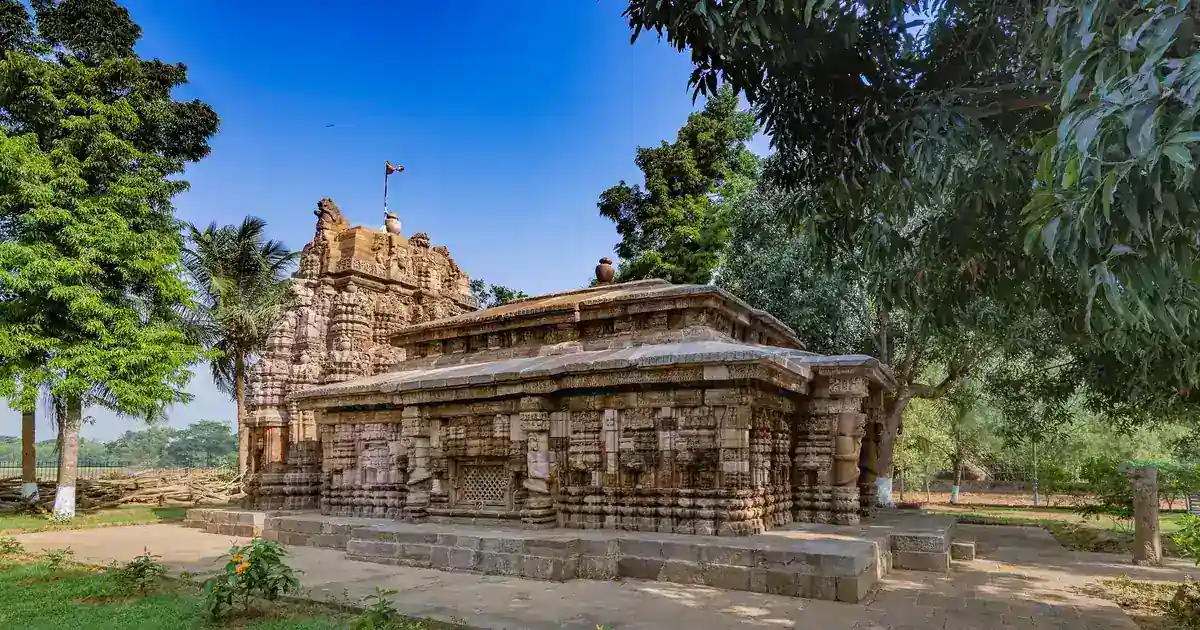
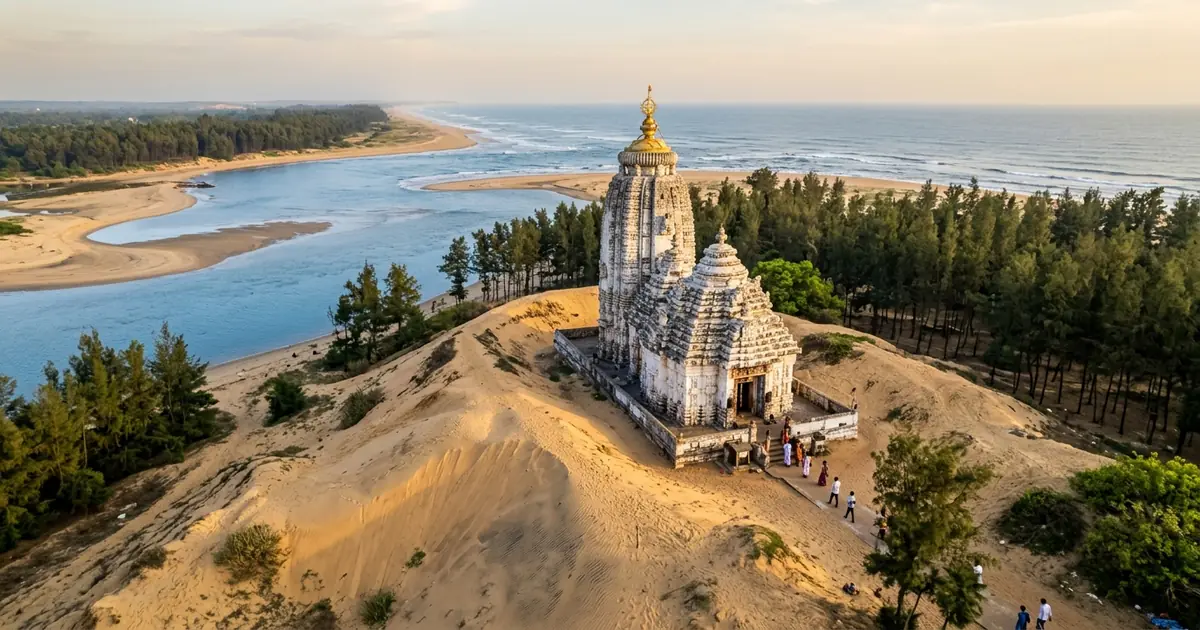
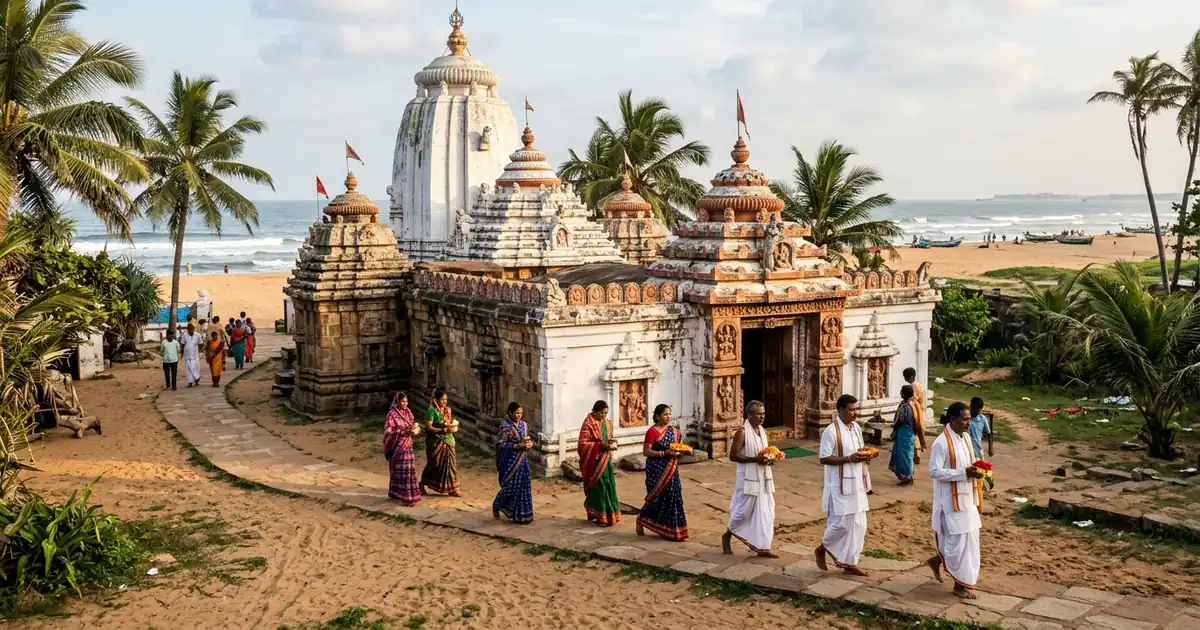
Mangala Temple Kakatpur Puri: Timings, History & Visitor Guide
Visit Maa Mangala Temple in Kakatpur, Puri. Discover verified darshan timings, Nabakalebara divine dream rituals, Jhamu Yatra fire walking, and route guide.
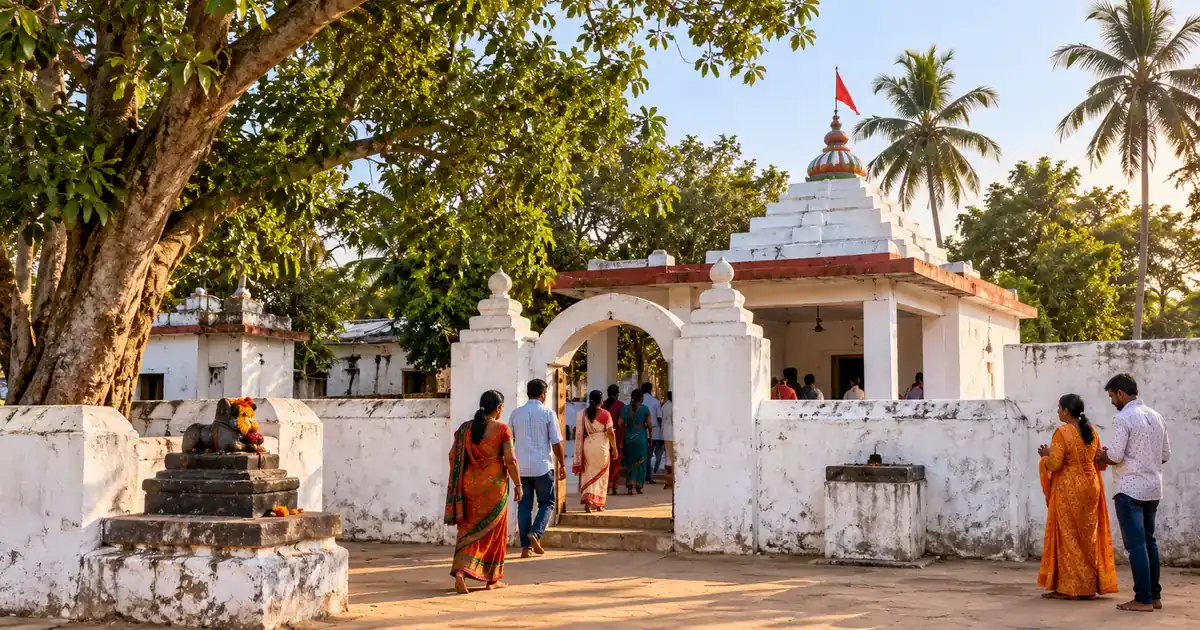
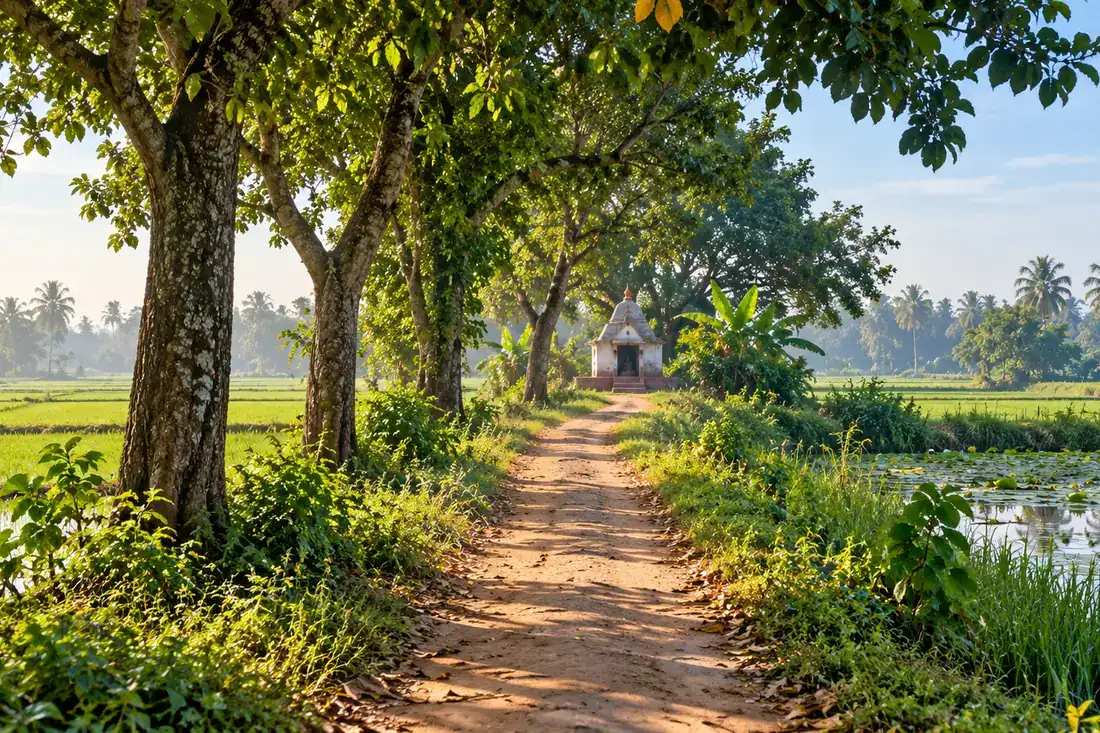
Resting along the sacred curves of the ancient Prachi River, the historic mangala temple kakatpur puri stands as one of eastern India’s most celebrated centers of Shakta worship. Situated in eastern Puri district roughly 52 kilometers from Puri town, this 15th-century sanctuary holds a position of supreme importance in the spiritual administration of Odisha.
The temple shares a profound connection with major regional goddess sanctuaries like Maa Biraja Temple, Maa Sarala Temple, and Maa Tara Tarini Temple. Among the venerated shakti peethas odisha reveres, Goddess Mangala is celebrated as the compassionate divine mother who protects travelers, grants fertility, and maintains the cosmic renewal of Jagannath culture.
Whenever the world-renowned Nabakalebara festival approaches at Lord Jagannath Temple in Puri, this quiet riverside shrine becomes the epicenter of divine guidance. Senior priests must spend nights in prayer here until the Goddess reveals the locations of the sacred neem trees in an auspicious dream.
Documented alongside coastal landmarks in our comprehensive Puri district travel guide, Kakatpur offers an unforgettable encounter with Odia living heritage. This visitor resource details verified darshan timings, rituals, history, and transportation logistics.
Key Takeaways
- Maa Mangala Temple at Kakatpur is a major Shakti shrine in the historic Prachi Valley, playing an essential role in Jagannath Nabakalebara rituals.
- Head Daitapati priests sleep on the temple floor to receive the divine dream order (Swapnadesh) pointing to the holy Daru neem trees.
- The presiding deity is a four-armed black granite sculpture seated in Lalitasana, holding a discus, trident, rosary, and lotus bud.
- The dramatic annual Jhamu Yatra festival in April features devout Patua penitents walking barefoot across glowing charcoal fire pits.
- Located 52 kilometers east of Puri and 21 kilometers from Konark, the temple opens daily from 6:00 AM to 9:00 PM with free public admission.
At-a-Glance: Temple Timings, Location & Visitor Summary
Understanding the ritual timetable ensures a peaceful darshan experience without unnecessary waiting. The temple follows a disciplined daily routine preserved by dedicated sevayat families across generations.
The temple atmosphere changes gracefully throughout the day. Early morning hours offer refreshing calm and close darshan, while the evening brings musical devotional prayers and freshly prepared prasad offerings.
Daily Darshan Schedule and Ritual Timeline
The sanctum doors open at 6:00 AM with the sacred Mangala Alati and ceremonial bath. Priests cleanse the deity with fragrant herbal waters and dress her in fresh cotton garments before public prayers commence.
During midday, the sanctum closes briefly from 1:00 PM to 3:00 PM for the deities’ afternoon Pahada rest. Worship resumes at 3:00 PM and continues uninterrupted through Sandhya Alati until final night closure at 9:00 PM.
| Ritual / Darshan Slot | Scheduled Timings | Key Highlights for Pilgrims |
|---|---|---|
| Mangala Alati & Snana | 5:30 AM to 6:30 AM | Sanctum opening, morning herbal bath, and first lamp offering |
| Morning Public Darshan | 6:30 AM to 12:30 PM | Open sanctum access for offering flowers, coconuts, and prayers |
| Madhyanna Dhupa (Bhog) | 12:30 PM to 1:00 PM | Grand midday cooked food offering inside the inner kitchen |
| Pahada (Afternoon Recess) | 1:00 PM to 3:00 PM | Inner doors closed for divine rest |
| Afternoon & Evening Darshan | 3:00 PM to 7:00 PM | Reopening of the Jagamohana hall for arriving travelers |
| Sandhya Alati & Dhupa | 7:00 PM to 8:00 PM | Evening incense offering, conch sounding, and prasad distribution |
| Badasinghara & Ratri Pahada | 8:30 PM to 9:00 PM | Night floral adornment followed by ceremonial sanctum closure |
During the high-traffic festive month of Chaitra, particularly on Tuesdays, mangala temple timings extend substantially. The sanctum doors frequently remain open through midnight to accommodate thousands of arriving devotees.
Essential Visitor Information & Quick Facts
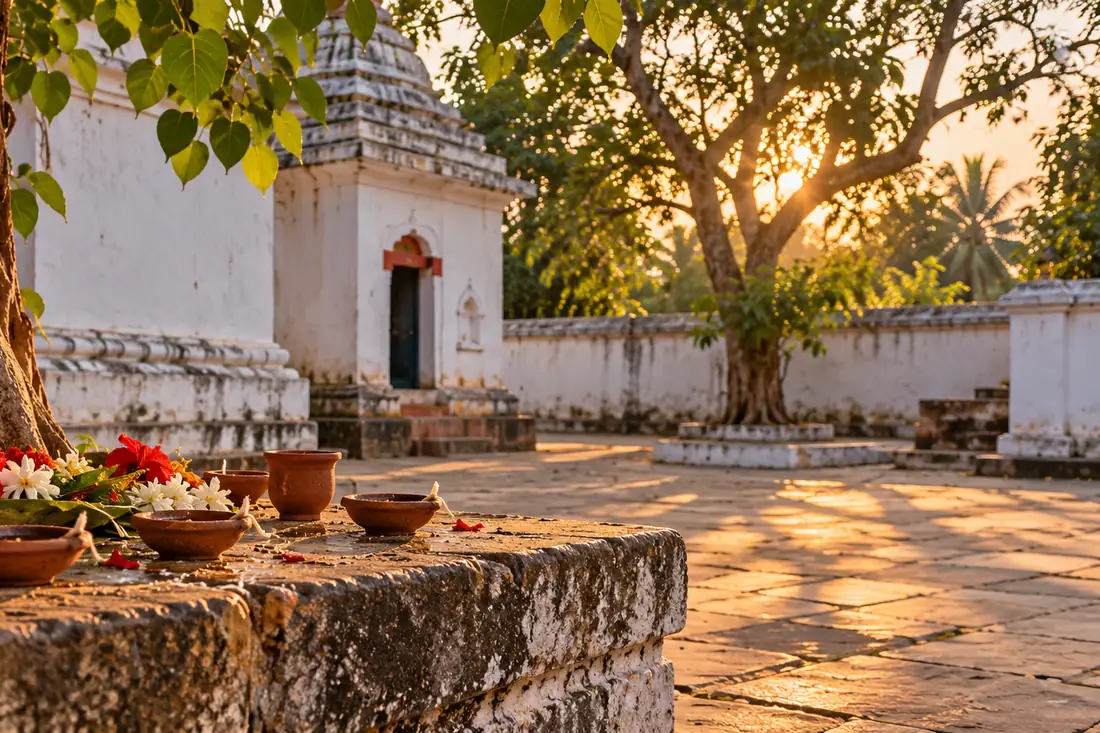
The temple compound features a spacious paved courtyard surrounded by stone protective walls. Paved walkways make walking easy for elderly family members and children.
Official visitor guidelines and festival notifications are published on the Official Odisha Tourism Portal and the Archaeological Survey of India.
| Parameter | Practical Detail |
|---|---|
| Presiding Deity | Goddess Mangala (Four-Armed Sarva Mangala in Black Granite) |
| Location | Kakatpur Town, Puri District, Odisha 752108 |
| Mangala Temple Kakatpur Entry Fee | Completely Free (No entry tickets for general public darshan) |
| Photography Regulations | Photography strictly prohibited inside the inner sanctum; compound photos permitted |
| Recommended Dress Code | Modest traditional attire (sarees, salwar suits, dhotis, kurtas; shorts strictly barred) |
| Best Season to Visit | October to March for mild weather; April for the legendary Jhamu Yatra festival |
| Nearest Railway Stations | Puri Railway Station (52 km); Bhubaneswar Station (60 km) |
| Nearest Airport | Biju Patnaik International Airport, Bhubaneswar (62 km) |
Sacred Origins & Prachi Valley: How Kakatpur Got Its Name
The geographic cradle of maa mangala temple kakatpur is the historic Prachi River valley. Archaeological surveys reveal that the Prachi basin was a flourishing cradle of civilization between the 7th and 14th centuries.
Scores of ancient Shaivite, Vaishnavite, and Shakta sanctuaries still dot its fertile riverbanks, most notably the 10th-century Varahi Devi Temple near Nimapada. Scholars consider the valley one of the most culturally dense zones in eastern India.
The Ancient Prachi Valley Civilisation and Tantric Roots
During the medieval era, the Prachi valley was celebrated as a center of tantric sadhana and monastic learning. The sculpture of Maa Mangala reflects this profound confluence of classical Hindu theology and regional folk traditions.
Carved out of lustrous black granite, the deity sits gracefully in Lalitasana upon a blooming lotus throne. The sacred sculpture displays four divine arms:
| Divine Hand | Sacred Emblem Carried | Spiritual Meaning |
|---|---|---|
| Upper Right Hand | Sudarshana Chakra (Discus) | Cosmic protection and divine will |
| Upper Left Hand | Trishula (Trident) | Overcoming negative worldly forces |
| Lower Right Hand | Akshamala (Rosary) | Eternal wisdom and meditative focus |
| Lower Left Hand | Padma (Lotus Bud) | Purity, fertility, and maternal grace |
Beneath her seat, a carved buffalo demon symbolizes the eternal triumph of divine consciousness over ignorance and disharmony. The architecture follows the classic Kalinga deula tradition prevalent among famous temples in Odisha.
The Legend of the Boatman and the Kaka-Atka Crow Miracle
The fascinating folklore explaining how the town received its name is rooted in 16th-century regional history. When general Kalapahad led destructive raids across Odisha, local priests submerged the sacred deity within the deep waters of the Prachi River to shield her from desecration.
Decades passed, and the exact location of the submerged statue was gradually forgotten. Years later, a local boatman was steering his wooden boat across the flooded river during a severe monsoon storm.
His oar struck an immovable object underwater, trapping his craft in swirling currents. Overcome with fear, the boatman prayed aloud for safety.
That very night, the Goddess appeared in his dream, identifying herself as Mangala and commanding him to retrieve her stone image from the riverbed. When the boatman returned to the waters next morning, he observed a black crow (known in Odia as Kaka) sitting motionless on a submerged rock, unable to fly away.
The crow remained held in place (known locally as Atka) until the boatman dived beneath that exact spot and brought up the stone deity. Combining the words Kaka and Atka, the grateful villagers established the settlement of Kakatpur around the new shrine.
The Nabakalebara Connection: The Divine Dream for Sacred Daru
The supreme cultural distinction of Kakatpur lies in its indispensable relationship with the Jagannath Temple in Puri. Every 8 to 19 years, when two lunar months of Ashadha occur in the traditional Odia almanac, Lord Jagannath undergoes the sacred ceremony of Nabakalebara.
Nabakalebara represents the ritual death and rebirth of the holy triad. The aging wooden deities are respectfully retired, and brand-new murtis are carved from specifically marked neem trees known as Daru Brahma.
The Banajaga Yatra and the Search for Daru Brahma
The monumental quest to find these trees is known as the Banajaga Yatra. A specialized troupe of servitors, led by the senior Daitapati priests and Pati Mohapatra, sets out on foot from Puri carrying divine silk cloths and sandalwood paste.
The search party cannot simply pick any mature neem tree. Each Daru tree must satisfy strict scriptural conditions:
| Requirement | Scriptural Condition | Symbolic Significance |
|---|---|---|
| Natural Bark Signs | Conch, discus, mace, or lotus markings | Divine identification of the deity |
| Environmental Purity | No bird nests or parasitic vines | Untainted organic sanctity |
| Animal Presence | Water body with cobra burrow at roots | Guardian of celestial timber |
| Geographic Isolation | Far from settlements or cremation grounds | Unpolluted sacred ground |
Finding four such unique trees across the sprawling coastal countryside of Odisha would be impossible through ordinary human exploration. This is where the supreme authority of Maa Mangala intervenes.
Sleeping Before the Goddess: Swapnadesh and Deuli Matha Rituals
Upon reaching Kakatpur, the Banajaga team takes up residence at the historic Deuli Matha, located a short distance from the temple gates. The servitors perform a sacred cleansing bath and offer elaborate prayers to Goddess Mangala.
After evening worship, the chief Daitapati lays down to sleep directly on the cool stone floor before the sanctum sanctorum, an austere ritual known as Adhia Padiba. The priests pray continuously for divine insight.
Tradition dictates that during the stillness of the night, Goddess Mangala appears in the chief priest’s dream in an experience known as Swapnadesh. In this divine vision, the Goddess gives exact geographical directions, naming the village, the landowner, and the precise physical markers of each holy neem tree.
Only after receiving this unmistakable dream direction does the Banajaga search party march forward into the countryside. History confirms that in every recorded Nabakalebara, the holy trees were discovered precisely where the Goddess indicated in the dream.
Jhamu Yatra & Chaitra Mela: The Miraculous Fire Walking Ritual
While visitors arrive throughout the year, Kakatpur experiences its most spectacular celebration during the Odia month of Chaitra (March to April). Every Tuesday of this month is celebrated with grand fairs, but the final Tuesday holds transcendent religious significance.
On this day, the temple hosts the world-famous Jhamu Yatra festival, drawing upwards of two hundred thousand pilgrims into the rural town.
The Patua Fast and the Bed of Burning Embers
The core of the Jhamu Yatra is the extraordinary penance undertaken by dedicated devotees known as Patuas. These penitents observe rigorous fasts for twenty-one days, consuming only pure milk and raw fruits while chanting sacred prayers.
On the festival morning, temple servitors dig a wide rectangular pit approximately twenty feet long in front of the temple courtyard. The pit is filled with heavy logs of tamarind and acacia wood, which are set ablaze hours in advance until they form a dense, glowing bed of red-hot charcoal embers.
At the auspicious hour, the Patuas complete a holy bath in the Prachi River. Dressed in sacred red cloth and smeared with turmeric paste, they approach the fiery trench accompanied by roaring drums and brass gongs.
Holding brass earthen pots crowned with holy flowers, the Patuas walk barefoot across the glowing coals one after another. Witnesses routinely marvel that the penitents walk calmly across the scorching trench without sustaining a single burn or blister on their feet.
Devotees hold firm faith that the protective grace of Maa Mangala shields her faithful children from all physical harm. Participating in or witnessing this ceremony is believed to heal chronic illnesses and bring domestic peace.
Chaitra Mela Gatherings and Seasonal Offerings
Surrounding the temple, the entire town transforms into an open carnival during Chaitra. Temporary stalls display authentic rural handicrafts, traditional toys, bamboo baskets, and local snacks.
Families travel from distant farming blocks in bullock carts, tractors, and buses to offer newborn hair, clay figurines, and silk veils to the Goddess. The entire Prachi delta echoes with devotional music, folk opera performances, and joyful village reunions.
Visitor Practicalities, Dress Code & Travel Routes
Visiting Kakatpur is a comfortable half-day journey from either Puri or Bhubaneswar. Because the shrine lies along well-maintained district roads connecting with the coast, planning transportation is straightforward.
Many travelers combine Kakatpur with a scenic coastal tour of the iconic Konark Sun Temple and scenic Chandrabhaga Beach.
Temple Rules, Entry Fees, Photography & Dress Code
To ensure a peaceful and spiritually respectful atmosphere, the temple authorities maintain standard pilgrimage guidelines:
| Category | Temple Policy & Visitor Guidelines |
|---|---|
| General Admission | Entry into the temple premises is completely free for all pilgrims |
| Attire Guidelines | Traditional modest clothing required (kurtas, dhotis, sarees); shorts barred |
| Leather Articles | Shoes, sandals, and animal-skin accessories must be deposited at the free counter |
| Cameras & Phones | Mobile photography strictly banned in the inner sanctum; courtyard photos permitted |
| Sanctum Sanctorum | Access into the innermost chamber is reserved for practicing Hindus per custom |
How to Reach Kakatpur from Puri, Konark, and Bhubaneswar
The temple benefits from good highway connectivity through the delta road network of eastern Puri district.
The standard puri to kakatpur distance is approximately 52 kilometers when driving via the scenic coastal route through Konark and Gop. The journey takes about 1 hour and 15 minutes by private taxi.
| Route Origin | Driving Path & Transit Mode | Travel Time | Approximate Fare (INR ₹) |
|---|---|---|---|
| From Puri Town | Via Marine Drive, Konark & Gop (52 km) | 1 hour 15 mins | ₹1,400 to ₹1,800 (private cab) |
| From Konark | Direct State Highway via Gop (21 km) | 30 minutes | ₹500 to ₹700 (taxi / auto) |
| From Bhubaneswar | Via Pipili bypass & Nimapara (60 km) | 1 hour 30 mins | ₹1,600 to ₹2,000 (private cab) |
| Public Bus from Puri | Regular OSRTC & private buses via Nimapara | 1 hour 45 mins | ₹45 to ₹65 per seat |
| Public Bus from Bhubaneswar | Regular buses from Badambadi / Kalpana Square | 2 hours | ₹55 to ₹80 per seat |
Travelers utilizing Indian Railways can alight at Puri Railway Station or Bhubaneswar Railway Station. From either station, private cabs and shared taxis are readily available outside the terminals.
Delicious Kakatpur Prasad and Sacred Kitchen Offerings
No trip to Kakatpur is complete without sampling the delicious offerings prepared in the temple hearths. Like other coastal shrines, the kitchen operates under strict rules of ritual purity.
The temple’s signature offering is Kakatpur Peda, a rich sweet prepared from slow-reduced milk and raw sugar. Visitors also relish crispy multi-layered Khaja, sweet coconut laddoos, and specialized rice pudding offered during morning prayers.
Prasad counters located inside the outer temple compound sell freshly packaged sweets at reasonable prices. The sweets stay fresh for several days, making them a wonderful gift to carry home for family and friends.
Frequently Asked Questions (FAQs)
What are the daily darshan timings of Maa Mangala Temple in Kakatpur?
The temple opens daily from 6:00 AM to 9:00 PM, with an afternoon rest period between 1:00 PM and 3:00 PM. During the annual Chaitra festive month and on Tuesdays, opening hours are significantly extended to accommodate visiting crowds.
What is the role of Maa Mangala in Lord Jagannath’s Nabakalebara?
Before every Nabakalebara festival, senior Daitapati priests sleep on the temple floor in Kakatpur to seek divine guidance. Goddess Mangala appears in their dreams through a divine vision known as Swapnadesh, revealing the exact locations of the sacred neem trees needed to carve new deities.
What is the significance of the Jhamu Yatra festival in Kakatpur?
Celebrated on the final Tuesday of the Odia month of Chaitra, Jhamu Yatra is the temple’s most iconic annual festival. During this ceremony, dedicated penitents known as Patuas fulfill religious vows by walking barefoot across a trench filled with glowing charcoal embers without suffering burns.
How did the town of Kakatpur get its name?
The town’s name originates from a historical miracle where a crow (Kaka in Odia) remained detained (Atka) on a submerged rock in the Prachi River. When a local boatman dived beneath that exact marker, he successfully retrieved the sacred idol of Goddess Mangala that had been concealed from invaders.
How far is Kakatpur Mangala Temple from Puri and Bhubaneswar?
The temple is situated roughly 52 kilometers east of Puri and approximately 60 kilometers southeast of state capital Bhubaneswar. Visitors can reach Kakatpur within an hour and a half by driving through well-paved state highways via Konark or Nimapara.
Are there any entry fees or dress codes at Maa Mangala Temple?
General public admission is completely free of charge, with no fees required for regular daily darshan. Visitors must dress modestly in traditional Indian clothing such as kurtas, dhotis, or sarees, and shorts are strictly barred at the entrance.