Udayagiri Buddhist Complex Jajpur: Monasteries & Travel Guide
Plan your visit to Udayagiri Buddhist Complex in Jajpur. Explore Madhavapura Mahavihara, rock-cut stepwell, stupas, ASI excavation facts, and travel routes.
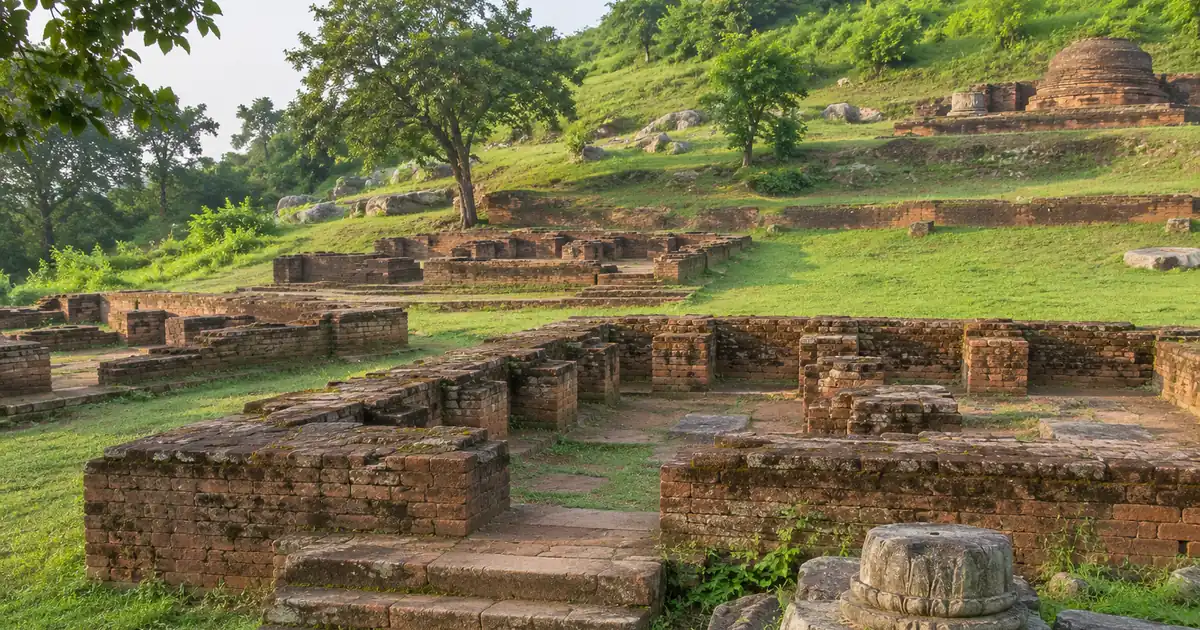
Archaeological travelers exploring the monastic heritage of eastern India will find Udayagiri Buddhist Complex Jajpur to be a remarkable historic landmark. Situated on the slopes of an isolated hill overlooking the Birupa river basin, this site represents the largest excavated settlement of the Diamond Triangle. It flourished between the seventh and twelfth centuries CE as an influential center for Mahayana and Vajrayana Buddhist philosophy.
Unlike densely clustered museum ruins, the archaeological remnants at Udayagiri spread across wide hillside terraces. Visitors can wander through excavated brick courtyards, admire colossal stone statues of Bodhisattvas carved into living rock, inspect ancient monastic drainage systems, and examine an extraordinary rock-cut stepped well that provided water to medieval monks.
Key Takeaways
- Diamond Triangle Anchor: The largest archaeological complex among the three celebrated Buddhist university sites of eastern Odisha, alongside Ratnagiri and Lalitgiri.
- Dual Mahavihara Settlement: Excavations uncovered two distinct monasteries named Madhavapura Mahavihara and Simhaprastha Mahavihara, confirmed by ancient terracotta seals.
- Rock-Cut Engineering: Features a 30-meter-deep monolithic stone stepwell carved directly into bedrock, adorned with medieval epigraphical inscriptions.
- Distinct from Bhubaneswar Caves: Must not be confused with the ancient Jain rock-cut caves of Udayagiri and Khandagiri situated in the state capital.
- Preserved by ASI: Protected as a national monument of importance under the Archaeological Survey of India with regulated daytime visiting hours.
Quick Facts & Archaeological Profile: Udayagiri Buddhist Site
To help you organize a smooth visit, practical information regarding visiting hours, entry fees, and geographic coordinates is summarized in the table below.
| Feature | Travel Specification |
|---|---|
| Official Monument Name | Excavated Buddhist Site, Udayagiri |
| Historical Inscription Names | Sri Madhavapura Mahavihara / Simhaprastha Mahavihara |
| District and State | Jajpur District, Odisha |
| Geographic Coordinates | 20.6433° N, 86.2678° E |
| Managing Authority | Archaeological Survey of India (Bhubaneswar Circle) |
| Historical Period | 7th to 12th Century CE (Later Bhauma-Kara and Somavamsi eras) |
| Distance from Cuttack | 70 km via National Highway 16 and Chandikhol |
| Distance from Bhubaneswar | 95 km via NH-16 through Chandikhol Junction |
| Distance from Ratnagiri | 13 km via rural connecting highway |
| Distance from Lalitgiri | 20 km via Chandikhol state highway |
| Nearest Rail Junction | Jajpur Keonjhar Road (JJKR, 42 km) / Cuttack (CTC, 72 km) |
| Daily Visiting Hours | 8:00 AM to 5:00 PM (Open all seven days of the week) |
| Entry Ticket Tariff | ₹25 for Indian, BIMSTEC and SAARC citizens; ₹300 for foreigners |
| Photography Regulations | Still photography allowed free; commercial filming requires ASI permit |
Key Excavation Data and Operational Schedule
Systematic archaeological excavations by the Archaeological Survey of India began in the 1980s and continued in successive phases through the 2000s. These excavations revealed that Udayagiri was far more extensive than earlier colonial surveys suggested, encompassing two extensive valley terraces designated as Udayagiri-1 and Udayagiri-2.
The site is open daily from morning until sunset. Because the ruins span across open hill terraces without artificial tree cover, arriving early in the morning allows you to explore the monuments comfortably before temperatures rise. More details on district administration and rural roadways can be consulted on the Jajpur District Official Portal.
Geographic Setting Along the Birupa River Valley
Udayagiri rests against the base of an amphitheater-shaped hill ridge that protects the valley from strong river winds. The Birupa and Brahmani river systems provided fertile agricultural support and ancient navigable waterways that connected the monastic universities with coastal trading ports.
From the upper stupa terraces, visitors enjoy broad vistas over green agricultural valleys and rural hamlets. The geographic context of this heritage corridor is fully detailed in our Jajpur district travel guide.
Important Clarification: Udayagiri Jajpur vs Udayagiri Bhubaneswar
Travelers planning an itinerary in Odisha frequently encounter confusion regarding the name Udayagiri, which translates literally to “Sunrise Hill” in Sanskrit. It is essential to recognize that two completely distinct historical monuments in Odisha share this name.
Understanding these differences ensures that travelers do not book wrong transit routes or conflate two separate cultural chapters of ancient Indian history.
Distinct Historical Foundations: Buddhist University vs Jain Caves
The Udayagiri site in Jajpur is an expansive Buddhist monastic university active from the seventh to twelfth centuries CE. Its ruins consist of brick-built monasteries, votive stupas, Mahayana stone icons, and Buddhist epigraphy.
In stark contrast, the famous Udayagiri and Khandagiri Caves in Bhubaneswar represent ancient Jain rock-cut cave dwellings. Those caves were carved during the first century BCE under the patronage of Emperor Kharavela of the Mahameghavahana dynasty. They contain no brick monasteries or Buddhist sculptures, focusing instead on rock-cut monastic cells and Jain tirthankara reliefs.
Geographic Separation and Distinct Archaeological Profiles
The two sites are situated nearly 100 kilometers apart. The Jain caves are located inside the municipal limits of Bhubaneswar, easily reached in 20 minutes from the city center.
By contrast, the Buddhist monastic complex in Jajpur is an archaeological landscape situated near Chandikhol along the northern heritage belt. While travelers can easily visit Dhauli Giri Hills Shanti Stupa and the Jain caves in Bhubaneswar within a single morning, Udayagiri in Jajpur belongs to the full-day Diamond Triangle circuit.
Location and How to Reach Udayagiri from Major Transit Hubs
Udayagiri is well connected by smooth highway infrastructure that branches off National Highway 16 at Chandikhol. The approach route travels through peaceful farming country, passing small canals and mango orchards before reaching the base of the hill.
Motorists and tour groups will find clear bilingual directional signs guiding them from the main highway to the monument parking area.
Driving Routes via National Highway 16 and Chandikhol
Travelers starting from Bhubaneswar or Cuttack should drive north along the six-lane National Highway 16 until reaching Chandikhol Junction. From Chandikhol, turn right onto the state highway heading toward Paradip and Kendrapara, then follow the signposted rural road leading toward Udayagiri.
The total driving distance from Bhubaneswar is approximately 95 kilometers, taking roughly 2 hours by private car or tourist taxi. Drivers coming from the neighboring Cuttack district will cover the 70-kilometer distance in approximately 1 hour and 30 minutes.
Connecting Transit from Jajpur Keonjhar Road Railway Station
Travelers arriving by long-distance express trains should alight at Jajpur Keonjhar Road railway station (station code JJKR). As a primary station on the Howrah-Chennai mainline, dozens of express trains stop here daily.
From the railway station exit, pre-paid taxis and auto-rickshaws can be chartered for full-day sightseeing. The station lies 42 kilometers northwest of Udayagiri. Budget travelers can also take public passenger buses from Jajpur town or Chandikhol toward Bari, alighting at the Udayagiri junction followed by a brief walk.
Architectural Highlights: Monasteries, Stupas and Ancient Stepwell
The architectural remains at Udayagiri demonstrate exceptional engineering skill and sophisticated urban planning. The monastic settlement is divided into two major clusters, each featuring distinctive structures arranged to facilitate both spiritual practice and communal living.
Walking between these archaeological sectors gives visitors a clear impression of how a thriving residential university functioned over twelve centuries ago.
Monastery 1: Madhavapura Mahavihara and the Central Shrine
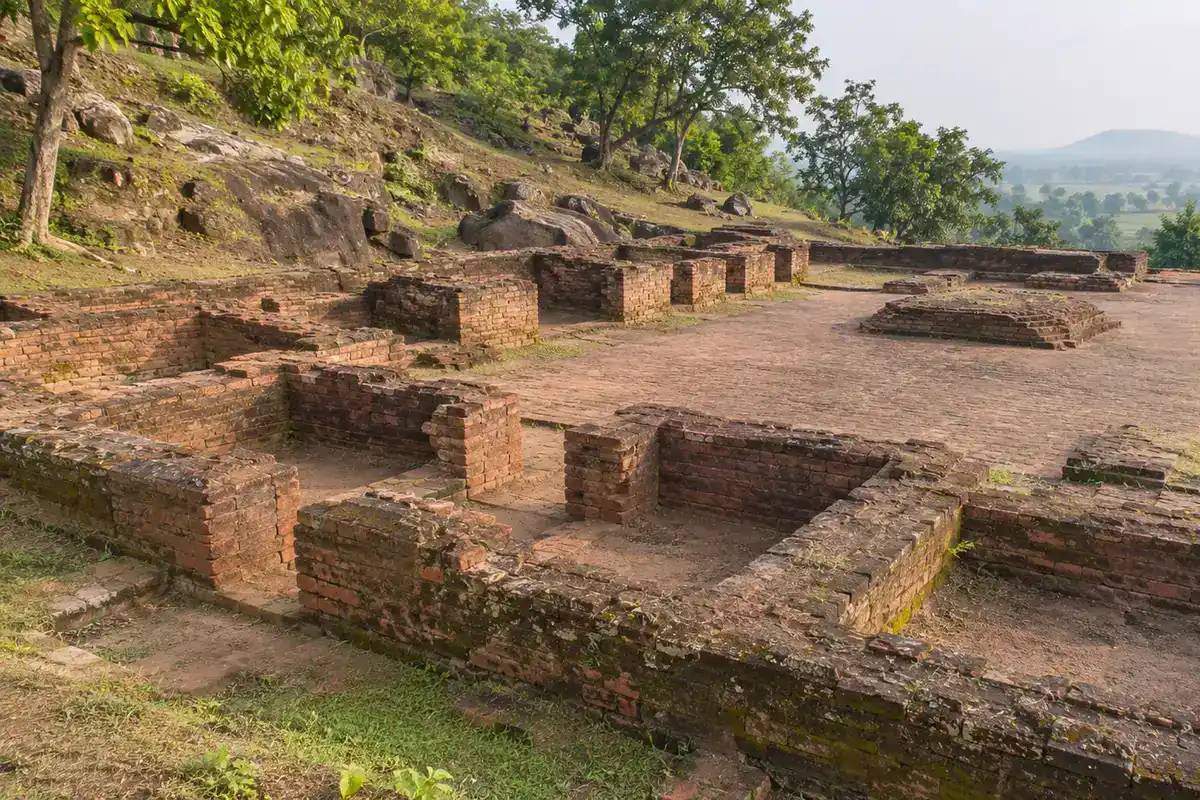
The first excavated complex, known as Monastery 1 or Madhavapura Mahavihara, is a grand quadrangular brick monastery built around a central stone-paved courtyard. Surrounding the courtyard are eighteen monk cells, each fitted with stone door jambs, niches for oil lamps, and raised sleeping platforms.
At the rear of the courtyard stands the main sanctum sanctorum, enshrining an imposing stone statue of Buddha seated in the Bhumisparsha Mudra (earth-touching gesture). The sanctum entrance displays beautifully carved stone door jambs featuring floral patterns, scrollwork, and dwarapala figures.
Monastery 2: Simhaprastha Mahavihara and Votive Enclosures
Located a short walk across the valley terrace is Monastery 2, identified through terracotta sealings as Simhaprastha Mahavihara. This second complex features another large residential monastery, a brick assembly hall, and several subsidiary shrines.
Surrounding the residential blocks are dozens of stone and brick votive stupas erected by pilgrims and resident scholars. On the upper hill slope stands a massive brick Mahastupa measuring over fourteen meters in diameter, surrounded by carved stone reliefs of the Dhyani Buddhas facing the four cardinal directions.
The Historic Rock-Cut Stepped Well (Vapi)
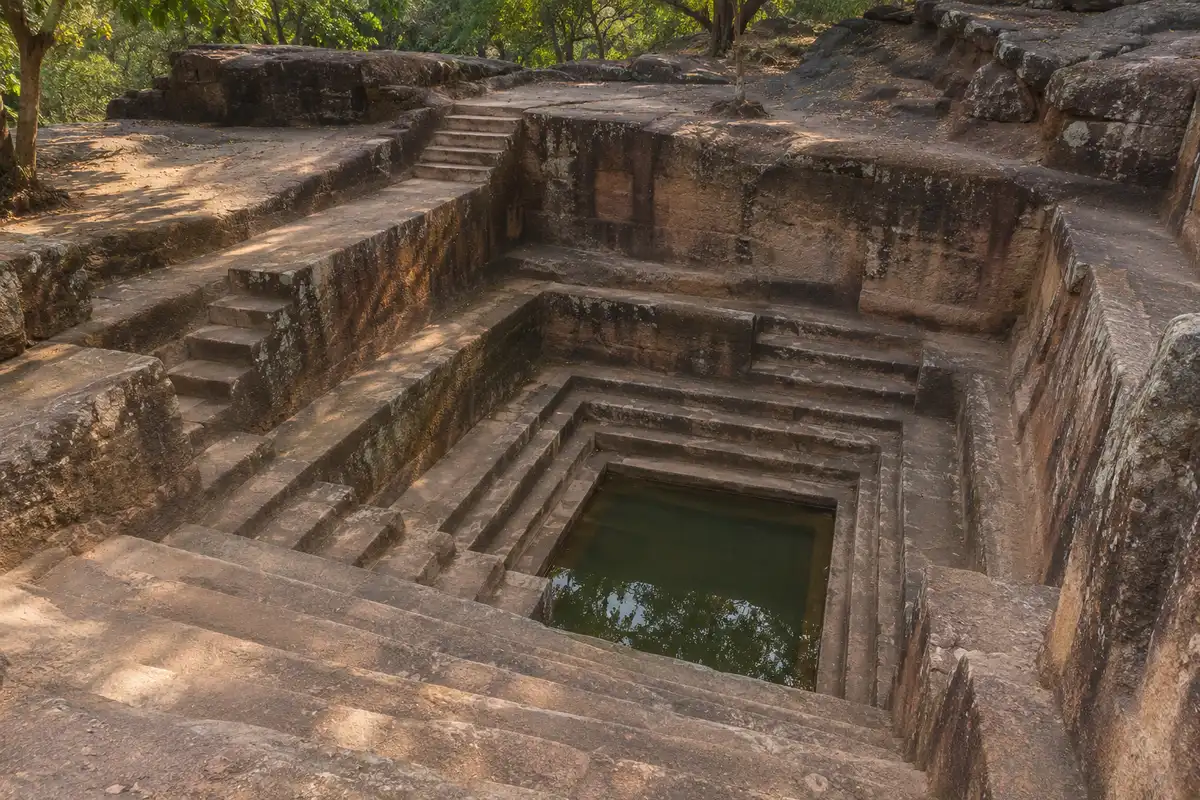
One of the most remarkable secular structures at Udayagiri is its ancient stepped well, known in epigraphy as a Vapi. Carved directly into living sandstone rock, the well descends through thirty-one stone steps to reach subterranean aquifers.
At the entrance to the stepped well, a stone inscription in medieval Nagari script records that the well was excavated by an individual named Ranaka Vajravarmma for public benefit. This engineering feat provided a dependable year-round water supply to hundreds of resident monks and visiting pilgrims.
Sculptural Heritage: Avalokiteshvara, Bodhisattvas and Epigraphy
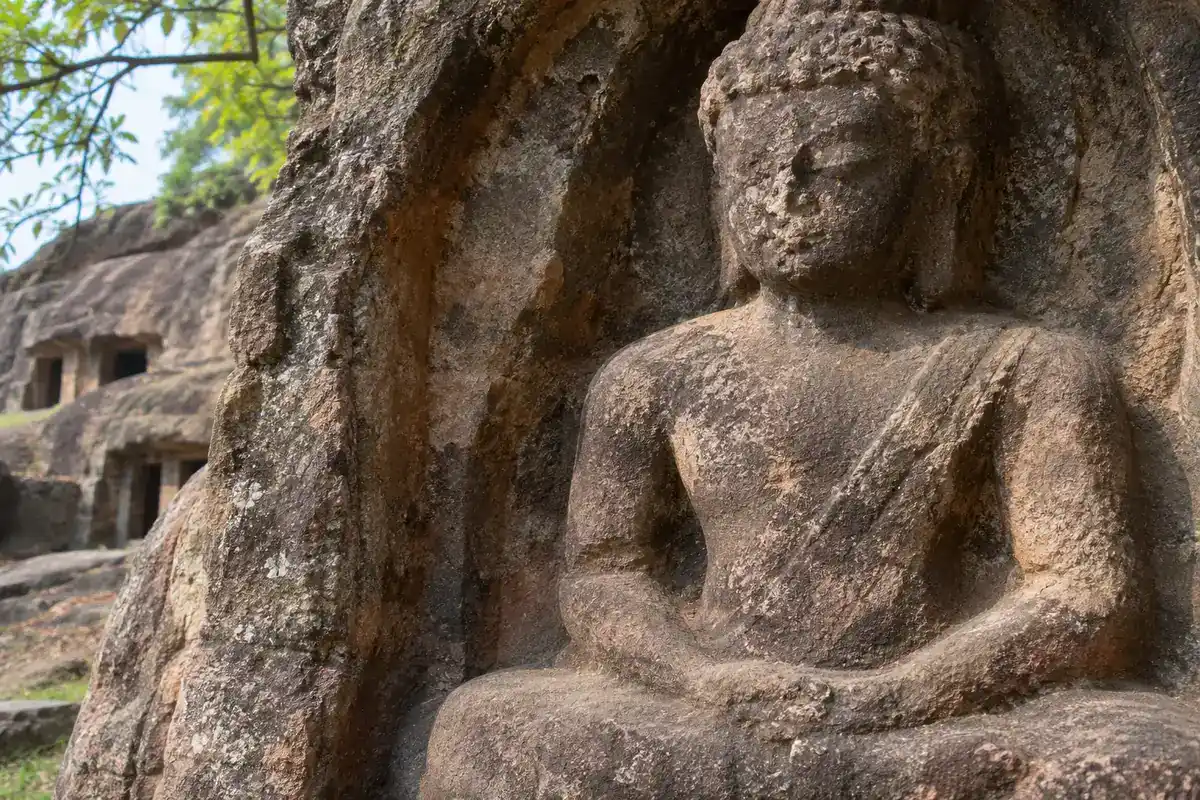
The sculptural art recovered from Udayagiri ranks among the finest examples of post-Gupta and early medieval eastern Indian sculpture. Sculptors utilized local khondalite and sandstone to create images that combine spiritual composure with intricate anatomical detail.
Many freestanding sculptures discovered during excavations are preserved in prominent museums, while several monumental rock reliefs remain in their original outdoor settings.
Colossal Rock-Cut Reliefs on the Hill Escarpment
Along the natural rocky scarp overlooking the stepped well, ancient artisans carved several monumental standing figures directly into the cliff face. These rock reliefs depict Bodhisattvas including Avalokiteshvara, Maitreya, and Manjusri carrying lotus stems and wearing ornate crown headgear.
The dignified facial expressions and graceful body postures demonstrate a high level of stone carving mastery. Similar artistic traditions and Vajrayana iconography can be explored in southern Odisha at Jiranga Buddhist Monastery in Gajapati. Official archaeological bulletins are maintained by the Archaeological Survey of India official portal.
Terracotta Seal Inscriptions and Epigraphical Discoveries
Excavations at Udayagiri yielded hundreds of inscribed terracotta sealings, clay tablets, and stone inscriptions. These artifacts were vital in deciphering the institutional history of the site.
The seals bear the classic Buddhist creed formula (Ye Dharma Hetuprabhava…) alongside official institutional insignias depicting the wheel of law (Dharmachakra) flanked by two deer. These findings proved conclusively that Udayagiri housed multiple self-governing monastic colleges supported by royal land endowments and merchant donations.
Best Time to Visit, Seasonal Guidelines and Walking Advice
Because exploring Udayagiri involves extensive walking across open hillside paths and stone courtyards, planning your visit according to seasonal climate trends makes a significant difference to your comfort.
Taking simple precautions regarding footwear and hydration ensures you enjoy the historical monuments without physical fatigue.
Optimal Winter Conditions from October to March
The winter season from October through March provides the best weather for touring Udayagiri and the Diamond Triangle. During these months, skies remain clear, and daytime temperatures stay comfortably between 20°C and 28°C.
A gentle breeze frequently sweeps across the hill slopes, making outdoor exploration pleasant even during midday hours. The early morning light from 8:00 AM to 10:30 AM is ideal for photographing the stone sculptures and brick masonry.
Summer Heat Precautions and Hydration Measures
During the summer months from April to June, temperatures across the rocky hill terrain often rise above 39°C by early afternoon. The exposed stone pathways and bare brick courtyards absorb solar radiation, creating intense ambient heat.
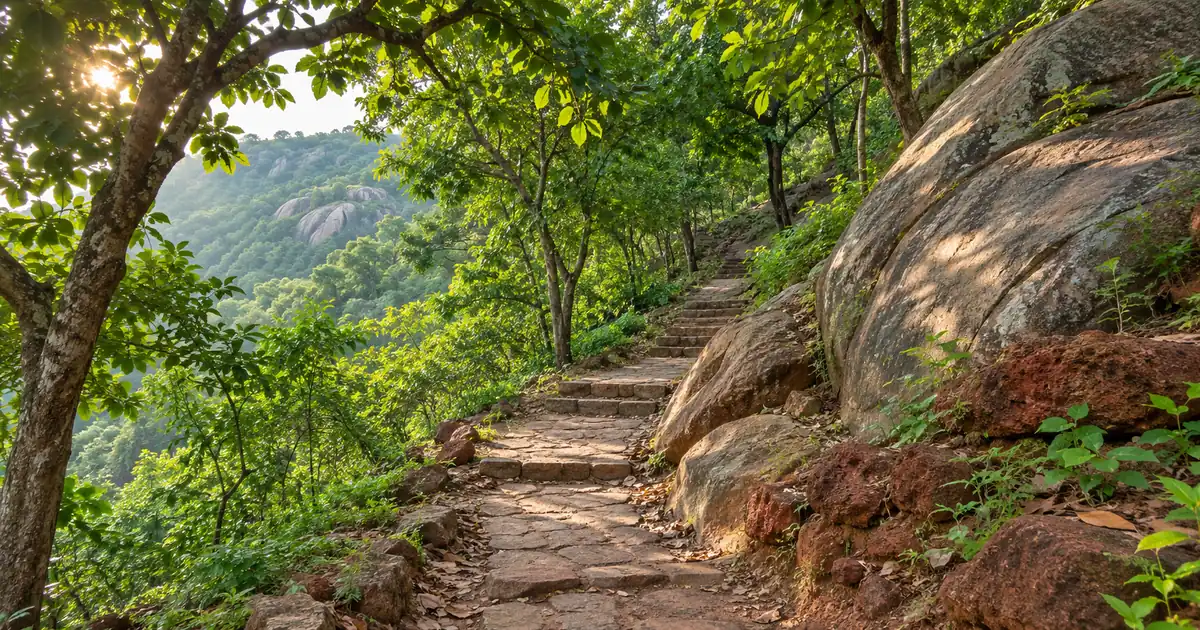
If you visit during summer, schedule your arrival for 8:00 AM and complete your walking tour by 10:30 AM. Wear sturdy, comfortable walking shoes with rubber soles, as climbing the stepped well and hill paths requires firm footing. Carry sufficient drinking water and wear wide-brimmed hats to protect against the sun.
The Diamond Triangle Circuit: Integrating Ratnagiri and Lalitgiri
Udayagiri is most effectively experienced as part of a comprehensive Diamond Triangle day tour. Because Ratnagiri, Udayagiri, and Lalitgiri sit within a 25-kilometer radius of one another, travelers can easily visit all three monastic complexes in a single day.
Coordinating your itinerary allows you to compare the distinctive architectural strengths of each ancient Buddhist center.
Practical Full-Day Monastic Circuit Routing
A practical and well-paced day tour begins early from Bhubaneswar or Cuttack along National Highway 16. Arrive first at Ratnagiri Buddhist Monastery and Museum, situated thirteen kilometers east of Udayagiri. Spend two hours inspecting the ornate green chlorite entrance portal and visiting the ASI sculpture museum.
Next, drive west to Udayagiri to explore Monastery 1, Monastery 2, and the historic stepped well. After enjoying lunch near Chandikhol or at the government OTDC Panthanivas, proceed south to Lalitgiri in Cuttack district to examine the sacred relic museum and the hilltop Mahastupa. For regional travelers, tourism resources can be accessed through the Odisha Tourism official portal.
Regional Pilgrimage and Cultural Pairings in Jajpur
Travelers spending additional time in Jajpur district can pair their Buddhist heritage tour with revered Hindu pilgrimage centers. Drive thirty minutes northeast to visit the ancient Adi Shakti Peetha at Maa Biraja Temple in Jajpur town, where Goddess Durga is worshipped as a rare two-armed deity.
You can also explore the newly excavated rock-cut stupas and early monastic remains at Langudi Hills rock-cut stupas, which historical evidence suggests may represent the ancient Pushpagiri university described by Chinese pilgrim Xuanzang. Combining these diverse sites provides a complete perspective on ancient Odisha pluralistic spiritual culture.
Frequently Asked Questions (FAQs)
Where is Udayagiri Buddhist Complex located in Odisha?
This ancient monastic settlement is situated on a hill ridge in Bari block of Jajpur district in eastern Odisha. It lies approximately 95 kilometers northeast of Bhubaneswar and 70 kilometers north of Cuttack via National Highway 16 and Chandikhol.
How is Udayagiri in Jajpur different from Udayagiri caves in Bhubaneswar?
The complex in Jajpur is an expansive Buddhist monastic university featuring brick monasteries, stupas, and stepwells built between the seventh and twelfth centuries CE. The site in Bhubaneswar consists of first-century BCE Jain rock-cut caves carved into sandstone cliffs under Emperor Kharavela.
What is the historical significance of Madhavapura Mahavihara?
Madhavapura Mahavihara was the ancient institutional name of Udayagiri, confirmed by hundreds of excavated clay seals and stone epigraphs. It served as a prominent residential university for Mahayana and Vajrayana Buddhist philosophy, welcoming monks and international scholars for over five centuries.
What are the visiting hours and entry fees at Udayagiri?
The archaeological site is open daily to the public from 8:00 AM to 5:00 PM throughout the week. Admission tickets cost ₹25 for Indian and SAARC/BIMSTEC citizens, and ₹300 for foreign visitors, with free entry for children under 15 years.
How far is Udayagiri from Ratnagiri and Lalitgiri?
Udayagiri is located approximately 13 kilometers west of Ratnagiri and about 20 kilometers north of Lalitgiri. All three monastic centers can be visited together in a single well-paced day trip from Bhubaneswar or Cuttack.
Can visitors see the ancient stepwell at Udayagiri?
Yes, the monolithic rock-cut stepped well with its thirty-one stone steps is fully accessible to visitors within the protected archaeological area. It represents a rare and well-preserved example of early medieval secular water engineering in eastern India.