Gonasika Temple Keonjhar: Baitarani River Origin Guide
Visit Gonasika Temple in Keonjhar, the sacred source of the Baitarani River. Explore Brahmeswar Shiva shrine, Guptaganga springs, timings, and travel tips.
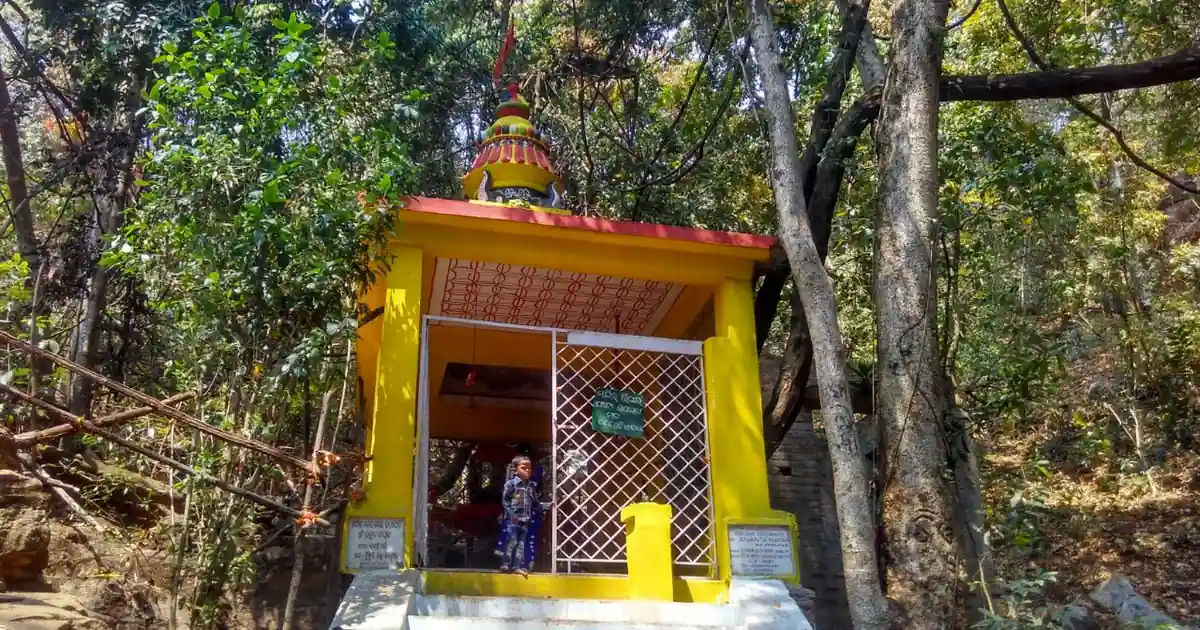
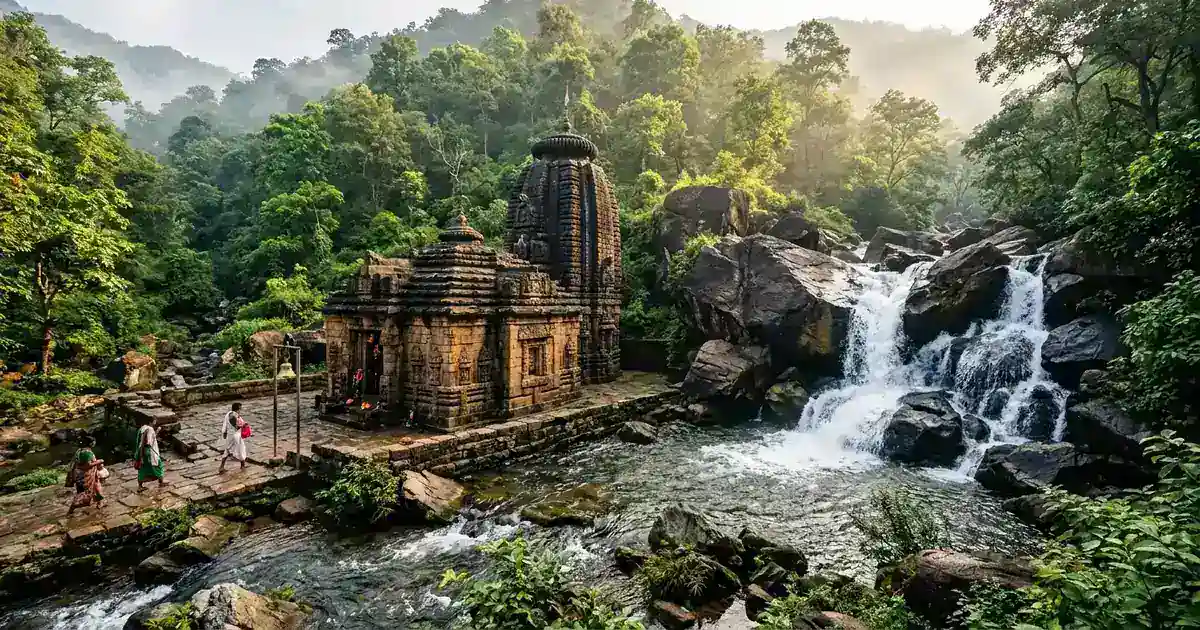
Gonasika Temple Keonjhar holds a venerable place in the cultural geography of Odisha. Perched amid the rolling forested ridges of Banspal block within Kendujhar district travel guide, this historic shrine marks the geographical origin of the holy Baitarani River. As one of the most distinctive pilgrimage destinations across northern Odisha, the complex combines deep river myth, tribal history, and classical Shaivite worship.
Travelers exploring Gonasika Keonjhar encounter both ancient stone heritage and mountain waterways. The site ranks prominently among the famous temples in Odisha because of its direct connection to the Baitarani River, which is worshipped across the region as a counterpart to the Ganga.
Key Takeaways
- Source of the Baitarani River: The sacred river emerges from a natural rock formation shaped like a cow’s nostril.
- 17th-Century Shiva Sanctuary: Lord Brahmeswar Mahadev temple was established under the royal patronage of the Keonjhar Bhanja dynasty.
- Mysterious Guptaganga Flow: The newly emerged mountain stream flows underground through granite fissures before collecting in Brahmakunda tank.
- Juang Tribal Heartland: The surrounding mountain valleys represent the ancestral territory and spiritual home of the indigenous Juang community.
- Accessible Mountain Excursion: Located approximately thirty-three kilometers southwest of Keonjhar district headquarters via scenic paved roads.
Gonasika Temple and Baitarani Origin at a Glance
A journey to Gonasika provides insight into how geographical landmarks gain sacred identity in eastern India. High in the Eastern Ghats hills, mountain springs gather between forested slopes to create one of Odisha’s six major river systems.
Pilgrims visit the shrine to offer morning prayers to Lord Brahmeswar Mahadev before walking uphill to witness the exact point where water trickles from the rock cleft. As one of the prime keonjhar tourist places, the destination welcomes families, historians, and pilgrims throughout the year.
| Feature | Official Fact | Visiting Notes |
|---|---|---|
| Presiding Deity | Lord Brahmeswar Mahadev (Shiva) | Ancient stone lingam in the sanctum |
| Geographic Significance | Origin of River Baitarani | Emerges from cow-nostril rock cleft |
| Historical Patron | King Laxmi Narayan Bhanja (1654–1688 AD) | Ruler of the Keonjhar Princely State |
| Location | Banspal Block, Kendujhar District | 33 km southwest of Keonjhar town |
| Temple Timings | 6:00 AM to 6:00 PM | Open every day of the week |
| Entry Fee | Free entry for all visitors | No ticket required for temple or spring |
| Nearest Railway Station | Kendujhar Railway Station (KDJR) | 35 km northeast via direct road |
| Sacred Water Tank | Brahmakunda | Traditional holy dip location |
The surrounding woodland canopy creates pleasant shade along the walking paths, offering comfortable touring conditions from October through March.
Mythological Origins: The Sacred Source of the Baitarani River
The cultural significance of Gonasika is rooted in its river origin folklore. The name Gonasika derives from the Sanskrit terms Go (cow) and Nasika (nostril or nose). According to regional oral history, the holy river initially emerges from a natural granite cleft that closely resembles the nostrils of a resting cow.
Ancient scriptures in Odisha revere the Baitarani as a sanctifying river capable of washing away earthly transgressions. Legends link the spot to Sage Parashurama and Sage Kapila, who were said to have meditated upon these granite ridges.
Lord Brahma is traditionally believed to have conducted a yajna in this valley, giving rise to the name Brahmeswar Mahadev for the presiding deity. The site is widely celebrated by devotees as gonasika temple baitarani river origin.
Devotees revere this perennial mountain spring as holy water, carrying small brass urns of Baitarani stream water back to their home shrines across the state.
Architectural Profile of Brahmeswar Mahadev Temple
The formal stone sanctuary at Gonasika was developed by the rulers of the Keonjhar kingdom. Chroniclers record that King Laxmi Narayan Bhanja, who ruled the Keonjhar Princely State from 1654 to 1688 AD, established the formal stone deul for Lord Shiva. This structure represents one of the significant bhanja dynasty temples keonjhar preserves today.
The temple follows the traditional Kalinga architectural order with a rekha deul tower rising above the square sanctum sanctorum. The outer walls feature hand-carved stone reliefs depicting guardian deities, celestial attendants, and Shaivite emblems.
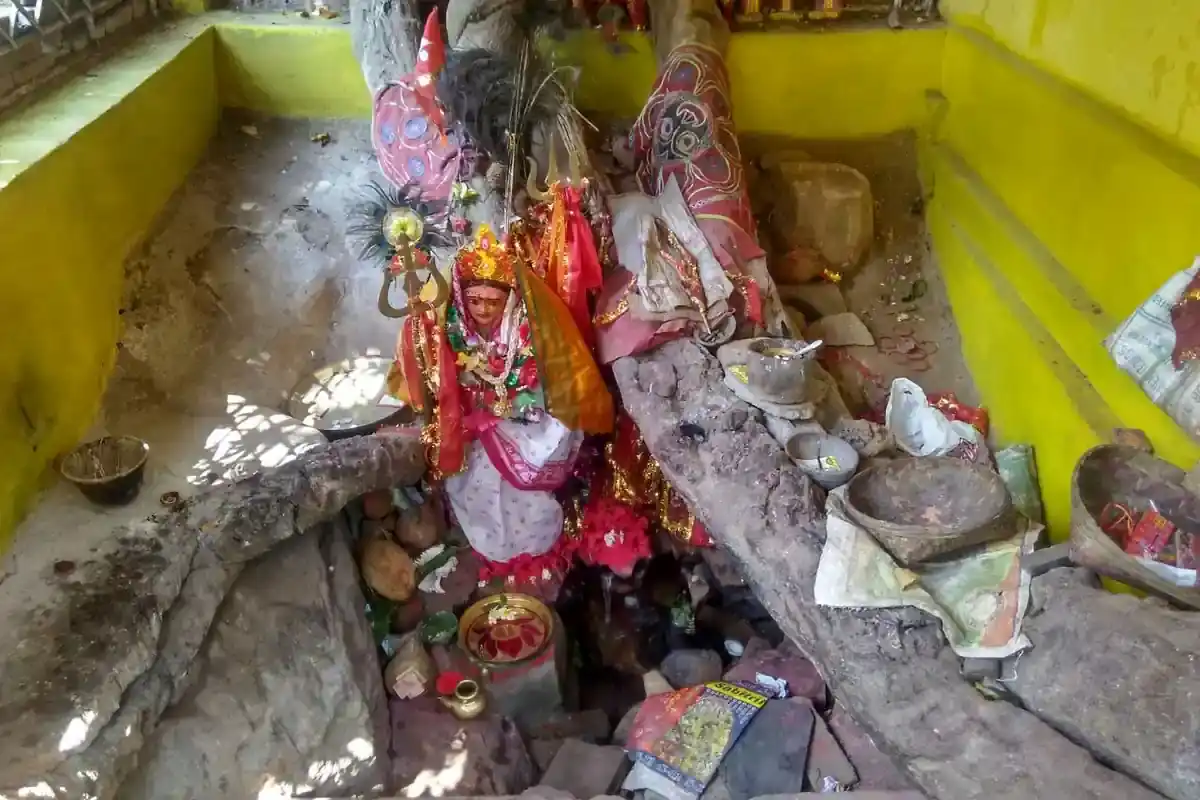
Inside the sanctum, the self-manifested Shiva lingam is kept bathed in cool mountain spring water. Devotees admire the simple dignity of this rural stone shrine, which harmonizes naturally with the rugged mountain landscape.
Guptaganga and the Sacred Brahmakunda Bathing Tank
One of the most fascinating hydrological and spiritual features of the site is Guptaganga Gonasika. After bubbling out from the rock cleft at the hilltop, the young stream flows exposed for only a short distance.
The stream then disappears underground into natural subterranean rock channels. Because the river conceals itself beneath the rock strata, locals named this hidden reach Guptaganga, meaning the “hidden Ganges.”
Approximately half a kilometer downstream, the subterranean stream resurfaces and fills a masonry-bordered stone reservoir known as Brahmakunda. The holy pool of brahmakunda gonasika serves as the sacred repository for pilgrims performing holy ablutions before darshan.
During seasonal festivals, pilgrims gather around Brahmakunda to perform ancestral tarpan rituals, believing the sanctified mountain waters carry great spiritual efficacy. Stone steps provide safe access for devotees to collect holy water for temple rituals.
Indigenous Juang Tribal Heritage and Sacred Forest Lore
The cultural identity of Gonasika cannot be separated from the indigenous Juang tribe. The Gonasika hill range constitutes the ancestral homeland of this ancient Munda-speaking tribal community.
According to Juang creation traditions, their very first ancestors emerged upon these forested hillsides beside the Baitarani springs. To the Juang people, the mountain ridges are sacred living beings rather than merely physical landscapes.
The Juang community actively participates in the custodianship of the shrine. Alongside traditional Brahmin servitors, indigenous priests known as Dehurys hold recognized ceremonial roles during regional rituals.
This peaceful cooperation between tribal custodians and temple priests illustrates the inclusive spirit that characterizes religious evolution in inland Odisha. Respecting local tribal customs and forest environments remains an important duty for visiting travelers.
Temple Timings, Daily Rituals, and Annual Festivals
Brahmeswar Temple maintains a consistent daily prayer routine suited to early morning pilgrims and traveling families. Understanding gonasika temple timings helps visitors schedule their excursion effectively.
| Daily Ritual | Schedule | Devotee Participation |
|---|---|---|
| Temple Opening & Morning Arati | 6:00 AM to 6:30 AM | Sacred dawn worship with bells and incense |
| Darshan & Jalabhishekam | 6:30 AM to 12:30 PM | Devotees offer mountain water and bilva leaves |
| Madhyanha Bhog (Midday Closure) | 12:30 PM to 2:00 PM | Inner sanctum closed; spring grounds open |
| Afternoon Reopening | 2:00 PM to 5:30 PM | Open darshan and peaceful temple walks |
| Sandhya Alati & Evening Closure | 5:30 PM to 6:00 PM | Dusk prayer service before nighttime closure |
The greatest annual gathering at Gonasika occurs during the Maha Shivaratri festival in February or March. Thousands of pilgrims keep vigil throughout the night, lighting brass oil lamps along the hillside.
Another significant celebration is the Baruni Jatra and baruni mela gonasika in late spring, when pilgrims assemble from surrounding districts for a ritual dip in the sacred waters of Brahmakunda.
How to Reach Gonasika from Keonjhar and Bhubaneswar
Planning how to reach gonasika from keonjhar is straightforward thanks to paved district roads connecting the town center with Banspal block. The keonjhar to gonasika distance is approximately thirty-three kilometers, taking about forty-five to sixty minutes by road.
| Journey Segment | Distance | Approximate Time | Recommended Travel Route |
|---|---|---|---|
| Keonjhar Town Center | 33 km | 50 minutes | Via Keonjhar-Banspal rural roadway |
| Banspal Block Office | 12 km | 20 minutes | Local connecting mountain road |
| Kendujhar Railway Station | 35 km | 55 minutes | Direct transit via town bypass road |
| Barbil Mining Hub | 95 km | 2 hours 15 minutes | Via NH-520 and Banspal connection |
| Bhubaneswar Capital | 245 km | 5 hours 30 minutes | Via NH-20 northbound to Keonjhar |
Transit by Private Vehicle or Taxi
Hiring a private taxi or driving a personal vehicle is the most comfortable way to visit Gonasika. The road winds through scenic sal forests and tribal hamlets, offering scenic viewpoints of the Eastern Ghats.
Rail Transit Options
The nearest railhead is Kendujhar Railway Station (KDJR), situated thirty-five kilometers away. Taxis and local auto-rickshaws can be arranged outside the station to complete the final mountain leg. Official travel updates and route advisories are provided on the Odisha State Portal and the Odisha Tourism Portal.
Nearby Destinations in the Keonjhar Heritage Circuit
A trip to Gonasika pairs effortlessly with other cultural and nature destinations across Keonjhar district.
Sanaghagara Waterfall
Located just five kilometers outside Keonjhar town, Sanaghagara Waterfall travel guide offers a gentle perennial cascade in a landscaped botanical setting. When reviewing gonasika vs sanaghagara, Sanaghagara provides family parks and picnic lawns, while Gonasika offers historic river origins and religious pilgrimage.
Murga Mahadev Temple and Waterfall
Situated seventy kilometers north in Champua subdivision, this hillside shrine is covered in our Murga Mahadev Keonjhar guide. In comparing gonasika vs murga mahadev, both shrines celebrate Lord Shiva in forested mountain settings, but Murga Mahadev features a direct rocky cascade beside the sanctum.
Bhimkund Natural Gorge
Located on the Baitarani River downstream, this magnificent deep blue rock reservoir is highlighted in our Bhimkund Waterfall travel guide.
Ghatagaon Maa Tarini Shrine
Keonjhar’s spiritual heartland centers on the celebrated coconut-offering temple described in our Ghatagaon Maa Tarini Temple guide.
Essential Visitor Guidelines and Forest Etiquette
- Footwear Selection: Wear walking shoes with dependable rubber traction because of slippery rocks near spring channels and steps.
- Respect Sacred Springs: Avoid washing soap or disposing of litter into Brahmakunda or the natural Baitarani spring cleft to protect clean mountain waters.
- Modest Attire: Modest attire required covering shoulders and knees when visiting the inner sanctum of Brahmeswar Temple.
- Carry Cash and Water: Keep bottled drinking water and small currency notes handy, as village stalls around Banspal have limited electronic payment options.
- Protect Tribal Privacy: Respect the privacy of local Juang villagers when walking through surrounding forest hamlets, asking permission before taking personal portraits.
- Daylight Scheduling: Begin your return drive before nightfall to navigate the winding forest roads comfortably in daylight.
Frequently Asked Questions
What is the historical importance of Gonasika Temple in Keonjhar?
Gonasika Temple marks the sacred origin point of the holy Baitarani River and houses the 17th-century Brahmeswar Shiva shrine built by King Laxmi Narayan Bhanja. The temple remains a cornerstone of regional spiritual heritage and Juang tribal history.
Why is the river origin at Gonasika called Guptaganga?
The river emerges from a cow-nostril rock cleft before flowing underground into hidden subterranean fissures for nearly half a kilometer. Because the holy current stays concealed before re-emerging at Brahmakunda, locals call it Guptaganga.
How far is Gonasika from Keonjhar town?
Gonasika is located approximately thirty-three kilometers southwest of Keonjhar town in Banspal block. The road journey typically takes forty-five to sixty minutes by private car or hired taxi through scenic forest roads.
What are the opening hours of Gonasika Temple?
The temple is open every day from 6:00 AM to 6:00 PM for public darshan. The inner sanctum pauses briefly for midday bhog offerings between 12:30 PM and 2:00 PM.
Is an entrance fee charged at Gonasika Temple?
No entrance fee is required to enter Brahmeswar Temple or visit the Guptaganga river origin spring. Visitors only need to pay nominal parking charges if arriving by personal four-wheeler.
What is the best season to plan a trip to Gonasika?
The best time to visit is during the post-monsoon and winter months from October to March when temperatures are mild and mountain greenery is abundant. Maha Shivaratri in late winter is especially popular for experiencing cultural rituals.