Bhimkund Waterfall Keonjhar: Best Time, History & Guide
Explore scenic Bhimkund Waterfall on the Baitarani River in Keonjhar. Discover natural blue water pools, picnic amenities, Makar Sankranti mela, and routes.
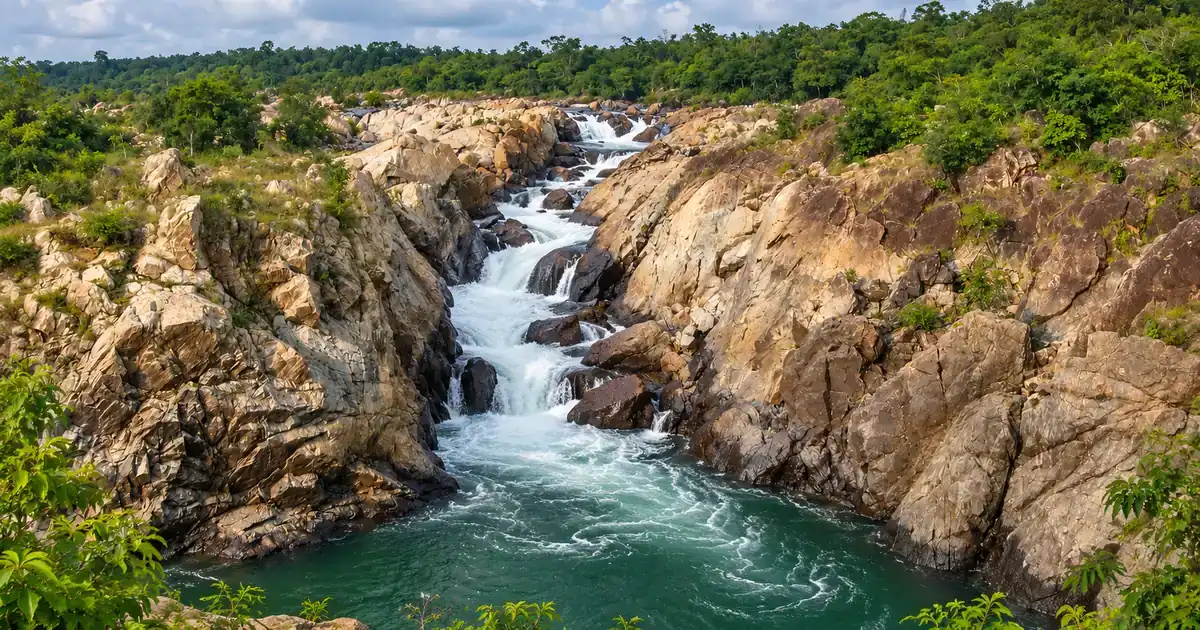
The dramatic cascades of Bhimkund Waterfall Keonjhar form one of northern Odisha’s most captivating natural landmarks. Carved into hard granite bedrock by the energetic waters of the holy River Baitarani, this geological marvel marks the geographical boundary between Kendujhar and Mayurbhanj districts. Visitors from across eastern India travel to witness its subterranean churning currents, sheer stone cliffs, and clear turquoise waters.
Unlike traditional mountain waterfalls that drop vertically off tall mountain ridges, Bhimkund channels an entire river through a constricted canyon. The foaming river surges over smooth boulders before plunging into a legendary deep reservoir. This comprehensive travel guide covers verified route options, seasonal safety guidelines, mythological folklore, and nearby attractions confirmed through Eco Tour Odisha and the Odisha Tourism Official Portal.
Key Takeaways
- River Gorge Landmark: Formed by the swift-flowing River Baitarani cutting through ancient crystalline rocks on the border of Kendujhar and Mayurbhanj.
- Twin Reservoirs: Consists of two interconnected natural pools known locally as Sanakunda (upper pool) and Badakunda (lower reservoir).
- Mahabharata Heritage: Revered in regional folklore as the place where the Pandava hero Bhima struck his mace to create drinking water for Draupadi.
- Favorite Picnic Destination: Features cemented pavilions, shade trees, and riverside clearings that attract winter picnic groups and family travelers.
- Free Public Access: Open daily between 6:00 AM and 6:00 PM without any admission ticket, charging only nominal parking fees for vehicles.
Overview and Natural Setting of Bhimkund Waterfall
Bhimkund stands out among eastern India’s water bodies because of its unusual canyon morphology. Rather than tumbling over a mountain escarpment, the broad Baitarani River funnels into a narrow rock fissure measuring less than twenty meters across. The compressed river volume roars over polished stone sills, creating a natural acoustic theater that can be heard long before reaching the water’s edge.
The surrounding landscape features undulating sal forest hills, rustic tribal hamlets, and expansive river terraces. While the administrative jurisdiction on the western bank falls under the Patna block of Kendujhar district, the opposite bank forms part of the Thakurmunda region in Mayurbhanj. This border location gives travelers the unique opportunity to experience the scenic gorge from two distinct regional perspectives.
The Baitarani River Gorge and Twin District Border
The Baitarani River is celebrated across Odisha as a sacred waterway alongside the Mahanadi and Brahmani. As it flows through the northern highlands toward the coastal delta, it encounters hard granite-gneiss belts that resist erosion. Over millions of years, water scouring along joints and fissures created the deep gorge visible today.
Travelers planning an extended exploration of the region can review our complete guide to Kendujhar district to discover nearby tribal villages, iron-ore highlands, and forest shrines. Because Bhimkund sits directly on the border with Mayurbhanj, visitors frequently cross into the northern bank and continue toward Karanjia by following our Mayurbhanj district travel guide.
Sanakunda and Badakunda: The Deep Blue Pools
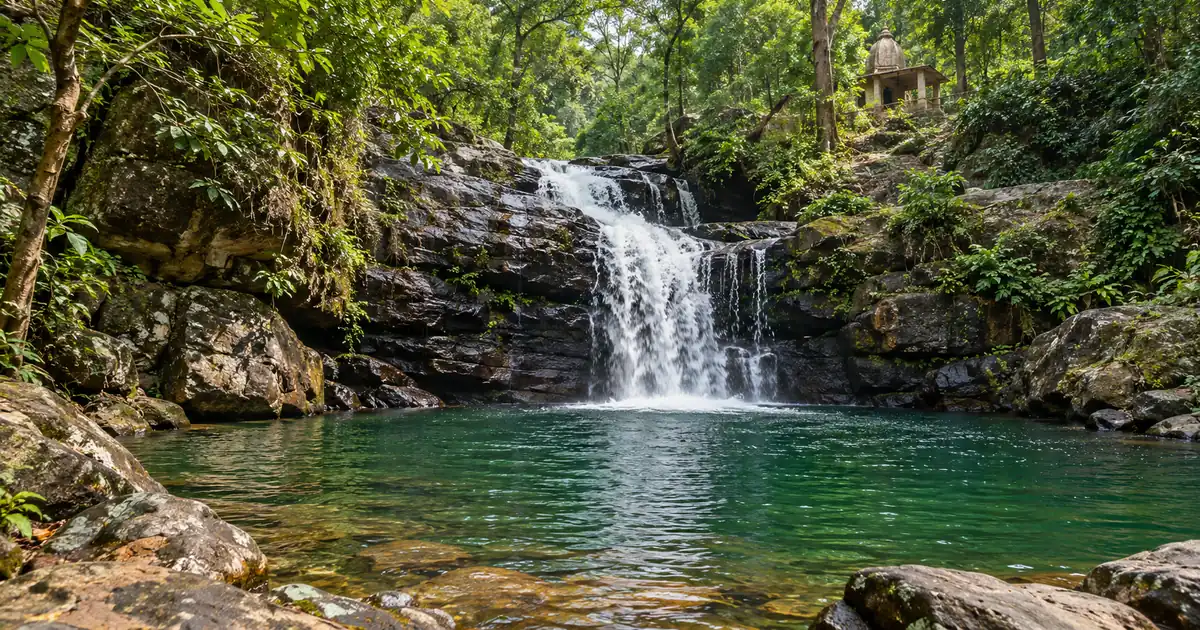
The hydraulic force of the river created two stepped depressions known as Sanakunda and Badakunda. Sanakunda serves as the upper settling basin, where foaming whitewater slows down after dropping over the initial rock shelf. From there, the stream spills through a narrower secondary sluice into Badakunda.
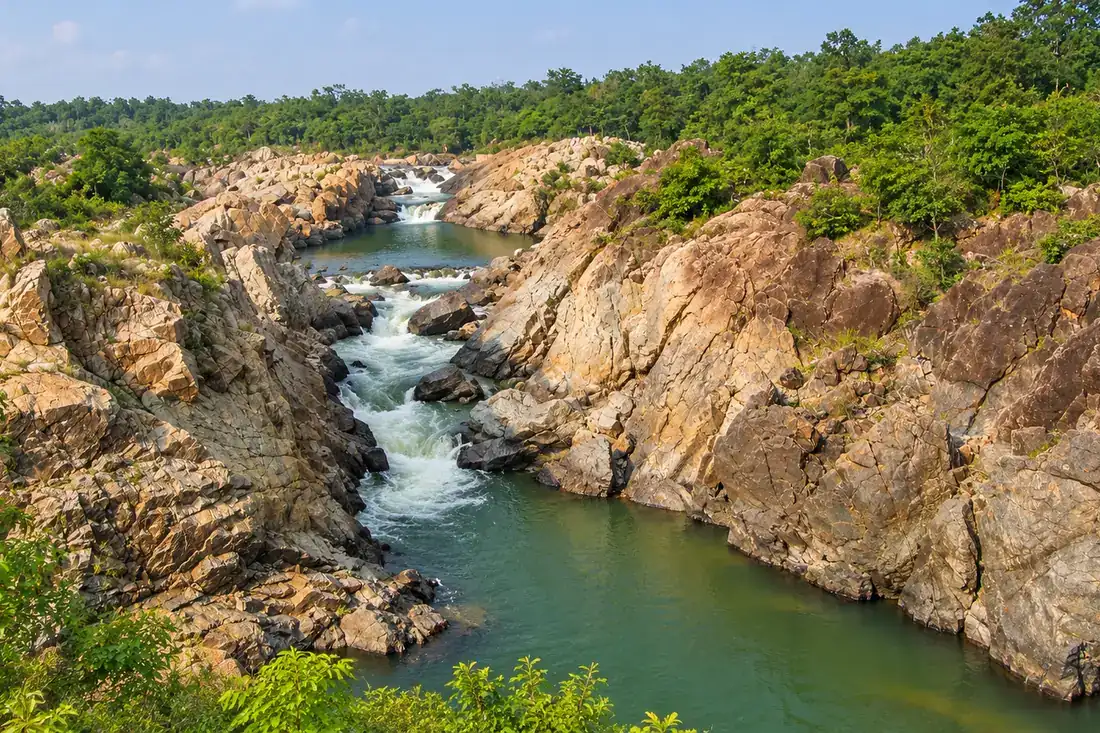
Badakunda is the principal circular pool that has fascinated geologists and pilgrims for centuries. The water here displays a striking emerald-green and azure-blue tint, created by sunlight scattering through sediment-free deep water against dark granite bedrock. Local lore refers to this reservoir as the blue water pool Bhimkund, celebrating its crystal clarity during dry post-monsoon months.
Geological Anatomy of the Granite Cavern
From a geological standpoint, Bhimkund represents an extraordinary example of fluvial pothole erosion and rock whirlpool scouring. Continuous swirling of quartz gravel carried by floodwaters carved deep vertical cylindrical walls into the granite floor. Over geological epochs, neighboring potholes coalesced to form the cavernous basin.
Hydrologists note that the true depth of Bhimkund pool has never been definitively established by surface sounding lines. Local folklore frequently claims the pool is connected to subterranean aquifers. The natural stone gorge acts as a giant surge basin, dampening river energy before the Baitarani continues its gentle eastward course toward Jajpur.
| Physical Parameter | Value / Characteristic | Traveler Significance |
|---|---|---|
| Forming River | Baitarani River | Sacred perennial river of northern Odisha |
| Geological Formation | Fluvial granite canyon and swirl pothole | Rare horizontal canyon formation |
| Water Clarity | Emerald-blue to deep azure (Winter/Summer) | Optimal for landscape photography |
| Primary Basins | Sanakunda (Upper) & Badakunda (Lower) | Natural two-tier waterfall system |
| Jurisdiction | Patna Block, Kendujhar / Mayurbhanj Border | Accessible from both district road networks |
| Elevation | Approx. 310 meters above mean sea level | Pleasant subtropical woodland climate |
Mythology, Folklore, and Sacred Cultural Heritage
Beyond its geological appeal, Bhimkund possesses deep religious importance rooted in ancient epic traditions. For local residents, the site is not merely a scenic picnic clearing but a sacred pilgrimage spot sanctified by the Pandavas during their mythical wanderings.
The tranquil morning hours often see tribal villagers and regional pilgrims offering flowers and lighting earthen lamps along the rocky banks. The air carries the scent of wild forest blossoms and temple incense, lending the gorge an enduring spiritual ambiance.
The Pandavas in Viratnagar and Bhima’s Mace
Local legends link the creation of the pool directly to the Mahabharata. During their one-year period of incognito exile (Agyatavasa) in the kingdom of Viratnagar, the five Pandava brothers and their consort Draupadi traversed these rugged northern woodlands.
According to oral tradition, Draupadi became overwhelmed by thirst under the scorching sun while crossing the dry stone riverbed. Seeing no accessible surface water, the mighty hero Bhima struck the granite earth with his enormous mace (Gada). The strike shattered the subterranean rock strata, causing cool underground waters of the Baitarani to bubble up into a deep, circular reservoir.
Graciously refreshed, Draupadi quenched her thirst, and Bhima subsequently used the deep pool for his daily sacred ablutions. Hence, villagers christened the cascade Bhimkund waterfall history and legend across generations.
Kundeswar Mahadev Temple and the Bhima Statue
Perched above the rocky bluff on the Kendujhar bank stands the ancient Kundeswar Mahadev Temple. Dedicated to Lord Shiva, this small stone shrine serves as the spiritual guardian of the river gorge. Devotees offer river water, bel leaves, and milk to the Shiva lingam before proceeding down to view the rapids.
Beside the temple courtyard, the local tourism committee erected an imposing statue of Mahabali Bhima standing resolutely with his mace resting against his shoulder. The colorful sculpture provides a popular photo backdrop for visiting families and schoolchildren learning about regional folk heritage.
The Annual Makar Sankranti Gathering
The spiritual significance of Bhimkund reaches its annual peak during the Hindu harvest festival of Makar Sankranti in mid-January. Tens of thousands of pilgrims assemble from Keonjhar, Mayurbhanj, Balasore, and neighboring Jharkhand districts to take holy purification dips in the Baitarani.
The confluence turns into a festive cultural fairground known as the Makar Sankranti mela Bhimkund. Temporary market stalls spring up along the approach roads, offering traditional Odia sweets like arisa pitha, chhena poda, bamboo handicrafts, and handcrafted brass jewelry. Folk troupes perform traditional Chhau dance and tribal dhol beats, infusing the forested riverbanks with festive music.
Waterfall Cascades, Photography Viewpoints, and Watchtowers
The sensory appeal of Bhimkund lies in the contrasting visual rhythms of raging whitewater and tranquil deep pools. As the Baitarani River approaches the canyon sills, its speed increases exponentially, sending white spray high into the morning air.
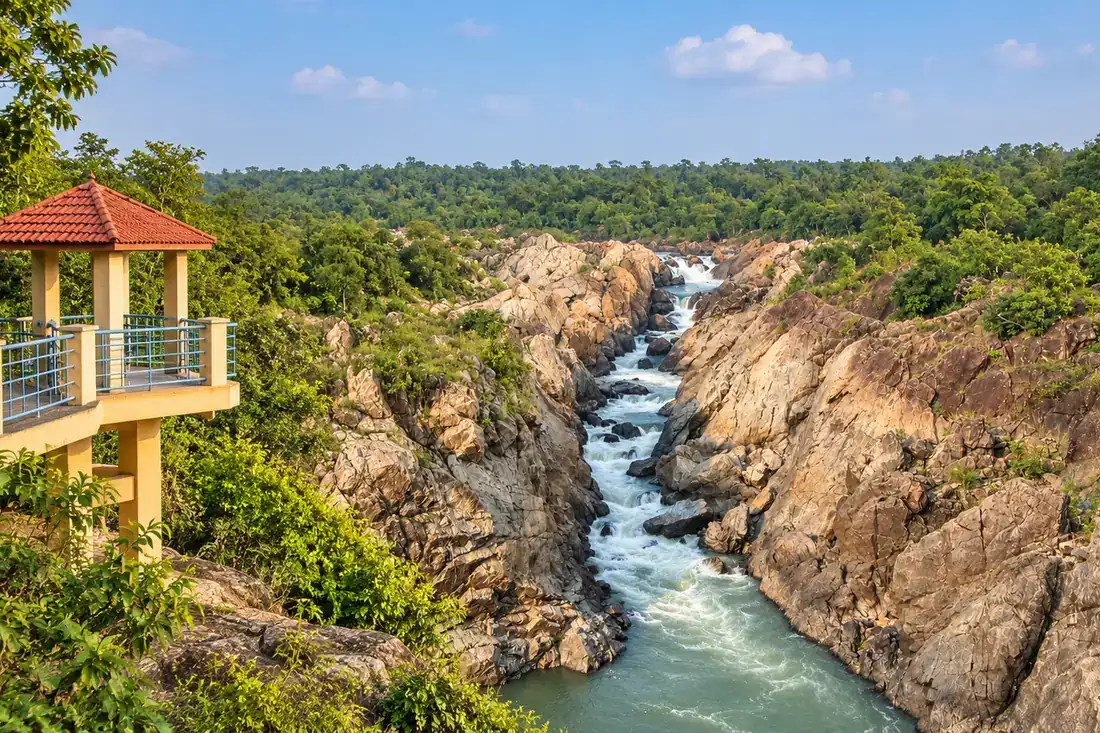
State tourism agencies on both district borders have invested in dedicated viewing infrastructure. Raised watchtowers, fenced walkways, and concrete lookouts allow visitors to admire the swirling pools safely from elevated vantage points.
The Two-Tiered Waterfall Drop
The waterfall system operates in two distinct stages. The first cascade tumbles roughly 5 to 7 meters down a broad granite ramp into the Sanakunda basin. The rushing current produces a persistent roaring sound that echoes through the rock walls.
The second tier drops an additional 6 meters through a compressed stone funnel into Badakunda. Here, the churning river collides against underwater subterranean rock walls, producing spiraling whirlpool eddies before smoothing into tranquil, reflective azure waters.
To compare Bhimkund with vertical plunging falls like Barehipani and Khandadhar, consult our comprehensive directory of waterfalls in Odisha. While mountain cascades like Barehipani Waterfall plunge hundreds of meters down steep cliff faces, Bhimkund channels immense river power through a narrow horizontal canyon.
Keonjhar versus Mayurbhanj Bank Viewpoints
Because the river divides two districts, each riverbank offers a distinct sightseeing angle:
- The Keonjhar Bank (Patna Block): Provides direct access to the Kundeswar Mahadev Temple, the prominent Bhima statue, and the main elevated watchtower viewing decks. This side has expansive open grounds suited for large vehicle parking and community picnics.
- The Mayurbhanj Bank (Thakurmunda Side): Offers an intimate, eye-level perspective of the swirling Badakunda pool. The rock formations here form wide natural stone terraces where visitors can sit shaded by tall arjun and sal trees.
A pedestrian pathway connects both riverbanks via a downstream footbridge, allowing energetic travelers to tour both sides within a single two-hour visit.
Nature Photography Angles and Water Mist
For nature photographers and content creators, Bhimkund provides exceptional composition opportunities. Early morning sunlight between 7:00 AM and 9:30 AM illuminates the rising river spray, frequently creating vivid natural rainbows across the mouth of the rock gorge.
Wide-angle landscape lenses capture the dramatic contrast between the polished dark gray rock cliffs and the emerald-blue reservoir. Fast shutter speeds freeze the violent churning whitewater at Sanakunda, while long-exposure shots render the swirling surface of Badakunda into smooth, mystical blue silk.
[!TIP] Polarizing filters are invaluable when shooting at Bhimkund. They cut surface glare from the rushing water and reveal the astonishing subterranean depth and mineral hues of the blue pool.
Picnic Experience, Visitor Amenities, and Safety Guidelines
Bhimkund is widely recognized as one of the most popular outdoor picnic destinations in northern Odisha. Between November and February, hundreds of families, youth groups, and corporate clubs travel from nearby towns to spend a full day cooking and relaxing beside the river.
The local administration has developed designated picnic zones away from fragile water edges to balance tourism recreation with river cleanliness.
Dedicated Picnic Pavilions and Cooking Pindis
The Keonjhar tourism division established shaded concrete gazebos, masonry cooking platforms (pindis), and tap water connections along the upper woodland clearings. These dedicated bhimkund picnic spot facilities allow picnic groups to prepare traditional Odia meals in comfort without damaging vegetation.
Visitors can purchase fresh seasonal vegetables, poultry, and wood charcoal from roadside village kiosks near Booring. However, groups planning elaborate multi-course meals should bring cooking vessels, spices, and drinking water canisters from Keonjhar or Karanjia.
Essential Safety Rules and Swimming Restrictions
While the tranquil blue water of Badakunda appears tempting on warm afternoons, the gorge conceals perilous underwater currents and sudden hydraulic down-pulls. The district administration strictly enforces safety rules at Bhimkund to prevent accidental drowning:
- Strict Swimming Ban: Absolute swimming restrictions apply across all sections of Badakunda and Sanakunda. Strong subsurface whirlpools can trap even experienced swimmers.
- Stay Behind Safety Railings: Do not climb over boundary fences or venture onto algae-covered, wet boulders near the rushing rapids.
- Supervise Children Constantly: Families traveling with young children must keep them away from unfenced river ledges.
- Avoid Monsoon Edge Access: During heavy July-September floods, river levels can rise dramatically within minutes, submerging the rocky viewing platforms.
[!CAUTION] Under no circumstances should visitors attempt to swim, dive, or wash utensils inside the main kund reservoir. The underwater suction currents are severe and unpredictable throughout the year.
Eco-Tourism Infrastructure and Waste Management
To safeguard the delicate river ecosystem, the district forest department conducts regular anti-litter drives. Masonry dustbins are stationed throughout the picnic clearings, and visitors are urged to avoid single-use plastic bags and thermocol plates.
Eco-conscious travelers should carry cloth bags and pack out all food wrappers and drink bottles. Maintaining site cleanliness preserves this natural river ecosystem for future generations.
| Facility / Amenity | Availability | Details & Advice |
|---|---|---|
| Entry Fee | Free | Completely free public entry for all tourists |
| Vehicle Parking | Available | Nominal parking charges: ₹20 two-wheelers, ₹50 four-wheelers |
| Public Toilets | Available | Basic sanitation blocks located near the entrance gate |
| Drinking Water | Borewell / Hand Pumps | Bottled water recommended for personal consumption |
| Picnic Pavilions | Available | Concrete pindis and shaded benches in upper zone |
| Mobile Network | Moderate | Jio and Airtel provide reliable 4G calling and data |
Comparing Bhimkund with Other Northern Odisha Waterfalls
The northern plateau of Odisha is celebrated for its dense concentration of forested waterfalls and natural springs. Understanding how Bhimkund compares with other regional landmarks helps travelers build an optimized travel itinerary.
Much like the sacred natural pools of Devkund Waterfall in the Similipal foothills, Bhimkund combines geological water formations with deep regional spiritual reverence. However, each cascade in the district possesses its own distinctive character and appeal.
Bhimkund versus Sanaghagara and Badaghagara
Located near Keonjhar town, the scenic Sanaghagara Waterfall park and Badaghagara represent classic stepped mountain cascades. Sanaghagara features manicured botanical gardens, paddle boating ponds, and children’s amusement parks, making it an urban leisure retreat. Badaghagara drops sixty meters through a dense sal valley, attracting trekkers and nature purists.
By contrast, Bhimkund offers a much more powerful river dynamic. Instead of a narrow mountain rivulet, it handles the full force of the Baitarani River. Visitors witness an immense volume of water surging through raw rock fissures, giving Bhimkund an untamed, dramatic atmosphere that manicured leisure gardens cannot match.
Bhimkund versus Gundichaghai and Devkund
Gundichaghai Waterfall, situated in Ghatgaon block, cascades down a sheer 15-meter rock amphitheater surrounded by fragrant wild forest. Devkund in Mayurbhanj features five sacred mountain pools hidden deep inside the Similipal biosphere, requiring a scenic walk through protected tiger reserve foothills.
Bhimkund bridges the gap between raw wilderness and easy vehicle access. Its paved approach road delivers visitors within two hundred meters of the river gorge, making it accessible to senior citizens and family travelers who might struggle with strenuous wilderness hikes.
Why Bhimkund Offers a Distinct Canyon Experience
What truly sets Bhimkund apart is its unique canyon topography. While other waterfalls across Odisha are defined by their vertical plunge heights, Bhimkund captivates visitors with horizontal river velocity, emerald depth, and acoustic drama.
The sight of the holy Baitarani swirling inside dark granite caverns before emerging as a tranquil mirror-like pool creates an unforgettable impression. It remains one of the few places in eastern India where tourists can witness river hydraulics carving living rock before their eyes.
How to Reach Bhimkund Waterfall: Routes and Transit Logistics
Reaching Bhimkund is straightforward thanks to well-maintained national and state highway networks linking Kendujhar with Mayurbhanj and coastal Odisha.
Travelers driving from Cuttack or Bhubaneswar typically combine Bhimkund with a spiritual stopover at the famous Maa Tarini Temple at Ghatagaon along NH 20.
Road Routes from Keonjhar and Karanjia
Road travel provides the most flexible transit option for reaching the waterfall:
- From Keonjhar Town (Approx. 60 km): Head south along National Highway 20 toward Dhenkikote junction. Turn east along the State Highway toward Patna block headquarters, and follow local signposts through Booring village directly to the Bhimkund parking plaza.
- From Karanjia Town (Approx. 40 km): Drive southwest along NH 49 and connected rural district roads via Thakurmunda. This scenic rural route winds through peaceful sal groves and across the upper Baitarani bridge.
- From Bhubaneswar / Cuttack (Approx. 215 km): Travel north on NH 16 to Panikoili, connect to NH 20 past Ghatagaon, and turn eastward toward Patna block. Total driving time is approximately 4.5 to 5 hours by private car.
| Origin City / Town | Distance | Recommended Highway Route | Driving Time |
|---|---|---|---|
| Karanjia | 40 km | Via NH 49 & Thakurmunda Road | 1 hour |
| Keonjhar Town | 60 km | Via NH 20, Dhenkikote & Patna | 1.5 hours |
| Ghatagaon (Tarini Temple) | 45 km | Via Dhenkikote Road | 1 hour 15 min |
| Baripada | 125 km | Via NH 49 through Karanjia | 3 hours |
| Rourkela | 185 km | Via NH 143 and NH 20 | 4.5 hours |
| Bhubaneswar | 215 km | Via NH 16, NH 20 & Patna Route | 4.5 to 5 hours |
Nearest Railway Junctions and Regional Airports
For long-distance travelers arriving by train or flight:
- Kendujhar Railway Station (KDJR): Located approximately 60 km west, offering daily express train connections to Bhubaneswar, Puri, and Chakradharpur.
- Jajpur Keonjhar Road (JJKR): Situated roughly 100 km south on the main Howrah-Chennai mainline, serving express rail links from Kolkata, Delhi, and Hyderabad.
- Biju Patnaik International Airport (BBI): The closest major commercial airport is in Bhubaneswar, located 220 km away with nonstop domestic flights to all major Indian metropolitan hubs.
Local Transport, Auto-Rickshaws, and Parking
Private taxis and rental vehicles represent the most comfortable transit method for touring Bhimkund and neighboring district sights. While local passenger buses ply between Keonjhar, Patna, and Karanjia, they drop passengers at highway junctions 3 to 5 km from the waterfall.
Auto-rickshaws can be hired from Patna market center or Dhenkikote for round trips. The open parking plaza near the entrance gate accommodates dozens of private cars and picnic coaches with nominal municipal parking fees collected at the barrier.
Frequently Asked Questions (FAQs)
Where is Bhimkund waterfall located in Odisha?
Bhimkund waterfall is located on the River Baitarani along the border of Kendujhar and Mayurbhanj districts. The main tourist complex and temple stand within Patna block of Kendujhar district, roughly 60 km from Keonjhar town.
Why is Bhimkund famous and what is its mythology?
Bhimkund is famous for its natural two-tiered waterfall, deep emerald-blue pools, and dramatic granite rock gorge. According to the Mahabharata, the Pandava hero Bhima struck the ground with his mace to create this reservoir so Draupadi could quench her thirst.
Is swimming permitted in Bhimkund pool?
No, swimming or bathing is strictly prohibited in the deep pools of Bhimkund due to dangerous underwater whirlpools and unpredictable currents. Visitors must observe the waterfall from secured concrete walkways and elevated watchtowers.
What is the best time to visit Bhimkund waterfall?
The best time to visit Bhimkund is during the winter season between October and March when pleasant daytime weather allows comfortable picnic activities. Visiting in mid-January lets travelers witness the grand annual Makar Sankranti religious fair.
How far is Bhimkund from Keonjhar and Karanjia?
Bhimkund is situated approximately 60 km from Keonjhar town via NH 20 and Dhenkikote junction. From Karanjia in Mayurbhanj district, the waterfall is around 40 km away via Thakurmunda.
What facilities are available for picnickers at Bhimkund?
The tourist complex provides shaded concrete gazebos, masonry cooking platforms, vehicle parking areas, and basic public toilets. Groups planning extensive picnics are advised to carry their own cooking utensils, provisions, and drinking water.