Pipili Puri: Complete Guide to Applique Craft Village
Discover Pipili in Puri, Odisha. Explore traditional GI-tagged applique craft, Rath Yatra canopies, artisan workshops, shopping tips, route map, and prices.
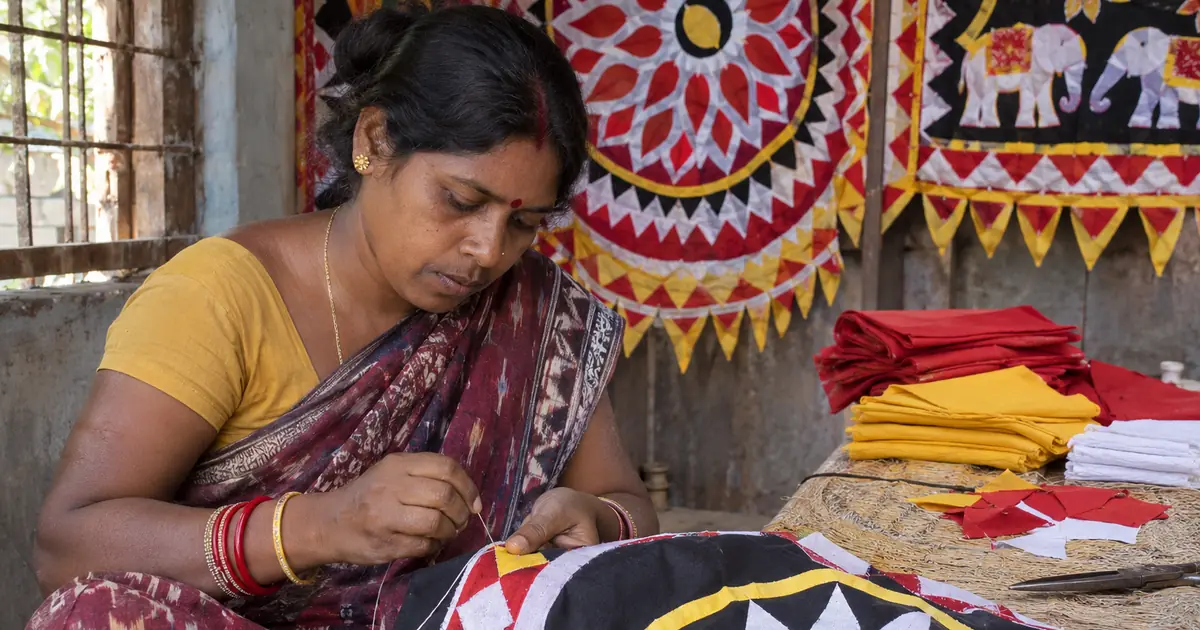
Pipili Puri is an active artisan town in Odisha celebrated globally for its colorful applique cloth work. Situated along the busy highway linking the state capital to the holy coast, this energetic craft settlement presents an unbroken centuries-old tailoring heritage. Travelers journeying toward the sea find both sides of the thoroughfare draped in kaleidoscopic canopies, umbrellas, lampshades, and wall hangings.
The town holds a sacred mandate tied intimately to the religious traditions of Jagannath culture. Local tailoring families trace their lineages back to medieval royal patronage, crafting the majestic fabric coverings that shield the deities during their chariot procession. Today, Pipili stands as a thriving creative marketplace where age-old stitchcraft meets modern decorative taste.
Key Takeaways
- Living Textile Heritage: Home to more than three thousand artisan families producing GI-tagged Odia applique craft (Chandua).
- Sacred Rath Yatra Mandate: Master tailors create ceremonial canopies and banners that dress the chariots of the holy deities.
- Convenient Highway Stop: Situated midway along National Highway 316, making it an easy 30-minute excursion from Bhubaneswar or Puri.
- Direct Artisan Showrooms: Visitors can purchase authentic lanterns, umbrellas, and embroidered panels directly from local creators.
- GI Tag Protection: Awarded Geographical Indication status in 2008 to safeguard authentic hand-needlework traditions.
Quick Facts & Town Profile: Pipili Applique Craft Hub
Pipili functions as both an administrative block headquarters and an intensive artisan collective within the Puri district artisan heritage guide. Every lane behind the main road hums with the rhythm of manual scissors, needle threading, and sewing pedal wheels. Over three thousand families in and around the township sustain their livelihoods through this specialized textile tradition.
The town earned its coveted Geographical Indication (GI) status under the Handicraft goods category in 2008. This legal recognition protects the authentic craft vocabulary of Odisha applique, acknowledging Pipili as its historical core. Walking along the highway strip, visitors observe lively showrooms glowing with warm light filtered through layered fabric lamps.
| Parameter | Official Specification |
|---|---|
| Administrative Location | Pipili NAC, Puri District, Odisha, India |
| Primary Craft Form | Traditional Applique Work (Locally termed Chandua) |
| GI Tag Registration | Registered in 2008 (GI Application No. 86) |
| Key Highway Corridor | National Highway 316 (Bhubaneswar-Puri Expressway) |
| Distance from Bhubaneswar | Approximately 18 kilometers south of city center |
| Distance from Puri Grand Road | Approximately 40 kilometers north of Jagannath Temple |
| Market Working Hours | 9:00 AM to 9:00 PM (Daily, open all 7 days) |
| Entry & Access Cost | Free entry to town market and roadside artisan workshops |
Key Geographic and Economic Profile
Pipili occupies a strategic geographical location within the fertile coastal plains of the Daya River basin. Its position midway between urban Bhubaneswar and coastal Puri has nurtured a robust commercial market for utilitarian and festive fabrics. The local economy relies predominantly on cooperative societies, private artisan units, and wholesale export houses.
Raw materials arrive from commercial cotton markets across western India, while local tailors source mirrors, metallic threads, and colored trims regionally. While men often oversee template tracing and major cutting routines, women artisan groups across surrounding hamlets execute the intricate hand stitching. This collaborative home industry provides critical income directly to rural households.
The Colorful Roadside Artisan Corridor
The main market corridor stretches across a two-kilometer sector of the old highway road. Both sides of the street feature double-story artisan emporiums where bright canopies hang proudly from verandas. Brilliant primary shades of crimson, sunshine yellow, forest green, turquoise, and stark white catch the sunlight throughout the afternoon.
Stepping inside these open-fronted stalls reveals bundles of folded decorative fabrics and ceiling lamps stacked neatly from floor to ceiling. Master craftsmen often sit on clean white floor sheets near the counter, demonstrating fine needlework to curious visitors. Travelers are warmly welcomed to watch the cutting and basting steps without any purchase obligation.
Location and How to Reach Pipili from Major Cities
Reaching the craft village is straightforward because of its direct location along National Highway 316. This six-lane expressway connects Bhubaneswar with Puri, ensuring rapid vehicular transit throughout every season. Tourists traveling between the capital and the sacred coast can easily include a one-hour shopping stop without detour.
If you plan an independent highway road trip or rely on state bus networks, Pipili offers simple access for day travelers exploring places to visit and things to do in Puri. The transit corridor features wide service roads that accommodate passenger drop-offs and roadside parking.
| Starting Point | Distance | Typical Travel Time |
|---|---|---|
| Bhubaneswar Airport (BBI) | 18 km | 30 minutes via NH-316 |
| Bhubaneswar Master Canteen | 20 km | 35 minutes via NH-316 |
| Dhauli Giri Peace Pagoda | 10 km | 15 minutes southbound |
| Puri Grand Road / Temple | 40 km | 50 minutes northbound |
| Konark Sun Temple | 44 km | 60 minutes via Nimapara route |
Driving Approaches Along National Highway 316
Private car or hired cab remains the most convenient transit mode for visitors originating in Bhubaneswar. Driving southward out of the capital crossing the Khordha district highway boundary, travelers pass the Daya River bridge and the Dhauli hills turnoff. Continuing straight along the expressway brings you into the Pipili flyover zone in roughly thirty minutes.
Take the service lane rather than mounting the elevated flyover to enter the artisan bazaar directly. Ample space exists along the service margins for two-wheelers and private cars outside major cooperative showrooms. Returning toward Bhubaneswar or continuing south toward coastal resorts requires an easy lane change at the designated underpass cutouts.
Public Bus Transit and Regional Auto Services
Frequent state transport buses operated by OSRTC and private stage carriages ply between Bhubaneswar and Puri every five minutes. Every regular non-express service stops at the main Pipili highway bus stand. The one-way bus fare from Bhubaneswar Master Canteen stand remains nominal, making this an economical excursion for budget travelers.
Auto-rickshaws and app-based cabs operate regularly from Bhubaneswar suburbs like Uttara and Lingaraj station. For travelers already staying in Puri, regular northbound buses stop at Pipili roundabout within forty-five minutes. Shared passenger autos run continuously connecting Pipili with nearby agrarian market centers like Nimapara and Delanga.
History and Sacred Link to Lord Jagannath Ratha Yatra
The origins of Pipili applique are inseparable from the sacred service rituals of the Jagannath Temple in Puri. Historical palm-leaf chronicles indicate that the craft flourished during the 12th century under the royal patronage of the Ganga dynasty. King Chodaganga Deva formalized specific service guilds to supply liturgical cloth furnishings for daily and festive temple ceremonies.
Among these designated temple sevaks, the Darji community received hereditary land grants and privileges in Pipili. Their sacred duty involved stitching majestic cloth covers, festive canopies, pillow cases, and flags for temple rituals. The high point of their annual calendar arrived with the construction of the colossal ceremonial chariots.
The Traditional Darji Tailor Lineages and Royal Patronage
Centuries ago, the Gajapati rulers of Odisha established settlements around Pipili to position skilled artisans along the principal pilgrimage highway. Master tailors organized themselves into tightly knit trade guilds called nijogs. These guilds preserved secret embroidery techniques, proprietary dye recipes, and strict rules regarding motif geometries.
Royal decrees strictly regulated which colors could adorn specific temple accessories. White, red, yellow, and black symbolized distinct cosmic energies within the Jagannath philosophical tradition. Through unbroken hereditary apprentice training, each generation passed down these tailoring skills to their sons and daughters.
Stitching the Sacred Chariot Canopies (Chandua) and Banners
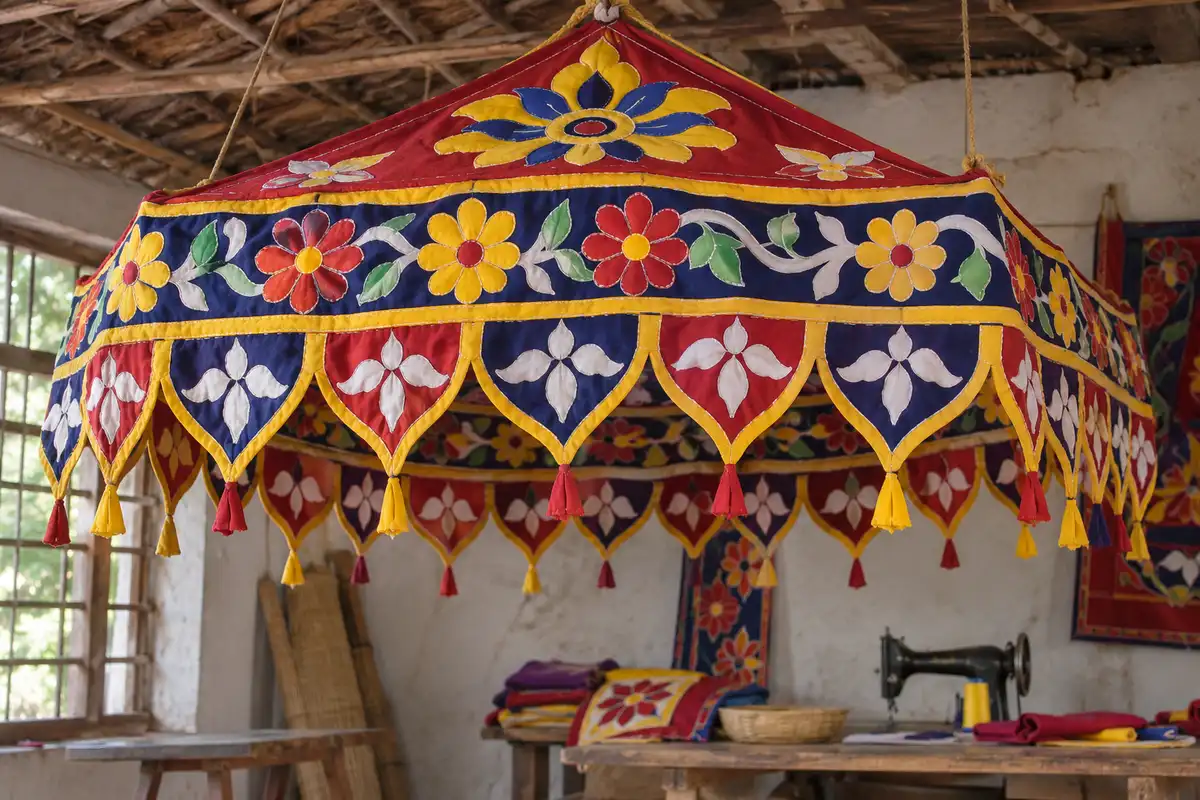
The most prestigious spiritual assignment remains crafting the towering chariot canopies for the grand annual Jagannath Rath Yatra festival. Each of the three magnificent wooden chariots requires hundreds of meters of specially prepared applique drapery. The temple administration commissions these ceremonial canopies months ahead of the summer festival.
- Nandighosa (Lord Jagannath’s Chariot): Draped in regal red and bright yellow applique cloth coverings.
- Taladhwaja (Lord Balabhadra’s Chariot): Wrapped in sacred red and forest green fabric canopies.
- Darpadalana (Devi Subhadra’s Chariot): Shrouded in ceremonial red and stark black applique cloths.
Beyond the chariot canopies, Pipili artisans stitch Trirashmi (ceremonial fans), Chhati (processional umbrellas), and Kahana (royal banners). These liturgical items accompany the deities during sacred processions across the temple grounds. Seeing these grand fabric creations unfurled in spiritual splendor represents the highest honor for Pipili craftsmen.
The Applique Technique: Fabric Cutting, Stitching and Mirrors
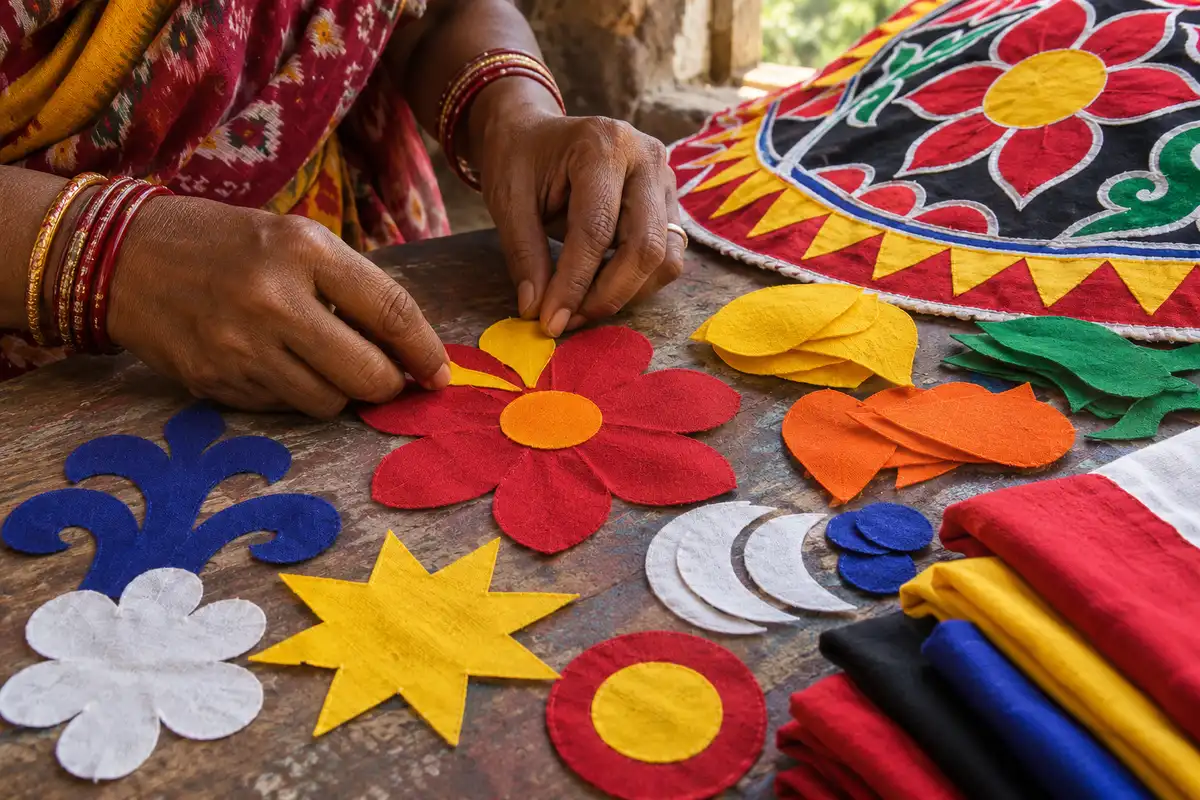
The word applique derives from the French verb appliquer, meaning to attach or lay on. In the Odia language, this traditional craft is referred to as Chandua Kama. The process entails cutting pieces of colored cloth into stylized silhouettes and stitching them onto a sturdy background fabric.
Creating a traditional applique artifact requires exceptional manual dexterity, patience, and visual symmetry. While contemporary shops employ electric sewing machines for mass-market souvenirs, master artisans insist on hand-needle assembly for premium works. The completed textile displays an eye-catching three-dimensional texture enhanced by tiny mirrors and thread embroidery.
| Stage | Craft Phase | Production Details |
|---|---|---|
| Stage 1 | Base Fabric Prep | Sturdy dyed cotton canvas cut and stretched smooth |
| Stage 2 | Motif Templates | Stencil tracing and hand cutting of animal and floral forms |
| Stage 3 | Layered Basting | Temporary alignment and fixing onto base sheet |
| Stage 4 | Fine Needlework | Precise execution of Taropa, Bakhia, and Ganthi stitches |
| Stage 5 | Mirrors & Borders | Interlocking chain stitching of glass mirrors and trim |
Base Canvas Assembly and Motif Cutting Traditions
Artisans begin by selecting heavy cotton cloth or durable canvas to serve as the structural foundation. This background fabric is dyed in solid base colors, typically deep scarlet, black, navy, or natural cream. The base cloth is stretched smoothly across wooden work boards to prevent bunching during the subsequent stitching steps.
Simultaneously, the craftsman traces intricate motifs onto contrasting bright fabric strips using stiff cardboard stencils. Iconic traditional figures include the royal elephant (Gaja), peacock (Mayura), sacred swan (Hamsa), and blooming lotus (Padma). Skilled cutters slice through stacks of folded cloth with razor-sharp shears, producing hundreds of identical silhouettes with effortless precision.
Hand Stitching Techniques: Bakhia, Taropa and Ganthi
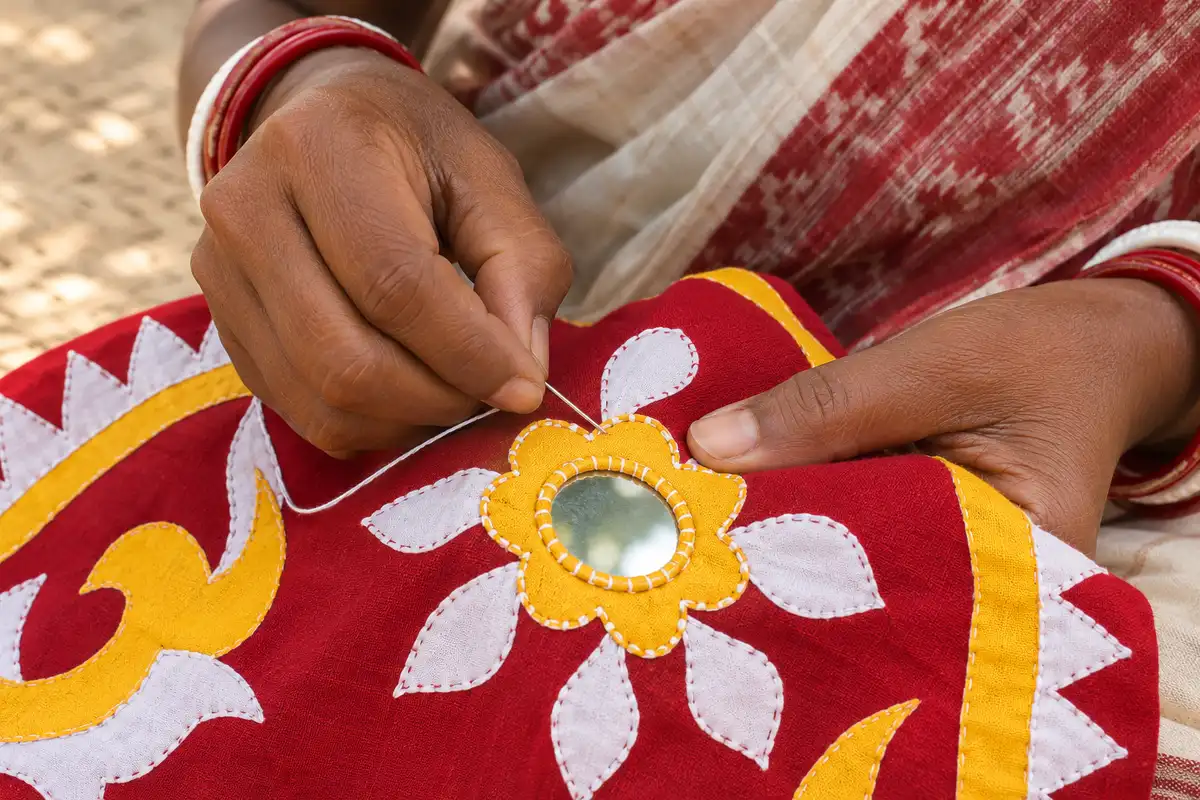
Once the motifs are cut, artisans pin them onto the base canvas following traditional geometric layouts. Odia applique relies on three specialized needlework stitches that define its authentic character and structural strength:
- Bakhia (Running Stitch): A swift, even straight stitch used to anchor raw fabric edges cleanly to the base.
- Taropa (Hem Stitch): An invisible border hem that tucks raw fibers underneath, creating smooth raised outlines around animal figures.
- Ganthi (Chain and Knot Work): Decorative topstitching that adds relief texture, defining feathers, claws, and floral stamens.
Embedding Mirrors, Tassels and Decorative Borders
To complete the piece, artisans embellish the fabric surface with circular glass mirrors, polished brass spangles, and cotton tassels. Each mirror is secured firmly using a web of interlocking chain stitches around its circumference without adhesive. When hung in an open doorway, these tiny mirrors catch passing rays of sunlight, casting dancing reflections across the room.
The borders receive special attention with layered wave patterns (Lahara) and triangular serrated saw-tooth edgings. These contrasting edge treatments frame the central design, lending dramatic visual balance to the entire cloth piece. High-grade heirloom pieces can demand several weeks of sustained hand embroidery from a single master artisan.
Shopping Guide: Popular Souvenirs, Prices and Verification
Pipili offers an outstanding shopping experience for travelers looking to bring home genuine Odia textile heritage. The bazaar features hundreds of shops catering to varied budgets, from inexpensive festival trinkets to museum-grade collector wall hangings. Knowing what to seek out helps visitors locate authentic masterpieces amid commercial factory copies.
For broad selections of state craft traditions under one roof, many travelers also browse the winter Toshali National Crafts Mela in Bhubaneswar. However, buying directly from artisan storefronts in Pipili ensures wholesale pricing and puts money directly into artisan family pockets.
| Craft Item | Description & Key Features | Typical Price Range (INR) |
|---|---|---|
| Hanging Lantern (Kandil) | Collapsible geometric lamp shades with mirrors and fringe | Rs 200 - Rs 750 |
| Garden Umbrella (Chhati) | Large sun umbrellas with bamboo/metal poles and heavy embroidery | Rs 1,200 - Rs 3,500 |
| Embroidered Wall Hanging | Framed cloth panels depicting Lord Jagannath or folk trees | Rs 450 - Rs 2,800 |
| Traditional Bedspread | Full cotton sheets with applique border work and pillow covers | Rs 1,500 - Rs 4,500 |
| Cloth Shoulder Bags | Everyday cotton tote bags with bright elephant and flower motifs | Rs 150 - Rs 400 |
| Ceremonial Chandua Canopy | Square ceiling canopy used in home puja rooms and festive pandals | Rs 600 - Rs 2,200 |
Must-Buy Artifacts: Lanterns, Umbrellas and Wall Hangings
The most popular purchase among domestic and foreign travelers is the collapsible geometric fabric lantern. These lightweight lanterns fold completely flat for packing inside suitcases and unfold into multi-tiered globes with dangling fabric tassels. When fitted with a domestic LED bulb at home, they cast radiant kaleidoscopic patterns across ceilings and walls.
Another striking specialty is the handcrafted garden umbrella. Supported by sturdy metal or wooden frames, these large decorative umbrellas feature scalloped borders, mirror inlays, and colorful needlework animals. They make magnificent decorative accents for residential verandahs, lawn patios, or festive event displays.
Verifying Certified GI Tag Labels and Fair Pricing Tips
As tourism expanded, factory-made synthetic imitations utilizing glued sequins and polyester cloth entered unregulated stalls. Authentic Pipili applique is fashioned from breathable cotton cloth with completely hand-sewn or carefully topstitched edges. When examining higher-value pieces, inspect the reverse side of the fabric to verify genuine thread stitching rather than synthetic glue adhesives.
Look for the official Geographical Indication logo or the India Handloom Brand tag inside established cooperative societies. Bargaining is standard practice in informal roadside stalls, though aggressive haggling is discouraged when buying authentic handmade pieces. Inquiring respectfully about the artisan who made the item often prompts storekeepers to show their finest heirloom stock.
Best Time to Visit, Seasonal Weather and Traveler Tips
Planning the timing of your visit enhances comfort, as midday coastal heat can make street walking uncomfortable between April and June. The winter dry season between October and March brings delightful sunny weather with moderate daytime temperatures hovering around 24 to 28 degrees Celsius.
Visiting during late afternoon hours between 4:00 PM and 7:00 PM offers the most visually captivating experience. Storekeepers illuminate hundreds of hanging lanterns along their shopfronts, transforming the entire highway corridor into a glowing corridor of light.
Optimal Winter Season from October to March
The pleasant winter months coincide with major regional festival seasons and cultural fairs across coastal Odisha. Mild humidity and clear skies make shopping along the open-air bazaar thoroughly enjoyable. During this peak tourist window, artisans produce their widest variety of home decor goods and seasonal gifts.
Monsoon months from July to September bring heavy coastal rain showers that can drench exterior textile displays. While shops remain open year-round, road conditions become wet, and outdoor displays are often brought indoors under plastic covers. The summer months from April to June experience high midday temperatures exceeding 38 degrees Celsius, making morning or evening visits essential.
Navigating Highway Traffic and Parking Safely
Because the craft bazaar flanks a high-speed expressway, pedestrian safety warrants careful attention when crossing lanes. Use marked pedestrian crossing points and stay aware of speeding vehicular traffic when stepping out of parked cars. Service lanes provide adequate buffer from the high-speed central carriageway.
- Vehicle Parking: Park inside dedicated lots provided by major artisan cooperatives like the Pipili Applique Guild emporium rather than roadside shoulders.
- Payment Methods: Most established shops accept UPI digital payments, Google Pay, and major debit cards, though carrying cash helps for small roadside stalls.
- Packing & Shipping: Most major stores can fold and waterproof large cloth purchases, and several offer parcel courier shipping across India.
- Photography Protocol: Stalls welcome photography of their illuminated displays, but always seek polite permission before taking close-up portraits of working craftswomen.
Nearby Attractions and Highway Day Tour Pairings
Because Pipili requires only one to two hours of shopping and exploration, it pairs naturally with neighboring cultural landmarks along the golden corridor. Travelers frequently build a rewarding full-day excursion exploring heritage villages, ancient monuments, and sacred pilgrimage shrines.
A convenient route combines the stone carving traditions of nearby Dhauli with the world-renowned folk painting colony at Raghurajpur Pattachitra heritage village. Visiting both villages on the same afternoon allows travelers to compare Odisha’s two most celebrated artisan communities firsthand.
| Timing | Tour Stop | Recommended Activity |
|---|---|---|
| 09:00 AM | Bhubaneswar Departure | Start south along National Highway 316 |
| 09:30 AM | Dhauli Giri Shanti Stupa | View Ashokan rock edicts and peace pagoda terrace |
| 11:00 AM | Pipili Craft Bazaar | Tour artisan workshops and browse applique showrooms |
| 01:00 PM | Highway Lunch Break | Sample fresh Odia thali at a local highway dhaba |
| 02:30 PM | Sakhigopal Temple | Explore medieval Krishna shrine and Bakul Bana groves |
| 04:00 PM | Raghurajpur Village | Watch Pattachitra masters and Gotipua dancers |
| 06:30 PM | Puri Coast Arrival | Reach Puri beachfront or return smoothly to capital |
Craft and Heritage Circuit: Dhauli and Raghurajpur
Starting southward from Bhubaneswar, travelers first encounter the Dhauli Giri Hills Shanti Stupa peace pagoda. Here, historical Mauryan rock edicts and a gleaming Buddhist dome commemorate Emperor Ashoka’s legendary transformation along the Daya River. After touring Dhauli, continuing ten kilometers south brings you directly to the celebrated textiles of Pipili.
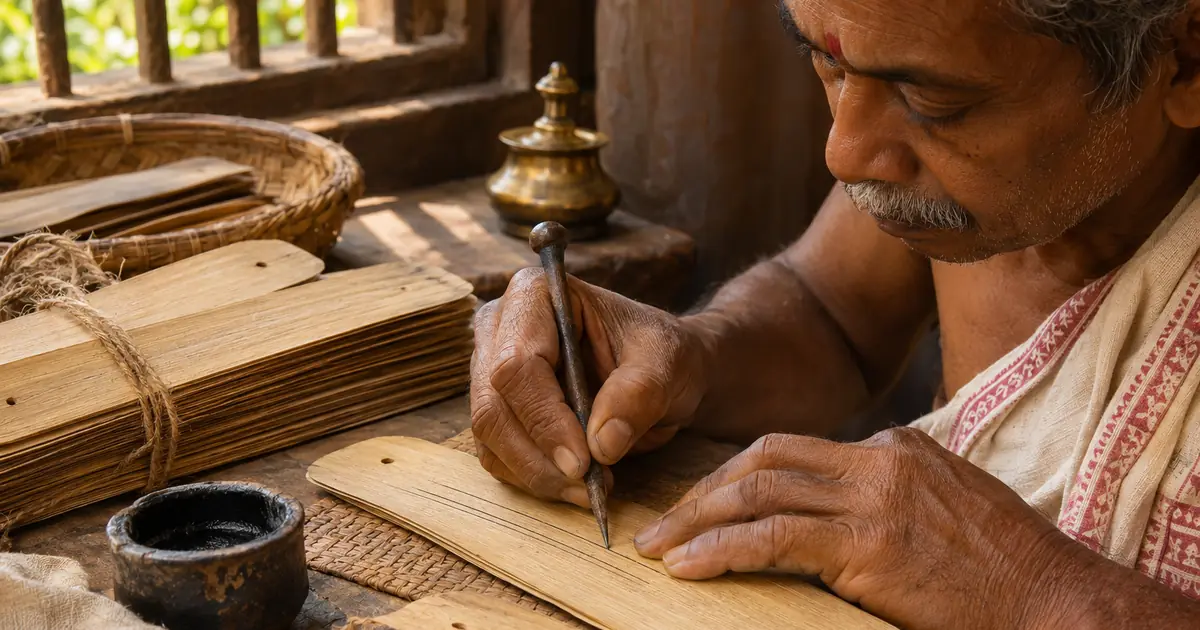
After concluding your shopping in Pipili, head further south along Highway 316 to the Chandanpur junction. Turning right leads to Raghurajpur, where master painters execute delicate palm-leaf engravings and stone carvings. Together, Pipili and Raghurajpur offer an unmatched glimpse into living guild traditions preserved across generations.
Coastal Circuit: Sakhigopal and Puri Grand Road
For visitors oriented toward spiritual exploration, pairing Pipili with the historic Sakhigopal Temple in Satyabadi makes an enriching pilgrimage itinerary. This medieval shrine dedicated to Lord Krishna features an ornate sanctum and ancient Bakul Bana groves associated with Odisha’s Panchasakha literary masters.
From Sakhigopal, continuing another twenty kilometers south brings you directly to the sacred shores and temple precincts of Puri. Consulting official administrative details via the Puri District Administration official portal and tourism routes on the Odisha Tourism official portal ensures current festival schedules and travel advisories.
Frequently Asked Questions (FAQs)
Where is the craft village situated in Puri district?
The artisan hub sits directly on National Highway 316 connecting Bhubaneswar and Puri. It lies roughly 18 kilometers south of the state capital and 40 kilometers north of the coastal temple city.
What distinctive handicraft made the town famous?
The town is globally celebrated for its ornate applique fabric art called Chandua. Artisans stitch colored cloth motifs onto heavy cotton canvases embellished with mirrors and decorative borders.
How are local artisans connected to the Puri chariot festival?
Local tailoring guilds hold hereditary sacred duties to stitch ceremonial canopies for the annual chariot procession. They construct the huge red, yellow, green, and black fabric covers for all three deities.
What are the best traditional souvenirs to purchase here?
Visitors frequently purchase collapsible geometric hanging lanterns, handcrafted garden umbrellas, and wall hangings. Embroidered shoulder bags and bedspreads also make durable and memorable craft keepsakes.
How much time should travelers spend exploring the market?
Most travelers find that one to two hours provides sufficient time to browse shops and watch craftsmen work. It serves as an easy cultural stop while traveling between Bhubaneswar and coastal destinations.
What are the operational shopping hours for the main bazaar?
Artisan showrooms and cooperative stalls remain open daily from 9:00 AM to 9:00 PM throughout the week. Evening hours provide the prettiest atmosphere as hundreds of illuminated cloth lanterns light up the street.