Raghurajpur Puri: Pattachitra Heritage Village Guide
Plan your trip to Raghurajpur in Puri. Discover Pattachitra scroll art, palm leaf etching, Gotipua dance, artisan workshops, timings, and travel routes.
Art lovers exploring coastal Odisha will discover Raghurajpur Puri to be one of India finest living craft communities. Situated along the peaceful banks of the Bhargavi River, this designated national heritage village offers direct engagement with master artists. As detailed in our guide to places to visit and things to do in Puri, its traditional art lineages have flourished unbroken for over a thousand years.
Raghurajpur is globally celebrated for its total dedication to indigenous arts. Every single household along its two central streets is an active studio of traditional Chitrakara painters. From colorful Pattachitra cloth scrolls and palm leaf etchings to papier-mache masks and Gotipua dance, the village presents an open-air museum of Odia culture.
Key Takeaways
- Centuries-Old Artisan Community: Home to over one hundred families where every household actively practices traditional Pattachitra painting and allied crafts.
- Natural Stone and Plant Pigments: Master artists grind white conch shells, yellow orpiment, black lamp soot, and vegetable juices to create permanent organic colors.
- Birthplace of Gotipua Classical Dance: Legendary birthplace of Odissi dance maestro Guru Kelucharan Mohapatra, preserving ancient Gotipua acrobatic dance gurukuls.
- Ideal Half-Day Cultural Tour: Located just 12 kilometers north of Puri town, reached in 25 minutes via the National Highway 316 and Chandanpur bypass.
- Direct Ethical Purchasing: Visitors can buy directly from master artists in their home verandas, eliminating commercial middlemen and supporting rural artisans.
Quick Facts & Village Profile: Raghurajpur Crafts Village
To help you organize your travel itinerary, the reference table below summarizes essential practical information regarding operational hours, travel distances, and artisan traditions at Raghurajpur.
| Feature | Travel Specification |
|---|---|
| Official Destination Name | Raghurajpur Heritage Crafts Village |
| District and State | Puri District, Odisha |
| Administrative Block | Puri Sadar Block (Chandanpur Tehsil) |
| Geographic Coordinates | 19.8972° N, 85.8322° E |
| Primary River Border | Bhargavi River (Branch of the Mahanadi delta system) |
| Heritage Distinction | First Heritage Crafts Village of India (Declared by INTACH in 2000) |
| Distance from Puri Grand Road | 12 km via National Highway 316 through Chandanpur |
| Distance from Bhubaneswar | 52 km via NH-316 southbound |
| Nearest Railway Station | Puri Railway Station (PURI, 12 km) / Sakhi Gopal (9 km) |
| Nearest Commercial Airport | Biju Patnaik International Airport (BBI), Bhubaneswar (54 km) |
| Artisan Studio Hours | 8:00 AM to 6:30 PM daily (Open all seven days of the week) |
| Village Entry Fee | Free public admission to streets and residential studios |
| Ideal Visit Duration | 2 to 4 hours for studio walks, art demonstrations, and shopping |
| Best Visiting Window | October to March for pleasant walking temperatures |
Key Geographic and Heritage Metrics
Raghurajpur occupies a shaded river terrace framed by coconut palm groves, betel vine plantations, and jackfruit orchards. The geographical layout consists of two parallel streets lined by approximately 120 traditional tiled homes, terminating at ancient village temples dedicated to Lord Radha Mohan, Lord Gopinath, and the village guardian deity Bhuasuni.
The exterior walls of almost every home are decorated with colorful murals depicting scenes from the Ramayana, Bhagavata Purana, and Krishna Leela. Detailed cultural administration data and artisan registration notices are maintained through the Puri District Administration official portal.
The Two Parallel Streets of Living Studios
Walking down the brick-paved lanes of Raghurajpur feels like stepping into a living art gallery. The traditional architecture features raised front verandas (Pindas) shaded by sloping terracotta tile eaves.
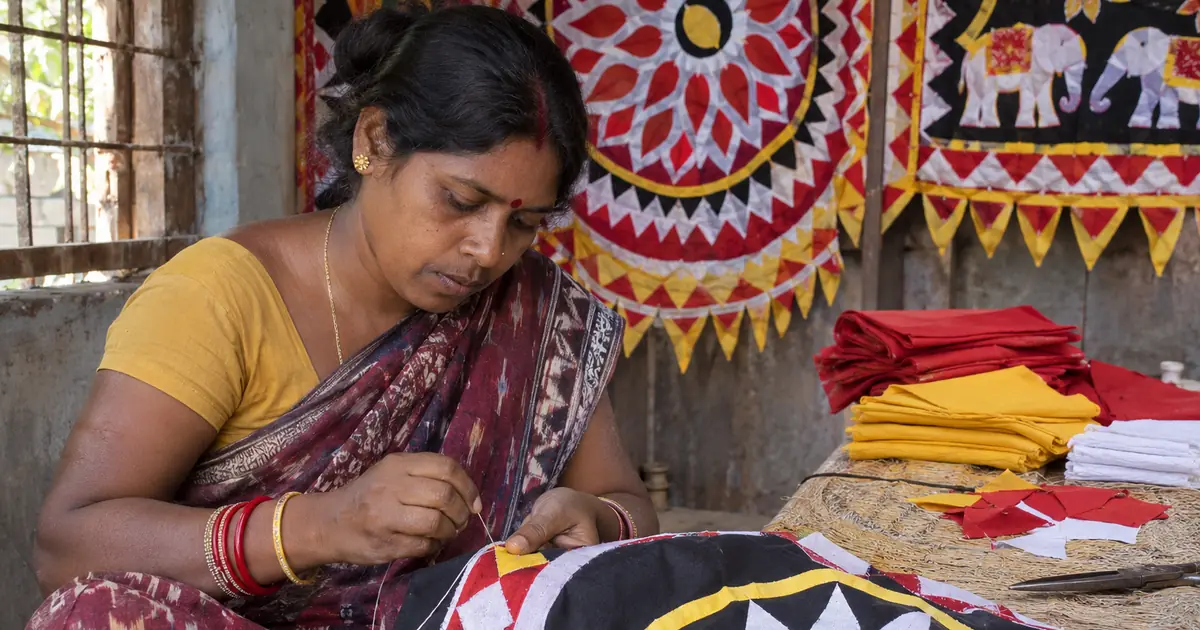
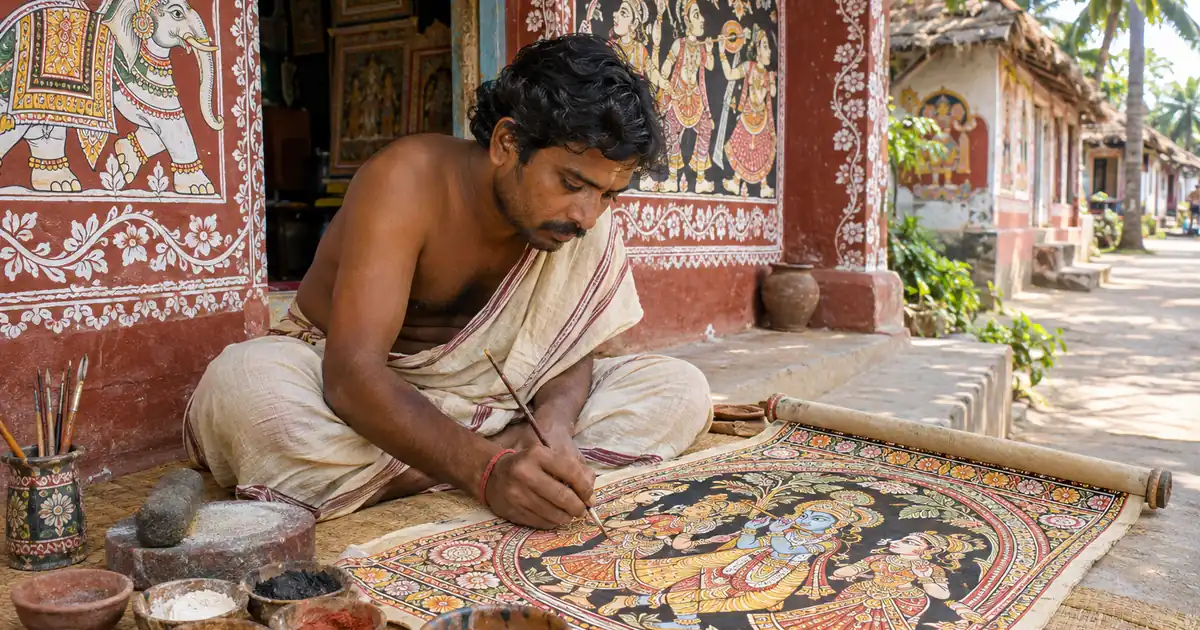
These open-air verandas serve as the daily workstations where artists sit cross-legged on reed mats, meticulously applying fine brushes made from mouse hair or bamboo quills onto prepared canvases. Visitors are invited to sit beside master painters, observe each step of the process, and learn about the iconography of Odia folk culture detailed in our Puri district cultural guide.
Location and How to Reach Raghurajpur from Puri and Bhubaneswar
Thanks to its location just off the main arterial expressway connecting the state capital with the coastal pilgrimage city, reaching Raghurajpur is simple by road. The turnoff is well marked near the active agricultural market junction of Chandanpur.
Whether you travel by personal car, tourist taxi, or auto-rickshaw, the smooth highway network ensures a swift and comfortable trip.
Driving Approach from Puri via Chandanpur
For travelers based in Puri town, drive north along National Highway 316 toward Bhubaneswar for approximately 10 kilometers until reaching Chandanpur market. At the Chandanpur bridge over the Bhargavi River, take the designated right-hand turn onto the narrow paved village road.
Following the scenic puri to raghurajpur route through coconut groves for two kilometers brings you directly to the entrance archway of the village. The entire drive from Bada Danda takes about 25 minutes. Ample vehicle parking is available outside the village entry gate, where cars and tour buses can park safely.
Public Transport Services from Bhubaneswar via NH-316
Travelers starting in Bhubaneswar should take National Highway 316 southbound toward Puri, covering approximately 50 kilometers in about one hour. Along the way, travelers can pause to visit the historic Sakhigopal Temple in Satyabadi before turning onto the Chandanpur access road.
Regular passenger buses operated by OSRTC and private transport ply between Baramunda bus terminal in Bhubaneswar and Puri every 15 minutes. Ask the conductor to drop you at Chandanpur junction. From Chandanpur, shared auto-rickshaws and cycle-rickshaws are readily available to transport visitors to the artisan streets.
The Living Art Forms: Pattachitra, Palm Leaf and Papier-Mache
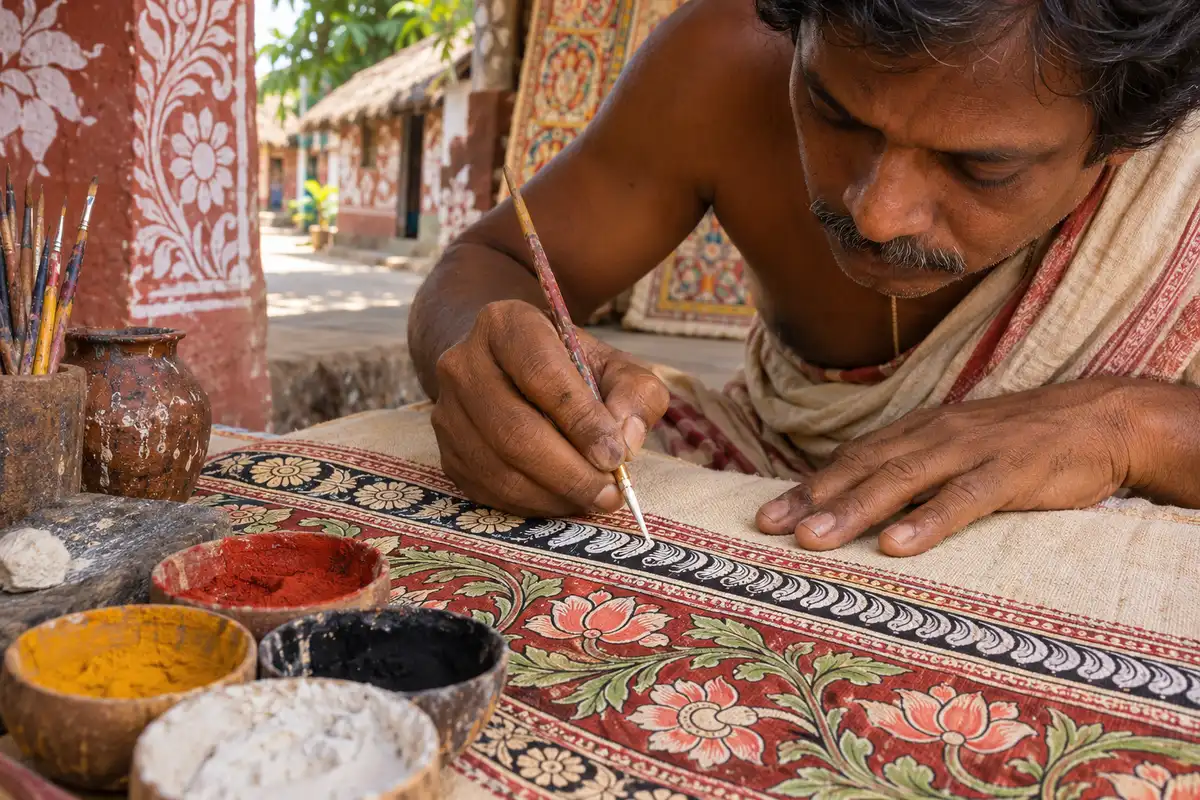
The artisan heritage of Raghurajpur encompasses multiple traditional crafts that evolved to serve the ritual and decorative needs of the Jagannath Temple in Puri. Master artists pass these techniques down through rigorous family apprenticeships spanning decades.
Understanding the materials, tools, and spiritual discipline behind these creations helps travelers appreciate why authentic Pattachitra artwork commands global admiration.
Traditional Pattachitra Canvas Preparation and Natural Colors
The word Pattachitra is derived from the Sanskrit terms Patta (cloth or canvas) and Chitra (picture). The process begins by preparing the traditional cloth canvas (Patti). Two layers of fine cotton cloth or tussar silk are glued together using paste boiled from tamarind seeds (Kaintha), then coated with powdered soft white clay or chalk.
Once dry, the cloth is polished repeatedly with river stones and conch shells until glossy. Artists use mineral and botanical pigments ground by hand. White comes from conch shells, yellow from orpiment, red from cinnabar, and black from lamp soot. Pine resin gives the painting lasting durability, celebrated at the Toshali National Crafts Mela in Bhubaneswar.
Tala Pattachitra: Fine Palm Leaf Incision and Inking
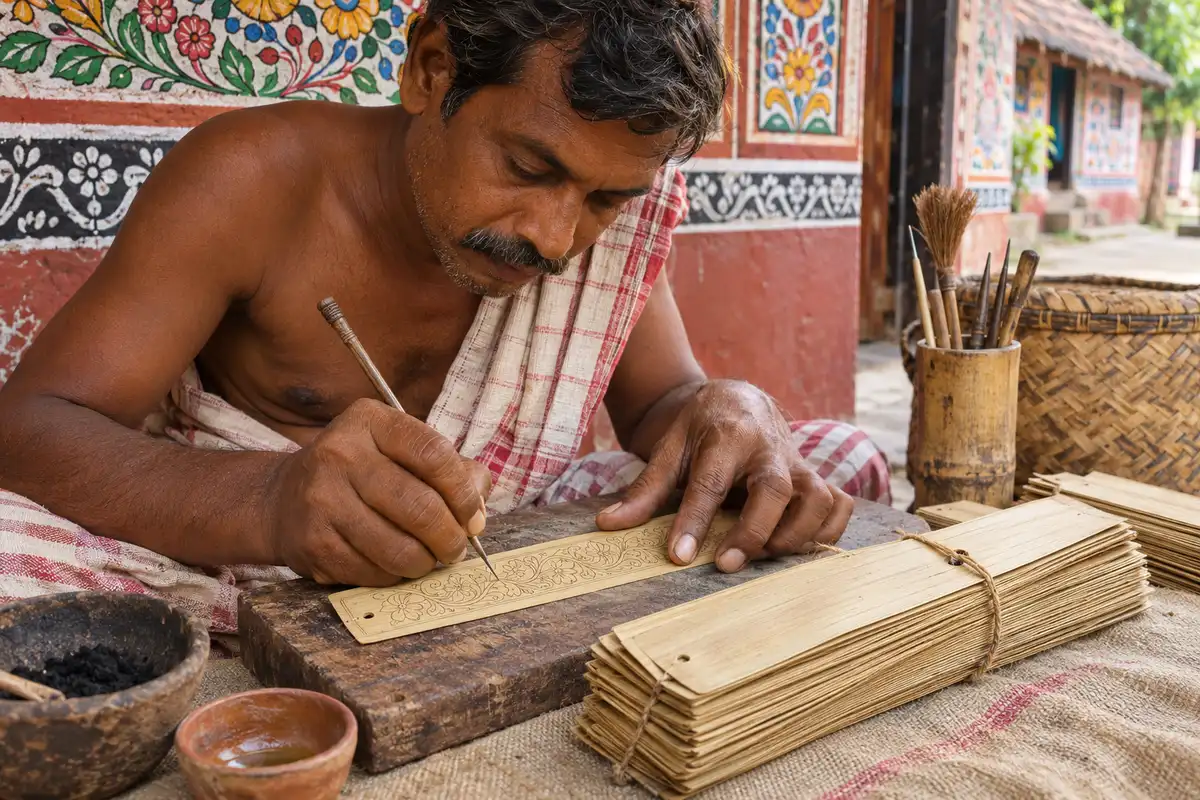
Another signature specialty of Raghurajpur is the celebrated palm leaf manuscript painting tradition (Tala Pattachitra). Mature leaves of the palmyra palm (Borassus flabellifer) are harvested, boiled in herbal solutions, dried in the shade for months, and cut into uniform rectangular strips.
Artists use a sharp iron stylus (Lekhani) to incise drawings into the fibrous palm leaf without puncturing it. Charcoal powder mixed with lamp soot and bean extract is rubbed over the surface. The pigment settles into etched lines while wiping cleanly from uncarved areas. Multiple leaves are bound together with thread, forming folding screens honoring Shree Jagannath Temple in Puri.
Papier-Mache Masks, Cowdung Toys and Wooden Craft
Beyond scroll paintings, Raghurajpur artisans excel in sculptural folk crafts. Families craft traditional papier-mache and cowdung masks representing Lord Jagannath, divine animals, and mythical demons used during village festivals and folk plays.
Skilled woodcarvers sculpt small wooden toys and ceremonial figurines from light indigenous wood, decorating them with bright natural lac colors. These diverse creative mediums ensure that every visitor finds unique artistic treasures suited to their personal taste.
Gotipua Dance Heritage and Guru Kelucharan Mohapatra
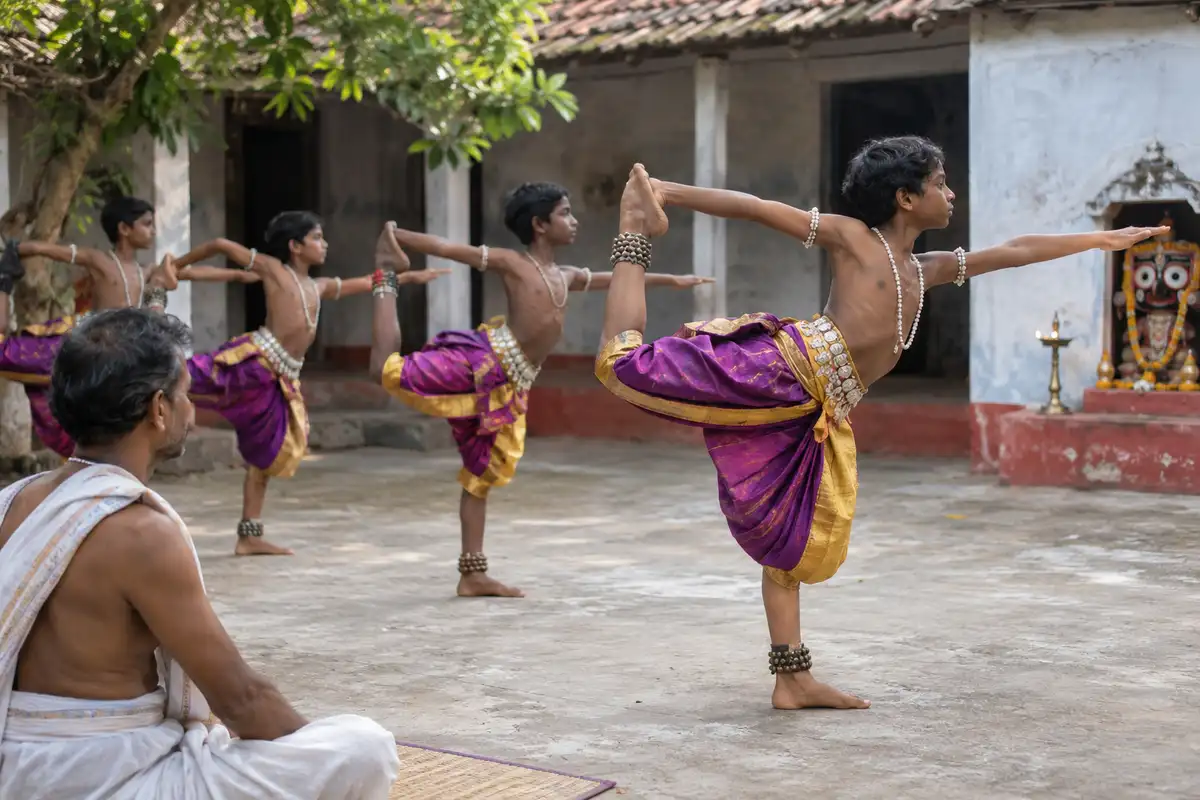
Raghurajpur holds an honored place in Indian performing arts history as the cradle of Gotipua classical dance. In the Odia language, Goti means single and Pua means boy.
The tradition arose centuries ago when young boys were trained to perform devotional dances in female attire, preserving the acrobatic movements and devotional expressions of Odissi classical dance outside temple walls.
The Precursor to Classical Odissi Dance
Gotipua dance is widely recognized by musicologists as the foundational precursor of modern Odissi dance. Young male students enter the village Gurukul at an early age, undergoing rigorous training in yogic flexibility, footwork, facial mime (Abhinaya), and classical rhythm (Tala).
Dressed in ornate silk costumes, ankle bells, and silver jewelry, the dancers perform complex acrobatic postures (Bandhas) accompanied by the rhythmic beat of the Mardala drum and cymbals. The dance historically depicted the divine love of Radha and Krishna, providing devotion and entertainment during seasonal festivals.
Visiting Village Dance Gurukuls and Observing Rehearsals
Raghurajpur is celebrated worldwide as the native birthplace of legendary maestro Guru Kelucharan Mohapatra, the visionary who revived and structured classical Odissi dance for modern international stages. Today, active Gotipua gurukuls in the village continue to train talented rural youths.
Visitors can arrange to tour the dance schools, speak with resident instructors, and watch morning or evening practice sessions. During major cultural festivals, special outdoor performances are staged in the village courtyard, providing an unforgettable auditory and visual experience.
Visitor Experience: Walking the Painted Street and Buying Artwork
Visiting Raghurajpur is a relaxed, immersive experience free of high-pressure retail tactics. The artisans welcome travelers into their homes with warm hospitality, offering stools and benches while presenting their portfolios.
Interacting directly with the creator of an artwork adds deep personal meaning to every piece you collect.
Exploring Mural-Painted Verandas and Open Workshops
As you stroll down the village lanes, take time to examine the colorful wall murals decorating the residential facades. Artists take immense pride in painting their own outer walls with depictions of gods, birds, elephants, and village folklore.
Do not hesitate to step onto open verandas when invited. Most artists are delighted to demonstrate how they hold the fine stylus, grind mineral stones on granite slabs, or mix lac varnish. Asking questions about the symbolic meaning behind traditional borders and color palettes reveals the profound philosophy behind each painting.
Fair Pricing, Artisan Guilds and Certificate of Authenticity
Buying directly in Raghurajpur ensures that your money goes directly to the artists and their families. Prices vary according to size, material, and the intricacy of detail. Small palm-leaf bookmarks and miniature paintings start around ₹200 to ₹500, while medium-sized framed Pattachitras range from ₹1,500 to ₹6,000.
Museum-grade masterworks that require three to six months of painstaking daily work can cost ₹25,000 or more. Genuine artists will happily sign their work and explain the story depicted on the scroll. Supporting these artisans through direct purchases ensures that these rare classical crafts remain economically sustainable for future generations.
Best Time to Visit, Seasonal Weather and Village Etiquette
Planning your excursion to Raghurajpur during pleasant weather enhances your walking comfort through the open village lanes. Coastal Odisha experiences distinct seasonal shifts that influence daytime temperatures and humidity.
Observing respectful village etiquette ensures a harmonious visit for both travelers and local residents.
Optimal Winter Season from October to March
The ideal travel window to explore Raghurajpur extends from October through early March. During these winter months, temperatures hover pleasantly between 18°C and 28°C, with gentle ocean breezes drifting from the coast.
Mornings and late afternoons are especially pleasant for slow walks along the artisan street. The summer months from April to June bring intense coastal heat and humidity, with midday temperatures reaching 38°C. If visiting during summer, schedule your visit between 8:00 AM and 10:30 AM to avoid the midday sun.
Respecting Artisan Privacy and Photography Courtesy
While the residents of Raghurajpur are accustomed to international visitors, treating their home spaces with respect is essential. Always ask for permission before photographing artists at work, especially when photographing young students in dance gurukuls.
Avoid touching unfinished canvases or wet mineral pigments without the artist consent. The village enforces an eco-friendly code; visitors must dispose of all food wrappers and water bottles in provided community bins, keeping the heritage streets clean and beautiful.
Nearby Attractions and the Golden Triangle Circuit
Raghurajpur can easily be integrated into a broader full-day exploration of Puri and the Golden Triangle of Odisha. Because the village sits just 12 kilometers north of Puri, it serves as an ideal cultural stop between temple visits and beach relaxation.
Coordinating your stops allows you to experience coastal spirituality, monumental stone architecture, and living handicrafts within a single coordinated itinerary.
Pairing with Shree Jagannath Temple and Golden Beach
A classic day itinerary begins with an early morning darshan at Shree Jagannath Temple in Puri, followed by a walk along the monumental Srimandir Parikrama heritage corridor. After enjoying an authentic Mahaprasad lunch at Ananda Bazar, head north to Raghurajpur to spend two to three hours exploring artisan studios.
Conclude your afternoon by returning to Puri to watch the sunset across the certified Blue Flag Golden Beach and enjoying fresh seafood along the promenade. Tourism itineraries and verified hotel accommodations can be consulted on the Odisha Tourism official portal.
Craft Circuits: Pipili Applique Village and Konark
Art enthusiasts can build an extraordinary dedicated handicraft circuit. Drive north from Raghurajpur to visit the famous sacred Alarnath Temple in Brahmagiri, celebrated for its colorful embroidered canopies and umbrellas.
Continue southeast along the scenic Marine Drive to marvel at the 13th-century chariot architecture of the Konark Sun Temple along Marine Drive. This comprehensive cultural journey connects ancient stone carving masterpieces with the living artisan hands that keep Odisha heritage alive today.
Frequently Asked Questions (FAQs)
Where is Raghurajpur located in Puri district?
Raghurajpur is situated in Puri Sadar block, approximately 12 kilometers north of Puri town and 52 kilometers south of Bhubaneswar. It lies two kilometers off National Highway 316 near the market town of Chandanpur.
What art forms are made in Raghurajpur village?
The village is renowned for authentic Pattachitra cloth scroll paintings, Tala Pattachitra palm-leaf etchings, papier-mache and cowdung masks, wooden toys, and traditional Gotipua classical acrobatic dance. Every household in the settlement is actively engaged in these heritage art forms.
Can tourists buy Pattachitra paintings directly from artists in Raghurajpur?
Yes, visitors can purchase original paintings, palm-leaf carvings, and handicrafts directly from master artists in their open home verandas. Direct buying guarantees authentic certified craftsmanship at fair prices while supporting traditional artisan livelihoods.
How far is Raghurajpur from Puri and Bhubaneswar?
Raghurajpur is located roughly 12 kilometers from Puri railway station, taking about 25 minutes by taxi or auto-rickshaw. From Bhubaneswar, the driving distance is 52 kilometers, taking approximately one hour via National Highway 316.
What is the Gotipua dance tradition of Raghurajpur?
Gotipua is an ancient acrobatic dance form performed by young boys dressed in feminine attire, revered as the historic precursor to modern classical Odissi dance. Raghurajpur is the native birthplace of dance maestro Guru Kelucharan Mohapatra and maintains active residential dance gurukuls.
What are the visiting hours for Raghurajpur crafts village?
The artisan studios and village streets are open to visitors daily from 8:00 AM to 6:30 PM throughout the year. Admission to the village is free of charge, with morning and late afternoon hours offering the best lighting and comfortable walking temperatures.