National Tribal Craft Mela Bhubaneswar: Artisan Guide & Dances
Explore the National Tribal Craft Mela in Bhubaneswar. Discover authentic Dokra art, Kotpad handlooms, organic forest honey, and folk dance schedules.
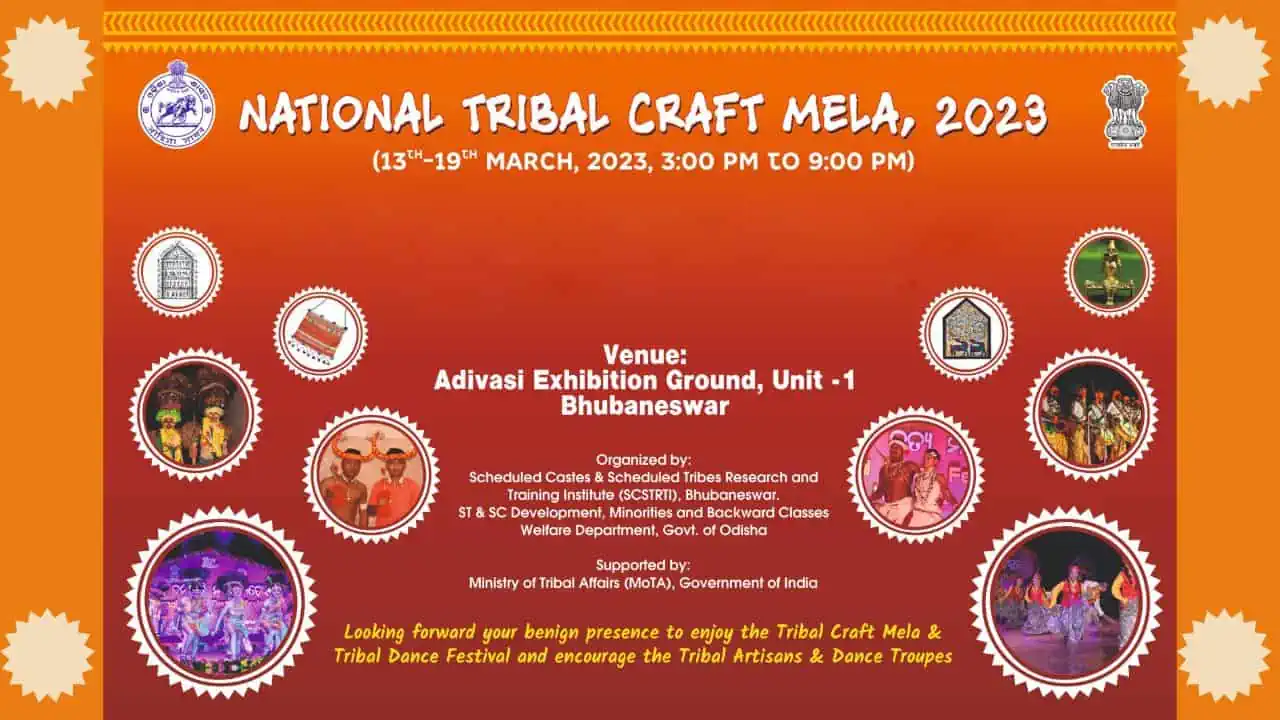
The National Tribal Craft Mela and National Tribal Dance Festival stands as one of the most prominent cultural expositions in Odisha. Held at the historic Adivasi Exhibition Ground in Bhubaneswar, this annual carnival presents traditional craftsmanship, indigenous music, and authentic organic forest produce from across India.
Key Takeaways
- The National Tribal Craft Mela and Dance Festival takes place annually at the Adivasi Exhibition Ground in Bhubaneswar.
- Over 180 master artisans and traditional dance troupes from 14 Indian states participate in the exhibition.
- Visitors can buy authentic GI-tagged crafts including Dokra bell metal, Kotpad natural dye handlooms, and Saura paintings directly from tribal cooperatives.
- Evening cultural programs run daily from 6:30 PM to 9:00 PM featuring indigenous dances like Dhemsa, Karma, and Cheraw.
Organized jointly by the Scheduled Castes and Scheduled Tribes Research and Training Institute and the state government, the event provides direct market access to rural artisans. Urban shoppers and cultural travelers can purchase certified handmade treasures directly from creators without commercial intermediaries.
Festival Overview: Celebrating Indigenous Heritage in Bhubaneswar
The craft mela brings together more than 180 tribal artisans representing fourteen Indian states, including Odisha, Jharkhand, Chhattisgarh, Nagaland, and Rajasthan. State government programs described on the SC & ST Development Department welfare schemes portal aim to preserve ancestral artisanal skills while generating direct economic livelihoods.
Research archives maintained through the SCSTRTI tribal research documentation help curate the authentic representation of indigenous communities. Visitors who attend this exhibition often also explore the broader annual Adivasi Mela in Bhubaneswar, which features complete tribal village life and agricultural traditions.
| Event Feature | Details | Visitor Information |
|---|---|---|
| Primary Venue | Adivasi Exhibition Ground, Unit-1 | Near AG Square in Bhubaneswar |
| Exhibition Hours | 2:30 PM to 9:00 PM daily | Stalls open throughout the afternoon |
| Dance Show Schedule | 6:30 PM to 9:00 PM | Open-air cultural amphitheater |
| Admission Fee | Free entry for all visitors | Open public access |
| Artisan Representation | 180+ artisans from 14 states | Direct cooperative sales counters |
Traditional Metalcraft and Tribal Handlooms to Shop
Shopping at the mela connects buyers directly with tribal cooperative societies and National Award recipients. The most sought-after metallurgical tradition is Dokra, an ancient lost-wax brass casting technique dating back over four millennia. Historical origins are preserved in the Dokra metallurgy historical archive.
Artisans from Rayagada and Dhenkanal craft Dokra jewelry, brass peacocks, and oil lamps with non-ferrous alloys. Handloom enthusiasts can examine Kotpad organic cotton textiles, which utilize natural red and chocolate dyes extracted from the roots of the local Aal tree. Shoppers interested in larger artisan fairs can also explore our guide to the Toshali National Crafts Mela in Bhubaneswar.
Additional specialties include Dongria Kondh Kapdaganda shawls, hand-painted Saura Idital wall murals on tussar silk, and woven Sabai grass table mats from Mayurbhanj. Because all products are sold directly by certified tribal collectives, prices remain fair and proceeds flow directly back to rural family workshops.
Natural Forest Produce and Tribal Organic Delicacies
Beyond physical handicrafts, the mela features extensive market stalls dedicated to minor forest produce harvested by tribal gatherers. These organic products undergo quality certification through state cooperative networks before being displayed for public sale.
A major attraction is raw, wild forest honey harvested sustainably from the canopies of protected wilderness tracts such as the Similipal Tiger Reserve and nature camp. Shoppers can also buy certified organic Kandhamal turmeric, valued globally for its high natural curcumin concentration.
| Forest Product | Harvesting Region | Key Features |
|---|---|---|
| Wild Multi-Flora Honey | Similipal and Niyamgiri hills | Raw, unpasteurized, cold-filtered |
| Kandhamal Haldi (GI Tag) | Kandhamal highlands | High curcumin content, certified organic |
| Organic Finger Millet (Mandia) | Koraput district | Nutrient-dense flour, cookies, and grains |
| Cold-Pressed Oils | Mayurbhanj and Keonjhar | Pure mustard and Mahua edible oils |
The food pavilion also serves cooked traditional tribal recipes. Visitors can sample steamed Mandia pitha, bamboo shoot curries, roasted country corn, and aromatic herbal decoctions prepared by indigenous self-help groups.
National Tribal Dance Festival: Evening Performance Schedules
As twilight approaches, the mela shifts attention toward the central open-air amphitheater for the National Tribal Dance Festival. Starting at 6:30 PM each evening, dance troupes present traditional choreographies celebrating harvest cycles, hunting expeditions, and spiritual deities.
Spectators can watch the synchronized footwork of Dhemsa dancers from the Koraput valley and energetic Karma dances performed by Gond communities of central India. Many performers wear hand-woven ethnic fabrics detailed in our overview of traditional Odisha handloom sarees.
Visiting troupes from northeastern states frequently demonstrate Cheraw, the famous Mizoram bamboo dance, requiring acrobatic agility to step between rhythmic clapping poles. These performances offer urban audiences a rare opportunity to appreciate living indigenous performing arts traditions in their authentic forms.
Venue Logistics, Exhibition Timings, and Visitor Guidelines
The Adivasi Exhibition Ground is located at Unit-1 in central Bhubaneswar, near the AG Square traffic roundabout. Exhibition stalls open daily at 2:30 PM, making mid-afternoon an optimal time to browse craft booths before evening crowds arrive.
Payment methods have modernized, with most artisan stalls now accepting UPI digital payments alongside cash transactions. Handloom buyers who wish to explore permanent government craft villages can also visit Ekamra Haat in Bhubaneswar throughout the year.
The mela grounds maintain clean public drinking water kiosks, seating sheds, and accessible pedestrian pathways. Visitors are encouraged to bring reusable fabric tote bags to minimize plastic waste during handicraft purchases.
How to Reach the Adivasi Exhibition Ground in Bhubaneswar
The venue benefits from central connectivity within the capital city. Bhubaneswar Railway Station is located roughly two kilometers to the northeast, while Biju Patnaik International Airport lies just 3.5 kilometers to the south.
Mo Bus routes provide direct transit from Cuttack, Khurda, and all suburban neighborhoods of Bhubaneswar, with designated stops at AG Square and Capital Hospital. Transit connections are documented in the Bhubaneswar urban transit directory.
Auto-rickshaws and taxi services are readily available outside the main entry gates throughout the day. Tourists planning extended capital sightseeing can consult our comprehensive guide to the 11 best tourist places to visit in Bhubaneswar to coordinate temple excursions and cultural mela visits.
Frequently Asked Questions About the National Tribal Craft Mela
Where is the National Tribal Craft Mela held in Bhubaneswar?
The National Tribal Craft Mela is held at the Adivasi Exhibition Ground in Unit-1, located near AG Square in central Bhubaneswar. The ground is easily accessible by city bus, taxi, and auto-rickshaw.
What are the exhibition timings and entry ticket fees?
The handicraft stalls operate daily from 2:30 PM to 9:00 PM, while evening dance performances run from 6:30 PM to 9:00 PM. Admission to the exhibition grounds is completely free for all visitors.
What are the most popular crafts to buy at the mela?
Popular purchases include Dokra lost-wax brass metal art, GI-tagged Kotpad natural dye handloom fabrics, Dongria Kondh Kapdaganda shawls, Saura wall paintings, and Sabai grass lifestyle items.
Which states participate in the National Tribal Dance Festival?
Dance troupes represent over 14 states across India, including Odisha, Jharkhand, Chhattisgarh, Mizoram, Nagaland, Gujarat, and Rajasthan. Performances include traditional dances such as Dhemsa, Karma, Cheraw, and Swang.
Can visitors purchase organic forest foods and millets at the mela?
Yes, the TDCCOL pavilion sells certified organic forest products including wild unpasteurized honey, GI-tagged Kandhamal turmeric, millets, and herbal remedies. Ready-to-eat tribal dishes and millet snacks are also served in the food court.