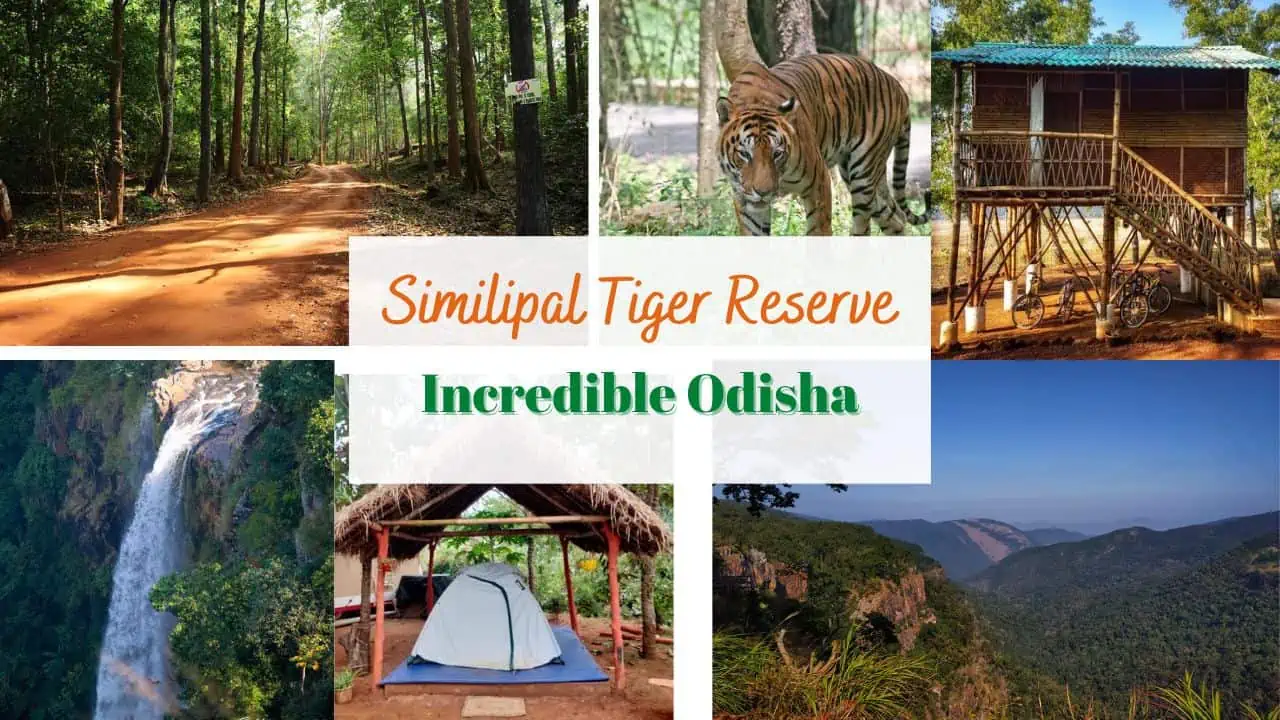
Similipal Tiger Reserve 2026: Black Tigers and Nature Camps
Explore Similipal Tiger Reserve in 2026 with black tiger insights, waterfalls, nature camp options, safari planning, and travel tips.
The first time I stood at the edge of the Barehipani waterfall, the sheer scale of Similipal hit me. It wasn’t just the 217-meter drop of water or the mist that clung to my skin; it was the silence—a deep, ancient quiet that only a 2,750-square-kilometer wilderness can command. Here, in the core of Odisha’s Mayurbhanj district, the air smells of wet earth and wild orchids, and every rustle in the dense Sal canopy feels like an invitation from the wild.
Similipal Tiger Reserve isn’t just another national park; it’s a UNESCO Biosphere Reserve and the only place on Earth where you can find the legendary melanistic or “black” tigers. In 2026, the reserve offers an experience that stays with you long after the red dust of its trails has been washed off your boots. From the rare sighting of a pseudo-melanistic tiger to a night under the stars in a luxury treehouse, Similipal is the raw, beating heart of Odisha’s wilderness.
Consider reading: 20 Must-Visit Best Tourist Places in Odisha
The UNESCO Biosphere Legacy: A Global Conservation Benchmark
Similipal’s name is derived from the ‘Simul’ (silk cotton) tree, and when these trees bloom in late winter, the forest floor turns into a crimson carpet that looks almost surreal from the air. But its beauty is more than skin deep. Since becoming part of the UNESCO World Network of Biosphere Reserves in 2009, Similipal has become a global benchmark for conservation in a multi-use landscape.
What makes this landscape so special is its incredible geographical and biological diversity. You have the high-altitude plateaus of Meghasani and Khairiburu reaching over 1,100 meters, which create their own microclimates. This means you can be sweating in the plains near Baripada and shivering in the core area within a few hours. The reserve is a massive watershed, giving birth to rivers like the Budhabalanga, Salandi, and Palpala, which are the lifelines of northern Odisha.
The vast expanse of Similipal National Park and its river networks.
In 2026, the focus has shifted towards sustainable tourism. The forest department has integrated local tribal communities into the tourism circuit. Your guide isn’t just someone who knows the names of birds; they are people whose ancestors have lived alongside these tigers for centuries. This “pro-poor” tourism model ensures that your visit directly supports the conservation of the land and its people.
Conservation History: From Royal Hunting Grounds to Project Tiger
The journey of Similipal from a royal preserve to a globally recognized biosphere is a testament to the changing philosophy of conservation in India. For centuries, the dense forests of Mayurbhanj were the private hunting grounds of the Bhanja Dynasty. While “hunting grounds” may sound counter-intuitive to modern conservation, the royal protection actually saved these forests from being cleared for agriculture during the British era. The kings maintained strict control over who could enter the forest, effectively creating one of the earliest forms of “protected areas” in the country.
The formal transition to modern conservation began in 1956 when a portion of the forest was declared a wildlife sanctuary. However, the real turning point came in 1973 when Similipal was selected as one of the original nine tiger reserves under the Government of India’s ambitious “Project Tiger.” This brought national funding and standardized protection protocols to the region. By 1979, the core area of 845 square kilometers was officially designated as a National Park, providing it with the highest level of legal protection under Indian law.
In the decades that followed, Similipal’s importance grew beyond just tigers. In 1994, the Government of India declared the entire 5,569 square kilometer area (including the buffer zones) as a Biosphere Reserve. This was followed by the prestigious UNESCO designation in 2009, recognizing Similipal as a unique ecosystem where human communities and wildlife coexist. Today, in 2026, the reserve is managed through a multi-layered approach that uses satellite technology and AI-driven surveillance to protect its inhabitants while providing livelihood opportunities to over 1,200 villages located in its buffer and transition zones.
The Mystery of the Melanistic Tigers: The Ghosts of Mayurbhanj
If there’s one thing that puts Similipal on the global map, it’s the black tigers. These aren’t a separate species; they are Royal Bengal Tigers with a rare genetic mutation that causes their black stripes to broaden and merge, sometimes covering their entire body.
As of early 2026, Similipal remains the only habitat in the world where these tigers exist in the wild. The latest census confirmed that nearly 13 out of Similipal’s 27 tigers exhibit this melanistic trait. It’s a fascinating yet concerning phenomenon for conservationists—while it’s a unique attraction, it also suggests genetic isolation.
Travelers in 2026 are finding that sightings have become more frequent. In late 2024, a melanistic tiger was spotted by tourists on a regular safari route for the first time in years. This was partly due to the introduction of low-noise hybrid safari vehicles, which don’t startle the wildlife as much as the old diesel engines did. Seeing one of these “ghosts of the forest” is the ultimate reward for any wildlife enthusiast.
Pro Tip for 2026: If you’re visiting in February, keep an eye out for heightened security. President Droupadi Murmu, a daughter of Mayurbhanj, is scheduled for a historic overnight stay in the reserve on February 6, 2026. Her visit has spurred massive improvements in the park’s infrastructure, including better roads and upgraded nature camps.
The Story of Khairi: Similipal’s Famous Resident
You can’t talk about Similipal without mentioning Khairi, the legendary pet tigress of the late Saroj Raj Choudhury, the first Field Director of Similipal. In the 1970s, Khairi was rescued as a cub and raised in the Gurguria nature camp. She became a symbol of the bond between humans and wildlife, living alongside Choudhury and even his pet dog and hyena.
Today, when you visit the Gurguria nature camp, you can see ‘Khairi Basa,’ the house where she lived. The stories of her roaming freely in the camp and sleeping at Choudhury’s feet still resonate with the staff and the local tribes. It’s a poignant reminder of Similipal’s history of compassionate conservation.
Comprehensive Fauna Profiles: Life in the Core Area
1. The Royal Bengal Tiger (Melanistic & Normal)
The undisputed king of Similipal. While the black tigers get the most attention, the reserve is also home to standard Royal Bengal Tigers. They are elusive, preferring the dense Sal thickets. In 2026, the introduction of AI-powered camera traps has helped the forest department track individual tigers more accurately. These tigers are smaller than their cousins in Central India but are incredibly agile in the hilly terrain.
2. The Asian Elephant
Similipal is a massive elephant reserve. Herds move through the vast corridors connecting Similipal with Jharkhand and West Bengal. Seeing a massive tusker standing silently in the middle of a forest trail is a humbling experience. They play a crucial role as “ecosystem engineers,” creating paths and clearing vegetation for other animals.
3. The Indian Giant Squirrel
Known locally as ‘Gharani,’ this brightly colored squirrel is a delight to watch. Look for them jumping across the high canopy in the Gurguria or Barehipani areas. Their loud, rattling calls are often heard before they are seen. They are famous for their multi-colored fur, ranging from maroon to purple and orange.
4. The Sloth Bear
Commonly found in the rocky outcrops of Similipal, the sloth bear is a shy creature. They are often seen digging for termites or feeding on ‘Mahua’ flowers during the summer months. Be careful if you’re on a nature walk; sloth bears are known to be unpredictable when surprised.
5. Barking Deer (Muntjac)
One of the most common sights in the reserve. Their name comes from the dog-like bark they emit when they sense a predator. They are the primary prey for leopards and tigers in the reserve and are often spotted near the water bodies at dawn.
6. The Indian Pangolin
An extremely rare and elusive creature. Similipal is one of the few places in Odisha where this scaly mammal is still found in the wild. They are strictly nocturnal and very difficult to spot, making any sighting a truly special event for a wildlife enthusiast.
Flora: The Green Lung of Odisha
Similipal is home to over 1,000 species of plants, making it one of the most botanically diverse regions in Eastern India. The forest is predominantly North Indian Tropical Moist Deciduous, but its unique topography allows for patches of semi-evergreen and even dry deciduous forests.
1. The Sal Tree (Shorea robusta): The King of the Forest
The undisputed king of Similipal’s flora is the Sal tree. In some parts of the reserve, these trees reach heights of over 40 meters. Sal is a semi-deciduous tree, shedding its leaves in late winter and quickly replacing them with fresh, lime-green foliage. For the local tribes, the Sal is more than just a tree; its resin (known as ‘Jhuna’) is used in religious rituals, its leaves are used to make eco-friendly plates, and its seeds are a source of edible oil.
2. The Asan Tree (Terminalia tomentosa): The Crocodile Bark
Easily recognizable by its thick, deeply fissured bark that resembles crocodile skin, the Asan is a hardy tree that thrives in the hilly terrain. It’s a primary source of ‘Tasar’ silk, as the silk moths often feed on its leaves. The wood is exceptionally hard and is traditionally used for building heavy-duty carts and agricultural tools.
3. The Piasal Tree (Pterocarpus marsupium): The Healing Timber
Known for its high-quality timber and medicinal properties, the Piasal is a pride of the Odisha forests. The wood contains ‘Pterostilbene,’ a compound studied for its potential in managing diabetes. Traditional ‘Bijasal’ tumblers made from this wood are still used by many locals to drink water as a natural health tonic.
4. The Arjun Tree (Terminalia arjuna): The Guardian of the Rivers
Commonly found along the riverbanks of the Khairi and Palpala, the Arjun is a massive tree with smooth, gray bark that peels off in large flakes. In Ayurvedic medicine, the bark is a legendary remedy for heart conditions. Its presence along the rivers helps prevent soil erosion, making it a vital part of the watershed’s health.
5. Bamboo (Dendrocalamus strictus): The Elephant’s Buffet
Extensive bamboo brakes provide the perfect cover and food for wild elephants. Similipal has two main species of bamboo: the ‘Kanta Baunsa’ (Thorny bamboo) and the ‘Salia Baunsa’ (Solid bamboo). They grow rapidly during the monsoon, sometimes reaching full height in just a few months, turning the forest into an impenetrable green wall.
6. The Orchid Empire: 100+ Species of Color
Similipal hosts over 100 species of orchids, including several that are endemic to this region. In late 2024, researchers discovered two new species: Dendrobium prasannae and Oberonia similipalensis. The most common yet spectacular orchid is the Vanda tessellata, with its blue and gray petals. If you visit between March and May, the forest is alive with the blooms of Cymbidium aloifolium and the delicate Dendrobium nobile.
The Story of the Mugger Crocodiles: A Success in Repopulation
While tigers and elephants dominate the headlines, the story of the Mugger crocodiles (Crocodylus palustris) in Similipal is a quiet but significant success. By the mid-1970s, the crocodile population in the rivers of Mayurbhanj had dwindled due to habitat loss and fishing disturbances. Recognizing the threat, the forest department established a rearing center at Ramatirtha, near Jashipur.
The program was simple but effective: eggs were collected from the wild or from captive pairs, hatched in a controlled environment, and the hatchlings were raised until they were large enough to survive in the wild. Since the late 1980s, hundreds of Muggers have been released into the Budhabalanga, West Deo, and Khairi rivers. In 2026, if you take a quiet walk along the riverbanks near the Ramatirtha or Gurguria camps, you’re likely to see these prehistoric-looking reptiles basking on the rocks. Their presence is a vital indicator of a healthy aquatic ecosystem, as they keep the fish populations in check and clean the rivers of carrion.
Birding at Similipal: A Seasonal Symphony
For birdwatchers, Similipal is nothing short of a paradise. With its 360+ species, the reserve offers something new in every season.
Winter (November to February): This is the best time for migratory birds. The water bodies near the Jashipur gate attract Pintails, Teals, and various species of Wagtails. The forest canopy is alive with the calls of the Malabar Pied Hornbill and the vibrant Orange Minivet.
Spring (March to April): As the Simul and Palash trees bloom, the forest becomes a hive of activity. This is the best time to see nectar-feeders like the Sunbirds and Flowerpeckers. The Hill Myna, Similipal’s most famous vocal artist, can be heard mimicking everything from other birds to forest vehicles.
Summer (May to June): While the heat is intense, this is the best time to spot the shy forest-dwelling birds like the Indian Trogon and the Emerald Dove. They tend to gather near the few remaining perennial streams, making them easier to photograph.
The Tribal Economy: Sabai Grass, Honey, and Resilience
The relationship between the tribes and the forest is the foundation of Similipal’s economy. Two products stand out: Sabai Grass and Wild Honey.
The Golden Grass of Mayurbhanj: Sabai grass (Eulaliopsis binata) is a natural fiber that grows in the hilly periphery of the reserve. For the tribal women of Mayurbhanj, it’s more than just a plant; it’s their primary source of income. They harvest the grass, dry it, and weave it into beautiful, durable products. In 2026, Sabai handicrafts from Mayurbhanj have gained international acclaim, and you can buy everything from yoga mats to stylish bags at the tribal cooperatives near Baripada.
Wild Honey Collection: The Hill Kharia tribes are legendary honey hunters. They climb high cliffs and massive Sal trees to harvest honey from the hives of the Rock Bee (Apis dorsata). This isn’t just a business; it’s a high-stakes tradition that requires deep knowledge of the forest and a spiritual connection with ‘Badam,’ the forest deity. The honey sold at the Gurguria camp is cold-pressed, organic, and has a unique floral note that you won’t find anywhere else.
Nature Camps: Your Wild Home in 2026
Staying inside Similipal is an experience in itself. Unlike many parks where you stay on the periphery, Similipal’s nature camps are deep within the forest. Here’s a detailed breakdown of the best camps for your 2026 trip:
1. Jamuani Nature Camp: The Canopy Experience
Located near the Jashipur entry gate, Jamuani is the “flagship” camp. In 2026, its tree-top houses remain the most sought-after accommodation. Waking up at canopy level, listening to the alarm calls of langurs, is something you won’t forget.
A traditional cottage stay at the Jamuani Nature Camp.
- Amenities: AC Tree Top Houses, Non-AC Santal Cottages, Tents.
- Estimated Price (2026): ₹4,500 - ₹7,500 per night (includes all meals).
2. Gurguria Nature Camp: The Orchid Haven
Gurguria is home to a beautiful orchidarium and is set amidst massive pine and oak trees. The climate here is noticeably cooler, making it a perfect escape during the summer months.
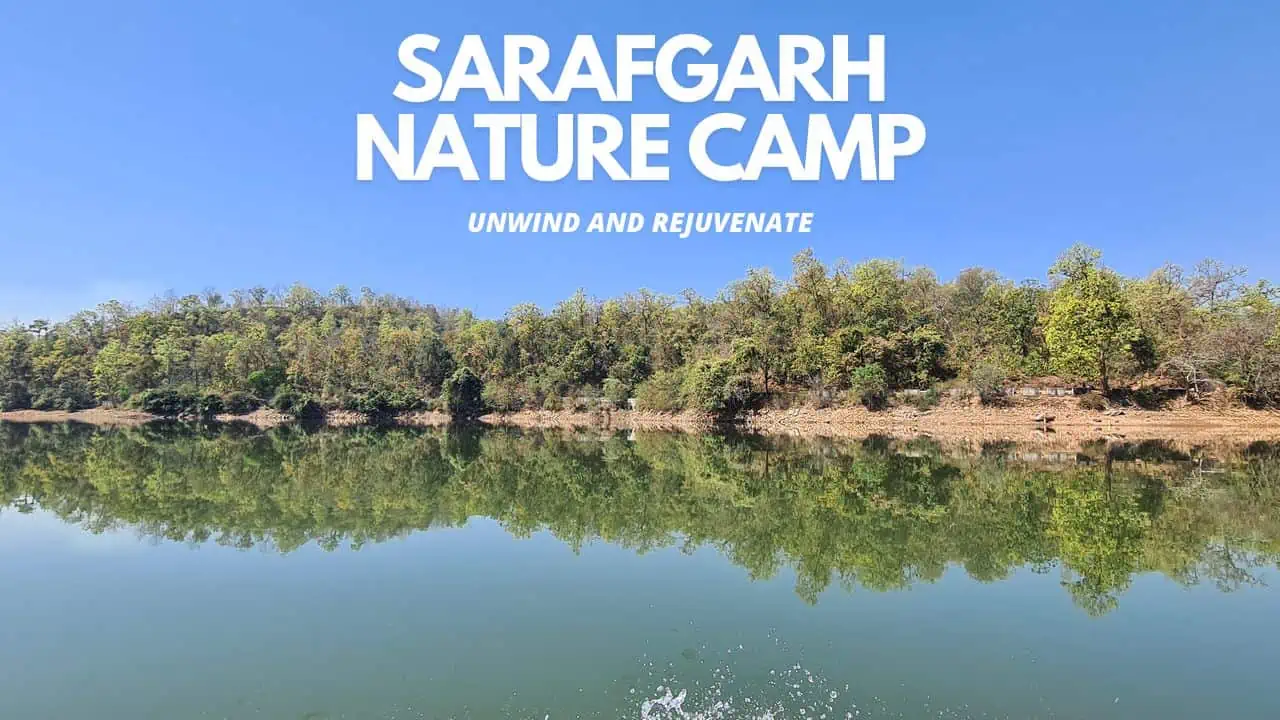
The serene camping environment at Gurguria Nature Camp.
3. Barehipani Nature Camp: Waterfall Views
Imagine sipping your morning tea while looking at India’s second-highest waterfall. The cottages here offer a rustic yet comfortable stay. It’s the best spot for night photography as the starlit sky over the canyon is spectacular.
4. Ramatirtha Nature Camp: Rivers and Reptiles
Located at the confluence of the Khairi and Bhandan rivers, this camp is famous for its Mugger Crocodile rearing center. It’s the easiest to access and perfect for families.
5. Lulung Nature Camp: The Eastern Gate
Lulung is located on the eastern periphery and is known for its beautiful stone cottages and the Palpala river flowing nearby. It’s a great base for those entering from the Baripada side.
6. Kumari Nature Camp: Close to the Core
Kumari offers a more secluded experience, closer to the core area. The cottages here are designed in the local tribal style, providing an authentic forest experience.
7. Eco-Retreat Similipal: Luxury Glamping
For those who want the ultimate luxury, the Eco-Retreat offers high-end tents with all modern amenities right in the lap of nature.
Luxury glamping at the Eco-Retreat in Similipal.
For current availability, always check the Official Eco-Tour Odisha Portal.
Waterfalls: Similipal’s Silver Veins
Barehipani Waterfall
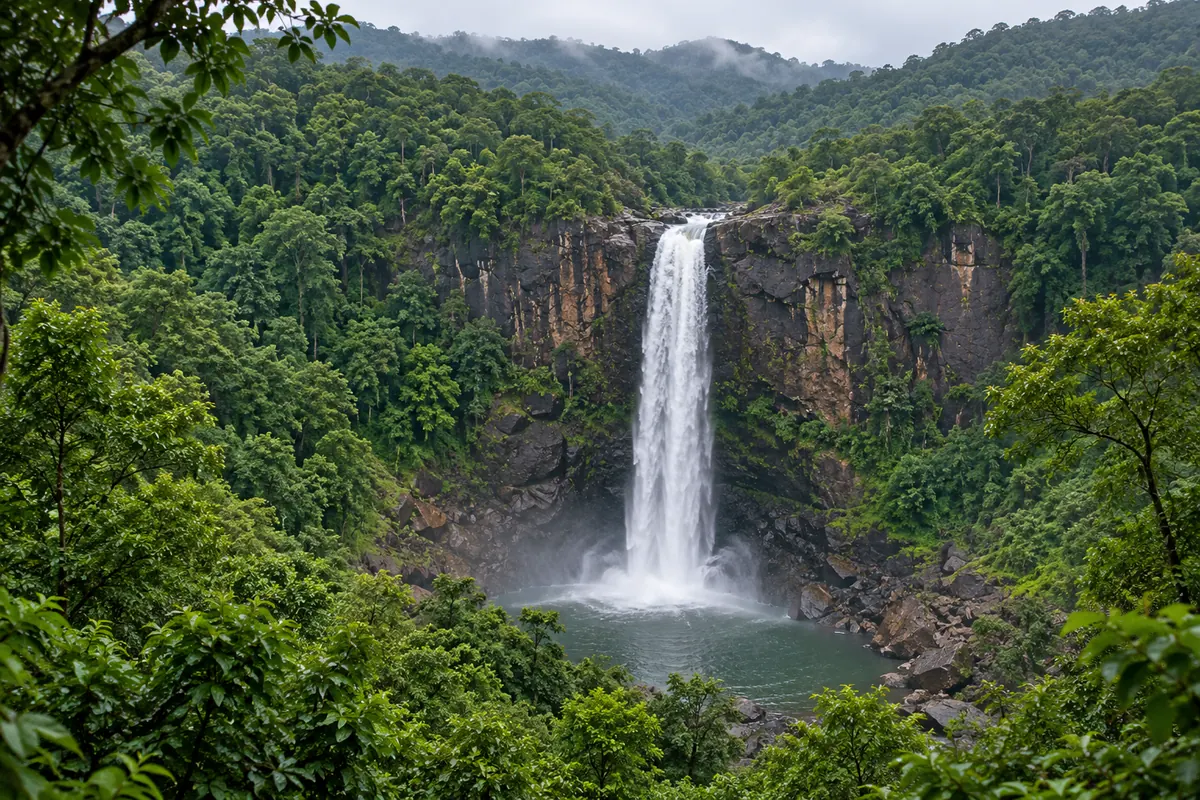
At 217 meters (712 feet), this two-tiered waterfall is the crown jewel of Similipal. It originates from the Budhabalanga River and drops into a deep green gorge. The viewpoint across the canyon is the best spot for photos.
Joranda Waterfall
Dropping perpendicularly from 181 meters, Joranda is all about raw power. The sound of the water hitting the gorge can be heard from miles away.
Uski and Devkund
While Barehipani is for viewing, Devkund (located on the periphery) is for the soul. It features a natural pool and a temple dedicated to Goddess Ambika. It’s a favorite spot for pilgrims and nature lovers alike.
Consider reading: Full List of Waterfalls in Odisha
The Bhanja Dynasty: The Royal Guardians of Similipal
The history of Similipal is deeply intertwined with the Bhanja Dynasty of Mayurbhanj. For centuries, these kings protected the forest as their private hunting grounds, which ironically ensured the forest remained untouched while other areas were cleared for agriculture.
The Bhanja kings were visionaries. They established the first educational institutions in Baripada and were early proponents of environmental conservation. Maharaja Sriram Chandra Bhanja Deo was instrumental in modernizing the state while keeping its natural heritage intact. In 2026, when you visit Baripada, the capital of Mayurbhanj, you can still see the royal influence in the town’s architecture and culture.
Hidden Gems of Similipal
If you have an extra day, I highly recommend exploring these lesser-known spots:
1. Chahala
Once a royal hunting lodge, Chahala is now one of the best spots for wildlife viewing. The forest department maintains a large salt-lick here, which attracts herds of elephants, Chital, and Sambar.
2. Meghasani Peak
At 1,162 meters, this is the highest point in Similipal. The trek to the top offers panoramic views of the entire reserve.
3. Jenabil
Located deep in the core area, Jenabil is for the true wilderness lover. It’s a quiet, remote spot where you can truly feel the pulse of the forest.
Recovery from the 2021 Forest Fires
Similipal faced a massive challenge in early 2021 when large-scale forest fires threatened the ecosystem. The world watched as local communities and the forest department fought the flames. Since then, the recovery has been remarkable.
The 2026 version of Similipal is more resilient. The forest department has used satellite-based monitoring and community-led fire squads to ensure such a disaster doesn’t happen again. The burnt patches have been naturally reforested, and the biodiversity has bounced back with incredible vigor.
Mayurbhanj Cuisine: A Feast for the Senses
No trip to Similipal is complete without tasting the local flavors.
- Mudhi-Mansa: The most famous dish from Mayurbhanj. It’s a combination of puffed rice (Mudhi) and a spicy, slow-cooked mutton curry.
- Kai Chutney (Red Ant Chutney): Recently awarded the GI tag, this chutney is made from weavers’ ants and their larvae.
- Pakhala Bhata: Especially in the summer months, fermented rice served with local greens and mashed vegetables is the ultimate comfort food.
Tribal Festivals: The Soul of the Forest
The tribes of Mayurbhanj celebrate their connection to nature through vibrant festivals.
- Makar Sankranti: Celebrated with grand ‘Melas’ and traditional sports.
- Baha Festival: A flower festival celebrated by the Santhals to mark the onset of spring.
- Sohrai: A harvest festival where they thank the cattle and nature for a bountiful year.
Planning Your 2026 Safari: Routes and Rules
A safari in Similipal is a day-long affair. Entry is restricted to 60 vehicles per day, so booking in advance is mandatory.
Gates and Timings
- Jashipur (Kaliani Gate): The primary entry for those coming from Bhubaneswar.
- Baripada (Pithabata Gate): Best for those coming from Kolkata or Balasore.
- Entry Timings: 6:00 AM to 12:00 PM. All vehicles must exit by 5:00 PM.
The Vehicle Rules
In 2026, the forest department has mandated the use of authorized 4x4 safari vehicles. The introduction of the Suzuki Jimny safari vehicles in 2025 has been a game-changer. They are quieter and more fuel-efficient.
The rugged, red-earth roads that lead you deep into the heart of Similipal.
- Booking: You can book your vehicle online through the official Similipal website or at the entry gate counter.
2026 Technology: AI in the Wild
Similipal has embraced technology to fight its biggest threat: forest fires.
- AI-Enabled Cameras: High-altitude towers now feature 360-degree AI cameras that can detect smoke up to 15 km away.
- Drones: Mini-drones are deployed to sensitive locations to monitor fire-prone areas and poachers.
- OMFS App: Field staff use this mobile app to report sightings and monitor fire spots in real-time.
A Perfect 3-Day Similipal Itinerary (2026 Edition)
Day 1: Arrival and Immersion
- 10:00 AM: Arrive at Jashipur. Check into Jamuani Nature Camp.
- 3:00 PM: Visit the Crocodile Rearing Center at Ramatirtha.
- 7:00 PM: Traditional Mayurbhanj Chhau dance performance.
Day 2: The Heart of the Core Area
- 6:00 AM: Full-day safari. Visit Gurguria, Barehipani, and Joranda.
- 1:00 PM: Picnic lunch at Barehipani Viewpoint.
- 3:00 PM: Tiger spotting near Chahala.
- 5:00 PM: Return to camp.
Day 3: Culture and Departure
- 8:00 AM: Visit local markets for Sabai grass handicrafts.
- 11:00 AM: Spiritual finish at Devkund waterfall.
- 3:00 PM: Departure.
Responsible Tourism: 10 Golden Rules
- No Plastic: Similipal is a zero-plastic zone.
- Silent Safaris: Keep your voice low.
- No Flash: Flash photography is strictly prohibited.
- Stay in the Vehicle: Never step out except at designated points.
- No Feeding: Feeding animals is a crime.
- Support Local: Buy handicrafts from tribal cooperatives.
- Respect Traditions: Be mindful when visiting tribal shrines.
- Follow the Guide: Always follow your forest guide’s instructions.
- No Smoking/Alcohol: Strictly prohibited inside the reserve.
- Tread Lightly: Stick to designated safari routes.
How to Reach Similipal in 2026
- By Air: Bhubaneswar (BBI) is the most convenient airport (200 km).
- By Train: Balasore (BLS) is the best railhead (115 km from Jashipur).
- By Road: Similipal is well-connected by NH-49. A 5-hour drive from Kolkata or Bhubaneswar.
The winding roads leading to the various nature camps inside the reserve.
For a detailed route map, see our Odisha Map and Tourist Networks.
FAQs on Similipal Tiger Reserve
What is the best time to see the black tiger?
Summer months (March to May) are best as tigers gather at water holes.
Is it safe for kids?
Yes, the nature camps are fenced and safe. However, the long safari hours can be tiring.
Can I take my own vehicle?
Yes, but it must be a high-clearance 4x4. You still need an entry fee and a forest guide.
What should I pack?
Layers (mornings are cold), earthy-toned clothes, a power bank, and a good camera.
Safari Comparison: Similipal vs. Other Indian Wildlife Giants
How does Similipal compare to the more famous parks of India? For travelers planning their 2026 wildlife circuit, understanding these differences is key to setting expectations.
| Feature | Similipal (Odisha) | Kaziranga (Assam) | Kanha (MP) | Corbett (UK) |
|---|---|---|---|---|
| Landscape | Dense Sal forest & Hilly terrain. | Elephant Grass Plains & Swamps. | Open Meadows & Sal Forest. | Hilly riverine & Sal. |
| Crowds | Very Low - provides a raw, solitary experience. | High - very popular and often crowded. | High - standardized safari routes. | Very High - heavy tourist footfall. |
| Key Attraction | Black Tigers & 100+ Orchid species. | One-horned Rhino & Wild Buffalo. | Barasingha & Royal Bengal Tigers. | Tigers & Elephants in a scenic river setting. |
| Safari Type | Full-day (12 hrs) - high immersion. | Slot-based (3-4 hrs) - focused bursts. | Slot-based (3-4 hrs) - standardized. | Slot-based (3-4 hrs) - standardized. |
| Accessibility | 5-6 hours from nearest airport. | 4-5 hours from Guwahati airport. | 4-5 hours from Nagpur/Jabalpur. | 5-6 hours from Delhi. |
The Similipal Edge: The biggest advantage of Similipal in 2026 is its “raw” nature. Unlike parks like Ranthambore where you might see 20 gypsies surrounding a single tiger, in Similipal, you might go the whole day without seeing another vehicle. It’s for the purist—those who enjoy the forest for the forest itself, where the tiger is a bonus, not the only goal.
The Future of Similipal: Translocation and Gene Pool Management
As we look towards 2030, the biggest challenge for Similipal is the genetic isolation of its tiger population. While the melanistic trait is a biological wonder, it’s also a sign of inbreeding. To address this, the National Tiger Conservation Authority (NTCA) has begun a series of ambitious “gene flow” projects.
In late 2025 and early 2026, there are plans to translocate a few female tigers from other healthy populations, like those in Madhya Pradesh or Maharashtra, to Similipal. This isn’t just about increasing numbers; it’s about introducing fresh DNA to ensure the long-term survival of the species. Similarly, corridors connecting Similipal with the Satkosia Tiger Reserve and the forests of Jharkhand are being strengthened to allow for natural migration.
The “Similipal Promise”: A Final Reflection
When you visit Similipal in 2026, you’re not just a spectator; you’re part of a grand experiment in coexistence. Whether it’s the Hill Kharia honey hunter who shares a story of a leopard sighting, or the forest guard who shows you the track of a black tiger in the morning dew, the human-nature bond here is palpable.
Similipal doesn’t give up its secrets easily. You might spend ten hours in a dusty Jimny and see “only” trees and birds. But then, just as you’re about to lose hope, the forest opens up. A massive tusker might cross your path, or you might see the flash of a dark, striped hide disappearing into the Sal thicket. It’s that uncertainty, that raw possibility, that makes Similipal the most exciting wildlife destination in India today.
Final Thoughts
As the sun sets over the Meghasani hills, turning the sky into shades of gold, you realize that Similipal is more than just a destination. It’s a reminder of a world that thrives on its own terms. Whether you spot the legendary black tiger or simply spend a night listening to the wind in the Sal trees, Similipal in 2026 is a sanctuary for the soul.
Planning a wider trip? Explore the History of Odisha to learn more about the royal legacy of the Mayurbhanj kings. Or check out the best restaurants in Bhubaneswar if you’re passing through the capital.