Ananta Basudev Temple Bhubaneswar: Timings, Abadha & Guide
Visit Ananta Basudev Temple in Bhubaneswar. Explore verified darshan timings, Anandabazar Abadha Mahaprasad, Ganga dynasty history, and travel guide.
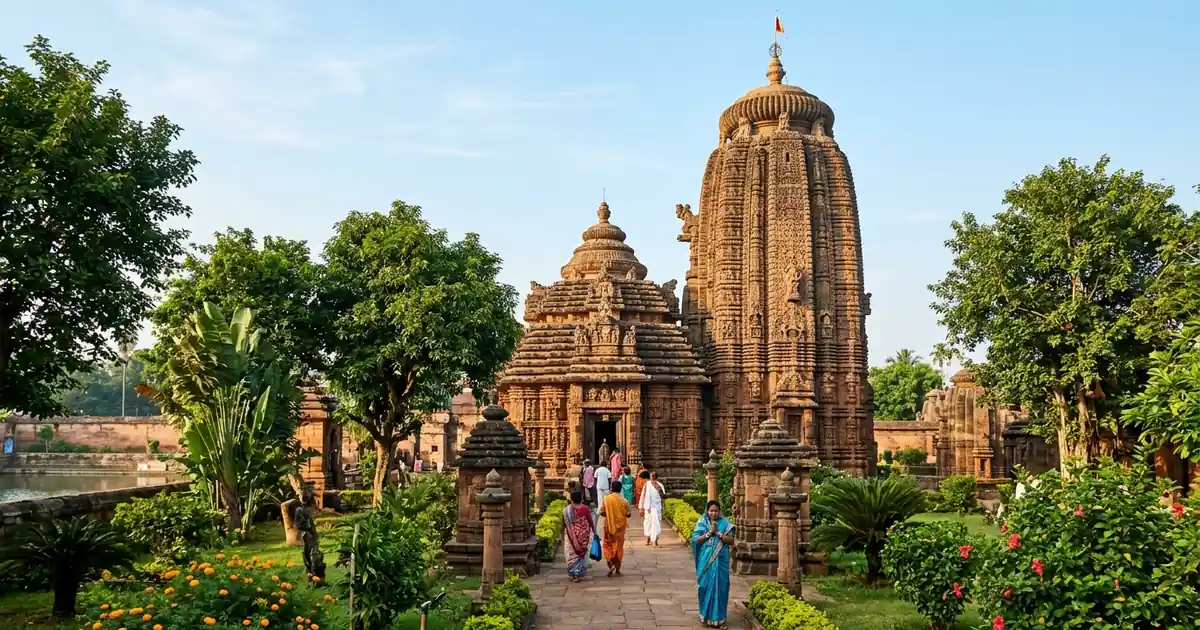
Located along the eastern bank of the holy Bindu Sagar lake, the historic ananta basudev temple bhubaneswar is the foremost Vaishnavite sanctuary in the temple city of Odisha. The 13th-century shrine is dedicated to Krishna, Balarama, and Subhadra.
While ancient Bhubaneswar is globally celebrated for its majestic Shaivite monuments, this spiritual center offers exquisite stone carvings and authentic culinary traditions. Travelers exploring top places to visit in bhubaneswar consider this temple an indispensable stop.
Key Takeaways
- Ananta Basudev Temple was commissioned in 1278 CE by Queen Chandrika Devi, daughter of King Anangabhima Deva III of the Eastern Ganga dynasty.
- Unlike the wooden deities of Puri, the sanctum enshrines complete, polished black chlorite stone sculptures of Krishna, Balarama, and Subhadra.
- Morning darshan opens daily from 6:30 AM to 1:30 PM, and evening darshan continues from 4:00 PM to 9:00 PM with free public access.
- The temple kitchen prepares authentic wood-fired Abadha Mahaprasad, available fresh daily between 12:00 PM and 2:30 PM in the Anandabazar.
- Situated in Old Town, the temple is easily reached by Mo Bus routes, auto-rickshaws, and walking trails around Bindu Sagar lake.
Devotees and food enthusiasts arrive every afternoon to purchase steaming earthen pots of sacred bhog. The complex retains the timeless ambiance of medieval Kalinga, offering quiet courtyards and authentic Odia traditions. For visitors mapping out an extended journey through the capital district, our comprehensive Khordha district guide offers additional transport routes and cultural context.
At-a-Glance: Temple Timings, Location & Visitor Summary
State heritage archives and cultural festivals are documented through the Official Odisha Tourism Portal. The quick reference table below highlights verified opening schedules, prasad distribution hours, and entry logistics for planning your morning or midday visit.
| Pilgrimage Parameter | Practical Detail |
|---|---|
| Presiding Deities | Lord Krishna (Vasudeva), Lord Balarama (Ananta), and Goddess Subhadra |
| Historical Period | 1278 CE (Eastern Ganga Dynasty) |
| Commissioned By | Queen Chandrika Devi (Daughter of King Anangabhima III) |
| Morning Darshan Timings | 6:30 AM to 1:30 PM daily |
| Evening Darshan Timings | 4:00 PM to 9:00 PM daily |
| Midday Temple Closure | 1:30 PM to 4:00 PM for deity rest and afternoon rituals |
| Abadha Mahaprasad Hours | 12:00 PM to 2:30 PM (Lunch) & 7:30 PM to 9:00 PM (Dinner) |
| Entry Fee | Completely free entry for all visitors |
| Location | Eastern bank of Bindu Sagar Lake, Old Town, Bhubaneswar |
| Nearest Railway Station | Bhubaneswar Railway Station (BBS, 5.5 km) |
| Nearest Airport | Biju Patnaik International Airport (BBI, 4.5 km) |
Morning visitors enjoy quieter prayer lines and cool breezes sweeping across the adjacent lake waters. Arriving between 11:30 AM and 12:30 PM allows travelers to attend the noon rituals before heading directly into the food bazaar for hot lunch.
Quick Reference Overview
The ananta basudev temple timings remain consistent throughout the year, with special extensions during major Hindu festivals. Devotees line up early during Janmashtami and Chandan Yatra to witness elaborate bathing ceremonies and sandalwood paste decorations. Because the inner sanctum is compact, visiting during regular weekday mornings ensures an intimate spiritual viewing without crowded queues.
Traditional priests conduct daily mangala aarti around dawn, followed by sacred shringar offerings and recitation of ancient Sanskrit hymns. Visitors can walk around the outer circumambulation path to admire exterior sculptures while the priests prepare the morning rituals.
Who Will Enjoy It Most (and When to Skip)
Art historians, spiritual seekers, and culinary explorers will find the complex deeply rewarding. The opportunity to sample genuine temple recipes cooked over wood fires inside handmade clay pots provides an authentic look into ancient Odia gastronomy.
Travelers with tight schedules who cannot stay through the noon hour may miss the signature food experience. In such cases, combining a morning architectural walk here with nearby monuments like the Raja Rani Temple provides a fulfilling half-day cultural excursion.
Historical Origins: Queen Chandrika Devi & Eastern Ganga Heritage
The foundation of Ananta Basudev Temple represents an extraordinary chapter in medieval Odisha history. Built in 1278 CE during the reign of King Bhanudeva I, the shrine was commissioned by Queen Chandrika Devi. She was the devoted daughter of Emperor Anangabhima Deva III and the younger sister of King Narasimhadeva I, the visionary ruler who constructed the world-renowned Konark Sun Temple.
The royal princess was widowed following the heroic death of her husband, the Paramardi prince, in battlefield defense of the realm. A deeply cultured scholar, musician, and ardent Vaishnavite devotee, she resolved to erect a magnificent temple dedicated to Lord Vishnu. She chose the tranquil eastern shoreline of Bindu Sagar lake, establishing a sanctuary that would endure through centuries of political transformation.
The temple holds a distinct position among the famous temples in Odisha, marking a harmonious bridge between Vaishnavism and the predominant Shaivism of Old Town. Local folklore indicates that an older wooden shrine existed on this identical ground long before the Ganga monarchs raised stone deulas across the delta.
Royal Inscriptions & British Museum Artifacts
The foundation of the temple is corroborated by ancient Sanskrit commemorative epigraphs composed by the royal poet Umapati. These detailed stone inscriptions praised the devout queen for her wisdom, piety, and lavish donations of land and servitors to the shrine.
[!NOTE] During the early nineteenth century under British colonial rule, the original inscribed stone slab from Ananta Basudev Temple was removed from the complex. Today, that historic slab forms part of the permanent collection at the British Museum in London, while an authentic plaster replica is preserved at the Odisha State Museum in Bhubaneswar.
These historical records provide scholars with firm chronological markers for Eastern Ganga dynastic lineage, administrative organization, and artistic patronage. They affirm that royal women played substantial leadership roles in patronizing grand architectural monuments across the medieval kingdom.
A Vaishnava Oasis in Ekamra Kshetra
Ekamra Kshetra, the historic core of Bhubaneswar, was primarily conceived as the sacred realm of Lord Shiva. Hundreds of sandstone spires honored various aspects of Mahadeva, centered upon the towering Lingaraj Temple.
The construction of Ananta Basudev introduced an enduring Vaishnava sanctuary into this Shaivite landscape. Rather than creating religious discord, the temple deepened the syncretic spirit of Odia spirituality. Just as Lord Lingaraj is worshipped daily as Harihara (half Vishnu, half Shiva), Ananta Basudev established a shared devotion where bilva leaves and sacred tulsi twigs are revered side by side.
During the late seventeenth and eighteenth centuries, the Marathas extended their governance over Odisha and undertook extensive structural repairs on the temple walls. Their restorative efforts helped safeguard the inner chambers and boundary walls, preserving the historic deula complex for future generations.
Unique Deities & Kalinga Architectural Style
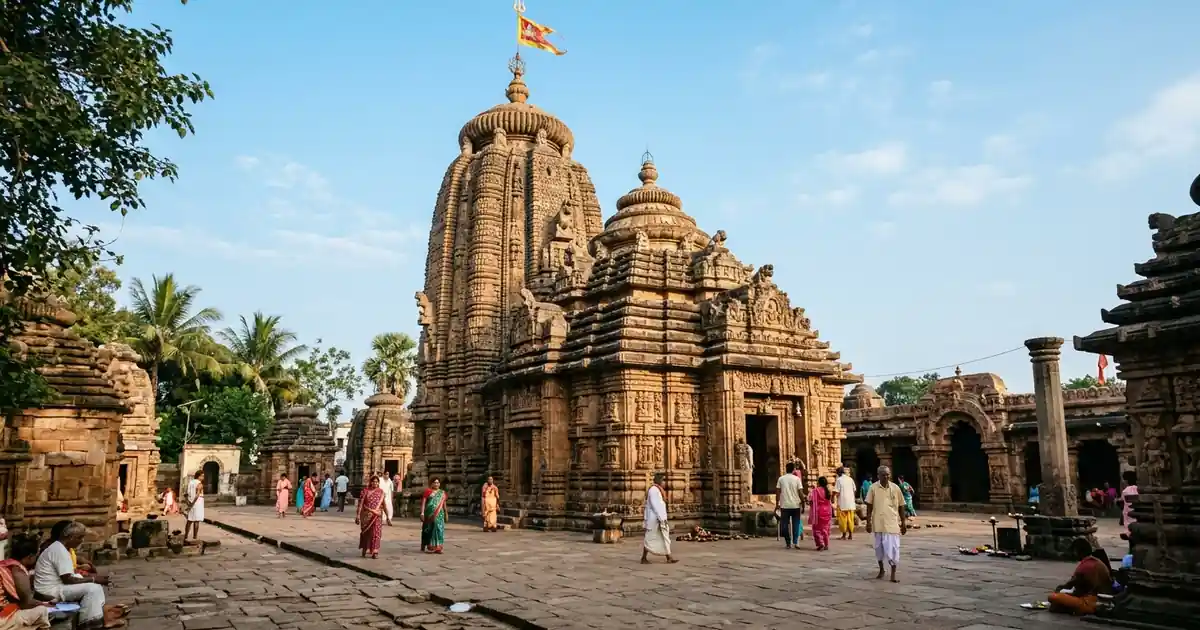
Architecturally, Ananta Basudev Temple exemplifies the mature phase of Kalinga temple construction. Built primarily from durable sandstone and laterite blocks, the monument incorporates all four standard structural components aligned along an east-to-west axial layout.
The complex includes the principal sanctum (rekha deula), the tiered assembly hall (jagamohana or pidha deula), the festival pavilion (nata mandapa), and the sacred offering hall (bhoga mandapa). Each hall steps progressively higher, drawing the viewer’s gaze toward the imposing curvilinear tower that crowns the inner sanctum.
Visitors entering the precinct immediately notice the rhythmic exterior carvings depicting floral creepers, celestial maidens, protective guardian beasts, and narrative panels illustrating the legends of Lord Krishna. The balanced proportions create an atmosphere of quiet grandeur along the lakeside promenade.
The Sacred Holy Trinity: Krishna, Balarama, and Subhadra
The sanctum of Ananta Basudev differs remarkably from the Jagannath Temple in Puri. While Puri enshrines iconic neem-wood figures characterized by stylized, abstract forms, Ananta Basudev houses lifelike, anthropomorphic images sculpted from glistening black chlorite stone.
The three primary images stand upon an elevated stone pedestal inside the darkened sanctuary:
- Lord Balarama (Ananta): The elder brother stands under a protective canopy formed by a seven-hooded divine serpent (Sheshanaga). He holds a sacred plough (hala) in one hand and a club in the other.
- Lord Krishna (Vasudeva): The central deity is depicted in classical four-armed iconography, holding the conch (shankha), discus (chakra), lotus (padma), and mace (gada).
- Goddess Subhadra: Positioned between the two divine brothers, the goddess stands in graceful tribhanga posture, holding auspicious water vessels and lotus blossoms.
Small brass representative idols (chalanti pratima) rest before the stone sculptures to receive daily bathing rituals and festive public processions. Pilgrims often spend several minutes in the quiet sanctum taking in the expressive stone contours carved by medieval Odia artisans.
Fourfold Deula Plan on Bindu Sagar Lake
The temple’s direct relationship with the waters of bindusagar lake bhubaneswar is fundamental to its spiritual design. Broad stone steps lead downward from the temple courtyard to the sacred ghats, where pilgrims perform ritual ablutions before entering the sanctum.
The four halls display distinct decorative features:
- The Bhoga Mandapa features open pillared spaces where large quantities of prasad are organized before being carried to the sanctum.
- The Nata Mandapa retains historic lintels carved with nine planetary deities (Navagrahas).
- The Jagamohana exhibits pyramidal roof tiers adorned with sculpted musicians and dancers.
- The Vimana rises gracefully with miniature decorative spires (angashikharas) clustered along its curving corners.
Travelers who appreciate classic temple engineering can trace similar stylistic developments at the nearby Mukteswara Temple, famous for its freestanding arched torana.
Anandabazar Abadha: Authentic Temple Mahaprasad Experience
Beyond its architectural beauty, Ananta Basudev Temple is celebrated throughout Odisha for its sacred culinary tradition. Much like the grand kitchen of Puri, the temple operates a lively traditional kitchen that feeds hundreds of devotees and townspeople every day.
The sanctified meal is known as Abadha or Mahaprasad. Prepared according to strict Vedic injunctions, the food is completely vegetarian and cooked without onions, garlic, green chilies, or imported vegetables like potatoes and tomatoes. Devotees consider this food spiritually purifying because it is first offered to Lord Vishnu before being served in the public Anandabazar courtyard.
Purchasing Abadha here is far more convenient and approachable than the crowded corridors of Puri. Visitors can walk directly into the open-air bazaar, inspect freshly cooked clay pots, interact with friendly temple cooks, and sit down on clean stone platforms to enjoy their meal.
Earthen Pot Cooking in the Sacred Kitchen
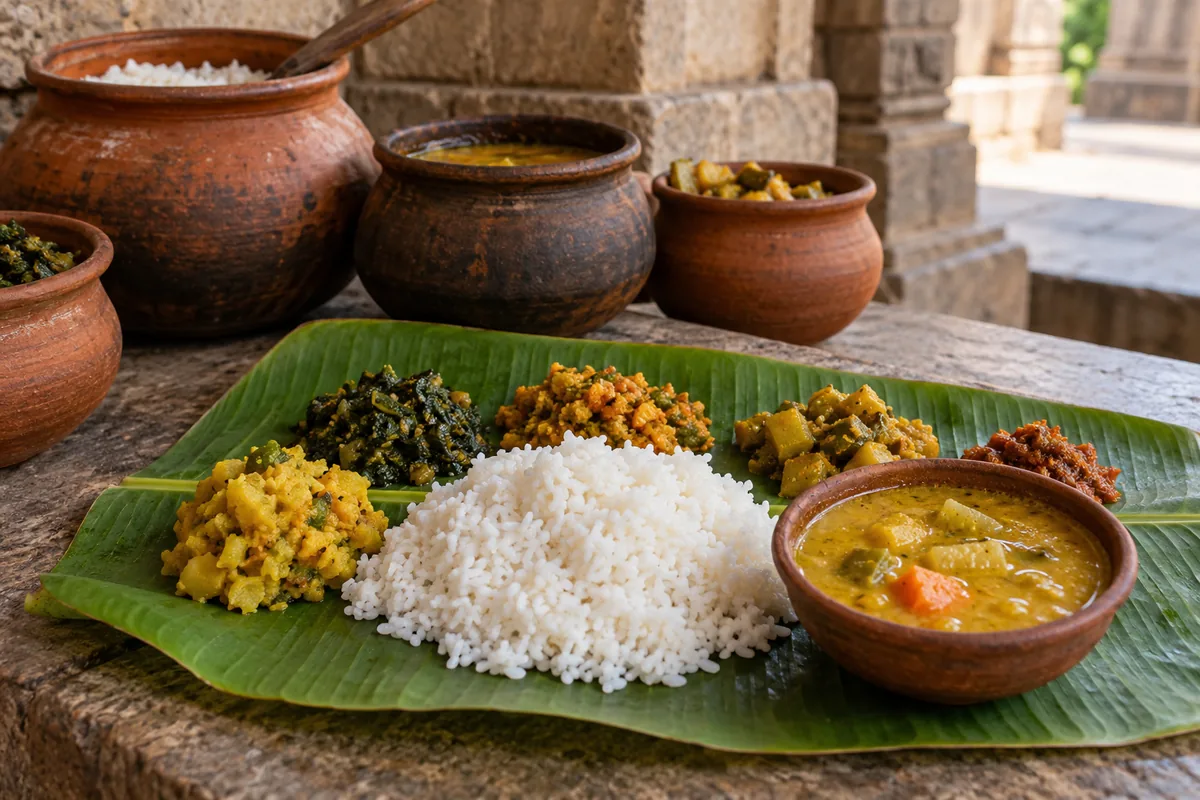
The preparation of Abadha follows an ancient thermodynamic technique that has remained unchanged for over seven hundred years. Cooks utilize multi-tiered earthen pots called kuduas stacked atop one another over natural wood fires inside brick stoves.
The intense steam generated from the lowest vessel rises through the porous clay layers, cooking the rice, lentils, and vegetables simultaneously. Remarkably, the food in the topmost pot often finishes cooking at the same time as the vessel closest to the embers. This slow steaming process imparts a distinctive earthy aroma and delicate smokiness that modern cooking methods cannot replicate.
All ingredients are sourced locally from traditional Odia farmers, emphasizing native tubers, plantains, pumpkin, and indigenous leafy greens. Pure cow ghee, cumin seeds, ginger paste, and fragrant bay leaves provide subtle seasoning without overpowering the natural flavors of the produce.
Menu Highlights: Kanika, Dalma, and Sweet Khiri
A traditional Abadha meal includes an abundant variety of savory and sweet preparations served together on fresh banana leaves:
| Temple Dish | Traditional Ingredients | Flavor Profile & Texture |
|---|---|---|
| Sadha Anna | Indigenous parboiled rice cooked in well water | Fluffy, aromatic, and steaming hot |
| Kanika | Sweetened fragrant rice with ghee, cloves, and raisins | Mildly sweet, golden-hued, and celebratory |
| Mitha Dali | Split pigeon peas cooked with raw jaggery and ginger | Rich, sweet-savory, and comforting |
| Harida Dali | Yellow lentils flavored with cumin and pure ghee | Light, savory, and easily digestible |
| Odia Dalma | Lentils stewed with raw banana, pumpkin, and yam | Thick, hearty, and packed with wholesome vegetables |
| Besara | Mixed local vegetables tempered with mustard paste | Pungent, savory, and traditionally Odia |
| Mahura | Sweet tuber curry cooked with dry roasted spices | Sweet, thick, and deeply satisfying |
| Potol Rasa | Pointed gourds cooked in spiced coconut gravy | Rich, aromatic, and delicate |
| Khiri | Rice pudding slow-cooked in thickened milk and sugar | Creamy, cardamom-infused, and decadent |
After relishing this royal feast, travelers can explore contemporary local craft shopping at Ekamra Haat, which features traditional handlooms and bell-metal cookware just a few kilometers away.
Pricing & Anandabazar Token System
Obtaining lunch at the Anandabazar is straightforward and traveler-friendly. Between 11:30 AM and 1:30 PM, temple servitors display fresh earthen pots beneath shaded pavilion awnings in the courtyard.
Visitors can purchase individual dishes or order complete meal packages served in medium or large earthen vessels. A hearty single-person meal typically costs between ₹120 and ₹180, including rice, dalma, two vegetable preparations, and sweet khiri. Larger family-sized pots (bada kudua) suitable for four to five adults range from ₹500 to ₹750 depending on the dishes selected.
You can eat your meal seated traditionally on the courtyard verandah floor, where temple attendants provide fresh leaf plates and drinking water. Alternatively, visitors can request leaf wrappings and carry the earthen pots back to their hotel rooms or homes as take-away meals.
Visitor Guidelines: Dress Code, Photography, and Ground Realities
Respecting customary temple guidelines guarantees a tranquil and welcoming experience for travelers of all backgrounds:
- Dress Code: Modest and conservative attire is appreciated. Men are advised to wear full-length trousers, jeans, dhotis, or kurtas. Women generally wear sarees, salwar suits, or long skirts. Sleeveless shirts and short trousers should be avoided.
- Footwear Policy: Leather shoes, sandals, and sports footwear must be removed before crossing the outer threshold. A designated footwear stand operates outside the main gateway for a nominal tip of ₹5 to ₹10.
- Photography Rules: Photography is strictly prohibited inside the inner sanctum and kitchen corridors. However, respectful photography of the exterior towers, garden courtyards, and Anandabazar dining area is permitted.
- Cleanliness & Waste: Help maintain the sanctity of the complex by disposing of banana leaf plates and earthen vessels in designated stone masonry waste bins located near the perimeter wall.
- Non-Hindu Entry: Unlike the Lingaraj Temple nearby, Ananta Basudev Temple welcomes respectful visitors of all faiths into its outer courtyards and dining pavilions to experience the architecture and taste the Mahaprasad.
[!TIP] If your primary goal is tasting the fresh Abadha, aim to reach the temple between 12:15 PM and 1:00 PM. Arriving after 2:15 PM often means popular specialty dishes like Kanika and sweet Khiri may be sold out for the day.
Festival Celebrations: Janmashtami and Chandan Yatra
The temple comes alive with extraordinary devotion during major Hindu calendar celebrations:
- Janmashtami (August to September): The appearance day of Lord Krishna is celebrated with day-long fasting, devotional singing, and midnight abhisheka ceremonies. The temple exterior is illuminated with thousands of earthen lamps.
- Chandan Yatra (April to May): During the peak of summer, representative brass deities are anointed with cooling sandalwood paste and taken in ceremonial palanquins to the waters of Bindu Sagar for evening swan-boat cruises.
- Radhashtami & Balarama Jayanti: Special morning pujas and festive prasad distributions celebrate the divine birthdays of Goddess Radha and Lord Balarama.
Visitors planning itineraries during festival weeks can check state cultural schedules via the Odisha State Archaeology Portal.
How to Reach Ananta Basudev Temple by Road, Train, and Air
Situated in the heart of Old Town Bhubaneswar, Ananta Basudev Temple is accessible from all major transit hubs across the state capital:
| Transit Mode | Starting Location | Distance & Approximate Travel Time | Recommended Transport |
|---|---|---|---|
| City Bus (Mo Bus) | Master Canteen Bus Terminal | 5.5 km (20 to 25 minutes) | Mo Bus Route 23 or Route 33 to Lingaraj Temple stop |
| Auto-Rickshaw | Bhubaneswar Railway Station | 5.5 km (15 to 20 minutes) | Prepaid auto or app-based booking (Ola/Uber Auto) |
| Airport Taxi | Biju Patnaik International Airport | 4.5 km (15 to 18 minutes) | Airport prepaid cab or private vehicle |
| Highway Route | Cuttack via NH-16 | 32 km (50 to 60 minutes) | Private taxi or intercity express bus to Rasulgarh |
Transit Connections from Railway Station and Airport
Travelers arriving at Bhubaneswar Railway Station (BBS) can board city buses from the Master Canteen terminal directly opposite the station exit. Mo Bus routes operating toward Old Town stop near Lingaraj police station, leaving a short four-hundred-meter scenic walk to the temple gates.
From Biju Patnaik International Airport (BBI), pre-paid taxis and auto-rickshaws reach the temple via Airport Road and Old Town Boulevard in less than twenty minutes. The route passes several historic sandstone shrines, offering a delightful introduction to the heritage quarter.
Old Town Heritage Circuit Pairings
Because Ananta Basudev sits amidst high concentrations of protected monuments, travelers can design a rich walking tour around Bindu Sagar:
- Morning (7:30 AM to 10:30 AM): Begin with sunrise darshan at Lingaraj Temple, followed by visits to the 7th-century Parasurameswara and 10th-century Mukteswara shrines.
- Midday (11:30 AM to 1:30 PM): Walk along the eastern embankment to Ananta Basudev Temple for peaceful darshan and a hot Abadha feast at Anandabazar.
- Afternoon (3:00 PM to 5:30 PM): Take a short drive south to explore the Buddhist peace monument at Dhauli Giri Hills Shanti Stupa or the ancient rock-cut inscriptions at Udayagiri and Khandagiri Caves.
This heritage combination provides a balanced immersion into Odisha’s diverse artistic, religious, and architectural history in a single memorable day.
Frequently Asked Questions About Ananta Basudev Temple
What are the daily darshan timings of Ananta Basudev Temple in Bhubaneswar?
The temple opens daily for morning prayers from 6:30 AM to 1:30 PM and reopens for evening darshan from 4:00 PM to 9:00 PM. The complex closes briefly in the afternoon between 1:30 PM and 4:00 PM for deity rest and ritual bhog offerings.
How can visitors buy Abadha Mahaprasad at Ananta Basudev Temple?
Visitors can walk into the open Anandabazar courtyard between 12:00 PM and 2:30 PM to select freshly cooked dishes directly from temple servitors. Meals are served on traditional leaf plates for immediate dining or wrapped in banana leaves for take-away.
Who built Ananta Basudev Temple and when was it established?
The temple was constructed in 1278 CE by Queen Chandrika Devi, daughter of Emperor Anangabhima Deva III of the Eastern Ganga dynasty. It was established as a prominent Vaishnavite shrine to honor Lord Vishnu, Krishna, and Balarama beside Bindu Sagar lake.
Which deities are worshipped inside Ananta Basudev Temple?
The sanctum sanctorum houses complete, polished black chlorite stone idols of Lord Krishna, Lord Balarama, and Goddess Subhadra. Unlike the wooden idols of Puri, these murtis feature full anthropomorphic features sculpted in classical Kalinga style.
How far is Ananta Basudev Temple from Bhubaneswar Railway Station?
The temple is situated approximately 5.5 kilometers southwest of Bhubaneswar Railway Station in Old Town. Commuters can reach the shrine in about fifteen to twenty minutes using local auto-rickshaws, taxis, or regular Mo Bus city buses.
Is photography allowed inside Ananta Basudev Temple?
Photography is strictly prohibited inside the inner sanctum sanctorum and around the private cooking hearths. Visitors are permitted to photograph the exterior stone spires, outer courtyard gardens, and the lively Anandabazar dining area.