Mangalajodi Bird Sanctuary: Complete Winter Birdwatching & Boating Guide
Discover Mangalajodi Bird Sanctuary on Chilika Lake. Complete winter guide with boating charges (₹1,200), best photography hours, bird species, and stays.
Key Takeaways
- Global Wetland Paradise: Mangalajodi hosts over 300,000 migratory waterfowl across 200+ bird species on the northern marshes of Chilika Lake.
- Prime Winter Window: The peak birding season spans November through February, with December and January offering the highest avian density.
- Silent Boat Safaris: Traditional hand-paddled wooden country boats glide silently through reed channels for ₹1,200 to ₹1,500 per 3-hour trip.
- Poachers-to-Protectors Legacy: The village’s community conservation model earned the prestigious UNWTO Award for Innovation in Tourism Enterprise.
- Proximity to Bhubaneswar: Located just 70 km southwest of Bhubaneswar along National Highway 16, reachable in a comfortable 90-minute drive.
Every winter, as Arctic temperatures freeze the northern tundra, more than a million winged travelers undertake extraordinary transcontinental journeys. A massive concentration of these migratory waterfowl lands on the tranquil freshwater marshlands of Mangalajodi. Situated on the northern rim of Chilika Lake, this quiet village transforms into one of Asia’s most spectacular wildlife theaters.
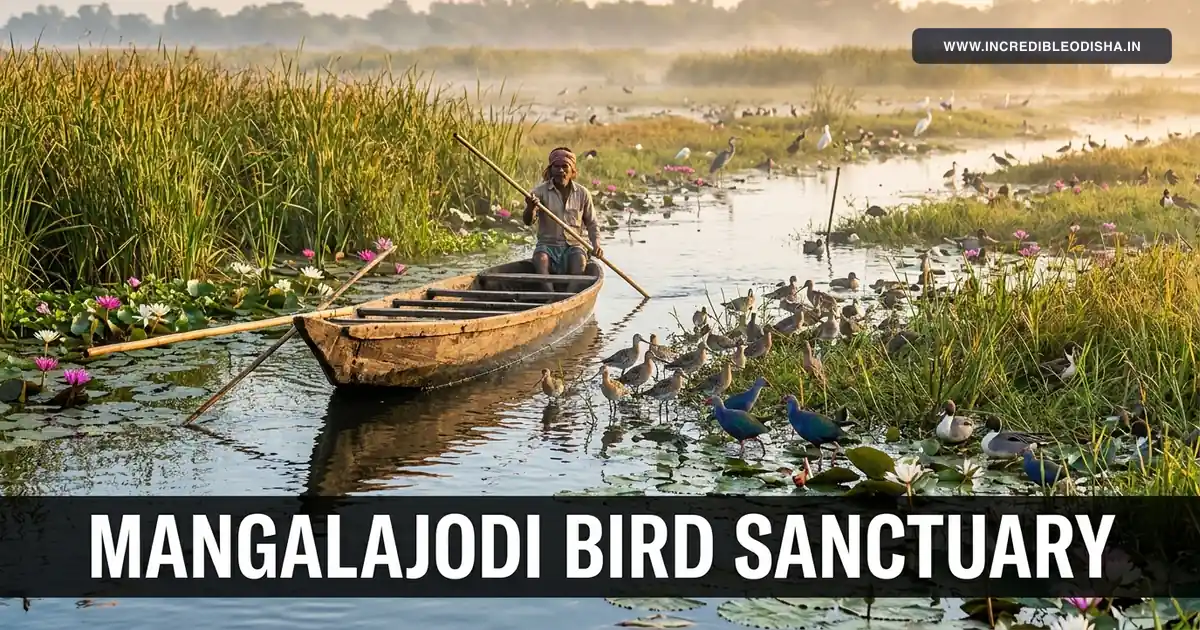
Unlike commercial sanctuaries where noisy engines scatter wildlife, Mangalajodi offers an intimate, silent safari experience. Travelers glide through blooming water lilies and towering reed beds aboard wooden country boats propelled only by long bamboo poles. This comprehensive travel guide covers the village’s inspiring conservation history, official boating tariffs, ideal morning photography timings, bird species checklists, and nearby eco-cottage stays.
What Makes Mangalajodi the Birds’ Paradise of Chilika?
Mangalajodi stands apart from other sectors of Chilika Lake because of its shallow freshwater wetland ecology. While southern sectors like Satapada and Rambha feature deep, brackish open lagoons, Mangalajodi receives freshwater drainage from coastal rivers, nurturing dense mats of aquatic vegetation and submerged mollusks.
This rich buffet provides ideal foraging territory for probing waders, dabbling ducks, and elusive marsh dwellers. Water levels remain waist-deep throughout the winter months, allowing small country boats to navigate narrow natural channels without disturbing resting flocks. Official wetland management and conservation initiatives are coordinated through the Odisha Tourism Official Portal.
The destination represents a cornerstone of eco-travel in eastern India, featured prominently across our guide to 20 must-visit tourist places in Odisha.
The Inspiring Conservation Story: From Poachers to Protectors
The global fame of Mangalajodi is rooted in one of the most remarkable conservation turnarounds in global wildlife history. Understanding this community transformation enriches every safari across the wetland marshes.
The Dark Era of Poaching in Northern Chilika
Until the late 1990s, Mangalajodi was notorious across eastern India as a major hub for commercial waterfowl poaching. Trappers poisoned shallow pools with agricultural pesticides and strung invisible monofilament nets across the reeds.
Between 2,000 and 3,000 migratory birds were slaughtered every single night during peak winter months. Carcasses were packed in ice and transported to illicit meat markets in nearby towns, threatening the ecological stability of Chilika Lake.
Nanda Kishore Bhujabal and the Mahavir Pakshi Suraksha Samiti
The transformation began when dedicated naturalist Nanda Kishore Bhujabal of the non-profit organization Wild Odisha engaged directly with the hunters. Through patient dialogue, community leaders helped poachers recognize that their heritage was being destroyed.
In an emotional ceremony at the sacred temple of Maa Kalijai, poachers surrendered their nets and took a formal oath to protect the birds. They established the Sri Sri Mahavir Pakshi Suraksha Samiti, converting former poachers into expert bird guides, trackers, and boatmen. Detailed historical records preserved in the Chilika Lake Heritage Registry chronicle this community turnaround.
International UNWTO Recognition and Community Livelihoods
The community-driven ecotourism model created sustainable alternative livelihoods through guided boat safaris, eco-cottages, and village hospitality. Local youths were trained in field ornithology, binoculars operation, and tourist safety.
Since earning the United Nations World Tourism Organization (UNWTO) Award for Innovation in Tourism Enterprise at the 14th UNWTO Awards in Madrid, Mangalajodi stands as an international benchmark for community conservation. Today, the grandchildren of former hunters proudly lead international wildlife photographers through the marshes.
Best Time to Visit and Ideal Birdwatching Hours
Timing your journey to Mangalajodi is critical, as migratory populations fluctuate based on seasonal winter weather patterns.
Winter Migration Calendar (November to February)
The winter birding season begins in early November as pioneering flocks of Garganey, Northern Pintails, and Black-tailed Godwits arrive. Numbers expand dramatically by December, reaching peak density during late December and throughout January.
By late February, warming temperatures signal the return migration toward Central Asia and Siberia. Travelers planning multi-destination lake tours can explore seasonal activities in our guide to Chilika Lake 5 things to do and see.
Golden Hours: Sunrise vs Late Afternoon Safaris
The hours between 6:00 AM and 9:00 AM provide the ultimate birdwatching conditions. The lagoon surface is glassy and still, while low-angle morning sunlight illuminates dewdrops on lotus leaves and the colorful plumage of foraging waders.
Late afternoon safaris from 3:30 PM to 5:30 PM offer a different charm. Golden sunset tones bathe the reed beds as thousands of egrets, herons, and openbill storks return to their communal roosts against the evening sky.
Boating Safaris at Mangalajodi: Pricing, Timing, and Experience
Safaris at Mangalajodi are conducted strictly in traditional wooden country boats, locally called Donga. To prevent noise and water pollution, motorized engines are prohibited in the core birding marshes.
A skilled boatman steers the boat using a long bamboo pole (Luhani), while a certified village naturalist spots elusive birds and identifies calls. This sustainable safari format serves as an exemplary model across the eco tourism Odisha best nature camps network, ensuring minimal disturbance to the ecosystem.
The table below outlines official boat rental charges, capacities, and durations managed by community trust counters:
| Safari Component | Details & Guidelines | Official Rate / Notes |
|---|---|---|
| Standard Boat Safari | Traditional wooden country boat (non-motorized) | ₹1,200 to ₹1,500 per boat |
| Safari Duration | Complete guided loop through core channels | 2.5 to 3 Hours |
| Boat Passenger Capacity | Maximum tourists per boat for safety & balance | Up to 4 Adults (+ Boatman & Guide) |
| Naturalist Guide Fee | Certified local community birding naturalist | Included in standard boat tariff |
| Operating Hours | Sunrise to dusk (Ticket counter opens at dawn) | 6:00 AM to 5:30 PM daily |
| Binoculars Rental | Optical field glasses available at the jetty counter | ₹50 to ₹100 per safari |
Top Migratory and Resident Bird Species You Can Spot
Mangalajodi’s shallow water channels host over 200 recorded avian species. Visitors can observe diverse bird families foraging in harmoniously stratified feeding zones.
Waders, Ducks, and Shorebirds
Large flocks of Black-tailed Godwits form the signature sight of Mangalajodi, probing their long, slender beaks deep into soft wetland mud. Northern Pintails, Northern Shovelers, Garganeys, and Eurasian Wigeons paddle alongside them in deeper water pockets.
Pacific Golden Plovers, Wood Sandpipers, Common Snipe, and Black-winged Stilts patrol the muddy water margins. Their varied bill shapes demonstrate adaptive radiation, allowing dozens of species to feed side by side without competing for identical prey.
Marsh Specialists and Secretive Bitterns
The extensive reed beds of Phragmites and Typha grasses provide refuge for elusive marsh specialists. Western Swamphens (Purple Moorhens) with radiant indigo plumage and coral-red frontal shields step gracefully across floating water lilies.
Bronze-winged and Pheasant-tailed Jacanas balance on expansive lily pads with their elongated toes. Alert observers can also spot secretive Yellow Bitterns, Cinnamon Bitterns, and Black Bitterns blending naturally into the golden reeds.
Majestic Raptors and Fish Eagles
The abundant waterfowl population attracts impressive birds of prey throughout the winter. Magnificent White-bellied Sea Eagles soar high above the marshes, occasionally swooping down to pluck fish from open channels.
Western Marsh Harriers cruise low over the reed beds with buoyant, V-shaped wingbeats, scanning for injured birds or amphibians. Other recorded raptors include Osprey, Peregrine Falcon, and Brahminy Kite.
Wildlife Photography Master Tips for Mangalajodi
Mangalajodi is universally celebrated among wildlife photographers because the low-slung country boats position cameras just inches above the water line. This low shooting angle produces creamy background blur (bokeh) and dramatic eye-level portraits.
A telephoto lens with a focal range of 100-400mm or 150-600mm is ideal for capturing both wide flock behavior and tight individual portraits. Fast shutter speeds of 1/1600 second or higher freeze flying waders and water splashes during rapid feeding sprints.
Photographers should bring beanbags or soft rests rather than rigid tripods, as narrow wooden boat gunwales make tripod legs unwieldy. Respect the birds by never urging your boatman to paddle closer than their comfort boundary or making sudden loud noises.
Where to Stay: Ecotourism Cottages and Nature Camps
To catch the magical 6:00 AM morning boat safari, staying overnight near Mangalajodi is highly recommended:
- Mangalajodi Ecotourism Nature Camp: Managed by the local village trust and state forestry initiatives, this camp offers air-conditioned cottages, non-AC rooms, and clean dormitories with home-cooked Odia meals.
- Godwit Eco Cottage: A comfortable community-run property located near the wetlands, featuring shaded verandas and private guide arrangements.
- OTDC Panthanivas (Barkul & Rambha): Situated 35 km away along the western shore of Chilika, offering comfortable lake-view rooms and water sports.
Travelers can compare rates and reservation details in our dedicated guide to Chilika Lake nature camps across the regional wetland network.
How to Reach Mangalajodi by Road, Train, and Flight
Mangalajodi is well-connected to major transport hubs across Odisha, making weekend trips straightforward:
- By Road: Mangalajodi is located 70 km southwest of Bhubaneswar along National Highway 16. Turn off the four-lane highway near Tangi and follow the paved rural road for 7 km to reach the jetty. The drive takes around 90 minutes.
- By Train: The nearest railway stations are Kalupara Ghat (KAPG), located 6 km away, and Balugaon (BALU), located 32 km away. Several express trains on the Howrah-Chennai trunk line stop at Balugaon.
- By Air: Biju Patnaik International Airport (BBI) in Bhubaneswar is the closest air gateway, situated 70 km away with rental cars and pre-paid taxis available. Regional highway networks are cataloged in the Khordha district administrative registry.
Travelers basing themselves in the capital city can coordinate their excursion with urban heritage tours outlined in our guide to 11 best tourist places to visit in Bhubaneswar.
Frequently Asked Questions About Mangalajodi Bird Sanctuary
What is the best time to visit Mangalajodi Bird Sanctuary?
The best time to visit Mangalajodi is during the winter months from November through February when migratory bird populations peak. Early morning hours between 6:00 AM and 9:00 AM provide optimal lighting and maximum bird foraging activity.
How much does a boat safari cost at Mangalajodi?
A standard guided wooden boat safari costs between ₹1,200 and ₹1,500 per boat for a 2.5 to 3-hour excursion. Each boat accommodates up to four visitors and includes an experienced local community naturalist guide.
How far is Mangalajodi from Bhubaneswar?
Mangalajodi is located approximately 70 kilometers southwest of Bhubaneswar via National Highway 16. The journey takes around 90 minutes by private taxi or personal vehicle.
Why are non-motorized boats used at Mangalajodi?
Non-motorized wooden boats propelled by long bamboo poles glide through the shallow reed channels without creating engine noise or water ripples. This silent approach prevents startling sensitive migratory birds and enables intimate eye-level wildlife photography.
Which bird species are most commonly seen at Mangalajodi?
Visitors frequently sight large flocks of Black-tailed Godwits, Northern Pintails, Purple Swamphens, Glossy Ibises, and Bronze-winged Jacanas. Elusive species such as Yellow Bitterns, Cinnamon Bitterns, and White-bellied Sea Eagles are also regularly recorded.
Are night stays available at Mangalajodi?
Comfortable eco-cottages and dormitories are operated by the Mangalajodi Ecotourism Trust and private eco-resorts within walking distance of the jetty. Visitors can reserve cottage accommodations in advance to enjoy pre-dawn sunrise safaris.